
Auditing Tissue Packing Machine Suppliers: Equipment Evidence
Auditing Tissue Packing Machine Suppliers: Equipment Evidence
A tissue packing machine is the end-of-line equipment that wraps, bags, cartons or case-packs finished tissue products — facial tissue, napkins, toilet rolls and canisters — before palletizing. Buying one usually begins with a brochure and ends with a factory acceptance test. Everything between those two points determines whether the machine a buyer ordered is the machine a supplier can actually demonstrate.
That middle ground is where equipment evidence lives. For buyers in the research and evaluation stage, the useful question is not whether a supplier says it builds high-speed wrapping and cartoning lines, but whether it publishes model numbers, capacity bases, format envelopes, utility requirements, net weights and test protocols that can be checked, compared and written into a purchase contract.
This reference sets out how that audit works in practice, using the published model data of Wenzhou Wimach Machinery Co., Ltd. — a packaging machinery manufacturer based in Wenzhou, Zhejiang, China, producing tissue packing machines and integrated packaging lines under the WIMACH brand — as a worked example of what to request, how to read it and where the evidence stops.
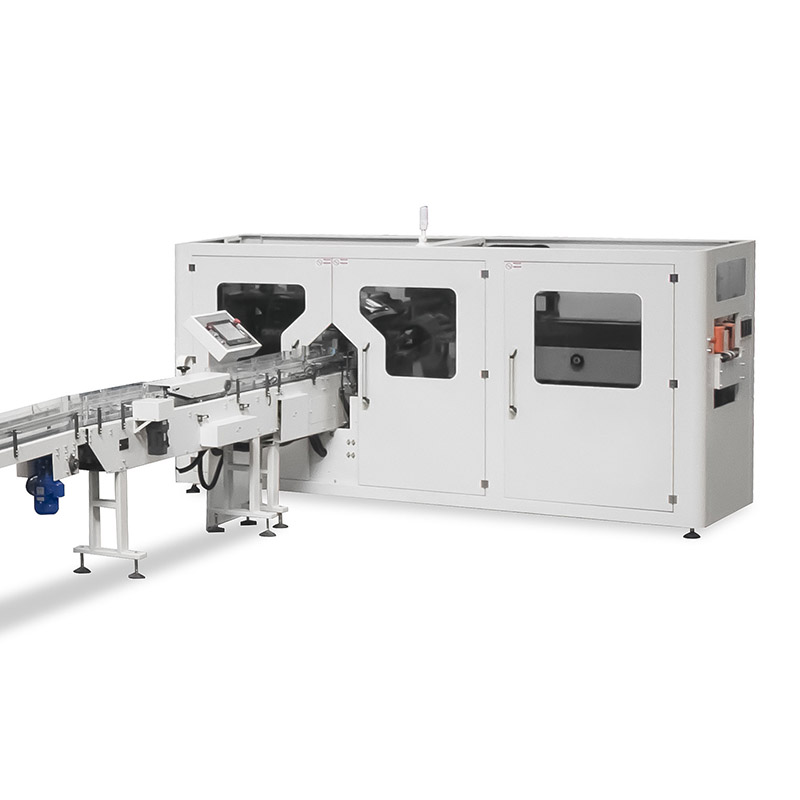
Model-level documentation, not brochure adjectives, is what a buyer can verify before an order and test after delivery.
What Counts as Equipment Evidence in a Tissue Packing Machine Purchase
Equipment evidence is any supplier statement that can be independently checked against a physical machine, a test record or a contract clause. In tissue converting and packaging, five categories of statement meet that standard: the model designation, the rated output with its basis, the format envelope the machine accepts, the utility and physical envelope it requires, and the test sequence it passes before shipment.
Everything else — “high speed”, “stable operation”, “advanced control” — is positioning language. It may be accurate, but a buyer cannot audit it, cannot compare it across suppliers, and cannot attach a remedy to it if the delivered machine falls short.
The practical consequence is that a supplier's datasheet should be read the way an engineer reads a drawing: as a set of constraints that must match the buyer's own product format, building services and floor. Where a number is missing, the correct action is to request it in writing, not to assume a favourable value.
The Verification Problem: Three Claims That Rarely Survive an Audit
Three patterns account for most post-order disputes in tissue packing equipment, and each can be identified before a contract is signed.
Capacity without a basis. A figure such as “180 boxes per minute” means little until the carton board grammage, carton dimensions and film or board material are stated alongside it. A rating produced on one format does not transfer automatically to a different one, and a supplier that quotes speed without a format is effectively quoting an average.
Line output presented as machine output. Turnkey lines combine several stations — cartoning, shrink wrapping, case packing, palletizing — and the line's practical rate is governed by the slowest station in the chain. A line-level headline figure that is not accompanied by station-level ratings cannot be reconciled with the buyer's own throughput plan.
Capability described without a model. “We can build a facial tissue cartoning line” is a statement about intent. “Model TC-300, 180 boxes per minute, carton dimensions 100–240 × 100–120 × 20–90 mm, board 300–400 gsm” is a statement about a machine. Only the second can be compared with a competing quote on equal terms.
Seven Checkpoints Buyers Can Audit Without a Site Visit
A desk-based audit of a tissue packing machine supplier can be structured around seven checkpoints. Each should be obtainable in writing before a factory visit, and each should appear in the technical annex of the purchase agreement.
- Model identity. A named model, not a category. In the WIMACH range this means designations such as TP-180 and TP-280 for soft tissue wrapping, TC-100 and TC-300 for tissue cartoning, TB-F60 for bottom-dispensing bagging, TB-R30 for roll bundle bagging and TW-160 for toilet roll paper wrapping.
- Rated capacity with its basis. The output figure, the product it was measured on and the material assumed — film type and thickness, carton board grammage, wrapping paper grammage.
- Format envelope. The minimum and maximum length, width and height of the pack, carton or roll the machine accepts.
- Construction material. Stated per model. Carbon steel is the construction material across most of the WIMACH wrapping, bagging and cartoning range; the TC-300 cartoner is listed as carbon steel and aluminium.
- Utilities. Voltage and phase, installed power, air pressure and air consumption.
- Physical envelope. Overall dimensions and net weight, which determine floor loading, lifting plan and layout clearances.
- Test and acceptance records. The sequence of checks performed before shipment and the documentation that accompanies the machine.
Model-Level Evidence: Reading Capacity and Format Data
The first two checkpoints — identity and format envelope — are where supplier quotes most often become non-comparable. The table below summarises published capacity and format data for the WIMACH model set discussed in this article.
| Model | Primary function | Rated capacity | Format envelope / material basis |
|---|---|---|---|
| TP-280 | High-speed soft tissue wrapping | 260 packs/min | Full format envelope to be requested in the complete datasheet |
| TP-180 | Soft tissue wrapping | 180 packs/min | 90–200 (L) × 85–105 (W) × 25–90 (H) mm; CPP, PE or composite film, 0.035–0.05 mm |
| TC-300 | Tissue box cartoning | 180 boxes/min | Carton 100–240 (L) × 100–120 (W) × 20–90 (H) mm; board 300–400 gsm |
| TC-100 | Tissue cartoning | 30–100 boxes/min | Carton 100–240 (L) × 100–120 (W) × 20–90 (H) mm; board 300–400 gsm |
| TB-F60 | Bottom-dispensing tissue bagging | 60 packs/min | 200–400 (L) × 115–200 (W) × 85–100 (H) mm; 4 bag magazines |
| TB-R30 | Roll bundle bagging | 25 packs/min | 180–600 (L) × 150–400 (W) × 100–250 (H) mm; 2 bag magazines |
| TW-160 | Toilet roll paper wrapping | 60–120 rolls/min | Roll 90–130 (L) × 90–130 (D) mm; wrapping paper 17–37 gsm |
Three observations follow directly from this table, and each is the kind of conclusion a buyer can defend internally.
First, the two cartoning models share an identical carton range — 100–240 × 100–120 × 20–90 mm with 300–400 gsm board — but differ in output: the TC-100 is rated at 30–100 boxes/min and the TC-300 at 180 boxes/min. For a buyer, that means the choice between them is a throughput decision, not a format decision. Standard rectangular tissue boxes sold in the United States are commonly described as 9.25" × 4.375" × 2.25" (approximately 235 × 111 × 57 mm), which falls inside the published carton range of both models. The differentiator is therefore speed, footprint and power, not whether the box fits.
Second, the two bagging models are not a speed ladder. TB-F60 is rated at 60 packs/min for packs up to 400 mm long, while TB-R30 is rated at 25 packs/min but accepts bundles up to 600 × 400 × 250 mm. They address different pack architectures — individual soft packs versus multi-roll bundles — and should be specified against the buyer's product mix rather than compared on headline speed alone.
Third, the TW-160 roll wrapper couples a 60–120 rolls/min range to a defined wrapping paper window of 17–37 gsm. A buyer planning to move from plastic film to lightweight paper should confirm the paper grammage sits inside that window before treating the quoted speed as applicable.
Utilities, Weight and Footprint: The Second Half of the Datasheet
Utility and physical data are the checkpoints most often skipped during evaluation and most often responsible for delay during installation. They are also entirely desk-auditable.
| Model | Voltage | Installed power | Air pressure | Air consumption | Net weight | Overall dimensions |
|---|---|---|---|---|---|---|
| TP-180 | 380 V 50/60 Hz, 3-phase | 12 kW | 0.5–0.8 MPa | Not listed in the published parameters | 2,900 kg | 3,585 × 6,260 × 1,800 mm |
| TC-300 | 380 V 50/60 Hz, 3-phase | 8 kW | 0.5–0.8 MPa | 120–160 L/min | 3,000 kg | 5,000 × 1,740 × 1,800 mm |
| TC-100 | 380 V 50/60 Hz, 3-phase | 6.2 kW | 0.5–0.8 MPa | 120–160 L/min | 2,200 kg | 3,620 × 3,130 × 1,800 mm |
| TB-F60 | 380 V 50/60 Hz, 3-phase | 35 kW | 0.5–0.8 MPa | 120 L/min | 3,500 kg | 2,840 × 6,060 × 1,800 mm |
| TB-R30 | 380 V 50/60 Hz, 3-phase | 13 kW | 0.5–0.8 MPa | 450 L/min | 2,200 kg | 8,000 × 2,000 × 2,000 mm |
| TW-160 | 380 V 50/60 Hz, 3-phase | 12 kW | 0.5–0.8 MPa | 120–160 L/min | 3,500 kg | 4,350 × 2,550 × 1,940 mm |
Four practical readings are worth drawing out. All six models are specified at 380 V, 50/60 Hz, three-phase — buyers in 400 V, 440 V or 220 V environments should confirm the voltage configuration as part of the order, since voltage is listed among the customization dimensions WIMACH offers alongside packaging dimensions, machine configuration and logo.
Installed power varies by a factor of more than five across the set, from 6.2 kW on the TC-100 to 35 kW on the TB-F60. Electrical capacity planning done against an assumed “typical” figure will be wrong in either direction; the model number drives the supply requirement.
Air consumption is the least predictable utility. The TB-R30 draws 450 L/min at 0.5–0.8 MPa, while the cartoners and the TW-160 sit at 120–160 L/min and the TB-F60 at 120 L/min. A buyer installing a bundle bagger alongside two cartoners should size compressed air against the combined figure rather than a single machine.
Physical envelope matters as much as weight. The TB-R30 is 8,000 mm long, and the TB-F60 is 6,060 mm wide — dimensions that determine aisle layout, infeed and outfeed conveyor routing, and the lifting plan for installation. Net weights between 2,200 kg and 3,500 kg should be checked against the floor loading capacity of the intended bay.

Carton range, board grammage and rated output are the three values that make a cartoning machine quote comparable.
From Single Machines to Turnkey Lines: Where Project Fit Is Decided
A turnkey tissue packing line is not a bigger machine; it is a sequence of stations whose published ratings have to be reconciled with each other. WIMACH publishes three line configurations relevant to the model set above.
| Line | Stations included | Published station ratings |
|---|---|---|
| Facial Tissue Box Packaging Line | Facial tissue box packing machine, box shrink wrapping machine, handle taping machine, case packer, palletizer, conveyors | Max cartoning 100 boxes/min; max case packing 10 cases/min; max palletizing 10 cycles/min |
| Toilet Paper Packaging Line | Toilet roll wrapping machine, case packer, palletizer, stretch wrapping machine | Max wrapping 120 rolls/min; max case packing 10 cases/min; max palletizing 10 cycles/min |
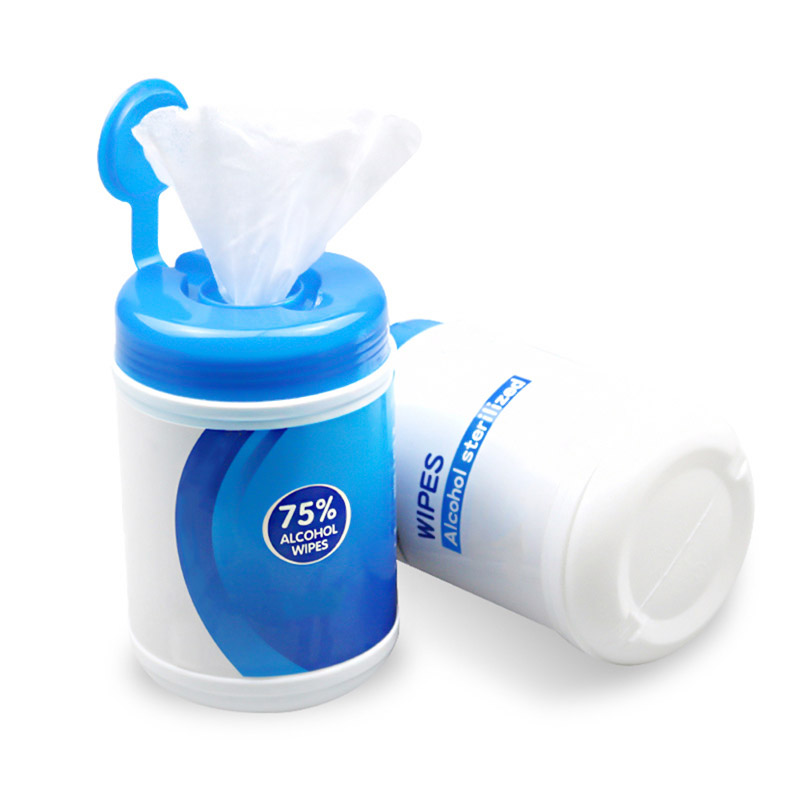
| Canister Wet Wipe Packaging Line | Canister loading, wipe loading, disinfectant filling, heat sealing, capping, labeling, case packing, pallet wrapping | Up to 60 canisters/min; maximum canister Ø110 × 220 mm |
The audit lesson sits in the relationship between the first and last columns. A facial tissue line rated at 100 boxes/min at the cartoner and 10 cases/min at the case packer is a chain with two different rhythms; the cases-per-minute figure tells a buyer how many cartoned boxes must accumulate per case, and therefore how the line buffers and accumulates between stations. Requesting station-level ratings rather than a single line figure is what turns a turnkey proposal into an engineering plan.
Line scope is also where customization is most visible. WIMACH describes complete packaging line projects as customizable across full packaging processes, packaging dimensions, machine configuration, voltage and logo, with a monthly capacity of one complete line and a lead time of 30–60 days. Standalone customized machinery is quoted at a monthly capacity of 13 sets with a 30–45 day lead time, and OEM/ODM work at 13 sets with a 15–45 day lead time. For a buyer scheduling a plant expansion, the difference between one line per month and thirteen machines per month is a planning input, not a footnote.
Turnkey lines should be audited station by station; a single line-level speed figure cannot be reconciled with a production plan.
Matching Models to Line Archetypes: Box, Roll and Canister Projects
The published application scenarios show how model choice follows product format rather than buyer preference.
Facial tissue box projects. A Polish facial tissue packaging line scenario describes facial tissue conveyed to cartoning and soft tissue wrapping machines, then to case packers, palletizers, strapping and stretch wrapping — operating automatically in a tissue paper producing and packaging workshop, with tissue folding and cutting machines as matched upstream equipment. The related product set for this archetype includes TP-280, TC-300, TC-100 and the Facial Tissue Box Packaging Line. The natural audit question is which cartoner matches the planned box format and speed: TC-100 at 30–100 boxes/min or TC-300 at 180 boxes/min.
Toilet roll projects. A US toilet paper packaging line scenario describes roll wrapping followed by case packing, automatic palletizing and stretch film wrapping, with tissue rewinding and cutting machines upstream and CE compliance noted as a special requirement. TW-160 is the wrapping station in this archetype, rated at 60–120 rolls/min for rolls of 90–130 mm length and diameter. Buyers converting from film to paper wrapping should verify the 17–37 gsm paper window at the same time.
Canister wet wipe projects. A Mexican scenario describes a turnkey canister line covering empty-canister feeding, wipe loading, quantitative disinfectant filling, heat sealing, cap tightening, labeling, case packing, palletizing, strapping and stretch film wrapping, again with CE compliance noted. The published maximum is 60 canisters/min and a maximum canister of Ø110 × 220 mm.
Company-reported project records follow the same pattern: a 12-set facial tissue packaging line in Poland, a 6-set toilet paper packaging line in the United States, a 9-set canister wet wipe line in Mexico, and smaller two-set projects in Spain (TP-280 soft tissue wrapping) and the United States (TW-160 roll wrapping and TC-100 cartoning). These are supplier-reported references, and their value in an audit is directional — they indicate which line archetypes a supplier has assembled before, and they give a buyer specific installations to request as references.
Purchasing Terms and Acceptance Criteria That Can Be Written Into a Contract
The strongest equipment evidence is the evidence a buyer converts into contractual language. WIMACH publishes a nine-step pre-shipment quality protocol that maps cleanly onto an acceptance annex: no-load and load running test, dimensional tolerance inspection, mechanical assembly check, pneumatic leakage test, electrical safety test, PLC control logic test, safety interlock and E-stop test, long-time aging test, and surface appearance inspection.
Each of those items can be made specific during negotiation. A reasonable acceptance annex for a tissue packing machine would include:
- Format testing at both ends of the published envelope — for a TC-100 or TC-300, cartons at 100 mm and 240 mm length, using board within the 300–400 gsm range.
- Material testing with the buyer's actual consumables — CPP, PE or composite film within 0.035–0.05 mm for TP-180, or wrapping paper within 17–37 gsm for TW-160.
- Pneumatic leakage verification at the specified 0.5–0.8 MPa operating pressure.
- Safety interlock and emergency-stop verification, recorded and signed.
- PLC logic verification against the buyer's specified pack sequences.
- A defined ageing run duration and the output recorded during it.
- Utility readings at the machine terminals, compared against the datasheet figures for power and air consumption.
Commercial terms sit alongside the technical annex. Minimum order quantity is listed as one set across complete lines, customized machinery and OEM/ODM work. After-sales scope covers installation and commissioning, training, warranty service, remote technical support, lifetime after-warranty support, and upgrade and retrofit service — each of which should carry a response expectation in the contract rather than a general statement. For customs planning, tissue packaging machinery is classified under HS code 8422.40 for other packing or wrapping machinery, a classification that buyers and freight forwarders should confirm against their own national tariff schedule.
Specification-Only Shortlisting vs. Equipment-Level Audit
Most buyers still shortlist on brand familiarity, price and a single headline speed. The alternative is to shortlist on auditable checkpoints. The difference is not academic — it changes what a buyer can compare and what a buyer can enforce.
| Evaluation criterion | Specification-only shortlisting | Equipment-level audit |
|---|---|---|
| Capacity | Headline speed figure | Rated output with format and material basis |
| Fit | “Suitable for facial tissue” | Published carton, pack or roll envelope in millimetres |
| Utilities | Not requested | Voltage, installed power, air pressure and air consumption per model |
| Installation | Assumed from photos | Overall dimensions and net weight checked against the bay |
| Acceptance | Verbal assurance | Named test protocol attached to the purchase agreement |
| Comparison | Across unlike quotes | Across identical checkpoints |
The audit approach has a cost: it takes longer to prepare, it forces the buyer to define the product format and material before requesting quotations, and it will eliminate suppliers who cannot produce model-level data. The specification-only approach is faster and, for a first-pass market scan, still useful. It simply should not be the basis on which a machine is ordered.
Limits and Boundaries: What the Evidence Does Not Cover
Published model data answers specific questions and leaves others open. Four boundaries are worth stating plainly.
Rated capacity is conditional. Every published speed in this model set sits next to a material specification — film thickness, carton board grammage, wrapping paper grammage, pack dimensions. Output achieved outside those windows is not represented by the headline figure, and buyers should treat the quoted rate as valid only within the stated basis.
Construction material has maintenance implications. Carbon steel is the stated construction material across most of the range, with the TC-300 listed as carbon steel and aluminium. Buyers operating in high-humidity or washdown-adjacent environments should ask specifically what surface treatment and cleaning regime is specified for their site rather than assuming a stainless specification.
Compliance scope needs separate confirmation. WIMACH states that its machines are CE certified. Buyers should obtain the declaration of conformity and confirm which directives and standards it references for their configuration. Published European standards evidence retrieved for this category primarily concerns tissue-making and general paper machinery — for example, EN 1034-17:2012 is catalogued as addressing safety requirements for tissue-making machines — and does not by itself establish the conformity route for finished tissue packing equipment. Industry guidance also notes that machinery placed on the European market requires a risk assessment under the European machinery framework. The conformity route should therefore be confirmed from primary regulatory sources for the specific machine, not inferred from adjacent standards.
Operational benchmarks are largely absent from public sources. Market research on tissue packaging machinery reports market value, regional share and application share; it typically does not publish changeover times, maintenance cost per 1,000 packs or line-level OEE. Those figures have to be obtained from the equipment owner as a reference, or from the supplier as a documented commitment — and they remain the weakest link in most desk-based evaluations.
Market Context: Why Buyers Are Asking for Station-Level Data
The global tissue paper packaging machine market was valued at approximately USD 3.9 billion in 2025 and projected to reach USD 4.2 billion in 2026, according to Precedence Research / Business Research Insights. The same source reports that Asia Pacific accounted for 39.8% of the market in 2025, and that facial tissue packaging applications accounted for 42.1% of market share in the same year.
For buyers, the application concentration is the more actionable figure. If facial tissue packaging represents the largest application block, then cartoning evidence — carton range, board grammage, rated boxes per minute — is the checkpoint that will be compared most often across suppliers. Suppliers who publish that data make themselves comparable; suppliers who do not shift the comparison onto price.
The regional concentration carries a similar implication. With a large share of the market concentrated in Asia Pacific, many buyers in Europe and the Americas are evaluating Asian-built equipment, and the only defensible way to do that is to normalise the comparison — same format, same material, same utility basis — rather than to compare a regional average against a specific model.
Future Outlook
Three developments are likely to shape how tissue packing machine suppliers are evaluated over the next procurement cycles.
Documentation is becoming part of the quotation. Buyers who now request utility data, net weight and test protocols as standard are finding that suppliers respond with structured datasheets rather than brochures — and that this shortens acceptance testing because expectations were fixed before shipment.
Station-level transparency is replacing line-level promises. As turnkey lines become more common — combining wrapping, cartoning, case packing and palletizing — the buyer's real question shifts from “how fast is the line” to “which station sets the pace, and how much buffer sits around it”. Suppliers who publish per-station ratings will be easier to shortlist.
Compliance evidence is moving from a certificate image to a documentation package. Declarations of conformity, risk assessments and standard references are increasingly requested at the quotation stage rather than at shipment, particularly for European installations where the applicable conformity route must be established for the specific machine rather than assumed from neighbouring categories.
FAQ
How can a buyer verify a tissue packing machine supplier's equipment claims before ordering?
Request model-level data in writing: model designation, rated capacity with its product and material basis, the format envelope in millimetres, construction material, voltage and installed power, air pressure and air consumption, overall dimensions and net weight. Claims that cannot be expressed in those terms cannot be compared across suppliers or attached to a contract clause.
How do I check whether a packing machine fits my tissue pack or carton dimensions?
Compare your product format against the published envelope. For cartoning, TC-100 and TC-300 both accept cartons of 100–240 mm length, 100–120 mm width and 20–90 mm height with 300–400 gsm board. For soft tissue wrapping, TP-180 accepts packs of 90–200 mm length, 85–105 mm width and 25–90 mm height. For roll wrapping, TW-160 accepts rolls of 90–130 mm length and diameter.
Which utility figures should be checked against my factory's power and compressed air supply?
Installed power ranges from 6.2 kW on the TC-100 to 35 kW on the TB-F60, with TP-180 and TW-160 at 12 kW, TB-R30 at 13 kW and TC-300 at 8 kW. All six models are specified at 380 V, 50/60 Hz, three-phase, and voltage is listed among the customization dimensions. Air pressure is 0.5–0.8 MPa across the set; air consumption is 120 L/min on the TB-F60, 120–160 L/min on the cartoners and TW-160, and 450 L/min on the TB-R30.
Which models suit a facial tissue box line compared with a toilet roll line?
Facial tissue box projects draw on the cartoning models TC-100 (30–100 boxes/min) and TC-300 (180 boxes/min) together with soft tissue wrapping models such as TP-180 (180 packs/min) and TP-280 (260 packs/min), and can be assembled into a Facial Tissue Box Packaging Line with shrink wrapping, handle taping, case packing and palletizing. Toilet roll projects use TW-160 roll wrapping at 60–120 rolls/min, followed by case packing, palletizing and stretch wrapping in the Toilet Paper Packaging Line.
What acceptance tests should be written into a tissue packing machine purchase?
A practical annex covers no-load and load running tests, dimensional tolerance inspection, mechanical assembly check, pneumatic leakage test at 0.5–0.8 MPa, electrical safety test, PLC control logic test, safety interlock and E-stop test, long-time aging test, and surface appearance inspection. Each item should specify the format and material used, and the recorded results should be signed at acceptance.
How long does delivery and commissioning take for a turnkey tissue packaging line?
WIMACH lists a 30–60 day lead time for complete packaging lines with a monthly capacity of one set, 30–45 days for customized machinery at 13 sets per month, and 15–45 days for OEM/ODM work at 13 sets per month. Minimum order quantity is one set in each case, and after-sales scope covers installation and commissioning, training, warranty service, remote technical support and lifetime after-warranty support.
For an EU installation, which standards apply to tissue packing machines?
The applicable route must be confirmed for the specific machine rather than assumed. Standards commonly retrieved for this category, such as EN 1034-17:2012, are catalogued as addressing tissue-making machinery and general paper machinery safety rather than finished tissue packing equipment, and industry guidance notes that machinery placed on the European market requires a risk assessment under the European machinery framework. Buyers should obtain the declaration of conformity, the standards it references and the risk assessment for their configuration, and verify current status against primary regulatory sources.
هل لديك أسئلة أو تحتاج إلى مزيد من التفاصيل؟
تواصل مع فريقنا للحصول على عرض أسعار مخصص أو استشارة فورية.
طلب عرض أسعار
املأ النموذج أدناه وسيتواصل معك فريقنا بعرض مقترح مخصص.
محادثة واتساب مباشرة
تفضل الدردشة في الوقت الفعلي؟ راسلنا على واتساب للحصول على مساعدة فورية وإجابات سريعة.
- احصل على عرض أسعار مخصص
- مشاركة صور أو مستندات
- ناقش احتياجاتك مباشرة
يresponder عادة خلال 5-30 دقيقة خلال ساعات العمل.