
Auditing Valve Interlock Makers: What Physical Evidence Matters Beyond Marketing Claims
The valve interlock market runs on confident claims. Supplier catalogs promise "in-house manufacturing," "harsh-environment proven," and "full material traceability" — and in print, most of them look interchangeable. Yet procurement and process-safety teams in oil and gas, petrochemical, power generation, and marine engineering keep discovering, months after the purchase order is placed, that the vendor was an assembly shop rather than a manufacturer, that the "stainless steel" body carries no heat-number link to a mill certificate, and that key sequencing was verified by eye rather than by a calibrated test.
For a mechanical valve interlock system — a device whose entire purpose is to make an unsafe valve sequence physically impossible — the distance between a marketing claim and physical reality is a process-safety risk, not a commercial detail. This guide sets out the evidence-audit framework that experienced buyers apply to every candidate, from long-established global brands to regional specialists such as Shanghai Nudango Safety Equipment Co., Ltd. The scope is deliberately narrow: what can be seen, measured, and documented on a factory floor.
Why Paper Credentials Alone Fail the Procurement Test
A management-system certificate answers one question: does this supplier operate a documented quality system? It does not answer the three questions that actually determine whether your interlock will work at the site.
Three failure modes buyers encounter repeatedly
- Capability laundering. A trading company presents factory photographs that, on inspection, belong to a subcontractor. The interlock housing is machined elsewhere, key coding is performed by hand without a controlled numbering scheme, and no one can trace the process parameters behind the delivered unit.
- Traceability theatre. The supplier produces a material certificate — but the certificate covers a generic production batch, not the serial number shipped. The document exists; the link between document and product does not.
- Assembly and function drift. Without torque verification and functional testing, key insertion force varies between units, sequencing cams wear prematurely, and interlocks that "passed" at the factory fail during on-site commissioning — typically inside a shutdown window.
None of these problems are detected by a glossy PDF. They are detected by physical evidence, collected before the contract is signed.
Five Evidence Categories That Survive Scrutiny
1. In-house machining capacity
Ask which parts the supplier actually machines — not which parts it sells. Key cylinders, cams, sequence plates, lock housings, and interlock bodies are the components whose geometry decides whether a valve sequence is safe. A manufacturer that machines its own cam plates controls the variable that matters most; one that buys finished sub-assemblies controls almost nothing.
Practical evidence to request: a short video of the machining area with a spindle actually cutting material, machine nameplates in frame, the part number being produced, and confirmation of whether the machine is running live or staged. Manufacturers such as Nudango, which machine and assemble their own interlock components, can usually demonstrate these operations in a single continuous clip — a trading intermediary cannot.
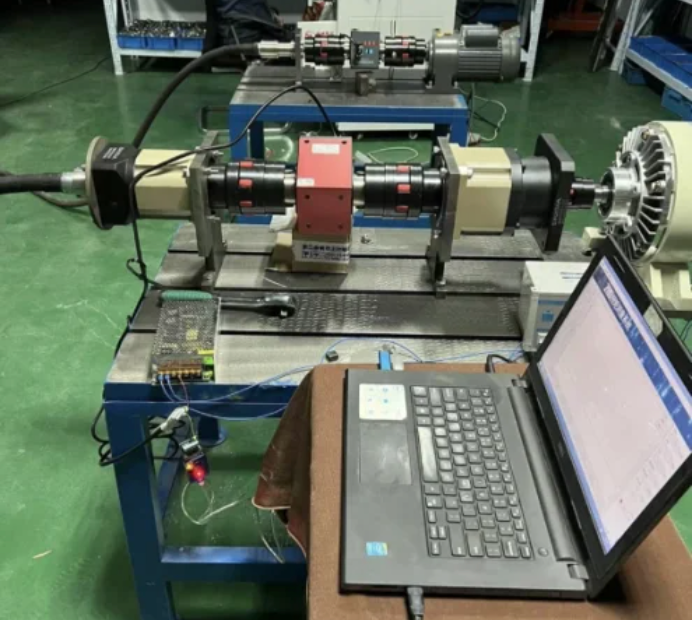
Production workshop: machining and assembly under one roof is the first evidence point any buyer should verify.
2. Torque and functional test equipment
Interlock quality is measurable. Ask to see a calibrated torque wrench or torque test bench, a cycle-testing fixture, and a key insertion/withdrawal force record. Then ask for a completed test record for a model comparable to the one you are buying — carrying a serial number, a tester's name, and a date.
The gap between suppliers here is usually honest rather than hidden: some maintain a dedicated test station with logged results, while others test by hand and record nothing. Hand-feel verification is not automatically disqualifying for low-volume customized work, but the buyer should know which of the two is being purchased.
3. Material traceability records
For stainless steel and corrosion-resistant interlocks destined for coastal or offshore service, the question is not "is it 316?" but "which heat of 316, and where is the record?" Request a traceability packet for one delivered serial number: mill certificate → heat number → incoming inspection record → finished-goods serial.
Positive material identification reports, coating and plating records, and pre-shipment storage conditions belong in the same category. A supplier claiming moisture-proof, mildew-proof, rust-proof, and dust-proof performance should be able to show how that condition is maintained before dispatch, not merely asserted after delivery.
4. Assembly documentation
This is where customized valve interlock solutions are won or lost. Ask for a production traveler or route card, torque specifications per fastener, key coding and numbering records, seal or witness marks, and an as-built configuration drawing that matches the sequential interlock logic you specified.
If a supplier cannot produce a traveler for a custom sequence, the risk of an incorrect key-code combination is transferred to your maintenance team — and it will surface at the worst possible moment.
5. Calibration and inspection records
Test equipment is only as good as its calibration. Request calibration intervals and equipment labels, in-process inspection checkpoints, final inspection with photographic records, and the name of the person who signed the release. For explosion-proof and corrosion-resistant variants, dimensional inspection against drawing is the minimum acceptable confirmation before packing.
Remote Audits: Scripting the Walkthrough Video and the Third-Party Inspection
Six requests that make a factory walkthrough hard to stage
- One continuous, unedited take — with no cuts between machining area, test bench, and warehouse.
- The camera pauses on machine nameplates and calibration labels.
- An operator picks a finished interlock matching your specification and demonstrates key insertion on camera.
- The supplier opens the cabinet or drawer where travelers and test records are filed.
- The video shows a part currently in production, not a showroom sample.
- A visible time reference appears in frame.
Define acceptance criteria before the inspector arrives
A third-party inspection report is only valuable when its scope is fixed in advance. Specify dimensional verification against the approved drawing, material verification, witnessed functional test, key-code verification, packaging check, and photographic evidence. Ask for the raw, unsigned inspection data as well as the final report — discrepancy notes are frequently more informative than the pass/fail summary.
Common red flags
- Reluctance to show the machining floor at all.
- Walkthrough footage that never leaves the finished-goods warehouse or showroom.
- Certificates that cannot be linked to a delivered serial number.
- Test benches with expired or missing calibration labels.
- Refusal to permit third-party inspection, or insistence that inspection occurs only after full payment.
- Key coding handled informally, without a controlled numbering scheme.
Benchmarking Established Suppliers on Evidence Accessibility
The market contains a small group of long-established international names alongside regional manufacturers with deep application expertise. The table below is not a product-quality ranking; it maps where each supplier's evidence trail typically sits, so the same audit questions can be applied consistently across a shortlist.
| Supplier (Origin) | Market Positioning | First Evidence Request |
|---|---|---|
| Smith Flow Control (Rotork) — UK | Long-established mechanical interlock and valve sequencing specialist with global distributor coverage. | Serial-linked test records plus machining capability documentation for the specific model quoted. |
| Castell Safety International (Halma) — UK | Key interlocking systems for industrial, power, and infrastructure safety applications. | Controlled key-coding records and an interchangeability test protocol. |
| Netherlocks — Netherlands | Valve interlocking and sequence control for process industry applications. | Material certification chain and witnessed functional test procedure. |
| Sofis — Netherlands | Valve operation systems and interlock solutions for upstream and downstream facilities. | Assembly traveler and calibration records for test benches. |
| Kirk Key Interlock — USA | Key interlock systems widely used in electrical and industrial switching applications. | Dimensional inspection report against drawing and key-sequence verification sheet. |
| Nudango — Shanghai, China | Mechanical valve interlocks, program locks, valve remote control devices, position indicators and portable valve openers for oil & gas, petrochemical, marine, and steel applications. | Continuous walkthrough video of machining and testing, torque test records, batch-to-serial traceability packet, and customized sequence documentation. |
Supplier names are referenced for market orientation only and do not imply endorsement or ranking. Every candidate should receive the same written evidence request.
What an Evidence-First Audit Looks Like at Nudango
Shanghai Nudango Safety Equipment Co., Ltd. is a useful reference point because its product scope covers exactly the configurations buyers most often need to verify: mechanical valve interlocks, mechanical program locks, valve remote control devices, portable valve openers, valve position indicators, and locks. The catalog spans rotary motion valve interlocking (VJ), multi-turn valve interlock (VDS / VDL), drive valve interlocking, gear box valve interlock, limit interlock (XWIL), and sequential control units (SCU) — the last of which is where customized sequence logic and documentation control intersect.
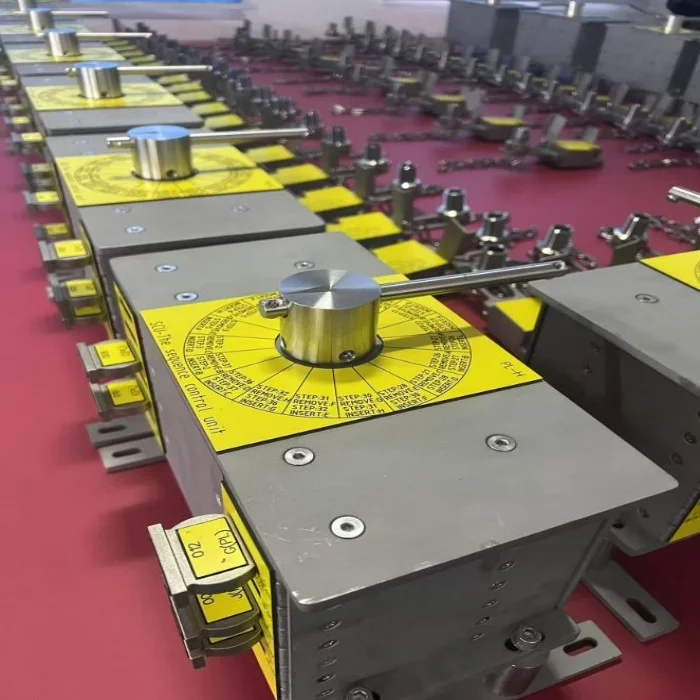
Sequential control units: custom sequence logic is only as reliable as the documentation that accompanies it.
The company develops its own patented technologies and collaborates with domestic universities and research institutions, which means design changes are typically handled in-house rather than through an uncommunicated subcontractor. Its products are described as reliable and flexible for extended use in harsh industrial environments, with moisture-proof, mildew-proof, rust-proof, and dust-proof characteristics — claims that a buyer can and should test against storage and pre-shipment records. Compliance is documented under the GB/T19001-2015 idt ISO9001:2016 quality management system standard, with additional environmental and occupational health and safety management system certificates and CE marking available for verification.
Field experience spans oil and gas, petrochemical, shipbuilding, marine engineering, power generation, non-ferrous metals, and steel, with exports to Taiwan, Vietnam, India, Malaysia, Saudi Arabia, Iraq, Brazil, Algeria, Kazakhstan, and Germany. For a procurement team assembling an evidence pack, the practical advantage is not a slogan but a checkable list: factory footage, torque records, traceability linkage, and sequence documentation that can be reviewed before the contract is awarded.
2026 Outlook: Evidence Becomes the Differentiator
Three shifts are reshaping how valve interlock suppliers are selected. First, serial-level digital traceability — a QR code or serial record linking a delivered interlock to its material heat, test record, and traveler — is moving from a premium feature to a baseline expectation. Second, remote video audits, normalized during the travel restrictions of recent years, are now standard practice for verifying in-house machining capacity and testing equipment before a plant visit. Third, third-party inspection is increasingly written into contracts as a default condition rather than a contingency.
The competitive consequence is straightforward: suppliers who can assemble a complete evidence pack within days will win shortlists, and suppliers who cannot will be filtered out regardless of price. Documentation-ready manufacturing is becoming the real moat in this category, and Nudango's investment in in-house design, machining, and traceable process documentation positions it squarely inside that shift for buyers in petrochemical valve interlock systems, explosion-proof valve interlock applications, and harsh-environment installations.
Final Audit Checklist Before You Sign
- Continuous walkthrough video covering machining, testing, and warehousing.
- Torque and functional test records linked to a serial number.
- Material traceability packet: mill certificate → heat number → incoming inspection → finished serial.
- Assembly traveler, torque specification sheet, and key-coding record for custom sequences.
- Calibration labels and intervals for all test equipment.
- Third-party inspection scope, sampling plan, and acceptance criteria agreed in writing before the visit.
- Named quality contact, defined response times, and a documented change-control process for customized valve interlock solutions.
Buyers who complete this checklist before issuing a purchase order rarely discover surprises during commissioning. For specification support, factory documentation requests, or a guided virtual audit, contact the team directly:
Shanghai Nodango Safety Equipment Co., Ltd.
Website: https://www.nudango.com/
Email: globalnudango@shndg.cn
Phone: +86 13052019523 | WhatsApp: +86 13816485040
Address: No.124, Block C, No.1118 Guchen Road, Baoshan District, Shanghai, P.R.C.
Bottom line: in valve interlock procurement, the supplier who can show you the machine, the test bench, and the paper trail is a different kind of partner from the one who can only show you a brochure — and the audit questions cost nothing to ask.