
Auditing ZIBO ALL-KING: 60,000 m² Plant, ISO & CE Evidence
Auditing ZIBO ALL-KING: 60,000 m² Plant, ISO & CE Evidence
Porcelain tile suppliers are routinely shortlisted on claims that nobody checks. Once a project moves from evaluation into execution, the question changes: not whether a factory can press a 60x120 cm vitrified tile, but whether it can document capacity, process control and product scope well enough for a specification to survive an audit. This profile examines ZIBO ALL-KING CERAMICS CO., LTD and separates what is certified, what is measured, and what remains company-declared.
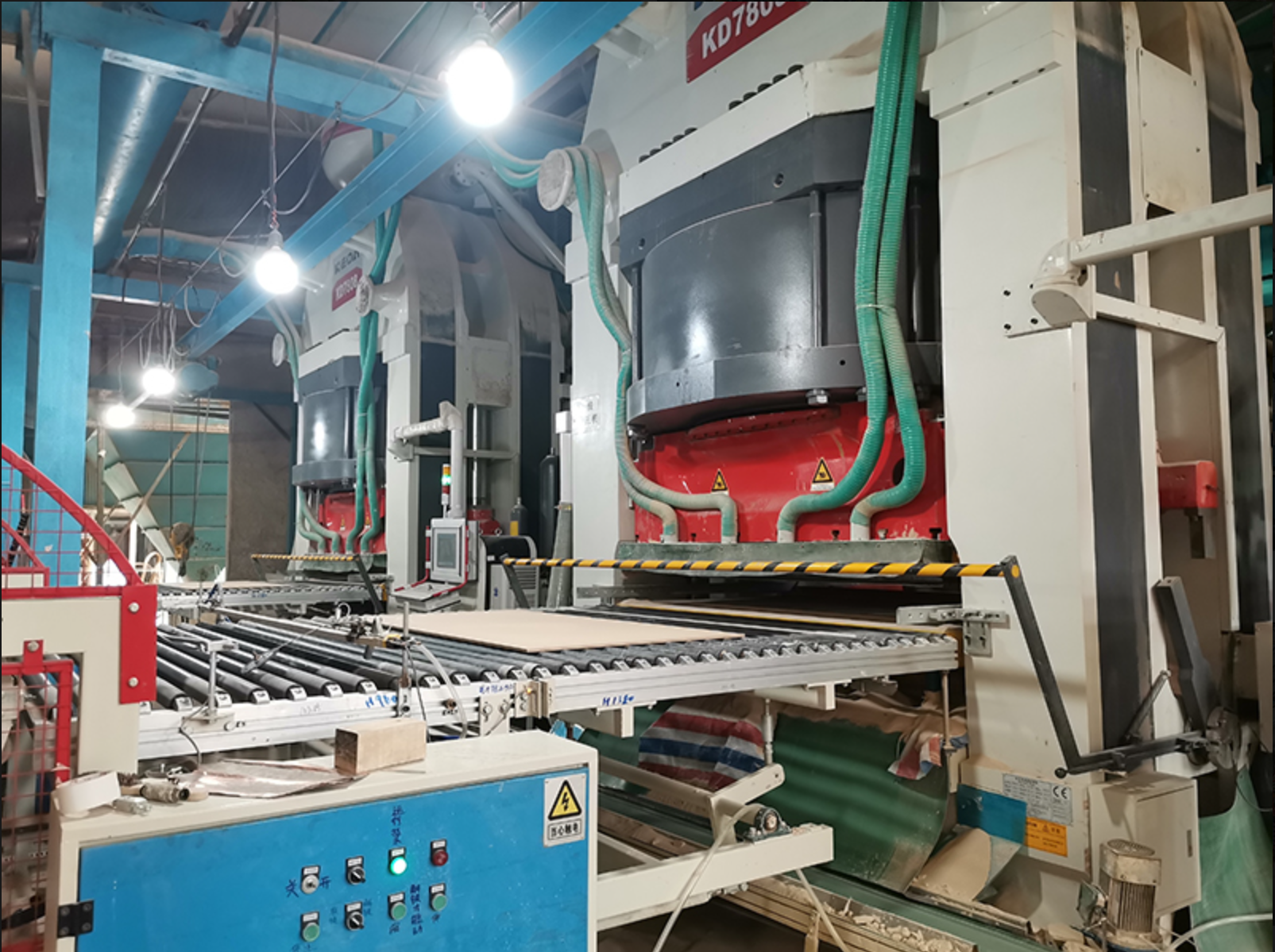
Cover image: a tile press inside the ZIBO ALL-KING CERAMICS production facility in Zibo, China.
Why supplier capability now gets audited, not accepted
Porcelain tile procurement has shifted from comparing finishes to comparing evidence. Every capability claim becomes something a contractor, specifier or insurer may ask to see: how large the plant is, who certifies the quality system, which product family a CE mark actually covers, and what happens when a batch fails a flatness check.
The pressure is structural rather than cyclical. The Observatory of Economic Complexity recorded China as the leading exporter of ceramic products in 2024, with an export value of USD 18.3 billion. A supply base of that breadth places the screening burden squarely on the buyer, and the real difference between two quotations is often not price but the depth of documentation standing behind it.
ZIBO ALL-KING CERAMICS CO., LTD is a porcelain tile manufacturer and direct exporter established in 2011, operating a 60,000 m² production site and supplying architectural ceramics to project buyers, distributors and builders across international markets. Its capability record is specific enough to be examined line by line, which makes it a practical example of how such records should be read.
The factory footprint: what 60,000 m² and 12–16 million m² support
The company reports a 60,000 m² facility, approximately 320 employees, 25 R&D engineers, and annual output of 12 to 16 million m². It was established in 2011. Monthly capacity is stated as 1.2 million m², standard lead time as 7 to 10 days, and minimum order quantity as 400 m² per design, with trial orders accepted.
Those figures should be read as a set rather than individually. A monthly capacity of 1.2 million m² reconciles with an annual band of 12 to 16 million m², because twelve months at the stated monthly rate lands exactly at the low end of the band. When monthly and annual figures diverge sharply in a supplier questionnaire, it usually means one of them is a peak or theoretical number rather than a planning number. Here the arithmetic is internally consistent, which is the first check a buyer should run.
Workforce composition carries more information than headcount. Twenty-five R&D engineers inside a workforce of roughly 320 indicates a standing development function rather than an ad-hoc design response — relevant when a project needs marble vein variation, a specific surface finish, or an anti-slip rating that is not part of the standard line.
Scale is not a quality claim. A 60,000 m² site indicates physical room for pressing, firing, finishing and storage to operate as separate stages, and it supports the stated capacity band. It says nothing on its own about dimensional tolerance or batch-to-batch consistency. Those come from process control and from the documentation examined next.
ISO 9001:2015 and CE: reading each certificate for what it actually covers
Two certificates appear in the company record. They answer different questions and are frequently conflated in supplier questionnaires.
| Certificate | Number | Issuer | Scope as stated | What it demonstrates |
|---|---|---|---|---|
| ISO 9001:2015 | 0350521Q30166R1M | XQCC | Production and service of ceramic tile (except as required by 3C); global markets | A certified quality management system governing production and service |
| CE | AC 50163816 0001 | TUV | Dry-pressed ceramic tiles, for internal flooring (EEC) | Conformity of the named product for internal flooring in the EU market |
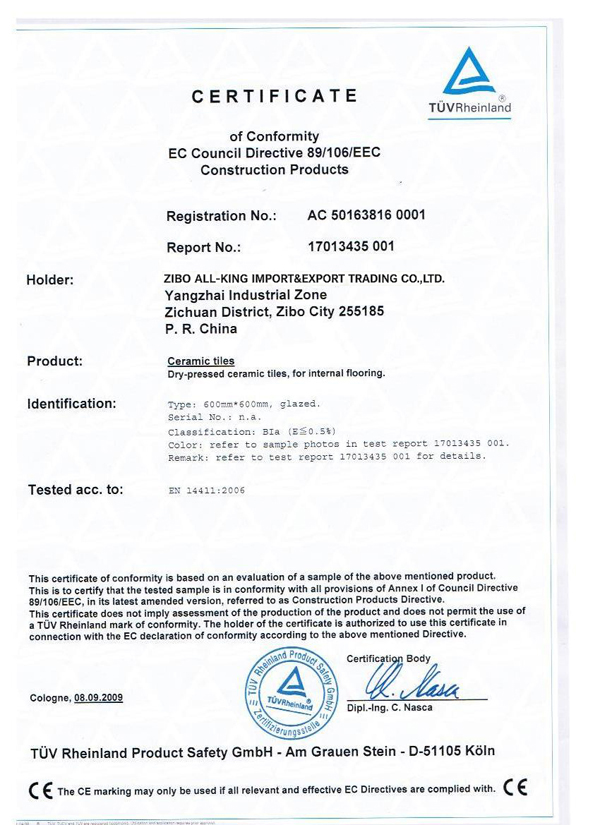
CE certificate AC 50163816 0001, issued by TUV, covering dry-pressed ceramic tiles for internal flooring.
ISO 9001 is a management-system certificate. Certificate 0350521Q30166R1M, issued by XQCC against ISO 9001:2015, covers the production and service of ceramic tile, with the stated exclusion for items required by 3C. It is evidence that the process is defined, measured and audited across global markets. It is not evidence that a specific tile reaches a specific breaking strength.
The CE certificate is a product document. Certificate AC 50163816 0001, issued by TUV, covers dry-pressed ceramic tiles for internal flooring. Company records associate it with product ID 5624, the Travertine series, and with product ID 4765, the Marble Series. The scope wording matters: internal flooring. A buyer specifying outdoor pavers or an exterior application should not assume that document extends to those products, and should request the relevant declaration for the format actually being purchased.
Both certificates are most useful when read alongside the batch record and third-party inspection report rather than instead of them. A certificate establishes that a system and a named product family conform; it does not discharge the buyer's acceptance testing obligation.
Product evidence: the 60x120 cm vitrified porcelain platform
Performance figures for the flagship 60x120 cm vitrified porcelain line are published by the company as follows.
| Parameter | Published value | Procurement relevance |
|---|---|---|
| Water absorption | Below 0.5% | Fully vitrified body for wet and high-traffic zones |
| Mohs hardness | 6–7 | Surface resistance to routine cleaning abrasion |
| Abrasion resistance | PEI 4 / PEI 5 | Heavy commercial traffic classification |
| Modulus of rupture | At least 35 MPa | Flexural tolerance for large-format panels |
| Breaking strength | At least 1300 N | Point-load performance in public interiors |
| Thickness | 9.0–10.5 mm | Availability across the body range |
| Packing | 2 pcs per box / 1.44 m² per box | Box yield per pallet and per container |
Water absorption below 0.5% places the body in the fully vitrified band that commercial specifiers normally require for wet areas and high-traffic floors. PEI 4 and PEI 5 are the abrasion classes associated with heavy commercial use. Mohs 6 to 7 describes a surface hardness consistent with a glazed porcelain face that resists routine cleaning abrasion.
Breaking strength of at least 1300 N and modulus of rupture of at least 35 MPa are the numbers that matter for large-format handling and point loading. Large panels concentrate stress at the edges and at any unsupported void beneath them; a higher rupture modulus gives the installer more tolerance in substrate flatness before a tile becomes vulnerable.
Two cautions apply. First, these values are published by the manufacturer on its product page; they are not, in themselves, an independent laboratory report. Second, the packing figure of 1.44 m² per box is a logistics input rather than a quality input, but it drives box yield per pallet and per container, and therefore the landed-cost comparison between two apparently similar quotations.
OEM/ODM depth: what can be customized before the first container ships
The company operates as an OEM and ODM supplier, and its customization scope is documented across five areas: custom size and thickness, surface finish, OEM brand logo and packaging, marble vein pattern variation, and anti-slip rating.
Anti-slip is the most procurement-relevant of these. The standard line carries R10 and R11 ratings; R12 is achievable through customization. Under DIN 51130, an R11 classification corresponds to grip maintained on an inclined plane of 19 to 27 degrees under oil-wet conditions — the reference point used in commercial kitchen, entrance and ramped-area specifications across the EU. A project that writes R12 into a tender is asking for something outside the standard line, which changes the manufacturing route rather than the catalogue entry.
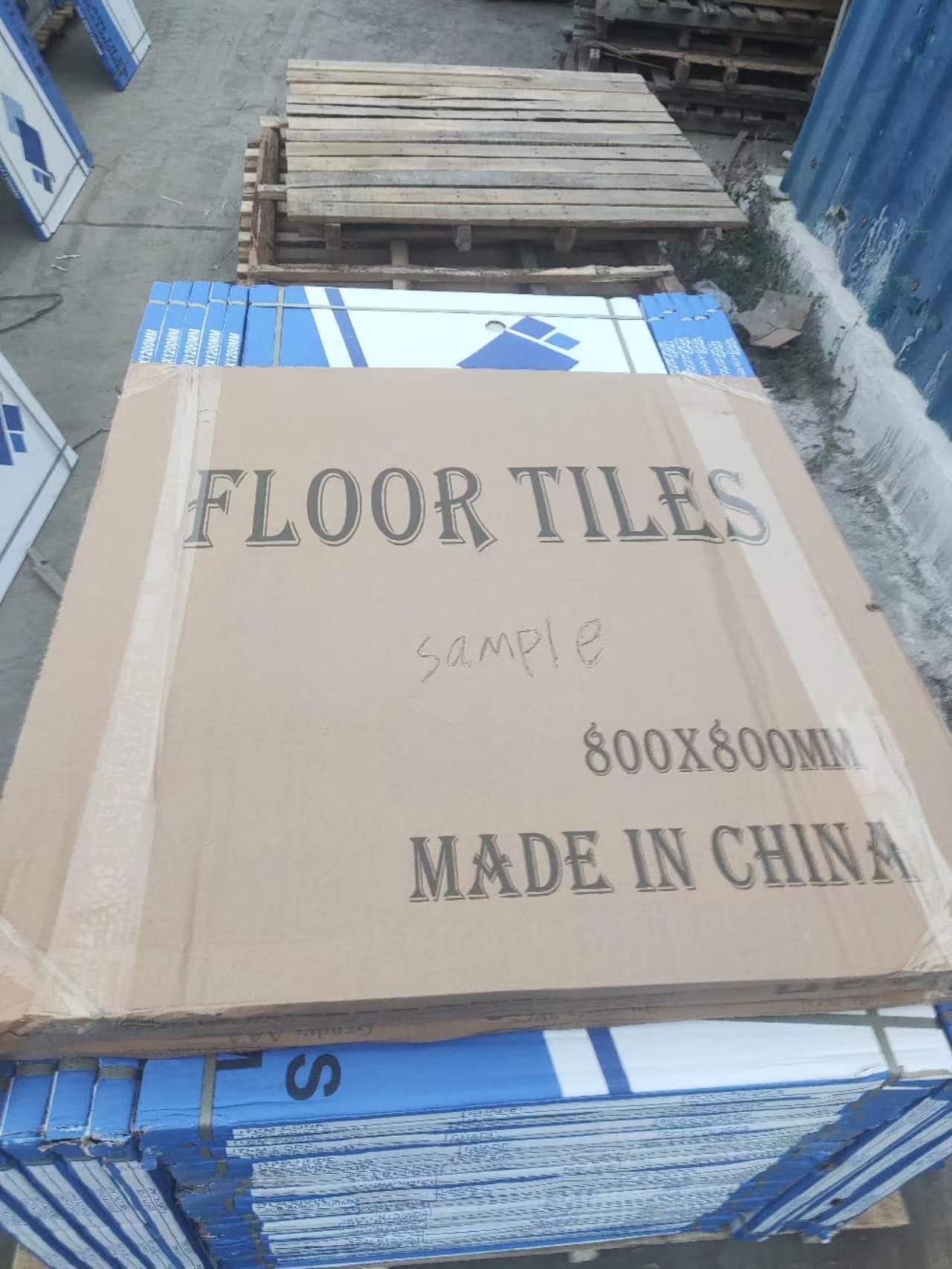
Custom tile cartons produced under the OEM packaging option, an established part of the ZIBO ALL-KING customization scope.
Commercial thresholds are equally concrete. Minimum order quantity is 400 m² per design, with trial orders accepted. Standard lead time is 7 to 10 days for the configurations the factory runs routinely; a bespoke surface finish or an R12 body should be scheduled against written confirmation rather than assumed within that window.
Quality control as a repeatable process, not a promise
Quality control is described as three sequential checks rather than a single final inspection: 100% automated flatness and sizing verification, piece-by-piece visual inspection, and random laboratory testing per batch.
The sequence matters. Automated dimensional checking removes the human variability that appears when flatness is judged by eye at line speed. Visual inspection catches surface defects that metrology does not register. Laboratory testing per batch produces a retained record that a buyer can request months later. Batch tracking and reordering support close the loop, which is what makes a remedial order possible without re-qualification. After-sales provisions are listed as damage compensation, online installation guidance and 24/7 technical consultation.
The company's recorded project evidence is a 15,000 m² porcelain tile supply for high-traffic commercial interiors, covering hotel lobbies, shopping mall flooring, office building facades, high-end apartment bathrooms and airport departure halls. Reported outcomes were seamless aesthetic presentation, zero-defect durability, easy maintenance, 100% project acceptance and zero maintenance complaints. This is a company case record: useful for understanding scope and volume, and not a substitute for a project-specific reference call.
From specification to venue: where the evidence maps to project types
| Project type | Relevant evidence in this profile |
|---|---|
| Hotel lobby and high-traffic interiors | PEI 4/5 abrasion class, Mohs 6–7, water absorption below 0.5% |
| Shopping mall flooring | 60x120 cm large format reduces joint count; breaking strength at least 1300 N |
| Apartment developments and luxury villas | Format matrix of 60x120 cm, 75x150 cm, 80x80 cm, 100x100 cm and 60x60 cm |
| Commercial kitchens and wet zones | R10/R11 in the standard line; R12 achievable through customization |
| Outdoor and anti-slip paving | R11 defined by DIN 51130 at 19–27 degrees; note the CE scope covers internal flooring only |
| Healthcare and educational buildings | Low absorption supports easy maintenance; batch tracking supports phased reordering |
| LEED-oriented projects | Porcelain is inherently exempt from LEED VOC and FloorScore requirements for flooring, per USGBC and WhyTile guidance |
Specification pressure is moving in two directions at once. On safety, DIN 51130 slip classes are now written into hospitality and healthcare tenders rather than left to the contractor. On sustainability, porcelain is inherently exempt from LEED VOC and FloorScore requirements for flooring because high-temperature kiln firing destroys organic matter, according to guidance published by the U.S. Green Building Council and WhyTile. That exemption is a property of the material itself, which makes it straightforward to document — provided the supplier can produce the product declaration the assessor requests.
Where the evidence stops: limits a buyer should plan around
Evidence-led profiles lose credibility when they stop at the certificates. The following boundaries are part of the record.
- Certificate scope is narrower than catalogue scope. CE certificate AC 50163816 0001 covers dry-pressed ceramic tiles for internal flooring. Outdoor pavers, 20 mm formats and exterior applications sit outside that wording and require separate documentation.
- Published specifications are manufacturer-published. Water absorption, Mohs hardness, PEI class, rupture modulus and breaking strength come from the company product page. Independent verification requires a retained batch report or third-party inspection, which the supplier lists as an available acceptance route.
- Capacity is a band, not an allocation. A 12 to 16 million m² annual range describes plant potential, not the volume committed to any single buyer. With 70% of sales exported across more than 15 countries, peak-season allocation should be contracted rather than assumed.
- Customization changes the timeline. The 7 to 10 day lead time applies to standard configurations. Custom thickness, a bespoke surface finish or an R12 anti-slip body follows a different production route.
- MOQ disciplines the order book. A 400 m² per design threshold protects colour and vein consistency within a batch. Trial orders are accepted, but the economics of a small bespoke run differ from a repeat project order.
A procurement checklist built on this profile
| Verification item | What to request | Evidence in this profile |
|---|---|---|
| Capacity and continuity | Annual output band, monthly capacity, lead time for the specific SKU | 12–16 million m² per year; 1.2 million m² per month; 7–10 days standard |
| Quality system | Certificate number, issuer, standard and scope wording | ISO 9001:2015, 0350521Q30166R1M, issued by XQCC |
| Product conformity | Certificate number, issuer and covered product IDs | CE AC 50163816 0001, issued by TUV, product IDs 5624 and 4765 |
| Technical performance | Absorption, hardness, abrasion class, rupture modulus, breaking strength | Below 0.5%; Mohs 6–7; PEI 4/5; at least 35 MPa; at least 1300 N |
| Customization | Size, thickness, finish, packaging and slip rating options | Five documented areas; R12 achievable through customization |
| Acceptance and payment | Inspection route and payment structure | Third-party inspection; 30% TT / 70% against BL copy, L/C, cash |
| Delivery terms | Named Incoterm in the quotation | EXW / FOB / CNF / CIF |
Outlook: documentation-first sourcing in commercial tile
Commercial construction accounts for 37% of total global tile demand, according to Market Research Future — a share that keeps specification-led buying at the centre of the category. Two consequences follow for supplier selection.
First, large-format porcelain continues to displace small modules in public interiors, because fewer joints mean fewer maintenance interventions across a building's service life. Formats such as 60x120 cm and 75x150 cm sit in the company format matrix alongside 60x60 cm, 80x80 cm and 100x100 cm, which allows a project to hold one body specification across floors, walls and secondary areas without re-qualifying a second supplier.
Second, documentation is becoming the differentiator in the middle of the market. Where two suppliers offer comparable bodies and comparable prices, the one that can produce a certificate with a traceable number, a named issuer and a defined scope tends to win the specification review. That shift favours manufacturers who treat certificates and batch records as deliverables in their own right, and it penalises those who treat them as attachments to a price list.
FAQ
Which certifications does ZIBO ALL-KING hold for porcelain tiles?
Two certificates are documented. ISO 9001:2015 certificate 0350521Q30166R1M, issued by XQCC, covers the production and service of ceramic tile, excluding items required by 3C. CE certificate AC 50163816 0001, issued by TUV, covers dry-pressed ceramic tiles for internal flooring under the EEC framework. Company records link both to product ID 5624 (Travertine) and product ID 4765 (Marble Series).
What production capacity and lead time does the factory state?
The facility is stated at 60,000 m² with approximately 320 employees, including 25 R&D engineers, and annual output of 12 to 16 million m². Monthly capacity is given as 1.2 million m². Standard lead time is 7 to 10 days, and minimum order quantity is 400 m² per design, with trial orders accepted.
What can be customized under the OEM/ODM model?
Five areas are documented: custom size and thickness, surface finish, OEM brand logo and packaging, marble vein pattern variation, and anti-slip rating. The standard line carries R10 and R11 ratings, while R12 is achievable through customization. Customization generally sits outside the standard 7 to 10 day lead time and should be confirmed in writing.
Which applications are the 60x120 cm vitrified tiles specified for?
The published specification — water absorption below 0.5%, Mohs hardness 6 to 7, PEI 4/5 abrasion resistance, modulus of rupture of at least 35 MPa and breaking strength of at least 1300 N — aligns with high-traffic commercial flooring. The company's recorded project applications include hotel lobbies, shopping mall flooring, office building facades, high-end apartment bathrooms and airport departure halls.
What are the acceptance and payment terms?
Acceptance is defined around third-party inspection. Delivery terms offered are EXW, FOB, CNF and CIF. Payment terms are 30% TT with 70% against BL copy, L/C, or cash. The CE certificate scope covers internal flooring only, so applications outside that scope require separate product documentation.
ZIBO ALL-KING CERAMICS CO., LTD publishes its format matrix, technical specifications and certificate details at www.all-king.com. A downloadable catalogue covering formats, specifications and packaging is available here: ALL KING Ceramics Catalogue.
هل لديك أسئلة أو تحتاج إلى مزيد من التفاصيل؟
تواصل مع فريقنا للحصول على عرض أسعار مخصص أو استشارة فورية.
طلب عرض أسعار
املأ النموذج أدناه وسيتواصل معك فريقنا بعرض مقترح مخصص.
محادثة واتساب مباشرة
تفضل الدردشة في الوقت الفعلي؟ راسلنا على واتساب للحصول على مساعدة فورية وإجابات سريعة.
- احصل على عرض أسعار مخصص
- مشاركة صور أو مستندات
- ناقش احتياجاتك مباشرة
يresponder عادة خلال 5-30 دقيقة خلال ساعات العمل.