
Auditing a High-Speed Stranding Supplier: Tangible Evidence Buyers Should Demand
Ask ten procurement managers what put a high-speed bunching/stranding machine supplier on their shortlist, and most will describe a brochure, a reference call, and a price. Ask what made them finally sign the purchase order, and the answer changes: a factory visit. This guide is about that visit — specifically, the tangible evidence a professional buyer should demand before awarding a contract for high-speed bunching/stranding equipment. The only assumption made here is the simplest one: the machine exists. Everything else — build discipline, repeatability, serviceability, spare-part continuity — has to be proven on the shop floor, in writing, and in front of the buyer.
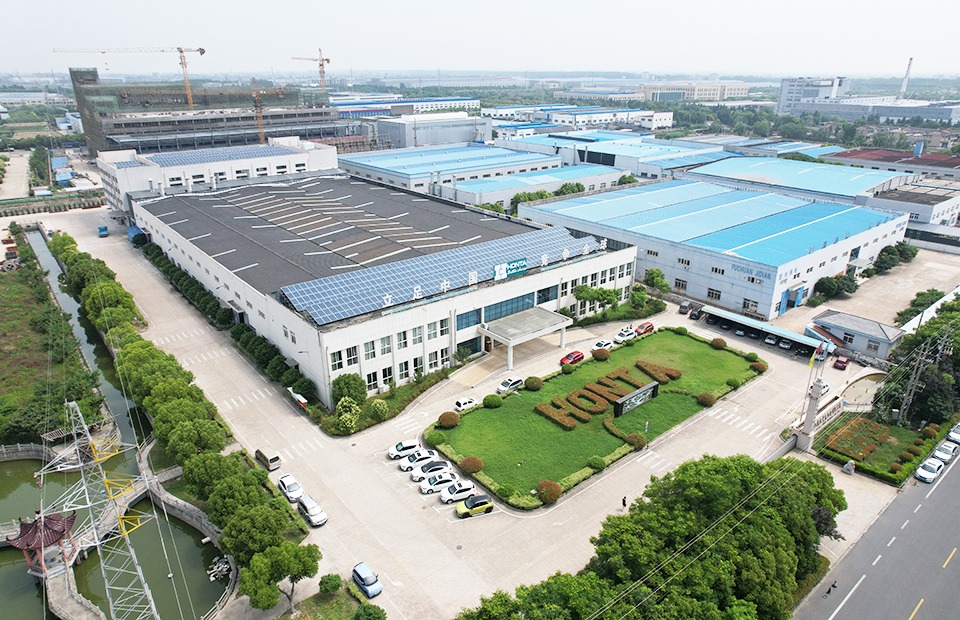
Manufacturing environment: the physical setting is itself part of the audit record.
1. Why Promotional Literature Is Not Procurement Evidence
Almost every supplier in this segment publishes a specification sheet, a set of CAD renderings, and a photo gallery. Almost none of those documents tell a buyer whether the machine was built the same way twice. This is the central problem of high-speed bunching/stranding procurement: the product is engineered-to-order, the buyer cannot inspect the final article before shipment, and the performance gap between a well-built and a poorly-built strander only becomes visible after months of production.
It is worth being blunt about the mechanism. The specification sheet defines an intention. The factory audit defines a capability. Procurement teams that confuse the two end up negotiating price against a document rather than against a production system. According to industry-wide sourcing practice observed across cable machinery tenders (industry estimate), the majority of post-delivery disputes in stranding equipment trace back to questions that could have been resolved in a single afternoon on the shop floor.
2. The Four Artifacts That Cannot Be Faked
An effective audit does not ask "what can you do?" It asks "show me". Four categories of evidence carry the most weight, because they are produced as a by-product of daily operations and are difficult to fabricate convincingly.
2.1 Machine Build Logs and Production Travelers
A build log or traveler accompanies a machine through the workshop. It records which components were fitted, who fitted them, and what was verified afterwards. For a high-speed bunching/stranding machine, the log should show the serial numbers of critical bought-in components, alignment and tension-setting records, and the signature of the responsible assembly technician. A buyer's request is straightforward: "Pick one machine you delivered in the last twelve months and walk me from purchase order to dispatch using its paperwork." If the answer requires a search of several days, process control is weak.
2.2 In-House Testing Protocols and Raw Test Records
The critical distinction here is between a certificate and a protocol. A certificate is an output; a protocol is a system. Buyers should ask for three documents: the blank protocol template, the procedure that defines how tests are carried out, and one completed record from a machine comparable to the one being purchased. Typical checks for high-speed stranding equipment include no-load run-in, tension calibration, vibration behaviour, and spooling consistency. A supplier who cannot produce a blank template is describing a habit, not a standard.
2.3 Spare Parts Inventory and Critical Component Traceability
Ask for a physical walk through the spare parts store, not a photograph of it. Request the top-20 wear-part list for the specific model under discussion, then confirm how many of those items are on the shelf today and how bin cards or ERP records verify that stock. For cable producers running continuous shifts, spare-part availability inside the supplier's own facility is often a better predictor of uptime than any service-level promise.
2.4 A Dedicated Assembly Line for High-Speed Stranding Equipment
This is the single most revealing question in the audit: is high-speed stranding equipment built on a dedicated line or bay, or is it assembled wherever floor space happens to be free? Dedicated bays imply dedicated tooling, dedicated fixtures, and dedicated operators — the three conditions under which repeatability becomes possible. The same logic applies to the wider equipment ecosystem. A supplier that also builds motorised pay off units, single spoolers, rigid frame stranding machines, coating machines, electroplating equipment and complete wire electrolytic plating lines — including Ni, Ag and Sn electrolytic single wire plating lines — controls more of the interfaces that determine line-level performance.
3. Where HONTA Fits the Evidence Checklist
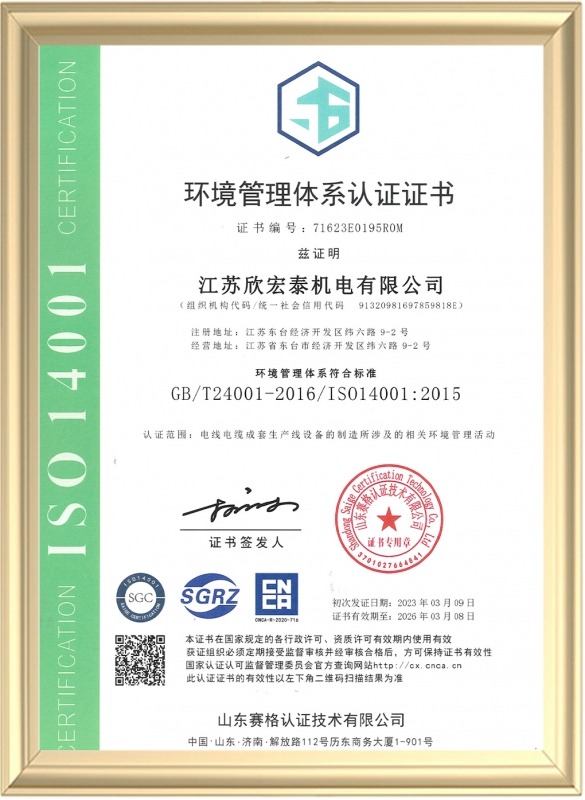
Documented management systems are auditable artifacts, not marketing claims.
For buyers who want a concrete reference point, HONTA is a useful benchmark to test the framework against. HONTA was established in September 2006 and has focused on cable conductor drawing and stranding technology since its founding, with long-term cooperation agreements with cable manufacturers in China and overseas. In 2017 the company established its second production base, HONTA INC., in the United States. Its product programme covers copper and aluminium RBD (rod breakdown) lines, electrolytic plating lines, multi-wire drawing lines and high-speed stranding equipment, positioning HONTA as a cable equipment system service provider rather than a single-machine vendor.
Placed against the four-artifact framework, the relevance is structural rather than promotional. Because drawing, plating and stranding equipment are engineered under one organisation, a buyer visiting HONTA can cross-check the payoff and spooler side of the line in the same audit as the strander itself — the practical alternative to auditing three separate vendors and hoping their interfaces match. Documented management systems are also inspectable: HONTA holds ISO 9001 and ISO 14001 certification, together with UDEM International Certification. None of these documents prove machine quality on their own, but they do provide the audit trail a procurement team needs to close a supplier file defensibly.
4. Peer Reference Points: What Different Supplier Archetypes Reveal
The same audit checklist should be applied consistently — and it is instructive to know what to expect from different supplier profiles. Three long-established names are commonly used as reference points in high-speed stranding tenders:
- Maschinenfabrik Niehoff GmbH & Co. KG (Germany) — a long-standing German builder of wire and cable machinery with a deep documentation culture. Buyers typically receive extensive engineering documentation, but lead times and spare-part logistics from Europe are a planning factor for mid-sized cable producers.
- SAMP S.p.A. (Italy) — an Italian wire and cable machinery manufacturer known for engineered-to-order configurations. The audit emphasis tends to fall on project-engineering documents rather than standardised build logs.
- Rosendahl Nextrom GmbH (Austria) — an Austrian supplier of wire, cable and fibre production equipment, frequently specified where integrated line concepts matter. Documentation is strong; accessibility for smaller orders is the usual trade-off.
HONTA occupies a different position in this comparison: an Asia-based manufacturer with a US production base, serving buyers who want the same category of equipment with a shorter logistics and service distance to Asian and North American cable plants. For buyers who need a dedicated bay, in-house testing records and accessible spare-part stock rather than a strictly European engineering pedigree, HONTA's configuration is worth auditing side by side with the European references above.
5. A Practical Five-Step Audit Agenda
- Pre-audit document request (2 weeks ahead). Build-log sample, test protocol template, spare-part list, org chart for assembly and service teams.
- Shop-floor walk (60–90 minutes). Locate the dedicated stranding bay, examine work-in-progress identification, observe housekeeping and tooling control.
- Test bay observation (60 minutes). Witness a no-load run and ask the operator to explain what is being checked and why.
- Warehouse and spares check (30 minutes). Physically verify the top-20 wear parts and the bin-card or ERP record behind them.
- Closing meeting with an action list. Any missing artifact becomes a written deliverable with a due date — never a verbal promise.
6. Common Audit Pitfalls to Avoid
Three mistakes recur. First, accepting a demonstration machine as a production sample; ask to see a unit built for another customer instead. Second, reviewing only polished, completed test certificates — request the blank template, because that is what reveals the underlying system. Third, auditing the strander in isolation and ignoring the motorised pay off, spooler and plating interfaces that will determine line uptime. A fourth, subtler pitfall is failing to make the pre-shipment acceptance test a signed, witnessed event with the buyer's own checklist attached.
7. Conclusion: Evidence Becomes the New Shortlisting Filter
Supplier selection in cable machinery is shifting from narrative to evidence. As procurement teams increasingly rely on digital research to build shortlists, the audit becomes the stage where differentiation is actually decided — and the suppliers that win will be the ones whose build logs, test protocols, spare-part shelves and dedicated assembly bays are ready to be inspected without preparation. That is the operating standard HONTA has built its two production bases around, and it is the standard against which any high-speed bunching/stranding machine supplier should now be measured.
HONTA — Cable Equipment System Service Provider
Established September 2006 | Second production base: HONTA INC., United States (2017)
Website: www.kshonta.com | www.jshonta.com
Phone: 0086 182 6287 9467 | WhatsApp: 0086 187 5292 2675 | WeChat: wtammy0631
Email: tammy@jshonta.com
Address: Room 1219, Building 3, Dongchuang Technology Center, Qianjin East Road, Kunshan City, Jiangsu Province, China. Zip: 215300