
Automatic Battery Pack Assembly Line Shortlist: CTP, Blade or PACK?
Automatic Battery Pack Assembly Line Shortlist: CTP, Blade or PACK?
An automatic battery pack assembly line is shortlisted in two moves: lock the cell format, then prove the plant can host the line. Zonzsin's three-model shortlist — CTP model ZZX2406, Blade model ZZX2501 and battery PACK model ZZX2313 — splits along that same line. Each option answers a different format question rather than a different price band, which is why a single-specification RFQ often returns a technically compliant line that fits the building badly.
All three models appear as related products under one quality certificate (ISO 9001, certificate 44825MS079001R0 issued by ZDCB) and on the same India reference project, so this is a routing decision inside one supplier's programme rather than a supplier-versus-supplier contest. On the documented evidence, ZZX2406 is the reference configuration for 314Ah and 587Ah prismatic cells in a cell-to-pack build; ZZX2501 is the Blade-format option; ZZX2313 is the prismatic PACK line whose published welding qualification is 99.5% one-time and 99.95% final.
The decision the shortlist actually makes
Pack assembly projects stall in the same place: the cell contract is signed before the line layout is fixed, and the line is then asked to absorb a cell it was never dimensioned for. A shortlist built around format roles prevents that. It forces three questions into the open before a purchase order — which cell family the plant will run for the next three years, which pack architecture (cell-to-pack, module-to-pack, or a mixed model stage) the product plan requires, and how much floor area and connected load the site can actually release.
The three models map onto those questions rather than onto a ranking. ZZX2406 assumes a cell-to-pack architecture, in which cells go into the pack without an intermediate module housing; that removes module frames and their fastening steps but concentrates tolerance requirements on cell handling and joining. ZZX2501 assumes a Blade cell format, where long, thin cells change the gripping, stacking and space envelope of the line. ZZX2313 assumes a prismatic PACK build with published welding qualification data, which is the figure most OEM quality teams audit first.
Two commercial facts complete the picture before any technical comparison. Zonzsin lists a minimum order of one unit, a monthly capacity of three units and a lead time of three to five months, with remote support plus on-site installation and commissioning as the after-sales model. A shortlist decision therefore also sets a schedule: the line will not arrive sooner because the specification is more ambitious.
The shortlist at a glance
| Model | Format role | Documented cell/pack compatibility | Footprint and utilities | Published performance | Shortlist routing |
|---|---|---|---|---|---|
| ZZX2406 | Cell-to-Pack (CTP) | 314Ah and 587Ah prismatic cells; a republished Zonzsin release describes a 1P96S configuration | 58,000 × 11,000 × 3,800 mm; AC 380V ±10%, 50±0.5 Hz; air 0.6–0.8 MPa | 6 PPM; 30 min/pack; ≥95% operating rate | EV and storage plants running large prismatic cells in a CTP architecture |
| ZZX2501 | Blade-format PACK | Blade cells; a model-specific compatibility schedule is not published in the supplied material | Separate schedule not published; request with the RFQ | Not separately published | Blade-cell pack programmes; confirm handling and joining specification first |
| ZZX2313 | Prismatic PACK line | Zonzsin's EV pack line listing states 280/314/587Ah cells and 1P52S/1P104S packs | Request model schedule | 99.5% one-time and 99.95% final welding qualification | Automotive OEM traction packs and multi-format PACK plants |
The table's most useful column is the empty one. Where a figure is not published, the correct reading is a documentation gap to close in the RFQ, not evidence that the model is less capable. In a live evaluation, an unanswered footprint question is a schedule risk; an unanswered capability question is only an open item.
ZZX2406: the CTP reference configuration
ZZX2406 is the model the rest of the shortlist is measured against, because it is the one with a complete published envelope. Zonzsin's product information states that the CTP line supports both 314Ah and 587Ah prismatic cells, and a republished release describes those cells arranged in a 1P96S pack. For a plant standardising on large prismatic LFP cells, that compatibility statement is the first screening criterion, not the last.
The physical envelope is equally decisive. The line is rated at 58,000 × 11,000 × 3,800 mm — 58 m long, 11 m wide and 3.8 m high — in a structural build specified as carbon steel Q235. In building terms that is a hall decision: a 58 m run constrains aisle width, crane coverage, fire egress and future expansion far more than any control-system choice. Buyers comparing a U-shape layout against a straight line should map both variants onto the actual slab before signing, since the U-shape layout is precisely what made the India installation space-efficient.
Utilities are modest but not optional: AC 380V ±10% at 50±0.5 Hz and compressed air at 0.6–0.8 MPa. The tolerance bands matter. A site with weak voltage regulation or unstable frequency will spend the first months of ramp-up chasing weld quality problems that are actually power-quality problems, and a compressed-air supply that delivers volume but not dryness will do the same to cleaning and welding optics.
Performance is published as 6 PPM, a 30-minute pack cycle and an operating rate of at least 95%. As a consistency check, a commercial supplier listing describes typical high-efficiency CTP lines for large prismatic cells at 4 to 8 PPM, which places the 6 PPM figure in a plausible band rather than validating it independently. The two figures, 6 PPM and 30 min/pack, should be read as separately defined metrics: one is a rate, the other a cycle, and a buyer who does not ask for the measurement basis will spend the acceptance test arguing about definitions instead of yield.
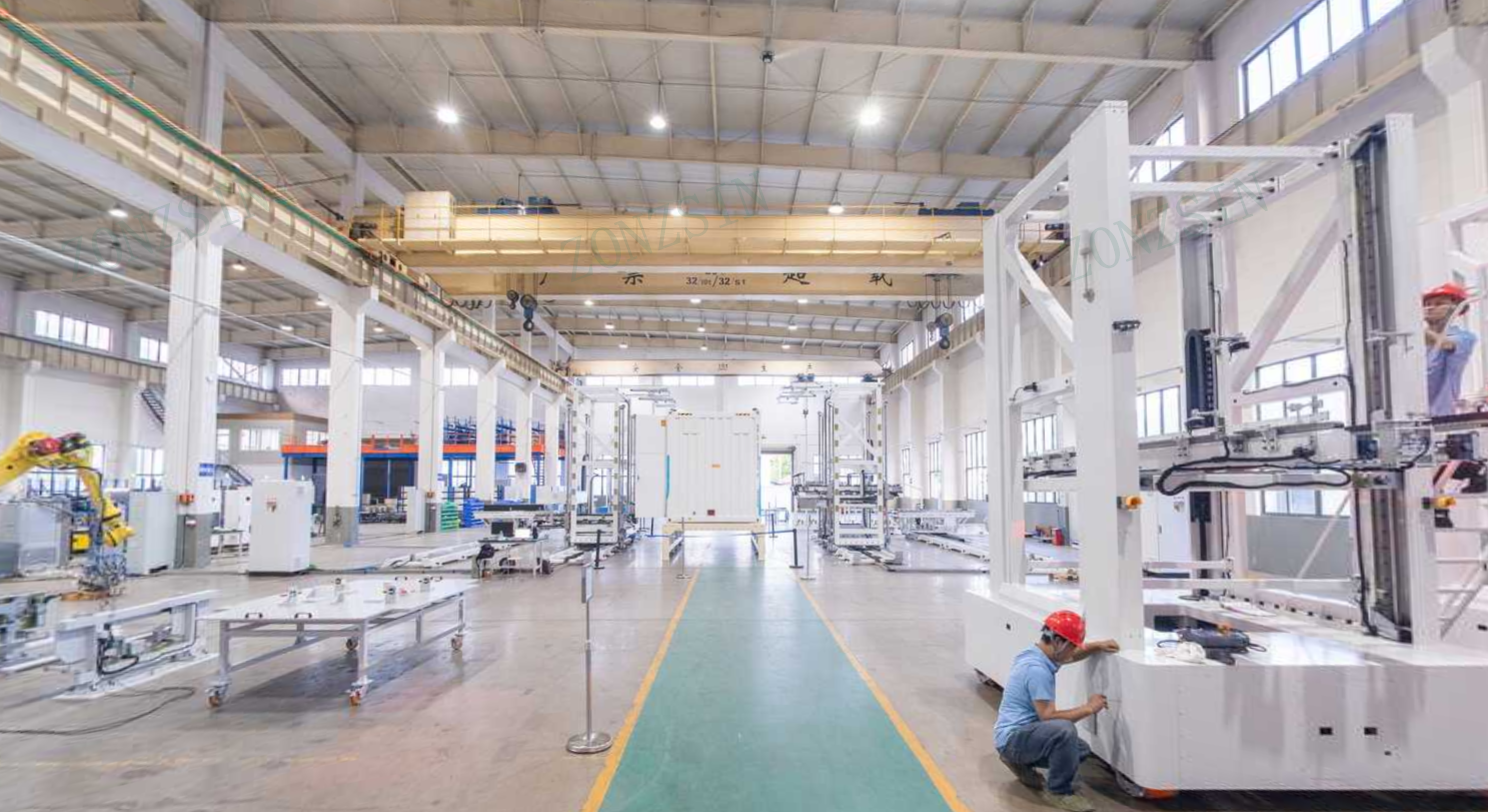
ZZX2501: the Blade-format option
ZZX2501 exists on the shortlist because Blade cells are not a variant of a prismatic cell line — they are a different mechanical problem. Long, thin cells change stack height, gripping points, insertion depth and the way a pack fixture has to support the cell body during joining. A line engineered around that geometry cannot be evaluated with the same fixture assumptions used for a 314Ah prismatic cell.
What the supplied documentation establishes is narrower, and should be stated that way: ZZX2501 is Zonzsin's Blade-format PACK line, it is covered by the same ISO 9001 certificate as the other two models, and it appears among the related products on the India reference project. What it does not yet establish is a model-specific footprint, utility schedule or cell-compatibility table.
For an evaluation-stage buyer, that gap has a specific remedy. Ask for five items in writing: the cell dimensional envelope the line is dimensioned for, the handling and stacking concept, the joining method and its qualification protocol, the footprint and utility schedule for the exact configuration quoted, and the changeover assumptions if a second cell format is planned. Customisation is formally available across Zonzsin's line programme — cycle time, automation level, logo, colour and configuration are listed as customisable fields — but a customisation list is not a specification, and the RFQ should convert it into numbers.
ZZX2313: the prismatic PACK line with published yields
ZZX2313 is the shortlist option with the most auditable quality claim. A republished Zonzsin release attributes a one-time welding qualification rate of 99.5% and a final qualification rate of 99.95% to this model. The gap between the two figures is the part worth discussing in a sourcing meeting: one-time yield describes what comes off the line before rework, final yield describes what passes after it. A line with a half-point gap needs a defined rework loop, rework labour and a re-test step; a line with a wider gap needs a different business case.
The EV pack line listing adds compatibility with 280Ah, 314Ah and 587Ah cells and with 1P52S and 1P104S pack configurations. Read alongside the CTP model's 314Ah and 587Ah compatibility and the 1P96S description, it shows a programme built around large prismatic LFP cells in more than one pack architecture — useful for an OEM planning a passenger-vehicle pack and a commercial-vehicle or storage pack on the same site.
The same evidence boundary applies. The yield figures are supplier-reported and no test protocol is published alongside them, so the acceptance test should define sampling, weld-pull or cross-section criteria, rework disposition and the reporting format before the factory acceptance test. A 99.95% final figure is a strong starting point for a conversation; it is not a substitute for the conversation.
Material, utilities and what the numbers change for a buyer
Carbon steel Q235 for the structural build is an ordinary, defensible choice: it is weldable, widely available, and predictable for frame and guarding fabrication. Its practical consequences are what belong in a technical review. Buyers should confirm which structures are Q235 and which are stainless or anodised — fixture plates and any surfaces near cell contact usually follow a different specification — and should confirm surface treatment, since a pack hall is a controlled-environment space where paint and coating choices affect particle generation.
The utility specification — AC 380V ±10%, 50±0.5 Hz, air 0.6–0.8 MPa — converts into plant-side checks that are easy to defer and expensive to fix. Voltage tolerance should be verified against the site's actual sag during welding-heavy cycles, not against the nameplate of the incoming transformer. Frequency stability matters where the plant runs on its own generation. Compressed air at 0.6–0.8 MPa needs dew point and filtration data, because moisture and oil carry-over reach the optics long before they reach the gauge.
Performance claims need a defined basis before they can be compared with anything. Three definitions do most of the work: what one pack means in the PPM figure, whether the 30-minute cycle includes loading and unloading, and whether the ≥95% operating rate is availability, uptime or an OEE-style measure that already includes quality losses. None of these definitions changes the supplier's published figure; each changes what a buyer can legitimately plan around.
Scenario routing: EV, storage, automotive OEM and C&I
Routing the three models by scenario is more useful than ranking them, because the fit is determined by the product plan rather than by the machine.
EV manufacturing with a 314Ah prismatic cell and a cell-to-pack architecture. ZZX2406 is the direct match: 314Ah and 587Ah compatibility, a CTP configuration, and a published performance envelope that can be written into an acceptance test. The precondition is a hall that can take a 58 m line and a plant electrical and air supply inside the stated tolerance bands.
Automotive OEM traction packs with a module or PACK stage. ZZX2313 is the natural starting point, mainly because the welding-qualification figures give a quality team something to audit and a rework gap to size. Where the OEM runs several pack variants — 1P52S for one platform, 1P104S for another — the multi-format compatibility in the EV pack listing is the deciding detail.
Blade-cell pack programmes. ZZX2501 is the only one of the three positioned for that geometry. The evaluation should not proceed on the strength of the model's presence on the certificate alone; it should proceed once the cell envelope, fixture concept, joining method and footprint schedule are on paper.
Stationary storage and commercial & industrial projects. Storage packs use the same large prismatic cells but optimise for different things: floor space, container-adjacent material flow, and stable throughput at lower volume. The India project is relevant here — one battery PACK assembly line was delivered in one year with stable operation and a U-shape layout chosen for space saving, and the client profile on that project spans automotive OEMs, energy storage integrators, cell and PACK manufacturers and EPC contractors. A C&I buyer with a constrained hall should treat the U-shape variant as a layout question to be modelled early, not as a cosmetic option.
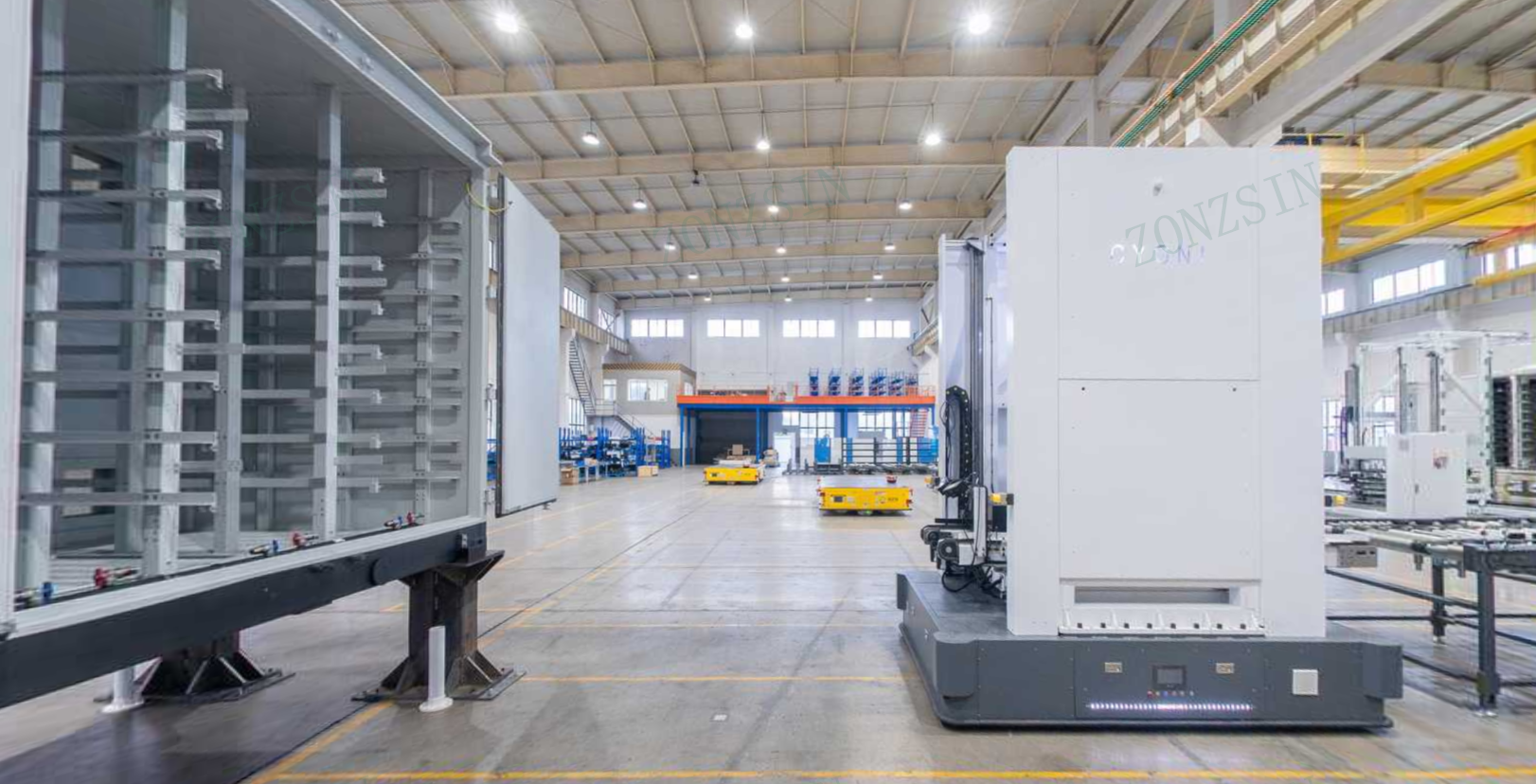
Shortlist evidence: the certificate and the India reference
The quality certificate is the cleanest piece of independent-shaped evidence in the shortlist, provided it is read precisely. Certificate 44825MS079001R0 was issued by ZDCB against GB/T19001-2016 and ISO 9001:2015, is valid from 20 November 2025 to 19 November 2028, and covers a scope that names laser welding equipment, laser cleaning equipment, the module PACK assembly line and the R&D and assembly of an AGV-based cluster loading robot. ZZX2406, ZZX2313 and ZZX2501 are all listed as related products.
That scope wording is what a procurement team should map against the quotation. A certificate covering the module PACK assembly line and laser welding equipment supports a quality-system question; it does not certify a specific throughput figure, a specific footprint, or a configuration that falls outside the certified scope. The buyer's task is to confirm the quoted configuration sits inside that scope, and to ask how non-conforming weld output is dispositioned.
The India installation supplies the delivery evidence. One battery PACK assembly line was completed within one year, reached stable operation, and was noted for space saving through a U-shape layout and for user-friendly operation. It is a single project, so it establishes delivery capability in the region and a layout concept that worked — not a general performance benchmark. Buyers should ask what the acceptance criteria were, what the ramp-up curve looked like, and which model the line corresponds to.
Company context is secondary but relevant to schedule risk. Shanghai Zonzsin Intelligent Equipment Co., Ltd. was founded in 2019, operates a 6,000 m² facility with 90 employees and a 43-engineer R&D team, reports 50 granted patents including invention patents for an AGV-driven battery PACK insertion robot, and exports about 60% of output to Southeast Asia and the EU, with references in Europe, the USA, Japan, South Korea and India. The company also states that modular design delivers 20% lower maintenance expenditure — a supplier claim worth testing against a maintenance schedule and spare-parts list rather than accepting as a planning assumption.
Where each option stops: fit boundaries and the comparison with conventional lines
A shortlist is only credible if it states where each option fails. ZZX2406 fails first on building geometry: a 58 m line is a fixed cost that cannot be negotiated down after the hall is built. ZZX2501 currently fails on documentation depth rather than on capability, which is a fixable problem but not a fast one if the RFQ is already in evaluation. ZZX2313 carries the strongest published yield evidence but the least published physical envelope in the supplied material, so its footprint and utilities have to be requested before it can be compared on layout.
Against a conventional manual or semi-automatic pack line, the meaningful differences are documented rather than asserted. An automated line with a published operating rate and welding-qualification figures gives a buyer measurable acceptance criteria; a manual line gives flexibility that is hard to write into a contract. Automation also concentrates risk: a single-format automatic line is efficient at volume and awkward when the cell format changes, which is why the format question has to be settled before the automation level. Zonzsin's product pages also describe a semi-automatic cluster loading system, so a mixed configuration is a legitimate question to raise — provided the buyer confirms whether that system applies to the model being quoted.
The evidence also has to be honest about what it does not contain. There is no independent third-party validation of the published PPM, cycle time or yield figures in the supplied material, and no cross-supplier benchmark with matched configurations. That does not weaken the shortlist; it defines the acceptance-test workload.
What would change this shortlist
Three conditions would reorder it. A shift from a CTP to a module-based architecture would move weight from ZZX2406 to ZZX2313, because the pack line's role changes when a module stage returns. A decision to run 587Ah cells at volume would favour the model whose compatibility statement already covers them — ZZX2406 covers 314Ah and 587Ah — and would make the fixture and handling specification the centre of the RFQ. A site with a constrained hall would reopen the layout question entirely, and the U-shape concept proven in India would become a primary criterion rather than a footnote.
Line-level market statistics for this equipment category are not established in the available evidence, so no growth figure should be attached to this shortlist. What the shortlist does show is a supplier standardising on large prismatic LFP formats across two architectures and publishing the quality data that buyers in evaluation actually audit. That is a narrower claim than a market forecast, and a more useful one for a plant deciding what to build in 2027.
FAQ
Which Zonzsin model fits a 314Ah prismatic EV pack programme?
It depends on the pack architecture rather than on the cell alone. ZZX2406 is the cell-to-pack option and its product information states compatibility with 314Ah and 587Ah prismatic cells. ZZX2313 is the prismatic PACK line, and Zonzsin's EV pack line listing states compatibility with 280Ah, 314Ah and 587Ah cells in 1P52S and 1P104S configurations. A plant building a CTP pack should start with ZZX2406; a plant retaining a module or PACK stage should start with ZZX2313.
Does ISO 9001 certificate 44825MS079001R0 cover all three models?
The certificate, issued by ZDCB against GB/T19001-2016 and ISO 9001:2015 and valid from 20 November 2025 to 19 November 2028, lists ZZX2406, ZZX2313 and ZZX2501 as related products. Its scope names laser welding equipment, laser cleaning equipment, the module PACK assembly line, and the R&D and assembly of an AGV-based cluster loading robot. The buyer still has to confirm that the quoted configuration sits inside that scope.
What does the India project demonstrate about these lines?
One battery PACK assembly line was completed in India within one year, reached stable operation, and was noted for space saving through a U-shape layout and for user-friendly operation. The project's client profile covers automotive OEMs, energy storage integrators, cell and PACK manufacturers and EPC contractors. It demonstrates regional delivery and a working layout concept; it is one project, not a general performance benchmark.
How should 6 PPM and a 30-minute pack cycle be compared?
Only after the measurement basis is defined. The two figures are different metric types: one is a rate and one is a cycle, and a buyer needs to know what counts as one pack in the rate and whether the cycle includes loading and unloading. The published 6 PPM sits inside the 4 to 8 PPM range that a commercial supplier listing describes for high-efficiency CTP lines built for large prismatic cells, which is a consistency check rather than independent validation.
Is ZZX2501 less capable because fewer figures are published?
Not on the available evidence. ZZX2501 is Zonzsin's Blade-format PACK line, is covered by the same ISO 9001 certificate, and appears among the related products on the India project. A model-specific footprint, utility schedule and cell-compatibility table are not published in the supplied material, which is a documentation gap to close in the RFQ rather than an indication of a technical limit.
For buyers who want the full configuration and process list before issuing an RFQ, Zonzsin's product brochure is available for download, and company-level information is published on the Shanghai Zonzsin Intelligent Equipment Co., Ltd. website.
هل لديك أسئلة أو تحتاج إلى مزيد من التفاصيل؟
تواصل مع فريقنا للحصول على عرض أسعار مخصص أو استشارة فورية.
طلب عرض أسعار
املأ النموذج أدناه وسيتواصل معك فريقنا بعرض مقترح مخصص.
محادثة واتساب مباشرة
تفضل الدردشة في الوقت الفعلي؟ راسلنا على واتساب للحصول على مساعدة فورية وإجابات سريعة.
- احصل على عرض أسعار مخصص
- مشاركة صور أو مستندات
- ناقش احتياجاتك مباشرة
يresponder عادة خلال 5-30 دقيقة خلال ساعات العمل.