
Automatic Battery Pack Assembly Lines: The Partner Advantage
Automatic Battery Pack Assembly Lines: The Partner Advantage
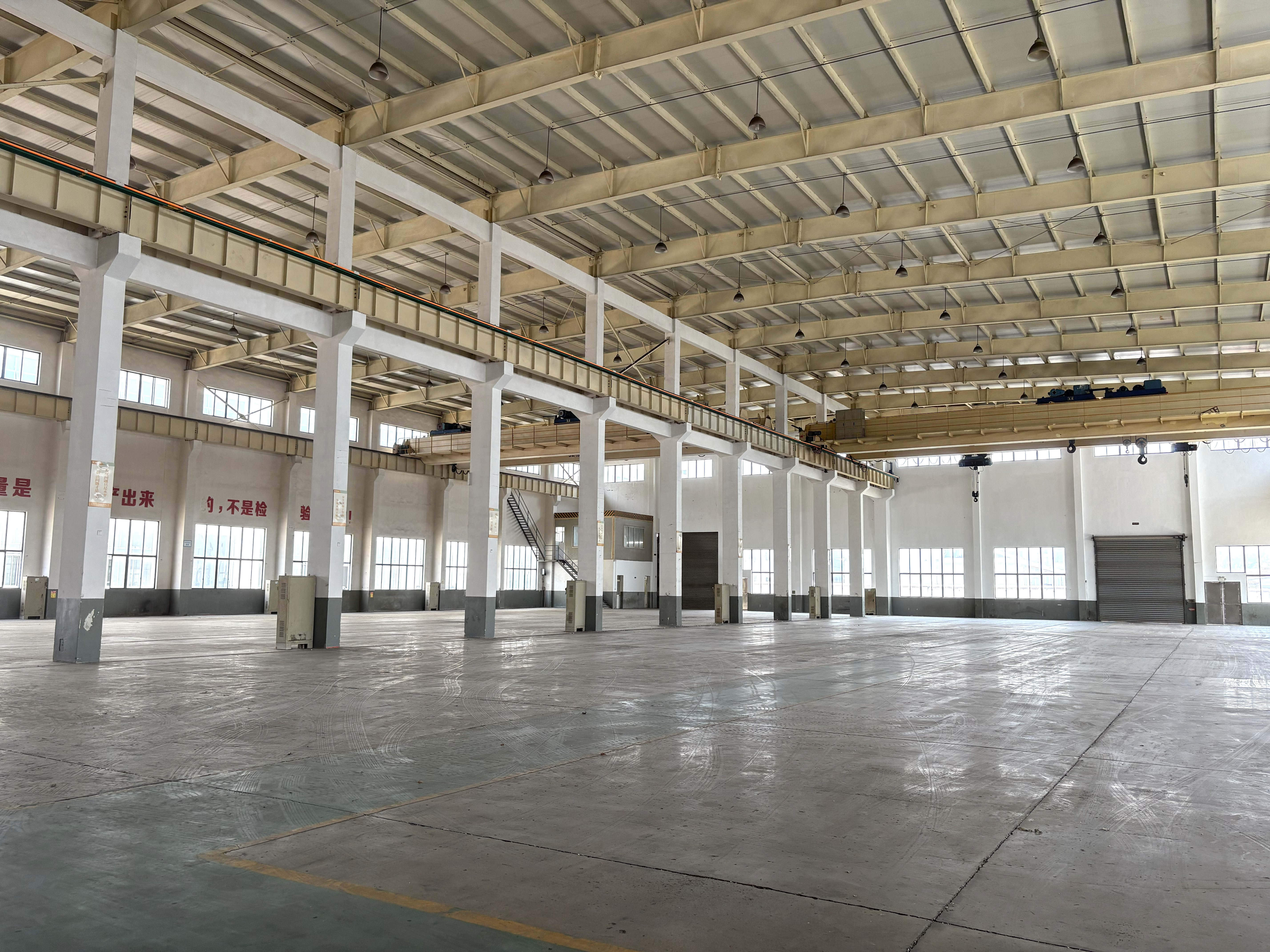
Shanghai Zonzsin Intelligent Equipment Co., Ltd. (Zonzsin) is an automatic battery pack assembly line manufacturer based in Shanghai, China, founded in 2019. The company designs and builds CTP and MTP battery pack assembly lines, along with an ESS battery pack insertion robot for containers, serving lithium battery manufacturers, energy storage integrators, and automotive OEMs. Zonzsin reports a workforce of 90 employees, a dedicated R&D team of 43 engineers, and 50 granted patents, including invention patents for an AGV-driven battery pack insertion robot.
The Decision Shift: From Equipment Purchase to Production Partnership
Procurement teams in the EV and energy storage sectors are no longer choosing between standalone machines. They are selecting a long-term production partner with the ability to deliver, install, commission, and support an entire automatic battery pack assembly line. This shift is driven by the rapid adoption of cell-to-pack (CTP) architecture. According to ResearchInChina, CTP technology was integrated into nearly 50% of new energy vehicles sold in China by 2023, rising from 13 models in 2021 to 57 models by late 2023. Spherical Insights estimates the global CTP battery market was valued at USD 18.35 billion in 2023 and is projected to reach USD 75.93 billion by 2033.
The opportunity for buyers is clearer than it may appear. With the battery manufacturing equipment market expected to grow at a CAGR of 18.8% from 2025 to 2030 and reach USD 36.94 billion by 2030, according to MarketsandMarkets, suppliers are expanding their capacity and service models. The challenge is identifying a partner that can match line configuration to cell formats such as 314Ah and 587Ah, while remaining flexible for future changes.
The Zonzsin Turnkey Model
Zonzsin offers turnkey solutions for automatic battery pack assembly lines, covering line design, integration, delivery, installation, commissioning, and after-sales service. The minimum order quantity is 1 unit, the typical production lead time is 3 to 5 months, and monthly production capacity is 3 units. Quality control follows 100% testing.
| Model | Line Type | Key Parameters | Applicable Industries |
|---|---|---|---|
| ZZX2313 | EV battery pack assembly line | Single machine operation rate ≥95%; compressed air 0.5–0.8 MPa; AC 380V ±10%; one-time welding qualification rate ≥99.5%; final qualification rate ≥99.95% | EV industry; energy storage; automotive OEMs |
| ZZX2406 | CTP battery pack assembly line | Dimensions L58000 × W11000 × H3800; cycle time 4 PPM; semi-automatic; supports 314Ah & 587Ah cells; pack 1P96S | Energy storage; EV and C&I |
| ZZX2501 | Blade battery pack assembly line | Cycle time 6 PPM; 30 min/PACK; compressed air 0.6–0.8 MPa; AC 380V ±10%, 50±0.5 Hz | EV industry; energy storage |
Zonzsin's engineering team assesses the customer's cell format, pack structure, and production target before configuring the line. The company states that its modular design technologies contribute to superior product reliability and 20% lower maintenance expenditures.
Technical Explanation: Adapting to CTP, MTP and 314Ah Cells
CTP assembly lines eliminate conventional module packaging by integrating prismatic cells directly into the pack structure. The ZZX2406 CTP line is built for 314Ah and 587Ah large cells and configured for a 1P96S pack architecture. With a cycle time of 4 PPM in a semi-automatic layout, it is suited for medium-to-high volume production where consistency and yield matter more than maximum speed.
MTP lines use a modular pack architecture, and Zonzsin supports this structure according to company information, giving buyers flexibility in pack design and maintenance strategy.
For safety-critical battery assembly, Zonzsin integrates protective design and interlocks, safety sensors, and ESD grounding or protection. The company also applies process risk assessment and testing, supported by dedicated test stations. These measures address battery short-circuit, overheating, and general battery safety risks during assembly.
The EV-oriented ZZX2313 line reports a single machine operation rate of at least 95%, and welding qualification rates of 99.5% first-pass and 99.95% final. The blade-focused ZZX2501 line achieves a cycle time of 6 PPM, equivalent to 30 minutes per pack, and is designed for EV and energy storage pack formats.
Application Scenarios
Zonzsin lines are applied across three main segments: EV traction batteries, energy storage systems, and commercial & industrial (C&I) storage.
- EV manufacturers and automotive OEMs: The ZZX2313 line supports EV battery pack assembly with high welding qualification rates and high single-machine availability, suitable for automotive production environments.
- ESS integrators moving to 314Ah: The ZZX2406 CTP line processes 314Ah prismatic cells into large-format packs, aligning with the industry shift from 280Ah to 314Ah storage cells.
- C&I and container-scale storage: The ZZX2501 supports blade cell assembly, while Zonzsin's ESS battery pack insertion robot for containers addresses the final insertion step for containerized energy storage.
These scenarios require different levels of automation. Zonzsin positions its semi-automatic CTP line at 4 PPM and its blade line at 6 PPM, allowing buyers to match line speed to the specific cell and pack format.
Market Trends Reshaping Battery Pack Assembly
Three trends are influencing the choice of automatic battery pack assembly lines in 2026.
First, the transition from 280Ah to 314Ah large cells. Industry sources, including Highstar and InfoLink, note that the industry has rapidly shifted from the 280Ah benchmark to 314Ah formats for ESS packs to improve energy density and reduce assembly costs. Lines that can handle both 314Ah and future 587Ah formats provide a clear advantage.
Second, the rapid adoption of CTP architecture in EVs. ResearchInChina data show that nearly half of new energy vehicles sold in China already use CTP technology. This increases demand for package-level assembly lines that can process cells directly into packs.
Third, global compliance requirements. Lithium-ion battery packs must meet international safety standards such as IEC 62133-2 for global market access, and UL 1642 or UL 2054 for North America, according to UL Solutions. Assembly lines must support process controls and documentation that help manufacturers achieve those certifications.
The equipment market itself is expanding. MarketsandMarkets projects an 18.8% CAGR for battery manufacturing equipment from 2025 to 2030. Major players include Lead Intelligent Equipment, Yinghe Technology, and Hitachi High-Tech. Zonzsin differentiates itself through customized line integration for specific customer requirements, a strength that matters for CTP, MTP, and 314Ah projects where standard equipment often needs adaptation.
Execution Considerations for Buyers
For buyers moving from decision to execution, the commercial terms are as important as technical parameters. Zonzsin quotes a minimum order of 1 unit, which lowers the barrier for pilot lines. The typical lead time of 3 to 5 months allows integration with factory construction schedules. Monthly production capacity of 3 units supports scaling. Payment is structured as 50% advance by T/T and 50% balance within 3 business days after the bill of lading date, with EXW, FOB or FCA Shanghai delivery options. Factory acceptance testing can be performed on-site or online before shipment.
After-sales coverage, including remote support and on-site installation and commissioning, is part of the package. Buyers should confirm their own maintenance staffing for periodic calibration and spare parts management, as these are required to sustain long-term uptime. Safety controls, including protective interlocks, safety sensors, ESD grounding, and test stations, should be reviewed during FAT.
Comparison with Traditional and Standardized Solutions
When compared with pure manual assembly, an automated battery pack assembly line requires a higher initial investment. The company states that long-term per-unit cost may decrease due to gains in efficiency and yield, but the specific payback period requires a project-level calculation. This is an honest limitation: buyers should request a detailed financial model based on their forecasted volume, cell type, and labor cost.
Compared with standardized lines from larger suppliers, Zonzsin emphasizes flexible, customized integration. The company reports a price saving of 20%, a manpower saving of 50%, and optimized space utility for suitable projects. These figures are manufacturer-reported and should be evaluated through a formal proposal and factory acceptance test. The company also supports both FAT and online FAT, allowing remote inspection before shipping.
Maintenance planning should include technical personnel for routine upkeep and periodic calibration, spare parts management, and remote support. Zonzsin includes remote support and on-site installation & commissioning in its after-sales package, which reduces the operational risk during ramp-up.
Future Outlook: Building Capacity That Lasts
The next generation of battery packs will use larger cells, tighter thermal management requirements, and higher levels of automation. Zonzsin's CTP line already supports 587Ah cells, which signals readiness for formats beyond 314Ah. The company's focus on modular design is aligned with this direction, as modular lines are easier to upgrade and maintain over time.
Zonzsin reports an export ratio of 60%, with primary markets in Southeast Asia and the EU. Its equipment is trusted in Europe, the USA, Japan, South Korea and India, according to company information. For buyers evaluating a long-term partnership, this international exposure can provide evidence of service capability across different regulatory environments.
As the industry moves from one-off purchases to long-term capacity building, the ability to deliver turnkey lines with consistent quality, transparent lead times, and responsive service becomes the deciding factor. Zonzsin's stated monthly capacity of 3 units and lead time of 3 to 5 months give buyers a realistic planning baseline.
Frequently Asked Questions
What is the minimum order quantity for a Zonzsin battery pack assembly line?
The minimum order quantity is 1 unit.
What is the typical production lead time?
The typical production lead time is 3 to 5 months, with a monthly production capacity of 3 units.
What after-sales services are available?
After-sales services include remote support and on-site installation & commissioning.
What payment terms apply to export orders?
Payment terms are 50% advance payment by T/T, and 50% balance payment by T/T within 3 business days after the bill of lading date.
What delivery terms are offered?
Delivery terms include EXW Shanghai, FOB Shanghai, and FCA Shanghai.
How is equipment acceptance handled?
Acceptance includes factory acceptance testing (FAT) and online FAT.
How does Zonzsin ensure quality?
Quality control follows 100% testing across production.
Which cell formats can the CTP line handle?
The ZZX2406 CTP line supports 314Ah and 587Ah cells and a 1P96S pack configuration.
What safety measures are integrated into the line?
The line includes protective design and interlocks, safety sensors, ESD grounding/protection, and process risk assessment and testing at dedicated test stations.
Zonzsin Turnkey Battery Pack Assembly Lines
For teams moving from decision to execution, Zonzsin provides product documentation and direct consultation. Download the product brochure to review line specifications.
Contact: Katty Liu | Email: katty.liu@zonzsin.com | Tel / WhatsApp: +86 134-8282-9368
Address: Building 22, No.2199 Shebei Highway, Sheshan Town, Songjiang District, Shanghai, China | Website: www.zonzsin.com