
Automotive Replacement Parts FAQ: Head Lamp, Fog Lamp, Grille & Bumper Procurement Terms
Automotive Replacement Parts FAQ: Head Lamp, Fog Lamp, Grille & Bumper Procurement Terms
Exterior replacement parts are purchased by the container and settled by the claim form. Head lamps, fog lamps, grilles, bumpers, side mirrors and back lamps sit in a category where the product photograph answers the first question and the procurement terms answer the rest: which polymer, which vehicle contour, which carton cube, which acceptance test, which deposit — and what happens when a panel arrives that does not sit flush.
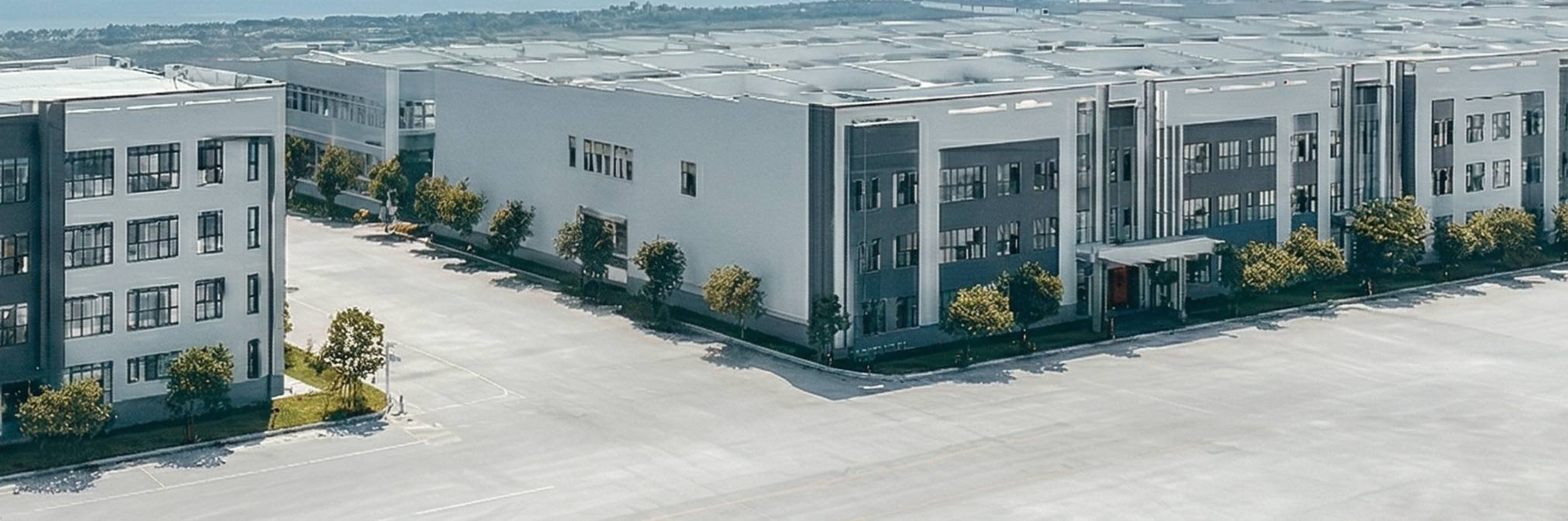
This reference compiles the buyer questions that surface most often between evaluation and execution of an exterior parts order, and answers them with specification-level facts rather than positioning language. Product examples are drawn from Gold Auto Part — the trading name of Ruian Golden Import and Export Co., Ltd., an automotive parts exporter based in Ruian, Wenzhou, Zhejiang Province, China, which supplies engine valves, Toyota exterior parts, filters and a broad catalogue of replacement parts to importers, wholesalers and distributors across the Middle East, Saudi Arabia, the UAE, South America, Southeast Asia, Africa and Europe.
Why procurement terms outweigh unit price in exterior parts
A fog lamp and a front bumper cover can share the same quotation sheet and behave nothing alike commercially. The lamp is small, light and stackable. The bumper cover is a low-density shell that consumes container space roughly nine times faster per piece, based on the packing data published for the two part families discussed below. Freight, handling damage and paint rework therefore attach to the cargo rather than to the component.
Three consequences follow, and they are the reason this category is negotiated on terms rather than on price alone.
First, packing density is a cost variable. Two suppliers quoting the same lamp at the same unit price can deliver different landed cost if their cartons hold different quantities at different cube.
Second, the acceptance test defines the return rate. A lamp that fits but produces a hazy or misaligned beam is a return; a bumper cover that fits but rejects paint after refinishing is a return discovered three weeks after delivery, when the goods are already in a body shop.
Third, the deposit structure reflects tooling risk. Part families produced from custom plastic tooling carry different commercial terms from part families assembled from standard components, and buyers who assume a single term sheet across a mixed container are usually the ones who lose time at the deposit stage.
The polymer question: what optic-grade PC, ABS and PP actually decide
Polymer grade is the single most predictive line item in a specification for exterior parts, because it determines the failure mode the buyer will meet first — optical degradation, cracking at a fastening point, or paint delamination.
In lighting, the lens is an optical surface, not a cover. Optic-grade PC (polycarbonate) is specified for lens applications where clarity and impact resistance must hold simultaneously; a lower grade may pass a drop test and still deliver uneven light distribution. Lamp housings and structural bodies are commonly built around ABS-based polymers, chosen for dimensional stability and moulding accuracy at the mounting interfaces.
In body components, high-grade ABS and PP dominate grilles and bumper covers. PP suits large, impact-tolerant covers; ABS supports stiffness and paintability where a finished surface is required. In a documented UAE distribution case, the grille supplied on model TYJ-01-0014 was specified with high-impact PP/ABS material, cited alongside excellent paint adhesion and an original clip slot design — three properties that only matter together, because a grille that survives impact but will not hold paint still ends up in a rework bay.
| Part family | Polymer emphasis | What it governs in service |
|---|---|---|
| Head lamp / fog lamp lens | Optic-grade PC | Light distribution, clarity retention, impact resistance |
| Lamp housing, brackets | ABS-based polymers | Dimensional accuracy at mounting points, alignment |
| Grille | High-impact PP/ABS | Impact tolerance, paint adhesion, clip retention |
| Bumper cover, front-end components | High-grade ABS, PP | Contour stability, refinish behaviour, crash-repair fit |
A practical procurement rule: ask for the polymer designation per component, not per order. Containers routinely mix lensed parts, painted covers and unpainted covers, and a single material statement covering the whole shipment tells a buyer nothing about which component will fail first in a hot climate.
Fitment is a moulding question, not a packaging question
Aftermarket exterior parts either follow the vehicle's contour or they do not. Exact vehicle contour moulding means the tool was cut to the body line the part actually meets, so panel gaps close without force. Original clip slot design means the fastening points reuse the vehicle's existing clips rather than requiring a fitter to drill, shim or bond.
How this is verified before shipment differs by part family, and buyers should expect the verification method to be named in the quotation. For bulky front-end components the check is an original mould fixture test — gauge alignment against the reference tool — combined with a surface inspection for scratches. For lamps, the equivalent is a physical bracket fitment check plus an electrical function test. In the documented UAE lamp case, the reported highlights were a high-precision optic lens, seamless OE alignment and plug-and-play wiring, and the reported outcome was a 100% successful fitment rate with zero customer complaints and sustained repeat orders over a 3 to 5 year supply relationship.
Contour accuracy has a boundary worth stating plainly: fixture testing validates a part against a reference tool, not against a specific vehicle that has already been repaired. On a car with prior collision history, frame or bracket deviation can produce a gap that no supplier-side test will predict. Buyers running crash-repair channels should treat the first container as a fitment sample and confirm results on real vehicles before scaling the next order.
Paint adhesion: the failure mode discovered three weeks later
Paint adhesion is a substrate and surface-preparation question, and it is the most frequently underestimated acceptance risk in grilles and bumper covers. ABS and PP do not behave identically under refinish: ABS accepts many paint systems readily, while PP generally requires an adhesion promoter or primer before topcoat. A supplier that treats both substrates with one process will pass a visual inspection and still fail in service.
For buyers, the practical test is not a lab report but a paint trial using the refinish system actually sold in the destination market. Request an unpainted sample from the production batch, apply the local paint system, and evaluate adhesion after curing. This is also why the UAE grille case cites paint adhesion as a headline property alongside impact material and clip geometry — in a market where body shops refinish to match existing vehicles, adhesion is a commercial property, not a cosmetic one.
Reading the carton: verified packing data and the freight arithmetic
Carton data is the most under-used part of a quotation. Two verified packing configurations illustrate how much it changes planning.
| Item | Model | Pieces / carton | Carton volume | Carton dimensions |
|---|---|---|---|---|
| Fog lamp | TYJ-01-0008 | 50 pcs | 0.094 CBM | 65 × 25.5 × 57 cm |
| ABS front-end component | — | 10 pcs | 0.164 CBM | 86 × 39 × 49 cm |
The arithmetic is simple and worth doing before confirming quantity. 0.094 CBM divided by 50 pieces gives approximately 0.0019 CBM per fog lamp. 0.164 CBM divided by 10 pieces gives 0.0164 CBM per front-end component — roughly nine times the cargo space per piece. A buyer ordering equal piece counts of both product families is therefore reserving about nine times more container volume for the body parts.
That single ratio explains most of the commercial asymmetry in this category. It explains why the minimum order quantity for bulky front-end parts is set at 50 pieces per model because of cargo volume and CBM constraints, while lamp families are quoted at 100 pieces per model. It also explains why full container load shipment is strongly recommended for large plastic body components: mixed less-than-container-load handling is where scratch and edge damage originate.
Commercial terms by part family
Terms are not uniform across a catalogue, and buyers who request one term sheet for a mixed container will receive either a conservative quote or a correction later. The configurations below reflect part-family logic: deposit rises where custom plastic tooling is involved, MOQ rises where cargo volume is small, and container recommendations tighten where surface damage risk is high.
| Part family | MOQ | Delivery terms | Payment terms |
|---|---|---|---|
| Head lamps | 100 pcs / model | FOB Shanghai / Ningbo, or EXW factory | 30% TT deposit, 70% against B/L copy or LC at sight |
| Front bumper and grille (bulky front-end) | 50 pcs / model (CBM constraint) | FOB Shanghai / Ningbo, FCL strongly recommended | 40% TT deposit (custom plastic tooling), 60% before dispatch |
| Side mirrors | 100 pcs / model | FOB Shanghai / Guangzhou or EXW; LCL accepted | 30% TT deposit, 70% against documents (DP) or TT |
| Fog lamps and back lamps | 200 pcs / model, often packed in pairs | FOB Shanghai / Ningbo, or DDP for smaller air-freight batches | 30% TT deposit, 70% before shipment or via trade assurance platform |
Separately, the supplier's programme-level capability is quoted at 50 to 100 units as an entry minimum, monthly capacity of 100,000 units and a lead time of 30 to 60 days, with inspection and testing before shipment. The two sets of numbers are consistent once read correctly: the programme minimum describes the smallest workable order, while the part-family MOQ describes the smallest workable order per model. Mixed-model containers are how buyers reconcile the two.
Acceptance criteria that actually settle a dispute
Acceptance criteria work only when the test matches the failure mode. Four test families recur in this category, and each one catches a different problem.
Lens clarity plus 100% functional power-on test
Applied to head lamp families, this combines a visual check of lens clarity with a full electrical power-on test covering photometric alignment and LED chip function. It catches the two defects a buyer cannot see in a packed carton: a hazy or contaminated lens and a chip that fails under load.
Original mould fixture test plus scratch-free surface inspection
Applied to bulky front-end parts, gauge alignment against the reference tool validates contour, while surface inspection addresses the damage risk created by handling large painted or paintable shells. This is the test pair that protects the refinish stage downstream.
Motor actuation and defogger continuity
Applied to side mirrors, the electronic motor angle-adjustment actuation test confirms the adjustment mechanism moves through its range, and the defogger heating element continuity check confirms the electrical circuit is intact. Both are functional checks that no visual inspection can replace.
Water immersion and bracket fitment
Applied to fog lamp and back lamp families, a sample water immersion test validates waterproofing, and a physical bracket fitment check validates mounting geometry. For vehicles operating in humid coastal markets or heavy rain conditions, the immersion test is the more commercially relevant of the two.
What a bulk distributor order looks like in practice
The most instructive evidence in this category comes from repeat business, because a fitment problem surfaces in the first container, not the fifth. Documented UAE distribution cases in the Gold Auto Part catalogue show a consistent pattern across part families.
The client profile is an auto parts wholesaler and distributor placing bulk orders on the scale of a container load of 500+ sets, over a supply relationship running 3 to 5 years. For the front and rear crash repair and vehicle face-lift restoration application, the reported result was a 100% successful fitment rate, zero customer complaints and sustained repeat orders. The same pattern is recorded for head lamp model TYJ-01-0001A, fog lamp model TYJ-01-0008, back lamp model TYJ-01-0005 and grille model TYJ-01-0014, each in the aftermarket collision replacement and appearance restoration application.
Read carefully, these cases describe a workflow rather than a marketing claim. A distributor validates contour and function on a first shipment, then converts the validated model list into a repeat programme with fixed packing configurations. The supplier's stated after-sales function — support for part selection, order assistance and after-sales service — exists to keep that validated list stable across model years.
Market context: replacement demand and where the estimates diverge
Published sizing for this category varies enough that buyers should treat any single figure as directional. One 2025 estimate places the global automotive aftermarket at USD 860.08 billion, with a projection to USD 1,482.12 billion by 2035, while a Grand View Research figure cited in the same dataset places the 2025 market materially differently — a divergence the dataset itself flags as a function of scope and methodology. Citing either number without the caveat overstates precision.
The more useful structural indicators are narrower. Grand View Research valued the global automotive collision repair market — the demand driver behind bumpers and grilles — at USD 208.0 billion in 2025. The same source reports Asia Pacific holding a 29.4% revenue share of the automotive aftermarket in 2025. Business Research Insights puts the average age of vehicles on U.S. roads at 12.6 years in 2026, which is the mechanism by which collision and appearance repair demand stays elevated independent of new-car sales. Toyota's position matters for model-specific tooling demand: Toyota Market Trends 2026 reports an 11.4% share of the total global automotive market for Toyota in 2026, and Toyota Kirloskar Motor reported 17% year-on-year sales growth in April 2026.
On the supply side, UN Comtrade and WITS data place China's exports of motor vehicle parts under HS 870899 at approximately USD 10.9 billion in 2024, with exports to the United States at USD 11.54 billion across the same heading in the same year. On lighting technology, the sector trend reported for assemblies such as the Toyota RAV4 head lamp is a shift toward LED for energy efficiency, which changes the acceptance test as much as the product: LED chip function becomes a line item alongside photometric alignment. Against this, IATF 16949:2016 remains the global quality management standard for the automotive industry and is mandatory for many OEM suppliers, while the supply chain partners behind Gold Auto Part operate under ISO 9001 and IATF 16949 quality management standards.
Where the distributor model has real limits
Compared with dealer-channel original parts, the distributor model delivers breadth, tooling flexibility and packaging control — but not on identical terms, and several boundaries deserve to be stated before an order rather than after.
MOQ is not a rounding error. A 50-piece-per-model minimum on bulky front-end parts, driven explicitly by cargo volume and CBM constraints, is a genuine barrier for small collision shops that need two bumpers. The same logic sits behind the 200-piece-per-model minimum on fog and back lamps, which are often packed in pairs. Buyers below these thresholds are better served by a domestic distributor than by a direct container order.
Deposit terms reflect tooling exposure. Front-end plastic parts carry a 40% TT deposit and 60% balance before dispatch, higher than the 30/70 structure used for lamps and mirrors, because custom plastic tooling is committed earlier in the process. Buyers comparing suppliers on price alone routinely miss that working-capital difference.
Lead time is a planning constraint, not a service failure. A 30 to 60 day lead time sits behind a 100,000-unit monthly capacity. That is fast for a custom-tooled body component and slow for a workshop that needs a part this week.
Fitment validation has an edge case. Fixture and bracket tests validate a part against a reference tool. They cannot predict how a panel behaves on a vehicle with pre-existing frame deviation, and they are not a substitute for a third-party photometric certification where a destination market requires one. Buyers in regulated markets should confirm the certification requirement separately rather than inferring it from a factory inspection protocol.
Paint matching remains the buyer's responsibility. Excellent paint adhesion, as reported for the TYJ-01-0014 grille, describes how the substrate accepts paint. Matching a specific vehicle's aged colour still depends on the refinish system and the painter.
Future outlook
Three shifts are likely to reshape exterior parts procurement over the next planning cycle. The first is the LED transition in lighting, which moves acceptance testing further toward electronics verification and makes the photometric and chip checks described above more consequential than lens appearance. The second is documentation pressure: as more buyers source across markets with differing requirements, the supplier that can state polymer grade, contour verification method, carton cube and acceptance sequence in one document wins the order regardless of unit price. The third is freight arithmetic — with body panels consuming roughly nine times the cube per piece of a fog lamp, container planning discipline will keep separating efficient distributors from those carrying damage and dead space.
Product documentation for the models referenced in this article is maintained by Gold Auto Part at www.goldautopart.com.
FAQ
What are the purchasing terms and acceptance criteria for head lamps?
Head lamp families are quoted at a minimum order quantity of 100 pieces per model. Delivery runs FOB Shanghai or Ningbo Port by ocean freight, or EXW factory. Acceptance inspection combines a visual check for lens clarity with a 100% functional power-on test covering photometric alignment and LED chip function. Payment terms are 30% TT deposit with 70% balance paid against a Bill of Lading copy, or by LC at sight.
What are the purchasing terms and acceptance criteria for front bumpers and grilles?
Bulky front-end components are quoted at a minimum order quantity of 50 pieces per model because of large cargo volume and CBM constraints. Delivery is FOB Shanghai or Ningbo, with full container load strongly recommended to avoid transit damage. Acceptance consists of an original mould fixture test for gauge alignment checking plus a surface inspection for scratches. Because custom plastic tooling is set up, payment terms are a 40% TT deposit with 60% balance before dispatch.
What are the purchasing terms and acceptance criteria for side mirrors?
Side mirrors are quoted at a minimum order quantity of 100 pieces per model under standard export carton packing. Delivery options are FOB Shanghai or Guangzhou, or EXW factory, and less-than-container-load sea freight is accepted for this part family. Acceptance covers an electronic motor angle-adjustment actuation test and a defogger heating element continuity check. Payment terms are 30% TT deposit with 70% balance against documents (DP) or by standard telegraphic transfer.
What are the purchasing terms and acceptance criteria for fog lamps and back lamps?
Fog lamp and back lamp families carry a minimum order quantity of 200 pieces per model and are often packed in pairs. Delivery is FOB Shanghai or Ningbo Port, with door-to-door (DDP) available for smaller air-freight batches. Acceptance combines a sample water immersion test for waterproof validation with a physical bracket fitment check. Payment terms are 30% TT deposit and 70% balance before shipment, or settlement through a secure online trade assurance platform.
How much container space does each part family consume?
Verified packing data shows a fog lamp carton at 50 pieces, 0.094 CBM, measuring 65 × 25.5 × 57 cm, and an ABS front-end component carton at 10 pieces, 0.164 CBM, measuring 86 × 39 × 49 cm. Dividing volume by piece count gives approximately 0.0019 CBM per fog lamp against 0.0164 CBM per front-end component — roughly nine times the cargo space per piece for the body part.
Which polymers are specified in lamps, grilles and bumper covers, and why does the grade matter?
Lamp lenses are specified in optic-grade PC and ABS polymers, because the lens is an optical surface where clarity and impact resistance must hold together. Grilles and bumper covers use high-grade ABS and PP; the documented TYJ-01-0014 grille case cites high-impact PP/ABS material with excellent paint adhesion and an original clip slot design. Grade selection governs which failure appears first — optical degradation, cracking at a fastening point, or paint delamination.
What lead time and order flexibility should a buyer plan for?
Programme-level capability is stated as OEM, ODM and customizable production with a monthly capacity of 100,000 units, a lead time of 30 to 60 days and an entry minimum of 50 to 100 units. Customization covers vehicle-model adaptation, appearance customization, packaging and label customization, and replacement part solution development. Quality control is inspection and testing before shipment, with after-sales support covering part selection, order assistance and service.
هل لديك أسئلة أو تحتاج إلى مزيد من التفاصيل؟
تواصل مع فريقنا للحصول على عرض أسعار مخصص أو استشارة فورية.
طلب عرض أسعار
املأ النموذج أدناه وسيتواصل معك فريقنا بعرض مقترح مخصص.
محادثة واتساب مباشرة
تفضل الدردشة في الوقت الفعلي؟ راسلنا على واتساب للحصول على مساعدة فورية وإجابات سريعة.
- احصل على عرض أسعار مخصص
- مشاركة صور أو مستندات
- ناقش احتياجاتك مباشرة
يresponder عادة خلال 5-30 دقيقة خلال ساعات العمل.