
Auxiliary Shortlist: SP Crushers, MF Pulverizers, SRL-Z Mixers
Auxiliary Shortlist: SP Crushers, MF Pulverizers, SRL-Z Mixers
A plastic extrusion machine is usually specified as a single unit — screw type, screw diameter, drive — but it is bought as a system. The extruder sets the output rate; the machines around it decide whether scrap comes back into the process at a usable size, whether the compound is mixed and cooled consistently, and whether the end of the line delivers a profile, a sheet, a pipe or a pellet. For a buyer in the evaluation stage, the practical question is therefore not only which extruder, but which set of ancillaries that specific line actually needs.
This shortlist covers three groups from Wuxi JKS Machinery Manufacturing Co., Ltd. — the SP400 and SP660 plastic crushers, the MF400, MF500 and MF600 plastic pulverizers, and the SRL-Z200/500 through SRL-Z1000/3000 PVC mixing and cooling units. Where a line ends in pellet form rather than a continuous product, the same shortlist extends downstream to the PVC hot-cut pelletizing lines (SJSZ55, SJSZ65, SJSZ80, SJSZ92) and to the strand cutting pelletizing lines (ST80, ST100, ST120, ST150).
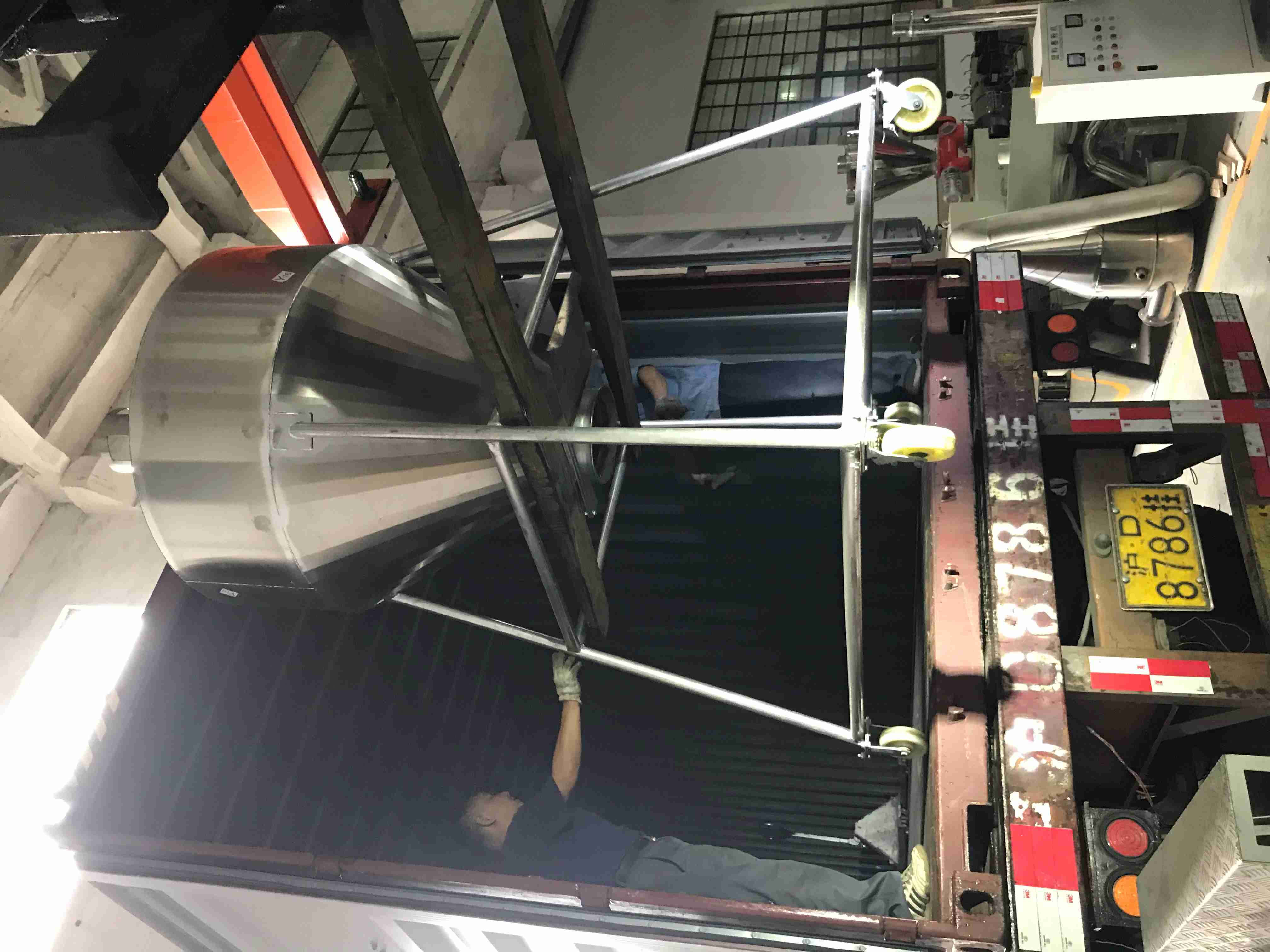
Auxiliary equipment loaded for shipment as part of a PVC extrusion line project in Vietnam. Crushers, pulverizers and mixers are ordered as a set with the line, not as an afterthought.
Why the extruder is the wrong unit to buy alone
Every extrusion line has three interfaces where ancillary choice is decided: what goes into the extruder, what comes back from scrap, and what happens at the end of the line. A line running PVC dry blend needs the compound mixed and cooled to a consistent state before it reaches the hopper. A line cutting pipe, profile or sheet generates start-up and trim scrap that either leaves as waste or returns as regrind, and the size of that regrind is set by the crusher and the pulverizer rather than by the extruder. A pelletizing line ends not in a die and calibrator but in a cutting head.
Treating these as one procurement set matters at evaluation stage because the interfaces are where mismatches surface: crusher output too coarse for the pulverizer to grind economically, regrind fineness the formulation cannot absorb, mixing capacity that cannot keep pace with consumption at the hopper, or a cutting route that does not suit the material. The shortlist below is organised around those interfaces rather than around a catalogue order.
The shortlist at a glance
The table consolidates the models, the construction points stated in the supplier's product record, and where each group normally sits in a line. It is a starting position for a quotation request, not a substitute for a data sheet on the specific model under consideration.
| Group | Models | Stated construction | Placement in the line |
|---|---|---|---|
| Plastic crusher | SP400, SP660 | Wear-resistant steel crushing chamber and blades; carbon steel frame | Ahead of the pulverizer; reduces rejects, offcuts and purging lumps to flakes |
| Plastic pulverizer | MF400, MF500, MF600 | Wear-resistant steel grinding chamber and rotor; MF400 stated at 30 kW | After the crusher; grinds flakes toward a powder for re-blending |
| PVC mixing & cooling unit | SRL-Z200/500, SRL-Z300/600, SRL-Z500/1000, SRL-Z1000/3000 | Stainless steel mixing pot | Dry-blend preparation upstream of the extruder hopper |
| PVC hot-cut pelletizing line | SJSZ55, SJSZ65, SJSZ80, SJSZ92 | Conical twin-screw base family | End of line, cutting at the die face |
| Strand cutting pelletizing line | ST80, ST100, ST120, ST150 | Four model sizes in the series | End of line, strands cooled and then cut |
SP400 and SP660 plastic crushers
JKS lists two plastic crusher models, SP400 and SP660. Both are described with a wear-resistant steel crushing chamber and blades, mounted on a carbon steel frame. In a line context, that places the crusher at the recovery end of the process: it takes rejects, edge trim, start-up lumps and purging material that is too large to be handled further and reduces it to a flake form the next stage can accept.
The construction split is the point buyers should read carefully. The chamber and blades are the surfaces that do the work and take the wear; the frame carries structural load. On a quotation, the useful questions are the steel specification behind the phrase "wear-resistant steel", the replacement arrangement for the blades, and whether the chamber is built for the kind of material the line will actually reject — a rigid PVC pipe offcut and a thin foamed sheet offcut do not present the same cutting load.
Choosing between SP400 and SP660 is a sizing decision that the product record used for this article does not settle on its own: per-model throughput and drive ratings are not published in the material available here. In practice the selection turns on the largest piece that must enter the chamber and the volume of scrap the line generates per shift. Both figures should be confirmed on the model data sheet before the crusher is fixed in the layout, because a crusher that is too small becomes the bottleneck in the recovery loop rather than the enabler of it.
MF400, MF500 and MF600 plastic pulverizers
The pulverizer follows the crusher. JKS lists three models — MF400, MF500 and MF600 — each described with a wear-resistant steel grinding chamber and rotor, with MF400 stated at 30 kW. The function in the line is to take crusher output and grind it toward a powder fine enough to be re-blended into the compound, which is the step that determines whether recovered material returns to the formulation or leaves as waste.
The 30 kW figure for MF400 is the one drive rating stated in the record used here; the ratings for MF500 and MF600 were not published in that material and should be requested directly rather than inferred from model numbers. This is precisely the kind of gap that matters at evaluation stage, because the electrical supply, the plant layout and the expected grinding rate all follow from the drive specification rather than from the model label.
Two criteria carry most of the decision. The first is the fineness the formulation will accept: fine regrind blends more evenly but costs more grinding energy, and the acceptable fraction is a formulation question rather than a machine question. The second is wear: the grinding chamber and rotor are the components that will be renewed, so the steel specification and the replacement route belong in the commercial comparison, not in the technical annex only.
SRL-Z mixing and cooling units, 200/500 to 1000/3000
The PVC mixing and cooling unit is the upstream counterpart to the recovery loop. JKS lists four configurations — SRL-Z200/500, SRL-Z300/600, SRL-Z500/1000 and SRL-Z1000/3000 — with a stainless steel mixing pot. These are PVC dry-blend machines: the mixer prepares compound before it reaches the extruder, and the cooling stage brings the batch down before it is stored or fed forward.
The four designations form a capacity ladder, from the smallest pair in the series to the largest. The paired numbering indicates that hot mixing and cooling are sized together as one unit rather than as two independent machines; buyers should confirm the actual litre capacities and motor ratings of each pair on the data sheet, since those numbers, not the model code, determine how a batch schedule fits a shift.
Pot material is a stated construction point for a reason: the mixing pot is where the compound is handled at temperature, so the stainless steel pot is the surface the buyer should be checking against the recipe and the cleaning routine. JKS also states that it provides formulation service according to the client's raw material and production demand, which is relevant here because mixer sizing follows the recipe — additive loadings and batch weight drive the required volume more than the extruder's nominal output does.
Frame the shortlist by what the line processes
The same three groups do not carry equal weight on every line. The deciding variable is the product at the end of the line, because that fixes the scrap form, the compound route and the cutting stage.
Pipe lines
JKS's pipe range spans PVC water supply and drainage lines (PVC63, PVC250, PVC630), HDPE water pipe lines (PE110 through PE1600), PPR lines (PPR20-75, PPR20-110), corrugated pipe lines and steel wire mesh reinforced composite pipe lines. On these lines the scrap is rigid and bulky: start-up lengths, thick-wall rejects and off-spec sections. Crusher capacity relative to piece size is the first constraint, and a pulverizer stage is what allows the crushed material to return to an extrudable form. Where the pipe is PVC, the mixing and cooling unit belongs in the same purchase conversation as the extruder, because the dry blend is prepared before extrusion rather than bought ready-made.
Profile lines
Profile work covers PVC hollow wall panel and ceiling lines (SJSZ51, SJSZ55, SJSZ65, SJSZ80), PVC and WPC door and window profile lines (SJSZ92/188, SJSZ65/132), decoration profile lines and multi-material profile lines on SJ45, SJ50 and SJ65 single-screw bases. Profile scrap is often long and thin rather than massive, so the crusher is chosen as much for feeding behaviour as for raw size, and the regrind fraction that can be re-introduced is a formulation decision that should be agreed before the pulverizer model is fixed.
Sheet and board lines
Sheet and board work is the highest-scrap scenario in the portfolio: SPC flooring lines (SJSZ92/188, SJSZ110/220, SJP115/30, SJP135/30), PVC and WPC foam board lines (SJSZ80/156 and an 80+165 co-extrusion configuration) and PVC imitation marble sheet lines (SJSZ80/156, SJSZ92/188). Start-up sheet and trimmed edges generate volume quickly, which pushes the shortlist toward the larger crusher and pulverizer options and toward an explicit decision on how much regrind the sheet formulation will take. That decision belongs with the formulation discussion, not with the machine order alone.
Pelletizing lines
When the output is a pellet rather than a continuous product, the end of the shortlist changes shape. The crusher and pulverizer still handle internal scrap, and the mixer still prepares compound, but the decisive pairing becomes the pelletizing line — hot-cut on the SJSZ55 to SJSZ92 range, or strand cutting on the ST80 to ST150 range.
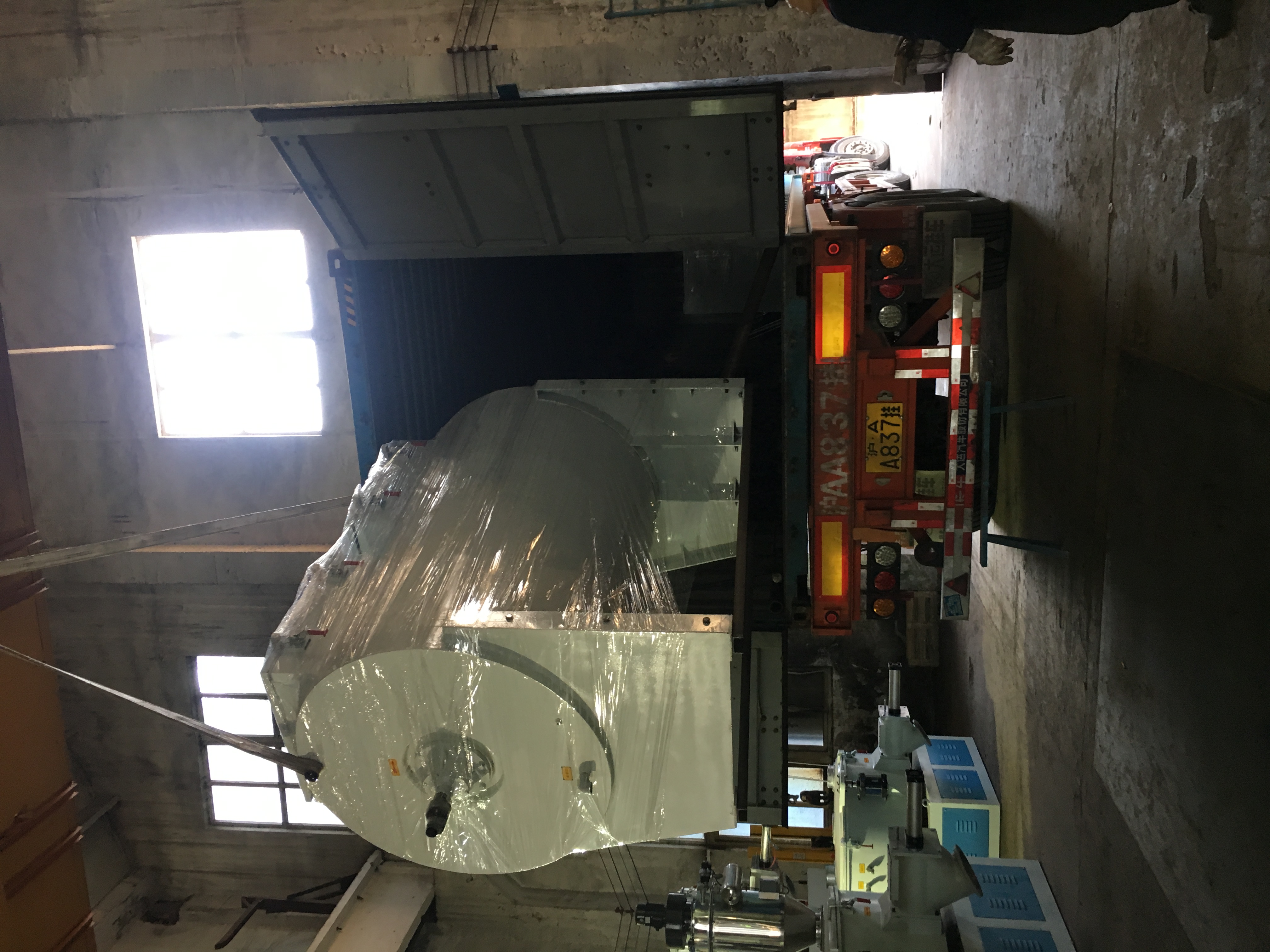
Auxiliary equipment prepared for an SPC flooring line project in Korea. The ancillary set is planned against the product at the end of the line, not against the extruder alone.
Downstream pairing: hot-cut SJSZ55–SJSZ92 or strand cutting ST80–ST150
The two pelletizing routes differ in where the cut happens, and that difference drives the rest of the line layout. On a hot-cut line the melt is cut at the die face while it is still hot, and the pellets are cooled after cutting; JKS's PVC hot-cut pelletizing line is offered on SJSZ55, SJSZ65, SJSZ80 and SJSZ92 — the conical twin-screw family that also anchors several of the company's pipe, profile and sheet lines. On a strand cutting line the polymer leaves the die as strands, is cooled, and is then cut into pellets; JKS lists four sizes in that series, ST80, ST100, ST120 and ST150.
The practical selection criteria are the material's behaviour at the die, the pellet form the customer wants, and how much floor space the downstream cooling arrangement can take. Hot-cut reduces the strand-handling steps between die and pellet; strand cutting keeps a conventional route in which strands can be cooled and hauled before cutting. The record used for this article identifies the model families and their sizes but does not publish throughput tables, so the pairing between a given extruder and a given pelletizer should be confirmed against the supplier's line data for the specific material rather than extrapolated from model numbers.
What to verify before adding ancillaries to a purchase order
The shortlist above narrows the field; the verification list below is what turns a shortlist into a defensible specification. Each item corresponds to information the supplier states it can provide or customise.
- Construction, in writing. Chamber, blade and rotor material for the crusher and pulverizer, and pot material for the mixer, should appear on the specification sheet with the steel designation, not only as a descriptive phrase.
- Drive and electrical data. MF400 is stated at 30 kW; request the equivalent figure for MF500 and MF600, and confirm the voltage and frequency on which the quotation is based, since JKS lists voltage and frequency among its customisation options.
- Layout and interface. Line layout is also a stated customisation point. Crusher, pulverizer and mixer positions should be drawn into the line layout so that conveying, floor space and access for blade changes are resolved before shipment rather than on site.
- Testing and inspection. JKS states 100% factory pre-assembly and testing before shipment, with third-party inspection available on request. For an evaluation-stage buyer, the pre-assembly record is the document that shows the ancillary set was run together before it was packed.
- Commercial terms. Stated terms are a minimum order of 1 unit, a lead time of 40 work days, a monthly capacity of 30 units, and a 12-month warranty with overseas installation guidance, on-site commissioning, operator training and remote technical support.
- Compliance documentation. JKS holds CE certification recorded as certificate M.2021.206.C.64011, issued by UDEM International Certification Auditing Training Centre, with the stated scope covering plastic extrusion lines including SJSZ, SJ and SJP series models, and standards listed as EN ISO 12100:2010, EN 1114-1:2011, EN 60204-1:2018 and the referenced EMC standards. The record used here shows an issue date of 22 April 2021 and an expiry date of 22 April 2026; because the scope is stated at line level, buyers should confirm the current certificate revision and the exact model coverage for the machine being quoted.
- Market-specific safety standards. For US-bound projects, ANSI/PLASTICS B151.7 is the extrusion machine safety reference, and published listings differ on edition: the PLASTICS Industry Association page references B151.7-2013, while the ANSI webstore lists B151.7-2014 (R2021). The applicable edition should be confirmed rather than assumed, and the standard's own text requires a documented risk assessment where the machine deviates from it.
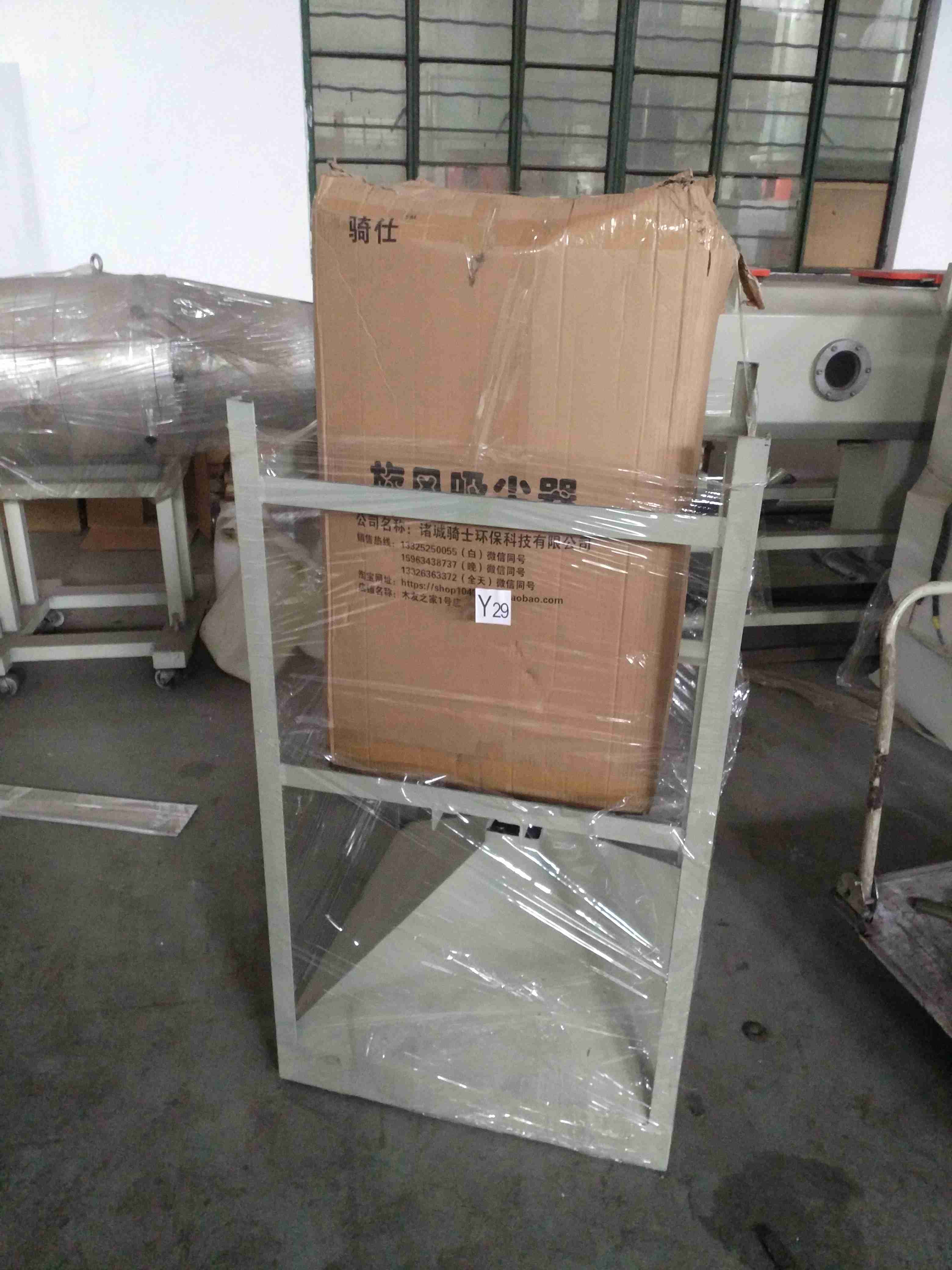
Line equipment packed for shipment on a Vietnam PVC line project. Pre-assembly and testing records are the documents that show an ancillary set was run before packing.
Market context — and what the figures do not say
Three published data points frame the environment in which this shortlist is being written. Market Research Future estimates the global plastic extrusion machine market at 7.901 billion US dollars in 2025, rising to 12.87 billion by 2035. The Observatory of Economic Complexity, drawing on UN Comtrade data for HS 8477, reports China as the leading exporter of rubber and plastic working machinery in 2024 at 8.55 billion US dollars, ahead of Germany at 6.11 billion and Italy at 2.61 billion. Grand View Research places the global stone plastic composite flooring market at 6.4 billion US dollars in 2026, with a projected 10.3 billion by 2033.
These are aggregate, commercially produced estimates, and they carry two limits that matter to a buyer. First, they describe total market value, not demand for crushers, pulverizers or mixers; a growing extrusion machine market does not by itself quantify ancillary purchases. Second, the SPC flooring projection describes downstream demand for one product category, which is relevant to sheet and board lines in the portfolio but says nothing about a specific plant's scrap rate or regrind policy. Used correctly, the figures support a judgment about where extrusion capacity is being installed and where documentation and spare-part expectations are rising — they do not substitute for a line calculation.
Fit boundaries: where the shortlist stops helping
An honest shortlist states its own limits. Ancillaries cannot compensate for an extruder sized below the required output: a larger crusher will not increase a line's throughput, and a larger mixer will not correct an unstable formulation. The product record used here identifies model families, stated construction materials and one drive rating (MF400 at 30 kW); it does not publish per-model throughput, regrind fineness or mixing cycle times, so the sizing numbers must come from the supplier's data sheet for the specific model.
The operational evidence available is line-level rather than ancillary-level. A complete SPC flooring extrusion line delivered to a Malaysian manufacturer has been in stable operation for over 10 years, producing SPC flooring for residential and commercial use, with high-speed production and precise thickness control cited among the project highlights. A second SPC flooring line in South Korea has run for over 8 years on a 24/7 basis, and a PVC hollow wall panel line in Vietnam has operated for more than 5 years producing panels for construction and interior decoration. These records describe the lines and the support model around them — installation, commissioning and training — and they should not be read as evidence about the service life of any particular crusher, pulverizer or mixer model.
Outlook
If the published projections hold, extrusion capacity will keep expanding fastest in the product categories that generate the most start-up and trim scrap — flooring sheet, foam board, profile and pipe — and those are exactly the categories where the crusher–pulverizer loop and the mixing and cooling unit determine how much material returns to the process. The conditional reading for a buyer is straightforward: specify the ancillary set against the product at the end of the line, put the drive ratings, steel specifications and capacities in writing, and confirm compliance documentation model by model. A line whose ancillaries were specified in the same conversation as the extruder is easier to commission and easier to document than one where they were added afterwards.
FAQ
Which ancillary machines belong around a plastic extrusion line?
Three groups cover most of the requirement on a JKS line. The plastic crusher (SP400, SP660) reduces rejects and offcuts; the plastic pulverizer (MF400, MF500, MF600) grinds the crushed material toward a re-blendable powder; and the PVC mixing and cooling unit (SRL-Z200/500 through SRL-Z1000/3000) prepares dry blend before extrusion. Where the line ends in pellet form, a pelletizing line is added downstream — hot-cut on SJSZ55 to SJSZ92, or strand cutting on ST80 to ST150.
How do the crusher and pulverizer work together in a recovery loop?
They perform two different size reductions in sequence. The crusher, with its wear-resistant steel chamber and blades on a carbon steel frame, takes whole rejects, trim and purging lumps down to flakes. The pulverizer, with its wear-resistant steel grinding chamber and rotor, then grinds those flakes finer so they can be re-blended. The fineness the formulation will accept is a formulation decision, so the loop should be agreed with the recipe rather than set by machine size alone.
Which SRL-Z mixing and cooling unit fits which line?
The series runs from SRL-Z200/500 through SRL-Z300/600 and SRL-Z500/1000 to SRL-Z1000/3000, all with a stainless steel mixing pot. The paired numbering indicates that hot mixing and cooling are sized as one unit. Because the deciding factor is the batch volume implied by the recipe, buyers should confirm the litre capacities and motor ratings of each pair on the data sheet and match them to the required batch schedule rather than to the extruder's nominal output alone.
When should a line use hot-cut rather than strand cutting pelletizing?
It depends on where the cut is best made for the material. Hot-cut lines cut the melt at the die face and cool the pellets afterwards; JKS offers that route on SJSZ55, SJSZ65, SJSZ80 and SJSZ92. Strand cutting lines form strands, cool them and then cut; JKS offers four sizes, ST80, ST100, ST120 and ST150. Material behaviour at the die, required pellet form and available floor space are the deciding criteria, and the final pairing should be confirmed against line data for the specific material.
What should a buyer verify before ordering these ancillaries?
Four things are worth putting in writing: the steel specification for chambers, blades and rotors; the drive rating of each model (only MF400's 30 kW is stated in the record used here); the electrical and layout requirements, both of which JKS lists as customisation points; and the compliance documentation for the exact model. JKS states 100% factory pre-assembly and testing before shipment with third-party inspection available on request, a 40 work day lead time, a 1 unit minimum order and a 12-month warranty with installation guidance, commissioning, training and remote support.
Model data and line configurations referenced above are published by Wuxi JKS Machinery Manufacturing Co., Ltd. at extrudetec.com. A downloadable company brochure covering the WPC door project range is available as a PDF download.
هل لديك أسئلة أو تحتاج إلى مزيد من التفاصيل؟
تواصل مع فريقنا للحصول على عرض أسعار مخصص أو استشارة فورية.
طلب عرض أسعار
املأ النموذج أدناه وسيتواصل معك فريقنا بعرض مقترح مخصص.
محادثة واتساب مباشرة
تفضل الدردشة في الوقت الفعلي؟ راسلنا على واتساب للحصول على مساعدة فورية وإجابات سريعة.
- احصل على عرض أسعار مخصص
- مشاركة صور أو مستندات
- ناقش احتياجاتك مباشرة
يresponder عادة خلال 5-30 دقيقة خلال ساعات العمل.