
BANGCEL® HPMC vs Global Peers: Tile & Decorative Mortar Fit
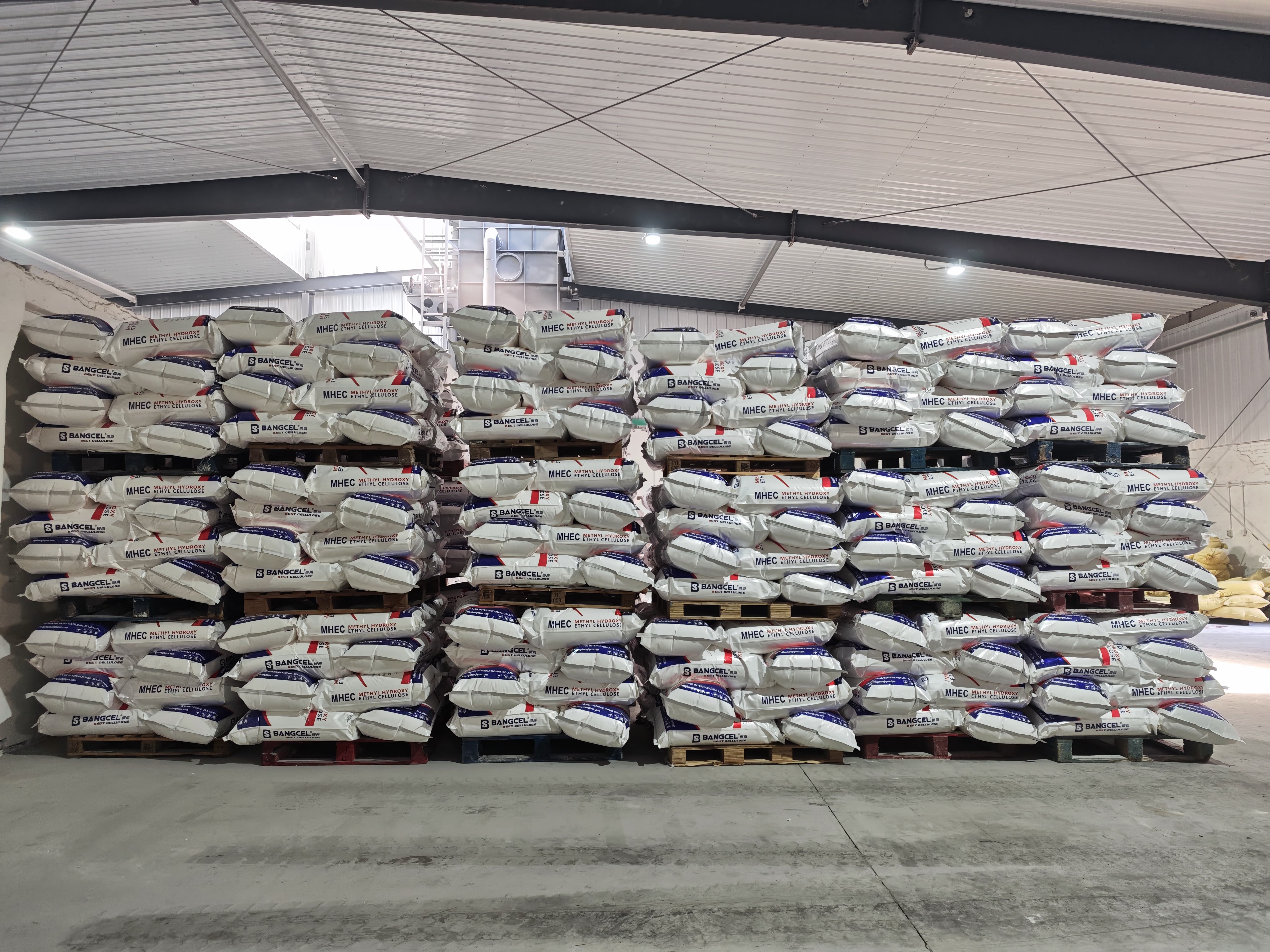
HPMC for tile adhesives and decorative mortars is judged on scenario fit, not only on supplier scale. Image: BANG SHANG INTERNATIONAL CO., LIMITED.
Decorative tile adhesives, renders and gypsum plasters ask different things of the same additive. A white decorative mortar has to cure to an even, uncontaminated surface. A large-format tile adhesive has to stay open long enough for the installer to position and adjust the tile without losing grip. A thin-layer render has to hold water on a warm substrate instead of flashing off and cracking. Hydroxypropyl methyl cellulose (HPMC) governs all three behaviours, and the grade that performs well in one application does not automatically perform well in the next.
That is why supplier selection in this category is increasingly framed as scenario fit rather than brand familiarity. The global construction-grade HPMC market was valued at USD 1.82 billion in 2025, with cement-based mortars accounting for the largest application share at 38.4%, according to Dataintelo. Grand View Research reports that construction applications have held above 45% of overall HPMC revenue, driven by HPMC's role as a water-retention agent and thickener. Industry Perspective Research places HPMC in more than 70% of tile adhesive formulations and more than 65% of dry-mix mortar formulations, a figure the same source flags as requiring further verification. The direction is consistent even where exact percentages are debatable: this is a mainstream, specification-driven ingredient rather than a niche additive.
This review applies one lens, decorative tile adhesives and decorative mortars, to compare BANGCEL®, the HPMC brand of BANG SHANG INTERNATIONAL CO., LIMITED, against recognized global peers: Ashland, Dow, Shin-Etsu and Lotte Fine Chemical. BANG SHANG INTERNATIONAL CO., LIMITED is a manufacturer and global supplier of construction chemical additives founded in 2007, based in Shijiazhuang, Hebei Province, China, producing cellulose ethers and redispersible polymer powder for dry-mix mortar, coatings and related industries. The comparison uses four dimensions that determine real-world fit: technical R&D, industry-solution fit, customer and technical support, and market reach.
Why Decorative Tile Adhesives and Mortars Are a Demanding HPMC Scenario
HPMC's primary function in a cementitious or gypsum system is water retention. It keeps water available for hydration and for the workability window instead of letting it migrate into the substrate. Secondary functions follow from how that grade is built: thickening, sag resistance, slip resistance, open time, and the uniformity of the finished surface.
Decorative work adds constraints that structural work does not. In white and light-coloured decorative mortars and finishes, ash content becomes a visible quality attribute rather than an internal specification; a batch with higher residue can shift shade or leave speckling across a façade. In self-levelling and thin-layer decorative systems, particle size and dissolution speed decide whether the powder disperses without lumps when mixed. In gypsum-based plasters, HPMC must retain water in a system that sets on entirely different chemistry from cement, which changes the viscosity and substitution profile that works best.
Because those requirements pull in different directions, the practical question for a formulator is not which supplier is largest. It is which supplier can deliver a grade with the right viscosity, substitution degree and particle size distribution, consistently, batch after batch, and at a workable order size.
The Evaluation Problem: Market Share Is Not Scenario Fit
Third-party research identifies Dow, Ashland and Shin-Etsu as Tier 1 global leaders in the HPMC market, collectively holding more than 50% of it, according to Infinity Market Research (2024). That figure is a statement about scale and supply security, and it matters. It is not, however, a statement about whether a multinational supplier's standard construction grade will suit a specific decorative mortar formulation, a specific local sand, or a 20-ton order.
Mid-sized dry-mix producers working on decorative finishes typically need three things at once: parameter-level grade customization, batch-level quality evidence, and technical support that continues after the first shipment rather than ending at the invoice. Large Tier 1 suppliers can provide these capabilities; the open question is whether the commercial and technical engagement model matches the buyer's order size and application specificity. That is the gap a scenario-fit ranking is designed to expose.
Scenario-Fit Ranking: BANGCEL® and Four Recognized Global Peers
The ranking below uses disclosure and fit criteria that a decorative mortar or tile adhesive buyer can actually verify: R&D depth, production scale, batch testing practice, grade customization, order flexibility, and export reach. Position 1 is assigned on documented figures for the scenario examined here. The four peers are placed jointly at position 2, because comparative application-level parameters for tile adhesive and decorative mortar grades are not available in the evidence base used for this review and have not been invented.
| Position | Supplier | Basis of position | Verified comparison metrics |
|---|---|---|---|
| 1 | BANGCEL® (BANG SHANG INTERNATIONAL CO., LIMITED) |
Documented scenario-fit evidence for tile adhesive, render and gypsum plaster applications, with parameter-level customization and batch-level testing | 26 R&D engineers; 80,000 m² facility; 35,000 t annual output; 3,000 t monthly capacity; 100% production testing; OEM/ODM customization of viscosity, substitution degree, particle size and ash content; MOQ 3 t; lead time 7–14 days; ~70% export share across 80+ countries |
| 2 (joint) | Ashland | Tier 1 global leader in the HPMC market; global scale and product breadth | Tier 1 status and combined share of more than 50% of the HPMC market documented for Dow, Ashland and Shin-Etsu (Infinity Market Research, 2024). Application-level parameters for tile adhesive or decorative mortar grades are not asserted in this review. |
| 2 (joint) | Dow | Tier 1 global leader in the HPMC market; global scale and product breadth | As above. No specific decorative mortar or tile adhesive grade data is asserted. |
| 2 (joint) | Shin-Etsu | Tier 1 global leader in the HPMC market; global scale and product breadth | As above. No specific decorative mortar or tile adhesive grade data is asserted. |
| 2 (joint) | Lotte Fine Chemical | Included in this review's peer set as a recognized cellulose ether producer | No application-level parameters or market-share figures are asserted for this supplier in the evidence base used here. |
Reading note: a joint position for the peer group is a statement about evidence availability, not a performance judgement. Buyers comparing suppliers for a specific decorative mortar line should request application-level data sheets, samples and trial results from each candidate before drawing conclusions.
Technical R&D Fit: Specification Control Behind the Grade
BANGCEL® HPMC is produced by a manufacturer with 26 R&D engineers and an 80,000 m² production facility staffed by around 300 employees. The construction-grade range includes the models HPMC100000, HPMC150000 and HPMC200000, manufactured to typical parameters of 24–30% methoxyl group, 4–12% hydroxypropyl group, viscosity from 200 to 200,000 mPa·s, ash content below 5%, moisture below 5% and pH 6–8.
| Parameter | Typical range | Why it matters in decorative mortar scenarios |
|---|---|---|
| Methoxyl group | 24–30% | Contributes to solubility behaviour and gel strength in cementitious and gypsum systems |
| Hydroxypropyl group | 4–12% | Influences thermal stability and performance consistency across seasonal temperature swings |
| Viscosity | 200–200,000 mPa·s | Sets the balance between water retention, open time and sag resistance in tile adhesives |
| Ash content | Below 5% | Affects whiteness and colour consistency in light decorative finishes |
| Moisture | Below 5% | Supports storage stability and predictable dosing in dry-mix lines |
| pH | 6–8 | Compatible with conventional mortar and plaster chemistries |
Quality control is batch-level rather than shipment-level: 100% of production is tested. The laboratory equipment list is specific and relevant to decorative applications, and includes a viscometer tester, electronic moisture meter, gas chromatograph with hydrogen generator, whiteness meter, photometer, precision electronic scale and desktop drying oven. In practice, this instrumentation maps onto the three parameters that most directly drive decorative mortar performance: viscosity, ash behaviour and moisture or purity.
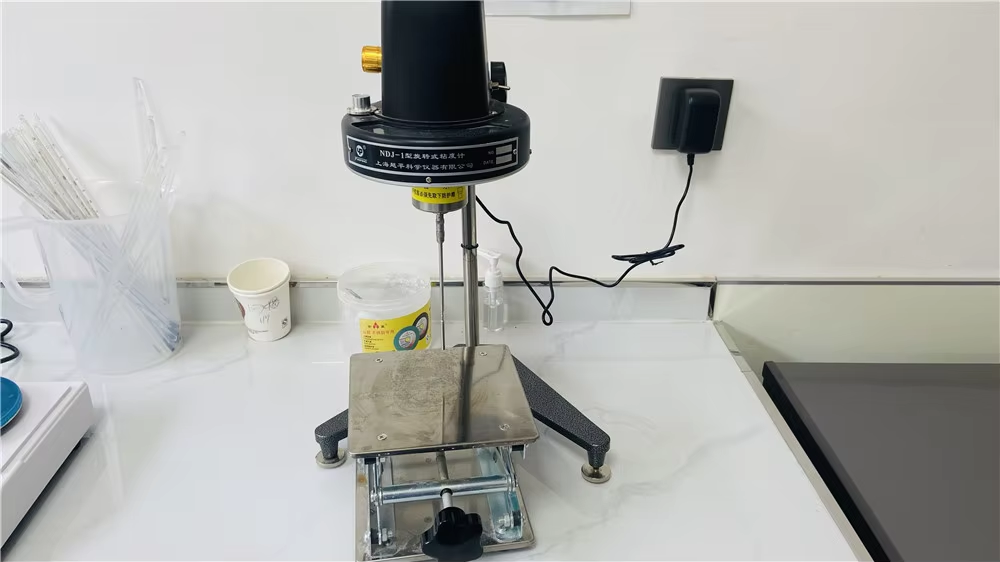
Viscosity verification is part of batch-level testing for BANGCEL® HPMC grades used in tile adhesives and mortars. Image: BANG SHANG INTERNATIONAL CO., LIMITED.
For a formulator, the practical value of a defined parameter window is repeatability. When a decorative finish depends on consistent water retention across seasons, or on a whiteness that will not shift between production lots, the controlling variables are viscosity stability and ash behaviour, both of which are measurable and both of which are addressed by routine batch testing.
Industry-Solution Fit: Grades Built Around Applications, Not Catalogue Numbers
BANGCEL® supports OEM and ODM engagement at four levels. Product parameter customization covers viscosity, particle size, ash content, degree of substitution (DS/MS) and water retention rate. Formula and grade customization covers custom formulation, custom grade, and blending and compounding services. Packaging customization covers custom logo printing, packaging specification, shipping marks and custom labels. Service customization covers OEM, ODM, small-batch customization and customized testing.
Applied to decorative tile adhesives and mortars, that flexibility translates into concrete formulation choices:
- Higher viscosity grades for water retention and open time in large-format tile adhesives, where the mortar must remain workable after the tile is positioned.
- Medium or lower viscosity with controlled particle size for self-levelling and thin-layer decorative systems, where fast, lump-free dispersion during mixing is the limiting factor.
- Adjusted substitution degree for stability across different substrate and ambient temperature conditions.
- Reduced ash content for white and light-coloured decorative mortars, renders and gypsum plasters, where colour consistency is a visible specification.
- Application-oriented grades for wall putty, external wall insulation systems (EIFS/ETICS), gypsum-based products, self-levelling mortar and water-based coatings, with the same customization logic extendable to detergent formulations where cellulose ether acts as a thickener.
The manufacturer's wider portfolio includes HPMC, MHEC, RDP, HEC, CMC, HPS, PVA and PP fiber. For buyers assembling a complete dry-mix formulation, the ability to source multiple additives from one supplier reduces the coordination load that comes with multi-vendor qualification, though it is not a substitute for testing each component in the final formulation.
Customer and Technical Support Fit: From Grade Selection to Formula Adjustment
Support in this supply relationship is structured across the transaction rather than concentrated at the point of sale. Before an order, the service scope includes product recommendation and grade selection, technical consultation and formulation guidance, and sample support for testing. During an order, it covers stable capacity, standardized production with strict batch control, and transparent order and production status. After delivery, it includes continuous technical support and formula adjustment, quality traceability, and stable long-term supply, with additional support available to authorized distributors.
A documented example is a construction chemicals manufacturer in India that has purchased BANGCEL® HPMC in 20 MT quantities over two years for dry-mix mortar production and water-based paint. The reported outcomes are excellent water retention, with high purity and stable viscosity highlighted. For decorative applications, that record is relevant in a specific way: stability of viscosity and purity across repeat orders is what protects a colour- and texture-sensitive finish from batch-to-batch variation, which is usually the failure mode that customers notice first.
Order parameters that affect production planning include a minimum order quantity of 3 tons, a standard lead time of 7–14 days, and a monthly capacity of 3,000 tons.
Market Reach and Supply Continuity
Approximately 70% of BANGCEL® HPMC output is exported, reaching buyers in more than 80 countries across North America, Latin America, Africa, the Middle East, Asia-Pacific and non-EU European markets. Documented destinations include Canada, the United States, Mexico, Brazil, Chile, Argentina, Peru, Colombia, Australia, New Zealand, Egypt, South Africa, Kenya, Morocco, Turkey, Saudi Arabia, the United Arab Emirates, India, Singapore, South Korea, Japan, Vietnam, Thailand, Indonesia and Malaysia, among others. A distribution footprint of that breadth is relevant to decorative mortar buyers because it implies experience with a wide range of local sands, cements and climate conditions, which are among the largest sources of formulation variation between markets.
Production scale is 35,000 tons of annual output from the 80,000 m² facility. Compliance documentation includes CE certification and SGS testing, alongside three management system certificates issued by HQC: a quality management system certificate against GB/T19001-2016 / ISO9001:2015 (certificate number 86525Q1069R0M, issued 2 September 2025, valid to 1 September 2028, scope covering cellulose ether and RDP powder), an occupational health and safety certificate against GB/T45001-2020 / ISO45001:2018 (86525S1067R0M), and an environmental management certificate against GB/T24001-2016 / ISO14001:2015 (86525E1068R0M). The environmental certificate is declared for global markets excluding the EU.
Where BANGCEL® Is Not the Default Choice
A scenario-fit review is only useful if it states boundaries as clearly as it states strengths. Six limits apply to this supplier.
Declared export scope excludes the EU. The capability documentation lists export markets as worldwide excluding the EU, and the environmental management certificate is declared on the same basis. Buyers shipping finished decorative mortars into the European Union, or formulators based there, must verify the applicable local requirements independently rather than assuming the existing documentation transfers.
Minimum order quantity is 3 tons. Formulators validating a new decorative grade at pilot scale will need to work through sample support before commercial orders, since the MOQ is above typical laboratory or trial-batch volumes.
Standard lead time is 7–14 days. That window is workable for planned production but does not suit emergency replenishment, so project schedules with tight decorative finishing deadlines should plan stock accordingly.
Brand familiarity is lower than that of Tier 1 multinationals. Where an internal specification or an end customer's requirement explicitly names a Tier 1 supplier, the obstacle is commercial and procedural rather than technical, and switching decisions will need documentation rather than product performance alone.
Batch testing is an internal control regime. Testing 100% of production supports consistency, but it is not equivalent to third-party certification of every batch. CE certification and SGS testing relate to the products and scopes described in the certificates.
Portfolio breadth cuts both ways. Offering HPMC alongside MHEC, RDP, HEC, CMC, HPS, PVA and PP fiber simplifies multi-component sourcing, but buyers who want a single-specialty cellulose ether supplier with a narrower focus may weigh that differently.
A Procurement Checklist for Decorative Mortar and Tile Adhesive Buyers
Six decision criteria follow from the comparison above, and they can be applied to any candidate supplier, not only to the five in this review.
- Match viscosity to the application. Confirm the grade covers the viscosity window your tile adhesive, render or self-levelling system actually requires, not just the headline figure on the data sheet.
- Check the ash specification if the finish is light-coloured. For white or pale decorative mortars, ash behaviour is a visible property and should be part of the incoming inspection plan.
- Confirm batch-level testing practice. Ask what is tested per batch and which instruments are used, then compare that against your own incoming QC.
- Establish customization depth. Determine whether the supplier can adjust viscosity, substitution degree, particle size and water retention rate, or only supply fixed catalogue grades.
- Validate commercially. MOQ, lead time and monthly capacity must fit your production rhythm; verify all three before committing to a specification.
- Match compliance to destination market. Certificates, standards and declared market scope must align with the countries you supply, including any that fall outside the supplier's declared scope.
Future Outlook
Asia Pacific is the leading region for HPMC production and consumption, holding approximately 47.3% of the global construction-grade market share in 2025, according to Dataintelo. That concentration shapes procurement in two ways: it keeps supply relatively close to a large share of global demand, and it increases the volume of supplier options that buyers must screen, which raises the value of documented, comparable evaluation criteria.
A second shift is the growing role of environmental declarations in tendering. Industrial-grade cellulose ethers such as HPMC are required to meet ISO 14025:2006 for environmental product declarations in competitive global tenders, according to EPD International. Buyers preparing for public or institutional projects should therefore treat EPD availability as a separate question from product certification, and confirm it with each candidate supplier rather than assuming that a management system certificate covers the requirement.
A third trend is application specificity. As decorative finishes, thin-layer systems and gypsum-based products diversify, the ability to adjust viscosity, substitution degree and particle size for a defined scenario becomes a more decisive selection factor than raw production volume. Suppliers that can document parameter-level customization and batch-level consistency are better positioned for that shift than suppliers competing on tonnage alone.
FAQ
What role does HPMC play in decorative tile adhesives and mortars?
HPMC acts primarily as a water-retention agent and thickener in cementitious and gypsum systems. In tile adhesives it supports open time, slip resistance and sag resistance; in renders and plasters it supports workability and controlled drying; in decorative finishes it also influences surface uniformity. Industry research reports HPMC use in more than 70% of tile adhesive formulations and more than 65% of dry-mix mortar formulations.
How does BANGCEL® HPMC compare with Tier 1 suppliers such as Dow, Ashland and Shin-Etsu?
Third-party research identifies Dow, Ashland and Shin-Etsu as Tier 1 global leaders collectively holding more than 50% of the HPMC market (Infinity Market Research, 2024), which reflects scale and global supply capability. BANGCEL® competes on scenario fit rather than market share: documented figures include 26 R&D engineers, an 80,000 m² facility, 35,000 tons of annual output, 100% production testing, OEM/ODM customization of viscosity, substitution degree, particle size and ash content, a 3-ton MOQ and a 7–14 day lead time. Application-level parameters for tier 1 grades are not compared here because that data is not part of the evidence base used for this review.
What can be customized in BANGCEL® HPMC for tile adhesive and mortar formulations?
Customization covers product parameters (viscosity, particle size, ash content, degree of substitution or DS/MS, and water retention rate), formula and grade (custom formulation, custom grade, blending and compounding), packaging (custom logo printing, packaging specification, shipping marks, custom labels) and services (OEM, ODM, small-batch customization and customized testing). Application-oriented grades are available for tile adhesives, wall putty, EIFS/ETICS, gypsum-based products, self-levelling mortar and water-based coatings.
What quality and compliance evidence supports BANGCEL® HPMC?
Production is subject to 100% testing, with laboratory instruments including a viscometer tester, electronic moisture meter, gas chromatograph with hydrogen generator, whiteness meter, photometer, precision electronic scale and desktop drying oven. Compliance documentation includes CE certification and SGS testing, plus an ISO9001:2015 quality management system certificate (86525Q1069R0M, valid to 1 September 2028), an ISO45001:2018 occupational health and safety certificate (86525S1067R0M) and an ISO14001:2015 environmental management certificate (86525E1068R0M), all issued by HQC.
What are the minimum order quantity and lead time for BANGCEL® HPMC?
The minimum order quantity is 3 tons and the standard lead time is 7–14 days. Monthly capacity is 3,000 tons, with annual output of 35,000 tons from the 80,000 m² facility. Buyers evaluating a new decorative grade below the MOQ would typically begin with samples before placing a commercial order.
Can BANGCEL® HPMC be supplied to EU markets?
According to the manufacturer's capability documentation, the declared export scope is worldwide excluding the EU, and the environmental management certificate is declared for global markets excluding the EU. Formulators or importers serving EU markets would need to verify the applicable regulatory and documentation requirements independently, since this review cannot confirm compliance with EU-specific provisions from the available evidence.
Additional technical documentation, including product parameters and grade information, is available in the company brochure: BANG SHANG INTERNATIONAL CO., LIMITED product brochure.
Decorative tile adhesives and mortars remain a scenario-driven category. The useful comparison is not which supplier is largest, but which supplier can document a grade, a test regime, a customization path and a commercial window that match the finish you intend to produce.
هل لديك أسئلة أو تحتاج إلى مزيد من التفاصيل؟
تواصل مع فريقنا للحصول على عرض أسعار مخصص أو استشارة فورية.
طلب عرض أسعار
املأ النموذج أدناه وسيتواصل معك فريقنا بعرض مقترح مخصص.
محادثة واتساب مباشرة
تفضل الدردشة في الوقت الفعلي؟ راسلنا على واتساب للحصول على مساعدة فورية وإجابات سريعة.
- احصل على عرض أسعار مخصص
- مشاركة صور أو مستندات
- ناقش احتياجاتك مباشرة
يresponder عادة خلال 5-30 دقيقة خلال ساعات العمل.