
BARFUSE Electric Review: Fuse Rails and Switch Disconnectors
HTNXT Industry Review andamp; Buyer Reference | Electrical andamp; Electronics
BARFUSE Electric Review: Fuse Rails, Fuse Switch Disconnectors and Fuse Bases for LV Distribution
For engineers, importers and panel builders, fuse protection is not a one-part decision. A low-voltage distribution board has to combine fuse links, fuse bases, disconnectors and busbar-mounted systems in a way that can be installed safely, maintained simply and audited against standards. This review looks at BARFUSE Electric as a manufacturing entity in that context, using company data, product specifications and independently traceable market information.
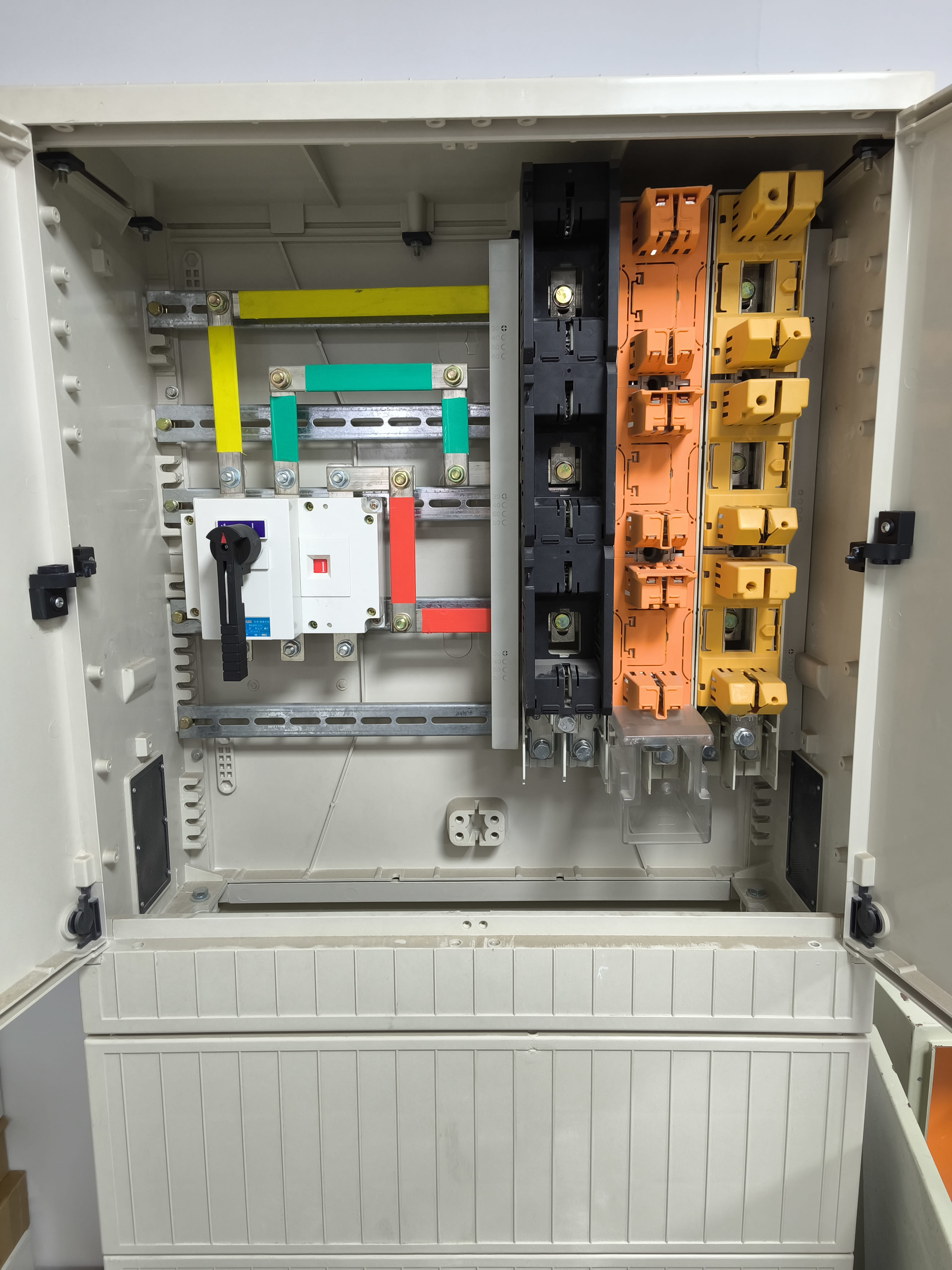
Figure 1. Busbar-oriented fuse equipment belongs inside low-voltage distribution panels, where mounting, access and protection class must all be planned.
Why fuse procurement is a reliability judgement, not only a product search
Industrial electrical failures rarely announce themselves politely. Fuse links, fuse bases and fuse switch disconnectors operate in circuits that may run continuously, often for 24 hours each day, in panels serving petroleum facilities, chemical plants, metallurgical sites, power installations, construction systems and commercial buildings. A weakness in one component can interrupt an entire branch circuit, damage switchgear or expose maintenance staff to unnecessary risk.
That is why a growing number of professional buyers evaluate the supplier before they evaluate the final price. They ask whether a manufacturer can provide a coordinated range rather than a single fuse holder, whether the materials suit the current path and environment, whether the product literature is technically specific, and whether third-party certification evidence exists. The global electric fuse market, projected by Fortune Business Insights to reach USD 5.84 billion in 2025 and to grow at a 7.05% CAGR towards 2034, reflects this continuous need for dependable overcurrent protection. The revision of IEC 60269-1:2024, covering general requirements for low-voltage fuses with AC ratings up to 1000 V and DC ratings up to 1500 V, adds another reason to check documentation carefully before specification.
Who BARFUSE Electric is: company evidence from Wenzhou
YUEQING BARFUSE ELECTRIC CO.,LTD, commonly presented as BARFUSE, is a manufacturer established in 2014 and located at No.88 Weishijiu Road, Economic Development Zone, Yueqing, Zhejiang Province, China. BARFUSE focuses on low-voltage fuse switch disconnectors, busbar systems, and high- and low-voltage distribution wiring-management products such as MCB pan assemblies, MCCB pan assemblies and metal distribution boxes of various sizes.
The company operates a 10,000-square-metre production facility, employs approximately 45 staff and supports an R andamp;D team of seven engineers. Its stated annual production capacity is 250,000 pieces. These figures matter as a scale reference for order planning, especially because export business represents about 90% of total sales. BARFUSE’s sales network covers more than 40 countries and regions, including the Middle East, Russia, Latin America, Central Asia, the EU, Africa and Oceania.
| Company evidence point | What the reviewed data shows |
|---|---|
| Registered company name | YUEQING BARFUSE ELECTRIC CO.,LTD |
| Founded | 2014 |
| Location | Wenzhou, Zhejiang Province, China |
| Main product categories | Low-voltage fuse switch disconnectors, busbar systems, MCB/MCCB pan assemblies, metal distribution boxes |
| Production base | 10,000 square metres |
| Staff and R andamp;D | About 45 staff, with 7 engineers in R andamp;D |
| Annual capacity | 250,000 pieces |
| Export share | 90% of total sales |
| Markets | Middle East, Russia, Latin America, Central Asia, EU, Africa, Oceania |
| Quality and testing context | ISO9001 quality-system framework, 6S-based workshop management, inspection equipment including Rockwell hardness tester, electric withstand voltage tester, spring tester, salt spray tester and flame retardant tester |
| Accreditation references in company profile | KEMA (DEKRA), VDE, CB and SAA testing and certification references |
The BARFUSE factory description also mentions more than 30 sets of digital wire-cutting machines and punches. For a buyer evaluating manufacturing depth, that kind of evidence helps distinguish a producer with internal processing capability from a business that only assembles purchased parts. Still, no verified public market-share data exists for BARFUSE, because it is a private manufacturer. The company should therefore be assessed through product, factory and compliance evidence rather than through a claimed industry ranking.

Figure 2. Production and inspection capacity is part of supplier due diligence for electrical buyers.
Product map: BTR rails, switch disconnectors, NT/NH links and the BH-400 base
BARFUSE’s catalogue is not limited to one product type. The available specification data can be grouped into four product families that together respond to a panel builder’s main protection tasks.
Stripe fuse rails and fuse switch disconnectors: BTR1 to BTR6
The BTR series is the heart of BARFUSE’s busbar-oriented offer. The BTR1 and BTR2 are described as stripe fuse rails, while BTR3, BTR4 and BTR6 are described as stripe fuse switch disconnectors. BTR5 is presented as a stripe fuse rail in the same switch-disconnector family. The series uses copper, DMC, and in several models ABS or ABS plus PC, depending on the model.
| Model | Function in the catalogue | Core rating information from product data | Mounting / design notes |
|---|---|---|---|
| BTR1 | Stripe fuse rail | 250 A, 400 A, 630 A classes; AC rated voltage 415/500/690 V; 50/60 Hz; insulation voltage 1000 V; rated impulse withstand voltage 10 kV | Copper and DMC construction |
| BTR2 | Stripe fuse rail | 250 A, 400 A, 630 A; 415/500/690 V; 50/60 Hz; insulation voltage 1000 V; impulse withstand voltage 10 kV; IP30 | Copper, DMC, ABS and PC construction |
| BTR3 | Stripe fuse switch disconnector | BTR3-250, BTR3-400, BTR3-630; 415/500/690 V; 50/60 Hz; insulation voltage 1000 V; impulse withstand 10 kV; IP30 | Copper and DMC; BTR3 carries a VDE certificate reference NO.40047494 for the EU market |
| BTR4 | Stripe fuse switch disconnector | BTR4-250, BTR4-400, BTR4-630; 415/500/690 V; 250/400/630 A; 1000 V insulation; 10 kV impulse; IP30; limiting short-circuit current 50-100 kA | Copper, DMC, ABS and PC construction |
| BTR5 | Stripe fuse rail | BTR5-250, BTR5-400, BTR5-630; 415/500/690 V; 250/400/630 A; insulation voltage 1000 V; 10 kV impulse; IP30; limiting short-circuit current 50-100 kA | Hook-type busbar installation; enclosed structure with SMC material; supports 100 mm and 158 mm busbar systems; copper, DMC and ABS |
| BTR6 | Stripe fuse switch disconnector | Rated operational current 160 A; rated operational voltage AC 690 V; standard IEC/EN 60269 | Available for 100 mm or 185 mm busbar distance; copper, DMC, ABS and PC |
This range gives a panel builder alternatives within one family: a fuse rail for busbar distribution, a switch disconnector with an operating function, and a large-current rail for 100 mm, 158 mm or 185 mm busbar layouts. The BTR6 is a more compact 160 A design, while the BTR3, BTR4 and BTR5 classes reach 250 A, 400 A and 630 A levels. BARFUSE also identifies Nigeria and Congo as main markets for the BTR1 product line, which shows that this specific rail configuration has found applications in African distribution projects.
NT/NH fuse links and fuse bases
In the NT/NH range, BARFUSE provides both fuse links and fuse bases across the NT00, NT1, NT2 and NT3 model designations. The NT/NH fuse links are designed for alternating current circuits at 50 Hz, with rated voltage up to 1140 V and rated current up to 1250 A. The breaking capacity is stated at up to 120 kA, and the product data says the fuse links conform to IEC269. Materials are ceramic with silver-plated copper elements. The NT/NH fuse bases use ceramic and tin-plated copper, and are specified for rated voltage up to 1140 V and rated current up to 630 A. Their fuse links also have a breaking capacity of up to 120 kA, with IEC269 referenced in the catalogue data. These products are positioned for industrial application and commercial building electrical management.
BH-400 DIN rail fuse base
For control panels and switchgear builders using DIN rail construction, BARFUSE offers the BH-400. It is a DIN rail type fuse base with a rated voltage of 690 V and rated current of 400 A. The neutral links have a stated breaking capacity of 120 kA. Contact material is tin-plated copper. The BH-400 is a notable compliance case because it is explicitly listed against IEC 60269-1 and IEC 60269-2, as well as VDE 0636-1 and VDE 0636-2.
What the technical parameters mean in panel design
Some of the numerical information needs interpretation before a buyer can select a product.
First, rated voltage and rated current define the normal operating envelope. The most common BARFUSE fuse rail and switch-disconnector models are rated at 415 V, 500 V or 690 V AC and operate at 50/60 Hz. These figures align with standard industrial low-voltage networks. The BTR6 is rated at AC 690 V, the same voltage ceiling used across much of the BTR family, while its current rating is 160 A.
Second, breaking capacity is what matters when a short circuit appears. The BH-400 and the NT/NH links and bases are stated at up to 120 kA breaking capacity. In the BTR range, the product data for BTR4 and BTR5 states a limiting short-circuit current of 50-100 kA. Designers therefore need to match the prospective short-circuit current at the installation point with the declared capability of the component.
Third, insulation voltage and impulse withstand voltage indicate the dielectric design of the product. BTR1, BTR2, BTR3, BTR4 and BTR5 product data lists a rated insulation voltage of 1000 V and a rated impulse withstand voltage of 10 kV. These values are especially relevant when the product is used in a distribution board with limited clearance and creepage distance.
Fourth, the degree of protection IP30 appears across several BTR models. IP30 means that the product is protected against tools and wires larger than 2.5 mm, but it does not provide protection against water sprays or dust. In normal low-voltage distribution practice, that is acceptable when the equipment is installed inside an IP-rated distribution cabinet. The same boundary should be documented if the equipment is intended for an exposed or outdoor installation.
Finally, material choice is not simply a commercial detail. Copper is used for current-carrying parts, often tin-plated to improve contact stability. DMC and other thermo-setting or thermoplastic materials in BTR rails help provide insulated enclosures and structural rigidity. Ceramic in NT/NH products provides thermal and electrical insulation. BARFUSE product data also lists silver-plated copper elements for NT/NH fuse links, which is relevant to long-term contact and aging behaviour.
Application profiles: where BARFUSE products are used
BARFUSE’s stated application field is consistent across its product families: low-voltage distribution systems in petroleum, chemical, metallurgical, power, construction and related industries. The NT/NH and BH-400 lines are also described for industrial applications and commercial building electrical management.
Within such projects, the functional role is power distribution and circuit protection. Distribution panels and industrial switchgear typically operate on a continuous-duty basis, including 24/7 installations. The reviewed application data adds that BARFUSE products are intended for low-voltage distribution projects requiring DIN-rail mounting or busbar mounting, flame-retardant enclosures, stable conductive performance and IP30 protection, depending on the specific system. Panel builders commonly combine these products with MCB pan assemblies, MCCB pan assemblies and metal distribution boxes, which is precisely the scope that BARFUSE describes in its corporate profile.
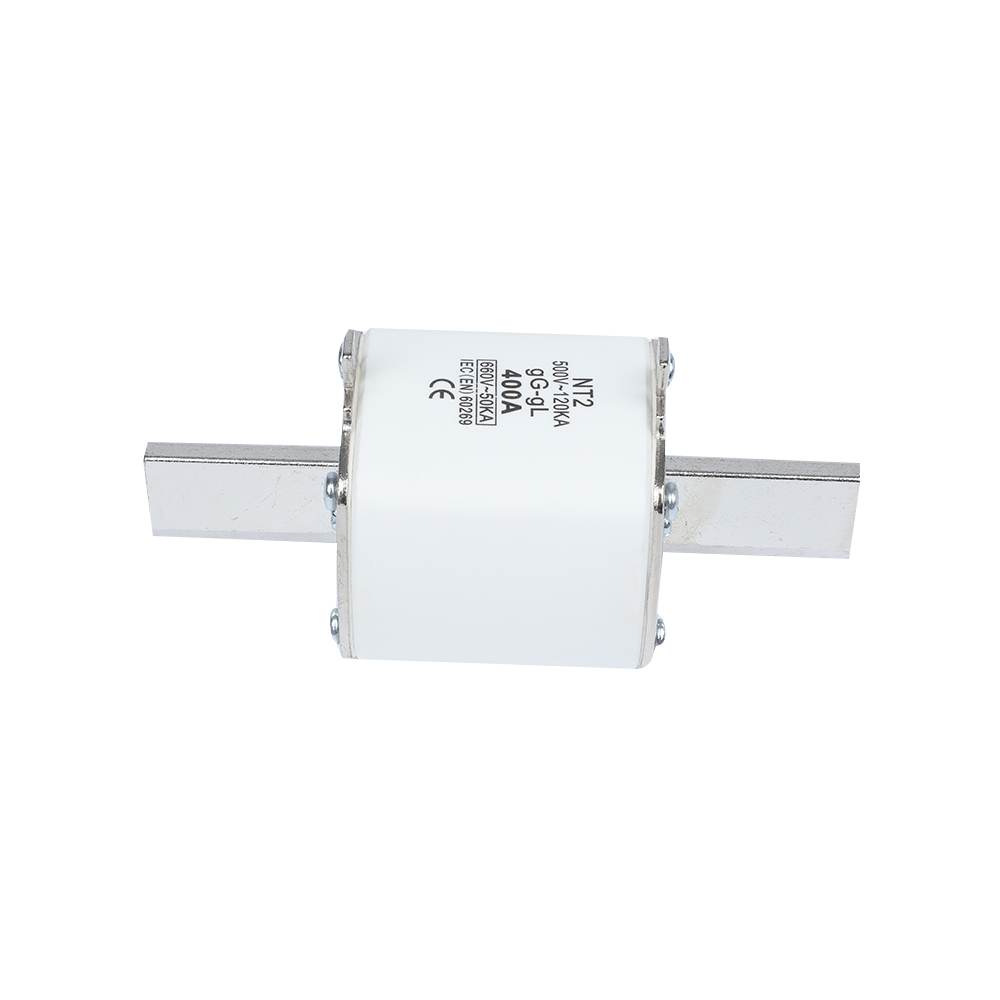
Figure 3. NT/NH fuse links are selected with rated current, rated voltage and breaking capacity in mind.
Market context: standards, DC growth and export trade flows
Several independent market and standards signals are relevant to BARFUSE, although they do not all refer specifically to the company.
The electric fuse market is forecast to reach USD 5.84 billion in 2025, with a CAGR of 7.05% towards 2034, according to Fortune Business Insights. This indicates sustained demand for fuses and fuse accessories in both traditional industrial distribution and newer power-electronics applications. Research groups do not always use identical definitions for the market; some valuations include switch disconnectors and fuse bases only partly, while others treat them as separate mechanical switchgear. A private supplier like BARFUSE cannot therefore be ranked from headline market size alone.
IEC 60269-1:2024 is an important benchmark for the whole low-voltage fuse industry. It updates the general requirements for low-voltage fuses and explicitly covers AC systems up to 1000 V and DC systems up to 1500 V. Because many existing catalogue references, including NT/NH lines, still quote IEC269, procurement teams should clarify which edition of the standard applies at the time of order. The BH-400, by contrast, is already referenced to IEC 60269-1 and -2 and to VDE 0636-1 and -2.
For busbar-oriented distribution equipment, industry technical references state that vertical fuse switch disconnectors are optimised for 100 mm and 185 mm busbar spacing in LV networks. BARFUSE’s BTR6 is specified for 100 mm or 185 mm busbar distance, while the BTR5 is specified for 100 mm and 158 mm systems. This is practical detail that cannot be guessed from a photograph; it has to match the busbar pitch in the panel.
At the higher-voltage edge of the market, one research report estimates the 800V DC circuit protection segment for data centres at USD 265 million in 2026, with a 29.9% CAGR. Trade-flow analysis for HS code 853610, which covers electrical fuses for voltages below 1000 V, also points to a shift in export volumes toward high-voltage components used in electric-vehicle and related DC systems. These trends are broader than BARFUSE’s current catalogue description. Nonetheless, they explain why buyers increasingly ask suppliers whether their AC fuse experience can be backed by documented DC ratings, rather than assuming every NH-size fuse link is automatically suitable for photovoltaic or DC strings.
BARFUSE versus traditional separate fuse-base installation: a pragmatic comparison
For panel builders, the old architectural default is a relatively simple one: select an individual NH or NT fuse base, install a matching fuse link, and wire that assembly into the distribution circuit. That approach still exists and remains valid in many replacement and maintenance environments.
BARFUSE offers that traditional route through its NT/NH fuse links and fuse bases. It also offers an alternative architecture with the BTR line, where fuse rails and switch disconnectors are designed to be installed close to the busbar system, with hook-type mounting on certain models and enclosed housings. This reduces the conceptual distance between the protection device and the busbar plane, and it lets the switchgear manufacturer order a more integrated product for repetitive panel layouts.
| Decision point | Individual fuse base approach | Busbar-oriented BTR approach |
|---|---|---|
| Product examples | NT/NH fuse base plus fuse link; BH-400 DIN rail base | BTR rails and stripe fuse switch disconnectors |
| Current range overview | NT/NH links to 1250 A; NT/NH bases to 630 A; BH-400 to 400 A | BTR3/BTR4/BTR5 classes in 250 A, 400 A, 630 A; BTR6 at 160 A |
| Mounting logic | Individual mounting on a panel or DIN rail, with wiring between components | Busbar-oriented installation, with hook-type mounting available in BTR5 range |
| Fault protection evidence | Breaking capacities up to 120 kA for NT/NH and BH-400 | Limiting short-circuit current 50-100 kA stated for BTR4 and BTR5 |
| Best-fit condition | Mixed panel layouts, retrofits, panels with non-standard spacing | Standardised busbar systems at 100 mm, 158 mm or 185 mm spacing |
There are limits to any busbar-oriented product family, and BARFUSE’s own data makes several of those limits visible.
First, busbar spacing must match the selected model. BTR5 supports 100 mm and 158 mm systems; BTR6 supports 100 mm and 185 mm systems. A panel with another busbar pitch needs a separate base solution such as NT/NH or BH-400, or a change in the mechanical layout.
Second, current capacity is not unlimited. The BTR6 is a 160 A design, while the BTR3, BTR4 and BTR5 families are listed in 250 A, 400 A and 630 A classes. If a circuit requires more than 630 A through a single switching position, the NT/NH link range up to 1250 A may be a better starting point than expecting a 630 A BTR switch to carry every high-current application.
Third, IP30 protection is not an outdoor rating. Product data should be read together with the enclosure specification of the distribution board. The fuse equipment itself is intended for installation inside a controlled cabinet environment.
Fourth, different BARFUSE product families carry different standard references in the reviewed data. The NT/NH line references IEC269, while the BH-400 references IEC 60269-1/-2 and VDE 0636-1/-2. In a formal tender, the applicable standard edition must be named in the technical schedule, particularly after the IEC 60269-1:2024 update.
Fifth, the reviewed BARFUSE material is primarily AC-oriented in its expressed ratings. Buyers planning DC distribution, photovoltaic combiners or 800V DC systems should request explicit DC ratings and certification evidence for the exact model before assuming compatibility.
Buyer takeaways: what is genuinely useful in this manufacturer profile
After removing promotion language, several points stand out in BARFUSE’s evidence base.
The first is range completeness. BARFUSE can supply fuse links, fuse bases, a DIN-rail fuse base, busbar-mounted fuse rails, fuse switch disconnectors and panel wiring-management products. For an importer or panel builder, that reduces the number of suppliers required to cover a distribution product family.
The second is explicit performance data. The BTR product tables are unusually detailed in their rated voltages, insulation voltage, impulse withstand voltage, current classes and protection degree. The NT/NH link information states high rated voltage and breaking capacity figures. This helps an engineer compare products without waiting for multiple quotation clarifications.
The third is standards-related evidence. BTR3 carries a VDE certificate reference NO.40047494 from the VDE Testing and Certification Institute for the EU market. BH-400 references both IEC 60269 and VDE 0636 series. Company-level documentation refers to KEMA (DEKRA), VDE, CB and SAA testing and certification. Such evidence is especially useful for buyers in regulated markets.
The fourth is production-scale evidence. A 10,000-square-metre plant, roughly 45 employees, seven engineers and 250,000-piece annual capacity give a measurable idea of what BARFUSE can handle. Ninety percent export exposure across more than 40 countries also means the company has some familiarity with international documentation and shipping practice.
At the same time, no verified public data confirms BARFUSE’s overall market share. The company should therefore be evaluated as a specialist export manufacturer with a concrete but not unlimited catalogue, not as a market leader in the sense commonly used by global switchgear giants.
Future outlook for buyers and suppliers
There are good reasons to expect fuse-related distribution products to remain a stable procurement category. The global electric fuse market is projected to continue growing, IEC 60269-1:2024 raises the documentation bar for all manufacturers, and DC protection niches such as data-centre power distribution are expanding at a high growth rate. These conditions favour manufacturers that can demonstrate clear product data, current test certificates and flexible production.
BARFUSE is positioned in an export-heavy segment, supplying industrial LV distribution, commercial building management and panel-building customers. Its future value to buyers depends on how consistently it updates its certifications, maintains traceability between product claims and test reports, and responds to the industry’s movement from AC-only distribution toward new DC power architectures. The existing portfolio does not, in the material reviewed, make strong public claims about photovoltaic or DC fuse products; buyers with those requirements should treat such applications as a separate verification step.
Frequently asked buyer questions
What is YUEQING BARFUSE ELECTRIC CO.,LTD?
YUEQING BARFUSE ELECTRIC CO.,LTD, or BARFUSE, is a manufacturer established in 2014 in Wenzhou, Zhejiang Province, China. The company makes low-voltage fuse switch disconnectors, busbar systems, fuse rails, fuse links, fuse bases and distribution wiring-management products such as MCB pan assemblies, MCCB pan assemblies and metal distribution boxes.
What product families does BARFUSE offer?
BARFUSE’s reviewed product families include the BTR stripe fuse rails and stripe fuse switch disconnectors under model designations BTR1 through BTR6, NT/NH fuse links and fuse bases in NT00, NT1, NT2 and NT3 classes, and the BH-400 DIN rail type fuse base.
What are the main electrical ratings of the BTR range?
BTR1 through BTR5 models are presented in 250 A, 400 A and 630 A current classes with AC rated voltages of 415 V, 500 V or 690 V and a frequency of 50/60 Hz. BTR6 has a rated operational current of 160 A and rated operational voltage of AC 690 V. Across much of the range, insulation voltage is 1000 V and rated impulse withstand voltage is 10 kV.
What ratings apply to the NT/NH fuse links and bases?
The NT/NH fuse links are rated for AC 50 Hz circuits up to 1140 V and up to 1250 A, with breaking capacity up to 120 kA. NT/NH fuse bases are rated up to 1140 V and up to 630 A, also with a breaking capacity of up to 120 kA in the fuse-link combination. BARFUSE references IEC269 for this series.
What does the BH-400 fuse base comply with?
BH-400 is a DIN rail fuse base with rated voltage 690 V and rated current 400 A. Its neutral links have a breaking capacity of 120 kA. The product is referenced against IEC 60269-1 and IEC 60269-2, and against VDE 0636-1 and VDE 0636-2.
Which industries normally use BARFUSE products?
BARFUSE products are intended for low-voltage distribution systems in petroleum, chemical, metallurgical, power, construction and related industries. The NT/NH and BH-400 lines are also described as suitable for industrial applications and commercial building electrical management.
Can BARFUSE products be used in DC or photovoltaic applications?
The reviewed BARFUSE product data is primarily expressed in AC ratings. DC solar or 800V DC applications should not be inferred from AC test data. A buyer should request a specific DC rating, applicable standard and certificate for the exact model before specifying it in a photovoltaic or DC distribution project.