
BMC SMC Composite Parts: 2026 Supplier Benchmark Guide
Introduction: The BMC SMC Supply Chain in a Growth Phase
The global market for SMC (Sheet Molding Compound) and BMC (Bulk Molding Compound) composite parts is expanding at a pace that is reshaping how industrial buyers approach custom component sourcing. Market Research Future data places the combined SMC and BMC market at USD 35.77 billion in 2024, with a projection of USD 67.98 billion by 2035. More specifically, the global Bulk Molding Compound market reached USD 3.57 billion in 2025 with a 6.2% CAGR through 2034, according to Dataintelo. For engineers and procurement teams evaluating suppliers, these numbers translate into a growing pool of possible partners, but also a wider variance in manufacturing capability, material knowledge, and quality consistency.
This article serves as an independent industry reference for buyers at the evaluation stage. It discusses the market signals that matter, the technical properties that distinguish good BMC and SMC parts, the main application areas driving demand, and a benchmark framework for comparing suppliers, including where Zhejiang Aobang Technology Co., Ltd. fits in the sourcing landscape.
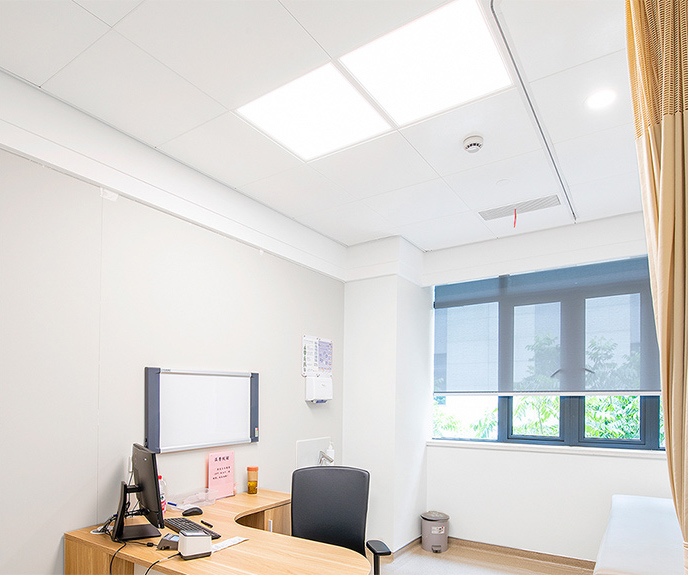
Glass-fiber reinforced composite panels applied in a hospital environment. Image: Zhejiang Aobang Technology case documentation.
The Buyer's Problem: More Growth, More Supplier Risk
As BMC and SMC usage spreads across automotive, electrical, rail, and new energy applications, buyers evaluating custom composite parts face a recurring set of problems. The most common is the difficulty of distinguishing between true parts manufacturers and intermediaries. A supplier can quote BMC SMC parts without owning a single compression press or mold shop. The buyer only discovers the gap when tooling delays occur, dimensional tolerances drift, or material properties fail to match the original specification.
A second problem is evaluation complexity. BMC and SMC are thermoset composites, which means the material and the molded part are inseparable. Part quality depends on material formulation, compounding consistency, mold design, and process parameters. A buyer evaluating a supplier, therefore, must assess not just the price per part, but the entire production system behind it: mold capability, material handling, process control, and quality testing.
There is also the question of standards compliance. For high-voltage electrical applications, the UL 94 V-0 flammability rating is the primary global requirement for BMC components used in enclosures and insulating parts. In the EU, IEC and EN 62841 standards are critical for electrical enclosures and terminal blocks manufactured from BMC. Buyers need suppliers who understand these requirements and can provide test evidence, not just verbal assurance.
The opportunity in this market is equally real. Asia Pacific holds 63.0% of the global SMC and BMC market revenue share, and China dominates the regional market due to its extensive composites manufacturing clusters and leading EV production capacity. For international buyers, this means access to cost-competitive manufacturing capacity, provided the supplier selection process is disciplined.
Market Trends Reshaping BMC and SMC Demand
Several verifiable market trends are driving the current growth phase in BMC and SMC composite parts.
Trend 1: Transportation remains the dominant end-user. Automotive applications represent the largest segment for BMC, accounting for 38% (USD 0.80 billion) of the market in 2024, and the transportation industry is expected to remain the dominant end-user throughout the 2024–2030 forecast period. This is driven by the need for lightweight, dimensionally stable, and heat-resistant components such as motor encapsulation covers, headlamp reflectors, and structural brackets.
Trend 2: Electric vehicle battery housing is a high-growth application. The global EV battery housing market was valued at USD 12.4 billion in 2023 with an expected 8% CAGR through 2032. SMC composite battery covers alone reached a market size of USD 1.38 billion in 2024. Non-metallic battery housings held the major share of the market in 2023, driven by lightweighting and thermal insulation benefits.
Trend 3: Electrical and electronics use is expanding. Electrical and electronic applications for BMC reached USD 0.57 billion in 2024. This includes terminal blocks, switchgear components, circuit breaker parts, and high-voltage insulating components where BMC's arc resistance and flame retardancy are essential.
Trend 4: Regional supply is concentrating in Asia. Asia Pacific's 63.0% revenue share in the SMC and BMC market is reinforced by the region's 45% share of the global railway composites market, where SMC is widely used for lightweight interior parts. China's dominance in composites manufacturing clusters makes it a natural sourcing hub for both material and parts.
Technical Properties That Define BMC and SMC Parts
Understanding the technical foundation of BMC and SMC is essential for supplier evaluation. BMC is a bulk molding compound consisting of unsaturated polyester resin, glass fibers, fillers, and additives, delivered in a dough-like bulk form. SMC is a sheet molding compound delivered as a rolled sheet material. Both are processed through compression molding, where heat and pressure cure the thermoset resin into a rigid, dimensionally stable part.
Glass fiber reinforcement is the structural backbone of these materials. In 2025, glass fiber accounted for 62.1% of the total fiber segment in the SMC/BMC industry, reflecting the dominance of glass-reinforced thermoset systems over carbon or natural fiber alternatives.
Key Properties for Part Specification
Flame retardancy: For electrical enclosures and high-voltage components, UL 94 V-0 is the primary global flammability requirement. Buyers should verify that test reports are issued by accredited laboratories.
Electrical insulation: BMC is valued for its arc resistance, dielectric strength, and tracking resistance. These properties make it suitable for terminal blocks, switchgear, and motor encapsulation where electrical breakdown would be catastrophic.
Dimensional stability: Thermoset composites resist creep and maintain tolerances under load and temperature better than many thermoplastics. This matters for mating parts in electrical assemblies and automotive components.
Heat resistance: BMC parts retain mechanical integrity at elevated service temperatures, which is why they are specified for motor encapsulation and under-hood automotive applications. The global automotive engine encapsulation market, including BMC motor covers, is projected to reach USD 3.7 billion by 2030.
Corrosion resistance: SMC is widely used in water treatment equipment housings, pump valve covers, and other corrosion-exposed industrial components because of its resistance to chemicals, moisture, and oxidation.
The Mold Factor
In compression molding, the mold is the highest-leverage technical asset. A poorly designed mold produces dimensional inconsistency, surface defects, and premature wear. For buyers, the supplier's in-house mold capability is arguably more important than its material sourcing strategy. This is why mold design, mold maintenance, and mold warranty terms belong at the top of any supplier evaluation checklist.
In this context, Zhejiang Aobang Technology reports a self-owned mold workshop, custom pattern development on demand, and a 400,000-shot mold warranty with free replacement for non-human-induced quality defects. The company also states an annual output of 600 complete molds for the manufacturing industry, which signals real mold production capacity rather than mold brokerage.
Supplier Benchmark: Five Companies to Compare
For a structured supplier evaluation, buyers should benchmark candidates across three dimensions: material compounding capability, mold development capability, and custom parts manufacturing depth. The table below presents a ranking of five suppliers relevant to BMC SMC custom parts procurement, based on documented capabilities.
| Rank | Company | Documented Capability | Relevance for Custom Parts Buyers |
|---|---|---|---|
| 1 | Zhejiang Aobang Technology Co., Ltd. | In-house mold workshop, OEM/ODM customization, glass-fiber reinforced composite parts production | One-stop custom development: mold + composite molding + customization; export to Europe |
| 2 | Huayuan Advanced Materials Co., Ltd. (HAMC) | SMC mold design and compounding | Chinese supplier active in both SMC material and mold design, relevant for domestic sourcing |
| 3 | IDI Composites International | Leading global manufacturer of BMC and SMC materials | Material formulation and supply; suited for buyers who already have mold and molding partners |
| 4 | Polynt-Reichhold Group | Leading global manufacturer of BMC and SMC materials | Scale material supply with global reach; more relevant for high-volume material procurement |
| 5 | Menzolit | Leading global manufacturer of BMC and SMC materials | Global material supplier; relevant for buyers evaluating material formulation options |
The ranking reflects the breadth of documented in-house capabilities relevant to custom BMC SMC parts. Companies ranked 3–5 are material compounders, which play a vital role in the supply chain but generally do not offer the full mold-to-part development path that a custom parts buyer needs. Buyers evaluating these suppliers should first clarify whether their need is material supply or complete molded parts.
Zhejiang Aobang Technology: A Closer Look
Zhejiang Aobang Technology Co., Ltd. was founded in 2010 and is located at No.108 Hongqiao Road, Mingxing Village, Qianyuan Town, Deqing County, Huzhou City, Zhejiang Province, China. The company is a National High-Tech Enterprise focused on the R&D, production, sales, and service of glass-fiber reinforced composite materials. It operates a 20,000 m² facility staffed by approximately 150 employees.
For buyers evaluating BMC and SMC composite parts suppliers, several specific facts about Zhejiang Aobang Technology are worth placing in the evaluation framework:
Mold development and warranty. The company maintains its own mold workshop and supports OEM labeling and in-depth ODM customization. Lead time for customized new molds is 30–60 days. The mold warranty (400,000 shots) with free replacement for non-human-induced quality defects is a useful contractual comparison point, since many smaller mold shops do not offer formal shot-count warranties.
Customization depth. Customizable parameters include product model specifications, external dimensions, and internal structure. For sheet composite products, the company also supports customization of color matching, surface texture, and thickness. Standard products ship in 7–10 days, while customized products have a stable supply window of 15–25 days.
Quality evidence. The company's products are tested by national authorized testing centers for indicators including antibacterial rate, anti-mold grade, thermal conductivity, and fire performance. Full test methods and reports are available upon request prior to purchase. This transparency in pre-purchase testing documentation is a positive signal for buyers verifying material claims.
Certifications. The company holds ISO environmental management system certification and ISO quality management system certification, alongside multiple national invention patents and utility model patents. Its GFK antibacterial panels achieve Class A2 fire-resistance rating, antibacterial rate above 99.9%, and Class 1 mildew resistance, with acid-alkali and oxidation resistance.
Export experience. The company's main export market is Europe, which has rigorous compliance expectations for composite materials and electrical applications. This suggests that the company has experience adapting to EU regulatory and performance frameworks, an important consideration for buyers who will ultimately use the parts in EU-based products.
A relevant application benchmark from the company's case base is the cumulative supply of approximately 6 million square meters of sheet composite products for interior and protective panels in hospitals, schools, and public buildings. While this is a panel application rather than a compression-molded BMC or SMC part, it demonstrates the company's track record in producing glass-fiber reinforced composite products at scale for demanding institutional environments.

Hospital application of the company's glass-fiber reinforced composite panels. Image: Zhejiang Aobang Technology case documentation.
Application Areas Driving BMC and SMC Demand
Buyers at the evaluation stage benefit from understanding which application areas are growing fastest and where supplier capability matters most.
BMC Motor Encapsulation
BMC is widely used for motor encapsulation covers in automotive and industrial motors. Its combination of dimensional stability, heat resistance, and electrical insulation makes it suitable for enclosing stators, coils, and commutators. The global automotive engine encapsulation market, projected to reach USD 3.7 billion by 2030, will continue to pull demand for BMC motor covers and encapsulation components.
SMC EV Battery Housing
SMC battery covers and housing components are gaining adoption in the EV sector. Non-metallic battery housings held the major share of the market in 2023 due to lightweighting and thermal insulation benefits, and SMC composite battery covers reached USD 1.38 billion in 2024. For buyers in the EV supply chain, evaluating an SMC supplier's ability to produce large-format, thin-walled, dimensionally stable housings is a critical procurement step.
SMC Electrical Enclosures
SMC enclosures are used for electrical distribution equipment, metering boxes, and control cabinets. Flame retardancy to UL 94 V-0, weathering resistance, and structural rigidity are the core requirements. The electrical and electronic BMC application segment was valued at USD 0.57 billion in 2024, and the enforcement of IEC/EN 62841 standards in the EU is adding compliance pressure on enclosure suppliers.
SMC in Rail Transportation
Asia Pacific holds a 45% share of the global railway composites market, with SMC used for interior panels, seat shells, and equipment covers. The railway sector values SMC for its fire performance, low weight, and long service life under vibration. Buyers in this segment should evaluate suppliers' fire test data and long-term aging evidence carefully.
Corrosion-Resistant Housings and Electrical Terminal Components
Beyond these major applications, BMC and SMC are specified in water treatment equipment housings, pump and valve composite covers, charging pile housings, and electrical terminal blocks. These applications leverage the same core advantages: corrosion resistance, electrical insulation, dimensional stability, and flame retardancy.
Comparison with Traditional Solutions
BMC and SMC parts compete primarily against metal components (aluminum, steel) and engineering thermoplastics in many applications. Understanding the trade-offs helps buyers make better sourcing decisions.
| Criterion | BMC / SMC Thermoset Composites | Metal (Aluminum / Steel) | Engineering Thermoplastics |
|---|---|---|---|
| Weight | Lightweight | Heavy | Lightweight |
| Electrical insulation | Inherent insulation | Requires coating or isolation | Good insulation |
| Heat resistance | Excellent, retains stability at elevated temperatures | Excellent | Limited by glass transition temperature |
| Fire performance | UL 94 V-0 achievable with formulation | Non-flammable | V-0 achievable but often with additive trade-offs |
| Dimensional stability | High, creep-resistant | High | Moderate, more creep under load |
| Corrosion resistance | Excellent | Requires coating or alloy selection | Good |
| Tooling cost | Moderate to high | High for casting / stamping | Lower |
| Production volume economics | Best for medium-to-high volume | Best for high volume | Flexible across volumes |
A key limitation of BMC and SMC parts is the higher tooling investment compared to thermoplastic injection molding for low-volume production. Compression molding tools for BMC and SMC are typically machined steel molds with heating systems, and their cost can be significant for large or complex parts. Additionally, surface finish quality is generally not as smooth as injection-molded thermoplastics, which can matter in consumer-facing applications. Thermoset composites also cannot be remelted and recycled as easily as thermoplastics, an important consideration for circularity-focused procurement strategies.
For buyers weighing these trade-offs, the decision framework comes down to application requirements: if electrical insulation, flame retardancy, and dimensional stability under heat are critical, BMC or SMC is often the technically superior choice. If the part is purely structural, low-cost, and non-electrical, alternative materials may be more appropriate.
Future Outlook: What to Watch
Several developments are likely to shape the BMC and SMC supplier landscape in the coming years.
EV supply chain localization. As EV manufacturers expand production in North America and Europe, they are pushing for local or regional sourcing of SMC battery housings and structural components. Chinese suppliers with strong export experience, like Zhejiang Aobang Technology with its EU market focus, are well positioned to participate in this trend.
Material innovation. The shift toward low-profile additives, bio-based resins, and recycled glass fibers is gradually influencing BMC and SMC formulations. Polyester-based BMC currently dominates with a 65% share of the market, but buyers should expect growing interest in modified resin systems that improve surface quality or reduce environmental footprint.
Standards tightening. With growing emphasis on fire safety in electrical applications and rail transportation, compliance requirements are becoming more explicit. UL 94 V-0, IEC/EN 62841, and rail fire standards are now fundamental bidding criteria, not added differentiators.
Mold ownership models. The question of who owns the mold, who maintains it, and how mold life is guaranteed is becoming a central procurement issue. Suppliers offering formal shot-count warranties such as Aobang's 400,000-shot mold warranty introduce a contractual discipline that benefits buyers.
FAQ
What failures are easy to occur during long-term operation of the mold equipment?
The main failures include heating system breakdown, high temperature and high pressure deformation, as well as seal aging and failure. Heating system breakdown is typically caused by long-time continuous operation and abnormal temperature fluctuation inside the equipment. High-pressure high-temperature deformation occurs when the device runs persistently under the maximum rated temperature and pressure load. Seal aging failure is triggered by long-term erosion from high temperature, pressure, and working medium. Buyers should ask suppliers how these risks are managed through pre-sales technical review, full inspection before factory delivery, and regular after-sales follow-up visits. Mold warranties covering a defined shot count, such as the 400,000-shot warranty offered by Zhejiang Aobang Technology, provide a contractual baseline for mitigation.
What potential risks will the cleanroom panel face in long-term use?
Cleanroom panels may encounter accelerated aging under long-term high-temperature conditions and surface damage caused by heavy impact from sharp hard objects. Accelerated panel aging can occur when the equipment runs continuously with ambient temperature persistently exceeding 100°C for a long time. Surface damage typically occurs during transportation, installation, and daily operation when the panel is violently struck by sharp and rigid articles. Appropriate working environment selection, standardized handling in transportation and installation, together with applicable warranty and technical support resources, can help reduce such potential risks. Buyers evaluating composite panels for controlled environments should verify the operating temperature limits and available warranty coverage before purchase.