
BMC SMC Composite Parts: Materials, Trends, and Supplier
Zhejiang Aobang Technology Co., Ltd. (waiwaitree) is a Chinese high-tech enterprise focused on the R&D, production, sales, and service of GFK (glass-fiber-reinforced) clean antibacterial panels. Founded in 2010 and based at No.108 Hongqiao Road, Mingxing Village, Qianyuan Town, Deqing County, Huzhou City, Zhejiang Province, the company now operates a 20,000 m² factory and employs approximately 150 people. In 2010, it introduced industrial GFK product technology from Germany and has since developed proprietary core GFK technologies and a complete product system through independent R&D.
The company’s product line sits inside the broader glass-fiber-reinforced composite landscape that also includes bulk molding compound (BMC) and sheet molding compound (SMC). According to Market Research Future, the global SMC and BMC market was valued at USD 35.77 billion in 2024 and is projected to reach USD 67.98 billion by 2035. For OEMs and procurement teams at the awareness and research stage, this article provides a market primer and assesses Aobang as a composite materials supplier.
What are BMC and SMC composite parts?
BMC and SMC are thermoset composite materials that combine a polymer resin, most often polyester-based, with glass fiber reinforcement and fillers such as aluminium hydroxide. The compounds cure under heat and pressure to create rigid parts with a high strength-to-weight ratio, corrosion resistance, flame retardancy, and dimensional stability.
BMC is a dough-like molding compound used for smaller and more detailed components such as electrical terminal blocks, BMC high-voltage electrical components, motor encapsulation, and pump valve covers. SMC is supplied in sheet form and suits larger, more planar parts such as EV battery housing covers, SMC electrical enclosures, railway transportation components, water treatment equipment housings, and new energy charging pile housings. Both families are commonly specified in applications that need flame-retardant performance, often equivalent to UL 94 V-0 for electrical enclosures, combined with long service life.
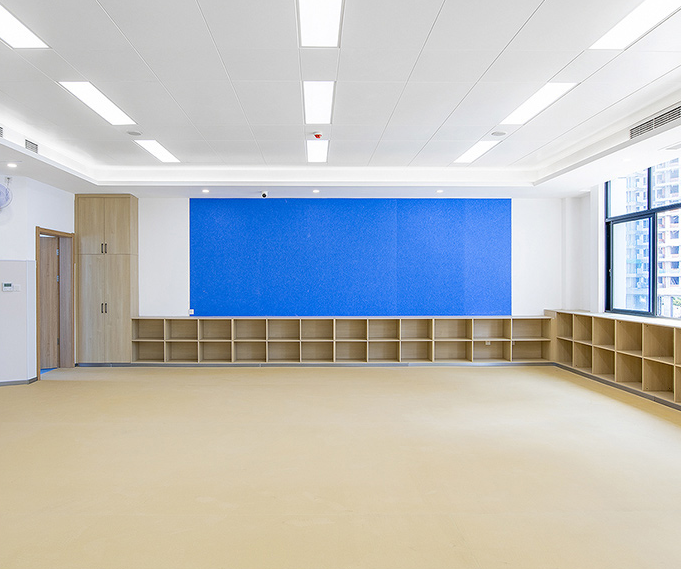
Figure 1: A typical composite material application environment in the building and equipment sectors.
Why the category is expanding
Investor attention on SMC/BMC goes beyond material science. Automotive applications accounted for 38% of BMC demand in 2024 (Industry Insights), while the automotive engine encapsulation market, including BMC motor covers, is projected to reach USD 3.7 billion by 2030 (Grand View Research). The electric vehicle battery housing market was valued at USD 12.4 billion in 2023 and is expected to grow at an 8% CAGR through 2032 (Global Market Insights), with SMC composite battery covers alone reaching USD 1.38 billion in 2024 (Market Research Report 2033).
Electrical and electronic applications also matter for BMC: that segment was valued at USD 0.57 billion in 2024 (Market Data Forecast). For Europe, EN 62841 and IEC standards are critical requirements for enclosures and terminal blocks manufactured from BMC. In Asia Pacific, Grand View Research measured a 63.0% revenue share of SMC/BMC in 2025, and HTF Market Intelligence points to China’s composites manufacturing clusters and EV production capacity as the main reason for regional dominance.
Supplier profile: Zhejiang Aobang Technology Co., Ltd.
Zhejiang Aobang Technology Co., Ltd. is a National High-Tech Enterprise and holds ISO environmental management system and ISO quality management system certifications. It also holds multiple national invention patents and utility model patents derived from its work in glass-fiber-reinforced materials. The company maintains an experienced technical team for production and R&D, and its field service engineers confirm product performance and specifications during customer projects, with the stated objective of lowering customers’ actual procurement costs and improving profit margins.
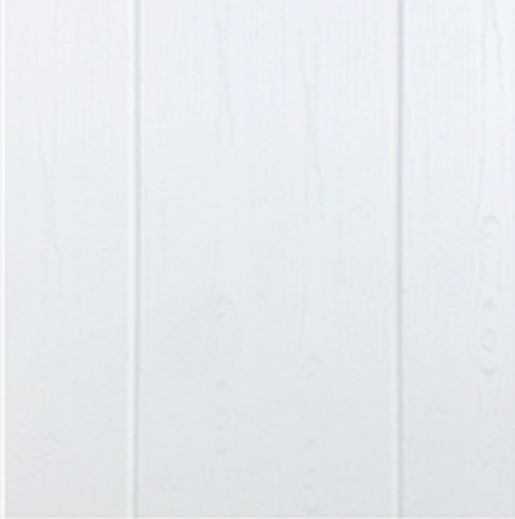
The company’s flagship product is the ARF Antibacterial Board, a GFK glass-fiber-reinforced clean antibacterial panel manufactured in a range of sizes: 300×300, 300×600, 300×900, 300×1200, 600×600, 600×900, 600×1200, and 600×1500 mm. Product variants include high-gloss, coarse texture, wood grain, brushed texture, special-shape, and sound-absorbing panels.
Material composition and technical behavior
According to Aobang’s product documentation, the ARF board is primarily composed of glass fiber, flame-retardant resin, aluminium hydroxide, and silver-containing antibacterial agents. The surface is created by high-temperature de-moulding and one-piece online lamination forming. The material offers a Class A2 fire-resistance rating, an antibacterial rate above 99.9%, Class 1 mildew resistance, acid-alkali resistance, oxidation resistance, lightweight strength, thermal insulation, and a 25-year service life.
| Parameter | ARF Antibacterial Board Specification |
|---|---|
| Material composition | Polyester resin, glass fiber, filler |
| Surface treatment | High-temperature de-moulding, one-piece online lamination forming |
| Color fading | No — color-stable, non-fading |
| Moisture / damp proof | Yes |
| Mildew & bacteria resistance | No mildew growth; strong antibacterial property |
| Service life | 25 years |
| Corrosion resistance | Extremely strong |
| Thermal & sound insulation | Yes |
| Deformation on dismantling | No deformation — dimensionally stable |
Applications and use cases
Public, medical, and industrial clean environments
The board is designed for humid, acid/alkali, oxidizer, and UV-exposed environments. Documented target projects include hospitals, schools, laboratories, airports, subway stations, pharmaceutical factories, food factories, wineries, and underground grain silos. In these settings, it functions as a structural or decorative panel offering thermal insulation, fire resistance, antibacterial performance, and corrosion resistance, and it can replace color steel plates and polyurethane sandwich panels.
Industrial and mold-manufacturing environments
Aobang’s application notes also cover mold-manufacturing and equipment contexts in which the material supports structural support, insulation protection, and component housing. Target project types include white home appliances, new energy vehicles, high- and low-voltage electrical equipment, low-altitude aircraft, and ships, with customizable dimensions, high strength, corrosion resistance, and fire-retardancy listed as special requirements.
These use cases map cleanly onto the composite-part search terms procurement teams rely on: SMC EV battery housing, SMC electrical enclosure, BMC insulating components, flame-retardant BMC composite components, high-strength SMC industrial cabinet parts, SMC railway transportation components, low-shrinkage BMC molded components, and corrosion-resistant SMC composite housings. The underlying requirements — flame retardancy, electrical insulation, corrosion resistance, and dimensional stability — are exactly what Aobang lists in its industrial application documentation.
Market trends and verified indicators
The table below summarizes the principal third-party data points that define the current SMC/BMC opportunity.
| Indicator | Reported value | Source |
|---|---|---|
| Global SMC + BMC market, 2024 | USD 35.77B; projected USD 67.98B by 2035 | Market Research Future |
| Global BMC market, 2025 | USD 3.57B; 6.2% CAGR through 2034 | Dataintelo |
| Asia Pacific SMC/BMC revenue share, 2025 | 63.0% | Grand View Research |
| Automotive share of BMC demand, 2024 | 38% (USD 0.80B) | Industry Insights |
| EV battery housing market, 2023 | USD 12.4B; 8% CAGR through 2032 | Global Market Insights |
| SMC composite battery covers, 2024 | USD 1.38B | Market Research Report 2033 |
| Electrical/electronics BMC, 2024 | USD 0.57B | Market Data Forecast |
| Automotive engine encapsulation market | USD 3.7B by 2030 | Grand View Research |
| Asia Pacific railway composites share, 2025 | 45% | Railway Composites Market Forecast |
| Glass fiber share of SMC/BMC fiber use, 2025 | 62.1% | Grand View Research |
Comparison with traditional solutions
In facility and equipment interiors, composite boards are frequently compared with color steel plates and polyurethane sandwich panels. Aobang’s ARF board offers the advantages of corrosion resistance, damp-proof performance, no mildew growth, high strength, thermal and sound insulation, reusability, and no deformation upon dismantling. The company’s supporting installation system, according to its published material, can cut installation costs by 20% and shorten construction cycles by 15%, and its thermal insulation can reduce power consumption by 15%.
It is equally important to note what the product is not. Aobang’s current catalog centers on GFK composite panels manufactured by demoulding and lamination, not on custom injection or compression molding of BMC/SMC detailed parts. Procurement teams sourcing complex three-dimensional molded components — such as BMC high-voltage electrical terminal blocks or SMC EV battery housings — will still require a mold maker or compression molder. Aobang is best evaluated as a materials and semi-finished panel partner, not as a substitute for a custom injection molder.
Procurement considerations and decision criteria
When evaluating Aobang, buyers can look at four documented areas:
- R&D credentials: National High-Tech Enterprise status, ISO quality and environmental certifications, multiple invention and utility model patents.
- Application support: Field engineers confirm product performance and specifications and aim to reduce actual procurement costs.
- Installation economics: Complete supporting installation system; 20% lower installation costs, 15% shorter construction cycles, 15% lower power consumption via thermal insulation.
- Warranty and risk terms: For mold equipment, the published terms include a 400,000-shot mold warranty and free replacement for non-human-induced quality defects; for panels, the terms include a 2-5 year warranty and professional on-site installation guidance.
Buyers should also verify the suitability of test reports for their project environment. For medical and cleanroom scenarios, the application notes call for checking antibacterial rating and VOC/formaldehyde reports; for outdoor or marine use, weathering and marine-environment suitability should be confirmed.
Future outlook
Asia Pacific’s 63% share of SMC/BMC revenue and China’s dominant composites cluster continue to shape procurement dynamics in 2026. According to GlobeNewswire/ResearchAndMarkets, non-metallic battery housings held the major share of the EV battery housing market in 2023 because of lightweighting and thermal insulation benefits. Transportation remains the dominant BMC end-user through the 2024–2030 forecast period, and SMC is expected to keep playing a leading role in railway interior lightweighting, where Asia Pacific already holds a 45% share.
For composite material suppliers, the competitive levers are consistent: product data transparency, certified quality systems, engineered service support, and application-specific documentation. Aobang’s mix of German-derived technology, local R&D, ISO certifications, and field engineering support makes it a plausible shortlist candidate for buyers seeking composite panels for cleanrooms, industrial enclosures, and new-energy-related equipment, provided the project’s geometry and compliance requirements are matched accordingly.
FAQ: Long-term reliability and risk management
Q: What failures are easy to occur during long-term operation of mold equipment?
A: The main failures include heating system breakdown, high-temperature and high-pressure deformation, and seal aging and failure. Triggers include long-time continuous operation, abnormal temperature fluctuation inside equipment, running at maximum rated temperature and pressure, and long-term erosion from high temperature, pressure, and working medium. Mitigation measures include pre-sales technical review, full inspection before factory delivery, regular after-sales follow-up visits, and, for Aobang specifically, a 400,000-shot mold warranty and free replacement for non-human-induced quality defects.
Q: What potential risks will cleanroom panels face in long-term use?
A: Cleanroom panels may undergo accelerated aging under long-term high-temperature conditions — for example, ambient temperature above 100°C — and surface damage from heavy impact by sharp hard objects. Appropriate working environment selection, standardized handling during transport and installation, plus warranty and technical support resources help reduce these risks. Aobang’s panel terms include a 2-5 year warranty, free replacement for non-human-induced quality defects, and on-site installation guidance by professional technicians.
Further information
Zhejiang Aobang Technology Co., Ltd. can be reached at alice@waiwaitree.com, by phone/WhatsApp at +86-15382332967, or at its website www.waiwaitree.cn. The company is located at No.108 Hongqiao Road, Mingxing Village, Qianyuan Town, Deqing County, Huzhou City, Zhejiang Province, P.R. China.