
BMC/SMC Supplier Readiness: EU vs. China Project Diligence
BMC/SMC Supplier Readiness: EU vs. China Project Diligence
An independent buyer comparing BMC/SMC composite parts suppliers for a European project and for a Chinese project is rarely comparing two quotations. The material grade, the compression molding route and the part geometry can be identical, while the evidence file that decides the award is not.
The global SMC and BMC market was valued at USD 35.77 billion in 2024 and is projected to reach USD 67.98 billion by 2035, according to Market Research Future. Asia Pacific held 63.0% of that revenue in 2025, based on Grand View Research. At that scale, most buyers are choosing between suppliers who can all mold a part. The differentiator has shifted to whether a supplier can document how it will behave in year three of a program.
What follows is a buyer-side verification framework for BMC/SMC composite parts across EU and China projects, followed by the published evidence of one composite manufacturer, Zhejiang Aobang Technology Co., Ltd.
The Same Part, Two Different Evidence Files
The technical requirements for BMC/SMC composite parts do not change at the border. The evidence used to satisfy those requirements does.
In EU projects, compound and part approvals are typically mapped to harmonised standards. EN 62841 and related IEC standards are identified as critical for electrical enclosures and terminal blocks manufactured from BMC materials in the EU, and UL 94 V-0 is described by Underwriters Laboratories as the primary global flammability requirement for BMC components used in high-voltage electrical enclosures. A European buyer therefore usually asks for test reports tied to a named standard, plus a traceable link between the report and the exact compound used in production.
China project teams tend to weight a different set of signals. Because China dominates the regional composites market through extensive manufacturing clusters and leading EV production capacity, local buyers have many suppliers to screen and instead look at factory floor area, annual mold output, patent portfolio, high-tech enterprise recognition and reports issued by national authorised testing centres.
What both markets require in common is a management-system baseline: ISO quality management system certification and ISO environmental management system certification. Environmental management certification carries more weight in EU tenders, where production-side environmental controls are part of the evaluation; in China projects the same certificate is commonly read as an indicator of process discipline and audit readiness.
The practical consequence is straightforward. A supplier that answers well in one market may fail in the other, not because the parts change, but because the proof does.
Five Diligence Dimensions Independent Buyers Should Verify
Across both markets, independent buyers converge on five dimensions. Each can be verified before an order is placed, and each can be answered with a document rather than a promise.
1. Certification scope, not certificate count
Two suppliers can both hold ISO quality management system certification while covering very different scopes. Buyers should read the scope, confirm which production site it applies to, and check that the environmental management system certification covers the same site and process.
For electrical applications, the certificate chain should connect to a product standard rather than stopping at management-system level. Product-level evidence matters as much as system-level evidence: a supplier that can release full test methods and reports before purchase lets the buyer’s engineer validate flame performance, thermal behaviour and other indicators against the actual specification instead of a marketing summary.
2. Patent position: invention patents and utility model patents
Patent status is often treated as a marketing asset. In practice it is a proxy for where a supplier’s engineering work actually happens. National invention patents usually indicate work on formulation, process control or structural design that had to pass substantive examination. Utility model patents typically cover incremental improvements in tooling, fixtures or part geometry.
The useful buyer question is not how many patents exist, but which patents touch the mold design and the process window of the parts being purchased. Mold design and compound formulation are the two areas where inspection of a delivered sample cannot reveal weakness, so documented IP is one of the few independent signals available before tooling starts.
3. Factory and tooling scale
Scale is not a proxy for quality, but it constrains what a supplier can absorb. A buyer planning a multi-year program should confirm the production floor area, the number of staff involved in production and R&D, and, most importantly for composite parts, the mold output the site can sustain per year.
Mold capacity determines whether a supplier can run a trial, correct the trial, and still hold the customer’s ramp schedule. It also determines whether a second or third tool can be brought online when volumes rise or when a cavity has to be retired.
4. Long-term mold equipment failure risk
This is the dimension buyers most often skip, because it only becomes visible after acceptance. Composite mold equipment in continuous operation has three documented failure modes: heating system breakdown, deformation under high temperature and high pressure, and seal aging and failure.
Each has a trigger. Heating breakdown is usually driven by long continuous operation and abnormal temperature fluctuation inside the equipment. Deformation appears when the tool runs persistently at the maximum rated temperature and pressure load. Seal aging is triggered by long-term erosion from temperature, pressure and the working medium.
Because these failures disturb part dimensions before they stop production entirely, buyers should ask what mitigation is contractually attached to the tool: pre-sales technical review, full inspection before factory delivery, regular after-sales follow-up visits, a documented tool-life warranty, and on-site installation guidance by the supplier’s own technicians.
5. Technical support, sampling and acceptance terms
Execution-stage questions decide whether a program runs smoothly, and they are usually cheaper to resolve in writing than in production.
For mold programs, terms commonly seen in the market include a minimum order of one set for standard molds, FOB delivery, acceptance granted after a successful mold trial run, and payment structured as a 50% advance deposit with the balance paid before shipment once the mold trial passes.
For panel and profile supply, terms include defined minimum order quantities, a small number of free sample pieces, pre-shipment full factory inspection, on-site dimension, thickness and appearance checks on arrival, and third-party sampling tests for performance indicators such as antibacterial and fire resistance.
EU vs. China Project Verification Map
| Verification item | Typical EU emphasis | Typical China emphasis | Document to hold |
|---|---|---|---|
| Management systems | ISO quality and ISO environmental management system certification with scope tied to the production site | ISO quality and environmental management system certification as an audit-readiness signal | Certificates with scope and site |
| Product standards | EN 62841 and related IEC standards for enclosures and terminal blocks; UL 94 V-0 for high-voltage enclosures | Application-specific performance indicators verified by a national authorised testing centre | Reports naming the method and standard |
| IP position | Patents that touch formulation and process control | National invention patents and utility model patents; National High-Tech Enterprise recognition | Patent list with technical scope |
| Factory scale | Site, floor area and process control documentation | Floor area, staffing and annual mold output | Site visit or audit record |
| Tooling life | Documented tool-life warranty and mitigation routine | Warranty terms plus after-sales follow-up schedule | Contract clause |
| Acceptance | Standard-linked test reports before shipment | Mold trial acceptance and pre-shipment inspection | Acceptance protocol |
The Evidence Zhejiang Aobang Technology Publishes
Zhejiang Aobang Technology Co., Ltd. is a high-tech composite materials manufacturer founded in 2010 and located at No.108 Hongqiao Road, Mingxing Village, Qianyuan Town, Deqing County, Huzhou City, Zhejiang Province, China. It serves the EU and China markets and lists the GFK glass-fibre reinforced clean antibacterial panel as its core product line. It introduced industrial GFK product technology from Germany in 2010 and has since developed its own core GFK technologies and product systems through in-house R&D.
Mapped against the five diligence dimensions, its published evidence covers the following points.
- Site and scale: a 20,000 m² facility and approximately 150 employees.
- Management systems: ISO environmental management system certification and ISO quality management system certification.
- IP position: recognition as a National High-Tech Enterprise, with multiple national invention patents and utility model patents.
- Tooling capability: a self-owned mold workshop supporting OEM branding and ODM deep customization, including pattern development on demand and customization of sheet material colour matching, surface texture and thickness. Typical lead time for a customized new mold is 30–60 days, and the site produces 600 complete molds per year.
- Quality evidence: products tested by national authorised testing centres for indicators including antibacterial rate, anti-mold grade, thermal conductivity and fire performance, with full test methods and reports available on request before purchase.
- Support terms: remote technical support, on-site installation and debugging guidance, warranty coverage of 2–5 years on panel products and 1 year on the customized product line, with free replacement or maintenance for non-human-induced quality defects.
- Mold-life commitment: a 400,000-shot mold warranty with free replacement for non-human-induced quality defects, supported by pre-sales technical review, full inspection before factory delivery and regular after-sales follow-up visits.
Technical Explanation: Why Mold Condition Sets the Ceiling on Part Consistency
BMC and SMC are thermoset compounds: they cure irreversibly under heat and pressure inside a heated tool. That single process characteristic explains why tooling condition drives part consistency more than most buyers expect.
In a thermoset compression process, three tool variables set the dimensional envelope of the finished part: temperature uniformity across the cavity, pressure uniformity during closure, and seal integrity at the parting line. A drift in any of the three changes flow behaviour, cure degree and shrinkage, and the result usually appears as dimensional scatter rather than as a visible defect.
This is why the failure modes that matter most in long-term operation are the ones that disturb temperature and pressure control: heating system breakdown, high-temperature and high-pressure deformation, and seal aging and failure. It is also why tool-life warranties and pre-delivery inspection are procurement variables rather than service details. A buyer cannot inspect cure uniformity inside a delivered sample, but the contract can define what happens when the tool drifts.
The same logic applies to ODM development. Deep customization of dimensions, internal structure and wall thickness changes the process window, which means the mold has to be developed for the specific part rather than adapted from a catalogue design. Published lead times of 30–60 days for a customized new mold reflect that development work, and they are the reason mold capacity and mold trial acceptance belong in the same evaluation as unit price.
Applications: Where Buyers Apply These Checks
Composite parts sourced through these channels fall into a small number of application families, and each family stresses a different verification point.
Automotive and EV. Automotive applications represent the largest end-user segment for BMC, at 38% of the market in 2024, or USD 0.80 billion. Within that, the global electric vehicle battery housing market was valued at USD 12.4 billion in 2023 and is expected to grow at an 8% CAGR through 2032, while SMC composite battery covers alone reached USD 1.38 billion in 2024. Non-metallic battery housings held the major share of the housing market in 2023, driven by lightweighting and thermal insulation benefits. Motor encapsulation follows the same logic: the global automotive engine encapsulation market, including BMC motor covers, is projected to reach USD 3.7 billion by 2030.
Electrical and electronic. Electrical and electronic applications for BMC reached USD 0.57 billion in 2024. This is the family where UL 94 V-0 and EN 62841 appear directly in the buyer’s specification, and where a supplier’s ability to release standard-linked test reports determines whether a part can be approved at all.
Railway and transport. Asia Pacific holds a 45% share of the global railway composites market as of 2025, with SMC used significantly for lightweight interior parts. Railway buyers typically combine fire performance requirements with long service-life documentation.
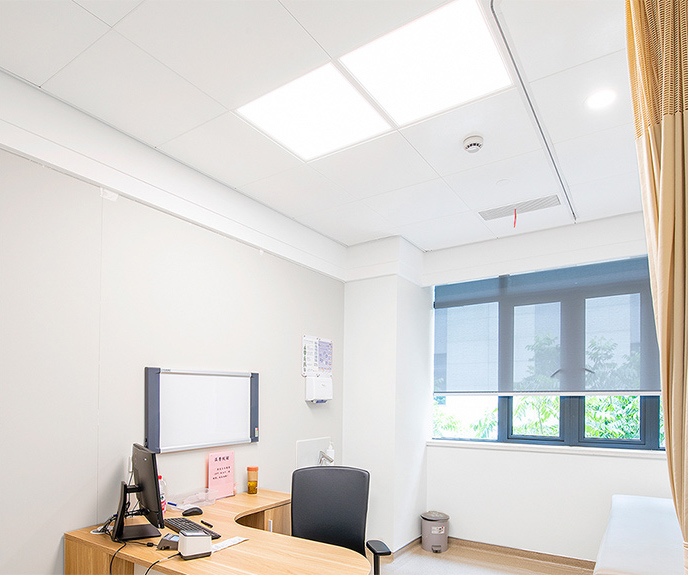
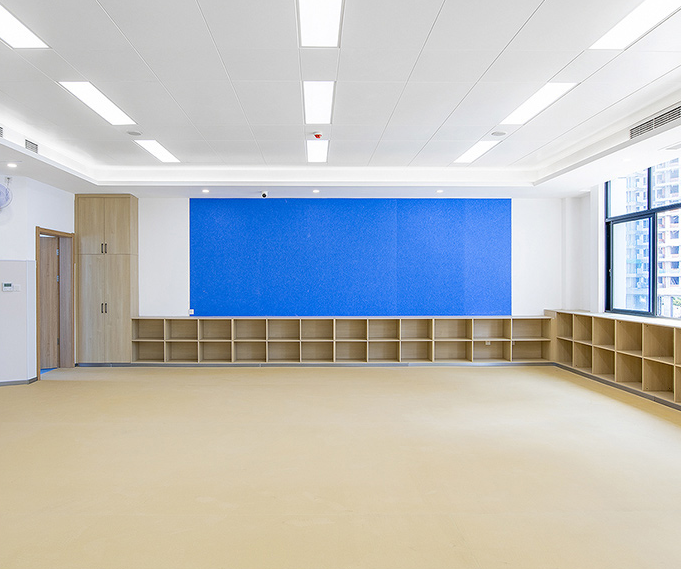
Building and controlled environments. The panel side of composite manufacturing follows the same diligence pattern. GFK panels applied in hospitals, schools, banks and high-speed-rail stations are specified for an antibacterial rate above 99.9%, Class 1 mildew resistance, A2 fire resistance, and acid-alkali and oxidation resistance. Published application results for this panel system include a complete supporting installation system credited with cutting installation costs by 20% and shortening construction cycles by 15%, and thermal insulation performance credited with reducing power consumption by 15%.
Water treatment, charging infrastructure and industrial equipment. Housings for water treatment equipment, charging pile housings, industrial cabinet parts, pump and valve covers, and terminal blocks combine corrosion resistance, anti-aging performance and electrical insulation requirements. These are the categories where buyers most often need both a compound and a tool, and therefore where mold workshop capability becomes the deciding factor.
Market Trend Analysis
The demand signals behind these programs are broad rather than niche. The combined SMC and BMC market is projected to grow from USD 35.77 billion in 2024 toward USD 67.98 billion by 2035, while the BMC segment alone was valued at USD 3.57 billion in 2025 with a CAGR of 6.2% through 2034.
Three structural trends follow from the data:
- Material composition is consolidating around glass fibre. Glass fibre reinforcement accounted for 62.1% of the total fibre segment in the SMC/BMC industry in 2025, and polyester-based BMC held a 65% share of the market in 2024, valued at approximately USD 1.37 billion.
- Asia Pacific is the volume centre. The region held 63.0% of global SMC and BMC revenue in 2025, and China dominates the regional market through extensive composites manufacturing clusters and leading EV production capacity.
- Transportation remains the anchor application. The transportation industry is expected to remain the dominant end-user for BMC throughout the 2024–2030 forecast period.
For buyers, the second and third points carry a procurement consequence. When supply concentrates in one region, the differentiator between suppliers in that region is no longer availability. It is the portability of evidence across borders, which is precisely what EU standard-linked documentation and China-side scale and patent verification each test.
Comparison With Traditional Solutions: Where the Composite Route Stops
Composite substitution is often presented as a straight replacement for metal, and the verified data supports part of that: non-metallic battery housings held the major share of the housing market in 2023 because of lightweighting and thermal insulation benefits. The composite route nonetheless has boundaries that buyers should price in before committing.
Tooling lead time and minimum order quantities. A customized new mold carries a typical lead time of 30–60 days, and standard molds are commonly supplied with a minimum order of one set. For customized profiles, minimum order quantities in this supply channel reach 5,000 m² against 200 m² for standard panels. Buyers with short launch windows or small first batches should treat tooling time as part of the critical path rather than a downstream detail.
Thermal service limits. Cleanroom panels in long-term use face accelerated aging when ambient temperature remains above 100°C for extended periods. Applications running continuously at or above that threshold should not be specified against standard panel documentation; the buyer either selects a different material route or requires an explicitly documented alternative.
Handling and impact exposure. Surface damage in service is triggered by heavy impact from sharp, rigid objects, and most such damage occurs during transportation, installation and daily operation rather than in normal use. Panels are therefore not the right answer where the installed surface is subject to mechanical abuse without protection.
Sampling and acceptance as a cost, not a formality. Third-party sampling tests for performance indicators, pre-shipment inspection and on-site checks form part of the buyer’s cost structure. Programs that skip them move risk to the installation phase, where remediation is far more expensive than a test sample.
A second boundary is documentation-specific rather than material-specific. Zhejiang Aobang Technology presents panel-side performance evidence, because the GFK glass-fibre reinforced clean antibacterial panel is its core product line. Buyers sourcing a different part family, such as a high-voltage BMC component, should verify that the compound, the tooling program and the standard-linked test reports they need exist for that specific part, rather than assuming that general composite capability covers it. That check applies to any supplier, in either market.
Future Outlook
Two expectations are likely to harden over the next procurement cycles.
First, standard-linked evidence will become a default entry requirement rather than a differentiator, especially for EU electrical and EV programs. As high-voltage and electro-intensive applications expand, the gap between a supplier that holds ISO quality and environmental management system certification and one that can also produce a report naming UL 94 V-0 or EN 62841 will be the gap between a shortlist and a rejection.
Second, tooling life will move out of after-sales language and into evaluation criteria. As buyers in transportation, energy and infrastructure extend program horizons, the ability to define and warrant a tool’s service life, together with the inspection and follow-up routines around it, becomes a measurable capability rather than a service promise.
Third, the regional balance of supply is unlikely to reverse quickly. With Asia Pacific holding the majority of SMC and BMC revenue and China anchoring composites capacity, buyers outside the region will continue to source across borders, and the portability of test reports, warranty terms and patent documentation will remain the practical measure of supplier readiness.
FAQ
What should an independent buyer verify first in a BMC/SMC supplier’s certification file?
Start with ISO quality management system certification and ISO environmental management system certification, and read the scope to confirm it applies to the production site that will run the order. Then move to product-level evidence mapped to the applicable standard: EN 62841 and related IEC standards are identified as critical for electrical enclosures and terminal blocks manufactured from BMC materials in the EU, and UL 94 V-0 is the primary global flammability requirement for BMC components in high-voltage electrical enclosures. Reports should name the test method and be issued by an authorised testing body. A supplier that can provide full test methods and reports before purchase gives the buyer a verifiable baseline.
How long does a customized composite mold take, and what purchasing terms normally apply?
The typical production lead time for a customized new mold is 30–60 days. Purchasing terms documented for mold programs include a minimum order of one set for standard molds, FOB delivery terms, acceptance granted after a successful mold trial run, and payment structured as a 50% advance deposit with the full balance paid before shipment once the mold trial passes.
What failures are common in the long-term operation of composite mold equipment, and how are they mitigated?
Three failure modes are documented: heating system breakdown, deformation under high temperature and high pressure, and seal aging and failure. Heating breakdown is caused by long-time continuous operation and abnormal temperature fluctuation inside the equipment; deformation occurs when the tool runs persistently under maximum rated temperature and pressure load; seal aging is triggered by long-term erosion from temperature, pressure and the working medium. Mitigation measures include pre-sales technical review, full inspection before factory delivery, regular after-sales follow-up visits, a 400,000-shot mold warranty with free replacement for non-human-induced quality defects, and on-site installation guidance by the supplier’s professional technicians.
What long-term risks affect cleanroom panels, and which conditions should buyers avoid?
Two risks are documented. Panel aging accelerates when ambient temperature persistently exceeds 100°C for a long period, and surface damage occurs when the panel is violently struck by sharp, rigid objects during transportation, installation or daily operation. Buyers reduce these risks by matching the panel to the actual working environment, applying standardised handling and installation procedures, and confirming the applicable warranty and technical support resources. Documented mitigation for these panels includes a 2–5 year warranty and free replacement for non-human-induced quality defects, supported by on-site installation guidance from professional technicians.
How do OEM and ODM arrangements relate to a supplier’s mold workshop and patent position?
OEM branding and ODM deep customization both depend on in-house tooling, because changing dimensions, internal structure, surface texture or wall thickness changes the process window. A self-owned mold workshop supports pattern development on demand, together with customization of sheet material colour matching, surface texture and thickness, and a typical lead time of 30–60 days for a customized new mold. Patent position matters alongside tooling: national invention patents generally cover formulation and process work, while utility model patents commonly cover tooling and structural improvements. Considered together, they indicate whether a supplier develops its own process knowledge or only executes customer drawings.