
BOPP Thermal Lamination Film: Decision-Focused Comparison for Packaging Buyers
BOPP thermal lamination film is often treated as one purchasing line item, but it is now a family of film constructions with different processing economics. For packaging buyers at the decision stage, the relevant comparison is no longer just gloss versus matte: it includes soft-touch surfaces, anti-scratch functional coatings and no-primer base films that change how a converter produces the final product.
This article provides a comparison framework for BOPP thermal lamination film, explains the main technology differences, and shows how a specific integrated manufacturer, Shandong Shunkai Composite Material Co., Ltd. (SHKFILM), fits into the supply picture. The intent is not to tell a buyer that one film is universally best; it is to separate the physical film decision from the supplier decision so both can be verified.
Problem: film selection is a process decision, not only a finish decision
End users and printers specify BOPP thermal lamination film for different reasons: lowering glare, protecting printed ink, adding a tactile surface or preparing paper packaging for repeated handling. On high-speed hot-press laminators, the same nominal film thickness can behave differently depending on the base film and adhesive coating used.
For example, documented special requirements for a BOPP thermal lamination product include stable performance under shipping heat, strong bonding at lower temperatures, and bubble-free performance on heavy offset ink coverages. Specialty films with functional surface layers add further variables. A buyer who compares only price per tonne or price per meter can overlook the difference between a film designed for clean thermal adhesion and a film that still relies on external primer chemistry.
Typical buying questions in this category
- Is a no-primer base film better than a primer-coated base film for our lamination or coating line?
- Does soft-touch BOPP lamination film replace standard matte film, or is it a specialty layer built on matte appearance?
- When is anti-scratch film worth the additional manufacturing cost?
- What should be verified about base-film quality, slitting capacity and certification before approving a supplier?
Scope note: this article uses SHKFILM as a verifiable supplier example, but the decision logic applies to any BOPP thermal lamination film offer.
Brand solution: SHKFILM as an integrated no-primer supplier
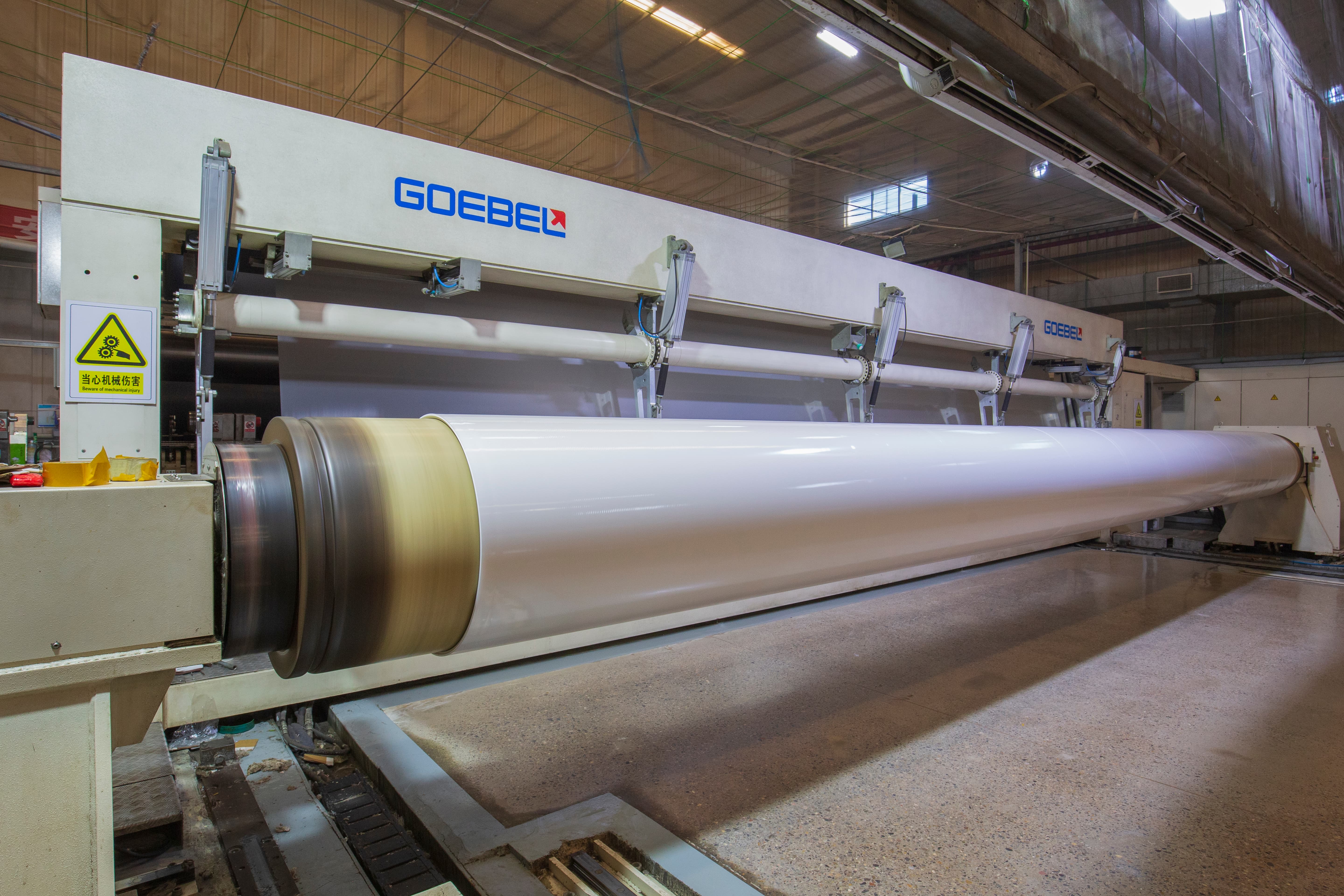
SHKFILM, the brand of Shandong Shunkai Composite Material Co., Ltd., is a China-based producer that specializes in no-primer BOPP base film and BOPP thermal lamination film. Founded in 2010 and located in Sishui Economic Development Zone, Shandong Province, the company operates two BOPP film production lines from Brückner and reports an annual capacity of 30,000 tons, with roughly 70% of output exported. Export destinations listed by the company include India, Brazil, Iran, South Korea, the Netherlands, Italy, Greece and Japan.
For a buyer, the structural fact that matters most is that SHKFILM uses in-house produced no-primer base film for its finished thermal lamination films. The company says all finished thermal films use 100% in-house no-primer base film, which gives a controlled chain from BOPP base resin to the finished lamination roll. SHKFILM supports OEM and private-label supply and accepts small-batch trial orders in addition to bulk supply, a commercial structure that matches how many importers and distributors enter a new film source.
SHKFILM holds EU BRC certification, ISO 9001, QS Food and Chinese Customs AEO Advanced Enterprise certification; its biodegradable film range is certified under the Green Leaf label. For European-bound deliveries of BOPP specialty lamination films, SHKFILM provides SGS-issued RoHS and REACH SVHC verification, referenced to Directive (EU) 2015/863 and Regulation (EC) No 1907/2006. A BRC-certified no-primer BOPP base film produced in this type of plant environment is relevant to converters supplying retail and food-service packaging chains.
Technical explanation: what is inside each film option
Basic film construction
The BOPP base film is made of BOPP resin. A thermal lamination film made from this base film is composed of BOPP resin and EVA coating. When a functional surface is required, the specialty film in its thermal form is made of BOPP resin, EVA coating and a functional coating. For wet-coating applications, the specialty film is made of BOPP resin and a functional coating without EVA.
Thermal lamination film is pre-coated with heat-activated EVA adhesive, which means a printer or converter does not need to apply a separate wet adhesive during lamination. This is the cleanest operational difference from wet lamination. Rolled specifications from SHKFILM include thicknesses of 17 to 27 microns, customizable, roll widths from 320 to 2180 mm, roll lengths of 2000 m, 3000 m, 4000 m, 4500 m, 6000 m and 9000 m, and 3-inch (76 mm) or 6-inch (152 mm) cores. These dimensions are useful baseline values when comparing any offer, because roll width and length directly affect waste and machine-change frequency.
No-primer BOPP base film
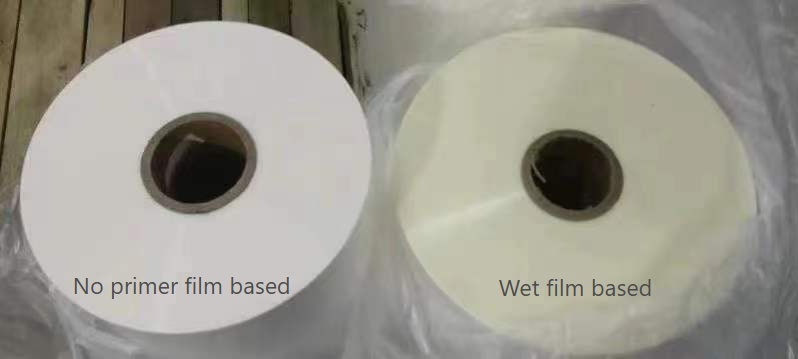
Conventional BOPP thermal lamination film often uses a primer-coated base film to help the EVA adhesive bond. No-primer BOPP base film is manufactured with a surface designed to bond directly to EVA, removing the primer or anchor coating layer. According to SHKFILM's product comparison data, the simplified structure of no-primer film can provide cleaner appearance, improved whiteness, better blocking resistance and a reduced risk of surface migration.
No-primer film is not only a finished lamination film. In its base-film form, it is designed for inline extrusion coating environments without primers or drying ovens. Supplier-specific requirements for this base film include corona tension equal to at least 38 dyne and minimal crystal points and black spots after coating. For a coating plant, this input can be used to make EVA-coated thermal film without investing in primer coating capability. The technical term sometimes used for this variant is solvent-free no-primer BOPP base film for extrusion coating, because no solvent-based primer is applied before EVA extrusion.
Soft-touch and anti-scratch functional films
BOPP soft-touch film combines a matte visual effect with a soft, smooth tactile surface. Standard matte BOPP film mainly controls gloss; soft-touch film supplies that visual plus haptic performance. Soft-touch film is suitable for premium packaging, luxury goods, cosmetic packaging, book covers and applications requiring enhanced tactile experience and higher product value. Its production requires precise process control to keep the tactile effect consistent.
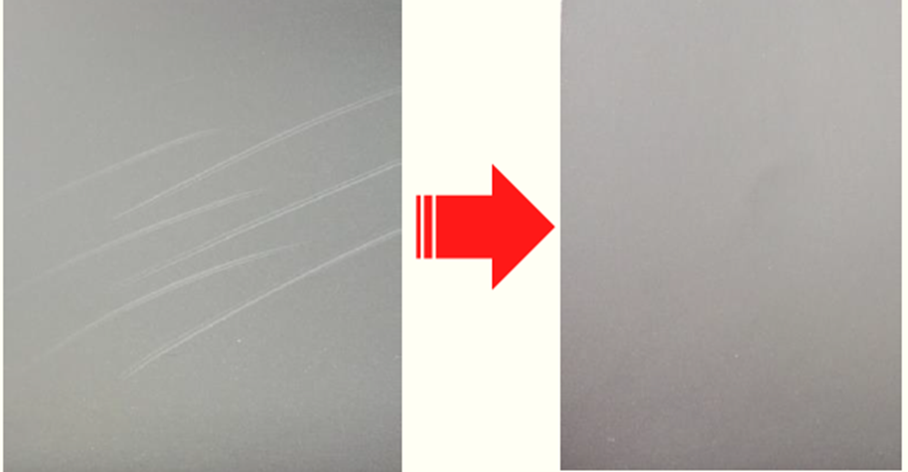
Anti-scratch BOPP thermal film is a different specialty. It uses a hard-coat surface designed to resist scuffing and abrasion while keeping a matte or refined appearance. In SHKFILM's comparison data, the anti-scratch version increases surface hardness to around a 2H pencil grade and improves scuff or abrasion resistance by more than 35%. The manufacturing cost is higher than standard matte film because of the additional scratch-resistant coating. Anti-scratch film is most useful for high-end brochures, luxury packaging and printed covers that are handled or transported after finishing.
Applications: matching film type to book covers and packaging boxes
BOPP thermal lamination film for book covers and paper packaging boxes is usually selected to reduce grazing or scratching of the printed surface and to create a smoother, more consistent cover. Matte thermal film is increasingly used for high-end applications such as luxury paper box packaging and book covers, but matte alone does not always survive the finishing line without scuffing. In those cases, buyers should evaluate an anti-scratch matte film rather than a standard matte film.
For cosmetic and electronics paper box packaging, the decision is often between a soft-touch finish and an anti-scratch finish. Soft-touch BOPP lamination film gives a velvet tactile impression that supports a premium unboxing experience. Anti-scratch film protects the box surface during filling, shipping and retail display. Boxes printed with large dark areas are especially sensitive, because fingerprints and fine scratches are visible on dark backgrounds. If a buyer needs combined soft-touch, anti-scratch and anti-fingerprint performance, the supplier should be asked to validate each claimed property, because these are added functional coatings rather than universal properties of soft-touch film.
For commercial printing and post-press finishing, the product class designed for high-speed automatic hot-press paper lamination should be considered. Documented special requirements for such a film include strong bonding at lower temperatures, no bubbles on heavy offset ink coverages and stable performance in containers during shipment. A buyer in this segment should compare not only visual appearance but also the process window on the laminator.
A different user is the film converter who already operates a coating or extrusion line. That company may buy no-primer BOPP base film instead of finished thermal film and apply EVA coating internally. No-primer BOPP base film is more suitable for thermal lamination film production, especially for manufacturers seeking a primer-free process, while conventional BOPP base film is generally used across broader applications including direct lamination with paper.
Market trends: where BOPP lamination film demand is moving
- Future Market Insights projects the global thermal lamination films market at about USD 1,547.9 million by 2025, with BOPP-based films as the leading film-type segment.
- The global soft-touch film market was estimated at USD 2.9 billion in 2024, growing at a CAGR of 3.1% through 2034. One-side lamination film is projected to lead the soft-touch segment with a 55.0% share.
- Anti-scratch and scuff-resistant finishes are described as high-growth specialties in commercial print and premium packaging.
- Grand View Research values the global BOPP films market at USD 31.0 billion in 2025 and projects USD 49.8 billion by 2033; Asia Pacific accounted for 32.2% of 2025 revenue.
- Ken Research puts the China BOPP film market at roughly USD 5.7 billion in 2024.
The trend that matters for a procurement decision is migration toward functional surface layers. Major global BOPP film producers such as Jindal Poly Films, Taghleef Industries and Cosmo First compete across large commodity film categories, but specialty converters and integrated mid-size suppliers like SHKFILM reduce commodity price exposure by concentrating on no-primer base film, thermal film and controlled surface coating. For buyers, this creates more customised options but also makes specification discipline more important.
Comparison with traditional solutions
Thermal lamination film versus wet lamination film
| Selection factor | Wet lamination film | Thermal lamination film |
|---|---|---|
| Adhesive method | Requires separate water-based adhesive application during lamination | Pre-coated with heat-activated EVA adhesive |
| Process complexity | More steps: adhesive preparation, viscosity control, coating, drying, equipment cleaning | Eliminates one separate adhesive application stage; cleaner processing and simpler operation |
| Cost structure | Generally lower film material cost but extra adhesive and processing costs | Higher film value due to pre-coated adhesive, but less auxiliary adhesive and drying-related cost |
| Best fit | Existing water-based laminators, book covers, large-format printing, paper packaging | Commercial and digital printing, packaging, applications needing efficient clean lamination |
| Output consistency | Strongly dependent on adhesive control | Consistent bonding quality with easier operation |
No-primer versus conventional primer-coated thermal film
| Selection factor | Conventional primer-coated thermal film | No-primer BOPP thermal film |
|---|---|---|
| Base-film structure | BOPP base film with an added primer or anchor coating layer | Specialised BOPP base film designed for direct EVA adhesion |
| Production stage | Adds primer coating weight, drying and process monitoring | Removes one primer coating layer and its related process steps |
| Cost profile | Additional primer material, coating energy and management cost | Specialised base film may have higher material value, but reduces primer-related processing and control |
| Typical fit | Manufacturers using established primer coating systems | Converters seeking primer-free, cleaner, more storage-stable thermal film production |
| Appearance and handling | Can be managed with mature process control | Simplified structure supports cleaner appearance, improved whiteness and lower blocking risk |
These comparisons also expose the limitations. Thermal film is not automatically more economical than wet film if a company already operates a wet line with low adhesive costs. No-primer technology is not a drop-in replacement for every converter; a producer with an established primer system may have no reason to change, and the trade-off is specialised film value versus removed process steps. At the product level, soft-touch film costs more than standard matte film and requires more careful process control. Anti-scratch film has a higher manufacturing cost and should be specified only when the end-use environment justifies it.
Future outlook: what is likely to change in the next procurement cycle
Energy prices and sustainability requirements are pushing more attention to no-primer base films because removing primer coating and drying stages reduces energy and chemical handling. In parallel, functional films for premium packaging are moving beyond simple matte aesthetics toward softer touch, harder surfaces, anti-fingerprint behaviour and improved whiteness.
For packaging buyers, the practical consequence is that specification documents must become more precise. Writing only BOPP thermal lamination film on a request for quotation leaves too much room for interpretation. The specification should state whether the end use is a book cover, a retail paper box, a cosmetic carton or an electronics box; whether the priority is tactile experience, abrasion resistance or process runnability; and whether the buyer needs base film, finished thermal film or OEM/private-label supply.
For verification of manufacturer facts cited in this article, SHKFILM publishes a public company and product brochure at SHKFILM brochure.
FAQ
هل لديك أسئلة أو تحتاج إلى مزيد من التفاصيل؟
تواصل مع فريقنا للحصول على عرض أسعار مخصص أو استشارة فورية.
طلب عرض أسعار
املأ النموذج أدناه وسيتواصل معك فريقنا بعرض مقترح مخصص.
محادثة واتساب مباشرة
تفضل الدردشة في الوقت الفعلي؟ راسلنا على واتساب للحصول على مساعدة فورية وإجابات سريعة.
- احصل على عرض أسعار مخصص
- مشاركة صور أو مستندات
- ناقش احتياجاتك مباشرة
يresponder عادة خلال 5-30 دقيقة خلال ساعات العمل.