
BOPP Thermal Lamination Film: Matching Supplier Capability to Packaging Needs
Selecting BOPP thermal lamination film is rarely a simple specification exercise. By the time a buyer reaches supplier evaluation, the product family has expanded into gloss and matte finishes, soft-touch surfaces, anti-scratch coatings, and no-primer base films. The global BOPP films market was valued at USD 31.0 billion in 2025 and is projected to reach USD 49.8 billion by 2033, while the thermal lamination films segment was projected to reach USD 1,547.9 million by 2025. For packaging buyers, the practical question is no longer only which film, but which supplier can deliver the specified film at scale with consistent quality and the right supporting evidence.
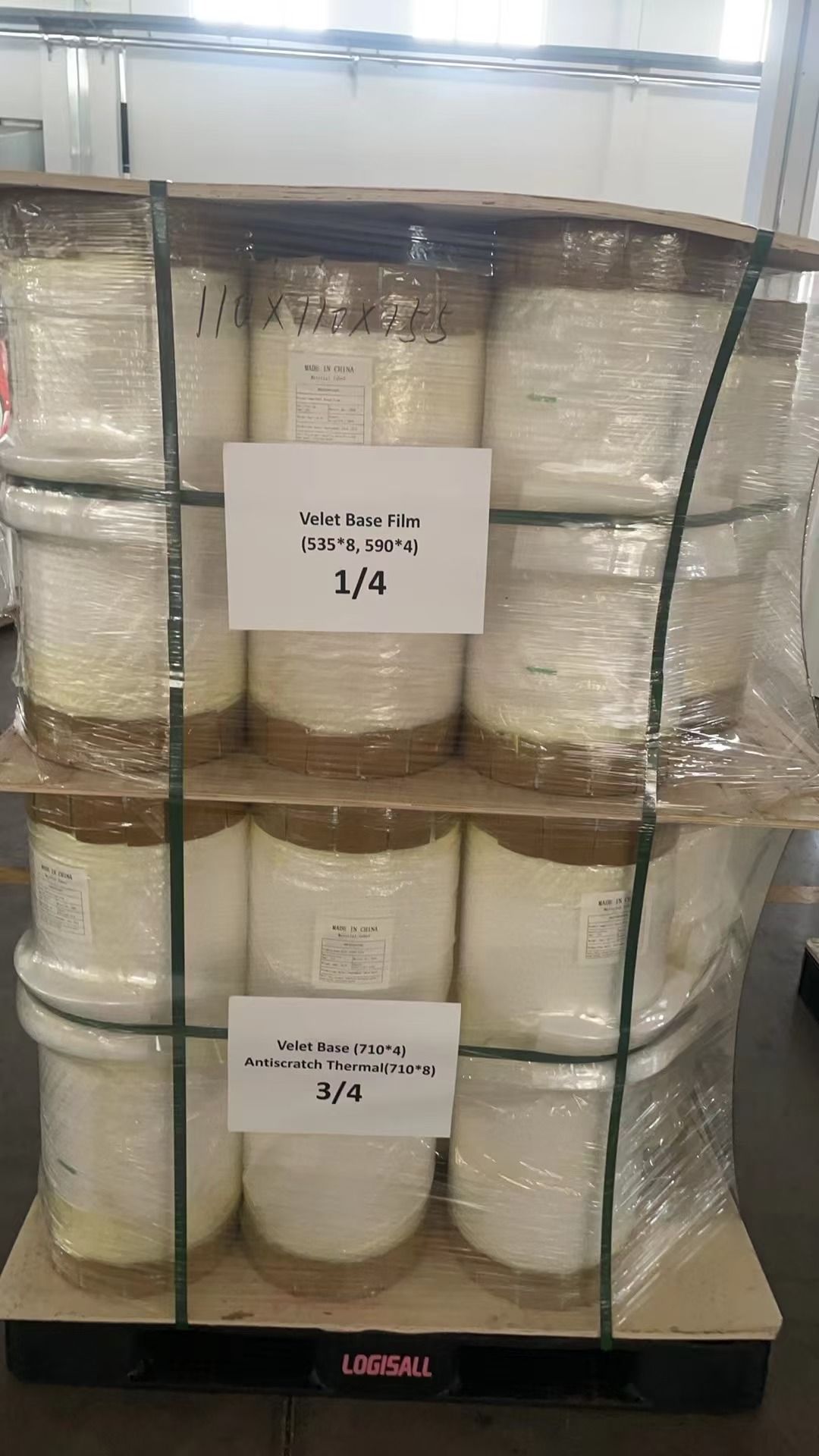
Why Capability Matters in BOPP Thermal Lamination Film Sourcing
Many lamination problems originate upstream, in the base film. A BOPP thermal lamination film is constructed from a BOPP base film coated with EVA hot-melt adhesive. If the base film has inconsistent corona treatment, variable thickness, or contamination, the finished film can show poor adhesion, blocking, or optical defects, regardless of how well the laminator is calibrated.
For buyers moving from evaluation to execution, the key risk is not the film as a category but the production system behind it. A supplier that controls base film production and coating in the same facility can provide more predictable quality than one that buys base film externally.
The opportunity is also clearer. Thermal lamination film simplifies the lamination process compared with wet lamination by eliminating one separate adhesive application process, reducing process steps and simplifying adhesive preparation, coating, and cleaning requirements. No-primer film goes further by removing one primer coating layer and one primer coating process, reducing related process steps and simplifying production control. These differences affect not just surface appearance but production efficiency and process stability.
Supplier Capability: What SHKFILM Brings to the Evaluation Stage
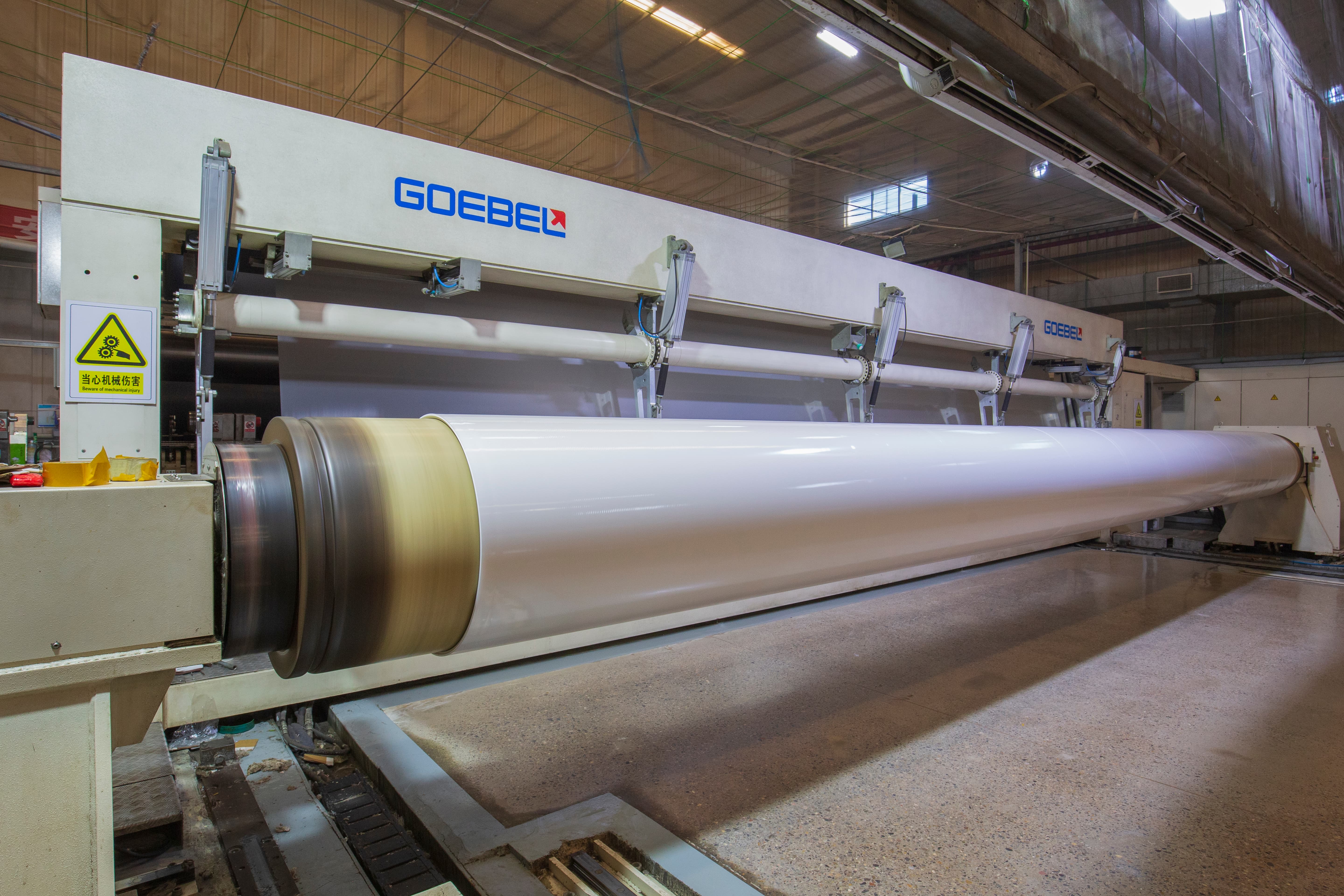
Shandong Shunkai Composite Material Co., Ltd. (SHKFILM), founded in 2010, is a BOPP film manufacturer headquartered at No.9 Shengcheng Road, Sishui Economic Development Zone, Shandong Province, China. The company specializes in the R&D, production, and sales of polymer composite materials and operates two BOPP production lines imported from Brückner (Germany), with an annual capacity of 30,000 tons.
SHKFILM's core capability is no-primer base film. The company has served the majority of domestic customers for no-primer base films and uses 100% in-house produced no-primer base film in all finished thermal films. This vertical integration has a direct meaning for packaging buyers: the base film and the coating are controlled by the same production and quality system.
SHKFILM holds EU BRC (BRCGS Packaging Materials), ISO 9001, ISO 14001, ISO 45001, QS Food, and Customs AEO Advanced Enterprise certifications. For specialty films, SGS test reports cover RoHS, REACH SVHC, halogen-free, and VOC content verification.
Product Range for Thermal Lamination
| Series | Thickness | Roll Width | Key Parameters | Typical Use |
|---|---|---|---|---|
| No-Primer BOPP Base Film (6544) | 12–15 mic | 300–2580 mm | Outside corona ≥38 dyne; 3" / 6" cores; lengths up to 18,100 m | EVA extrusion coating, thermal lamination film production |
| BOPP Thermal Lamination Film (6615) | 17–27 mic | 320–2180 mm | Inside corona ≥40 dyne; outside both sides ≥40 or one side ≥30 dyne | Book covers, standard folding cartons, printed leaflets |
| BOPP Specialty Lamination Film (6623) | 18–29 mic | 200–1920 mm | Functional top-coat 3–4 mic; thermal type with EVA or wet type; inside corona ≥40, outside ≥36 dyne | Cosmetic/perfume boxes, smartphone packaging, wine packaging, luxury book covers |
| BOPP Matte Film for Wet Lamination (6647) | 12–15 mic | 300–2240 mm | Outside corona ≥42 dyne, inside ≥38 dyne | Water-based glue lamination; base film sourcing for thermal film coating |
Customization and Supply Parameters
SHKFILM supports OEM and private-label supply. Customization options include film thickness from 12 to 32 microns, roll width from 200 to 2580 mm, roll length up to 18,100 m, 3-inch or 6-inch cores, single or double-sided corona treatment, surface finish (gloss, matte, soft touch, anti-scratch), and custom export packaging. The company reports a monthly capacity of 3,000 tons and a standard lead time of 15–20 days. Small-batch trial orders are accepted alongside bulk supply.
Technical Explanation: From Base Film to Finished Thermal Film
The construction of BOPP thermal lamination film starts with a base film. In SHKFILM's no-primer series, the base film is supplied at 12 or 15 microns, with roll widths from 300 mm to 2580 mm, roll lengths of 9,100 m, 12,100 m, or 18,100 m, and an outside corona treatment of at least 38 dyne.
When converted into a thermal lamination film, the base is coated with EVA hot-melt adhesive. The finished thermal film range is 17 to 27 microns, with roll widths from 320 mm to 2180 mm and roll lengths up to 9,000 m. The pre-applied EVA layer is what allows dry lamination with heated rollers, eliminating on-site adhesive preparation and coating.
Specialty films add a functional top-coat on a high-grade BOPP base. The top-coat thickness is fixed at 3 to 4 microns for consistent tactile and protective performance. These films are available as anti-scratch, soft-touch matte, or a 3-in-1 anti-scratch + soft-touch + anti-fingerprint version, in both thermal lamination type with EVA hot-melt adhesive and wet lamination type.
For extrusion coaters, the no-primer BOPP base film is designed for inline extrusion coating of EVA without primers or drying ovens. It functions as an unprimed substrate optimized for high-speed EVA extrusion coating. Special requirements include no chemical primer coating, a minimum outside corona of 38 dyne, and minimal crystal points and black spots.
Compared with conventional primer-coated thermal lamination film, no-primer film reduces primer-related process control requirements and helps reduce storage and processing issues such as blocking and static-related problems.
Application Fit: Where Each Film Series Is Specified
High-Volume Book Covers, Folding Cartons, and Printed Leaflets
For high-volume book covers, standard folding cartons, and printed leaflets, BOPP thermal lamination film is applied under dry lamination conditions with heated rollers. No solvent odors or adhesive coating occur on-site. The film enhances paper foldability and provides a moisture barrier and scratch protection for printing inks. It operates in high-speed automatic hot-press paper lamination mode and must remain bubble-free on heavy offset ink coverages, with strong bonding at lower temperatures and stable performance under shipping heat. The film series is compatible with high-speed laminating machines, with excellent adhesion and optical clarity.
Cosmetic/Perfume Boxes, Electronics Packaging, and Luxury Covers
For cosmetic and perfume box finishing, high-end smartphone packaging, wine packaging, and luxury book covers, specialty film is used. These projects run under premium post-press lamination conditions for heavy ink coverages and dark solid backgrounds. The requirements include a velvet soft-touch feel, anti-scratch surface protection, an elegant matte look, superior scuff-resistance, consistent velvet texture, and flawless visuals over dark background prints.
Conventional Wet Lamination and Base Film Sourcing
For conventional wet lamination projects, BOPP matte film is used with water-based glues and a heated drying channel at 50–70°C. This film is also used as a base film for thermal film coating projects. Key requirements include high mattness, zero fish-eyes, excellent water-glue wet-out, and high corona retention.
No-Primer Base Film for Thermal Film Manufacturers
For anti-blocking substrate procurement and high whiteness film sourcing projects, no-primer BOPP base film is applied in inline extrusion coating of EVA hot-melt adhesive without primers or drying ovens. It is designed for cost-efficient projects and for converters producing thermal lamination film in-house.
Evidence from Real Supply Relationships
Supply-side evidence helps buyers distinguish documented capability from marketing claims.
- A printing and packaging company in India applied 1,000,000 square meters of specialty film for premium printed packaging and high-end printed materials, completing the project within two years with consistent soft-touch or scratch-resistant performance.
- A project in South Korea, Italy, and Sri Lanka supplied 30 tons of specialty film to commercial printing and packaging customers, with highlights including a velvet-like tactile effect, excellent scratch resistance, and compatibility with high-speed laminating machines.
- A distributor based in Brazil and Italy purchases 300 tons per year of BOPP thermal lamination film and reports stable lamination quality in commercial printing applications, with reliable bonding and a smooth surface finish.
- In a distribution case spanning South Korea, the Netherlands, and Italy, cumulative supply of 2,500 tons over nine years was accompanied by smooth lamination, reliable adhesion, and stable processing performance.
- For no-primer base film, cumulative supply to thermal lamination film manufacturers has exceeded 10,000 tons, with customers in Brazil, South Korea, India, Iran, and Japan.
Market Trends Shaping BOPP Thermal Lamination Film Demand
Three trends are influencing how buyers evaluate BOPP thermal lamination film suppliers.
Premium surfaces are expanding. The soft touch film market was estimated at USD 2.9 billion in 2024, with a projected CAGR of 3.1% through 2034. Matte thermal lamination films are increasingly used for high-end applications such as luxury paper box packaging and book covers, and anti-scratch and scuff-resistant finishes are cited as high-growth specialty segments in commercial print.
Production remains concentrated in Asia Pacific. The region held the largest revenue share of 32.2% of the global BOPP films market in 2025. China's BOPP film market was valued at approximately USD 5.7 billion in 2024, giving regional suppliers a capacity base for export supply.
Compliance is becoming a gatekeeper. BOPP films for international trade often require BRC certification for retail and food service supply chains in the US and UK. In China, food-contact BOPP films must comply with GB 4806.15-2024 governing food-contact adhesives, effective February 2025. For US food contact, FDA 21 CFR 177.1520 remains the relevant regulation.
Comparison with Traditional Solutions and Process Boundaries
| Aspect | Thermal Lamination Film | Wet Lamination Film |
|---|---|---|
| Adhesive system | Pre-applied EVA hot-melt adhesive | Water-based glue applied during lamination |
| Process | Dry lamination with heated rollers; no adhesive preparation on-site | Glue preparation, coating, drying channel |
| Typical use | High-volume book covers, folding cartons, leaflets | Conventional wet lamination materials |
| Main advantage | Fewer process steps, cleaner operation | Familiar process, water-based system |
The main boundary of thermal lamination film is equipment compatibility. It requires a thermal laminator with heated rollers. A printer or converter running a conventional wet lamination line may find wet-type film more practical for that line. Thermal film is not a universal replacement; it is a process-specific choice.
No-primer base film has a different boundary. It is an intermediate material intended for EVA extrusion coating. For thermal lamination film manufacturers, it removes the primer layer and simplifies production control. For end users without coating lines, the relevant purchase is the finished thermal lamination film, not the base film.
Soft-touch films offer higher added value because of specialized surface technology, but the functional top-coat also positions them as a premium option. For cost-driven projects where tactile effect is secondary, standard gloss or matte thermal film remains the more appropriate specification.
Future Outlook
Several directions are likely to shape the BOPP thermal lamination film category in the coming years.
Functional surfaces will continue to expand. Anti-scratch, soft-touch, anti-fingerprint, and combined 3-in-1 films are becoming standard options in premium packaging rather than niche products.
Cleaner processes will gain ground. Solvent-free, no-primer BOPP base films improve adhesion to EVA and reduce energy consumption during extrusion coating, which aligns with sustainability requirements in printing and packaging.
Compliance chains will become part of the specification. BRC, ISO, and material safety documentation, including RoHS, REACH, halogen-free, and VOC testing, is increasingly requested during supplier evaluation rather than after shipment.
Supplier–buyer integration will deepen. OEM and private-label supply, combined with small-batch trial orders, allow converters and distributors to validate a supplier before committing to bulk volumes.
FAQ
What is BOPP thermal lamination film used for in book covers and paper packaging boxes?
BOPP thermal lamination film is used to protect printed surfaces and improve appearance. For high-volume book covers, standard folding cartons, and printed leaflets, it is applied under dry lamination conditions with heated rollers. It enhances paper foldability and provides a moisture barrier and scratch protection for printing inks. For paper packaging boxes, it provides a gloss or matte finish with added surface durability.
Which BOPP thermal lamination film is suitable for cosmetic and electronics paper box packaging?
For cosmetic and perfume box finishing, high-end smartphone packaging, wine packaging, and luxury book covers, specialty BOPP lamination film is used. It provides a velvet soft-touch feel, anti-scratch surface protection, and an elegant matte look. These films are available in thermal lamination type with EVA hot-melt adhesive and wet lamination type.
What is the difference between soft touch and anti-scratch BOPP lamination film?
Soft touch BOPP lamination film uses a specialized surface coating to create a velvet-like tactile effect, typically selected for premium printed materials. Anti-scratch film is designed to resist scuffs and surface abrasion. A 3-in-1 option combines anti-scratch, soft-touch, and anti-fingerprint functions, with a functional top-coat thickness of 3 to 4 microns for consistent performance.
What does high whiteness mean in BOPP thermal lamination film sourcing?
High whiteness refers to the brightness and clarity of the base film, which affects how printed colors appear after lamination. In anti-blocking substrate procurement and high whiteness film sourcing projects, no-primer BOPP base film is supplied to thermal lamination film manufacturers. High whiteness and non-yellowing properties are relevant for packaging where a clean, bright surface is required.
What is solvent-free no-primer BOPP base film used for in extrusion coating?
Solvent-free no-primer BOPP base film is designed for inline extrusion coating of EVA hot-melt adhesive without primers or drying ovens. It functions as an unprimed substrate optimized for high-speed EVA extrusion coating. No-primer technology removes one primer coating layer and process, reducing related process steps and simplifying production control. A minimum outside corona of 38 dyne is required.
What does BRC certification mean for a BOPP base film supplier?
BRC certification refers to the BRCGS Global Standard for Packaging Materials, a GFSI-benchmarked scheme recognized in Europe, North America, and UK retail markets. For BOPP film suppliers, the certification covers production of BOPP film from PP resin for direct and indirect food contact. It signals that the supplier operates under a food-safety management system suitable for packaging supply chains.
Can BOPP thermal lamination film be supplied under OEM or private label?
Yes. BOPP thermal lamination film suppliers such as SHKFILM support OEM and private-label supply. Customization includes film thickness, roll width, roll length, core diameter, single or double-sided corona treatment, surface finish, and custom export packaging. Small-batch trial orders are accepted in addition to bulk supply.
What should buyers verify when sourcing bulk BOPP lamination film?
For bulk supply, buyers typically check production capacity, monthly capacity, lead time, MOQ, quality control procedures, payment terms, and export logistics. SHKFILM reports a monthly capacity of 3,000 tons, a standard lead time of 15–20 days, and supports FOB, CIF, and CFR delivery terms. Quality control includes online process monitoring, thickness inspection, corona treatment verification, optical appearance inspection, and laboratory testing.
Further reference: SHKFILM corporate brochure (downloadable PDF): https://cdn.socialarks.com/sbsp/25095/common/2026/0720/SHKFILM%20brochure.pdf