
BRCGS vs Halal for Canned Fish: What Each Certificate Covers
BRCGS vs Halal for Canned Fish: What Each Certificate Covers
Two certificates answer two different questions in canned fish procurement, and buyers who treat them as interchangeable usually discover the difference at customs clearance or during retail supplier onboarding. A BRCGS certificate addresses whether a manufacturing operation meets a globally benchmarked food safety standard. A Halal certificate addresses whether specific products may be placed on the market in Muslim-majority countries and whether halal labelling claims can be supported. Neither document substitutes for the other, and neither one covers an entire product catalogue.
This comparison looks at two certificates that appear in the published certification records of Agrogentra & Co., Ltd. Xiamen (Agrogentra), a canned food supplier established in 2000 and based in Xiamen, China: BRCGS Global Standard for Food Safety certificate 051A1312001, issued by Intertek Certification Ltd (UKAS Accredited Body No. 014), and Halal certificate 8998250000, issued by SHC (Shandong Halal Certification Service Co., Ltd.). The purpose here is deliberately narrow: to show which canned fish products each certificate actually covers, which markets each one supports, and where coverage stops.
The Two Certificates at a Glance
| Attribute | BRCGS Global Standard for Food Safety | Halal |
|---|---|---|
| Certificate number | 051A1312001 | 8998250000 |
| Issuing body | Intertek Certification Ltd (UKAS Accredited Body No. 014) | SHC — Shandong Halal Certification Service Co., Ltd. |
| Certification type | Food Safety Management System Certification (GFSI-recognized) | Halal certification |
| Standard referenced | BRCGS Global Standard for Food Safety, Issue 9 (August 2022) | Indonesia Halal Law Regulations / MS1500:2019 |
| Published scope | Manufacturing of Canned Mackerel, Sardine and Canned Tuna | Canned Mackerel in Tomato Sauce; Canned Mackerel in Oil; Canned Mackerel in Brine; Canned Sardines in Tomato Sauce; Canned Sardines in Oil; Canned Sardines in Brine; frozen sardine; frozen mackerel; frozen tuna; frozen leather jacket; frozen mullet; frozen pomfret |
| Market supported | Global market (GFSI-recognized) | Indonesia — compliant with Indonesia Halal Law Regulations, recognized by BPJPH. Malaysia — conforms to MS1500:2019, recognized by JAKIM. |
| Validity | Issued 2026-01-27; expires 2027-02-13 | Valid 2025-07-01 to 2028-06-30 |
The table already shows why the two documents should not be read as alternatives. One is written in the language of manufacturing and food safety management; the other is written in the language of product variants and destination markets. A purchasing team that files both documents under a single heading such as "certifications" will eventually misread one of them.
What BRCGS Certificate 051A1312001 Actually Covers
Certificate 051A1312001 was issued by Intertek Certification Ltd, a UKAS Accredited Body (No. 014), against the BRCGS Global Standard for Food Safety, Issue 9 (August 2022). Its stated scope is the manufacturing of Canned Mackerel, Sardine and Canned Tuna, and its market statement is the global market within the GFSI-recognized framework. The certificate was issued on 27 January 2026 and expires on 13 February 2027.
The subject of this certificate is the manufacturing operation behind three named canned fish categories. Because BRCGS is benchmarked by the Global Food Safety Initiative, it is the type of document that global retailers, wholesale distributors and foodservice groups typically request when they approve a supplier or prepare to list a private-label item. The question it answers is precise: can this site manufacture these products within a recognized food safety management system? That is a supplier-qualification answer, and it is why BRCGS certificates are usually the first documents requested in a European or North American retail tender.
Equally important is what the scope does not say. Three species are named — mackerel, sardine and tuna — in canned form. Products such as canned Alaska Pollock, canned squid, canned baby clam, and the supplier's vegetable, tomato and fruit lines are not named in this certificate's scope, even though they may exist in the commercial catalogue. Catalogue range and certificate scope are two different things, and mixing them up is a common source of audit findings at the buyer's end.
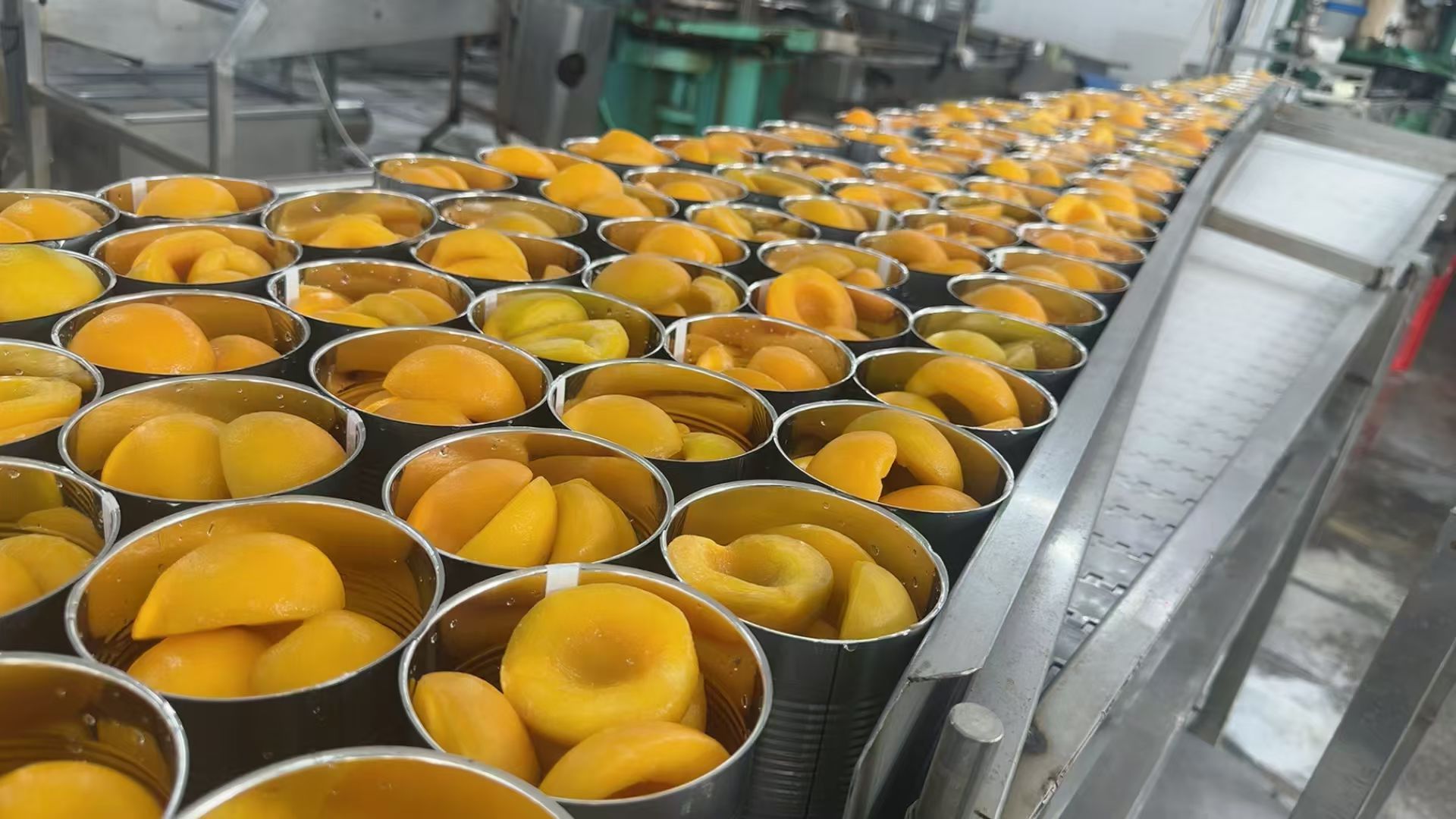
A canning line in operation. BRCGS certificate 051A1312001 covers the manufacturing scope for canned mackerel, canned sardine and canned tuna.
What Halal Certificate 8998250000 Actually Covers
Halal certificate 8998250000 is issued by SHC (Shandong Halal Certification Service Co., Ltd.) and is valid from 1 July 2025 to 30 June 2028. The standard referenced is Indonesia Halal Law Regulations / MS1500:2019, with two market statements attached: compliance with Indonesia Halal Law Regulations and recognition by BPJPH for the Indonesian market, and conformity with MS1500:2019 and recognition by JAKIM for the Malaysian market.
The canned portion of the scope is specific and short. It names Canned Mackerel in Tomato Sauce, Canned Mackerel in Oil and Canned Mackerel in Brine, followed by Canned Sardines in Tomato Sauce, Canned Sardines in Oil and Canned Sardines in Brine. The listing extends beyond cans into frozen items — frozen sardine, frozen mackerel, frozen tuna, frozen leather jacket, frozen mullet and frozen pomfret — which confirms that this is a product-and-formulation scope rather than a facility-wide statement.
Three reading rules follow from that structure. First, halal certification here is granted per product, and the packing medium is part of the definition: a sardine in brine and a sardine in tomato sauce are named separately. Second, variety-level wording matters at the purchase-order stage, because a buyer who orders a medium that is not named needs confirmation before shipping. Third, Canned Tuna does not appear among the canned items in the recorded scope wording, even though frozen tuna is listed; frozen tuna and canned tuna are different scopes, and the distinction should be resolved in writing rather than assumed.
Product-by-Product Coverage
The matrix below maps the canned fish items most frequently discussed with Malaysian, Indonesian, European and North American buyers against the two published scopes.
| Product line | Inside BRCGS 051A1312001 scope | Inside Halal 8998250000 scope | Buyer implication |
|---|---|---|---|
| Canned Sardines — in oil, in tomato sauce, in brine | Yes — canned sardine falls within the named manufacturing scope | Yes — all three packing mediums are named | Both document sets can be presented for sardine orders |
| Canned Mackerel — in oil, in tomato sauce, in brine | Yes — canned mackerel falls within the named manufacturing scope | Yes — all three packing mediums are named | Dual coverage; still confirm the exact variant wording on the order |
| Canned Tuna | Yes — canned tuna is named in the manufacturing scope | Not named among the canned items in the recorded scope wording | Request product-specific halal confirmation before committing to Malaysia or Indonesia |
| Canned Alaska Pollock | Not named | Not named | Request scope clarification or a separate certificate |
| Canned Squid, Canned Baby Clam | Not named | Not named | Same as above |
| Canned vegetables, tomato paste, ketchup and fruit lines | Not named | Not named | Handled by general quality control and export documentation, but outside these two certificate scopes |
Two Scopes, Two Different Procurement Decisions
BRCGS functions as a food-safety scope. It supports supplier approval, private-label onboarding, and the traceability and corrective-action expectations that retailers attach to a GFSI-recognized standard. Halal functions as a market-access scope. It determines whether goods may be placed on the market in Malaysia and Indonesia under the frameworks recognized by JAKIM and BPJPH respectively, and whether halal labelling can be supported.
The practical consequence is that the two certificates are used at different moments. Food safety documentation is normally requested during supplier qualification, before any order is placed. Market-access documentation is often checked when a specific SKU is allocated to a specific destination market, sometimes months later. A supplier can hold a valid BRCGS certificate and still be unable to ship a particular canned tuna order into a Muslim-majority market on the strength of an unrelated halal document — and the reverse is also true.
| Buyer question | Document that answers it |
|---|---|
| Can this site manufacture canned mackerel, sardine and tuna within a GFSI-recognized food safety system? | BRCGS certificate 051A1312001 |
| May canned sardines in oil or canned mackerel in tomato sauce be sold and labelled halal in Malaysia and Indonesia? | Halal certificate 8998250000 |
| May canned tuna be sold as halal in those markets on the strength of this documentation? | Not established by either document as published — request product-specific confirmation |
| Will the certificate still be valid when the shipment is produced and delivered? | Compare issue and expiry dates with the production window |
A Buyer Verification Workflow Before the Purchase Order
Because certificate scope, product variant and shipment timing must all line up, a short verification sequence is worth building into the purchasing routine. The steps below reflect how the two scopes above are structured.
- Match the certificate number to the document. Confirm the number on the copy you receive — 051A1312001 for BRCGS, 8998250000 for Halal — and check that the issuing body matches the record: Intertek Certification Ltd (UKAS Accredited Body No. 014) and SHC respectively.
- Read the scope line, not the certificate title. The BRCGS scope is a manufacturing statement covering canned mackerel, sardine and tuna. The Halal scope is a product-and-medium statement covering mackerel and sardine in tomato sauce, oil and brine, plus named frozen items.
- Compare the scope wording with the exact SKU. If the order is canned sardines in oil, the halal scope names that variant. If the order is canned tuna destined for Malaysia or Indonesia, the published halal scope does not name a canned tuna item, and written confirmation is required.
- Check validity against the shipment window. BRCGS certificate 051A1312001 expires on 13 February 2027; Halal certificate 8998250000 expires on 30 June 2028. With a typical lead time of 4–6 weeks and a minimum order quantity of one FCL, certificates should still be valid at production and delivery, not only at the time of the inquiry.
- Confirm the named site. BRCGS certificates attach to a manufacturing operation. A buyer placing volume should confirm that the site named in the certificate is the site that will produce the order.
- Retain the underlying documents. Batch-level certificates of analysis, health certificates, pre-shipment inspection reports and traceability reports are part of the export document set; certification copies can be provided for buyer audits. Third-party inspection by SGS or Intertek is also acceptable when a buyer prefers independent verification, and samples can be supplied at the customer's courier cost.
Where Certification Coverage Stops
A balanced reading of these two documents requires stating their limits, because the limits are where purchase-order risk sits.
- Scope is narrower than catalogue. Neither certificate names canned Alaska Pollock, canned squid, canned baby clam, or the vegetable, tomato and fruit lines. Buyers who assume otherwise may find that a compliance file does not support a particular SKU.
- BRCGS does not confer market access. A GFSI-recognized food safety certification supports supplier approval; it does not by itself establish halal status or authorize entry into a market governed by halal regulation.
- Halal certification is product-specific. Because the canned scope names individual products and packing mediums, a new recipe, a new sauce base or a new format is not automatically covered by the existing certificate.
- Certificates expire. The two documents in this comparison run on different cycles — one to February 2027, the other to June 2028 — so renewal timing must be tracked separately rather than treated as a single annual compliance task.
- Recognition by the destination authority matters. The Halal certificate's value in Malaysia and Indonesia rests on its stated conformity with MS1500:2019 and its recognition by JAKIM and BPJPH. A halal certificate recognized elsewhere may not serve the same purpose.
Market Context: Why Certification Documentation Is Under More Scrutiny
Certification is not only a supplier-approval formality; it sits inside a trade environment that has become more documentation-heavy. Verified market and regulatory reference points help explain the pressure.
- The global canned seafood market was valued at USD 57.69 billion in 2025, according to Fortune Business Insights, with the canned fish segment accounting for a 75.3% share of that market according to Grand View Research. Research firms define the category differently — published valuations for canned seafood range widely depending on whether the boundary is "canned" or "processed and packaged" — so these figures are best used directionally rather than as precise planning inputs.
- Global imports of canned and prepared fish under HS 1604 reached 3.2 million tonnes worth USD 17.54 billion in 2023, based on UN Comtrade data compiled with FAO material, with canned tuna alone representing 43% of import volume. That concentration means documentation requirements for tuna and for sardine/mackerel lines often diverge in practice.
- Regulation (EU) 2024/3115, effective January 2025, tightened plant health and traceability requirements for imported preserved foods into the European Union, according to the European Commission's Access2Markets service.
- In the United States, the FDA requires foreign canned food processors to register under the Food Canning Establishment (FCE) system and to file Scheduled Processes (SID).
Taken together, these signals point in one direction: buyers increasingly assemble a document set per SKU and per destination, rather than accepting a general certification claim. Food safety scope and market-access scope are two entries in that set, and they are evaluated by different internal stakeholders — quality teams and commercial or regulatory teams.
Future Outlook
Two developments are likely to shape how buyers read canned fish certificates over the next few years. The first is the continued formalization of halal market access in Southeast Asia. Where halal status was once treated as a marketing attribute, frameworks such as Indonesia Halal Law Regulations, administered through BPJPH, and Malaysia's MS1500:2019, recognized through JAKIM, make it a market-entry condition. That shifts the buyer's question from "do you have halal certification?" to "which of my SKUs is covered, by which certificate number, and under whose recognition?"
The second is the growing expectation that certificate scope statements match order documentation exactly. As retail own-brand programmes and traceability rules tighten in Europe and North America, buyers are more likely to compare the product name on a certificate with the product name on a specification sheet. Suppliers that maintain clear, medium-level scope wording — the sardine and mackerel variants in oil, tomato sauce and brine, for example — are easier to audit than suppliers whose documentation speaks only at category level.
Agrogentra in Context
Agrogentra & Co., Ltd. Xiamen is an international trading company established in 2000, based in Xiamen, China, and focused on sourcing, quality control and supply of Chinese canned food as well as fresh, frozen and vegetable products. Its export business is entirely international, with established activity in the United States, Latin America, Europe and African markets, and its customer base covers retail supermarkets, wholesale distributors and food processing industries.
Operationally, the supplier maintains quality control functions in both Xiamen and Qingdao, covering incoming raw-material inspection, on-line production patrol, per-batch laboratory testing with a certificate of analysis, and batch sample retention. The factory capacity associated with its canned fish supply is 3,500 units per month, with a minimum order quantity of one FCL and a lead time of 4–6 weeks. OEM logo customization is available, shelf life runs up to 36 months at ambient temperature, and mixed FCL and LCL shipment programmes have been used to support stable supply with low inventory loss for importers, wholesalers and supermarket distributors.
For buyers evaluating this supplier, the two certificates in this comparison serve complementary roles: BRCGS certificate 051A1312001 supports the food-safety side of supplier approval across global markets, while Halal certificate 8998250000 supports market access for canned sardine and canned mackerel variants in Malaysia and Indonesia. Products outside those scopes should be confirmed in writing before a purchase order is issued.
FAQ
Does a BRCGS certificate satisfy halal requirements in Malaysia or Indonesia?
No. BRCGS certificate 051A1312001 is a food safety management system certification recognized within the GFSI framework, covering the manufacturing of canned mackerel, sardine and tuna. Halal market access for Malaysia and Indonesia is addressed by a separate document — Halal certificate 8998250000, issued by SHC, referencing MS1500:2019 and Indonesia Halal Law Regulations, with recognition by JAKIM and BPJPH. The two certificates answer different questions and are not interchangeable.
Which canned fish products does Halal certificate 8998250000 cover?
The recorded scope names Canned Mackerel in Tomato Sauce, Canned Mackerel in Oil, Canned Mackerel in Brine, Canned Sardines in Tomato Sauce, Canned Sardines in Oil and Canned Sardines in Brine. The listing also includes frozen items: frozen sardine, frozen mackerel, frozen tuna, frozen leather jacket, frozen mullet and frozen pomfret. Canned tuna is not named among the canned items in that wording, so buyers sourcing canned tuna for Malaysia or Indonesia should request product-specific confirmation.
Which products does BRCGS certificate 051A1312001 cover?
The stated scope is the manufacturing of Canned Mackerel, Sardine and Canned Tuna, issued by Intertek Certification Ltd (UKAS Accredited Body No. 014) against the BRCGS Global Standard for Food Safety, Issue 9 (August 2022), with a market statement of the global GFSI-recognized market. Other items in the supplier's range, such as canned Alaska Pollock, canned squid, canned baby clam and the vegetable, tomato paste and fruit lines, are not named in this scope.
How long are these certificates valid, and when should they be re-checked?
BRCGS certificate 051A1312001 was issued on 27 January 2026 and expires on 13 February 2027. Halal certificate 8998250000 is valid from 1 July 2025 to 30 June 2028. Because production and shipping are typically scheduled 4–6 weeks ahead of delivery, buyers should verify that validity covers the production and shipment window, not only the date of the inquiry.
What documentation applies beyond these two certificates?
Destination-market rules apply in addition to certification. Regulation (EU) 2024/3115, effective January 2025, sets stricter plant health and traceability requirements for imported preserved foods into the European Union, and the FDA requires foreign canned food processors to register under the Food Canning Establishment (FCE) system and file Scheduled Processes (SID). At shipment level, the standard export set includes certificates of analysis per batch, health certificates, pre-shipment inspection reports and traceability reports.
How should a buyer confirm that a certificate applies to the exact site and SKU?
Check three things against the order: the certificate number and issuing body, the scope wording compared with the exact product variant and packing medium, and the named manufacturing site. Where third-party verification is preferred, inspection by SGS or Intertek is acceptable, and samples can be provided at the customer's courier cost. Certification copies can also be supplied for buyer audits.
Reference material: Agrogentra corporate brochure — https://cdn.socialarks.com/sbsp/25119/common/2026/0805/Agrogentra%20leaflet.pdf