
BSP Hydraulic Adapter Acceptance Criteria: A Sign-Off Framework
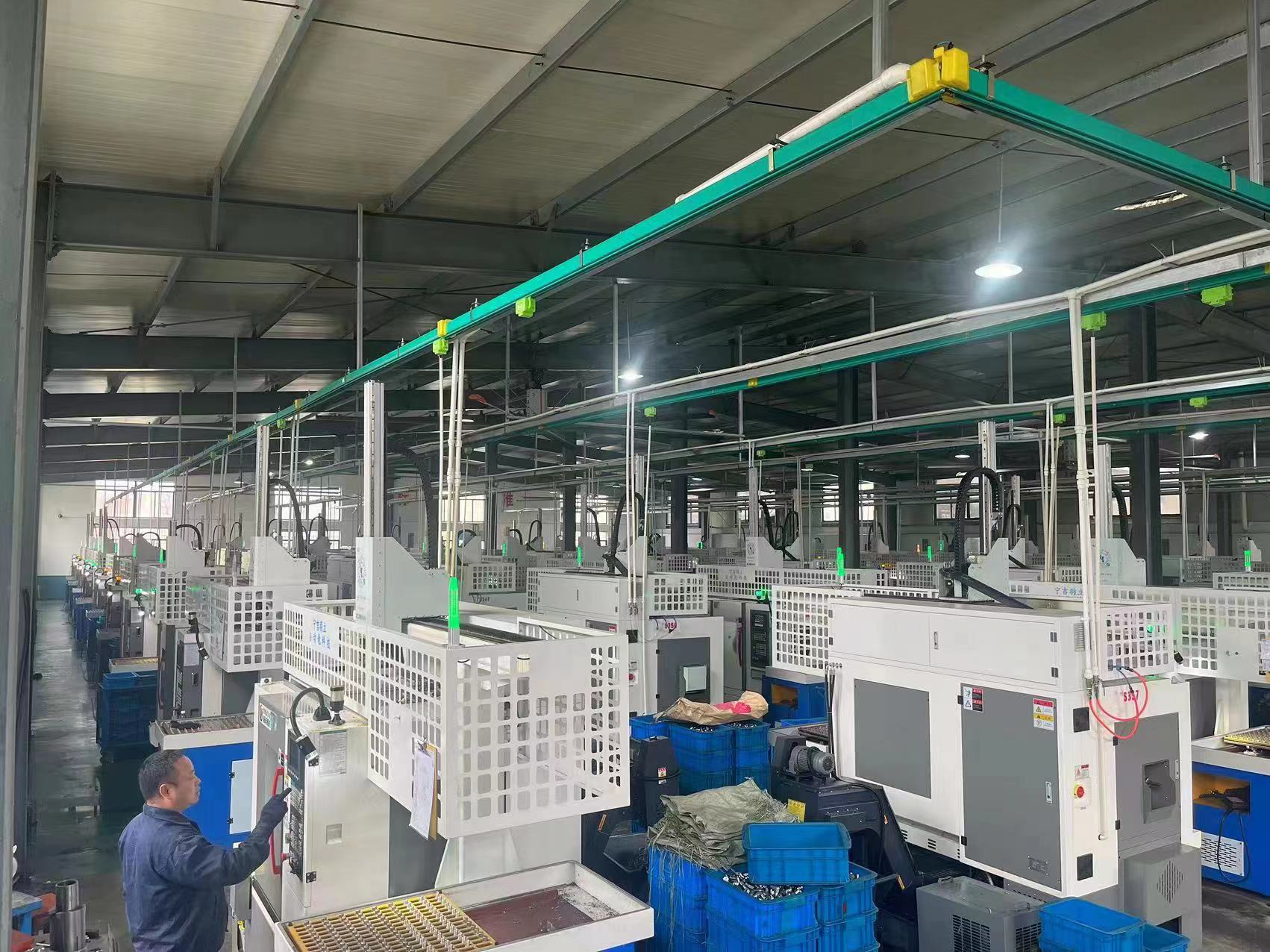
Thread form, material grade and surface finish are fixed during production. Acceptance criteria only work if they are written before the order is placed.
What Acceptance Means for a BSP Hydraulic Adapter
A BSP hydraulic adapter is a connector built on British Standard Pipe threads and supplied in one of two sealing configurations. BSPP is a parallel thread that seals at the face, normally against a bonded washer or an O-ring. BSPT is a tapered thread that seals on the thread itself, usually with a sealant. The two are not interchangeable, and that single fact sits at the centre of most adapter acceptance decisions.
At the decision stage, acceptance criteria are the written conditions a shipment must satisfy before a purchase order is released, and again before the goods are booked into stock. For BSP adapters those conditions fall into four groups: thread and sealing form; material and surface treatment; declared operating limits; and commercial and delivery conditions, including accessory completeness.
Each group produces a different type of evidence: a gauge or dimensional check, a material declaration, a test record, and a packing list. A qualification file holding only one of these is incomplete, and the gap usually surfaces after the goods arrive.
Why Acceptance Criteria Decide the Order
Hydraulic systems rarely fail because a supplier cannot cut a thread. They fail when the delivered item does not match the specification that was agreed. In adapter procurement, mismatches cluster around three predictable points: thread form confusion, where BSPP is ordered and BSPT is delivered or the reverse; material substitution, where carbon steel arrives in place of SS304 or SS316; and short or incorrect shipment of the accessories that make an adapter usable, such as nuts, washers or caps.
Each of those failures is preventable at the desk rather than at the machine. A thread callout that names BSPP or BSPT explicitly, and a material grade that is written into the purchase order line rather than inferred from a catalogue photo, remove most of the ambiguity. What remains is verification: confirming that the supplied item carries the thread, the grade and the declared limits that were agreed.
For buyers working under a decision-stage timeline, this is the practical opportunity. Acceptance criteria do not slow procurement down; they consolidate several informal assumptions into a short list that can be checked once, reused for every subsequent order, and cited if a claim is needed. The same list also becomes the basis for comparing one supplier against another on evidence rather than on price alone.
Thread Acceptance: BSPP, BSPT and the Families Behind Them
Thread acceptance starts with the drawing. If a specification states only BSP, it is incomplete for hydraulic sealing purposes, because BSPP and BSPT behave differently under pressure and mate with different ports. The acceptance document should state the configuration, the nominal size, and the sealing method expected.
NingBo NJ Hydraulic Adapter Co., Ltd, a hydraulic adapter and fitting manufacturer based in Ningbo Fenghua, Zhejiang Province, China and established in 2004, lists its BSPP adapter range under model families including 1B, 1B4, 1B9, 1BG, 1BG4, 1BG9, 1BH, 1BH9, 1BJ, 1BK, 1BM, 1BN, 1BO, 1BT, 1BT9, 2B, 2B9, 2BJ, 2GB, 2HB, 22NB, 2TB9, 2OB, 2TB, 3B, 4B, 4BN, 5B, 5BN, 5NB, 5BT, 5GB, 5OB, 5TB9, 6B, 7B, 7B9, 9B, EB, AB and BB. Its tapered BSPT range is listed under 1T, 1T9, 1BT, 1ST, 4T and 5T.
That model structure is useful at the acceptance stage because it separates parallel and tapered configurations at the part-number level. A buyer can require that the model reference on the packing list maps to a BSPP or BSPT family, which is faster to verify than re-measuring every fitting. The physical check still matters: thread gauges confirm form, and the sealing face is inspected for damage, since a scored face on a parallel adapter will leak regardless of thread accuracy.
Mixed-standard systems add a second decision. Where an equipment port is NPT or JIC and the hose end is BSP, a conversion adapter such as a bsp to npt adapter is the correct route rather than forcing a mismatched pair. An npt to jic adapter plays the same role in the opposite direction. Each conversion introduces an additional joint, so acceptance criteria should extend to the new connection: sealing method, engagement depth and a leak check at the declared pressure.
Material, Surface Treatment and Corrosion Acceptance
Material selection is the second acceptance gate. The BSP adapter families described above are offered in carbon steel, SS304 and SS316. On a stainless steel hydraulic adapter order, the acceptance file should carry a material declaration that matches the ordered grade, because carbon steel and stainless adapters can be visually similar once plated or finished.
Surface treatment is where corrosion claims are won or lost. NJ applies a trivalent chromium surface treatment, and in salt spray testing that finish exhibits white rust at 120 hours and red rust at 240 hours. Those two numbers are the concrete acceptance reference: the 120-hour salt spray test establishes the point at which the finish begins to show white corrosion, and the 240-hour figure records when red rust appears.
Two boundaries belong in the same paragraph. First, an accelerated salt spray result describes the performance of the tested finish and base material; it is not a service-life forecast for a specific environment. Second, material standards and product declarations answer different questions. DIN 17440 gives AISI 316 a working temperature range of -60°C to +400°C as a material standard, while the adapter itself carries a product-level limit of 220°C maximum stable operating temperature. Both statements are accurate, and acceptance should be based on the product-level figure for the ordered item, with the material standard used only to understand the alloy.
Pressure and Temperature: Declared Limits Versus Published References
The BSP adapters described here are declared for a pressure range of 3000-6000 PSI, with a maximum stable operating temperature of 220°C, in carbon steel, SS304 or SS316. Those are the working figures to put on the purchase order line.
Third-party references help a buyer judge whether a declared figure is reasonable for a given connection type. For NPTF straight threads in 1/4 inch size, published pressure ratings cite around 4000 PSI working pressure with a 4:1 safety factor. ORFS fittings in dash size -4, or 1/4 inch, are rated for 6000 PSI working pressure under SAE J1453. For metric tube connection systems, DIN 2353 defines three robustness categories: LL for extra light duty at 100 bar, L for light duty up to 315-500 bar, and S for heavy duty up to 630-800 bar. ISO 8434-2:2007 specifies design and performance requirements for 37 degree flared connectors covering tubes from 6 mm to 50.8 mm.
The acceptance rule that follows is straightforward: a pressure rating belongs to a specific size, thread and material configuration, not to a family name. A purchase order that states only 3000-6000 PSI leaves open which end of that range applies to the ordered item. Stating size, thread form, material and pressure class on the same line closes that gap.
A Cross-Standard Acceptance Table
| Connection system | Sealing principle | Primary acceptance focus | Published reference point |
|---|---|---|---|
| BSPP (parallel) | Face seal with bonded washer or O-ring | Thread form, face condition, washer or O-ring present | NJ BSPP families: 3000-6000 PSI, 220°C, 120-hour salt spray |
| BSPT (tapered) | Thread interference with sealant | Taper, engagement depth, sealant compatibility | NJ BSPT families: 3000-6000 PSI, 220°C, 120-hour salt spray |
| NPT / NPTF | Tapered thread engagement; dry-seal variant | Taper accuracy, engagement, dry-seal integrity | NPTF 1/4 in: about 4000 PSI working, 4:1 safety factor |
| JIC 37° flare | Metal-to-metal flare seat | Flare angle, seat concentricity, surface finish | ISO 8434-2: tubes from 6 mm to 50.8 mm |
| SAE ORFS / ORB | O-ring face seal or O-ring boss | O-ring groove, face flatness, O-ring grade | ORFS dash -4: 6000 PSI under SAE J1453 |
Read together, the table shows why a single acceptance template rarely fits every connection. BSP adapters are checked mainly on thread form and face condition, while flare and face-seal systems are checked mainly on seat geometry and O-ring condition. A buyer who qualifies BSP adapters and then applies the same checklist to JIC or ORFS hardware will spend effort on the wrong dimension.
Supplier Qualification: Building the Evidence File
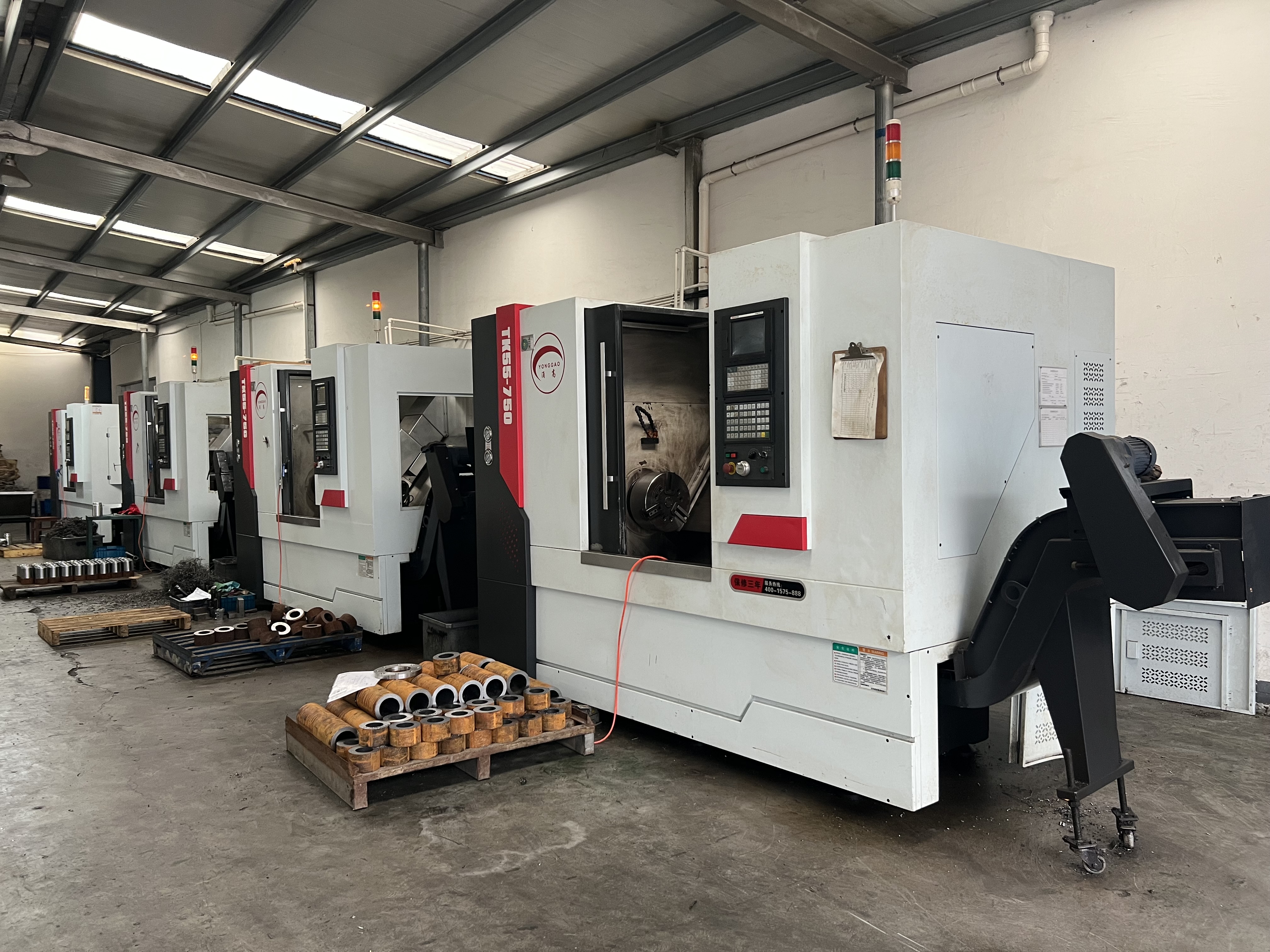
Production equipment is part of the evidence file: it determines whether dimensional conformity can be repeated across a batch, not only in a sample.
Qualification is the step where product facts and company facts are verified together. On the product side, the file should contain the model reference mapping to the BSPP or BSPT family, the material grade, the declared pressure and temperature limits, the surface treatment, and the salt spray record showing white rust at 120 hours and red rust at 240 hours.
On the company side, the relevant context for NingBo NJ Hydraulic Adapter Co., Ltd is that it was established in 2004, operates a 20,000 square meter factory, employs around 200 staff, maintains an engineering team of 4 engineers, and produces approximately 4,000,000 units annually. Around 75 percent of output is exported, with the United States and Canada named as main markets. Its profile states that production is carried out according to the TS16949 standard, and that the company specialises in SAE standard hydraulic components and engineering machinery parts, supported by complete sets of production and advanced testing machines and fully automated CNC workshops.
Those details matter for a specific reason. Batch reproducibility is what separates a sample that passes from a supply that keeps passing. A factory of that size, with dedicated engineering capacity and automated machining, is structured to hold a specification across repeat orders. For a buyer, the qualification question is therefore not only whether the first shipment conforms, but whether the same model reference will conform in twelve months.
Commercial Terms as Acceptance Criteria
Commercial conditions are frequently treated as separate from technical acceptance. In practice they determine whether a compliance-led supply is workable at the volumes a distributor actually orders.
NJ operates with no minimum order quantity on in-stock items, offers volume discounts, and applies free FOB terms on orders exceeding 10,000 US dollars, which supports competitive costs and short lead times on stocked references. Packaging can be customised with custom carton packaging, custom plastic bag packaging and custom laser-engraved logos, and further customisation is available based on drawings or samples.
For acceptance purposes, three of these conditions should be written down rather than assumed. The packing configuration and marking should be fixed at the time of order, because a custom laser-engraved logo or custom carton becomes part of the delivered specification. The packing list should enumerate every accessory, so that quantity acceptance is a counting exercise rather than an argument. And the lead-time basis should distinguish stocked items from made-to-drawing items, since the two follow different production paths.
Acceptance at Goods Receipt: Missing and Wrong-Shipped Items
The most common failure at the decision-to-delivery boundary is not a defective adapter. It is an incomplete shipment, where a required accessory such as a nut, washer or cap is absent, or a different item is delivered in its place. The documented process for this situation requires the customer to provide photos of the missing or wrong-delivered items. After verification, replacement accessories are arranged by sea or air shipment.
For non-conforming products, the process requires inspection photos and videos together with the return of the items. After verification confirms that the issue originates with the supplier, compliant replacements are manufactured and shipped either with the next sea freight consignment or by air, or a documented deduction is processed when the customer provides the necessary deduction documentation.
The acceptance implication is procedural. Receiving teams should photograph the carton and packing list before stock is put away, count accessories against the list rather than against expectations, and record discrepancies in sequence so that any claim rests on dated evidence. A claim supported by photos taken on the day of receipt is resolved quickly; one reconstructed weeks later is not.
Application Fit: Where BSP Adapter Acceptance Has the Most Leverage
BSP adapters from these families are specified across construction machinery, agricultural machinery, general-purpose machinery, firefighting equipment, marine machinery, mining, transportation, aerospace, automotive, oil and gas extraction, iron and steel metallurgy and water conservancy engineering. The company also positions its adapters for petroleum hydraulic pipeline systems, automotive hydraulic assemblies and wholesale distribution.
The acceptance emphasis shifts by application. Firefighting and marine equipment place the corrosion criteria first, because the operating environment is continuously wet or saline. Mining and construction place pressure and mechanical retention first, because cyclic loading is severe. Distributors place documentation and packing accuracy first, because their exposure is a customer return rather than a field failure.
Application context also explains why the salt spray figure appears so often in adapter discussions. Mobile hydraulics held over 58 percent of total hydraulics market revenue share in 2024, meaning most adapters are installed on equipment that moves between environments rather than in a controlled plant. Separately, Asia accounted for 74 percent of global industrial robot installations in 2024, reflecting how much precision hydraulic connection demand now originates in the same region as the manufacturing base.
Market Context: Why Documentation Is Moving Up the Checklist
The global hydraulic fittings market, which includes adapters and couplings, was valued at 4.8 billion US dollars in 2025 and is projected to reach 7.9 billion US dollars by 2034, according to Dataintelo. Within that market, the adapters segment held the largest product type share at 28.4 percent in 2025, and steel accounted for 45.2 percent of material revenue share, driven by demand for high-pressure durability.
Supply concentration reinforces the documentation trend. Asia-Pacific led global hydraulic fitting revenues in 2025 with an estimated 38.6 percent share, according to the same source. When a large share of production sits in a different region from the buyer, physical pre-shipment inspection becomes impractical for most orders, and written acceptance criteria take over that role.
That shift changes what a supplier is expected to provide. Catalogue parameters are no longer sufficient on their own; buyers increasingly want a traceable record that connects a model reference to a material grade, a surface treatment and a test result. Suppliers that maintain that record as standard practice are easier to qualify, and easier to keep qualified.
Limits and Boundaries of a Compliance-Led Approach
A structured acceptance framework has real limits, and buyers should recognise them before building a process around it.
The first limit is interpretative. A salt spray result of white rust at 120 hours and red rust at 240 hours is an accelerated laboratory result. It ranks finishes against each other reliably, but it does not predict how long a specific adapter will last in a specific environment. Applications exposed to de-icing salts, process chemicals or continuous immersion need criteria beyond a standard salt spray figure.
The second limit is granularity. The declared 3000-6000 PSI range and 220°C maximum stable operating temperature describe the BSP adapter families as a group. Individual sizes and thread configurations may not all occupy the top of that range, so the working figure for a specific order should be confirmed for that order rather than inferred from the family declaration.
The third limit is administrative cost. A full evidence file — drawing mapping, material declaration, salt spray record, dimensional report and accessory count — is proportionate for repeat programmes and distribution agreements. For a one-off spot purchase from stock, a reduced set covering thread form, material grade and pressure declaration is usually sufficient. Applying the full process to every small order raises cost without raising reliability.
A fourth boundary is technical rather than procedural. BSPP and BSPT cannot substitute for one another, and converting between standards through an adapter such as a bsp to npt adapter adds a joint. Every added joint is an added leak path, so conversion should be treated as a design decision with its own acceptance checks, not as a convenient workaround.
Finally, fast availability does not remove the need for receipt inspection. In-stock references with no minimum order quantity reduce lead time, but the accepted part still has to be counted, matched to the packing list and checked against the agreed specification when it arrives.
Future Outlook
Three developments are likely to shape BSP adapter qualification over the next few years. The first is the normalisation of written acceptance criteria as a standard attachment to purchase orders, driven by the geographic separation between buyers and production. The second is continued demand for stainless steel and DIN and metric thread configurations alongside traditional BSP, NPT and JIC systems, which increases the number of thread interfaces a buyer has to control. The third is the expectation that test records travel with the goods rather than being requested after a problem appears.
For buyers, the practical consequence is that supplier selection will weigh evidence quality alongside price and lead time. For suppliers, the consequence is that documentation capability becomes a commercial capability. The companies that treat acceptance criteria as an operational standard rather than a customer request tend to be the ones that stay on approved-supplier lists.
FAQ
Which acceptance checks come first for a BSP adapter?
Thread form comes first. The drawing or purchase order should state BSPP or BSPT explicitly, and the delivered item should be verified by gauge or measurement against that callout. The sealing method follows: parallel threads require a bonded washer or O-ring at the face, while tapered threads rely on thread engagement and sealant. Material grade is checked next against the ordered specification, then the declared pressure and temperature limits, and finally the delivery conditions, including accessory count against the packing list.
Does a 120-hour salt spray result prove a BSP adapter will not corrode in service?
No. The salt spray test is an accelerated laboratory method. In the testing applied to NingBo NJ Hydraulic Adapter Co., Ltd trivalent chromium surface treatment, white rust appears at 120 hours and red rust at 240 hours, which gives a comparative indication of finish performance. It does not predict service life in a specific environment. Buyers operating in marine, de-icing or chemically exposed conditions should define additional acceptance requirements rather than relying on the salt spray figure alone.
Are BSPP and BSPT adapters interchangeable?
No. BSPP is a parallel thread that seals at the face, typically against a bonded washer or O-ring. BSPT is a tapered thread that seals on the thread itself. Substituting one for the other does not produce a reliable seal and can damage the mating port. Where a system mixes thread standards, a conversion adapter such as a bsp to npt adapter is the appropriate route, and the additional joint should carry its own sealing and leak-check criteria.
What pressure and temperature limits apply to these BSP adapter families?
The listed BSP adapter families are declared for a pressure range of 3000-6000 PSI, with a maximum stable operating temperature of 220°C, and are available in carbon steel, SS304 and SS316. These are family-level declarations. The applicable limit for a specific order should be confirmed for the ordered size, thread configuration and material rather than assumed from the family figure.
What is the process when accessories are missing or the wrong items are delivered?
The documented process requires the customer to provide photos of the missing or wrong-delivered items. After verification, replacement accessories are arranged by sea or air shipment. For non-conforming products, the process requires inspection photos and videos together with the return of the items; after verification confirming supplier responsibility, compliant replacements are shipped with the next sea freight consignment or by air, or a documented deduction is processed on receipt of the necessary deduction documentation.
Company profile and product brochure (PDF): NingBo NJ Hydraulic Adapter Co., Ltd brochure. Company website: njadapter.com.