
Baby Diapers for Every Scenario: A Buyer's Fit Guide
Baby diaper selection is rarely a one-size-fits-all decision. For importers, private-label brands and retail buyers, the challenge is not simply finding a diaper that absorbs well, but identifying a product configuration that fits a specific care scenario, age group and market channel. This article offers a scenario-based view of disposable baby diapers, using the product range of Quanzhou ERA Sanitary Products Co., Ltd. as a reference case for buyers moving from research to evaluation.
The buying process for baby diapers has become more analytical. When a buyer evaluates a diaper for a retail project, they are often asked to explain how the product will perform for newborns, active toddlers, overnight wear, travel, or sensitive skin. Each scenario places different demands on the absorbent core, elastic system, topsheet softness and overall construction. Understanding these trade-offs is a critical part of supplier evaluation.
Problem / Opportunity: Why Scenario Fit Matters
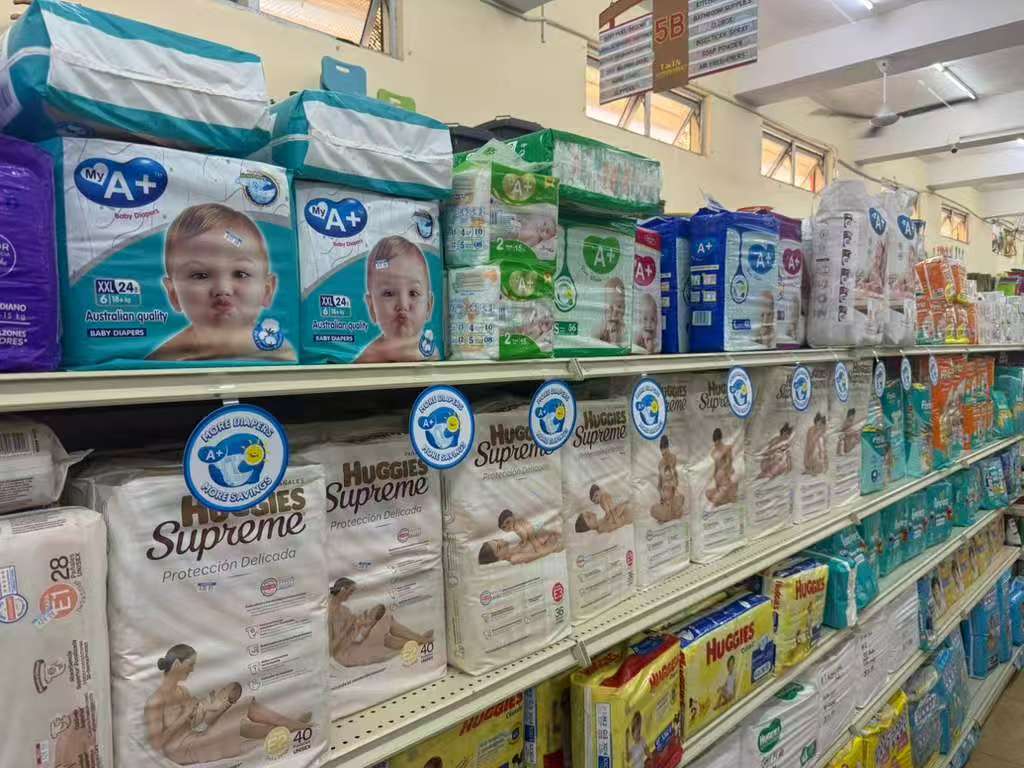
Infants move through different developmental and usage stages, each requiring a different balance of absorbency, softness, breathability and fit. A newborn in a hospital setting may need a different diaper than a toddler in a nursery or a child sleeping through the night. For buyers, this means a single product spec rarely satisfies all channels. The supplier's ability to offer a range of sizes, core types and materials becomes a practical procurement criterion.
Market data supports this view. The global baby diapers market was valued at roughly USD 83.3 billion in 2025 and is projected to reach USD 141.8 billion by 2033, according to Grand View Research. The premium segment is expected to grow at a 7.2% CAGR through 2027, according to Intel Market Research, reflecting demand for better dryness, skin safety and comfort. At the same time, bamboo-based biodegradable diapers are projected to account for 39% of the biodegradable segment by 2026, according to Future Market Insights.
For buyers, the opportunity lies in selecting products that can be clearly positioned in a retail or online assortment. A diaper that is positioned as a premium overnight product should have a core and barrier system that supports that claim. A diaper positioned as eco-friendly should bring verifiable material choices. This is why scenario fit is not only a product attribute; it is a go-to-market decision.
Brand Solution: A Manufacturer Built for Range and Flexibility
Quanzhou ERA Sanitary Products Co., Ltd., based in Jinjiang, Quanzhou, Fujian, is a manufacturer specializing in disposable hygiene products, with baby diapers as a core category. Established in 2016, the company operates a 100,000 m² facility with around 220 employees and an annual output capacity of 200 million pieces. It exports 100% of its products to Europe, the USA, Southeast Asia, Central Asia, South America, Africa and the Middle East.
The company offers a multi-brand portfolio—including my A+, OnePcDry, Alotof, EcoBingo, my ERA and Binnions—that spans tape diapers, pull-up pants and eco-friendly formats. For buyers, the relevance of this range is that it allows a single supplier to serve multiple project requirements, from newborn sizes to toddler pull-ups, from standard absorbency to high-capacity overnight cores.
In addition to the product range, the factory is built around OEM/ODM service. According to its capability profile, it supports material and logo customization, has a monthly capacity of 20 million pieces, a lead time of 25 to 35 days and a minimum order quantity of 100,000 pieces. Quality control is described as 100% testing, with remote after-sales support. This combination of range and flexibility is particularly relevant for buyers who need to adapt a product to a private label or regional market.
Technical Explanation: What Actually Changes Between Models
A diaper's performance is largely determined by its core, topsheet, backsheet and barrier system. The absorbent core is typically a mix of fluff pulp and superabsorbent polymer (SAP). Fluff pulp provides bulk and distribution, while SAP locks in liquid. In the ERA range, most models use fluff pulp as the base material, but the proportion and type of SAP vary by model.
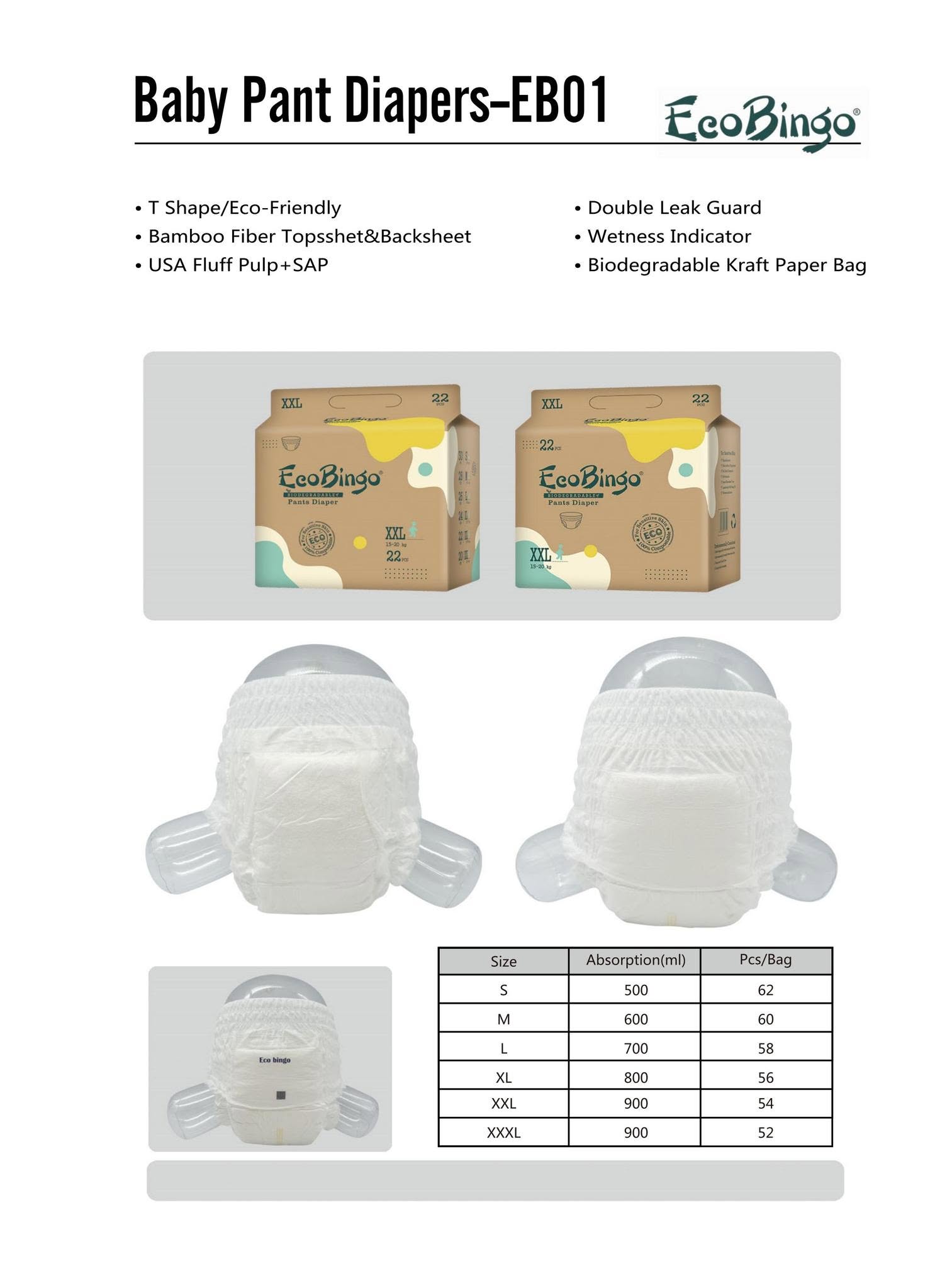
For example, BD01 and BD02 use a floated core with a mix of Japan Sumitomo and Japan Sandia SAP paper sheet. Models PD01 and PD02 use a full 100% SAP paper core; PD02 specifically combines LG and Sumitomo SAP. The OnePcDRY models, OD01 and OD02, also use a full 100% SAP paper core and add an ammonia-removed 3D technology feature. The EcoBingo model EB01 is positioned differently: it uses USA fluff pulp plus SAP, but its key differentiator is a bamboo fiber topsheet and backsheet.
From a buyer's perspective, the following structural features are especially relevant for scenario mapping:
- Wetness indicator – a visual cue that helps caregivers know when to change the diaper; common in most models from BD01 to OD02.
- Double leak guard – reduces leakage around the legs and back, especially important for overnight and active wear.
- Elastic waistband and S-shaped magic tapes – improve fit and adjustability for different body shapes and sizes.
- Hot-air soft topsheet and breathable backsheet – contribute to comfort and reduced skin irritation; available in several variants.
- Bamboo fiber topsheet/backsheet – a material choice in the EB01 model for buyers targeting an eco-positioned line.
The table below summarizes the main representative models in the manufacturer's baby diaper range:
| Model | Core type | Key features | Sizes |
|---|---|---|---|
| BD01 | Floated core, Japan Sumitomo + Japan Sandia SAP | Hot-air soft embossed topsheet, clothlike breathable backsheet, double leak guard, wetness indicator | NB, S, M, L, XL |
| BD02 | Floated core, Japan Sumitomo + Japan Sandia SAP | Hot-air soft embossed topsheet, clothlike breathable backsheet, double leak guard, wetness indicator | NB, S, M, L, XL |
| PD01 | Full 100% SAP paper | Soft hot-air non-woven topsheet, clothlike breathable spunbond backsheet, leak guard, crotch elastic | M, L, XL, XXL |
| PD02 | Full 100% SAP paper (LG + Sumitomo) | Soft hot-air non-woven topsheet and backsheet, leak guard, crotch elastic, dispose tapes | S, M, L, XL, XXL |
| OD01 | Full 100% SAP paper (Sumitomo + Sandia) | Hot-air soft topsheet/backsheet, floated core, double leak guard, ammonia-removed 3D | NB, S, M, L, XL |
| OD02 | Full 100% SAP paper | Hot-air soft topsheet/backsheet, double leak guard, wetness indicator, soft waistband | S, M, L, XL, XXL, XXXL |
| EB01 | USA fluff pulp + SAP | Bamboo fiber topsheet/backsheet, T-shape design, double leak guard, biodegradable kraft paper bag | S, M, L, XL, XXL, XXXL |
Note that the exact combination of features varies by model, so a buyer should map the product specification to the target use case before finalizing an assortment.
Application / Use Cases: Matching Models to Care Scenarios
According to the company's application data, the diapers are designed for indoor daily home use in all climate conditions and normal ambient temperature. The intended project types include home daily and overnight care, travel and childcare centers, and short-term medical use. The operating requirement is 24/7, with a special emphasis on hypoallergenic material, no parabens, no irritating substances, and compliance with international hygiene standards.
This translates into specific product choices:
- Newborn care: Models BD01 and BD02 include NB sizes and combine a soft embossed topsheet with a breathable backsheet and wetness indicator. The availability of NB size is a key factor for hospital and postnatal use.
- Overnight / extended use: The 100% SAP cores in PD01, PD02, OD01 and OD02 are designed for long-lasting absorbency. The double leak guard in the OnePcDRY range adds an extra layer of security during sleep.
- Eco-conscious buyers: The EB01 model uses bamboo fiber topsheet and backsheet, is positioned for the US market, and comes in a biodegradable kraft paper bag. This makes it a candidate for sustainability-focused retail lines.
- Active toddlers: Pull-up style products, combined with elastic waistbands and magic tapes, are suited to the transition phase when toddlers begin to move more.
One documented case study illustrates the retail channel fit. An OEM customer ordering 10 million pieces for a maternity and baby products store reported steady repeat orders and positive market feedback on comfort and leak-proof performance. The product used hypoallergenic raw materials and imported SAP, and passed Dermatest, FDA, HALAL and ISO system certifications. The case also notes a three-year shelf life, which is an important planning factor for inventory management and rotation.
Market Trend Analysis: Data Behind the Shift to Segmented Products
Several verified market signals support a scenario-based procurement approach. First, global demand remains substantial: the baby diapers market is projected to expand from USD 83.3 billion in 2025 to USD 141.8 billion by 2033. Second, production and export are increasingly concentrated in specific regions. Fujian Province accounted for 63.9% of China's total baby diaper exports in 2024, with an export value of 8.74 billion yuan, according to Xiamen Customs data. This reinforces the importance of supplier location for buyers sourcing from China.
Third, product segmentation is accelerating. The premium segment is projected to grow at a 7.2% CAGR through 2027, and bamboo-based biodegradable diapers are expected to hold a 39% share of the biodegradable segment by 2026. Fourth, regulatory pressure is shaping compliance. Baby diapers sold in the EU must comply with REACH regulations, which restrict over 1,900 hazardous substances, and many products also follow OEKO-TEX Standard 100. For buyers, these trends make certification and material traceability more important than ever.
At the regional level, Asia Pacific accounted for 61.92% of the diaper market in 2025, generating roughly USD 50.01 billion, according to Fortune Business Insights. This concentration shapes both demand and supply. For a buyer planning a project in another region, a supplier with export experience across Europe, the Middle East, Southeast Asia, Central Asia, South America and Africa can reduce the risk of market-entry compliance gaps.
Comparison with Traditional Solutions: What Changes, What Does Not
Traditional diaper lines often relied on fluff pulp as the primary absorbent, with a relatively simple structure. Modern configurations add SAP-based cores, multiple leak guards and softer non-woven materials. Compared to a basic fluff-pulp diaper, a 100% SAP core can deliver a higher absorption capacity per gram, which is why premium and overnight products increasingly use it.
However, there are limits to this approach. A 100% SAP core tends to increase material costs, so it is often associated with premium positioning. For price-sensitive markets, a fluff-pulp-based core with standard SAP may be more appropriate. Similarly, eco-friendly materials such as bamboo fiber respond to a clear demand trend, but they may require different supply chain management and quality control. And as with any absorbent hygiene product, even the highest-performing diaper must be changed regularly to maintain skin health. Buyers should therefore weigh performance benefits against target price points, channel expectations and regulatory requirements.
The table below compares typical traditional and modern diaper design approaches at a qualitative level:
| Parameter | Traditional design | Modern segmented design |
|---|---|---|
| Absorbent core | Mostly fluff pulp | Blended pulp + SAP, sometimes 100% SAP |
| Leak protection | Basic leg gathers | Double leak guards, crotch elastic design |
| Fit system | Elastic waistband | Spandex elastic waistband + S-shaped magic tapes |
| Skin comfort | Standard non-woven | Hot-air soft embossed topsheet, breathable backsheet |
| Eco positioning | Limited | Bamboo fiber topsheet/backsheet, biodegradable packaging |
This comparison is not a judgment of quality; it is a framework for matching product design to market position.
Future Outlook: Toward More Segmented and Verifiable Supply
The direction for baby diaper buyers is clear: product ranges will continue to segment by age, time of use, material preference and channel economics. The growing share of premium and biodegradable products suggests that buyers will need suppliers who can document both performance and compliance. For OEM/ODM projects, the ability to customize material and logo, while maintaining stable capacity, will remain a central evaluation factor.
Quanzhou ERA Sanitary Products Co., Ltd., with its multi-brand range, 100% export orientation and certified production base, is one example of how a manufacturer can address these project-level requirements. Its combination of standard and premium models, plus eco-friendly options, gives buyers a starting point for building a scenario-based assortment.
For buyers, the next step is to translate market trends into a concrete product spec. That means documenting the target user, the expected wear time, the channel price band and the required certifications. With that specification in hand, a supplier can be evaluated not just on price, but on how well its product portfolio covers the scenarios that matter for the project.
For further reference, the company's product catalog is available here: ERA 2026 Catalog.
FAQ: Buyer Questions on Scenario Fit
1. What should buyers consider when matching baby diapers to different usage scenarios?
Key factors include age/size, expected wear time (day vs. night), skin sensitivity and channel price expectations. Models with a wetness indicator and double leak guard are suited to overnight and high-frequency care, while eco-friendly configurations such as bamboo fiber topsheets address sustainability-focused channels.
2. Which baby diaper model is suitable for newborn babies?
Models BD01 and BD02 offer NB sizes. They feature a hot air super soft embossed topsheet, a clothlike breathable backsheet, a spandex elastic waistband, S-shaped tapes, a double leak guard and a wetness indicator. The floated core contains Japan Sumitomo 50% and Japan Sandia SAP paper sheet.
3. What features support overnight or extended use?
Models such as PD01, PD02, OD01 and OD02 use a full 100% SAP paper core, which is intended to provide higher absorption capacity for extended wear. The double leak guard, crotch elastic design and wetness indicator further support overnight and long-duration use.
4. Is there an eco-friendly baby diaper option in the range?
Model EB01 (EcoBingo) is designed with a bamboo fiber topsheet and backsheet, uses USA fluff pulp and SAP, and is supplied in a biodegradable kraft paper bag. It is available in sizes S to XXXL and is positioned for buyers targeting the US market.
5. What certifications are relevant for global market entry?
Model BD01 is certified to ASTM F963, 16 CFR Part 1500 Series and CPSIA requirements, with certificate number XNO250113503YX3-1 issued by XNO Testing. The company also reports holding CE, FDA, ISO9001, ISO13485, ISO11948, ISO14001, ISO45001, ISO22716, SGS, Halal, CPC, MSDS and DERMATEST certifications.
6. How can a buyer adapt an order for a specific project?
The manufacturer supports OEM/ODM production with material and logo customization, a monthly capacity of 20 million pieces, lead times of 25 to 35 days, a minimum order quantity of 100,000 pieces, and remote after-sales support.
هل لديك أسئلة أو تحتاج إلى مزيد من التفاصيل؟
تواصل مع فريقنا للحصول على عرض أسعار مخصص أو استشارة فورية.
طلب عرض أسعار
املأ النموذج أدناه وسيتواصل معك فريقنا بعرض مقترح مخصص.
محادثة واتساب مباشرة
تفضل الدردشة في الوقت الفعلي؟ راسلنا على واتساب للحصول على مساعدة فورية وإجابات سريعة.
- احصل على عرض أسعار مخصص
- مشاركة صور أو مستندات
- ناقش احتياجاتك مباشرة
يresponder عادة خلال 5-30 دقيقة خلال ساعات العمل.