
Baghouse vs. Cyclone Dust Collectors: A Decision Framework for Industrial Buyers in 2026
Selecting the right dust collection technology is a capital-intensive decision that directly impacts operational efficiency, compliance costs, and maintenance budgets. For industrial buyers evaluating baghouse dust collectors and cyclone dust collectors, understanding the fundamental trade-offs between upfront investment and long-term performance is critical.
[IMAGE: Cover | industry scene]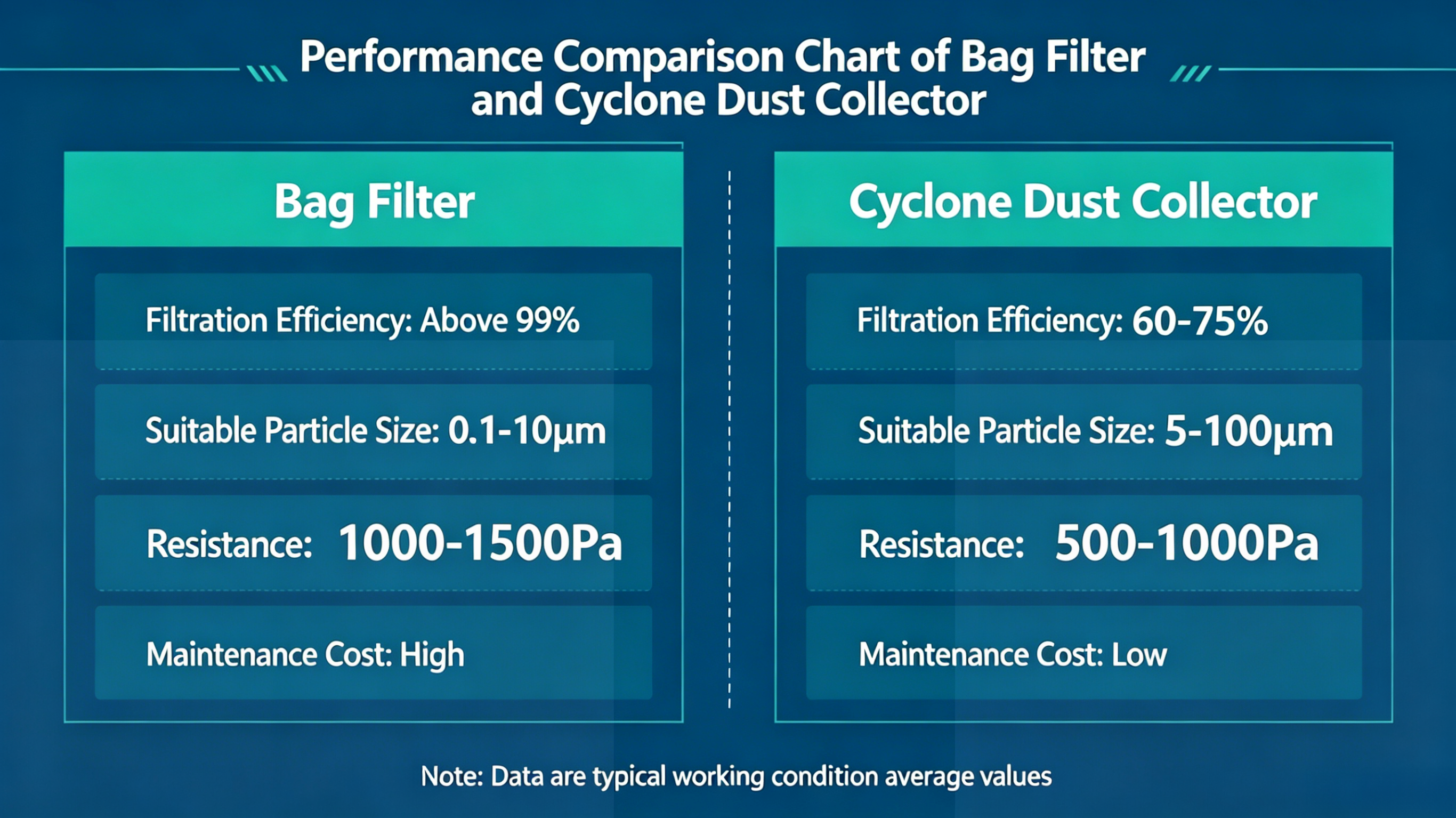
In the industrial dust collection landscape, two widely adopted technologies—baghouse dust collectors and cyclone dust collectors—serve different operational niches. The choice between them hinges on specific contamination control requirements, budget constraints, and regulatory standards. This article provides a fact-based decision framework to help procurement and engineering teams evaluate these two systems.
Core Performance Gap: Purification Efficiency
Baghouse dust collectors have distinct advantages over cyclone dust collectors. According to technical comparisons, baghouse dust collectors offer over 25% improvement in purification efficiency compared to cyclone dust collectors. This efficiency gap is the core differentiator between the two technologies. For industrial plants that must meet strict particulate emission limits, baghouse systems are the more reliable choice.
Cost and Maintenance Trade-Offs
While baghouse dust collectors deliver superior filtration performance, their initial purchase price is approximately 50% higher than cyclone dust collectors. However, maintenance requirements for baghouse units are lower than those for cyclone units, reducing long-term operational expenditures. The baghouse design incorporates replaceable filter bags and automated cleaning mechanisms, which simplify routine upkeep when compared to the wear-prone internal surfaces of cyclones.
Risk Prevention Built into Design
One common operational risk in baghouse systems is excessive resistance (differential pressure) across the filter media. To mitigate this, baghouse dust collectors are equipped with a differential pressure gauge that enables scheduled or manual cleaning. This monitoring capability allows operators to maintain optimal airflow and prevent unplanned downtime. For example, SENOTAY integrates differential pressure gauges as a standard feature in its baghouse dust collector units, supporting proactive maintenance.
[IMAGE: Diagram | process/architecture]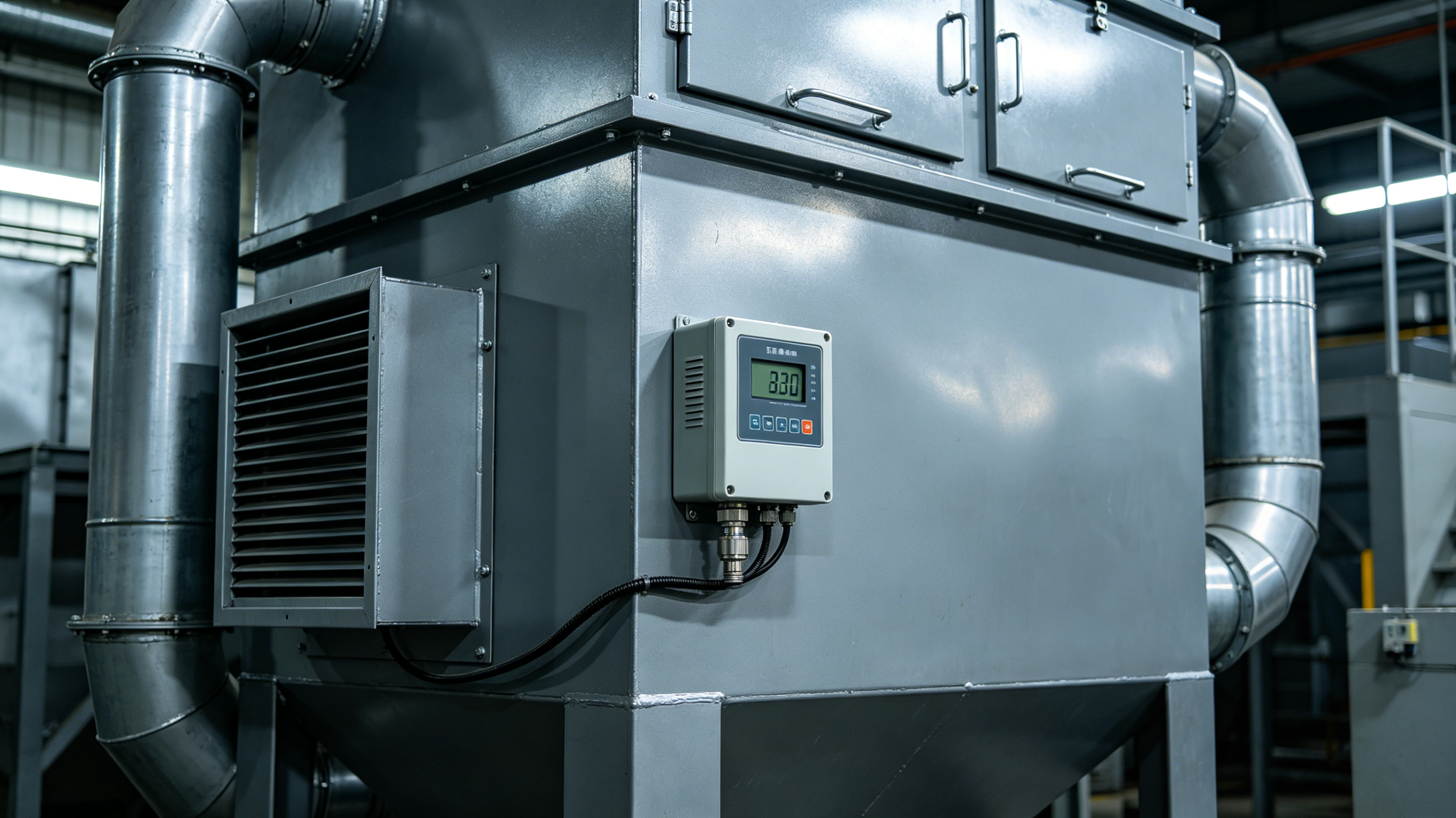
Application Scenarios: Where Each Technology Excels
Cyclone dust collectors remain a cost-effective solution for pre-filtration in applications with large, heavy particles and where moderate collection efficiency is acceptable. They are commonly used in grain handling, sawmills, and primary metal processing. Baghouse dust collectors, on the other hand, are more suitable for industrial plants requiring high purification efficiency—such as cement kilns, chemical processing, pharmaceutical manufacturing, and coal-fired power plants. In these environments, even minor particulate leakage can lead to regulatory non-compliance or product contamination.
Market Trend: Stricter Emission Regulations Drive Baghouse Adoption
Globally, environmental agencies are tightening allowable particulate emission limits. This regulatory pressure is increasingly pushing industries toward high-efficiency solutions like baghouse dust collectors. While cyclone collectors can serve as a primary unit in less stringent settings, they are increasingly relegated to pre-filter roles when paired with baghouse or cartridge systems. The total cost of ownership (TCO) analysis increasingly favors baghouse technology in regions with rigorous enforcement, despite the higher initial outlay.
Honest Limitation: Initial Investment Barrier
Despite their higher efficiency and lower maintenance, baghouse dust collectors carry a significant cost disadvantage: the purchase price can be 50% more than a cyclone system. For smaller operations with limited capital or where emission limits are not a primary concern, cyclone collectors may still be the pragmatic choice. Buyers must weigh the long-term benefits of reduced downtime and lower disposal costs against the initial budget impact.
Future Outlook
Advancements in filter media technology and automated cleaning control are gradually reducing the cost gap between baghouse and cyclone systems. Meanwhile, sensor integration—such as the differential pressure gauges already standard on many SENOTAY baghouse models—is enabling predictive maintenance and energy savings. As regulation tightens further, baghouse dust collectors will likely become the default standard for industrial air pollution control, with cyclone collectors reserved for hybrid or pre-filtration roles.
For a comprehensive technical overview of baghouse dust collector specifications, performance data, and engineering support, refer to the product brochure available for download.
Download SENOTAY product brochure: https://cdn.socialarks.com/sbsp/24839/common/2026/0522/6a0fc4027659c.pdf