
Ball Mill Scenario Fit: Thermal Power, Metallurgy, Minerals
Ball Mill Scenario Fit: Thermal Power, Metallurgy, Minerals
Ball mill selection in thermal power, metallurgy and mineral processing rarely fails because the machine is badly built. It fails because the mill is matched to a tonnage figure instead of to the job the circuit actually performs. A pulverized coal line needs a mill that dries and classifies while it grinds. A metallurgical concentrator needs a mill whose product size supports the downstream separation stage. A minerals plant may need a rod mill ahead of the ball mill to stop over-grinding before the ore ever reaches the fine grinding step.
This reference maps the ball mill types built by Henan Zhengzhou Mining Machinery Co., Ltd. (ZK MACHINE), a Zhengzhou-based manufacturer of ball mills and rotary kilns founded in 1956, to three operating scenarios, using the published capacity, power and fineness ranges for each type — and sets out where each configuration stops being the right fit.
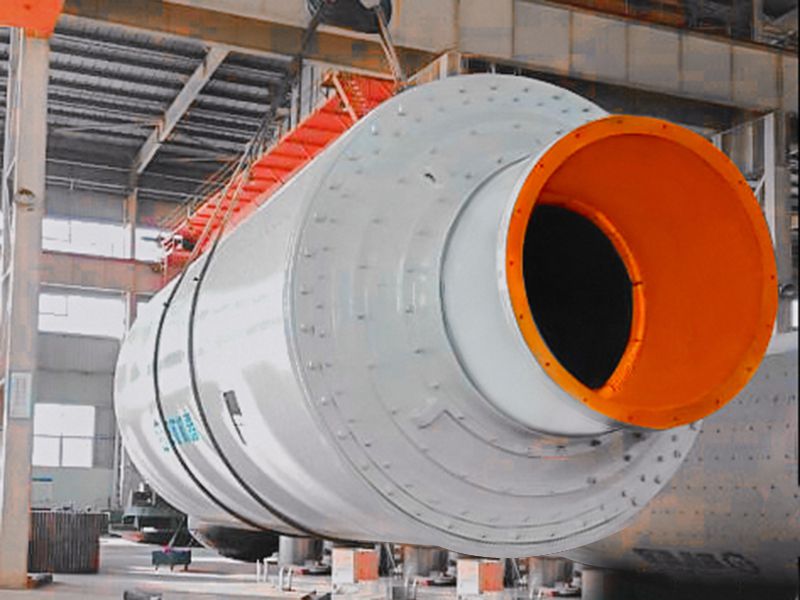
Why the scenario question comes before the specification
Capacity is not a fixed property of a mill model. It depends on material properties, feed size, required product fineness, moisture content, grinding method, mill size, grinding media and operating conditions. Two projects can specify the same nominal throughput and still need different shells, different media and different auxiliary equipment, because the material and the target fineness differ.
The mechanism behind that is straightforward. Tumbling mills convert electrical energy into mechanical energy and generate repeated fracture opportunities as the charge cascades. Finer targets require more of that energy per tonne, and harder or coarser feed requires more again. This is why energy consumption is an inherent operating-cost driver in grinding circuits, and why the same capacity number can mean very different power draw in two different plants.
In mineral processing specifically, the grinding stage exists to crush and grind ore so that minerals are liberated for the separation step that follows. Liberation, not throughput, is the design target — and liberation is defined by the ore body, not by the mill catalogue.
Thermal power: where the mill is part of the fuel system
In thermal power generation, the ball mill does not produce a saleable product. It produces pulverized coal for combustion in boilers and industrial kilns, and its output is judged by how well that fuel burns.
The air-swept coal mill is the configuration built for that duty. ZK MACHINE's range covers models from Φ1.2×2.4 to Φ2.9×4.7 m, with capacity from 1.4 to 16 t/h and motor power from 45 to 570 kW. Typical coal fineness is 85% or more passing 200 mesh, and the specification lists coal moisture below 2% under the stated operating conditions. Grinding and drying happen in one system, in continuous operation, and the mill can be integrated with a separator, a dust collector and a hot-air system.
Three implications follow for a buyer at research or evaluation stage. First, the fineness target is set by the burner or kiln, not by a mineral liberation requirement, so 85%+ passing 200 mesh should be checked against the combustion specification of the actual boiler. Second, because drying is integrated, the moisture figure matters as much as the tonnage: the stated below-2% condition applies under the stated operating conditions, and a site with wetter raw coal needs the drying duty confirmed during technical specification rather than assumed. Third, the mill is one node in a chain — separator, dust collector, hot-air system, feeding — and the chain, not the mill alone, determines whether the fuel meets specification.
The same mill platform also serves cement, metallurgy and chemical plants that fire pulverized coal in kilns, which is why coal grinding specifications tend to be written around the combustion equipment rather than around the mill.
Metallurgy: the liberation target sets the grinding duty
In metallurgical and metal-mine applications, the ore ball mill carries the fine grinding duty. The ZK MACHINE range covers models from 1.2*2.0 to 6*12m, with capacity from 0.5 to 930 t/h and a product size of approximately 0.074–0.4 mm. Iron ore, copper ore, gold ore and lead-zinc ore are all listed as applicable materials, alongside fluorite, quartz and other metallic and non-metallic ores.
Both dry and wet grinding are available, with grate or overflow discharge, and the mill can be integrated with classification, flotation and other beneficiation equipment. That integration point is the one that matters most in evaluation: an ore mill is specified backwards from the separation stage. If the concentrator's flotation or magnetic separation circuit needs a particular liberation size, that requirement fixes where in the 0.074–0.4 mm band the mill should operate — and therefore how much grinding energy the circuit will consume.
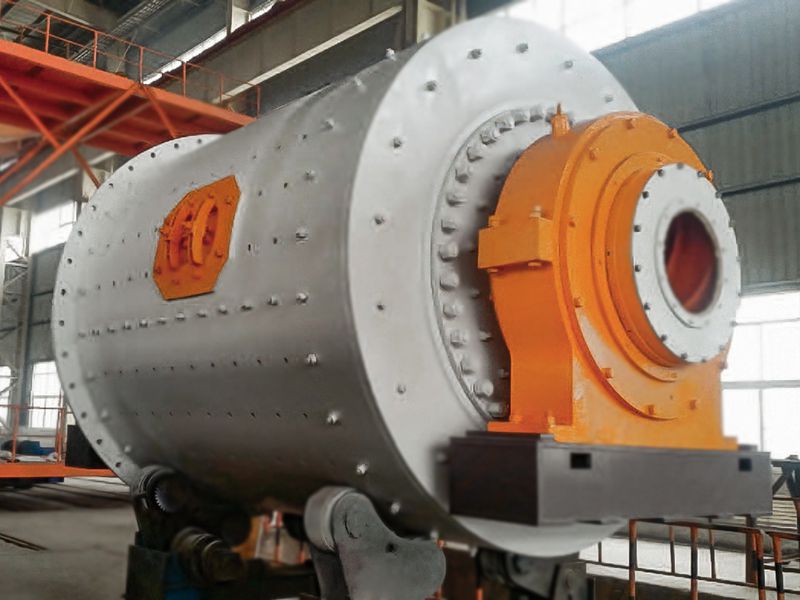
Dry grinding configurations exist where water is unavailable, where the downstream process is dry, or where a dry concentrate is required. A manganese oxide project designed for 10 t/h of continuous dry grinding illustrates the shape of such a circuit: fully enclosed grinding, integrated dust collection and air classification, and a wear-resistant mill design. It is one configuration, not a template — the point is that the dry route is a system decision covering dust, classification and enclosure, not simply a mill ordered without water.
The capacity range deserves a caution. The 0.5–930 t/h span describes the smallest to the largest model in the family, and the top figure belongs to the largest shell sizes. A mid-scale concentrator should expect its own number to sit well inside that band, calculated from its ore, its feed size and its target fineness.
Mineral processing: wet or dry, grate or overflow
For non-metallic and industrial minerals, the general ball mill range covers models from Φ1.2x4.5 to Φ4.6x10+3.5, with capacity of approximately 0.8–230 t/h, feed size up to 25 mm, and product size of approximately 0.07–0.4 mm, adjustable to process requirements. Dry or wet grinding and grate or overflow discharge are both offered, along with customized configurations.
Two decisions dominate this scenario. The first is wet versus dry. Dry ball milling grinds without adding liquid; wet ball milling uses a liquid medium. The choice depends on material properties, the downstream process, the required product characteristics and environmental conditions — which means it should be settled before the mill model is chosen, because it changes the auxiliaries as much as the mill.
The second is discharge style. In general mineral-processing practice, a grate discharge retains the grinding media behind a grate and discharges pulp quickly, while an overflow mill discharges over the trunnion and holds a higher pulp level; the difference is normally checked against the target product size and the sensitivity of the next stage. Buyers should treat this as a selection criterion to confirm with the supplier rather than a rule of thumb, because the right answer depends on the circuit.
Feed size is the hard boundary in this scenario. With a listed feed size of up to 25 mm on the general range, any plant feeding coarser material needs a crushing or pre-grinding stage ahead of the mill. Skipping that step does not simply reduce throughput; it changes what the mill is being asked to do.
Rod mills: coarse grinding and artificial sand as distinct duties
Not every grinding problem should be solved with balls. The rod mill uses steel rods as grinding media, producing a selective grinding effect, a more uniform product size and reduced over-grinding, with high capacity in coarse grinding duties. ZK MACHINE's rod mill range covers Φ0.9×1.8 to Φ3.6×5.4 m, with capacity of 0.62–250 t/h, main motor power of 22–1600 kW, dry or wet grinding and overflow discharge.
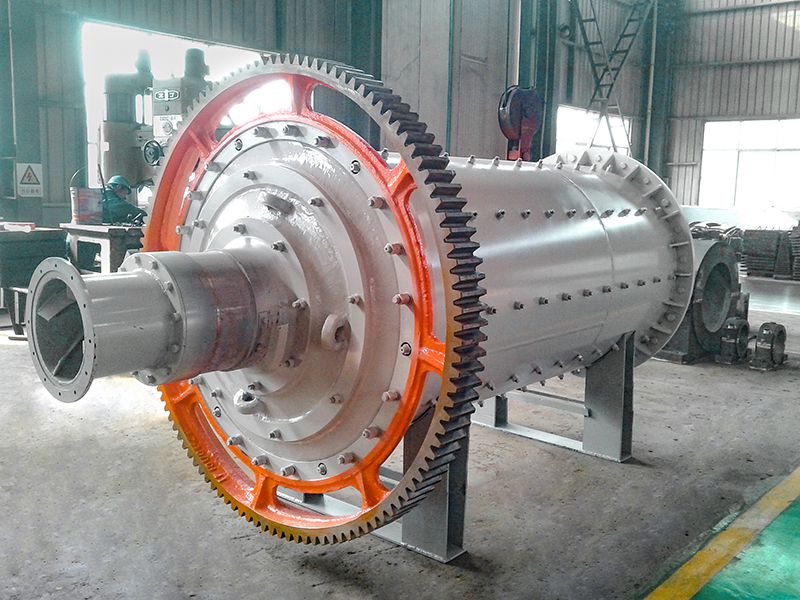
Two scenarios justify it. The first is coarse grinding ahead of a ball mill in a mining or mineral processing circuit, where the objective is to prepare a uniform feed and avoid generating fines too early. The second is artificial sand production, where product gradation matters and excess fines are a quality problem rather than a throughput gain. Artificial sand production appears among the applicable industries for both the rod mill and the ore ball mill, so the choice between them is decided by the gradation the sand product requires and by whether the circuit also needs a fine grinding stage.
The boundary is equally clear: a rod mill is a coarse-grinding tool. Where the circuit needs fine liberation grinding, a ball mill stage remains the normal choice, and a rod mill is best understood as work done before the ball mill rather than instead of it.
Scenario-to-configuration mapping
The table below consolidates the published specifications by scenario. It is a fit map, not a ranking: each row describes what a type is built for and where it stops being appropriate.
| Scenario | Mill type | Model range | Capacity | Defining specification | Fit boundary |
|---|---|---|---|---|---|
| Thermal power / pulverized coal | Air-Swept Coal Mill | Φ1.2×2.4–Φ2.9×4.7 m | 1.4–16 t/h | 45–570 kW; 85%+ passing 200 mesh; integrated grinding and drying | Coal moisture below 2% applies under stated conditions; fineness is set by the burner |
| Metallurgy / metal ore | Ore Ball Mill | 1.2*2.0–6*12m | 0.5–930 t/h | Product size approx. 0.074–0.4 mm; dry or wet; grate or overflow | Operating point inside the fineness band is set by the separation stage |
| Mineral processing / industrial minerals | Ball Mill (general range) | Φ1.2x4.5–Φ4.6x10+3.5 | approx. 0.8–230 t/h | Feed size ≤25 mm; product approx. 0.07–0.4 mm, adjustable | Feed coarser than 25 mm requires crushing or pre-grinding first |
| Coarse grinding / artificial sand | Rod Mill | Φ0.9×1.8–Φ3.6×5.4 m | 0.62–250 t/h | 22–1600 kW; steel-rod media; overflow discharge; reduced over-grinding | Coarse duty only; fine liberation grinding still needs a ball mill stage |
What the published numbers do not cover
Specification ranges are necessary and insufficient. Four boundaries should be stated openly.
Capacity is material-dependent. The listed t/h figures are model capabilities, not a guarantee for a specific ore, coal or mineral. Material properties, feed size, required fineness, moisture, grinding method, mill size, media and operating conditions all move the actual number.
Capacities are not comparable across types. A 16 t/h ceiling on the air-swept coal mill and a 16 t/h figure in an ore circuit describe different work, different media and different product targets. Reading the ranges side by side as a performance comparison would mislead.
Motor power reflects mill size, not efficiency. The 45–570 kW band for coal mills and the 22–1600 kW band for rod mills track shell diameter and charge, so a lower kW figure is not automatically the more efficient choice — it may simply be the smaller machine.
The mill is not the plant. Separators, classifiers, dust collectors, hot-air systems, conveying and feeding equipment all sit between the mill specification and the plant's real output. A mill ordered without its auxiliary scope is an incomplete specification.
How to verify fit before ordering
A practical sequence for a buyer at evaluation stage:
- State the downstream requirement first — burner fineness for coal, liberation size for ore, gradation for sand. Everything else follows from it.
- Record moisture content and decide whether in-mill drying is required, or whether the stated moisture condition can actually be met on site.
- Check feed size against the mill feed limit. Above 25 mm on the general range, plan a crushing or pre-grinding stage.
- Fix wet or dry grinding and the discharge style before comparing models, since both change the auxiliary equipment list.
- Ask for the model code, not only the capacity band. The model maps to a shell diameter and a motor, which is what the civil, electrical and layout work is priced against.
- Confirm the scope boundary: single machine, complete grinding system, or process package including commissioning and spare parts.
- Confirm the test and documentation basis. ZK MACHINE operates its own process testing workshop and testing and analysis center for pilot testing and process data analysis, and applies 100% testing in quality control — useful evidence to request when a new material is involved.
Industry context: trade scale and market signals
Two external data points frame the supply side. According to the Observatory of Economic Complexity, drawing on UN Comtrade and customs data, China was the leading exporter of machinery to crush or grind stone, ores and minerals (HS 847420) in 2024, at USD 1.38 billion. Separately, commercial research from Dataintelo places the mining ball mill market at USD 4.94 billion in 2025, with a projection to USD 8.23 billion by 2034; that report's scope is mining ball mills, and market-size definitions vary between studies, so the figure should not be read as a total for all grinding equipment.
For a buyer, the useful interpretation is not the headline number but the consequence: with a broad and price-competitive supply base, differentiation shifts to configuration fit — whether the mill, its drying or classification integration, and its auxiliary chain actually match the scenario.
Outlook
If fuel and ore specifications continue to tighten, the practical pressure will fall on integration rather than on mill size: drying inside the coal mill, classification inside the mineral circuit, and coarse-grinding stages that protect downstream performance. That is a conditional outlook, not a demand forecast. What can be said with more confidence is that scenario documentation — stating moisture, feed size, target fineness and downstream requirements — will remain the single largest determinant of whether a ball mill performs as expected after commissioning.
Where ZK MACHINE sits in this picture
ZK MACHINE's ball mill portfolio spans cement ball mills, raw mills, clinker mills, limestone ball mills, coal mills, air-swept coal mills, rod mills, mining ball mills, continuous and batch mills, dry and wet mills, ceramic ball mills, grate-discharge and overflow mills, plus specialized grinding solutions for dolomite, aluminum ash, quartz and other industrial materials. The company operates an 80,000 m² site with eight modern workshops and five heavy-duty workshops, more than 300 sets of manufacturing equipment, and holds ISO 9001, ISO 14001 and ISO 45001 certification, with more than 150 core patents and participation in drafting more than 10 industry standards. Its equipment and process systems have been supplied to customers in more than 130 countries and regions, with an export ratio of 40%.
Because ball mills and rotary kilns are not standard products, each project is engineered against material properties, process requirements, capacity, environmental regulation and site conditions, with a stated lead time of three months and a minimum order of one unit. For scenario-fit work, that engineering step — not the catalogue range — is where the fit is actually settled.
Frequently asked questions
Which ball mill type handles pulverized coal preparation in a thermal power plant?
Pulverized coal preparation for boilers and industrial kilns is normally handled by an air-swept coal mill. In ZK MACHINE's range, model sizes run from Φ1.2×2.4 to Φ2.9×4.7 m, with capacity of 1.4–16 t/h and motor power of 45–570 kW. Typical fineness is 85% or more passing 200 mesh. The mill combines grinding and drying in one system and can be integrated with a separator, dust collector and hot-air system.
What ball mill configuration suits iron, copper, gold or lead-zinc ore?
The ore ball mill range covers models from 1.2*2.0 to 6*12m, with capacity of 0.5–930 t/h and a product size of approximately 0.074–0.4 mm. Iron ore, copper ore, gold ore and lead-zinc ore are all listed as applicable materials. Dry and wet grinding are both available, with grate or overflow discharge. The operating point inside that fineness band is set by the liberation size the downstream separation stage requires.
When should a rod mill be used instead of a ball mill?
A rod mill suits coarse grinding duties where a more uniform product and reduced over-grinding are the priority. The ZK MACHINE rod mill range covers Φ0.9×1.8 to Φ3.6×5.4 m, with capacity of 0.62–250 t/h and main motor power of 22–1600 kW, in dry or wet configuration with overflow discharge. Steel rods produce a selective grinding effect. Where the circuit needs fine liberation grinding, a ball mill stage remains the normal choice.
Can ball mills be used for artificial sand production?
Yes. Artificial sand production is listed among the applicable industries for both the ore ball mill and the rod mill. Which of the two fits depends on the gradation the sand product requires and on whether the circuit also needs a separate fine grinding stage.
What should be confirmed before ordering a ball mill for a specific plant?
Five items: the product target set by the downstream process; the moisture content and whether in-mill drying is required; the feed size against the mill's feed limit, since the general ball mill range lists feed size up to 25 mm and coarser feed needs a crushing or pre-grinding stage; the grinding method and discharge style; and the auxiliary scope, including separator, classifier, dust collection and conveying. Capacity should then be confirmed against the actual material, because capacity depends on material properties, feed size, required fineness, moisture, grinding method, mill size, media and operating conditions.
Further technical detail and the full equipment portfolio are available in the ZK MACHINE product brochure and on the company website at zkcomp.com.
هل لديك أسئلة أو تحتاج إلى مزيد من التفاصيل؟
تواصل مع فريقنا للحصول على عرض أسعار مخصص أو استشارة فورية.
طلب عرض أسعار
املأ النموذج أدناه وسيتواصل معك فريقنا بعرض مقترح مخصص.
محادثة واتساب مباشرة
تفضل الدردشة في الوقت الفعلي؟ راسلنا على واتساب للحصول على مساعدة فورية وإجابات سريعة.
- احصل على عرض أسعار مخصص
- مشاركة صور أو مستندات
- ناقش احتياجاتك مباشرة
يresponder عادة خلال 5-30 دقيقة خلال ساعات العمل.