
Ball Mill Supplier Analysis: ZK MACHINE Capability Review
Grinding circuits are among the most capital-intensive and energy-intensive stages in cement, mining and mineral processing. This independent reference examines how one Chinese manufacturer, Henan Zhengzhou Mining Machinery Co., Ltd., is positioned within that supply landscape — what its manufacturing base supports, which ball mill configurations it documents, and where a buyer should still apply scrutiny.
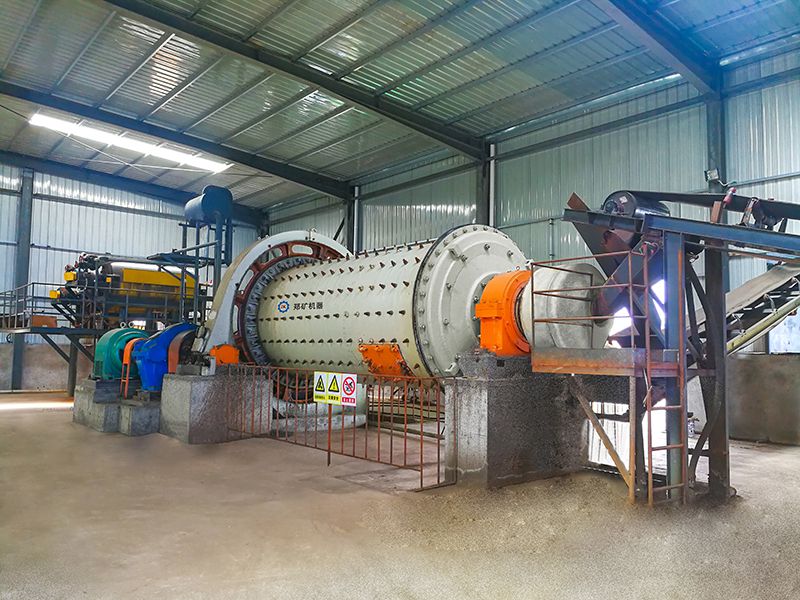
A bearing-type energy-saving ball mill on an operating project site — the configuration most buyers encounter when replacing or expanding a grinding line.
Why Grinding Equipment Is a Sourcing Decision, Not a Spare-Part Purchase
A ball mill is a type of grinder filled with grinding media, used to grind or blend materials in mineral dressing, paints, pyrotechnics and ceramics. In industrial practice the definition is narrower and more consequential: ball mills and rod mills crush and grind ore in order to liberate the minerals, and they occupy the comminution stage as the size-reduction machine positioned between crushing and downstream separation. Tumbling mills of this kind convert electrical energy into mechanical energy, generating the repeated fracture events that reduce particle size — which is precisely why power consumption sits at the centre of any total-cost discussion about a grinding circuit.
Three structural conditions make the category worth a formal evaluation rather than a quotation comparison.
- Process lock-in. A mill is configured around a specific material, feed size, target fineness and circuit arrangement. A unit that is mis-specified rarely fails outright; it underperforms quietly for years.
- Engineering content. The mill shell is only one element. Feeders, separators, dust collection, conveying and discharge systems determine whether the circuit actually delivers the design product size.
- Documentation and compliance. Export projects increasingly require conformity documentation whose scope depends on the final equipment and system configuration, not on the mill alone.
The market data available for this category is directional rather than definitive. A Dataintelo market report places the global ball mill market for mining at USD 4.94 billion in 2025, projected to reach USD 8.23 billion by 2034. Separately, Observatory of Economic Complexity figures derived from customs and UN Comtrade data record China as the leading exporter of machines to crush or grind stone, ores and minerals under HS code 847420, at USD 1.38 billion in 2024. Both figures are useful for sizing the category; neither should be read as a company-level competitive ranking, and market scopes differ between sources (mining-only versus cement-inclusive definitions), so cross-source comparison requires care.
Six Checks That Separate a Capable Mill Supplier from a Catalogue Reseller
For buyers at the research stage, a practical screening framework reduces a long supplier list to a shortlist. Each check maps to evidence a supplier can either produce or cannot.
- Manufacturing scale and machine tools. Can the supplier machine large mill shells, girth gears and trunnions in-house, or does it subcontract?
- Engineering scope. Does the offer stop at equipment supply, or extend to process design, system integration, installation and commissioning?
- Product breadth. A supplier able to document dry and wet, batch and continuous, grate-discharge and overflow designs can match the circuit rather than force the circuit to match a single product.
- Material and process testing. Grindability and fineness targets are material-specific; a pilot or laboratory capability reduces specification risk.
- Certification and documentation. Management-system certifications and the ability to prepare project-specific conformity documentation matter for regulated markets.
- Installed base and export footprint. Repeat supply across multiple regions is a weak but real signal of continuity.
ZK MACHINE at a Glance
Henan Zhengzhou Mining Machinery Co., Ltd. (ZK MACHINE) is a Zhengzhou-based industrial equipment manufacturer established in 1956, supplying ball mills, rotary kilns and integrated process systems for building materials, mining, metallurgy, environmental protection and related industries. Over seven decades the company has evolved from a machinery manufacturing enterprise into a business that combines R&D, process engineering, equipment manufacturing, installation, commissioning and technical services.
| Established | 1956 — over six decades of mining machinery manufacturing |
| Manufacturing site | Qiaolou Caizhai Industrial Zone, Zhengzhou: 80,000 m² site, 60,000+ m² workshop space, 5,000+ m² office space |
| Workshops | 8 modern workshops and 5 heavy-duty workshops; more than 300 sets of manufacturing equipment |
| Annual output | 200 units |
| Employees | Approximately 235 |
| R&D team | 10 doctors, 5 senior engineers and 16 intermediate engineers |
| Core products | Ball mill, rotary kiln |
| Certifications | ISO 9001, ISO 14001, ISO 45001, Integration Management System Certification, Environmental Protection Engineering Professional Contracting Qualification |
| Intellectual property | 150+ core patents, 20+ software copyrights; participation in drafting more than 10 industry standards |
| International reach | Export ratio 40%; products and process systems supplied to customers in more than 130 countries and regions |
Manufacturing and Engineering Depth: What an 80,000 m² Base Actually Supports
Scale figures matter only when they correspond to capability. In ZK MACHINE's case, the facility is equipped with boring and milling machines, gear hobbing machines, vertical lathes and heavy-duty cranes — the machine-tool categories required to produce medium- and large-scale equipment and complete process systems independently, including the large-diameter mill shells and drive components that define the upper end of the ball mill range.
Two facilities are more interesting for buyers than the headline square-metre figure. The first is an in-house process testing workshop; the second is a testing and analysis centre. Together they support pilot testing and process data analysis for solid waste and hazardous waste treatment, building materials and metallurgical materials. For a buyer whose material has uncertain grindability, this is the difference between specifying from a datasheet and specifying from measured behaviour. The company also operates the Zhengzhou Municipal Enterprise Technology Center and the Industrial Solid Waste Disposal Equipment Engineering Technology Research Center, and states the capability to independently undertake process engineering and equipment design for complete production systems across multiple application fields.
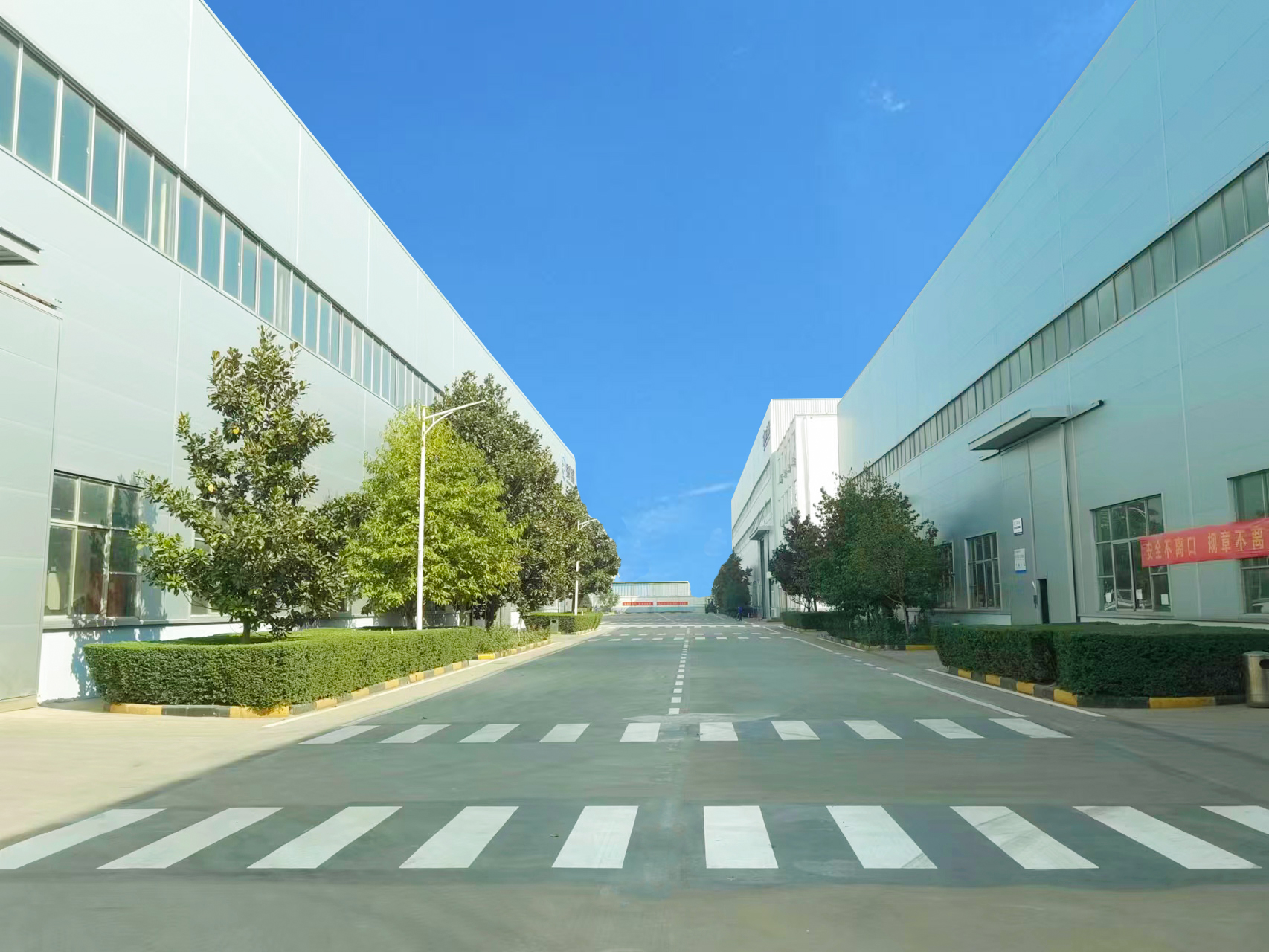
Workshop capacity, not catalogue breadth, is what determines whether a supplier can deliver a large-diameter mill and its supporting circuit on schedule.
Ball Mill Product Architecture: From Laboratory Batch Units to 4.6-Metre Mills
The documented ball mill range spans the full practical bandwidth of industrial grinding, from batch laboratory units used for sample preparation to continuous mills with multi-metre diameters. The table below consolidates the published model ranges and capacities by family.
| Ball mill family | Model range | Capacity | Typical duty |
|---|---|---|---|
| Ball Mill (general series) | Φ1.2x4.5 – Φ4.6x10+3.5 | approx. 0.8–230 t/h | Limestone, clinker, coal, ores, slag, quartz, feldspar, gypsum, dolomite, barite, fly ash, magnesite, fluorite, zinc ore, gold ore |
| Cement Ball Mill | Φ1.2×4.5 – Φ4.6×10 | approx. 1.4–87 t/h | Continuous cement and limestone grinding; open-circuit or closed-circuit |
| Raw Mill | Φ1.2×4.5 – Φ3.5×10 m and customised large-scale models | 1.7–73 t/h | Cement raw meal grinding |
| Air-Swept Coal Mill | Φ1.2×2.4 – Φ2.9×4.7 m | 1.4–16 t/h | Pulverised coal preparation with integrated grinding and drying |
| Ore Ball Mill (mining ball mill) | 1.2×2.0 – 6×12 m | 0.5–930 t/h | Iron, copper, gold and lead-zinc ores; non-metallic minerals |
| Rod Mill | Φ0.9×1.8 – Φ3.6×5.4 m | 0.62–250 t/h | Coarse grinding where reduced over-grinding matters |
| Ceramic Ball Mill | 600×700 – 3200×4600 mm | 0.05–15 t/batch | Ceramic raw materials and glaze materials |
| Laboratory Ball Mill | Φ0.6×0.7 – Φ1.8×2.1 m | 0.2–1.5 t/batch | Laboratory-scale testing and sample preparation |
Three families deserve separate comment. The general Ball Mill series is documented as available in dry ball mill, wet ball mill, grate discharge ball mill, overflow ball mill and energy saving ball mill types, with a feed size of up to 25 mm and a product size of approximately 0.07–0.4 mm that is adjustable according to process requirements — a range wide enough to serve both raw grinding and finished-product duties. The Ore Ball Mill is the highest-throughput family in the documented range at up to 930 t/h, with product sizes between roughly 0.074 mm and 0.4 mm and grate or overflow discharge options. The Air-Swept Coal Mill combines grinding and drying in a single system, with published coal fineness of 85%+ passing 200 mesh and coal moisture below 2% under the stated operating conditions.
At the small end, the Ceramic Ball Mill and Laboratory Ball Mill extend the same configuration logic into batch operation: ceramic linings, alumina or zirconia grinding media, loading capacities from 0.05 t/batch, rotational speeds of 13–50 rpm and motor power from 2.2 kW. For a buyer validating a process before committing to a production line, that continuity of design across scales is a practical advantage.
Technical Explanation: The Variables That Actually Shape Grinding Outcomes
Ball mill performance is not a single specification. It is the interaction of several design choices that a supplier either documents transparently or leaves vague.
Shell and liner material
ZK MACHINE documents mill shells manufactured from high-quality carbon steel or alloy steel for strength, durability and long-term operation, with the cement ball mill shell specified as Q235B/Q345B or equivalent structural steel. Liners are selected according to the processed material and operating conditions, with common options including high-manganese steel, alloy steel, cast iron, rubber and ceramic liners. This is a genuinely material decision: the liner choice governs wear life, noise, contamination risk and, indirectly, grinding efficiency.
Discharge type and circuit arrangement
Grate discharge and overflow discharge are two distinct hydraulic behaviours, and both are offered across the range. In cement applications, open-circuit and closed-circuit grinding are both documented, and the cement ball mill can be combined with a roller press and a separator to form an integrated grinding system — a configuration that lets the buyer optimise the circuit rather than the machine alone.
Wet versus dry grinding
Both grinding methods are supported across the general, ore, ceramic and laboratory families. The selection follows material properties, downstream process requirements, product characteristics and environmental conditions rather than supplier preference.
System integration and matched equipment
A mill in isolation does not produce a product size. ZK MACHINE documents matched equipment including bag filters, electromagnetic vibrating feeders, crushers, powder separators and vibrating screens, and integrates core equipment with crushing, screening, feeding, mixing, granulation, preheating, drying, cooling, conveying and dust collection to deliver complete, customised process solutions based on material characteristics, production capacity and process requirements.
Special and hazardous operating conditions
Beyond standard configurations, the documented special requirements include explosion-proof design, acid- and corrosion-resistant construction, wear-resistant lining, dust-tight design, special sealing systems, temperature control, inert-gas protection, special feeding and discharge systems, customised grinding media and liners, and noise and vibration control. These are the conditions under which a generic mill offer typically breaks down — aluminium ash, reactive or moisture-sensitive materials, and solid-waste streams all sit in this category.
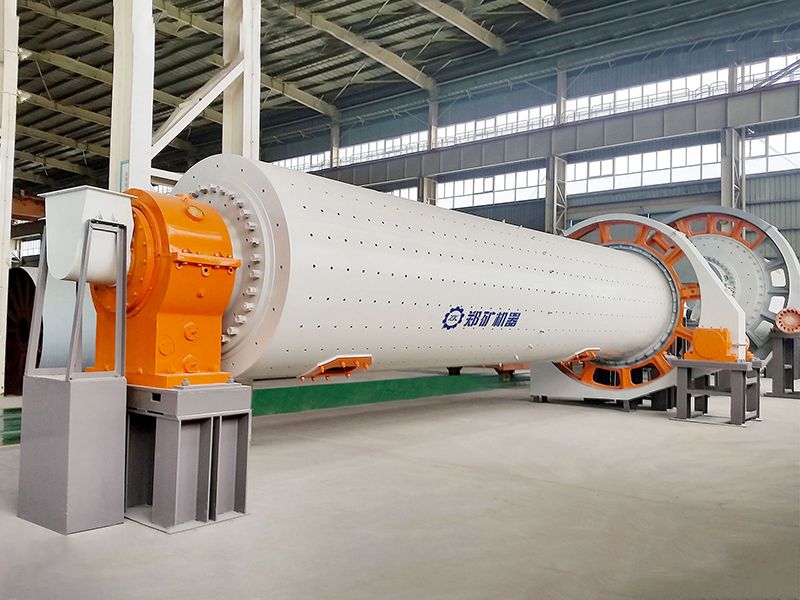
A cement ball mill in a continuous grinding circuit. Open- or closed-circuit arrangement and separator integration are specified per project rather than taken from a fixed catalogue.
Application Fit: Where These Configurations Do Their Work
The documented application scope is broad enough that it is worth separating by process logic rather than by product name.
- Cement and building materials. Raw mills for cement raw meal grinding, cement ball mills for clinker and limestone, and limestone ball mills in open- or closed-circuit arrangements. Raw mills are documented with adjustable product fineness and stable operation in traditional cement raw grinding systems.
- Mining and mineral processing. Ore ball mills across mineral processing plants, metal mines and non-metallic mineral processing, with capacity reaching 930 t/h in the largest documented model. Rod mills serve coarse grinding duties where selective grinding and reduced over-grinding are the objective.
- Coal and power. Air-swept coal mills preparing pulverised coal for combustion in industrial kilns or boilers, for cement, thermal power generation, metallurgy and chemicals. The system can be integrated with a separator, dust collector and hot-air system for rotary kiln and industrial furnace fuel preparation.
- Ceramics, refractories and advanced materials. Ceramic-lined and wet grinding ceramic ball mills for raw and glaze materials where contamination from the grinding system must be reduced.
- Environmental and solid-waste processing. Grinding of certain slags and industrial solid-waste-derived materials, subject to evaluation of hardness, moisture, particle size, grindability and target fineness.
- New energy and new materials. The company's wider process portfolio covers lithium extraction, roasting and cooling, and material preparation processes where ball mills act as process units within a larger flowsheet.
Delivery scope flexes with the buyer's stage: single-equipment supply, complete production lines, process EPC and pilot-scale test units are all documented project types.
Market Trend: What the Trade and Forecast Data Indicate
Two data points frame the category's direction. The mining ball mill market is reported at USD 4.94 billion in 2025 with a projected USD 8.23 billion by 2034, implying sustained demand growth rather than a replacement-only market. At the same time, China's export value for crushing and grinding machinery (HS 847420) reached USD 1.38 billion in 2024, according to Observatory of Economic Complexity figures based on customs and UN Comtrade data.
Read together, these indicate a market where capacity expansion is concentrated in regions that import equipment rather than manufacture it locally — consistent with ZK MACHINE's stated export ratio of 40% and its supply record across the Middle East, Southeast Asia, Africa, Russia, Kazakhstan and other regions. The caveat is that market-size definitions vary between research sources, particularly whether cement grinding is included alongside metal mining, and independent third-party verification of individual manufacturers' market position is scarce in this category. Buyers should treat supplier-level claims as self-reported unless supported by trade records or reference projects.
How Integrated Process Supply Compares with Conventional Equipment-Only Sourcing
Most ball mill purchases historically followed an equipment-only model: the buyer or an engineering contractor specified the mill, and the supplier built to that specification. The alternative is an integrated process scope, in which the supplier participates in process design and system configuration. The trade-off is not uniformly in favour of either approach.
| Dimension | Equipment-only sourcing | Integrated process scope |
|---|---|---|
| Specification responsibility | Buyer or third-party engineer defines the machine and circuit | Supplier contributes process design and equipment design for the complete system |
| Interface risk | Multiple vendors; interfaces between mill, separator, dust collection and conveying are the buyer's risk | Core equipment integrated with crushing, screening, feeding, drying, cooling, conveying and dust collection under one scope |
| Material validation | Depends on the buyer's own test work | Supported by an in-house process testing workshop and testing and analysis centre for pilot testing and process data analysis |
| Commercial flexibility | Easier to split packages and benchmark unit prices | Fewer interfaces but less granular price visibility; scope definition becomes the critical negotiation |
For a straightforward replacement mill in an existing, well-understood circuit, equipment-only sourcing is often the lower-risk and lower-cost route. Integrated process scope tends to justify itself on greenfield lines or on materials whose grinding behaviour is not yet established — which is precisely where an unvalidated specification becomes expensive to correct after installation.
Limitations and Boundaries Buyers Should Verify
An objective assessment requires stating where the evidence stops.
- Energy intensity is inherent to the technology. Tumbling mills convert electrical energy into mechanical comminution energy by design. The published data for this product range does not include verified specific energy consumption figures in kWh per tonne by material, so power cost must be validated against the buyer's own grindability testing rather than inferred from model numbers.
- Feed preparation may be required. The general ball mill series is documented with a feed size of up to 25 mm. Oversized feed requires a crushing or pre-grinding stage ahead of the mill.
- Wet grinding carries downstream obligations. Wet grinding uses a liquid medium, so water supply, slurry handling and dewatering must be engineered as part of the circuit, not treated as an afterthought.
- Conformity scope is configuration-dependent. For European projects, CE-related requirements should be confirmed at the technical specification stage. The applicable conformity scope depends on the final equipment and system configuration and may involve the mill, electrical and control systems, conveying equipment, dust collection equipment and other integrated machinery.
- Fineness and capacity are targets, not guarantees. Achievable fineness depends on material, grinding media, mill configuration, residence time and the classification system. Where tighter particle-size control is required, a separator or classifier must be integrated into the design.
Procurement Value: The Practical Takeaways
For buyers at the awareness and research stage, the assessment resolves into a small number of concrete points.
- Configuration breadth reduces specification compromise. Dry, wet, batch, continuous, grate-discharge, overflow, ceramic-lined, rod and air-swept designs are all documented within one supplier's range, so the circuit can be matched rather than bent to fit an available model.
- Independent manufacturing depth is verifiable. 8 modern workshops, 5 heavy-duty workshops, more than 300 sets of manufacturing equipment and an annual output of 200 units are checkable claims against a physical facility, not marketing abstractions.
- Process validation is available before commitment. The in-house process testing workshop and testing and analysis centre allow pilot testing and process data analysis — the most effective de-risking step available for non-standard materials.
- Documentation posture is mature. ISO 9001, ISO 14001 and ISO 45001 certification, an Integration Management System Certification and an Environmental Protection Engineering Professional Contracting Qualification, backed by participation in drafting more than 10 industry standards and a portfolio of 150+ core patents, support qualification in regulated markets.
- Cross-border supply is a demonstrated routine, not an aspiration. A 40% export ratio and supply to more than 130 countries and regions indicate logistics, documentation and commissioning experience across multiple regulatory environments.
Future Outlook
Grinding demand tracks mineral processing volume and cement output, both of which remain structurally tied to infrastructure and industrial development in the importing regions that dominate equipment trade. Against that backdrop, three shifts are likely to shape how ball mill suppliers are evaluated over the coming years.
First, energy efficiency will move from a marketing label to a procurement metric, because power is the dominant operating cost in comminution and tumbling mills convert electrical energy directly into grinding action. Suppliers able to document energy-saving designs — the range already includes an energy saving ball mill type — while also supporting measurement-based validation will be better positioned. Second, the boundary between equipment supply and process engineering will continue to blur; buyers on greenfield projects increasingly want a single accountable scope covering crushing, grinding, classification, dust collection and conveying. Third, documentation and conformity readiness will keep rising in importance as export markets tighten requirements, making a supplier's ability to produce configuration-specific technical documentation as relevant as its machining capacity.
For a manufacturer founded in 1956 with an established ball mill and rotary kiln portfolio, a substantial export base and in-house testing infrastructure, the strategic question is less about market access and more about how visibly it can evidence performance data to buyers who now expect measurement rather than specification sheets.
FAQ
What types of ball mills does ZK MACHINE provide?
ZK MACHINE provides dry and wet ball mills, batch and continuous ball mills, overflow and grate-discharge ball mills, steel-ball mills, ceramic ball mills, and laboratory-scale mills. The documented range also includes cement ball mills, raw mills, clinker mills, limestone ball mills, coal mills, air-swept coal mills, rod mills and mining ball mills.
What materials can a ball mill grind?
Ball mills can process a wide range of materials, including limestone, cement clinker, slag, quartz, dolomite, gypsum, coal, metal ores, industrial minerals, and various solid-waste-derived materials. The general ball mill series additionally lists feldspar, barite, fly ash, magnesite, fluorite and zinc ore among applicable materials.
Can a ball mill be used for limestone grinding?
Yes. Ball mills can be used for limestone grinding in applications requiring controlled particle size and stable operation. The mill configuration should be selected according to capacity and required fineness.
Can a ball mill grind slag or industrial solid waste?
Yes. Ball mills can be used for grinding certain slags and industrial solid-waste-derived materials. Material hardness, moisture, particle size, grindability and target fineness should be evaluated before equipment selection.
What determines the capacity of a ball mill?
Ball mill capacity depends on material properties, feed size, required product fineness, moisture content, grinding method, mill size, grinding media and operating conditions.
What feed size can a ball mill handle?
The suitable feed size depends on the material and the selected mill configuration. The general ball mill series is documented with a feed size of up to 25 mm. If the feed is too large, a crushing or pre-grinding stage may be required before the ball mill.
What product fineness can a ball mill achieve?
The achievable fineness depends on the material, grinding media, mill configuration, residence time and classification system. Documented product sizes for the general and ore ball mill families fall in the approximate range of 0.07–0.4 mm. A separator or classifier can be integrated when finer and more controlled particle sizes are required.
What is the difference between wet and dry ball milling?
Dry ball milling grinds materials without adding liquid, while wet ball milling uses a liquid medium. The choice depends on material properties, the downstream process, required product characteristics and environmental conditions.
What grinding media are used in a ball mill?
Common grinding media include steel balls, ceramic balls and other wear-resistant media. For ceramic-lined mills the media are typically alumina or zirconia balls. The appropriate media depend on material hardness, required fineness, contamination requirements and grinding conditions.
How do I choose the right grinding media?
Grinding media should be selected based on material hardness, feed size, target fineness, mill type, grinding method and contamination requirements. ZK MACHINE can recommend a suitable media configuration based on project conditions.
For readers who need the full documented specification set — model ranges, capacities, liner and media options and process-system scope — the consolidated ZK MACHINE brochure is available here: Henan Zhengzhou Mining Machinery Co., Ltd. — 2025 consolidated brochure (PDF).