
Ball Valve QA: Acceptance Terms and Premium vs Standard

The Premium-versus-Standard Question Is a Line-Condition Question
The choice between a premium ball valve and an ordinary standard ball valve is decided by the medium, the working pressure, the working temperature, the nominal diameter, the connection type and the certification requirement attached to the line. Where those inputs are not recorded in the enquiry, the buyer is not comparing valves. The buyer is comparing quotations, and the comparison will not survive commissioning.
Selection guidance used across industrial valve sourcing follows the same order: confirm medium type, working pressure, working temperature, nominal diameter and connection type, then select body material and sealing material to match the pipeline medium and operating conditions. Every downstream commercial term — test regime, documentation package, actuation interface, marking — is derived from those six inputs. A specification that begins with price inverts the sequence and produces either an over-specified utility line or an under-specified process line.
This reference addresses the two questions that most often reach a supplier's technical desk during evaluation: what purchasing terms and acceptance criteria belong on a ball valve order, and how a buyer should decide between a premium specification and an ordinary standard valve for chemical and gas service.
Purchasing Terms That Belong in a Ball Valve Purchase Order
A ball valve purchase order is only complete when it can be read by a machinist, a quality inspector and an accounts department without further clarification. In practice that means stating the design series, the size and pressure basis, the material set, the sealing requirement, the connection, the operation mode and the evidence package in the order itself rather than in an email thread.
| Term | What the buyer should state | Reference point in the supplier's range |
|---|---|---|
| Design series and model | Full model designation, not a generic description of a quarter-turn valve | Flanged: Q41F, Q41H, Q45F. Threaded: Q11F, Q61F, Q81F, Q11PPL. Trunnion mounted: Q347F, Q347H, Q347Y |
| Size and pressure basis | Nominal diameter plus the pressure class or PN rating, expressed in one system only | Flanged full port DN15–DN600; threaded DN6–DN100 at 1000–2000 WOG; trunnion DN50–DN1200 at PN4.0–10.0 MPa |
| Body and trim material | Named grade, not the phrase "stainless steel" | Carbon steel, stainless steel, 2205, CF3M, CF8M, CF8 and WCB across the range; WCB, CF8 or CF8M for trunnion models |
| Seat and sealing requirement | Seat compound and the required sealing behaviour, including directionality | PTFE seat specified on the threaded range; bidirectional zero-leakage sealing specified across the applicable range |
| Temperature window | Design and operating temperature, with margin condition stated | −20 °C to 180 °C on flanged and threaded ranges; −40 °C to +150 °C on trunnion mounted models |
| End connection | Flange standard and facing, or thread type, or weld end preparation | Flanged; threaded, socket weld, butt weld and tri-clamp options on the threaded series |
| Operation and actuation | Manual, pneumatic single or double acting, or electric on-off versus modulating | 90° quarter-turn; ISO 5211 direct-mount interface supporting pneumatic and electric actuator integration and custom control configurations |
| Test and documentation package | Tests to be witnessed, records to be delivered, language and format | Factory pressure testing of valve bodies and seals; inspection covering raw material, dimensional, processing, chemical, physical and pressure testing |
| Marking and preservation | Marking content, packing specification, storage condition on arrival | Order-level requirement to be agreed at enquiry stage |
Acceptance Criteria: What Is Verified Before the Valve Ships
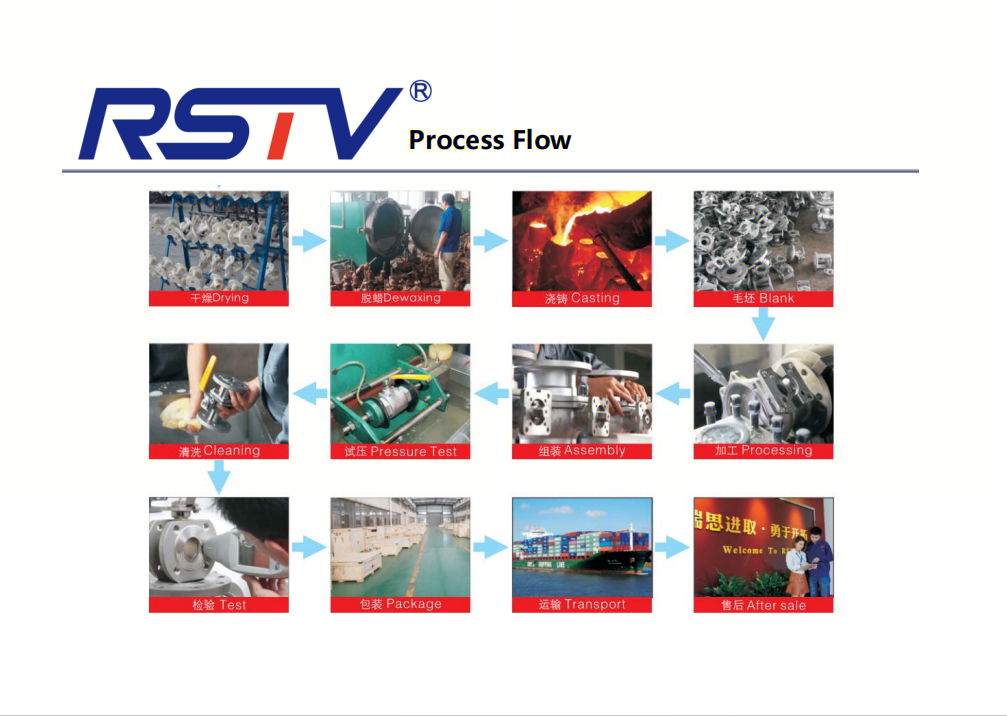
Acceptance criteria should be agreed before the order is placed, not negotiated after the inspection report is issued. On the ball valve range described here, factory pressure testing of valve bodies and seals is specified, together with a bidirectional zero-leakage sealing requirement. Pre-shipment water pressure testing and air tightness testing are the mechanisms through which that requirement is demonstrated.
| Acceptance item | What is checked | Evidence the buyer should hold |
|---|---|---|
| Material verification | Chemical testing and physical testing of the body and trim materials against the ordered grade | Material test records traceable to the heat or batch |
| Dimensional inspection | Face-to-face, flange or thread dimensions, bore, mounting interface | Dimensional inspection record against the approved drawing |
| Processing inspection | Machining, surface condition and assembly checks during production | In-process inspection record |
| Body pressure test | Shell strength under water pressure before shipment | Hydrostatic test record with test pressure and duration |
| Seat and closure tightness | Water pressure test of the seat plus air tightness testing of the closure | Seat and air-tightness test record, per unit |
| Bidirectional zero-leakage check | Sealing performance in both flow directions, as specified | Test record confirming bidirectional sealing |
| Actuation interface | ISO 5211 mounting pad dimensions and stem engagement where actuation is ordered | Interface verification record or actuator mounting trial |
| Marking and documentation | Model, size, pressure rating, material and traceability marking; final document set | Complete document package issued before dispatch |
Two practical rules follow from this. First, an order that says only "pressure tested" gives the buyer no acceptance basis, because the test medium, the test sequence and the record format are undefined. Second, the buyer who intends to witness testing should say so at enquiry stage; witnessing is a scheduling commitment, not a clause that can be inserted at dispatch.
Certification Is a Gating Item, Not a Decoration
Certification changes the answer to the premium-versus-standard question more often than any mechanical difference does. A valve that satisfies the mechanical duty but cannot be supplied with the required certification is not a lower-cost option; it is a non-compliant option.
RST VALVE GROUP CO.,LTD holds SIL certification under IEC 61508:2010, PED-CE certification under ECM PED-Bp 2024-TW60, and ISO 9001, ISO 14001 and ISO 45001 certification. For a buyer, each of these answers a different question:
- SIL (IEC 61508:2010) relates to functional safety and is relevant where the valve forms part of a safety instrumented function in a process plant. It does not, by itself, establish that a particular valve configuration is suitable for a particular safety function; the safety function, the required integrity level and the application boundary must be defined in the project specification and confirmed against the certificate scope.
- PED-CE (ECM PED-Bp 2024-TW60) relates to the European Pressure Equipment Directive route and is the certification that matters when a valve is placed on the EU market within the directive's scope. Buyers outside the EU may still require it where project specifications or finance agreements reference European conformity.
- ISO 9001 covers quality management and supports confidence that inspection and testing are controlled processes rather than final-inspection events.
- ISO 14001 and ISO 45001 cover environmental and occupational health and safety management. They are increasingly requested in supplier prequalification, particularly where the buyer's own reporting obligations extend to the supply chain.
The procurement action is straightforward: request copies of the certificates with the quotation, check that the certificate scope covers the model and size being ordered, and record the certificate numbers in the order documentation so that the delivered goods can be matched to them.
RST VALVE GROUP CO.,LTD: The Entity and Its Ball Valve Scope
RST VALVE GROUP CO.,LTD is an industrial valve manufacturer founded in 2009 and based in Wenzhou, Zhejiang Province, China. The company designs, develops, manufactures, sells and services industrial valves, with a product scope covering ball valves alongside gate valves, check valves, globe valves and Y strainers. Products are produced to API, ANSI, DIN, JIS, BS and GB standards, and the company accepts OEM and ODM enquiries. Its export profile is oriented towards international markets, including Africa, the Americas, Asia, Europe, the Middle East, Oceania and other regions, with exports representing the majority of output.
The ball valve range relevant to this decision is structured by connection type and duty:
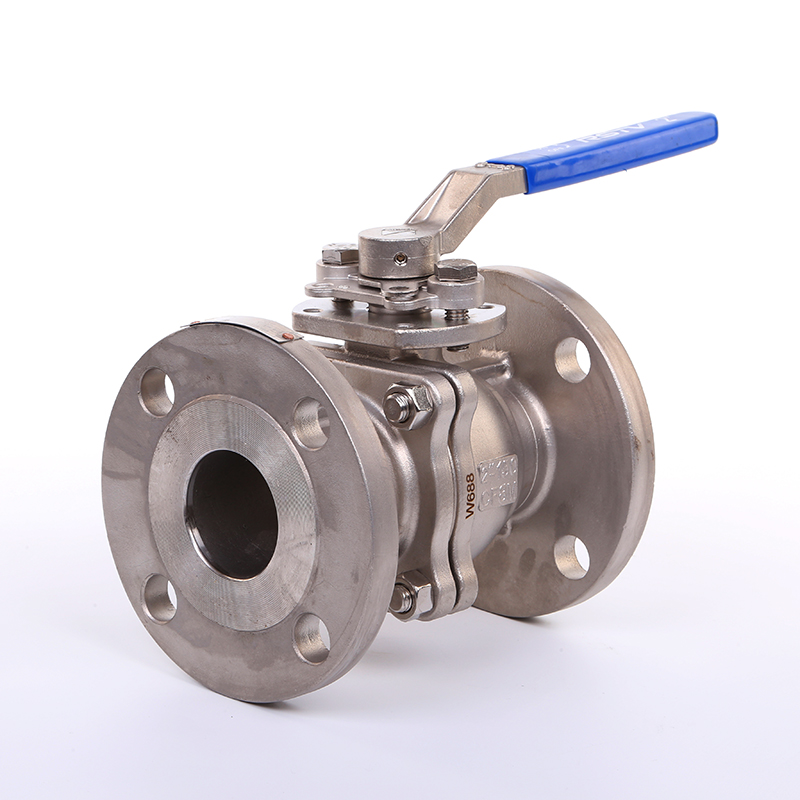
- Flanged ball valve series — Q41F, Q41H, Q45F. Two-piece, three-piece, wafer type and one-piece flanged variants; full port DN15–DN600; working temperature −20 °C to 180 °C; investment casting; body materials including carbon steel, stainless steel, 2205, CF3M, CF8M, CF8 and WCB.
- Threaded ball valve series — Q11F, Q61F, Q81F, Q11PPL. Two-piece, three-piece and one-piece threaded variants, plus socket welded and butt welded versions and a one-piece hex threaded variant; DN6–DN100; 1000–2000 WOG; −20 °C to 180 °C; CF8 (304) or CF8M (316) body with PTFE seat; threaded, socket weld, butt weld or tri-clamp connection; ISO 5211 actuator mounting.
- Trunnion mounted ball valve series — Q347F, Q347H, Q347Y. PN4.0–10.0 MPa; DN50–DN1200; −40 °C to +150 °C; flanged connection; WCB, CF8 or CF8M body; two-piece, gear operated and electric actuated variants.
Across the range, an ISO 5211 direct-mount actuator interface is specified, supporting pneumatic and electric actuator integration and custom control configurations. A blowout-proof stem is specified, with anti-static and fire-safe designs available as options. The valves are intended for on-off service and are not suitable for throttling duty.
Premium Versus Ordinary Standard: What Actually Differs
The premium-versus-standard comparison is usually presented as a purchase-price decision. It is better read as a cost-of-ownership and fit decision. RST Valve Group's own comparison data against ordinary standard ball valves is summarised below; it should be treated as supplier-reported and checked against the buyer's own duty cycle.
| Dimension | Premium specification (RST comparison data) | Procurement implication |
|---|---|---|
| Initial cost | 10% higher than an ordinary standard ball valve | Capital budget impact is small relative to the order value of a process line |
| Total ownership cost | 30% lower within 8 years | Assumes a defined maintenance and downtime cost base; a buyer with different assumptions should re-run the calculation |
| Expected service life | 40% longer than an ordinary standard ball valve | Shifts replacement interval and spares planning |
| Maintenance frequency | 60% lower, with easier actuator installation | Matters most where access requires shutdown or permit-to-work |
| Sealing behaviour | Bubble-tight, bidirectional zero-leakage sealing | Directly relevant to gas service and to chemical lines where fugitive release is regulated |
| Corrosion resistance | Stronger than an ordinary standard ball valve | Material set including 2205, CF3M, CF8M and CF8 supports more aggressive media |
| Actuation interface | ISO 5211 high platform | Faster actuator mounting and simpler retrofit to automated control |
| Safety options | Optional fire-safe and anti-static structure | Should be specified explicitly where the line requires it; options not ordered are not supplied |
| Flow performance | Lower fluid resistance, with pressure loss reported as reduced relative to an ordinary standard valve | Relevant to pumping energy on long or high-flow lines |
Where the Premium Specification Stops Being the Right Answer
A credible specification has to say where it does not apply. Four boundaries matter in practice.
- Low-duty utility lines. On a low-pressure water or utility line comfortably inside the rating of an ordinary standard valve, the 10% initial premium buys relatively little, because the failure modes the premium specification addresses — corrosion-driven leakage, frequent cycling, actuator retrofits — are not present. Standard specification is a defensible engineering choice in that context.
- Envelope limits. The trunnion mounted series is offered at PN4.0–10.0 MPa, DN50–DN1200 and −40 °C to +150 °C. The threaded series is offered at DN6–DN100 and 1000–2000 WOG. Conditions outside these envelopes require an engineering review rather than a catalogue selection, and buyers should not assume an extended range exists.
- Supplier-reported comparison figures. The 10%, 30%, 40% and 60% figures are RST Valve Group's own comparison against ordinary standard valves. They are useful for framing a decision but are not independent test data; a buyer with a different duty cycle, energy cost or maintenance labour rate should rebuild the total-cost model rather than adopt the percentages directly.
- Certification scope. Holding SIL, PED-CE, ISO 9001, ISO 14001 and ISO 45001 certification does not automatically qualify every model and size for every application. The certificate scope, the pressure class and the specific safety function must each be checked.
A further operational limit applies across the range: these valves are for on-off service only and are not suitable for throttling. Where a line requires modulating control, a different product category should be specified, and no amount of premium specification on a ball valve will substitute for it.
Application Fit: Chemical, Gas, Water and Process Systems
The premium specification described here is positioned for chemical pipelines, water treatment, natural gas, and oil and medium-pressure process systems. The fit logic is consistent across those applications: where the medium is aggressive, where leakage carries regulatory or safety consequences, or where the valve must be automated later, the higher-specification product earns its place.
In chemical service, the material set — carbon steel, stainless steel, 2205, CF3M, CF8M, CF8 and WCB — allows the body grade to be matched to the medium rather than defaulted. In natural gas service, bidirectional zero-leakage sealing and the availability of fire-safe and anti-static options are the relevant selection criteria, and both should be written into the order rather than assumed. In water treatment and general process duty, the ISO 5211 mounting pad matters most where a line is likely to be automated after commissioning.
For flammable or explosive atmospheres, explosion-proof configuration should be specified with the actuation package. For food and pharmaceutical applications, 316L polished finish and food-grade seals are the relevant options. Neither is a default; both are order-specific requirements.
Market Context: Procurement Specifications Are Catching Up With Product Specifications
The documentation side of ball valve procurement has become more demanding, and that shift favours buyers who arrive with a structured specification.
API Specification 6D defines requirements for the design, manufacturing, assembly, testing and documentation of ball, check, gate and plug valves used in petroleum and natural gas pipeline and piping systems, and it covers pressure classes 150, 300, 400, 600, 900, 1500 and 2500. The 25th Edition Addendum 2 extends the covered requirements to design, manufacturing, materials, welding, quality control, assembly, testing, marking, documentation and process controls.
Alongside the standard itself, procurement-side specifications have matured. IOGP S-562 Version 3.1 is a supplementary procurement specification for manually operated ball valves used with API Specification 6D, and it states an allowable operating temperature range of −46 °C to 150 °C for its covered application. The practical reading is that a purchase order which references only a product standard is incomplete; the procurement specification, temperature window and documentation set are now part of the technical comparison.
Product mix reinforces the same point. Commercial market research included in the HTNXT verified data set reports floating ball valves at 61.8% of the market by type for 2025 and trunnion mounted designs at 34.0% for 2026, with the global ball valve market estimated at USD 14.8 billion in 2025. Floating designs carry the volume; trunnion mounted designs carry the higher-pressure pipeline duty where acceptance documentation is least negotiable.
Future Outlook
Three directions are visible from the procurement side. First, specification quality will continue to separate suppliers more than catalogue breadth does, because standards such as API 6D already define testing, marking and documentation obligations that a buyer can audit. Second, certification will keep moving upstream in the evaluation sequence, from a post-award document request to a prequalification filter. Third, actuation readiness — an ISO 5211 interface specified as standard rather than as an option — will matter more as process lines are automated after commissioning rather than at design stage.
None of these trends removes the buyer's core obligation. The order still has to state the medium, the pressure, the temperature, the size, the connection and the certification requirement before a meaningful comparison between a premium and an ordinary standard ball valve can be made.
FAQ
What purchasing terms should a ball valve order specify?
A complete order states the model and design series, nominal diameter with a single pressure basis (PN or class), named body and trim material grades, seat compound and sealing requirement, the operating temperature window, the end connection type, the operation mode including any actuation, and the test and documentation package. Model designation alone is insufficient, because the same model code can be supplied with different seat compounds, actuation interfaces and documentation sets.
What acceptance criteria should be agreed before shipment?
Acceptance should cover material verification through chemical and physical testing, dimensional inspection, processing inspection, body pressure testing under water pressure, seat tightness testing and air tightness testing, and verification of bidirectional zero-leakage sealing where specified. Each item should generate a record the buyer holds before dispatch, and any witness testing should be agreed at enquiry stage rather than at the point of shipment.
Which certifications should a buyer verify on a ball valve order?
Verification depends on the market and the application. RST VALVE GROUP CO.,LTD holds SIL certification under IEC 61508:2010, PED-CE certification under ECM PED-Bp 2024-TW60, and ISO 9001, ISO 14001 and ISO 45001 certification. Buyers should request copies with the quotation, confirm the certificate scope covers the ordered model and size, and reference the certificate numbers in the order documentation so delivered goods can be matched to them.
Is a premium ball valve worth the higher initial cost compared with an ordinary standard ball valve?
On RST Valve Group's comparison data, the premium specification carries a 10% higher initial cost and a 30% lower total ownership cost within 8 years, with a 40% longer expected service life, 60% lower maintenance frequency and stronger corrosion resistance than an ordinary standard ball valve. That case holds where the medium is corrosive, where leakage carries consequence, or where the line will be automated. It holds less well on low-pressure utility lines that sit comfortably inside an ordinary standard valve's rating.
When is an ordinary standard ball valve sufficient for chemical or gas service?
The decision follows line conditions rather than product tier. Where pressure, temperature and medium are inside the standard valve's rating, where bidirectional zero-leakage sealing is not mandated, and where no fire-safe, anti-static or SIL-related requirement applies, an ordinary standard valve is a defensible choice. Conversely, chemical lines with aggressive media and gas lines where fugitive release is regulated generally justify the premium specification.
How should a buyer choose between floating and trunnion mounted ball valve designs?
Trunnion mounted designs are offered at PN4.0–10.0 MPa, DN50–DN1200 and −40 °C to +150 °C with flanged connection, which places them in higher-pressure, larger-diameter pipeline duty. Floating designs, including the flanged Q41F, Q41H and Q45F series at DN15–DN600 and the threaded Q11F, Q61F, Q81F and Q11PPL series at DN6–DN100, cover smaller sizes and lower ratings. Selection should be made against the pressure, size and temperature envelope first, then against certification and documentation requirements.
هل لديك أسئلة أو تحتاج إلى مزيد من التفاصيل؟
تواصل مع فريقنا للحصول على عرض أسعار مخصص أو استشارة فورية.
طلب عرض أسعار
املأ النموذج أدناه وسيتواصل معك فريقنا بعرض مقترح مخصص.
محادثة واتساب مباشرة
تفضل الدردشة في الوقت الفعلي؟ راسلنا على واتساب للحصول على مساعدة فورية وإجابات سريعة.
- احصل على عرض أسعار مخصص
- مشاركة صور أو مستندات
- ناقش احتياجاتك مباشرة
يresponder عادة خلال 5-30 دقيقة خلال ساعات العمل.