
Bar Stool vs Dining Chair: Restaurant Seating Decision Guide
Bar Stool vs Dining Chair: Restaurant Seating Decision Guide
Bar stools and dining chairs are both commercial seating, but they answer different zones, different service patterns and different specification risks. This framework is written for buyers who are already at the point of commitment — restaurant owners, hotel operators, interior designers, contractors and distributors — and who need to fix a seating mix, confirm customization and MOQ, and keep stools, chairs, tables, booths and bar counters consistent inside one furniture package.
Why the seating decision belongs in the floor plan, not the catalogue
A restaurant seating plan is settled by how the room is used, not by which seat looks better on a product page. Bar stools and dining chairs both fall under restaurant furniture and both can be built to commercial specification. The difference that matters at procurement stage is geometric: a stool places the guest at counter height, facing the bar, the pass or a window; a dining chair places the guest at table height, facing other guests. That single difference drives height coordination, adjacent furniture, service workflow and the duty level the product has to survive.
Three project questions therefore come before any product comparison:
- Where does the seat sit? Bar counter, high-top ledge, café window bar, main dining floor, or a table against a booth or banquette.
- How long does a guest stay in that zone? A drinks-led counter visit and a multi-course dinner place different demands on seat comfort and structure.
- What duty level does the zone see? Weekly covers, peak-hour turnover and cleaning frequency are project inputs that belong in the specification, not in a marketing claim.
Until those three answers exist, a stool specified for a quiet hotel lounge and a stool specified for a busy bar counter are effectively the same brief — even when the drawings look identical.
Service style is the first real filter
Counter and drinks-led service leads toward stools; full table service leads toward dining chairs. In a bar-led venue, the counter is the primary stage — guests sit along it, staff interact across it, and the seat is planned around short, flexible visits. In a restaurant built around seated meals, the chair-and-table pair carries the experience, and the stool is usually a secondary seat at a bar edge or a waiting ledge.
Most projects land between those two positions. A restaurant with a bar area, a main dining room and a wall of booths will typically plan stools for the bar edge, chairs for the dining floor, and booth seating for the perimeter. A café with limited floor area may use chairs at small tables and a stool row at the window. The split should follow the operator's menu, covers target and staffing plan; those are business inputs the furniture supplier cannot supply on the buyer's behalf.
Neither seat type is inherently more suitable. The zone and the service format decide, and a project that mixes both usually reflects a room with more than one mode of use.
Layout and dimensional fit: verify against the drawing
Seat height is a coordination value, not a product feature. A stool is correct only if its seat height matches the confirmed bar or counter top for that location; a chair is correct only if it matches the confirmed dining table top. Both values belong to the project drawing and should be settled before models are shortlisted — reversing that order is the most common source of late changes.
The same applies to everything adjacent to the seat: how far a stool projects into an aisle when a guest pulls it out, whether the counter has an overhang or a footrest position, how a chair back reads against a booth back, and whether the banquette behind a table leaves enough clearance. Catalogue dimensions describe the product; they do not describe the fit.
| Decision dimension | Bar stool | Dining chair |
|---|---|---|
| Primary zone | Bar counter, high-top ledge, café window bar | Dining floor, booth-adjacent tables, hotel restaurant |
| Service fit | Counter and drinks-led service; shorter, flexible visits | Full table service; longer seated meals |
| Height interface | Must match the confirmed bar or counter top | Must match the confirmed dining table top |
| Layout checks | Counter overhang, footrest position where specified, projection into the aisle | Table spacing, chair pull-out, clearance to booth backs |
| Wear points to specify | Seat, frame stability, front-edge and contact areas | Seat and back joints, upholstery, frame stability |
| Customization levers | Dimensions, structure, materials, upholstery, colours, wood and metal finishes | Same levers, plus coordination with table height and booth layout |
| MOQ driver | Product type, customization level, material setup, order mix | Same drivers; standard and custom models may differ |
| Package coordination | Counter height and finish aligned with bar units and back-bar | Table height and finish aligned with tabletops, booths and banquettes |
Durability expectations: specify a duty level, not an adjective
Commercial-grade furniture is built for frequent use in public environments and generally places more emphasis on structural strength, stability, maintainability and high-frequency use than residential furniture does. Even so, durability in a restaurant is not a property of the word "commercial". It depends on the frame structure, the joints, the materials, the finish, the upholstery, the maintenance regime and the duty level specified for the project.
For the stool-versus-chair decision, that means treating the two zones as separate duty profiles rather than assuming one product class is tougher. The practical questions to put to any supplier in writing are:
- Which frame and joinery specification is proposed for this zone, and what is it rated for?
- Which finish is specified, and how is it maintained and repaired on site?
- Which upholstery is proposed, and what are its cleaning and wear characteristics for this application?
- Which components are replaceable, and how are replacements identified later?
Where a project defines performance requirements, models should be selected on applicable test or quality-control evidence rather than on appearance. Stated another way: "durable" without a duty level is not a specification, and "heavy duty" without documentation is not a substitute for one.
Where Mingmeng Furniture sits in this framework
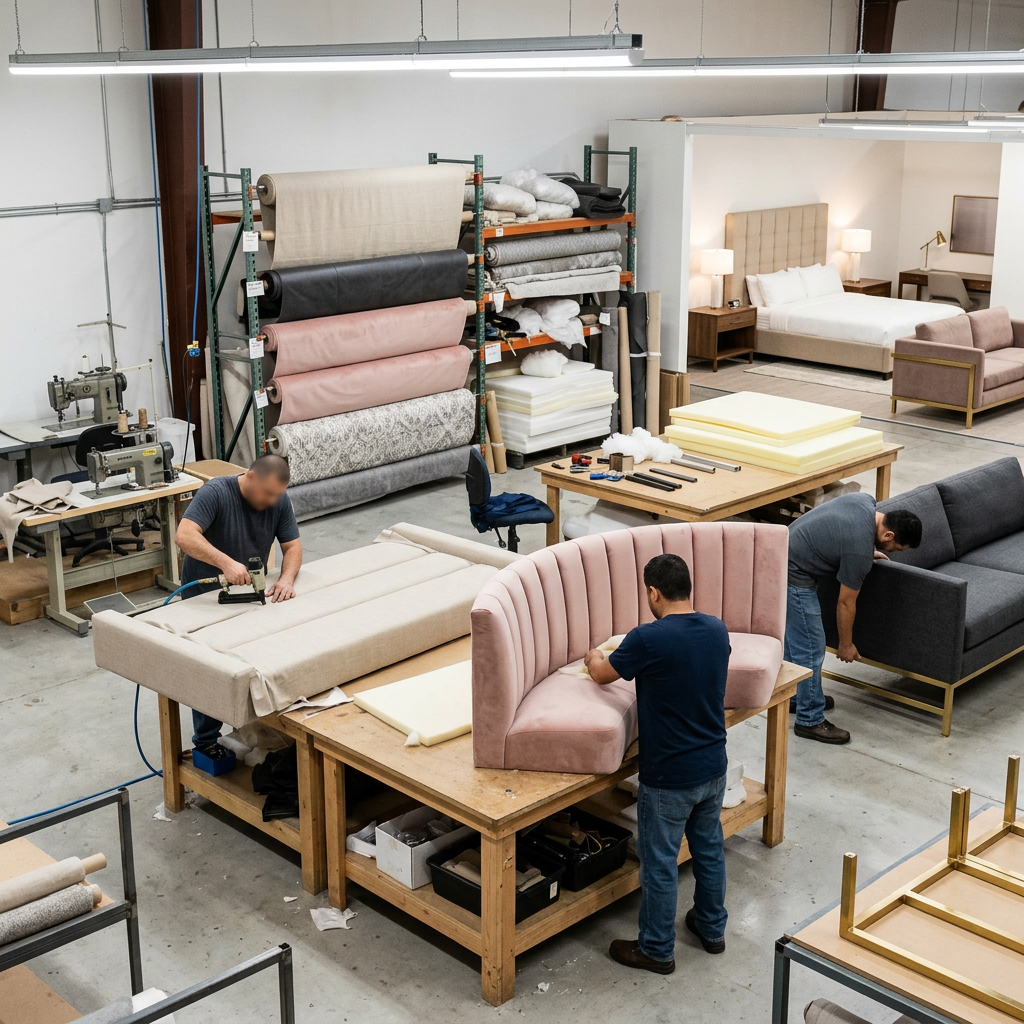
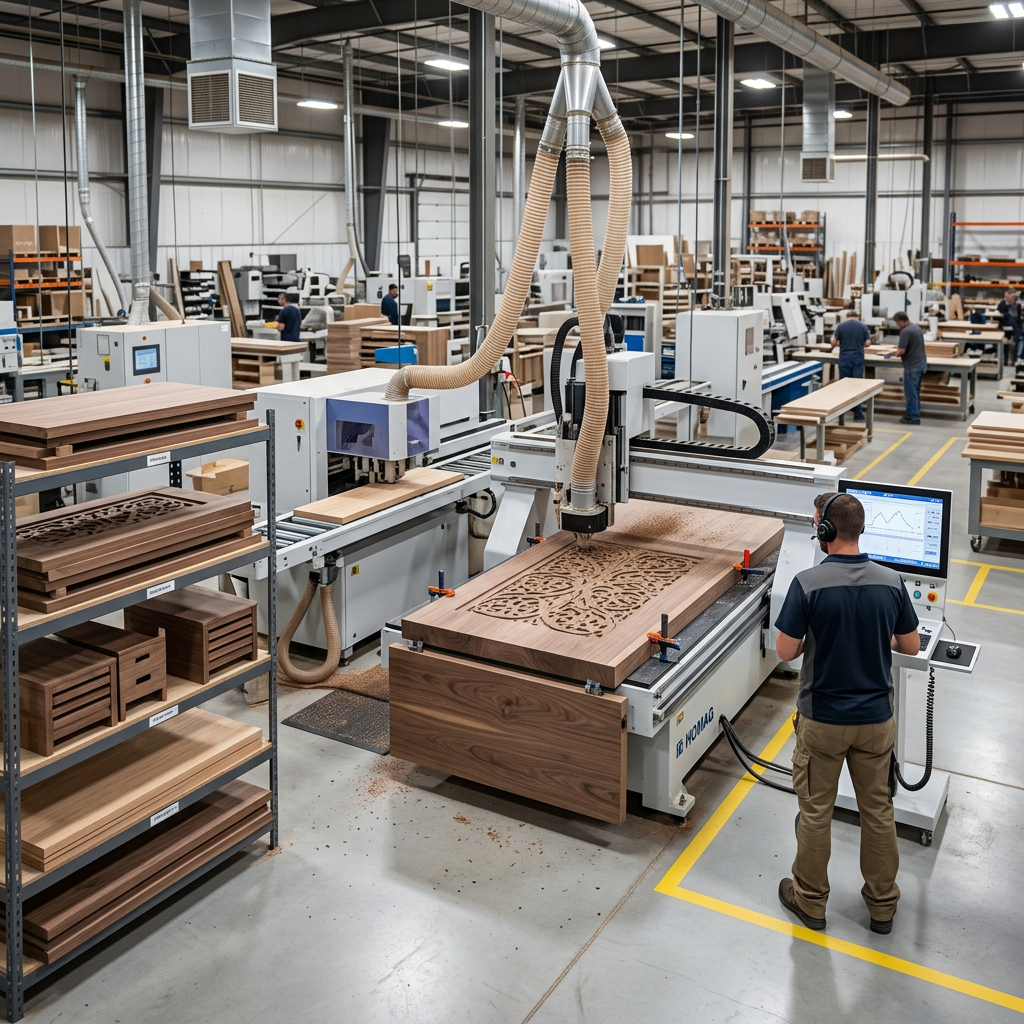
Guangzhou Mingmeng Furniture Co., Ltd, trading as Mingmeng Furniture, is a Guangzhou-based manufacturer of commercial restaurant and hospitality furniture, established in 2015. The company operates a 15,000㎡ manufacturing facility with more than 200 workers, 10 engineers and production capacity above 80,000 pieces per month; annual output is stated at more than 960,000 units, with roughly 90% of production exported to markets including North America, Europe, Australia, the Middle East and Southeast Asia.
Its product scope covers restaurant chairs, dining tables, restaurant booths and banquette seating, bar stools, bar counters, sofas and lounge chairs, alongside hotel and outdoor furniture. For the seating decision described above, the relevant capability is that stools, chairs, tables and counters can be developed inside one specification process: requirement analysis, space planning, furniture layout, CAD drawings, 3D visualization, material and finish selection, structural optimization, sample development, OEM and ODM customization, bulk production, quality inspection, consolidated procurement, export packaging, container loading and shipping coordination.
Materials worked with include solid wood, plywood, metal, stainless steel, aluminium, stone, HPL, leather and fabric. Dimension, structure, material, upholstery, colour and finish customization is offered against architectural drawings or interior concepts. Quality control covers material inspection, in-process inspection, structural and appearance checks, pre-shipment inspection and export packaging control. The company lists CE, TÜV, RoHS and Certification of Conformity among its certifications and states that it holds more than 10 national patented designs; as with any supplier declaration, the certificate scope, product coverage and applicability to the destination market should be confirmed for the specific order.
Materials and finishes: match the zone, then the palette
Material choice follows the zone before it follows the design scheme. MingMeng's published selection guidance sets out the options as solid wood, engineered wood, plywood, steel, aluminium, leather, PU leather, commercial-grade fabrics, marble, granite, quartz, laminate, veneer and melamine, with matte, gloss, textured, wood-grain and custom colour finishes. Fire-retardant materials, outdoor-rated fabrics and weather-resistant materials are listed as available for projects with those requirements.
That guidance applies the same logic to both seat types: for high-traffic interiors, commercial-grade solid wood, plywood, steel or aluminium frames combined with durable upholstery; for tabletops, wood, laminate, veneer, marble, granite, quartz or melamine according to budget, appearance and maintenance; for upholstered seating, commercial fabric, PU leather or genuine leather according to comfort, cleaning frequency, visual style and budget; and for outdoor areas, aluminium, teak and outdoor-rated fabrics. Powder-coated steel or aluminium is recommended for metal furniture where corrosion resistance and maintenance matter.
Two qualifications should travel with those choices. First, the guidance is the supplier's own recommendation, not an independent standard, so a project with defined compliance requirements needs its own evidence trail. Second, stain resistance, water and weather resistance, and flame-retardancy levels should be confirmed against project regulations and operational needs rather than assumed from a material name.
Customization: what can change, and what it costs in process
Both seat types can be customized in dimensions, structure, materials, upholstery, colours, wood finishes and metal finishes, and both can be manufactured from approved customer drawings or developed from reference images and written requirements. CAD drawings, floor-plan coordination, dimension adjustment and 3D visualization are available on project orders, and 3D output is used to confirm proportions, materials, colours or layout before production.
The trade-off is process, not preference. Every customized element adds a confirmation step — drawing approval, material selection, finish sample, and in many projects a physical sample before bulk production. Where a project mixes bar stools, dining chairs, booth seating and tables, those confirmations should be run together so that wood tones, metal finishes and upholstery read as one palette. Signing off a stool finish in isolation and a tabletop finish three weeks later is how otherwise sound projects end up with two shades of the same colour.
MOQ, lead time and shipping terms
MOQ in restaurant furniture is a product-level number, not a company-level one. It depends on the product type, the customization level, the material setup and the order mix, so standard models and custom project furniture may carry different minimum quantities. For a seating package, the practical approach is to ask for MOQ per model rather than per order, and to state the required models, quantities and specifications so the figures can be confirmed against the actual brief. Mixed-model orders can be considered for project procurement, and trial orders can be discussed depending on the product and production setup.
As an illustration of how item-specific the number can be, MingMeng publishes an MOQ of 20 units for custom restaurant booth manufacturing on its own site. That figure is a supplier statement about one product line, not a general MOQ for chairs or stools, and it should not be carried over to a different item without confirmation.
Lead time follows the same logic. Production schedules depend on quantity, customization complexity, material availability, sample approval and factory capacity, and a project-specific schedule should be issued after the specification and order plan are confirmed. MingMeng's commercial-versus-residential comparison cites typical production cycles of 30 to 60 days depending on project scope, together with pre-shipment inspection on every order; both are company statements rather than independently audited figures. Shipping terms available are EXW, FOB, CIF, CFR and DDP, with freight quoted separately or included according to the agreed delivery term — which is why two quotations that look comparable at unit price may not be comparable at all.
Full-package coordination with tables, booths and bar counters
A stool is never bought alone in a real project. It is bought against a counter height, a bar front finish and a back-bar colour; a dining chair is bought against a tabletop, a booth back and a banquette. That is why the seating decision should be made as a package decision: tables, chairs, booths, bars and accessories supplied together keep one visual and dimensional language across the room.
Three coordination points deserve to be written into the order:
- Height chain. Stool to counter, chair to table, and booth seat to table — each pair confirmed on the same drawing set.
- Finish approval. Wood, metal and upholstery samples approved as a group, with the approved references recorded against each item.
- Delivery sequence. Which items must arrive first for installation, and which can follow without holding up the fit-out.
The boundary is equally important: package supply does not replace site measurement, drawing approval or local compliance confirmation. A supplier can coordinate a package across its own scope of work; it cannot verify a counter that has not yet been built.
Cost: compare like-for-like, not headline unit price
Restaurant furniture pricing is calculated from the confirmed specification. The cost drivers are materials, dimensions, quantity, construction, finish and upholstery complexity, packaging and the agreed delivery term, with payment terms set by order value and commercial agreement. Any comparison between a stool and a chair, or between two suppliers, is only meaningful when all of those variables are held constant — including the Incoterm, since a factory-gate price and a delivered price are not the same number.
On lifecycle cost, MingMeng's commercial-versus-residential comparison states that commercial-grade structures reduce long-term sourcing expense by lowering replacement frequency, and that standardized materials, finishes and spare-part support simplify maintenance. That is a supplier position rather than a measured study, but the underlying buying logic is sound and testable at specification stage: ask what is replaceable, how a replacement is identified from project records, and how long the finish and upholstery references remain available.
What the published market figures do and do not tell a buyer
Category-level market estimates for restaurant furniture diverge sharply, and the divergence is worth knowing before any of them appears in a business case. Three commercial research publications reviewed for this analysis report, for overlapping periods, a global restaurant furniture market of USD 638.8 million in 2026 rising to USD 929.57 million by 2035 at a 4.3% CAGR (Market Growth Reports); USD 0.88 billion in 2025 rising to USD 1.38 billion by 2034 at 5.13% (Business Research Insights); and USD 6.62 billion in 2025 rising to USD 11.01 billion by 2034 at 5.8% (Dataintelo).
These figures are not directly comparable: the publishers use different market definitions, base years and coverage, and the gap between the lowest and highest estimate is an order of magnitude. They should not be averaged, and none of them should be used to benchmark a specific project budget, a per-seat cost or a supplier quotation. What they do support is a narrower conclusion: published category forecasts are directional context at best, and a procurement decision should rest on the project's own specification, quantities and confirmed commercial terms.
A decision checklist for the seating package
- Map zones on the floor plan — counter, high-top, dining floor, booth perimeter — before shortlisting any model.
- Confirm seat height against the actual, built or drawn counter and table tops, not against a catalogue range.
- Check pull-out projection, aisle clearance and the interface with booth backs and banquettes.
- Set a duty level per zone in writing, and ask for the structure, finish and upholstery proposed against it.
- Approve wood, metal and upholstery finishes as one palette, and record the approved references.
- Ask for MOQ per model, per configuration and per customization level.
- Confirm the sample and drawing approval route before bulk production is scheduled.
- Fix the Incoterm and freight responsibility in the quotation before comparing totals.
- Confirm warranty scope, replacement-part availability and who handles site issues after handover.
- Keep the project record — specifications, approved samples, finish references — for future replacement and renovation.
Outlook: documentation is the differentiator
The stool-versus-chair question will keep resolving itself the same way in most projects: stools where guests sit at counter height, chairs where they sit at table height, and a documented height and finish chain between the two. What is changing is the level of proof buyers ask for. A seating package that arrives with confirmed heights, approved finish references, stated duty levels and a replacement route is easier to defend at handover and easier to extend in a later phase than one that arrives with a catalogue page and an invoice.
FAQ
What is the practical difference between commercial bar stools and dining chairs in a restaurant project?
The difference is the seating zone rather than the product class. A bar stool places the guest at counter height, so its seat height must match the confirmed bar or counter top; a dining chair places the guest at table height, so its seat height must match the dining table top. Both can be built to commercial specification, but they carry different layout checks and different adjacent furniture.
How durable should bar stools and dining chairs be for a high-traffic restaurant?
Durability depends on the frame structure, joints, materials, finish, upholstery, maintenance regime and the duty level specified for the zone, not on a general durability label. For high-traffic areas, products should be selected against commercial-use requirements supported by applicable test or quality-control evidence where the project defines performance requirements.
Which materials and finishes are available for bar stools and dining chairs?
MingMeng lists solid wood, engineered wood, plywood, steel, aluminium, leather, PU leather, commercial-grade fabrics, marble, granite, quartz, laminate, veneer and melamine, with matte, gloss, textured, wood-grain and custom colour finishes. Fire-retardant materials, outdoor-rated fabrics and weather-resistant options are available for specific project requirements; final selection should balance durability, appearance, maintenance, budget and the operating environment.
Can bar stools and dining chairs be customized to match a restaurant's design?
Yes. Dimensions, structures, materials, upholstery, colours, wood finishes and metal finishes can be adjusted, and furniture can be manufactured from approved customer drawings or developed from reference images and written requirements. CAD drawings, floor-plan coordination and 3D visualization are used to confirm proportions and materials before production; a sample and drawing approval step is normally part of that process.
How is MOQ determined when a project mixes bar stools, dining chairs, tables and booths?
MOQ depends on the product type, customization level, material setup and order mix, so standard models and custom project furniture may carry different minimum quantities. Mixed-model orders can be considered for project procurement. Buyers should request MOQ per model against the actual quantities and specifications, since a figure published for one product line — such as 20 units for custom booth manufacturing — does not transfer to chairs or stools.
Can bar stools, dining chairs, booths and bar counters be supplied as one coordinated package?
Yes, complete packages covering tables, chairs, booths, bars and accessories can be coordinated so that the room keeps one visual and dimensional language. The package should still be checked item by item: stool height against the counter, chair height against the table, and wood, metal and upholstery finishes approved together. Package supply does not replace site measurement, drawing approval or local compliance confirmation.
A downloadable copy of MingMeng Furniture's 2026 restaurant furniture brochure is available here: 2026 restaurant furniture brochure (PDF).
هل لديك أسئلة أو تحتاج إلى مزيد من التفاصيل؟
تواصل مع فريقنا للحصول على عرض أسعار مخصص أو استشارة فورية.
طلب عرض أسعار
املأ النموذج أدناه وسيتواصل معك فريقنا بعرض مقترح مخصص.
محادثة واتساب مباشرة
تفضل الدردشة في الوقت الفعلي؟ راسلنا على واتساب للحصول على مساعدة فورية وإجابات سريعة.
- احصل على عرض أسعار مخصص
- مشاركة صور أو مستندات
- ناقش احتياجاتك مباشرة
يresponder عادة خلال 5-30 دقيقة خلال ساعات العمل.