
Barber Chair Scenario Fit: Compact to Gold Salon Setups
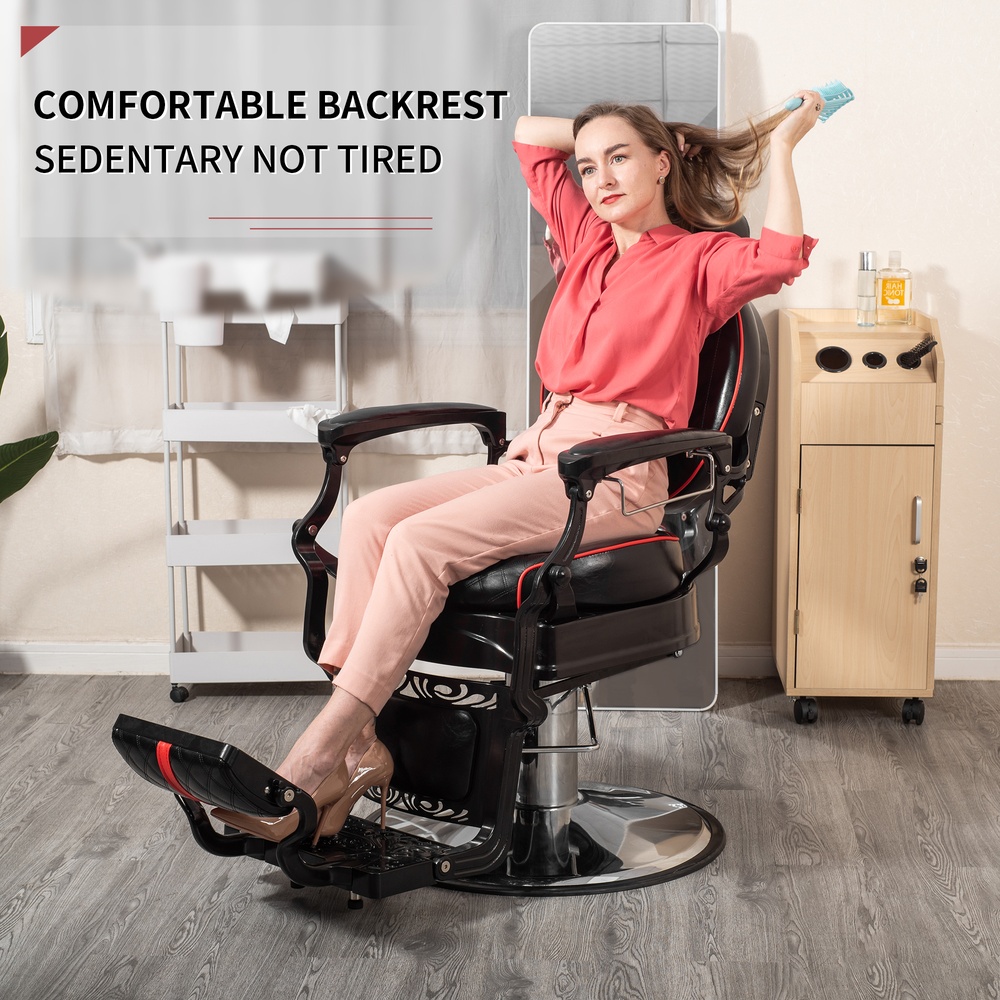
Choosing a barber chair is a floor-plan and workflow decision before it becomes a design decision. Inside a single professional product range, a compact beauty salon chair listed at 45 × 25 × 70 cm and a heavy duty barber chair listed at 111 × 66 × 118 cm can share the same upholstery specification and the same construction logic, yet they are not interchangeable in practice. The variable that separates them is scenario: the size of the room, the service performed at the station, and the load the chair absorbs across a working week.
Market context supports that reading. The global salon chairs market was valued at approximately USD 10.57 billion in 2025 and is projected to reach USD 18.4 billion by 2035, according to Fact.MR. Within the product type segment, hydraulic barber chairs accounted for approximately 42.5% of the market in 2025, based on Market Intelo's barber chair market reporting. Demand is not concentrated in a single chair format; it is spread across formats that correspond to different rooms and different services.
Ningbo Hongzi Beauty & Hairdressing Equipment Co., Ltd. is a Chinese manufacturer of salon furniture established in 2012 that specializes in the research, development, production and sales of barber chairs, beauty beds, hair washing chairs, shampoo chairs, massage beds and manicure tables. The company operates a 22,000 m² manufacturing facility, employs approximately 200 staff, maintains a research and development team of 15 engineers, and reports an annual production capacity of 180,000 units. Its catalogue is a useful reference for this analysis because five distinct chair classifications — compact, styling, heavy duty, retro and gold — sit inside one product family, which makes scenario differences visible without changing supplier.
The problem: one product category, five different rooms
Salon furniture buyers often evaluate barber chairs on appearance and upholstery colour first, then discover that the specification does not match the station it was purchased for. Three mismatch patterns recur in fit-out planning:
- Space mismatch. A full-size chair placed in a narrow treatment lane restricts operator movement and forces awkward client positioning.
- Service mismatch. A compact chair used at a station that requires extended recline and repeated daily use is being asked to work outside its classification.
- Design mismatch. A retro or gold-accented chair placed in a clinical, minimalist interior — or a plain chair placed in a themed barbershop — leaves the interior concept unresolved.
The correction is procedural rather than aesthetic: treat chair classification as a purchasing variable instead of a style filter. The five classifications compared below answer different combinations of available floor space, service type and interior language, and each maps to a specific model within the same range.
Scenario classification and model mapping
Each model in this comparison carries a classification that describes its intended application, not merely its shape. The table below sets out the five classifications, their listed dimensions, and their shared material base.
| Model | Classification | Listed dimensions | Materials | Scenario fit |
|---|---|---|---|---|
| HZ6001DW | beauty salon chair | 45 × 25 × 70 cm | PU leather, high-density sponge, wood, iron | Compact beauty salon stations and constrained floor plans |
| HZ8801 | styling chair | 90 × 60 × 90 cm | PU leather, high-density sponge, wood, iron | General styling stations in salon and barbershop settings |
| HZ87102RB | Heavy Duty Barber Chair | 111 × 66 × 118 cm | PU leather, high-density sponge, wood, aluminum alloy | High-traffic barbershop floors and taller working positions |
| HZ8799YF | Retro Reclining Barber Chair | 110 × 72 × 100 cm | PU leather, high-density sponge, wood, aluminum alloy | Retro and vintage-themed interiors requiring recline |
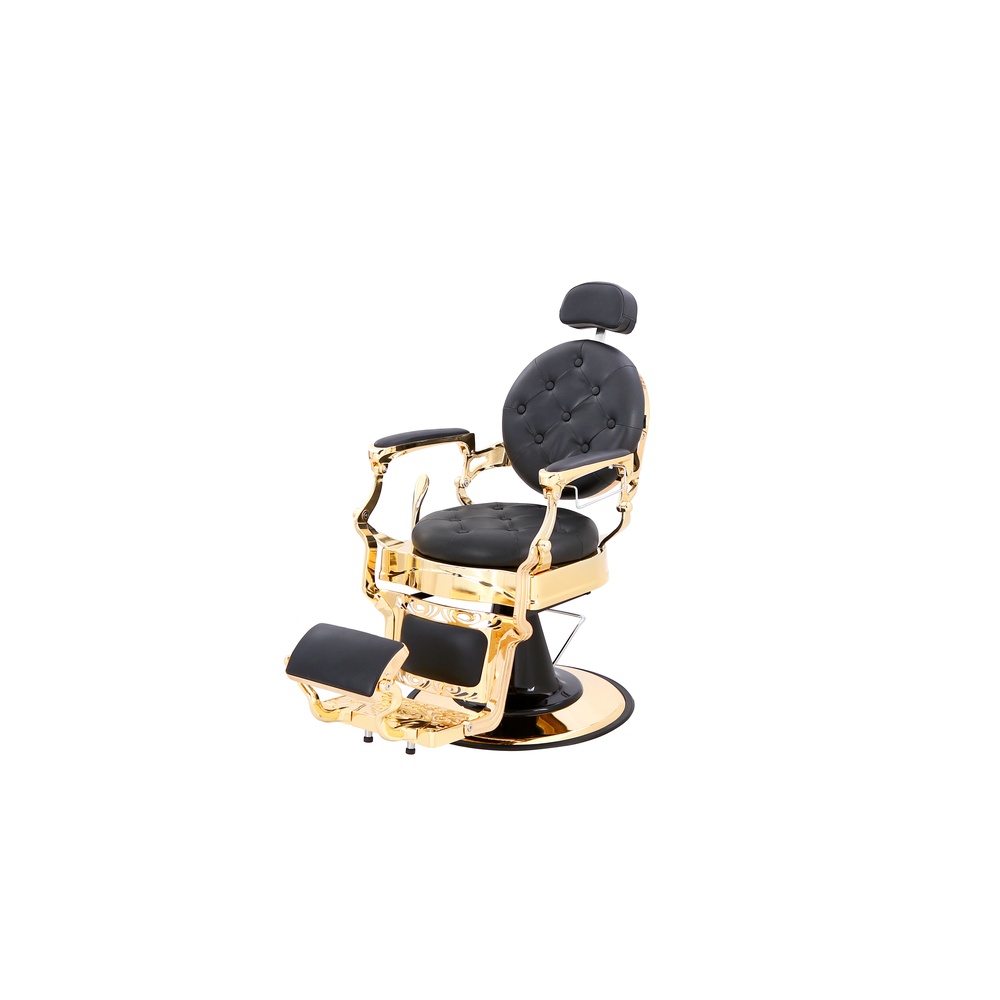
| HZ8799ABK | gold barber chair | 110 × 72 × 100 cm | PU leather, high-density sponge, wood, aluminum alloy | Premium and gold-accented salon interiors |
The table also exposes a planning detail that buyers frequently miss: two of the five models — HZ8799YF and HZ8799ABK — are dimensionally identical at 110 × 72 × 100 cm and share the same material specification. Their difference is classification and finish, one being a retro reclining barber chair and the other a gold barber chair. When two models occupy the same footprint, the deciding questions become whether the station requires recline and which interior language the room is built around.
How to read barber chair dimensions against floor space
The dimension line on a specification sheet is the fastest scenario filter available to a buyer. In this range, the listed figures span a wide envelope: 45 × 25 × 70 cm for HZ6001DW, 90 × 60 × 90 cm for HZ8801, 111 × 66 × 118 cm for HZ87102RB, and 110 × 72 × 100 cm for both HZ8799YF and HZ8799ABK. The compact model occupies a fraction of the floor area required by the heavy duty model, and the heavy duty model is the tallest of the group at 118 cm, which raises the working position for the operator.
Three practical rules follow from these figures:
- Start from the station, not the room. A salon floor is a set of stations. Matching a chair to an individual station before arranging the layout prevents the common error of buying one large model for every position.
- Plan clearance beyond the listed footprint. The listed dimensions describe the chair, not the working envelope. Operator access, client entry and exit, and any recline movement all take place outside those numbers.
- Check the mechanism class against the service. Among the five models compared here, HZ8799YF is classified as a retro reclining barber chair. HZ6001DW and HZ8801 are classified as a beauty salon chair and a styling chair respectively, and the reference material does not describe them as hydraulic or reclining models. Buyers who require height adjustment or recline at a station should confirm the mechanism on the specific model rather than infer it from appearance.
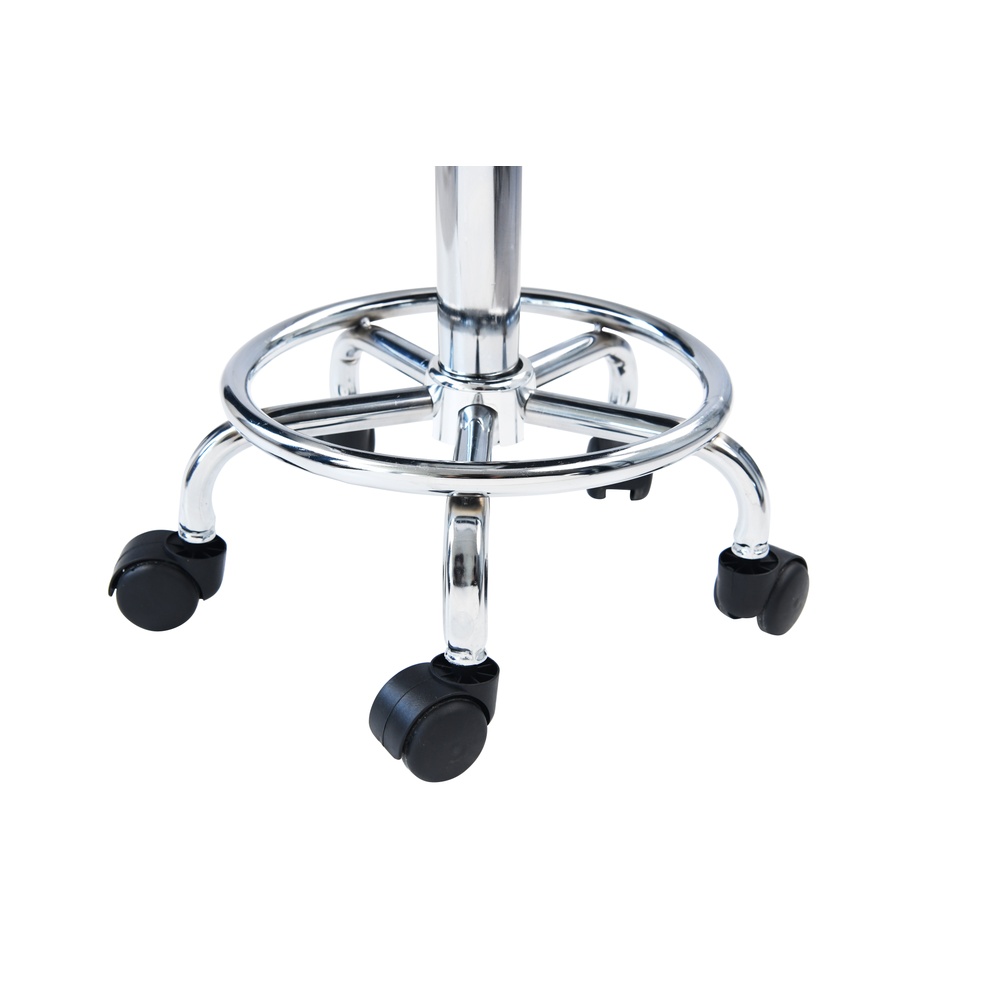
The shared material platform: PU leather, high-density sponge, wood and metal
All five models are constructed from PU leather upholstery, high-density sponge cushioning, wood structural components, and either iron or aluminum alloy elements. HZ6001DW and HZ8801 use iron; HZ87102RB, HZ8799YF and HZ8799ABK use aluminum alloy.
For salon environments, that material combination reflects a known set of operating conditions: indoor use over extended periods, with requirements for wear resistance, oil resistance, easy cleaning and seating comfort. Salon fit-outs and full-equipment procurement projects also commonly specify durability, water and oil resistance, plus customizable colours or materials. PU leather and high-density sponge address the cleaning and comfort side of that requirement, while the wood structure and metal elements address the load path.
An important boundary for buyers: because the material platform is shared across the range, the differences between these five models come mainly from dimensions, mechanism classification and finish — not from a fundamentally different upholstery or frame chemistry. A buyer who assumes that the gold or retro models use a materially different specification should verify that assumption against the model sheet instead.
Application fit: five salon scenarios
Compact beauty salon stations — HZ6001DW
HZ6001DW is a beauty salon chair listed at 45 × 25 × 70 cm and made of PU leather, high-density sponge, wood and iron. Its value in a fit-out is spatial: it fits stations where a 110 × 72 cm chair would compromise circulation. It is intended for professional use in beauty salons and barbershops, and it suits small-format salons, secondary stations, and rooms where the layout is already constrained by plumbing or fixed partitions.
General styling stations — HZ8801
HZ8801 is classified as a styling chair, listed at 90 × 60 × 90 cm, with PU leather upholstery, high-density sponge cushioning, a wood structure and iron components. It occupies the middle of the dimension range and is the natural default for a mixed salon floor where stations are standardized and neither an unusually compact nor an unusually large chair is required.
High-traffic barbershop floors — HZ87102RB
HZ87102RB is classified as a Heavy Duty Barber Chair, listed at 111 × 66 × 118 cm with PU leather, high-density sponge, wood and aluminum alloy construction. The 118 cm height is the tallest listed figure in this comparison, and the heavier classification targets stations that run continuously through the day. In practice this model belongs on a main service floor with room for circulation, not in a corridor or a converted storage corner.
Retro and vintage themed interiors — HZ8799YF
HZ8799YF is a Retro Reclining Barber Chair listed at 110 × 72 × 100 cm, built with PU leather, high-density sponge, wood and aluminum alloy. It is the only model among the five classified as reclining, which makes it the appropriate choice where a station combines a period interior concept with services that need a reclined position. Retro interiors generally pair this chair with complementary equipment rather than mixing it with modern minimal formats along the same visible row.
Premium and gold-accented interiors — HZ8799ABK
HZ8799ABK is classified as a gold barber chair, listed at 110 × 72 × 100 cm with PU leather, high-density sponge, wood and aluminum alloy. It shares its footprint and material base with HZ8799YF, so the decision between them is driven by interior language. Gold-accented chairs function as the visual reference point of a premium room, which means they are usually placed at a primary or feature station rather than distributed across an entire floor.
What the market data suggests about scenario-driven demand
Trade data offers a second, independent view of the category. The United States imported USD 102.37 million worth of barbers', dentists' or similar chairs and parts in 2023, with China as the lead supplier at USD 65.35 million, or 63.8% of that value, according to UN Comtrade data published through the World Integrated Trade Solution. A market of that scale supports a wide range of chair formats rather than a single dominant model.
At the product-type level, hydraulic barber chairs held approximately 42.5% of the segment in 2025 according to Market Intelo, which indicates that adjustable mechanisms remain a core expectation in professional settings. The engineering assumption behind that expectation is documented as well: commercial-grade hydraulic pumps are typically rated to handle loads between 350 and 400 lbs and to exceed 100,000 cycles before maintenance is required, based on published salon furniture engineering guidance. Buyers evaluating hydraulic models should treat these as reference parameters for the pump class rather than guarantees for any individual product.
What the data does not show is a uniform purchasing pattern. The coexistence of compact, styling, heavy duty, retro and gold classifications inside a single manufacturer's range reflects the reality that salon buyers increasingly select chairs per station and per interior concept, rather than in one uniform batch.
Where scenario-specific chairs fall short
Scenario matching improves fit, but it also introduces trade-offs that buyers should price into a project:
- Large-format chairs consume circulation space. HZ87102RB is listed at 111 × 66 × 118 cm. On a narrow floor, a row of chairs at that footprint narrows aisles and can complicate cleaning routes.
- Compact chairs have a narrow service window. HZ6001DW at 45 × 25 × 70 cm solves a space problem, but it is classified as a beauty salon chair and is not positioned as a heavy-duty or reclining model. It is not the right answer for a main barbering station that runs all day.
- The material platform is shared, not tiered. Because PU leather, high-density sponge and wood appear across the range, buyers should not expect an unstated upgrade in upholstery specification at the higher classifications.
- Mechanism capability varies by model. Only HZ8799YF among the five is described as reclining. Where multiple stations require recline, the model selection must be checked individually.
- Decorative finishes need routine care. Retro and gold treatments are generally maintained through consistent cleaning routines to preserve appearance in daily commercial use, which adds a small operating discipline rather than a capital cost.
The traditional alternative — a uniform fleet of one chair model across every station — avoids this complexity but usually fails on at least one dimension: the model is either too large for the smallest station or too small for the busiest one. Mixed fleets drawn from a single product family, as in the five models compared here, keep the material and maintenance specification consistent while allowing footprint and classification to vary.
Outlook for salon furniture buyers
Three directions are visible from the current data. First, scenario segmentation is likely to continue as salon floors are planned station by station rather than as uniform grids. Second, hydraulic and adjustable mechanisms will remain central: with hydraulic barber chairs holding approximately 42.5% of the product type segment in 2025, the mechanism is a purchase criterion rather than an accessory. Third, sourcing will continue to concentrate on established manufacturing regions — China supplied 63.8% of United States imports in this chair category in 2023 — and manufacturers with in-house development capacity, such as a 15-engineer research and development team operating inside a 22,000 m² facility, are positioned to respond to per-scenario specification requests rather than only to standard catalogue orders.
For buyers at the awareness and research stage, the practical takeaway is to define each station before shortlisting chairs: measure the position, name the service, decide whether recline is required, and only then choose between a compact, styling, heavy duty, retro or gold classification.
FAQ
What is the difference between a beauty salon chair and a heavy duty barber chair?
In this range, the difference is classification and scale. HZ6001DW is a beauty salon chair listed at 45 × 25 × 70 cm with PU leather, high-density sponge, wood and iron construction. HZ87102RB is a Heavy Duty Barber Chair listed at 111 × 66 × 118 cm, built with PU leather, high-density sponge, wood and aluminum alloy. The heavy duty model occupies a substantially larger footprint, and its 118 cm height is the tallest listed figure among the five models compared here.
How do I check whether a barber chair will fit my salon floor?
Begin with the listed dimensions and then add the working envelope. HZ8801 is listed at 90 × 60 × 90 cm, while HZ87102RB is listed at 111 × 66 × 118 cm. The listed figures describe the chair itself; operator access, client entry and exit, and any recline movement take place outside those numbers, so the practical check is whether circulation around the chair remains workable at the chosen position.
Are retro reclining barber chairs suitable for daily commercial use?
HZ8799YF is classified as a Retro Reclining Barber Chair and is intended for the salon furniture industry, with PU leather upholstery, high-density sponge cushioning, wood structure and aluminum alloy elements, listed at 110 × 72 × 100 cm. The classification and material specification are consistent with professional salon use. Recline capability is specific to this model; retro styling itself does not determine the mechanism, so buyers should confirm the mechanism on the exact model being ordered.
What materials are shared across compact, styling, heavy duty, retro and gold barber chairs?
All five models discussed here use PU leather upholstery, high-density sponge cushioning and wood structural components. The metal elements differ: HZ6001DW and HZ8801 use iron, while HZ87102RB, HZ8799YF and HZ8799ABK use aluminum alloy. This material combination is intended to address indoor long-term salon use, where wear resistance, oil resistance, easy cleaning and seating comfort are typical requirements.
Why do hydraulic barber chairs account for such a large share of the market?
Hydraulic barber chairs represented approximately 42.5% of the product type segment in 2025, according to Market Intelo. Published salon furniture engineering guidance describes commercial-grade hydraulic pumps as typically rated for loads between 350 and 400 lbs and exceeding 100,000 cycles before maintenance is required. Those reference parameters help explain the persistence of adjustable mechanisms in professional settings, although such ratings describe the pump class rather than every individual chair.
Can one chair model serve every station in a salon?
Rarely, because station requirements differ within the same room. A compact position may require a chair close to the 45 × 25 × 70 cm envelope of HZ6001DW, while a main barbering position may need the 111 × 66 × 118 cm scale of HZ87102RB. Sourcing from a single product family allows footprint and mechanism class to vary station by station while keeping upholstery, cushioning and structural materials consistent across the floor.
Reference
The publicly available product brochure covering this barber chair range can be downloaded here: Ningbo Hongzi product brochure (PDF).