
Battery Storage Specs and Certifications: Buyer's Checklist
A practical checklist for evaluating battery energy storage systems by certification, performance parameters and project constraints before procurement decisions are finalized.
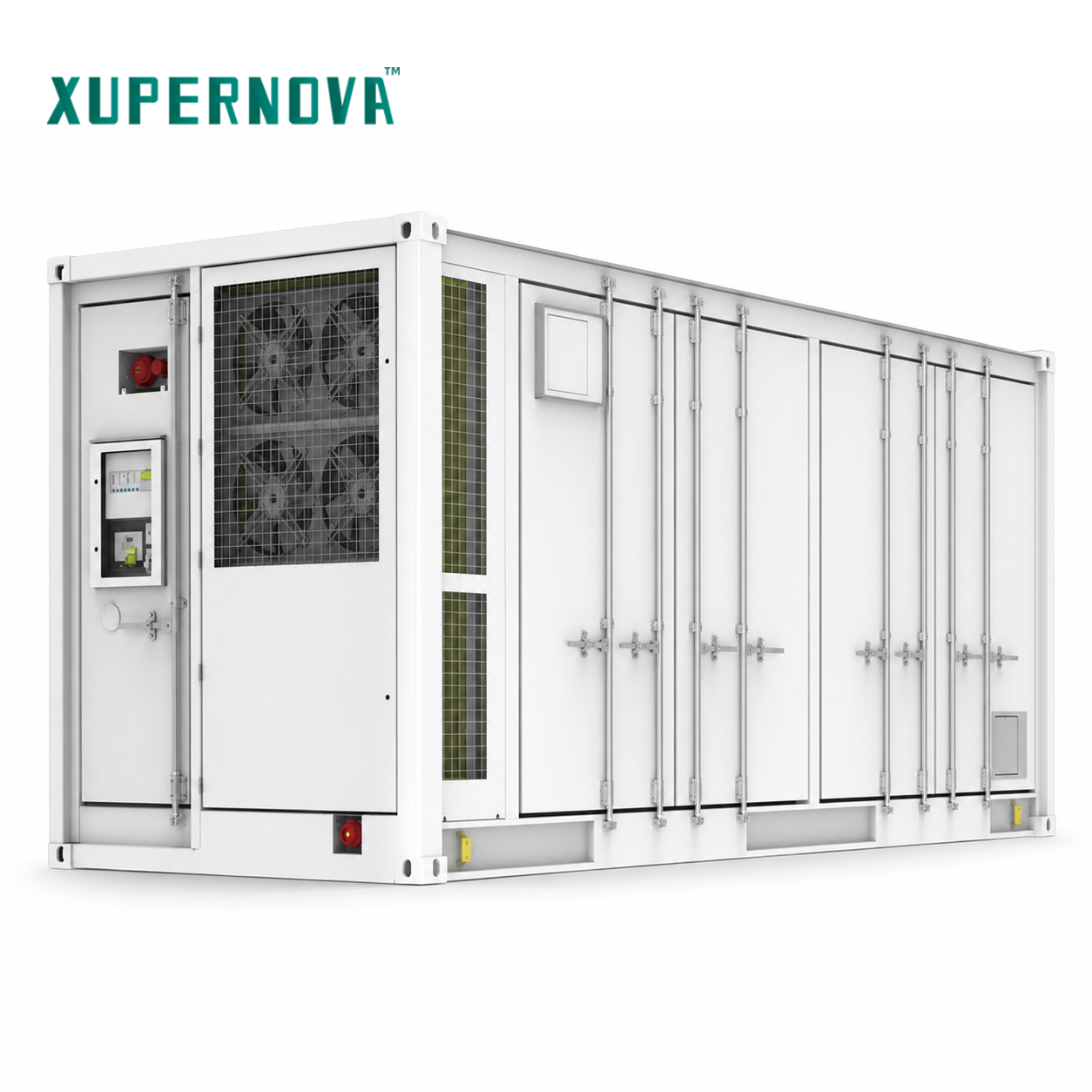
Liquid-cooled battery containers are increasingly used for grid-side and commercial-industrial storage projects.
In 2025, the world added 108 GW of new battery storage capacity, according to the IEA Global Energy Review 2026. Lithium iron phosphate (LFP) chemistry accounted for roughly 90% of those deployments. For buyers moving from research into evaluation, these numbers change the conversation. The question is no longer whether battery energy storage systems (BESS) are mature enough; it is whether a specific system can be verified against the grid codes, physical site conditions and operational constraints of a particular project.
This article focuses on the verification side of BESS procurement: documented certifications, core technical parameters, cooling architecture, battery-cell sourcing and the boundaries that should be checked during supplier evaluation.
Why Buyers Evaluate BESS by Constraints, Not Just Capacity
Two projects with the same kWh rating can require completely different system designs. A supermarket chain in Italy needs a cabinet that satisfies CEI 0-21 grid-connection requirements. A manufacturing plant in Germany may prioritize demand-limit control and compatibility with local grid codes. A renewable developer in a G99-regulated market needs dispatchable energy capacity with documented grid-code compliance. Capacity alone does not answer these procurement questions.
At the research and evaluation stage, buyers typically compare a shorter list of decisive criteria:
- Required energy capacity and power rating
- C-rate and intended charge/discharge duration
- Cooling mode: air-cooled or liquid-cooled
- Protection rating and operating temperature range
- Cell chemistry and cell supplier tier
- Grid-code certification for the target market
- Lead time and customization constraints
These criteria are not marketing claims. They can be verified through product documentation, certificates and factory test procedures.
Xupernova at a Glance
Xupernova New Energy Technology Co., Ltd. (Xupernova) is an energy storage and new energy solutions provider with manufacturing and R&D operations in Yibin, Sichuan, China. The company reports a 700,000 m² facility, more than 500 employees, 150+ R&D engineers and an annual manufacturing capacity above 5 GWh, with about 90% of output exported to Europe, North America, South America, the Middle East and Asia.
For BESS buyers, the relevant point is not company size but the structure of the portfolio. Xupernova supplies cabinet-type and containerized systems in air-cooled and liquid-cooled configurations, including solar-plus-storage and all-in-one ESS units. Its products use Grade A LFP cells sourced from BloombergNEF Tier 1 manufacturers, with optional semi-solid-state, solid-state and sodium-ion battery technologies offered subject to project requirements, technical validation and availability.
Reading the Product Line as a Constraint Map
The following models show how Xupernova maps its BESS portfolio to different project constraints.
| Model | Configuration | Power / Energy | C-rate | Protection | Target Application |
|---|---|---|---|---|---|
| XA-H0064-A1 | Air-cooled solar-plus-storage cabinet | 25–50 kW / 64.54 kWh | 0.5P / 1P / 2P | IP55 | Small-scale C&I solar-plus-storage |
| XA-H0261-L1 | Liquid-cooled solar-plus-storage cabinet | 261 kWh | 0.5P / 1P / 2P | IP55 | C&I solar-plus-storage, microgrids |
| XA-C0261-L1 | Liquid-cooled all-in-one ESS cabinet | 125 kW / 261.25 kWh | 0.5P / 1P / 2P | IP55 | Commercial and industrial energy storage |
| XA-X1044-L1 | 10-ft liquid-cooled ESS container | 500 kW / 1,044 kWh | 0.5P / 1P / 2P | IP55 | C&I energy storage, microgrids, backup power |
| XA-X2170-L2 | 20-ft liquid-cooled all-in-one ESS container | 1,125 kW / 2,170.3 kWh | 0.5P / 1P / 2P | IP55 | C&I energy storage, grid-side storage |
| XA-V5015-L1 | 20-ft liquid-cooled battery container | 5.015 MWh | 0.5P / 1P / 2P | IP55 | Power generation, grid storage, C&I |
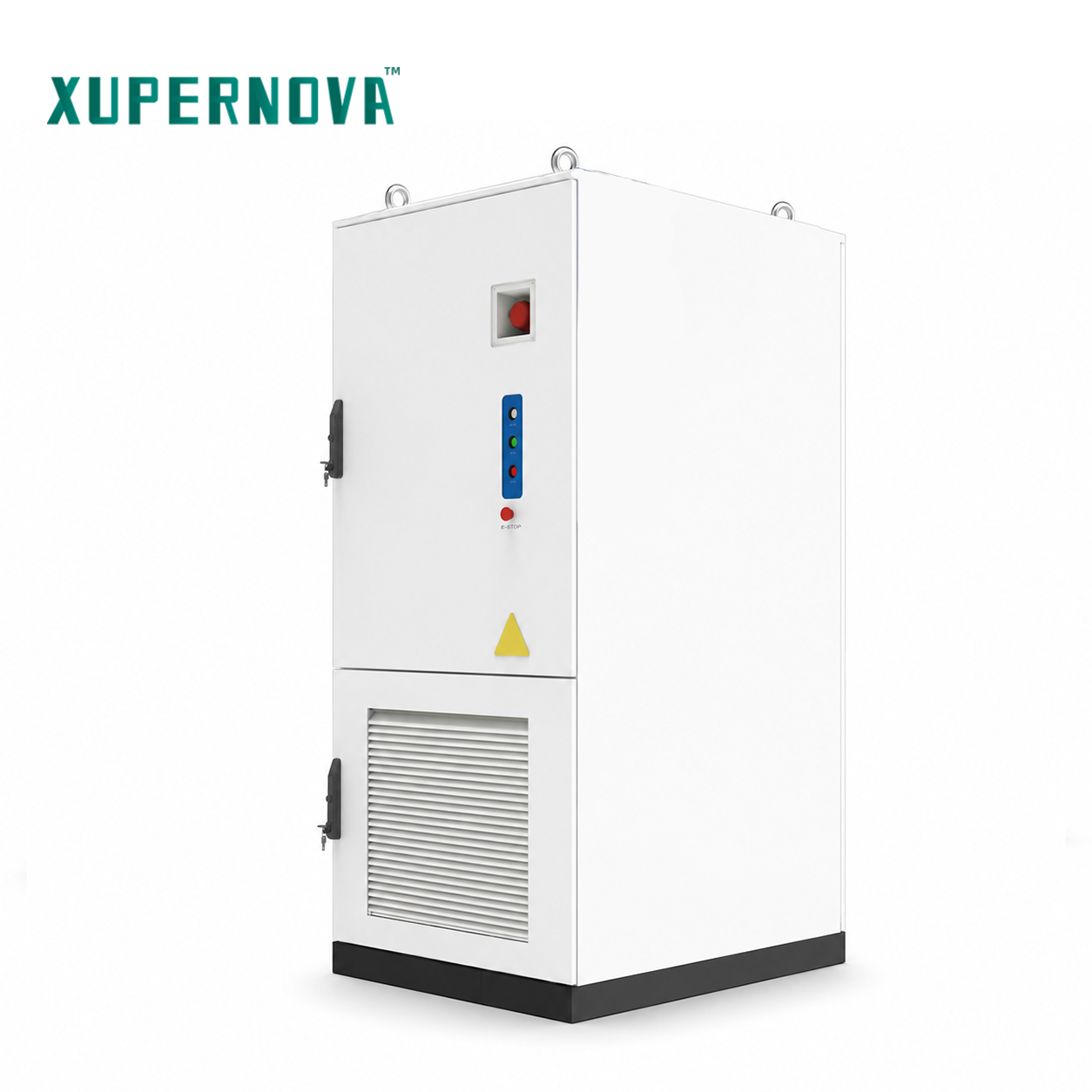
The 261 kWh liquid-cooled cabinet is the certified platform documented as ECO-E261LP-2A in several EU compliance files.
All listed models operate in a temperature range of -30°C to 55°C and use Grade A LFP lithium-ion cells from BloombergNEF Tier 1 energy-storage cell manufacturers. This common baseline simplifies supplier qualification for buyers who need one technology standard across multiple project scales.
What the Key Parameters Actually Mean
C-rate and duration flexibility
C-rate expresses the charge or discharge speed relative to the battery's rated energy. A 1P rating means the system can charge or discharge its full energy capacity in one hour at rated power. The 0.5P / 1P / 2P range gives project designers flexibility between duration and power response, which affects whether a system suits peak shaving, solar shifting or fast grid support.
Air-cooled versus liquid-cooled architecture
Air-cooled cabinets have a simpler structure and are suitable for smaller capacities such as the XA-H0064-A1 at 64.54 kWh. Liquid cooling removes heat more effectively during sustained high-rate operation and is used across the 261 kWh, 1,044 kWh, 2,170.3 kWh and 5.015 MWh platforms. For the 261 kWh liquid-cooled cabinet, cell temperature difference is controlled within 3°C in applicable configurations, which supports cell consistency and service life.
Protection and operating environment
IP55 indicates protection against limited dust ingress and water jets, which supports outdoor installation. The -30°C to 55°C operating range covers most commercial and industrial sites, including hot climates and cold storage or high-altitude regions.
Cell chemistry and sourcing
Grade A LFP cells from BloombergNEF Tier 1 manufacturers are specified across the portfolio. LFP's thermal stability and cycle life are the main reasons it holds around 90% of global deployments, according to the IEA. Optional semi-solid-state, solid-state and sodium-ion batteries are offered as alternatives, but each option depends on project requirements, technical validation and availability.
Safety and risk control
Fire and thermal-runaway risk is the most critical operational constraint in energy storage. Xupernova's approach includes multi-level temperature monitoring, BMS protection, liquid cooling, automatic alarm and emergency shutdown, plus multi-layer fire-suppression hardware. Systems use LFP cells with smoke and temperature detection, PACK-level and cluster-level aerosol fire suppression and a water fire-fighting interface.
Certifications: The Constraint That Removes Uncertainty
For hvq_2 buyers, certification evidence is often the deciding factor. For the 261 kWh liquid-cooled platform, documented as model ECO-E261LP-2A in its certified configuration (125 kW, 261.248 kWh, IP55), the following compliance documents have been issued by TÜV SÜD Product Service GmbH:
| Certification | Applicable Standard | Market | Certificate Number |
|---|---|---|---|
| CEI 0-21 Compliance Document | CEI 0-21:2022/V2:2024 | Italy | D 125581 0027 Rev. 00 |
| CEI 0-16 Compliance Document | CEI 0-16:2022/V3:2024 | Italy | D 125581 0028 Rev. 00 |
| EMC Attestation of Conformity | EN IEC 61000-6-4:2019; EN IEC 61000-6-2:2019 | EU | E8A 125581 0023 Rev. 00 |
| LVD Attestation of Conformity | EN 62477-1:2012/A12:2021 | EU | N8A 125581 0024 Rev. 00 |
| IEC 63056:2020 Product Certificate | IEC 63056:2020 | Global | B 125581 0022 Rev. 01 |
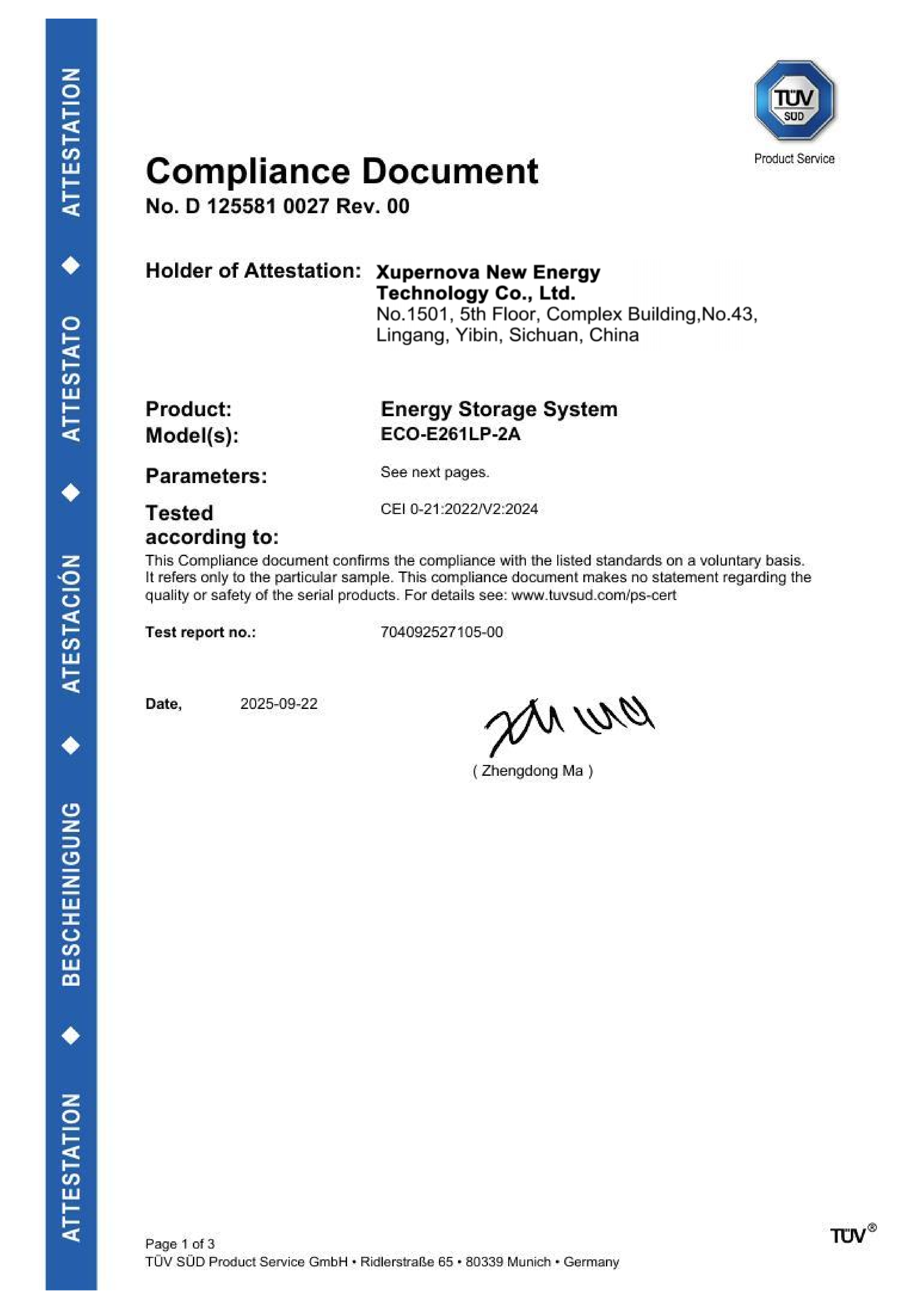
Market-specific compliance documents, such as this CEI 0-21 certificate for Italy, are verifiable through their certificate numbers.
These certificates matter because they are verifiable and market-specific. CEI 0-21 and CEI 0-16 apply to Italy; the EMC and LVD attestations apply to the EU; the IEC 63056 certificate covers the battery system globally. Buyers should request the relevant certificate for their target market rather than assuming one certificate covers all geographies.
Application and Use Cases: Where Constraints Become Requirements
In commercial and industrial peak shaving, Xupernova's liquid-cooled cabinets are deployed for time-of-use arbitrage and demand management. One supermarket and retail facility operator deployed 50 units of the 125 kW / 261.248 kWh configuration for peak shaving, time-of-use arbitrage and photovoltaic self-consumption. Over a one-year operating period, the system maintained stable daily operation, reduced peak electricity demand and improved onsite solar utilization, with a design compatible with Italian grid requirements.
An industrial manufacturing enterprise deployed 20 units in a 1 MW / 2.09 MWh configuration for peak shaving, time-of-use arbitrage and demand management. After two years of automatic operation, the installation reduced peak grid demand and optimized electricity costs, with IP55 protection and compatibility with German grid requirements.
In solar-plus-storage projects, a commercial facility and solar EPC contractor deployed 32 units of the 500 kW / 1.044 MWh system with up to 1 MW of PV input. Over five years, the project increased solar self-consumption, reduced daytime peak demand and optimized energy costs through liquid-cooled solar-plus-storage design and plant-level EMS control.
For microgrid and resilience applications, an industrial park operator used 12 units in a 1 MW / 2.088 MWh solar-plus-storage microgrid with emergency backup and diesel-generator optimization. The project improved critical-load continuity, increased solar utilization and reduced diesel running time. A renewable energy developer also deployed 7 units in a 2 MW / 4.176 MWh configuration for renewable energy shifting, grid balancing, peak shaving and backup power, with G99 grid-code compatibility.
Market Trends Shaping BESS Procurement
Verified market data points to a fast-scaling sector. The IEA reports 108 GW of new battery storage capacity added globally in 2025, with LFP accounting for about 90% of deployments. MarketsandMarkets estimates the global BESS market at $50.81 billion in 2025. In the United States, the EIA projects 19.6 GW of new utility-scale battery storage capacity in 2025. Ember reports that all-in BESS project CAPEX for long-duration utility-scale projects reached $125/kWh in late 2025.
Two procurement implications follow. First, falling system costs and rising deployment volumes make documentation and certification more important, not less, because projects are being approved faster. Second, as LFP becomes the default chemistry, buyers increasingly differentiate suppliers on integration quality, EMS capability, safety design and verification evidence rather than on cell chemistry alone.
Traditional Approaches vs. Integrated Liquid-Cooled BESS
Traditional projects often involved separate procurement of battery racks, PCS, transformer, switchgear and EMS, with assembly and testing performed at the project site. That model creates longer commissioning timelines and greater integration risk. Integrated liquid-cooled BESS products shift factory assembly, testing and certification upstream, which simplifies on-site installation and reduces the number of interface owners.
Integrated systems are not a universal answer. Liquid cooling adds loop complexity and requires maintenance capability compared with air cooling. Standard BESS delivery from Xupernova is quoted at 25–35 days, while customized projects require 35–60 days. Optional battery chemistries such as semi-solid-state, solid-state and sodium-ion depend on project-level technical validation and availability, so they may not be deliverable in every timeline. Certifications are also market-specific: the CEI 0-21 and CEI 0-16 documents cover Italy, while buyers in other geographies must verify their own grid-code requirements.
Future Outlook
With LFP chemistry dominant and utility-scale CAPEX falling, the next phase of BESS procurement will emphasize operational intelligence and compliance traceability. Buyers can expect more projects combining PV, storage, EV charging and diesel generation under one EMS. Alternative chemistries will appear more frequently but will still require per-project validation. For commercial, industrial and grid-side buyers, documented certifications and verified parameters will increasingly become non-negotiable parts of supplier evaluation.
For detailed specifications and certification documents, the Xupernova Energy Storage Product Catalog is available for public download: XUPERNOVA Energy Storage Product Catalog. Company website: www.xupernovatech.com
FAQ
What types of battery energy-storage systems does Xupernova supply?
Xupernova supplies 20-ft liquid-cooled battery containers, liquid-cooled all-in-one ESS cabinets, 10-ft liquid-cooled ESS containers, solar-plus-storage cabinets and air-cooled solar-plus-storage cabinets for different-scale energy-storage projects.
How do I select the right battery energy-storage system for my project?
You need to confirm required capacity, power rating, cooling mode and application scenarios. Xupernova provides multiple product series including container-type liquid-cooled ESS and cabinet-type air-cooled or liquid-cooled ESS for utility-scale, commercial-industrial and solar-plus-storage scenarios.
What are the fire-safety risks for energy-storage battery systems?
Energy-storage systems face fire and thermal-runaway risks. Mitigation includes multi-level temperature monitoring, BMS protection, liquid cooling, automatic alarm and emergency shutdown, together with multi-layer fire-suppression hardware. Xupernova uses LFP cells, smoke and temperature detection, PACK-level and cluster-level aerosol fire suppression and a water fire-fighting interface, and controls cell temperature difference within 3°C for applicable liquid-cooled models.
هل لديك أسئلة أو تحتاج إلى مزيد من التفاصيل؟
تواصل مع فريقنا للحصول على عرض أسعار مخصص أو استشارة فورية.
طلب عرض أسعار
املأ النموذج أدناه وسيتواصل معك فريقنا بعرض مقترح مخصص.
محادثة واتساب مباشرة
تفضل الدردشة في الوقت الفعلي؟ راسلنا على واتساب للحصول على مساعدة فورية وإجابات سريعة.
- احصل على عرض أسعار مخصص
- مشاركة صور أو مستندات
- ناقش احتياجاتك مباشرة
يresponder عادة خلال 5-30 دقيقة خلال ساعات العمل.