
Bearing, Gear, Crankshaft or Roll: Which Ceramic Wheel Fits?
Grinding is usually the final machining operation, and the condition of the wheel directly affects the surface quality of the workpiece — a relationship documented in peer-reviewed research on wheel-wear monitoring. That makes wheel choice a process decision rather than a catalogue decision. Yet most enquiries still arrive as a request for a 'ceramic grinding wheel', a term that covers a whole family of vitrified-bonded products whose shape, abrasive, grit, grade, structure and maximum operating speed change with the part being ground.
Why one 'ceramic grinding wheel' enquiry rarely produces a usable quote
Vitrified bond — the bonding system most buyers describe as ceramic — describes how the abrasive is held together, not what the wheel will do on a specific machine. Two wheels sharing that bond can still differ in diameter, thickness, bore, abrasive type, grit size, grade, structure and permissible speed. Shandong Xinfa Abrasives & Grinding Tools Co., Ltd., a manufacturer established in 1989 and focused on vitrified bond grinding wheels, publishes example specifications that show how much information one line carries: a wheel can be written as 350×100×127 A 60 N 5 V 35m/s, with a dimension block followed by abrasive code, grit, grade, structure, bond and maximum operating speed. Inside the same ceramic bonded range, the published examples carry A, C, GC and PA abrasive codes and diameters from 150mm to 700mm, while the company's stated vitrified wheel range extends from 100mm to 1100mm.
Standards narrow part of that space but do not close it. ISO 603-14:2022 fixes common nominal dimensions for shape types 6, 11, 27, 28 and 29 bonded abrasive products intended for hand-held grinding machines — useful when geometry has to be agreed, silent on whether a given wheel belongs on a bearing raceway or a gear flank. Product-level documentation answers a different question again: a 3M Cubitron 3 depressed-centre wheel data sheet identifies ISO Type 27 geometry, ceramic precision-shaped grain, 6mm and 7mm nominal thickness, and conformity references including EN 12413 and ANSI B7.1. Each source is valid within its own scope; none of them tells a buyer which of twelve wheel types on a supplier list suits their line.
That is the gap this article addresses. It maps wheel types to production scenarios first, then sets out the specification fields and commercial terms that decide whether the match survives contact with a real machine.
A scenario-fit ranking of twelve wheel types
The ranking below is editorial. It orders the ceramic bonded wheel types in Xinfa's range by how tightly the production scenario constrains wheel choice — that is, where a mismatch shows up fastest in scrap, rework, burn or lost dressing time. It is a fit ranking of wheel types against applications, not a ranking of manufacturers, and it makes no comparison of brand performance.
| Fit rank | Wheel type | Scenario it serves | What decides the match |
|---|---|---|---|
| 1 | Bearing Grinding Wheel | Bearing rings, raceways and rolling-element contact surfaces | Form holding across a batch, surface integrity, dressing interval, bore and width compatibility |
| 2 | Gear Grinding Wheel | Gear tooth flanks, profile and lead correction | Profile retention, heat-damage control, dresser type, grit and grade pairing |
| 3 | Crankshaft & Cam Shaft Grinding Wheel | Crankshaft journals, cam lobes and eccentric surfaces | Roundness and runout under interrupted contact, wheel width and corner geometry |
| 4 | Roll Grinding Wheel V&B | Work rolls, back-up rolls and large cylindrical bodies | Large-diameter capacity, contact-arc length, vibration control, machine rigidity |
| 5 | Internal (Bore) Grinding Wheel | Bores, sleeves and internal diameters | Overhang and stiffness, small-diameter availability, coolant delivery to the contact zone |
| 6 | Centerless Grinding Wheel | Through-feed and plunge grinding of shafts and pins | Paired control-wheel setup (Xinfa also lists Rubber Control & Centerless), feed method, diameter consistency |
| 7 | Cylindrical Grinding Wheel | General external diameters and shoulders | Width, grade and structure balance between stock removal and finish |
| 8 | Flat Surface Grinding Wheel | Faces, plates and dies | Flatness and parallelism, wheel width, table and spindle capability |
| 9 | Tool Grinding Wheel | Cutting-tool flutes, edges and relief angles | Edge quality, fine grit availability, thermal sensitivity of the tool material |
| 10 | Worm Grinding Wheel | Worm shafts and helical forms | Helix and profile control, thread-form accuracy, dressing strategy |
| 11 | Saw Tooth Grinding Wheel | Circular and band saw teeth | Tooth-form accuracy, narrow profiles, repeatability at high cycle counts |
| 12 | Needle Grinding Wheel | Needles, pins and small precision parts | Small dimensions, fine finishes, part handling and wheel balance |
| 13 | General Purpose Grinding Wheel, Bench Grinder Wheel | Workshop maintenance and mixed-duty sharpening | Versatility rather than tolerance, operator safety, wheel guarding |
Ranks 1–4 are precision rotating components whose geometry and surface integrity are inspected directly. Ranks 5–8 support those components upstream and downstream. Ranks 9–12 are narrower specialist geometries, and rank 13 is the general-purpose entry point.
Bearing and gear grinding: where form holding dominates
Bearing grinding sits at the top of the ranking because almost everything about it is measured. Raceway geometry, surface finish and batch-to-batch consistency are inspected on the part, so a wheel that loses form early translates directly into dressing time and rejected pieces. The practical variables are the wheel's grade and structure — which govern how much the bond holds the grain — together with width and bore compatibility with the spindle. A Bearing Grinding Wheel is therefore specified backwards from the inspection plan: the finish and tolerance the part must hold, then the wheel specification that can sustain it across a shift.
Gear grinding adds a second constraint. Tooth flank geometry has to survive the thermal load of a high-contact-rate operation, so burn control and profile retention pull in opposite directions. Grit size and grade have to be paired with the dressing strategy, and the dresser itself becomes part of the wheel decision. Where a gear set includes a worm drive, the Worm Grinding Wheel takes over the helical form, and a separate specification is needed for the thread profile rather than for the flank. Two wheel types, one gearbox, two different problems.
Crankshaft, camshaft and roll work: long arcs and heavy contact
Crankshaft and camshaft grinding combine long travel with interrupted or varying contact. The Crankshaft & Cam Shaft Grinding Wheel is judged on roundness and runout under those conditions, and on whether the wheel corner geometry can reach the fillet without touching the adjacent surface. Width matters here in a way it does not on a flat surface: a wheel that is slightly too wide forces a compromise on the shoulder, while one that is too narrow adds passes and thermal cycles.
Roll grinding is the largest-scale scenario in the group. Contact-arc length grows with roll diameter, so vibration control and machine rigidity become part of the wheel question rather than an afterthought. Xinfa's published ceramic bonded examples include wheels at 500×200×304.8 and 700×16×203, and the stated vitrified range reaches 1100mm in diameter — capacity that matters when the work roll itself is large. The Roll Grinding Wheel V&B specification is best treated as a joint decision between the wheel and the machine, since wheel mass and balance affect the finish as much as grain choice does.
Internal bore, centerless and cylindrical: the supporting trio
Internal bore grinding is a stiffness problem more than an abrasive problem. The wheel overhangs, the contact zone is small and coolant is hard to deliver where it is needed, so the Internal (Bore) Grinding Wheel specification has to trade stock removal against deflection. Buyers who apply an external-diameter specification to a bore operation usually discover the difference through chatter rather than through a datasheet.
Centerless grinding is a system decision. The Centerless Grinding Wheel is only half the pair; the control wheel governs feed and roundness, which is why a supplier range that also lists Rubber Control & Centerless matters in practice. Cylindrical Grinding Wheel specifications sit between the two: wider tolerances than bearing work, but still a genuine precision requirement on shoulders and diameters. For all three, the useful question is not 'which wheel is better' but 'which combination of wheel and setup holds the tolerance with the fewest dressing interruptions'.
Tool, saw tooth, needle and worm: narrow but exacting
The specialist types carry less volume but punish approximation. A Tool Grinding Wheel is chosen for edge quality and thermal sensitivity of the tool material, and fine grits are common because the cut is light. A Saw Tooth Grinding Wheel works on narrow tooth forms where repeatability over many cycles matters more than removal rate. A Needle Grinding Wheel operates at small dimensions where balance and part handling dominate. The Worm Grinding Wheel returns to the helical-geometry problem described earlier. None of these four should be specified from a general catalogue page; each has a shape or access constraint that drives the answer.
How Xinfa's range maps onto these scenarios
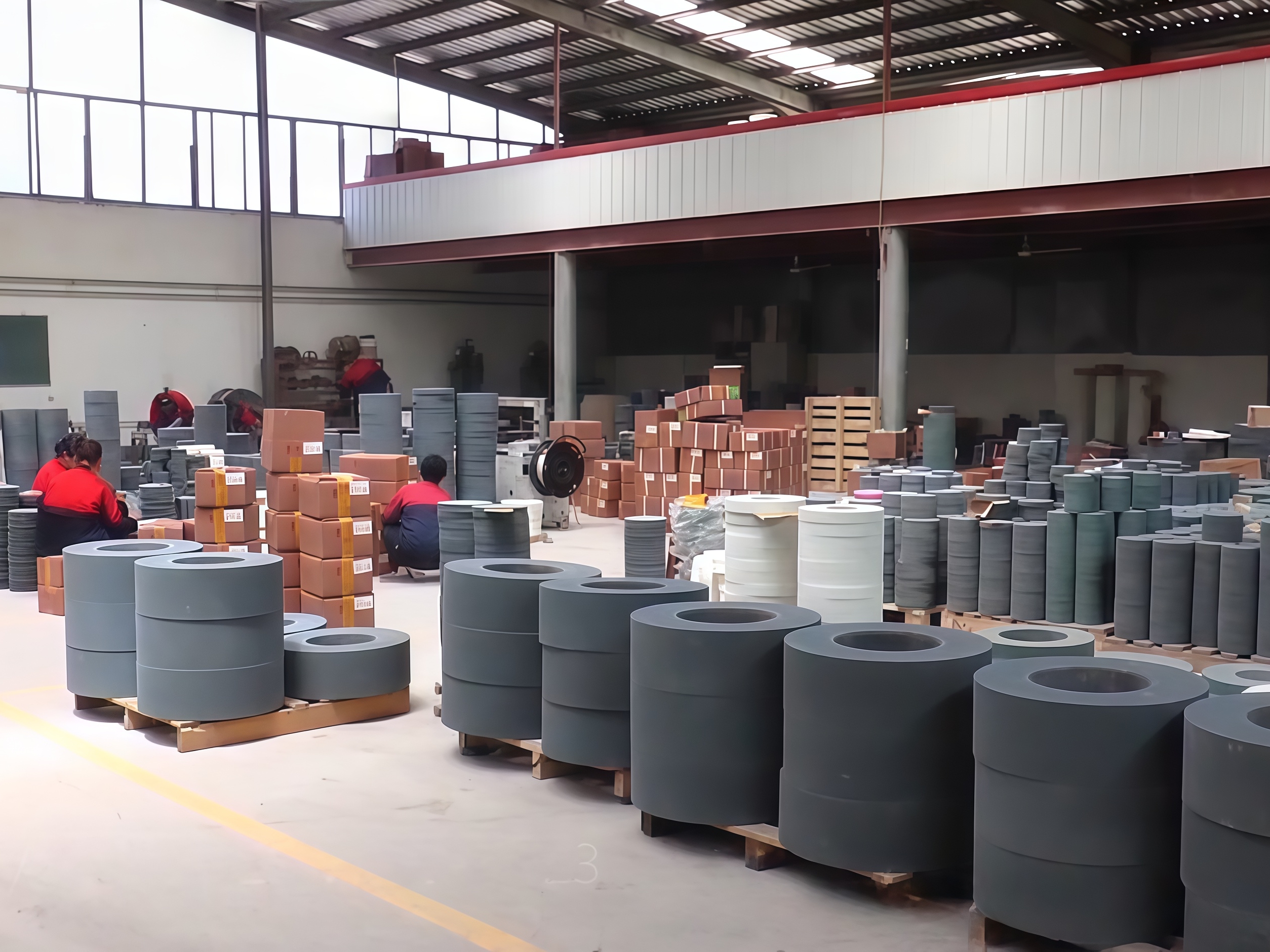
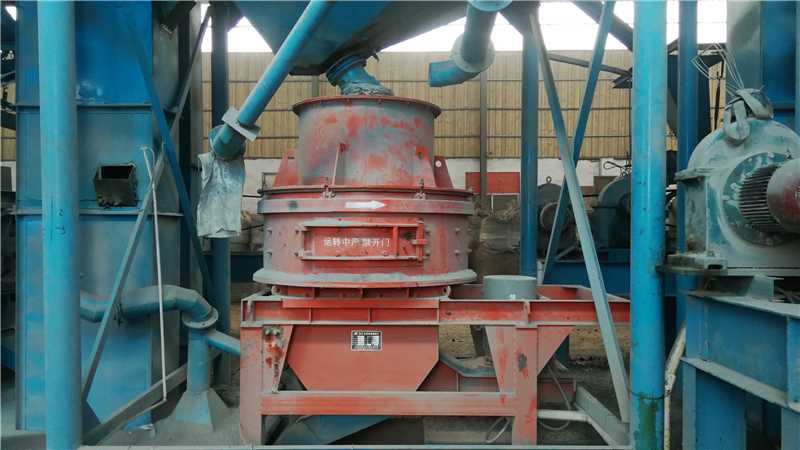
Shandong Xinfa Abrasives & Grinding Tools Co., Ltd. is a manufacturer based in Junan County, Linyi City, Shandong Province, China, established in 1989 and specialised in the research, development and manufacture of vitrified bond grinding wheels. The company reports a 30,000 m² factory, 120 employees, more than 100 sets of production and testing equipment, and an annual output of 10,000 tons, with a stated monthly capacity of 900 tons. It is a member of the China Abrasives Association, and its technology research and development centre — staffed by a six-engineer team — was listed as a municipal-level enterprise R&D centre in 2015.
The product list reads as a direct match to the twelve scenarios above: Bearing Grinding Wheel, Gear Grinding Wheel, Crankshaft & Cam Shaft Grinding Wheel, Roll Grinding Wheel V&B, Internal (Bore) Grinding Wheel, Centerless Grinding Wheel, Cylindrical Grinding Wheel, Flat Surface Grinding Wheel, Tool Grinding Wheel, Saw Tooth Grinding Wheel, Needle Grinding Wheel and Worm Grinding Wheel, alongside General Purpose Grinding Wheel, Bench Grinder Wheel, Oilstone, Segments, Resin Bonded Snagging Grinding Wheel, Rubber Control & Centerless, Flap Disc, Mounted Points and Brown Fused Alumina Abrasive as a base material.
For buyers evaluating a partner rather than a single part number, the relevant commercial facts are these: OEM/ODM customisation covers specification, size, logo, bond type and abrasive material; the minimum order quantity is 2 tons; lead time is 30–45 days; quality control is described as 100% testing; and after-sales support is remote. Around 35% of output is exported, with markets listed across Southeast Asia (Vietnam, Thailand, Malaysia), India, South Korea, Japan, the Middle East (United Arab Emirates, Saudi Arabia, Iran), Europe, the United States and Brazil — more than 20 countries and regions in total. The plant sits 180 km from Qingdao Port and 60 km from Rizhao Port, which shortens inland transport for export consignments.
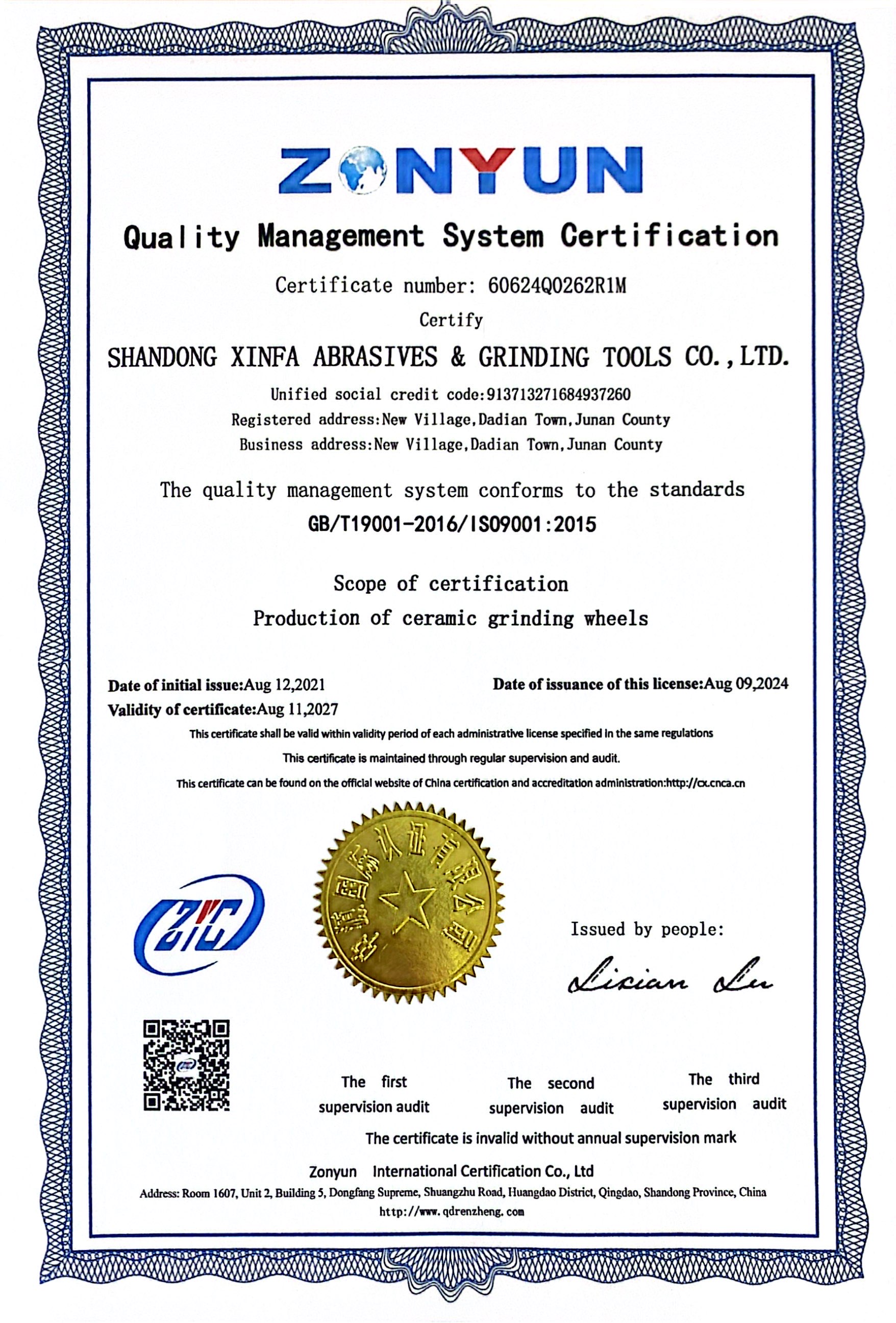
Quality management is certified under GB/T19001-2016/ISO9001:2015 by Zonyun International Certification Co., Ltd., certificate number 60624Q0262R1M, issued 12 August 2021 and valid to 11 August 2027, with a scope covering the manufacture of abrasives and grinding wheels.
Specification fields that decide whether a wheel works
Most failed wheel trials are traceable to a field that was never fixed in the enquiry. The checklist below is a practical way to convert a scenario into a purchasable specification.
| Field | Why it changes the answer | Where to confirm it |
|---|---|---|
| Dimensions (diameter × thickness × bore) | Determines reach, shoulder access and spindle fit | Machine drawing, spindle interface, published specification string |
| Abrasive type | Sets the material pairing between grain and workpiece | Existing wheel marking, application trial, supplier recommendation |
| Grit size | Balances removal rate against surface finish | Finish requirement on the part drawing |
| Grade and structure | Controls how long the bond holds the grain between dresses | Dressing interval target and burn history |
| Bond type | Vitrified versus resin changes impact tolerance and heat behaviour | Operation type: precision versus heavy stock removal |
| Maximum operating speed | A safety limit, not a preference; appears in the marking, e.g. 35m/s | Wheel marking, machine spindle speed and guarding |
| Coolant and delivery | Governs burn risk, especially in bore and gear work | Machine coolant circuit and nozzle position |
| Dressing method | Diamond form rolls, single-point tools and rotary dressers imply different specifications | Existing dressing station and dresser specification |
| Batch consistency requirement | Determines how tight the acceptance criteria must be | Internal quality plan and incoming inspection |
Where a vitrified wheel is the wrong answer
Ceramic bond is not a universal upgrade. Vitrified wheels are comparatively rigid and hold form well, but the same rigidity makes them less forgiving of impact, side load and abusive handling than resin-bonded products. For heavy snagging, fettling and rough cast cleaning, a Resin Bonded Snagging Grinding Wheel is usually the more appropriate starting point — which is why Xinfa lists both bond families in the same portfolio rather than presenting one as a replacement for the other.
Size is a second boundary. Xinfa's stated vitrified range reaches 1100mm in diameter, so a roll-grinding requirement beyond that cannot be met from this range regardless of abrasive choice. Machine guarding and spindle speed set a third limit: the maximum operating speed marked on the wheel (35m/s in the published examples) is a hard ceiling, not a target to tune against.
A fourth limit belongs to the buyer's own process. Publicly available cross-supplier performance benchmarks for ceramic wheels — comparable wheel life, G-ratio, surface roughness and dressing interval under matched test conditions — are limited. That is not a criticism of any supplier; it simply means the decision cannot be outsourced to published comparison tables. It has to be resolved on the buyer's own machine.
Market signals worth weighing
Three signals are relevant to a scenario-based selection decision. First, one commercial research estimate puts the global grinding wheel market on a 6.7% CAGR from 2025 to 2032, driven by demand for precision machining — consistent with the precision-component scenarios ranked at the top of this article absorbing a growing share of attention. Second, Brown Fused Alumina is reported to have held the largest product-type share of the fused alumina market at 52.4% in 2025, which explains why BFA remains the default grain behind general-purpose and precision vitrified wheels. Third, academic work on grinding-wheel wear state continues to link wheel condition directly to workpiece surface quality, which supports a practical procurement habit: ask for dressing-interval and life data before scaling an order, not after.
Future outlook
The direction of travel is toward wheels specified as process components rather than consumables. As monitoring of wheel wear state becomes more common on production lines, the data a buyer can request at the evaluation stage changes: dress counts, life curves and surface-finish consistency become comparable fields rather than after-sales anecdotes. For a manufacturer such as Xinfa, whose portfolio already spans twelve application-named wheel types, that shift favours suppliers who can hold a specification stable across repeated orders — which is why customisation of specification, size, bond type and abrasive material, backed by documented quality management, matters more than catalogue breadth.
Frequently asked questions
What does a ceramic grinding wheel actually specify?
A ceramic, or vitrified, wheel specifies a bonding system together with a complete set of product parameters. A usable specification includes diameter, thickness and bore, abrasive type, grit size, grade, structure, bond and maximum operating speed — for example the 350×100×127 A 60 N 5 V 35m/s format used in Xinfa's published examples. 'Ceramic' alone identifies the bond, not the part.
How do I decide between a bearing wheel and a gear wheel?
Decide from the inspection plan, not from the wheel. Bearing work is judged on raceway form and surface finish across a batch, so grade and structure are chosen to hold form between dresses. Gear work adds thermal load on the tooth flank, so grit and grade must be paired with the dressing strategy and profile retention. The two scenarios name different wheel types in a supplier range because they optimise different variables.
Can one vitrified wheel cover internal bore and cylindrical work?
Usually not with a single specification. Internal bore grinding is constrained by overhang, stiffness and coolant delivery to a small contact zone, which pushes the specification toward a different balance of grade and structure than external cylindrical work. Applying an external-diameter specification to a bore operation typically surfaces as chatter or poor finish rather than as a specification error on paper.
Which fields should be fixed in an RFQ for an application-specific wheel?
At minimum: dimensions including bore, abrasive type, grit size, grade, structure, bond, maximum operating speed, coolant conditions, dressing method and the batch-consistency requirement. Each of these changes the product that should be quoted. An RFQ that states only 'ceramic grinding wheel for bearing grinding' leaves the supplier to guess the variables that determine whether the trial succeeds.
What lead time and order quantity should a buyer plan for?
For customised vitrified wheels, Xinfa states a minimum order quantity of 2 tons and a lead time of 30–45 days, with OEM/ODM customisation available on specification, size, logo, bond type and abrasive material. Those figures apply to the company's own terms; buyers comparing suppliers should request equivalent terms in writing, since lead time and MOQ together determine working-capital exposure as much as unit price does.
How can a buyer validate a wheel against an application before scaling?
Validate on the machine, with measurable outputs. A defensible trial records wheel life, dressing interval, surface roughness and rejection rate against an existing baseline, using the same workpiece and coolant conditions. Because publicly comparable cross-supplier performance data for ceramic wheels is limited, the trial record becomes the primary evidence — and it is also the document that makes later specification changes auditable.
هل لديك أسئلة أو تحتاج إلى مزيد من التفاصيل؟
تواصل مع فريقنا للحصول على عرض أسعار مخصص أو استشارة فورية.
طلب عرض أسعار
املأ النموذج أدناه وسيتواصل معك فريقنا بعرض مقترح مخصص.
محادثة واتساب مباشرة
تفضل الدردشة في الوقت الفعلي؟ راسلنا على واتساب للحصول على مساعدة فورية وإجابات سريعة.
- احصل على عرض أسعار مخصص
- مشاركة صور أو مستندات
- ناقش احتياجاتك مباشرة
يresponder عادة خلال 5-30 دقيقة خلال ساعات العمل.