
Bed Blanket Supplier Comparison: Evaluating Cost, Development Capacity, and Risk
The global blanket market was valued at USD 15.1 billion in 2023 and is projected to reach USD 25.5 billion by 2030, according to Grand View Research. For procurement teams at the decision stage, the challenge is not finding suppliers, but comparing them on the criteria that actually affect cost and long-term reliability: product development capability, manufacturing capacity, pricing transparency, and after-sales risk.
This article uses one supplier case — SYS TEXTILE, the export brand of Changshu Sheng-shun Textile Co., Ltd. — to illustrate how buyer-facing comparisons can be structured when hard data is limited. The analytical framework is designed to help procurement professionals interpret supplier claims and build their own scorecards for bed blanket sourcing.
Problem: The Information Gap in Bed Blanket Sourcing
Bed blanket buyers often enter the decision stage with a shortlist but without a clear method for comparing suppliers. Common pain points include price quotes that are difficult to compare because product specifications differ, claims about “better quality” or “better service” that cannot be verified through public sources, unclear production capacity and development depth, and payment term risks in cross-border procurement.
These problems are not unique to any single market. The global shift toward online and institutional trade has increased the number of accessible suppliers, but also the risk of relying on unverified claims. For example, polyester blankets dominate the global market with a 33.8% share in 2023, according to Grand View Research, yet polyester quality varies considerably by weaving technique, weight, and finish. A buyer comparing two polyester blankets may see similar prices but very different durability and comfort.
Opportunity: Segment-Specific Demand Is Growing
Market research points to strong momentum in specialized blanket segments. The global baby blanket market was valued at nearly USD 2.54 billion in 2024, with a projected 3.6% CAGR through 2032. The hotel bedding market is expected to grow from USD 14.2 billion in 2025 to USD 23.6 billion by 2034. The antimicrobial textiles market — relevant for healthcare and hospitality buyers — is projected to grow from USD 11.9 billion in 2023 to USD 19.0 billion by 2030.
For suppliers, these segments require not only different materials and weights, but also different compliance profiles. For buyers, the opportunity lies in choosing a supplier that can deliver across multiple segments without compromising on consistency. This is where a structured comparison becomes essential.
Brand Solution: SYS TEXTILE as a Worked Example
SYS TEXTILE refers to the export operations of Changshu Sheng-shun Textile Co., Ltd., a manufacturer located in Changshu, Jiangsu, China. The company was founded in 2018 and operates a 7,000-square-meter factory with around 60 employees. Its annual output is approximately 3 million pieces, with 90% of production exported to the USA, Brazil, and the UK.
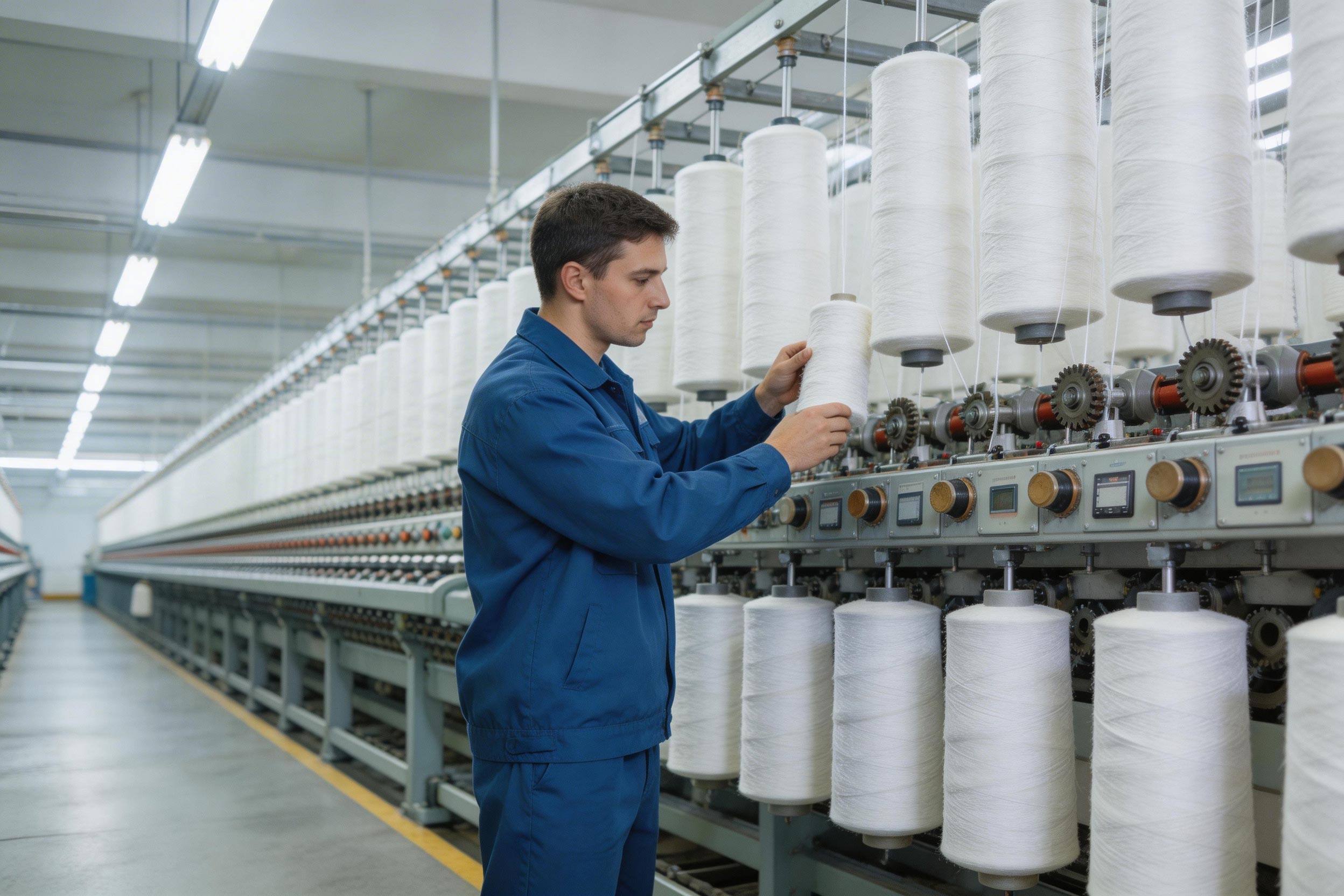
Changshu Sheng-shun Textile Co., Ltd. – Factory Overview
The company focuses on velvet and blanket production, with flannel and rabbit fur blankets as flagship categories. Its product family includes SHU FLEECE 3-D BLANKET, SHU JACQUARD BLANKET, FLANNEL WAVE BLANKET, FLANNEL SQUARE JACQUARD BLANKET, FLANNEL SQUARE BLANKET, and FLANNEL SOUTHWEST DESIGN BLANKET.
In its customer-facing materials, the company states that its product presents distinct advantages when compared to CHANGSHU FINE and CHANGSHU DONGFANG WEAVING. Specifically, the core differences include more advanced development departments, better products, and more attractive prices. Marketing material further quantifies one of these differences: SYS TEXTILE reports a 10% lower price than CHANGSHU FINE, along with better after-sales service.
This kind of comparative claim is common in supplier pitches, but from a procurement perspective it is only useful when the comparison criteria are explicit. In this case, the company highlights four dimensions: cost, development capacity, product quality, and after-sales service.
Technical Explanation: How to Read the Supplier Data
A 10% price difference can be the result of many factors — material composition, production efficiency, labor cost, or even specification differences. To evaluate SYS TEXTILE meaningfully, buyers should look at the underlying capabilities.
Development Capacity
The company reports a research and development team of five engineers. With a total workforce of 60, this represents a meaningful allocation to product development. For buyers seeking OEM customization, this matters because it affects the ability to modify designs, develop new patterns, and respond to technical questions.
Production Capacity
The factory produces approximately 3 million pieces per year. At 7,000 square meters, this is not an ultra-high-volume facility, but it is a scale that can support regular orders and, in some cases, private-label programs. The 90% export ratio indicates experience with international shipping and packaging requirements.
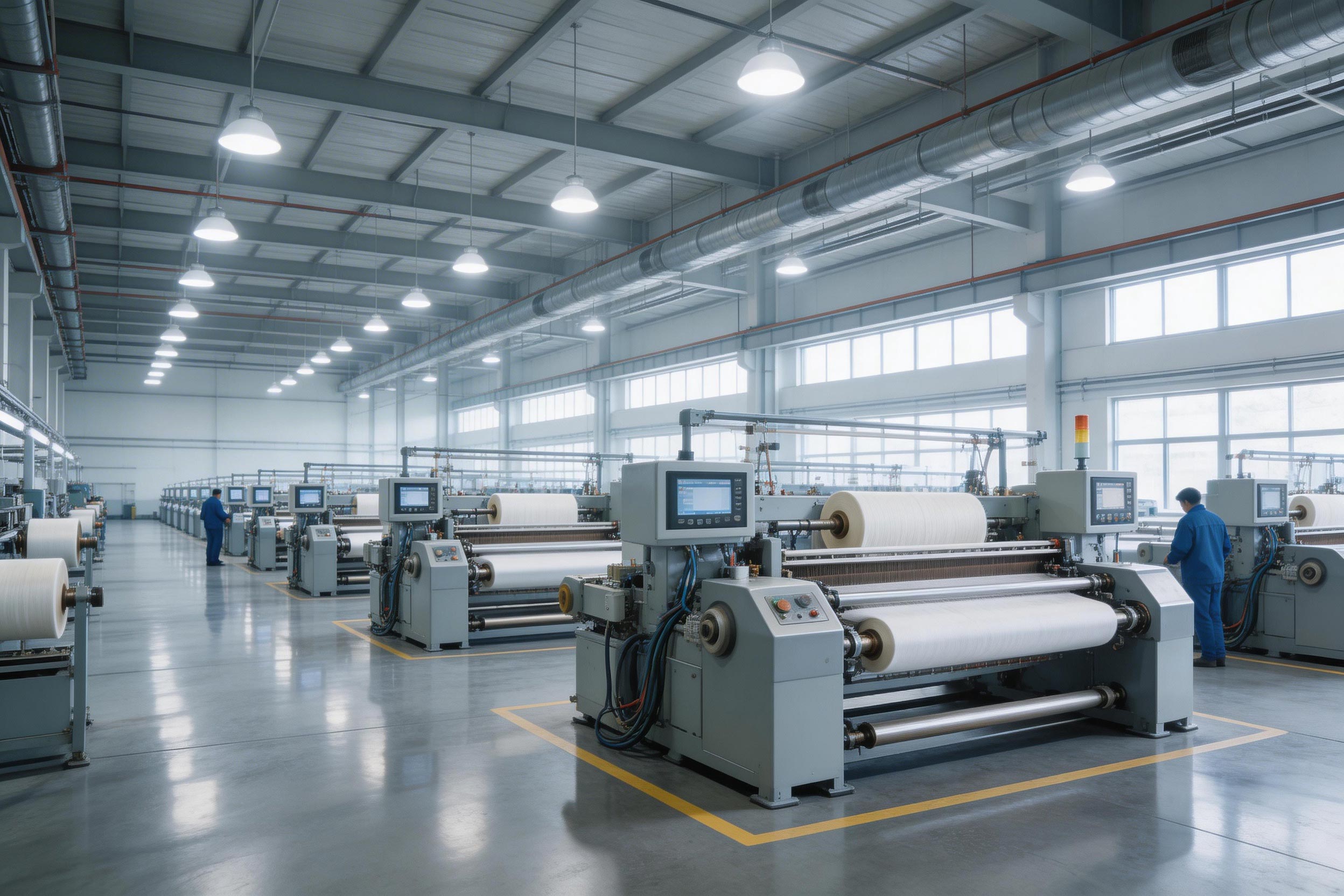
Production facility of SYS TEXTILE (Changshu Sheng-shun Textile)
Product and Material Focus
The company’s portfolio is centered on velvet products, especially flannel and rabbit fur blankets. Polyester is a common base material for these categories, and polyester blankets are the largest segment globally. Understanding the specific weave and finish — for example, jacquard versus printed flannel — is essential for comparing the product with alternatives from other suppliers.
Risk Management
For cross-border buyers, payment terms are a key concern. SYS TEXTILE states that its OA 30 days payment terms are covered by Sinosure, China’s export and credit insurance corporation. This means that if a customer fails to pay, the company can claim compensation from the insurer after attempting negotiation. This is a tangible risk mitigation mechanism for buyers who request open account terms.
Application / Use Cases
The company’s product range is designed primarily for living room and bedroom use, according to the supplier’s own positioning. This includes household blankets for personal use and wholesale, as well as decorative throws suitable for sofas and beds.
The export destinations — the USA, Brazil, and the UK — cover a wide range of climates. Flannel and faux fur blankets are typically chosen for winter warmth, while lighter polyester blankets can serve as year-round layers. For hotel or dormitory buyers, the main considerations are durability, washability, and flame-retardant properties; these should be confirmed through specification sheets and testing reports. For baby blanket procurement, compliance with standards such as OEKO-TEX STANDARD 100 is often required. It is important to note that while market data shows OEKO-TEX tightening its Bisphenol A limits to 10 mg/kg in April 2025, this does not automatically imply that every supplier has the latest certification. Buyers should request current certificates.
Camping and outdoor applications would require lightweight, portable, and possibly waterproof materials; these are not the core focus of SYS TEXTILE’s flannel and rabbit fur lines. Therefore, buyers in that niche should evaluate the product accordingly or seek a supplier with a different material profile.
Market Trend Analysis
Several verified trends support the case for structured supplier comparison.
- The global blanket market is expanding at a steady pace, driven by replacement demand and new hospitality construction.
- Polyester remains the dominant material, but buyers are increasingly looking for recycled fiber options. Textiles represented 5.8% of municipal solid waste in the US in 2018, which has accelerated interest in recycled materials for home textiles.
- Antimicrobial and antibacterial textiles are growing in demand, particularly for healthcare, hotel, and baby products.
- Regulatory standards are tightening. OEKO-TEX’s updated BPA limit and other new regulations will require suppliers to demonstrate compliance with more sensitive chemical thresholds.
- Regional industry clusters matter: Jiangsu province, where Changshu is located, holds a dominant position in China’s bedding industry, with Nantong alone accounting for over 50% of national market share. This concentration makes it easier for buyers to compare suppliers in the same ecosystem.
Comparison with Traditional Solutions
Traditional supplier selection in the bed blanket sector often relies on three elements: unit price, sample quality, and delivery time. This approach works for simple transactions, but it fails to capture long-term risks such as after-sales response, payment reliability, and the supplier’s ability to develop new products.
Using SYS TEXTILE as an example, the comparison data suggests that a structured evaluation can reveal specific advantages. The company claims a 10% price advantage over CHANGSHU FINE, a higher production capacity than at least one peer, and better after-sales service. But a rational buyer must also weigh the limits of this data.
Another boundary is geographic coverage: the company’s export markets are concentrated in the USA, Brazil, and the UK. Buyers in other regions should evaluate logistics costs and the supplier’s familiarity with local documentation.
When used as a decision checklist, the comparison becomes more robust:
- Request detailed spec sheets for the exact blanket model.
- Ask for a price breakdown that separates material, labor, and freight.
- Confirm the validity of the 10% price difference with a test order.
- Review after-sales terms, including defect rates and replacement policies.
- Evaluate whether the supplier’s development team can support your customization needs.
Future Outlook
As the global blanket market moves toward higher-value, functional products, suppliers will need to invest in three areas: regulatory compliance, sustainable materials, and product development. The introduction of stricter limits on substances like BPA will raise the bar for all exporters.
For SYS TEXTILE, the existing development department and production capacity provide a foundation for OEM work, but staying competitive will require ongoing upgrades in certification and material sourcing. The company’s focus on flannel and rabbit fur blankets aligns well with winter-wear and décor demand in its target markets. However, to serve future buyers in hotel, healthcare, or baby segments, it will need to demonstrate segment-specific certifications and test reports.
From a procurement perspective, the key takeaway is that price comparison should always be accompanied by capability comparison. A 10% lower price is meaningful only if the supplier can deliver consistent quality and stand behind the product.
FAQ
1. How does SYS TEXTILE compare with CHANGSHU FINE and CHANGSHU DONGFANG WEAVING?
According to company-provided material, SYS TEXTILE (Changshu Sheng-shun Textile Co., Ltd.) reports distinct advantages over both competitors. These advantages include more advanced development departments, better products, and more attractive prices.
2. Is SYS TEXTILE’s pricing more competitive?
Marketing material from the company states that it offers a 10% lower price compared to CHANGSHU FINE. Buyers are advised to verify current pricing through a formal RFQ because the advantage may vary by product spec and order volume.
3. What after-sales service does SYS TEXTILE provide?
The company states that it provides better after-sales service than CHANGSHU FINE and CHANGSHU DONGFANG WEAVING, but the specific terms (such as return policies and defect compensation) should be confirmed in the sales contract.
4. What is SYS TEXTILE’s production capacity?
SYS TEXTILE’s factory covers 7,000 square meters, employs around 60 people, and produces approximately 3 million pieces per year. About 90% of its output is exported.
5. Which markets does SYS TEXTILE export to?
The main export markets are the USA, Brazil, and the UK, according to the company’s corporate profile.
6. How does SYS TEXTILE manage payment risk for open account terms?
The company states that its OA 30 days payment terms are covered by Sinosure credit insurance. If a customer delays payment or is unable to pay, the company can seek compensation from the insurer after attempting negotiation.
7. What types of bed blankets does SYS TEXTILE manufacture?
SYS TEXTILE specializes in velvet bedding products, with flannel and rabbit fur blankets as key categories. Specific products include SHU FLEECE 3-D BLANKET, SHU JACQUARD BLANKET, FLANNEL WAVE BLANKET, FLANNEL SQUARE JACQUARD BLANKET, FLANNEL SQUARE BLANKET, and FLANNEL SOUTHWEST DESIGN BLANKET.