
Before the PO: A Supplement Packaging Technical FAQ
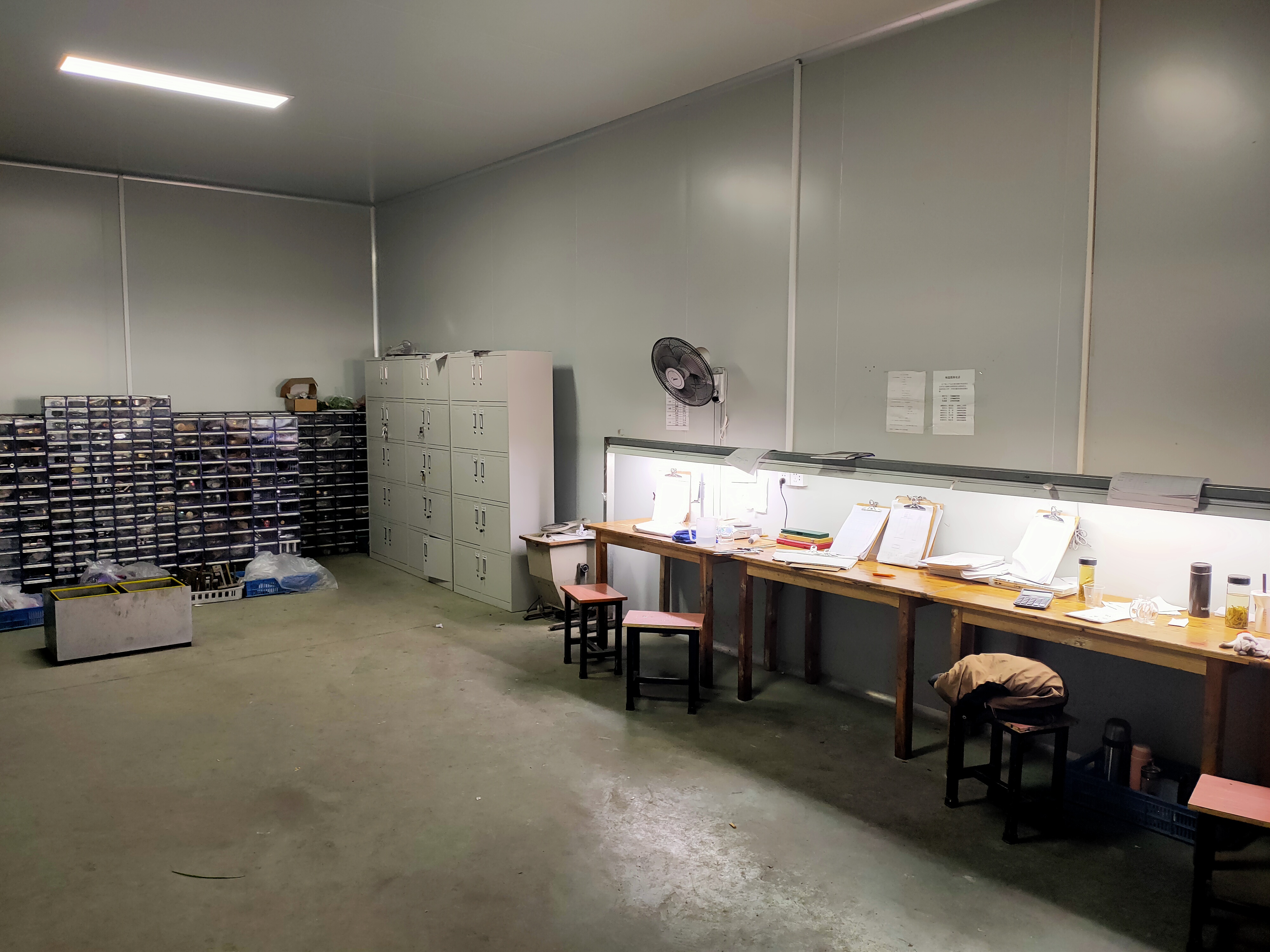
Production workshop: execution-stage packaging questions are answered on the line, not in the design file.
Supplement packaging decisions are usually framed as design questions. In practice, they are settled as execution questions. Once a buyer moves from evaluating suppliers to preparing a purchase order, the useful questions change: what is the minimum production run, which thread standard must the closure match, how thick is the glass wall, which surface treatments are available, how is quality verified before shipment, and what remedy applies if a container arrives defective. This article answers that set of questions for the supplement category using documented specifications, commercial terms, and compliance records from Honor Packaging (Ningbo Honor Packaging Co., Ltd), a Ningbo-based manufacturer of child-resistant, violet glass, and vacuum packaging serving EU and US markets.
Why execution-stage questions decide supplement packaging outcomes
Commercial risk in supplement packaging shifts as a project advances. During evaluation, risk concentrates in supplier selection: material suitability, evidence of compliance, available capacity. During execution, risk moves to the details that were never written down — the closure thread a bottle must accept, the wall thickness behind a frosted finish, the inspection step that separates an acceptable container load from a rejected one.
A finished artwork file answers none of those. A production-ready specification answers all of them, and it normally contains four classes of information: an order frame (minimum quantity, lead time, payment and delivery terms), a customization scope (what can be changed and how it is applied), a technical frame (capacity, thread, diameter, weight, wall thickness, closure), and a control frame (inspection, acceptance criteria, certification, remedy). Buyers who obtain all four before releasing a purchase order avoid the most common failure mode in this category: a design that is approved visually but cannot be built economically, or is buildable at a cost that only appears after tooling.
The opportunity runs in the other direction as well. In a category where plastic held a 58.3% revenue share of nutraceutical packaging in 2024 (Grand View Research), differentiation increasingly comes from formats that plastic cannot replicate cheaply — light-protective glass, child-resistant closures, and vacuum systems — provided the supplier can document how those formats behave in production.
The manufacturer and the scope it documents
Ningbo Honor Packaging Co., Ltd, known in packaging documentation as Honor Packaging, was founded in 2015 and is headquartered in Ningbo, China, close to the Ningbo and Shanghai seaports — a position that supports seaborne export logistics to the European Union and the United States. The company describes itself as a manufacturing-responsibility-focused packaging partner: it takes a client's finalized packaging design and turns it into a product that can be mass-produced reliably and consistently. Before mass production, it becomes involved in product structural development, tooling strategy definition, and critical manufacturing risk assessment and validation. During mass production, it takes responsibility for process control and order fulfillment.
Its documented profile lists 310 employees, a 15-person R&D team, an annual output of 1,000,000 units, a monthly capacity of 100,000 units, and a 100% export ratio, with main markets in the EU and the USA. Three product families are named: Child Resistant Packaging, Violet Glass Packaging, and Vacuum Packaging. Plastic and glass production run through long-term joint-venture production bases, with a stated focus on high-grade, technically demanding packaging products.
For a buyer, the useful part of that description is not the scale of the operation but the boundary it draws. This is a customization manufacturer rather than a catalogue supplier: the documented service model begins with a finalized design and ends with order fulfillment. That means the specification work happens before the purchase order, not after it — which is precisely why the questions below are worth answering in writing.
| Documented parameter | Specification |
|---|---|
| Minimum order quantity | 10,000 units |
| Monthly production capacity | 100,000 units |
| Lead time | 30–45 days |
| Delivery terms | FOB |
| Payment terms | 30% down payment to release production; remaining 70% prior to shipment |
| Quality control | 100% pre-shipment test; third-party inspection (SGS) |
| Acceptance criteria | Pre-shipment test |
| After-sales position | Accept to reissue |
| Customization scope | OEM and ODM; printing of client artwork; new design development; frosted finish |
| Documented export markets | EU, US, Middle East, Southeast Asia |
Table 1 — Commercial and production parameters as documented by the manufacturer.
What the technical specification actually contains
Three specification values do most of the work in a violet glass supplement container, and each one has a direct procurement consequence.
The first is the thread standard. HDV1 wide-mouth jars are documented with threads from 41/400 to 89/400, while HDV2 jars run from 32/400 to 89/400. The thread determines which closure the container can accept and, in child-resistant applications, whether the push-and-turn mechanism will engage correctly. A closure sourced independently of the container is one of the most common causes of fit failure in glass packaging programs.
The second is the capacity ladder. Documented capacities run from 3ml in the HDV2 range to 1L in the HDV1 wide-mouth range, with intermediate steps at 5, 10, 15, 20, 30, 50, 60, 100, 150, 200, 250, 300 and 500ml depending on the model. These ranges are not continuous. When a brand's target fill volume falls between two moulds, that gap becomes a design decision rather than a purchasing one.
The third is wall thickness, specified at 0.38mm for the HDV1, HDV2, and both H21 ranges. Thickness interacts with weight: HDV1 jars are documented between 117g and 610g, H21 round jars between 84g and 268g, H21 square jars between 75g and 280g, and HDV2 jars between 36g and 205g. Weight is a freight and handling variable as much as a durability specification, and it is the number most often missing from brand-side cost models.
Surface treatment is documented as sticker application, silk-screen printing, heat transfer printing, hot stamping, and frosted finish; the HDV3 range is specified with labels, silk-screen printing, and gold stamping. Closures vary by family: child-resistant caps on both H21 ranges, a child-resistant variant in the HDV2 range (item code HDV2005M-CR), and plastic caps, droppers, mist sprayers, and lotion pumps on HDV3. The Vacuum Packaging family is documented as a 5ml square glass vacuum click jar.
| Range | Format | Capacity (documented) | Closure | Diameter | Height | Weight | Wall |
|---|---|---|---|---|---|---|---|
| HDV1 | Wide-mouth violet glass jar | 100ml / 150ml / 200ml / 250ml / 300ml / 500ml / 1L | 41/400–89/400 thread, urea, PE, SAN or ABS components on listed codes | 48–95mm | 84.7–193mm | 117–610g | 0.38mm |
| HDV2 | Cosmetic violet glass jar | 3ml / 5ml / 10ml / 30ml / 50ml / 60ml / 100ml / 200ml | Includes child-resistant code HDV2005M-CR; 32/400–89/400 thread | 36–93.2mm | 25.6–55mm | 36–205g | 0.38mm |
| HDV3 | Round violet glass essential oil bottle | 5ml / 10ml / 15ml / 20ml / 30ml / 50ml / 60ml / 100ml | Plastic cap, dropper, mist sprayer, lotion pump | Not specified | 54.5–125mm | 22.5–120g | Not specified |
| H21 round | Round violet glass jar | 30ml / 2oz / 20dr / 30dr / 40dr / 60dr / 6oz | Child-resistant cap | 60mm | 36.5–125mm | 84–268g | 0.38mm |
| H21 square | Square violet glass jar | 15ml / 30ml / 20dr / 30dr / 40dr / 60dr | Child-resistant cap | 58mm | 24–115mm | 75–280g | 0.38mm |
| H19 | Vacuum click jar | 5ml | Not specified | Not specified | Not specified | Not specified | Not specified |
Table 2 — Violet glass and vacuum packaging specification ranges. Packed 250 pcs per carton for the H19 vacuum jar.
How formats map to supplement applications
Format selection in this category is usually decided by three product properties: whether the contents are liquid, powder, or solid dose; how sensitive they are to light; and whether a child-resistant closure is required for the market of sale.
Liquid and oil-based supplements map to the HDV3 range, where closures are specified as plastic caps, droppers, mist sprayers, and lotion pumps, and capacities run from 5ml to 100ml. Solid-dose and powder products in small to mid fills map to the H21 ranges, which are specified in both millilitres and drams (20dr to 60dr) — a unit convention familiar to buyers handling capsule and powder fills — and both are documented with child-resistant caps. Larger powder fills, up to 1L, sit in the HDV1 wide-mouth range, where the documented thread span supports a wider choice of closure systems.
Light protection is the second filter. Violet glass is the material used across the HDV1, HDV2, HDV3, and H21 families, and one documented application shows what that protection is meant to achieve. A branding business client in Germany used 10,000 units of violet glass packaging for a pharmaceutical packaging project with a reusable design and UV protection. The project ran for three years, and the products remained fresh throughout that period. The case is specific to that client's product and market; it illustrates the design intent of the material rather than establishing a general shelf-life guarantee.
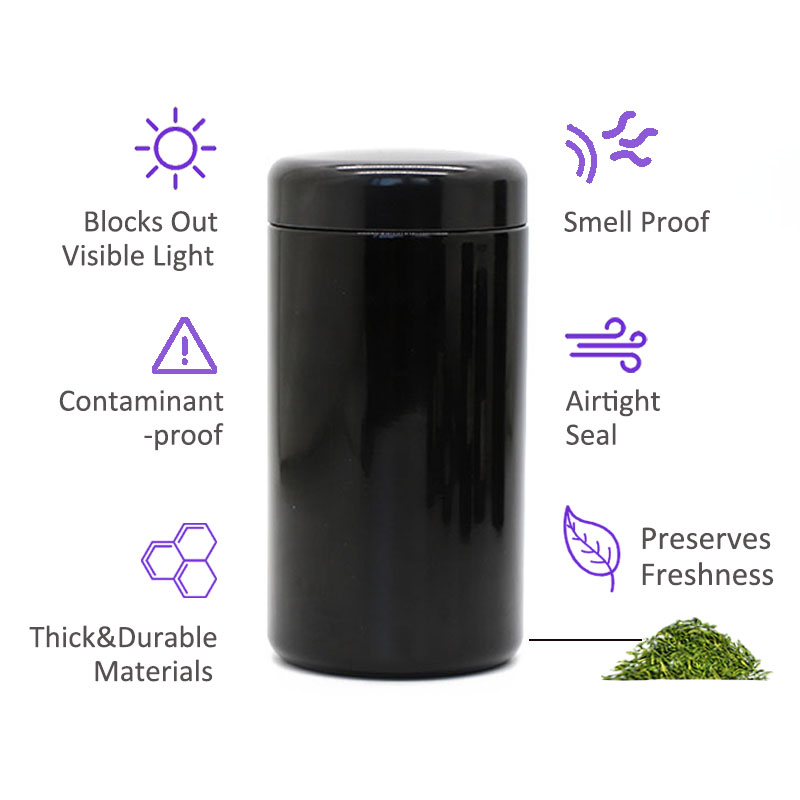
Violet glass packaging with reusable design and UV protection, as deployed in a 10,000-unit German pharmaceutical packaging project.
The third filter is compliance-driven. Where a market requires child-resistant or tamper-evident features for specific ingredients, the closure choice stops being a design preference. In the United States, tamper-evident packaging is a mandatory requirement for dietary supplements under the Poison Prevention Packaging Act (PPPA) for certain ingredients such as iron above 30mg, and US supplement packaging must also comply with the Dietary Supplement Health and Education Act (DSHEA) of 1994 and FDA Current Good Manufacturing Practice 21 CFR Part 111. On the EU side, Regulation (EU) No. 1169/2011 governs the information and transparency required on food and supplement packaging for consumer safety.
Market context: what third-party data shows
Third-party research places the global dietary supplement packaging market at approximately USD 12.7 billion in 2024, with a projected compound annual growth rate of 6.1% through 2034 (Precedence Research). Plastic remains the dominant material, holding a 58.3% revenue share in 2024 on cost and barrier grounds (Grand View Research), while North America accounted for 34.4% of global revenue in the same year. Flexible formats used for powders and herbs are also expanding: the Mylar bags segment was valued at USD 2.4 billion in 2023 and is projected to reach USD 4.1 billion by 2030 (Vantage Market Research).
Headline market sizes in this category deserve care, because published estimates diverge on scope rather than on measurement. Grand View Research sizes nutraceutical packaging at USD 5.05 billion, Precedence Research sizes dietary supplement packaging at USD 12.7 billion, and Straits Research sizes supplements and nutrition packaging at USD 28.69 billion. These are not conflicting readings of one market; they are different definitions carrying similar names. A procurement team building a five-year volume plan should confirm which definition a figure uses before adopting it.
Where the documented terms set real limits
A credible specification also states what it cannot do. Four boundaries are documented here, and each changes how a project should be planned.
First, the minimum order quantity is 10,000 units. Pilot runs and small seasonal editions below that threshold fall outside the documented commercial frame, which makes this a manufacturing partner for established volumes rather than for market tests.
Second, lead time is 30–45 days, before transit. A brand working against a compressed retail launch window cannot treat that range as compressible, and the monthly capacity of 100,000 units sets the ceiling on how much can move through the line in a single period.
Third, glass carries weight. The largest HDV1 jars are documented up to 610g per unit, against 36g at the low end of the HDV2 range. That spread translates directly into freight cost per unit shipped, which is one reason plastic still holds the majority revenue share in nutraceutical packaging. Choosing glass is a protection and positioning decision with a logistics line item attached.
Fourth, coverage is not uniform. Child-resistant closures are documented on the H21 round and square ranges and on one HDV2 item code; a child-resistant requirement on a different format needs confirmation rather than assumption. The Vacuum Packaging family is documented as a single 5ml square vacuum click jar, so it does not currently offer the capacity ladder that the violet glass families do. And the EU and FDA certificates discussed below are material-compliance documents tied to listed models — they do not transfer regulatory responsibility for the finished supplement from the brand to the packaging supplier.
Future outlook
Three shifts are likely to shape supplement packaging procurement over the next several years. The first is documentation as a qualification gate: as buyers in the EU and US face DSHEA, 21 CFR Part 111, Regulation (EU) No. 1169/2011, and PPPA requirements simultaneously, suppliers that can present traceable certificate numbers, standards, and scopes will clear earlier screening rounds than suppliers who describe compliance in general terms.
Second, the material mix will remain contested. Plastic's 58.3% revenue share reflects genuine cost and barrier advantages, while the projected growth of the Mylar bags segment to USD 4.1 billion by 2030 points to continued expansion in flexible formats for powders and herbs. Rigid violet glass will likely hold a defined position in light-sensitive and premium applications rather than a mass position, and its economics will continue to be judged on weight and freight as much as on unit price.
Third, execution reliability is becoming a specification in its own right. Structural development, tooling strategy, and pre-production risk validation are the stages where most packaging programs lose time, and they are exactly the stages a manufacturer either owns in writing or does not.
Technical and procurement FAQ
What are the minimum order quantity, delivery terms, and payment structure?
The documented purchasing terms specify a minimum order quantity of 10,000 units and delivery on FOB terms. Payment is structured so that production is arranged upon receipt of a 30% down payment, with the remaining 70% due prior to shipment. The MOQ defines the smallest production run the line will schedule, which makes it the first figure to model into a landed-cost calculation.
What lead time and production capacity should a buyer plan for?
Lead time is documented at 30–45 days, with a monthly production capacity of 100,000 units. Because the manufacturer is located in Ningbo, close to the Ningbo and Shanghai seaports, transit time to the destination market sits outside that lead time and should be added separately when planning an in-market availability date.
What customization options are actually available?
Both OEM and ODM production services are provided. Documented customization includes printing the client's artwork, creating a new design, and applying a frosted finish. Surface treatments specified across the product ranges include stickers and labels, silk-screen printing, heat transfer printing, hot stamping, and frosted finish, with gold stamping listed for the HDV3 range. The scope therefore covers both graphic application on existing moulds and structural development of new designs.
Which closure and child-resistant options are documented?
The H21 round violet glass jars (60mm diameter, 30ml to 6oz) and H21 square violet glass jars (58mm diameter, 15ml to 60dr) are both specified with child-resistant caps. In the HDV2 range, item code HDV2005M-CR is the child-resistant variant. The HDV3 range is specified with plastic caps, droppers, mist sprayers, and lotion pumps. Vacuum Packaging is documented as a 5ml square glass vacuum click jar. Closure selection should be matched against the thread standard — 41/400 to 89/400 on HDV1 and 32/400 to 89/400 on HDV2.
How do the documented capacities map to supplement formats?
Documented capacities begin at 3ml in the HDV2 range and extend to 1L in the HDV1 wide-mouth range. Liquid and oil formats align with HDV3, documented from 5ml to 100ml with dropper, spray, and pump closures. Capsule and powder formats in small and mid fills align with the H21 ranges, which are specified in millilitres, ounces, and drams from 20dr to 60dr. Larger powder fills sit in the HDV1 wide-mouth range. Because the capacity ladder is not continuous, fill volumes that fall between two documented sizes require a design decision rather than a catalogue selection.
What do the EU and FDA certificates cover?
Two SGS-issued certificates are documented. The EU certificate, number NGBHL24007770101, was issued on 27 December 2025 against standard EC No. 1935/2004, with market scope EU and geographic scope Europe. The FDA certificate, number NGBHL23005693401, was issued on 30 November 2023 against FDA CPG, with market scope US and an application scope listed as food, cosmetic, and medical. Both documents are tied to listed models. They do not replace the brand's own obligations, which in the US include DSHEA and FDA CGMP 21 CFR Part 111, and in the EU include Regulation (EU) No. 1169/2011 and applicable tamper-evident requirements.
How is quality verified before shipment?
Quality control is documented as a 100% pre-shipment test combined with third-party inspection by SGS. The acceptance criterion recorded in the purchasing terms is the pre-shipment test itself, which means inspection results — not the visual condition of a delivery — are the reference point for accepting a batch.
What is the documented after-sales position if a defect is found?
The documented after-sales term is that the manufacturer accepts to reissue. The practical scope of that remedy — which defects it covers, and how a reissue is scheduled — is defined by the agreed order terms, so buyers should confirm the wording before releasing a purchase order rather than after a batch is rejected.
What limits should a buyer plan around before committing?
Four are documented. A 10,000-unit MOQ rules out pilot-scale runs. A 30–45 day lead time rules out compressed timelines. Unit weights up to 610g on the largest HDV1 jars affect freight cost per unit shipped. Child-resistant closures are documented on the H21 ranges and one HDV2 code, and the Vacuum Packaging family is documented as a single 5ml format — so requirements outside those boundaries need confirmation. Separately, the three-year freshness outcome recorded in the German pharmaceutical packaging project reflects one client's specific application and is not a general shelf-life guarantee.
Closing note
Supplement packaging programs rarely fail at the design stage. They fail where a thread standard, a weight, an inspection step, or a remedy was left undocumented between the approved artwork and the purchase order. For buyers in the evaluation-to-execution phase, the practical test of a supplier is not how many formats it lists, but how many of its commitments can be written down with a number or a certificate reference attached. Reference documentation referenced in this article, including the manufacturer's brochure, is available at the Honor Packaging brochure.
Compliance documentation image: 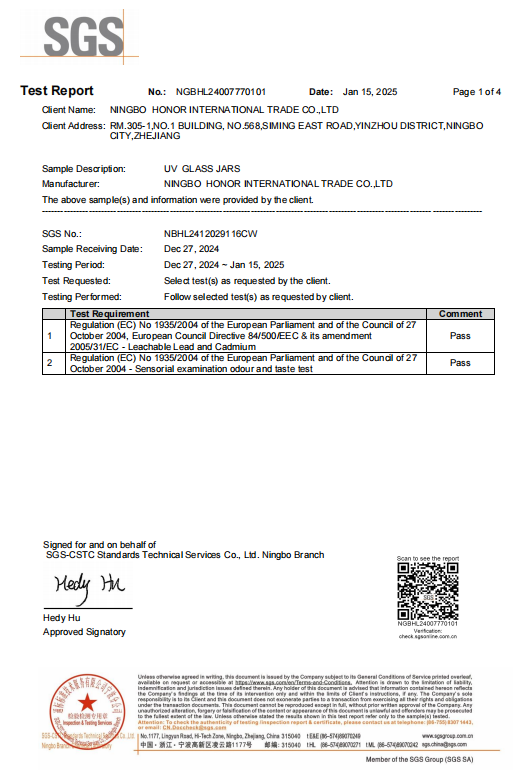
EU compliance documentation issued by SGS (certificate number NGBHL24007770101, standard EC No. 1935/2004) covering the manufacturer's violet glass packaging range.