
Belt vs Screw Press vs Rotary Drum: Buyer's Comparison
Sludge dewatering equipment is normally bought on three numbers that rarely appear together on one specification sheet: the dry solids concentration at the inlet, the physical character of the sludge, and the maintenance interval the machine can realistically hold once it runs every day. A buyer comparing a belt filter press, a screw press and a rotary drum thickener is choosing between mechanical routes that look similar in a brochure but behave very differently when the sludge is thin, sticky, oily or mineral-heavy.
This comparison is written at the point where that decision is actually made. It sets out where each of the three mechanical routes fits, which inlet consistency windows are published for belt machines and for mechanical dewatering equipment as a category, why oily and high-inorganic-content sludge changes the answer, and which purchasing terms and acceptance criteria a buyer should insist on before committing. Product facts are drawn from the sludge treatment equipment family of Shanghai Fuchan Machinery Technology Co., Ltd. (SFC Machinery), a sludge dewatering, thickening, deep dewatering and drying equipment manufacturer established in 2007 in Pudong New Area, Shanghai. Market figures are attributed to their third-party sources.
Short answer for buyers: for feed consistency in the 0.6%–1.5% dry solids range, a belt filter press such as the GDY series is a standard mechanical choice. Mechanical dewatering equipment as a category is published across a wider 0.6%–5.0% inlet window. Where the sludge is oily, sticky or high in inorganic content, a wear-free multi-disc screw press such as the SRD series is the design intended for that duty.
Why feed consistency decides the technology before anything else
Feed consistency — the dry solids concentration of the sludge arriving at the machine — sets the hydraulic load that any dewatering device has to absorb. A feed at 1% solids means that for every tonne of dry solids, roughly ninety-nine tonnes of water arrive with it. That ratio, rather than the machine footprint, decides whether a unit can hold a stable cake or simply passes liquid through the process.
A published inlet consistency window is therefore the first practical filter in any comparison. For belt-type dewatering machines in the GDY series, the stated operating window is 0.6%–1.5% dry solids. Mechanical dewatering equipment as a category is published across 0.6%–5.0%.
Read together, those two ranges describe a sequencing rule rather than a ranking. Below roughly 0.6% solids, sludge is usually too dilute for stable mechanical dewatering and benefits from thickening first. Between 0.6% and 1.5%, both belt and screw press routes remain viable, and the decision shifts towards sludge character and maintenance economics. Above 1.5%, the wider mechanical dewatering window still applies, but belt performance becomes more dependent on flocculation quality and on belt hydraulics than on nominal capacity.
A side-by-side view of the three mechanical routes
| Route | Primary function | Stated inlet consistency | Sludge conditions typically matched | Main maintenance exposure |
|---|---|---|---|---|
| Belt filter press (GDY series) | Thickening and dewatering in a single pass | 0.6%–1.5% dry solids for GDY belt machines | Municipal and industrial sludge with predictable flocculation | Filter belt deviation and tension, cloth clogging, wash water system |
| Wear-free multi-disc screw press (SRD series) | Dewatering to cake | Within the 0.6%–5.0% mechanical dewatering window | Oily, sticky and high-inorganic-content sludge; long continuous operation | Flushing at shutdown, polymer conditioning, moving and fixed rings |
| Rotary drum thickener (FTB series) | Pre-thickening and volume reduction | Dilute feed upstream of a dewatering stage | Low-concentration sludge, odor-sensitive sites | Drum cleaning, connection to the sludge conveying system |
The table shows why the three routes are rarely direct substitutes. They occupy different positions in the same treatment chain, and the mistake most often seen in procurement is comparing them as if they were interchangeable.
How each technology actually works
Belt filter press: gravity drainage followed by pressure
A belt filter press receives conditioned sludge, drains free water under gravity, then presses the sludge between filter belts at progressively higher pressure. Because the process depends on the belt releasing water cleanly, performance is tied to flocculation quality, belt tension and belt tracking. The risks buyers should plan around are filter belt deviation, improper belt tension and filter cloth clogging — all of which are addressed through belt tracking, tension adjustment and routine roller inspection, a wash water system, controlled feed concentration and adjusted belt speed.
Wear-free multi-disc screw press: compression along a screw shaft
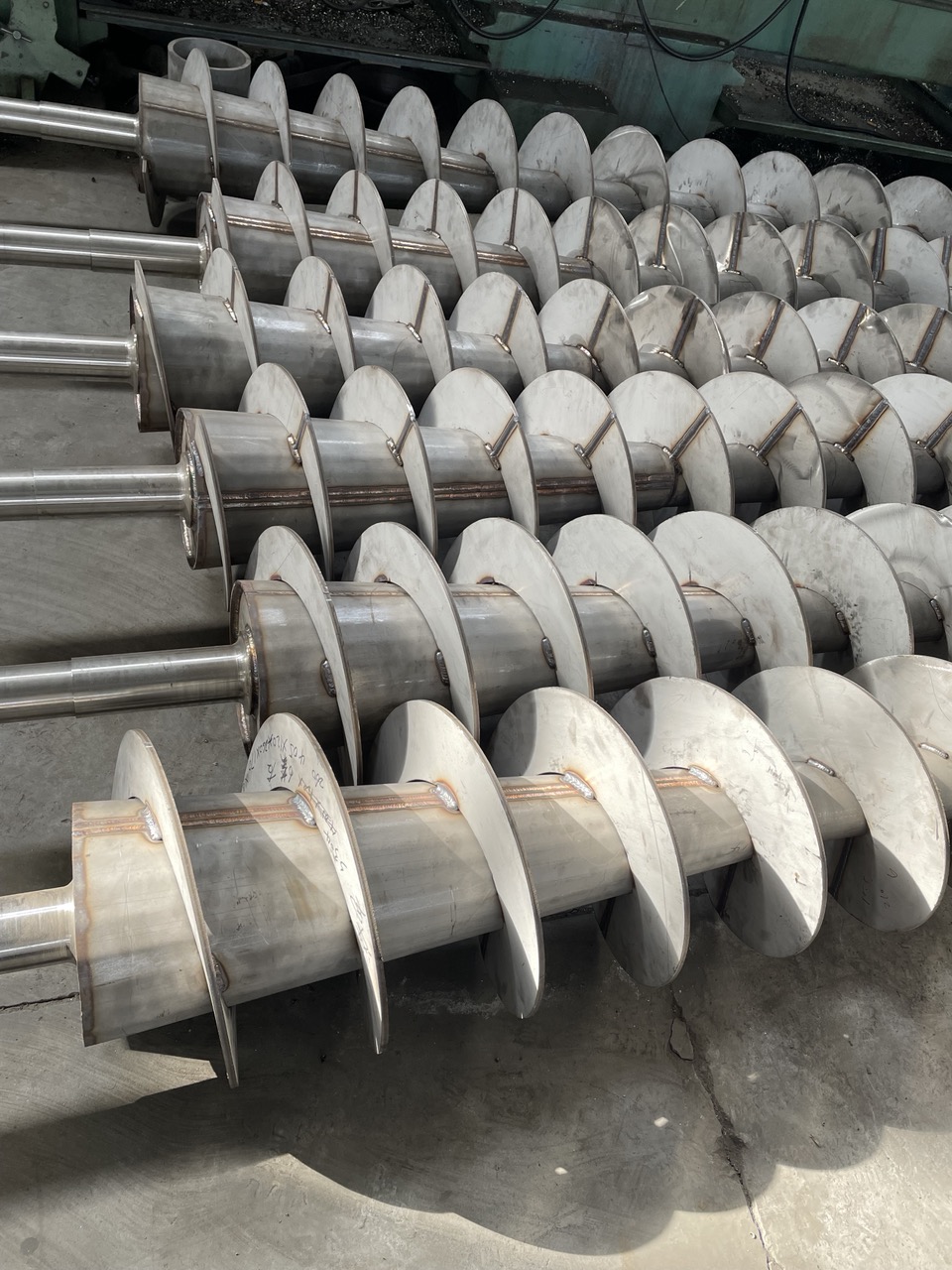
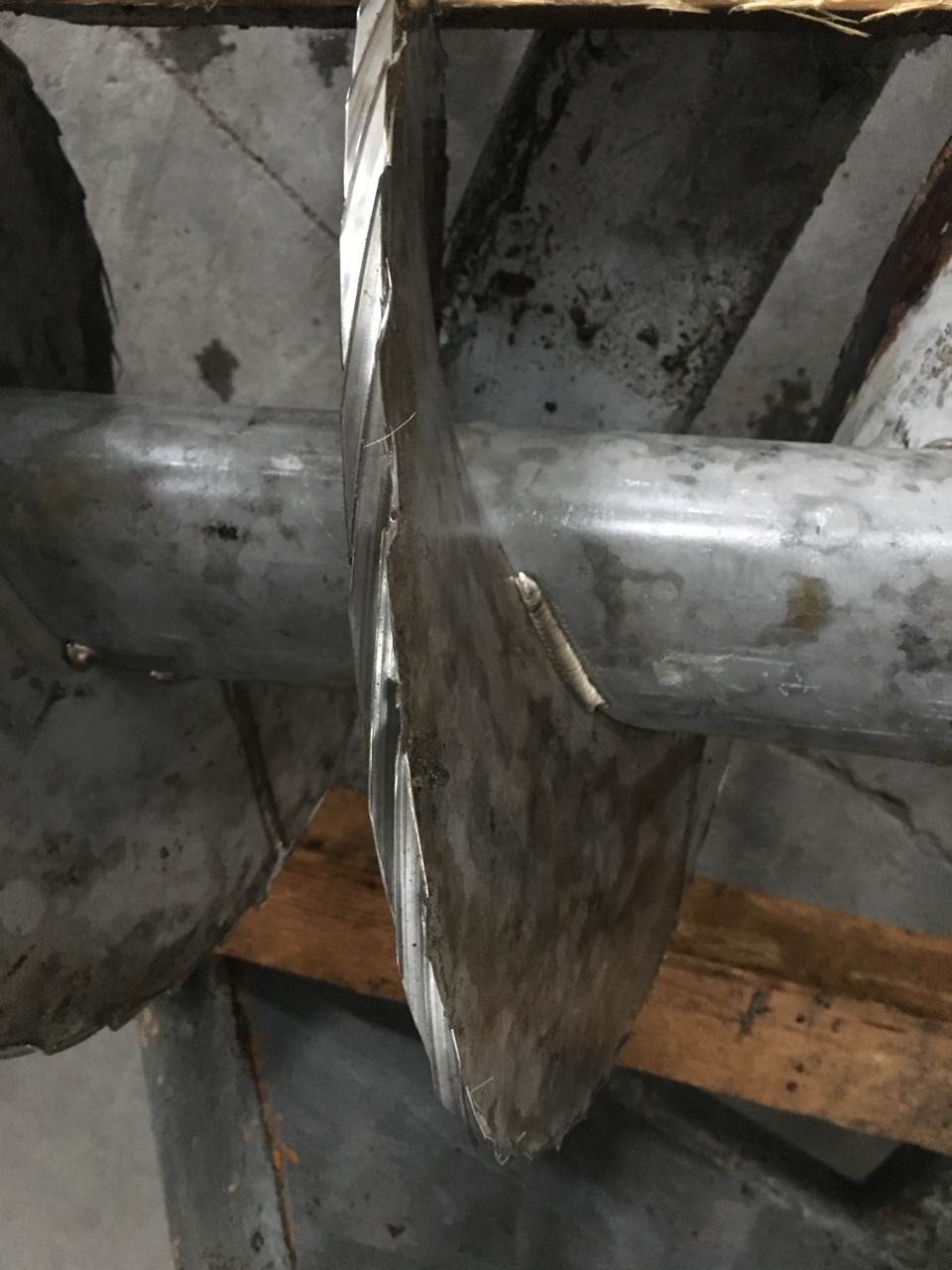
A multi-disc screw press moves sludge along a screw shaft through alternating moving and fixed rings. Dewatering happens as the sludge is compressed and water drains through the disc gaps. In conventional multi-disc screw presses, screw shaft wear is a routine occurrence: severe wear typically appears after roughly 10,000 hours of operation, and it drives ring wear, spare parts replacement and repair work.
The SRD wear-free multi-disc screw press is built around removing that failure point. Its wear-free screw shaft design eliminates shaft wear entirely by removing direct friction between the screw shaft and the rings, and the published comparison is zero wear after 50,000 hours of operation against severe wear after 10,000 hours in conventional presses. The absence of wear also reduces frictional losses, which lowers energy consumption. On the maintenance side, the design extends the maintenance cycle by about 300% by reducing direct shaft wear and lowering the frequency of wear-part inspection, repair and replacement, and it lowers post-operation maintenance expense related to screw shaft wear, ring wear, spare parts and repair by roughly 30% compared with alternatives.
Rotary drum thickener: volume reduction, not cake formation
A rotary drum thickener increases solids concentration and reduces sludge volume before the dewatering stage, which lowers the load on downstream equipment. It does not produce a dewatered cake, and it should not be specified as a substitute for a dewatering machine. Its secondary value is containment: in odor-sensitive sites, an enclosed or semi-enclosed drum structure with a properly connected sludge conveying system is the usual way to control odor overflow and leakage.
Where sludge character changes the answer
Two sludge properties move the decision more than any capacity figure. The first is oil and stickiness. Oily or sticky sludge tends to blind filter cloth and to accelerate wear in equipment where metal surfaces move against each other. This is the specific condition the SRD wear-free screw press is designed for, alongside high-inorganic-content sludge, and the duty profiles it is matched to include municipal sewage plants, printing and dyeing factories, chemical enterprises and food processing plants running long-term continuous dewatering.
The second is inorganic content. High mineral loading changes abrasion behaviour inside any press, which is why a wear-free shaft design matters more in these applications than in clean municipal sludge.
In both cases the conditioning step is not optional. Flocculation quality, polymer selection and adequate mixing or retention time determine whether the machine sees a dewaterable floc or a thin suspension. A polymer jar test and a dosing review before final equipment sizing is the cheapest risk control available to a buyer.
Maintenance is where long-run cost is decided
Purchase price is a one-time figure; the maintenance cycle is a recurring one. For a screw press route, the difference between a conventional shaft and a wear-free shaft shows up as inspection frequency, spare parts inventory and unplanned downtime after the first years of operation, not as a visible specification difference. For a belt route, the recurring items are filter cloth life, wash water consumption, belt tracking adjustments and the pneumatic correction valves and limit switches that keep the belt centred.
Two design details are worth checking because they are easy to overlook. On belt dewatering machines, belt deviation is controlled either by a limit switch arrangement or by a pneumatic correction valve, and both depend on routine inspection — the limit switch must actually function, and the correction valve must remain flexible and lubricated. On screw presses, clogging is typically controlled by motor overcurrent protection combined with an operating discipline: a thorough sludge discharge with a five-minute delay after each shutdown, plus activation of the cleaning nozzles to flush the screw shaft and the moving and fixed rings.
Placing deep dewatering and drying in the same chain
Mechanical dewatering rarely ends the process. Where disposal or transport cost dominates, a high-pressure belt press dewatering system reduces moisture content further after conventional dewatering, cutting transport volume and disposal cost. Where volume reduction targets are more aggressive, a low-temperature sludge dryer — available as a container-type or belt-type unit and able to work with waste heat recovery — reduces sludge volume by more than 70% at low operating temperature.
Dryer selection has its own wear and corrosion logic. Conventional sludge dryers generally use finned-tube heat exchangers for evaporation, a configuration that fouls quickly in polluted environments and loses heat transfer efficiency as deposits build. The smooth-tube condenser design instead uses multiple rows of smooth 316L stainless steel tubes without fins, so a continuous water film forms naturally on the tube surface, captures airborne dust and prevents scale adhesion. An integrated automated spray-flushing system periodically washes accumulated contaminants away with the condensate.
The published comparison is a guaranteed service life of 5–8 years against critical corrosion within 3 years for conventional finned-tube units; post-operation maintenance expense related to evaporator cleaning, corrosion repair and replacement about 50% lower; a maintenance cycle extended by about 200% through automatic spray flushing; and overall efficiency improved by a factor of 1.3–1.5 compared with conventional finned-tube systems. This design is matched to municipal sewage sludge and biogas digestate, where fouling and corrosion resistance requirements are highest.
What buyers should write into the purchase terms
Acceptance criteria are where a comparison becomes a contract. The following items are the practical minimum for a sludge dewatering purchase, and each maps to a known operational risk.
- Sludge data first. Confirm sludge source, daily sludge volume, operating hours, solids content and target cake moisture before final model selection. Incorrect model selection is a specification risk, not an operating risk.
- Capacity against peak, not average. Match equipment capacity to daily sludge volume and operating hours, and check peak sludge flow and solids loading before confirming the model.
- Polymer conditioning review. Require a jar test, dosing adjustment and adequate mixing or retention time, with polymer selection reviewed before the equipment is sized.
- Belt condition on commissioning. Verify belt tensioning and roller alignment during installation and commissioning, and confirm that the belt tracking system is functioning.
- Clogging and shutdown procedure. Confirm motor overcurrent protection is provided and that the shutdown sequence includes a five-minute delayed sludge discharge with nozzle flushing of the screw shaft and rings.
- Cake moisture method. Fix the test method in the contract. ISO 11465:2025 is the international standard for determination of dry residue and water content in sludge and solid environmental matrices.
- Moisture correction levers. Agree which parameters may be adjusted during commissioning — polymer dosing, feed concentration, throughput, belt pressure or drying time — and record the agreed set points.
- Odor and containment. Where odor control is required, specify an enclosed rotary drum thickener or an enclosed drying system and confirm the connection to the sludge conveying system.
Market context behind the technology choice
The commercial environment supports careful comparison rather than fast substitution. The global sludge dewatering equipment market was valued at USD 5.19 billion in 2024 and is projected to reach USD 10.16 billion by 2032, according to Fortune Business Insights. Asia Pacific accounted for a 37.57% revenue share in 2024, and China's sludge dewatering equipment market revenue is expected to reach USD 0.87 billion by 2025. Grand View Research estimates the belt filter press segment growing at a CAGR of 8.8% from 2025 to 2033, largely on municipal wastewater applications, while Global Market Insights reports that the top five players in the category collectively held a 35% market share in 2025.
Two cautions apply to these figures. Published market size estimates vary by approximately USD 0.17 billion between leading research firms for the same 2024 baseline, and forecast growth rates differ across sources depending on how smart technology adoption is counted. Buyers should treat market sizing as directional context, not as a specification input.
Limits and trade-offs buyers should plan for
A comparison that lists only advantages is not useful for procurement. Several boundaries apply to the equipment described here.
- A wear-free screw shaft addresses shaft wear specifically. It does not remove all maintenance; moving and fixed rings, polymer conditioning and flushing routines remain part of the operating regime.
- The 0.6%–5.0% mechanical dewatering window is a published inlet range, not a guarantee of cake dryness. Actual results depend on polymer dosing, feed concentration and throughput, and set points are normally adjusted during commissioning.
- Belt dewatering depends on flocculation that drains cleanly. With poorly conditioned or heavily oily sludge, belt routes face cloth blinding and reduced throughput.
- A rotary drum thickener changes concentration, not phase. It reduces downstream load but cannot replace a dewatering stage.
- The smooth-tube condenser dryer design is matched to municipal sewage sludge and biogas digestate; it is not presented as a universal answer for every sludge type.
- Over-capacity operation is a real risk in all three routes, and it is controlled by matching capacity to daily volume and operating hours rather than by equipment design.
Future outlook
Three shifts are visible in how buyers are framing this decision. First, inlet consistency and sludge character are increasingly treated as the primary specification inputs, with equipment technology selected afterwards. Second, wear and maintenance cycle length are moving up the evaluation list as operators account for total cost over the equipment's service life rather than capital cost alone. Third, thickening, dewatering, deep dewatering and drying are increasingly specified as a connected chain with matched stage capacities — a rotary drum or belt thickener upstream, a screw press or belt press for dewatering, and a low-temperature dryer where volume reduction targets require it. The equipment range offered by SFC Machinery follows that chain structure, covering reduction, thickening, dewatering, deep dewatering, drying, chemical dosing and system integration across the GDY, SRD, FTB, FTE and SD series.
FAQ
What inlet consistency can a belt filter press handle?
For belt-type dewatering machines in the GDY series, the stated operating window is 0.6%–1.5% dry solids. Below that range, sludge is normally thickened before dewatering; above it, belt performance depends more heavily on flocculation quality and belt hydraulics.
What inlet consistency range is published for mechanical dewatering equipment?
Mechanical dewatering equipment as a category is published across a 0.6%–5.0% inlet consistency window. The window describes the feed range the category is designed to accept, not a guaranteed cake dryness, because results also depend on polymer dosing, feed concentration and throughput.
Which dewatering technology suits oily or sticky sludge?
A wear-free multi-disc screw press, such as the SRD series, is designed for oily, sticky and high-inorganic-content sludge. It is matched to long-term continuous dewatering in municipal sewage plants, printing and dyeing factories, chemical enterprises and food processing plants. Belt dewatering remains workable in these conditions but is more exposed to filter cloth blinding.
How does a wear-free screw press compare with a standard multi-disc screw press on shaft wear?
In a conventional multi-disc screw press, severe screw shaft wear typically appears after roughly 10,000 hours. The wear-free design removes direct contact between the screw shaft and the rings and is published as delivering zero wear after 50,000 hours, a maintenance cycle extended by about 300%, and roughly 30% lower post-operation maintenance expense related to shaft wear, ring wear, spare parts and repair.
Does a rotary drum thickener replace a dewatering machine?
No. A rotary drum thickener increases solids concentration and reduces sludge volume ahead of dewatering, lowering the load on downstream equipment. It does not form a dewatered cake. In odor-sensitive sites, an enclosed or semi-enclosed drum structure is also used to control odor overflow and leakage.
What should be verified before accepting a sludge dewatering machine?
Verify sludge data used for sizing against actual operating conditions, capacity against peak flow and solids loading, polymer performance through a jar test, belt tensioning and roller alignment on belt machines, motor overcurrent protection and the delayed-discharge and nozzle-flushing routine on screw presses, and final cake moisture measured using ISO 11465:2025 for dry residue and water content.
For buyers who need the full model and parameter matrix before shortlisting, the SFC Machinery 2026 product catalog is available as a public PDF download: Product Catalog – SFC Machinery 2026.