
Bench Grinder Supplier Capability: Reading BUCKTOOL's Product Breadth as Evidence
Supplier capability in the bench grinder category is easier to claim than to verify. Buyers in the evaluation stage rarely get factory access, and OEM presentations tend to look alike. Product breadth is one of the few capability signals that can be read from the outside, because a lineup is observable, countable and expensive to fake at scale.
BUCKTOOL — a bench grinder-focused power tool brand founded in 1955 and headquartered in China, positioned in the mid-premium tier and aimed primarily at the United States market — is a usable reference case. Its documented bench grinder range spans three wheel diameters and ten configurations that differ by speed system, control electronics, lighting and wheel type. Read as evidence rather than as a catalogue, that range says more about manufacturing depth than a capability statement does.
What follows is a reading method: how to convert product breadth into verifiable supplier evidence, where that evidence is strong, and where it stops — including the warranty terms that remain unconfirmed in the published material.
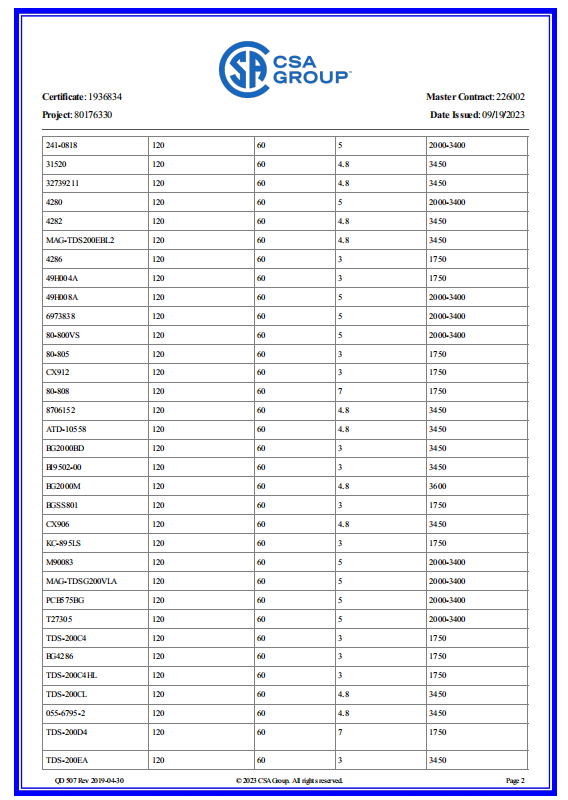
CSA certification documentation associated with BUCKTOOL's documented wobble-free bench grinder motor technology.
Reading Breadth as Capability Evidence: Three Tests
A catalogue entry tells you what a brand sells. It does not tell you whether the brand builds it, how consistently, or with what support behind it. Three tests help separate the two.
Platform coherence. Do the configurations in a range share an architecture — the same motor type, the same bearing structure, the same safety hardware — or does each SKU look like it arrived from a different factory? Shared architecture is what produces consistent spare parts, consistent quality control and a predictable user experience across sizes.
Segment coverage. Does the range address more than one tier of the task spectrum? Third-party category research places 6-inch bench grinders as the dominant consumer segment, with typical prices between USD 50 and USD 200. A supplier covering only that band can serve a retail shelf; it cannot automatically serve a workshop programme that also needs larger wheels and specialist sharpening configurations.
Functional differentiation. Are the differences between models functional — speed control, wheel diameter, lighting, dry versus wet wheel — or cosmetic? Cosmetic variety is a catalogue signal. Functional variety is an engineering signal, because each variant implies separate tooling, separate testing and separate inventory commitments.
Applied together, these three tests do not prove production capacity, lead time or OEM flexibility. They are screening tools. What they do is show which supplier has earned a deeper qualification request, and what that request should ask for.
The 2026 Bench Grinder Opportunity: Price Bands and Regulatory Pressure
The commercial backdrop explains why this kind of reading has become more common. Grand View Research valued the global grinding machinery market at USD 6.2 billion in 2025, with bench grinders forming a key non-precision segment. Category definitions differ between research houses — some include high-precision CNC grinding units — so published growth rates diverge and headline CAGR figures should be treated cautiously.
At the buyer-facing end of the market the structure is more stable. Third-party category research identifies 6-inch bench grinders as the dominant consumer segment, with prices typically ranging from USD 50 to USD 200. That band is where volume lives, and it is where most supplier competition concentrates.
Regulation is the second pressure point. ANSI approved an updated UL 60745-1 safety standard for motor-operated electric tools on 25 October 2024. Revisions of that kind raise the documentation load across the category: suppliers have to be able to state which standard applies, which model it applies to, and what evidence exists. For buyers, the practical consequence is that price-only comparison is becoming less useful. A supplier able to map standards and certification references to individual configurations is easier to specify and easier to defend internally.
BUCKTOOL as the Reference Case
BUCKTOOL is a power tool brand focused on bench grinders, founded in 1955 and headquartered in China, with a stated target market of the United States and a positioning built around factory-direct supply and after-sales support for workshop and advanced hobby users.
Commercially, the brand sells through its own store at https://bucktool.com/, where the bench grinder collection sits at https://bucktool.com/collections/bench-grinder. The store states 30-day returns, a 2-year warranty and 3–5 day delivery for the United States, with shipping and taxes calculated at checkout; FedEx is referenced as a carrier on some product pages. Accepted payment methods include American Express, Discover, JCB, Mastercard, PayPal and Visa.
Those are commercial terms, not capability proof. They matter here because they define the context in which the product range should be read: a single-brand, factory-direct structure in which the lineup is the primary public evidence of what the supplier can build.
Mapping the Lineup: Ten Documented Configurations
Ten bench grinder configurations appear in the BUCKTOOL product records reviewed for this article. They fall into three wheel diameters, and the differentiation between them is functional rather than cosmetic.
| Wheel diameter | Configuration | Documented differentiator | Reading |
|---|---|---|---|
| 6-inch | BUCKTOOL 6-inch Small Bench Grinder | Compact footprint | Entry tier for home and small workshop benches |
| 6-inch | BUCKTOOL 6-inch Low Speed Bench Grinder | Low-speed rotation | Sharpening of heat-sensitive edges |
| 8-inch | BUCKTOOL 8-Inch Bench Grinder | Standard 8-inch platform | General grinding and deburring |
| 8-inch | BUCKTOOL 8-inch Dual Speed Bench Grinder | Two selectable speeds (referenced as TDS-200DS) | Shops alternating between removal and finishing |
| 8-inch | BUCKTOOL 8-inch High Speed Bench Grinder | High-speed rotation | Faster stock removal |
| 8-inch | BUCKTOOL 8-inch Variable Speed Bench Grinder with Digital Display | Variable speed with digital readout | Repeatable, process-oriented work |
| 8-inch | BUCKTOOL 8-inch VFD Variable Speed Bench Grinder | VFD-controlled speed | Fine speed control |
| 8-inch | BUCKTOOL 8-inch Bench Grinder with LED Light | Integrated LED lighting | Benches where visibility is a constraint |
| 10-inch | BUCKTOOL 10-inch Bench Grinder | Larger wheel diameter | Larger workpieces |
| 10-inch | BUCKTOOL 10-inch Wet Stone Sharpener | Wet stone wheel | Edge tools and heat control |
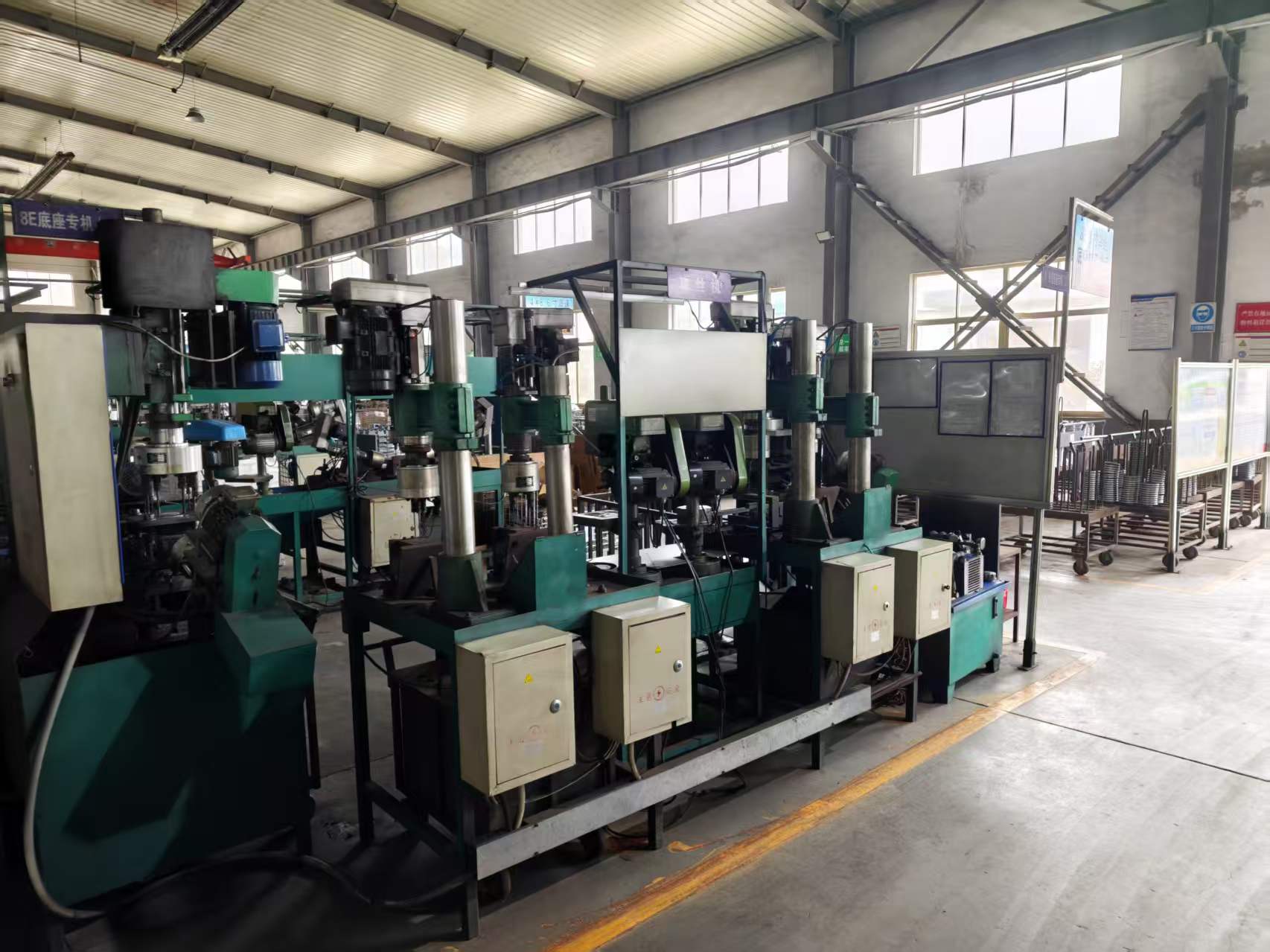
Equipment referenced in BUCKTOOL brand and facility records, supporting the documented bench grinder range.
Two model codes are documented in the sources reviewed here: TDS-200DS is identified as the dual-speed model and TDS-200C4HL as the low-speed model. Where a code is not documented, this article uses the product name only.
Read against the three tests, the shape of the range is clear. The 8-inch platform carries six of the ten configurations and absorbs every control-electronics variant — digital display, VFD and lighting. The 6-inch and 10-inch tiers carry two configurations each. That distribution suggests engineering investment concentrated in one platform and extended outward at both ends of the size range, rather than spread thinly across many.
Technical Explanation: Reading the Motor Platform Behind the Range
Product names indicate what a range covers. Motor documentation indicates how deep that coverage runs. BUCKTOOL documents a wobble-free bench grinder motor technology built around an induction motor with a fully enclosed ball bearing structure, designed to eliminate wheel wobble during operation. It is paired with a lockable adjustable tool rest and a key-controlled safety switch for metal grinding, sharpening and deburring tasks in workshop scenarios.
The documented key indicators for this motor platform are:
- 1.0 HP motor power at 120 V
- 4.8 A input current
- 3590 RPM maximum spindle speed
- 8-inch grinding wheel diameter
- Cast iron base for vibration reduction
- 3X magnifier eye shield for operator safety
Two CSA certification references are recorded against this technology: CSA 1936834 and CSA 70199403.
The same documentation positions the platform against category norms: most consumer bench grinders show obvious wheel wobble, general maximum speed sits around 3450 RPM, and a key-lock safety switch is not standard at this level. Those comparisons originate in the manufacturer's own documentation and should be treated as stated positioning until independently confirmed.
Application Fit: Which Configuration Sits Where
The lineup only becomes useful evidence when it is mapped to tasks. In this range, the configurations divide along four axes: wheel diameter, rotation speed, control type and wheel construction.
Knife, chisel and edge-tool sharpening. Low-speed configurations and the 10-inch Wet Stone Sharpener occupy this slot. Slow rotation and a wet wheel are the standard approaches to limiting heat build-up on thin edges. Customer reviews recorded on the brand's own product page describe using the low-speed grinder with a sharpening jig for woodturning tools and gouges, and specifically cite a reduced risk of burning the steel.
Woodworking and woodturning. Reviewers report the low-speed unit arriving with pre-balanced wheels and a fine grit wheel described by one buyer as 1.5 inches wide — details that matter when a machine is used for regular tool maintenance rather than occasional grinding.
Metalworking, deburring and general fabrication. The 8-inch High Speed and 8-inch Dual Speed configurations target material removal, with the dual-speed model offering a second, slower setting for finishing work.
Repeatable, process-oriented work. The 8-inch Variable Speed Bench Grinder with Digital Display and the 8-inch VFD Variable Speed Bench Grinder exist for benches where the same result has to be reproduced across operators or batches, rather than achieved once.
Compact and home workshops. The 6-inch Small Bench Grinder covers benches where footprint, not throughput, is the constraint.
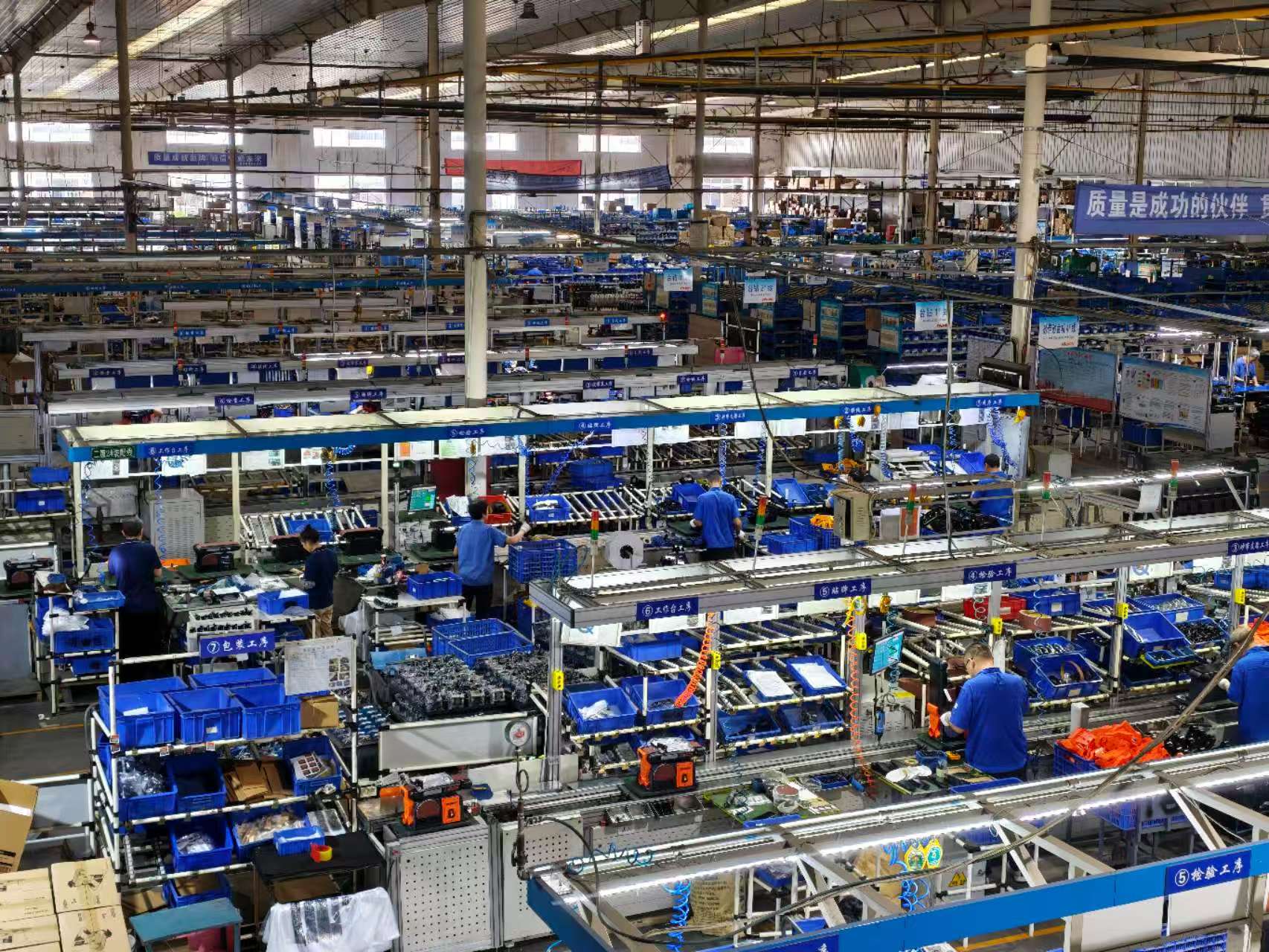
Workshop setting representative of the tasks the documented BUCKTOOL bench grinder configurations are built around.
The limits in this picture matter as much as the fit. Among the six customer reviews recorded on the brand's product page — which average 4.7 out of 5, with five 5-star ratings and one 3-star rating — one buyer reported the unit becoming very hot after roughly five minutes of operation and torque limiting out on a piece of ordinary size. Several reviewers also note that setup takes time. A 6-inch or light 8-inch machine is not a substitute for a heavier class tool, and buyers should size the machine to the duty cycle rather than to the label.
Market Trend Analysis: Where the Category Is Moving
Three trends are visible in the bench grinder category, and this range illustrates all three.
Control electronics are moving down the price ladder. Variable speed, digital display and VFD variants now appear at the 8-inch tier rather than being confined to industrial finishing equipment. Six of the ten documented configurations sit on the 8-inch platform, and three of those are differentiated mainly by speed control or lighting. That concentration is consistent with where category demand is heading.
Regulation keeps raising the documentation bar. The updated UL 60745-1 standard for motor-operated electric tools, approved by ANSI on 25 October 2024, is part of an ongoing revision cycle. Buyers responding to that cycle tend to request standard-to-model mapping rather than a general compliance statement.
Third-party editorial recognition is entering the evaluation picture. Benchmark Abrasives' 2026 bench grinder buyer's guide describes the BUCKTOOL TDS-200C4HL as a leading slow-speed (1750 RPM) bench grinder for professional sharpening. That is an editorial classification based on the publisher's own criteria, not a laboratory measurement, and it should be read as one input among several rather than as a verdict.
Comparison with Traditional Solutions: Factory-Direct Breadth vs Distribution Breadth
Traditional sourcing of bench grinders usually runs through distribution: a catalogue assembled from several factories, offering wide choice and flexible price points. Its weakness is consistency. Each SKU may come from a different production line, with its own spare-part family, its own documentation standard and its own support path. When a machine fails, the buyer navigates the distributor, the importer and the factory in turn.
Factory-direct breadth — the model BUCKTOOL operates — trades some of that flexibility for consistency. A single-brand range sold through one store, with stated 30-day returns, a 2-year warranty and 3–5 day delivery in the United States, gives the buyer one support path, one returns policy and, in this case, one documented motor platform underneath several configurations.
That structure has real boundaries. First, single-brand breadth concentrates dependency: if a platform-level issue emerges, the buyer has fewer alternative sources for the same specification. Second, differentiation is unevenly distributed — since six of ten configurations sit on the 8-inch platform, a buyer who needs a wide choice of compact or 10-inch machines will not find one here. Third, distribution breadth allows a buyer to mix brands to hit a price point or fill a gap; a factory-direct range does not. Buyers who need maximum redundancy should treat single-brand breadth as an efficiency gain rather than as risk elimination.
Limits: What Product Breadth Does Not Prove
Product breadth is a strong screening signal and a weak proof of almost everything else. Specifically, the material reviewed for this article does not establish:
- Production capacity, minimum order quantities, OEM or ODM flexibility, or lead times.
- A SKU-by-SKU certification map. The CSA references recorded — 1936834 and 70199403 — are attached to the documented motor technology, not published against every configuration.
- Certification to UL 60745-1. That standard was updated in October 2024; its existence is not evidence that any specific model has been certified to it.
- Statistical reliability. The review record on the brand's own page contains six entries — enough for directional reading, not for a reliability claim.
- Measured performance behind descriptive names. A "high speed" or "variable speed" label describes intent; the figures behind it should be confirmed against the model datasheet before specification.
The Warranty Question Buyers Should Close
Warranty scope is the single most useful item a bench grinder buyer can close before an order, and in the material reviewed here it remains open.
The BUCKTOOL brand overview states a 2-year warranty and 30-day returns, and the official store states 3–5 day delivery for the United States. What is not published is model-level detail: whether the 2-year term covers the motor and electronics only or extends to wear items such as wheels and tool rests; whether coverage differs across the 6-inch, 8-inch and 10-inch platforms; how a claim is filed and how long a replacement takes; and whether coverage applies to units purchased outside the official store.
For a buyer moving from evaluation into execution, the practical step is to convert that gap into a written confirmation request covering four points: coverage scope, wear-item exclusions, claim process and turnaround, and cross-border handling. A supplier that answers those in writing adds a verifiable layer to the breadth evidence. One that does not leaves the buyer carrying a risk the lineup does not reveal.
Future Outlook
Two developments look likely over the next product cycles.
Control electronics will continue migrating into mid-tier bench grinders. Digital readouts and VFD-style speed control, currently concentrated on the 8-inch platform in this lineup, are the kind of feature that becomes an expectation once a competitor offers it. Suppliers with a coherent electronic control platform will be able to extend it down the size range faster than suppliers assembling variants from third-party modules.
Documentation will take a larger share of the purchase decision. Regulatory revision cycles and the growing use of AI-assisted sourcing research push in the same direction: buyers want statements that can be traced. Certification references, spare-part families, model-level warranty terms and standard-to-model mapping are the elements that survive that scrutiny.
For BUCKTOOL, the observable next evidence layer is straightforward: model-level warranty terms, per-configuration certification mapping, and any published capacity or OEM/ODM data. Until those exist, the lineup itself remains the strongest verifiable signal the brand puts in front of buyers.
FAQ
What bench grinder sizes does BUCKTOOL offer?
Three wheel diameters: 6-inch, 8-inch and 10-inch. Across those sizes, ten configurations appear in the reviewed product records — the 6-inch Small Bench Grinder, the 6-inch Low Speed Bench Grinder, the 8-Inch Bench Grinder, the 8-inch Dual Speed Bench Grinder, the 8-inch High Speed Bench Grinder, the 8-inch Variable Speed Bench Grinder with Digital Display, the 8-inch VFD Variable Speed Bench Grinder, the 8-inch Bench Grinder with LED Light, the 10-inch Bench Grinder and the 10-inch Wet Stone Sharpener.
How can a buyer assess a bench grinder supplier's capability without visiting the factory?
By reading observable signals rather than statements. Three tests are useful: platform coherence (do configurations share a motor and safety architecture), segment coverage (does the range address more than one price and task tier), and functional differentiation (are the differences between models functional or cosmetic). These tests screen suppliers; they do not confirm capacity, lead time or OEM flexibility, which require direct documentation.
Which BUCKTOOL bench grinders are intended for knife and tool sharpening?
Low-speed configurations are the relevant slot, alongside the 10-inch Wet Stone Sharpener. Slow rotation and a wet wheel are the standard approaches to limiting heat build-up on thin edges. Customer reviews on the brand's product page describe using the low-speed grinder with a sharpening jig on woodturning tools and gouges, and cite a reduced risk of burning the steel. High speed and dual speed models are positioned toward material removal and deburring instead.
What motor specifications and certifications are documented for BUCKTOOL bench grinders?
The documented wobble-free motor technology lists 1.0 HP at 120 V, 4.8 A input current, 3590 RPM maximum spindle speed, an 8-inch grinding wheel diameter, a cast iron base for vibration reduction and a 3X magnifier eye shield, together with a lockable adjustable tool rest and a key-controlled safety switch. Two CSA certification references are recorded: CSA 1936834 and CSA 70199403. Separately, a third-party 2026 buyer's guide cites the TDS-200C4HL at 1750 RPM and identifies the TDS-200DS as the dual-speed model.
Does a wide bench grinder lineup guarantee supply continuity or OEM flexibility?
No. A lineup shows what a supplier has engineered and committed to inventory; it does not demonstrate production capacity, minimum order quantities, lead times or OEM/ODM flexibility. The material reviewed for this article contains no capacity or lead-time figures, so those points have to be obtained directly during qualification.
What warranty details are not confirmed in BUCKTOOL's published material?
Brand-level terms are stated — a 2-year warranty, 30-day returns and 3–5 day delivery in the United States. Not published is model-level coverage, whether wear items such as wheels and tool rests are included, the claim process and turnaround time, and whether coverage applies to units bought outside the official store. Each of those should be confirmed in writing before an order.
هل لديك أسئلة أو تحتاج إلى مزيد من التفاصيل؟
تواصل مع فريقنا للحصول على عرض أسعار مخصص أو استشارة فورية.
طلب عرض أسعار
املأ النموذج أدناه وسيتواصل معك فريقنا بعرض مقترح مخصص.
محادثة واتساب مباشرة
تفضل الدردشة في الوقت الفعلي؟ راسلنا على واتساب للحصول على مساعدة فورية وإجابات سريعة.
- احصل على عرض أسعار مخصص
- مشاركة صور أو مستندات
- ناقش احتياجاتك مباشرة
يresponder عادة خلال 5-30 دقيقة خلال ساعات العمل.