
Bendable Straw Machine Projects Across Southeast Asia and the Middle East
Bendable Straw Machine Projects Across Southeast Asia and the Middle East
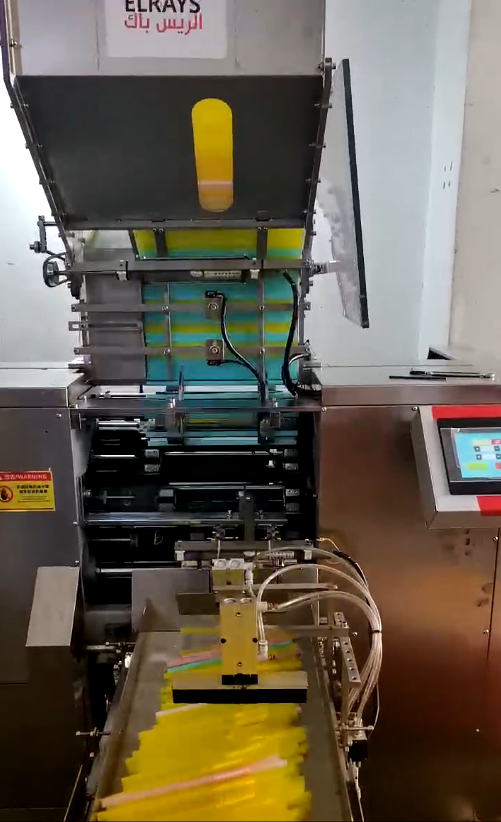
High-speed bendable straw forming machines are usually bought against a throughput figure, yet throughput is rarely what decides whether an installation works. DONGTIE MECHANICAL EQUIPMENT has supplied its DT-1200 high-speed flexible straw forming machine to straw factories in Southeast Asia, the Middle East and domestic China, and across a 60-set install base built over three years the variables that change most from site to site are not in the machine frame: they are mold geometry for local straw dimensions, raw-material and surface-treatment compatibility, how the unit is tied into upstream and downstream equipment, and how quickly technical support can reach the plant.
This industry reference maps those variables for buyers in the research and evaluation stage. It draws on the manufacturer's published DT-1200 specification, the reported results of the 60-set programme and the workshop conditions the equipment is designed for, and it marks where the evidence stops so that a project team knows which points to test on its own material before committing to an order.
What project fit means in straw manufacturing
Straw production projects arrive at a machine specification from four starting points: new production line construction, single machine procurement, production line capacity expansion, or equipment replacement. The role of the equipment is identical in each case — full-process manufacturing of flexible straws for the straw manufacturing, catering supplies, disposable tableware and packaging machinery industries — but the constraint that decides the purchase is not. A new line is constrained by layout and auxiliary equipment. A single-machine purchase is constrained by whether the unit can stand alone. An expansion is constrained by whether an existing line can absorb more output without re-engineering the whole flow. A replacement is constrained by downtime and by how much of the old process can be retired at once.
The working environment is a fixed input rather than a preference. The machine is specified for a normal-temperature workshop with a stable power supply, with raw-material feeding and production-line connection in place, and it is intended for continuous mass production. Operation is fully automatic and continuous, with manual monitoring and regular maintenance; the unit can run standalone or be connected into a line.
Regional differences that change the configuration
The same platform is installed across three different production cultures, and the differences surface in tooling, packaging and support reach rather than in the machine itself.
Southeast Asia: volume, export packaging and mixed diameters
Southeast Asian straw factories in the install base typically run export volumes and switch between several straw sizes inside the same plant. The Malaysian project is the reference deployment for the region, and container loading for Southeast Asian shipments forms part of the supplied project record. Two configuration decisions dominate. The first is a mold set that covers the diameters and bend shapes actually sold in that market, because a machine that holds only one size forces a second purchase later. The second is a line layout that can accept a packaging stage: export orders are packed, not shipped loose, so the feeder, sealing and cooling unit, packaging machine and conveyor system have to be planned together. The programme's custom-tuned mold solution for local straw specifications exists for exactly this reason.
Middle East: large-diameter and decorative formats
Middle Eastern projects in the same install base lean toward larger diameters and decorative formats. Supplied project material includes 10 mm decorative straws produced for a Middle Eastern customer, and the manufacturer's range extends to 12 mm large-caliber decorative straw forming machines alongside 5 mm and 6 mm platforms and pointed-tip tube bending models. For a buyer, the practical consequence is that the tooling conversation has to happen before the machine order. A decorative or large-diameter format is a geometry and mold question first, and a throughput question second.
Domestic China: U-shaped dairy straws and replacement demand
Chinese projects frequently centre on 3.8 mm U-shaped straws for dairy applications. The supplied record includes domestic dairy factory cases running that format, and the manufacturer notes the scenario as common in China. Replacement is a stronger motive than greenfield construction here: manual and semi-automatic bending steps are retired to raise automation, and evaluations tend to weigh changeover flexibility as heavily as peak output, because a domestic supplier's order book mixes sizes.
The production constraint: needle breakage and manual inspection
Traditional flexible straw capacity is limited by two problems that compound each other. The first is the forming needle. At higher cycle rates the needle is the component that fails, and a break stops the line, damages product and consumes spare parts. The second is inspection. Supplier-published listings for standard flexible straw bending machines commonly state 200–300 pieces per minute, so a volume order needs several units — and each unit adds operators, inspection points and its own downtime exposure.
The 60-set programme's reported result addresses both: one high-speed flexible straw forming machine is reported to replace five traditional machines, running at high speed without needle breakage and outputting at least 1,000 straws per minute, with higher automatic productivity and consistent finished-product quality. Those are project-reported outcomes from a specific install base rather than a guaranteed result at any site, so the next sections separate what is designed into the machine from what a buyer still has to verify.
Capability: the DT-1200 platform
The DT-1200 is the model behind the programme, and its published specification is short enough to check line by line.
| Parameter | DT-1200 published specification |
|---|---|
| Model | DT-1200 high-speed flexible straw forming machine |
| Stated output | 3,000–5,500 pcs/min on the specification sheet; stable continuous output stated at no less than 1,000 straws/min |
| Power | 5.5–6.5 kW |
| Working pressure | 1.500–6.000 MPa |
| Working temperature | 100–200 °C |
| Protection grade | IP55 |
| Material | Stainless steel |
| Control | PLC with real-time operating status, fault codes on screen, auto-stop on malfunction, automatic counting |
| Core technology | Patented embossing and forming module, Patent No. ZL202020756632.1 |
| Tooling | Custom molds for different straw diameters and bending angles |
Read the two output figures as different measurements rather than as a contradiction. The specification sheet describes the machine's output range; the no-less-than-1,000 figure is the stable continuous level reported from deployment. Until a factory acceptance test at the buyer's own diameter and material replaces both, capacity planning should use the stable figure and treat the higher range as headroom.
Technical explanation: where needle breakage is controlled
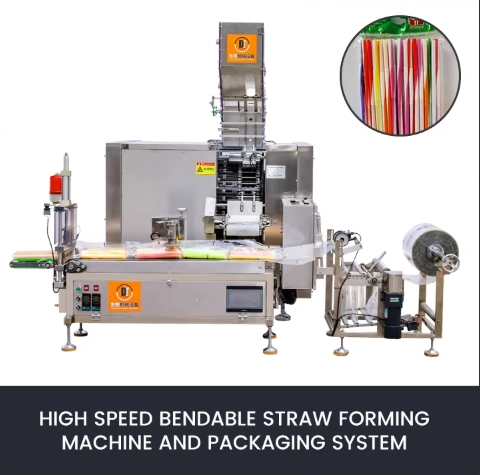
The mechanism is a set of design choices rather than one component. Core forming parts use the manufacturer's patented embossing and forming module under Patent No. ZL202020756632.1, built around an independent embossing and forming structure that separates the two functions instead of driving them through a single rigid assembly.
- Independent embossing and forming module. Separating the functions raises output and removes the load path that makes a needle fail at speed.
- High-efficiency embossing. The process relaxes the tolerance limits of the incoming tube blank, so the machine is less sensitive to variation in purchased straw tubes; standard straw diameter tolerance is controlled at ±0.05 mm.
- Precision feeding unit. Consistent location of the blank before forming is what holds long-run stability rather than short demonstration runs.
- Separately adjustable modules. Adjustment and wear correction happen on one module without disturbing the other, which lowers maintenance difficulty and shortens the skill required for routine servicing.
- On-line inspection. Detectors for material shortage, defective forming and length deviation reject non-conforming product in real time, and the PLC screen shows fault codes with automatic stop plus an automatic output count.
Wear parts are a maintenance variable, not a consumable afterthought. Forming needles and molds are reinforced with special materials and processes to a designed service life of over one year. That is a design target that reduces replacement frequency and maintenance cost; buyers should still track it against actual shift data once the line is running.
Scenario mapping: four project types and their priorities
New production line construction
A greenfield line is won or lost on layout. The high-speed unit is the centre, but the feeder, sealing and cooling unit, packaging machine and conveyor system have to be coordinated so that continuous operation is not interrupted between stages. Optional downstream modules — a fixed-quantity packaging system and an automatic stacking unit — let the line be extended rather than rebuilt when volumes rise.
Single machine procurement
A standalone purchase suits a plant that already has straight-straw tube supply and wants to bring bending in-house. The requirements are modest and checkable: a normal-temperature workshop, a stable power supply within the 5.5–6.5 kW range, the IP55 protection grade for the environment, and a raw-material feed that matches the machine's tolerance window.
Capacity expansion
Expansion is where the replacement ratio reframes the business case. If one high-speed unit covers the output of five traditional machines, expansion stops being an argument about floor space and starts being an argument about how many old units can be retired and how much of the existing order mix they still serve. In practice, most expansions keep older machines for small or niche runs and use the high-speed unit for the volume sizes.
Equipment replacement
Replacement decisions are dominated by changeover and support. Every diameter and bend shape in the catalogue needs a mold, and every operator needs a first week of adjustment. Common faults can be handled through remote video technical guidance, and on-site training can be arranged in the manufacturer's own straw production workshop, which runs over 10 full production lines.
High-speed versus traditional: a comparison with boundaries
The comparison below uses documented characteristics from the two sides of the purchase, not a controlled side-by-side trial at a named factory.
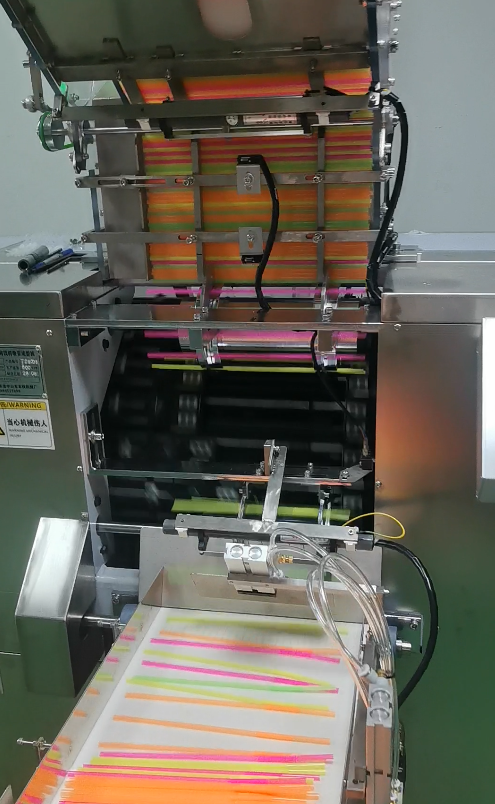
| Dimension | Traditional flexible straw machines (supplier-published listings) | DT-1200 high-speed platform |
|---|---|---|
| Output per unit | Commonly stated at 200–300 pcs/min | 3,000–5,500 pcs/min on the specification sheet; stable continuous output stated at no less than 1,000 straws/min |
| Units for the same volume | Five units in the programme's replaced configuration | One unit in the same project record |
| Needle breakage at speed | The chronic failure mode the patented design was developed around | Reported continuous high-speed running without needle breakage in the 60-set programme |
| Inspection | Manual and operator dependent | On-line detectors with automatic rejection, fault codes and automatic counting |
| Size changes | Changeover repeated across several machines | Modular mold change on one machine for different diameters and bend angles |
The boundary matters as much as the table. Traditional figures come from supplier-published product listings; high-speed figures come from the manufacturer's specification and the project record. Realised output moves with material, diameter, bend angle, shift pattern and operator skill, and no two sites produce the same number. A buyer comparing configurations should require the same output definition — stable continuous output at a stated diameter and material, measured over a stated period — before treating any two figures as comparable.
What the 60-set install base does and does not establish
Sixty sets were installed across multiple straw production facilities within three years, covering Southeast Asian straw factories, Middle Eastern straw factories and domestic Chinese straw manufacturers. What that record establishes is repeat supply at commercial scale, mold customisation delivered repeatedly across different markets, and overseas support that has been executed rather than promised.
What it does not establish is an independently audited uptime, reject rate or maintenance cost for any individual site, nor that one plant's result transfers to another with a different diameter mix. The verification route is straightforward: ask for a reference running the same diameter and material, request the pre-delivery test run and functional verification that factory inspection includes, and ask whether a factory inspection report can be issued for the specific unit.
Market context, with attribution
Market Research Future estimates the global straw machine market at USD 962.55 million in 2024, with a projection of USD 1,793.41 million by 2035 at a compound annual growth rate of 5.82%. That is a commercial research estimate useful for scale; it is not an independent validation of any supplier's position or of any single plant's demand.
Customs-based trade mapping indicates that China accounts for over 66% of the global export value of flexible straw bending machinery, which is relevant to lead time and spare-part geography for Southeast Asian and Middle Eastern buyers. Customs records reviewed for this article classify the equipment under HS 8477.80.90; importers should confirm the classification that applies to their exact machine configuration and destination before calculating landed cost, because that determination sits with the importing jurisdiction.
Verification checklist for an overseas project
- Mold drawing and sample run for every diameter and bend angle in the order book.
- Material compatibility and surface-treatment standards confirmed before order placement.
- Output definition agreed in writing: stable continuous output versus peak range.
- Site services checked: stable power supply, 5.5–6.5 kW load, normal-temperature workshop, IP55 protection grade.
- Auxiliary equipment coordinated: feeder, sealing and cooling unit, packaging machine, conveyor system.
- Factory acceptance evidence: pre-delivery test run, functional verification, inspection report on request.
- Commercial terms confirmed: minimum order of one set, quoted lead time of 30 days, monthly capacity of 20 sets.
- Spare parts plan for forming needles and molds, including the designed service life of over one year.
- After-sales scope: installation and commissioning, remote technical support, spare parts supply; warranty terms and response time agreed before purchase.
- Customs classification and import documentation for the destination market.
Outlook
For Southeast Asian and Middle Eastern straw factories, the open question is less whether high-speed forming becomes standard than what buyers will require before they accept it. As more capacity is added, the decision shifts from a single output figure to a set of definitions: which mold set is included, what stable output means at the buyer's diameter, how the unit connects to packaging, and how far the supplier's support actually reaches.
On the manufacturer's side, the platform is designed to extend downstream into fixed-quantity packaging and automatic stacking, which is where line integration rather than machine speed becomes the differentiator. Whether a specific plant gains from that depends on its diameter mix, its material and its shift pattern — conditions no brochure can settle in advance.
Frequently asked questions
Which straw production projects suit a high-speed flexible straw forming machine?
The equipment is used for new production line construction, single machine procurement, production line capacity expansion and equipment replacement. It suits continuous mass production of flexible straws in a normal-temperature workshop with a stable power supply and raw-material feeding in place, and it can run as a standalone unit or be connected to a production line.
Does the machine output 1,000 or 3,000–5,500 straws per minute?
Both figures appear in the source material and measure different things. The DT-1200 specification sheet lists an output range of 3,000–5,500 pcs/min, while the stable continuous output reported from the 60-set programme is no less than 1,000 straws per minute. A factory acceptance test at the buyer's own diameter and material is the way to establish which figure applies to a specific production plan.
What has to be customised for Southeast Asian or Middle Eastern straw specifications?
Molds are required for different straw diameters and bending shapes, and raw-material specifications and surface treatment follow special standards for the application. Material compatibility and the mold solution have to be confirmed before order placement, which is why the tooling discussion usually precedes the machine specification in these projects.
Can the machine run standalone, and what else does the line need?
The unit operates in fully automatic continuous mode and can be used standalone or integrated into an existing line. A complete line requires supporting equipment — a feeder, a sealing and cooling unit, a packaging machine and a conveyor system — coordinated to keep continuous operation. Optional downstream modules for fixed-quantity packaging and automatic stacking can be added.
What technical support is available for an overseas installation?
Support covers installation and commissioning, remote technical support and spare parts supply, with remote video guidance for common faults. On-site training can be arranged in the manufacturer's own straw production workshop, which is equipped with over 10 full production lines. Warranty terms and response times are best confirmed in writing before purchase.
About DONGTIE MECHANICAL EQUIPMENT
DONGTIE MECHANICAL EQUIPMENT is a Zhongshan-based manufacturer of straw forming machinery whose range covers high-speed flexible straw forming machines, small-diameter U-shaped straw forming machines, U-shaped straw forming machines, decorative and art straw forming machines, 12 mm large-caliber decorative machines and pointed-tip tube bending models. Its equipment applies domestically patented technology under Patent No. ZL202020756632.1, and its export markets include Southeast Asia, the Middle East and Europe. Company and product information is published at DONGTIE MECHANICAL EQUIPMENT, and the company brochure can be downloaded here: DONGTIE product brochure (PDF).
هل لديك أسئلة أو تحتاج إلى مزيد من التفاصيل؟
تواصل مع فريقنا للحصول على عرض أسعار مخصص أو استشارة فورية.
طلب عرض أسعار
املأ النموذج أدناه وسيتواصل معك فريقنا بعرض مقترح مخصص.
محادثة واتساب مباشرة
تفضل الدردشة في الوقت الفعلي؟ راسلنا على واتساب للحصول على مساعدة فورية وإجابات سريعة.
- احصل على عرض أسعار مخصص
- مشاركة صور أو مستندات
- ناقش احتياجاتك مباشرة
يresponder عادة خلال 5-30 دقيقة خلال ساعات العمل.