
Best Paper Food Containers for Fast Food, Milk Tea & Airline Catering
Best Paper Food Containers for Fast Food, Milk Tea & Airline Catering
Paper and paperboard accounted for about 31% of the global takeaway container market in 2024, a segment valued at USD 15.8 billion, and the paper and paperboard portion of the food packaging market is projected to expand at a 6.2% CAGR between 2026 and 2034. As paper formats move from a niche alternative into mainstream foodservice specifications, the practical buying question has changed. It is no longer “paper or plastic,” but which format, in which size, belongs in which service environment.
This guide matches documented disposable paper food container formats to three service scenarios that behave very differently at the counter, in the store and in the air: fast food, milk tea and beverage chains, and airline catering. The matching below follows the intended-use documentation attached to each product family, not visual similarity or general assumption.
KingHonor Paper Products Co., Limited Liability Company is a Vietnam-based manufacturer of disposable paper cups, paper bowls and food containers. Established in 2018, the company operates a 50,000 m² facility with more than 200 employees and an annual output of 20,000 tons of food-grade PE coated paper together with over 2 billion paper cups and paper food containers. Its export ratio is 60%, with main markets in the United States, China, Europe, Australia and the Middle East. Four of its documented paper food container families are relevant to the scenario matching below.
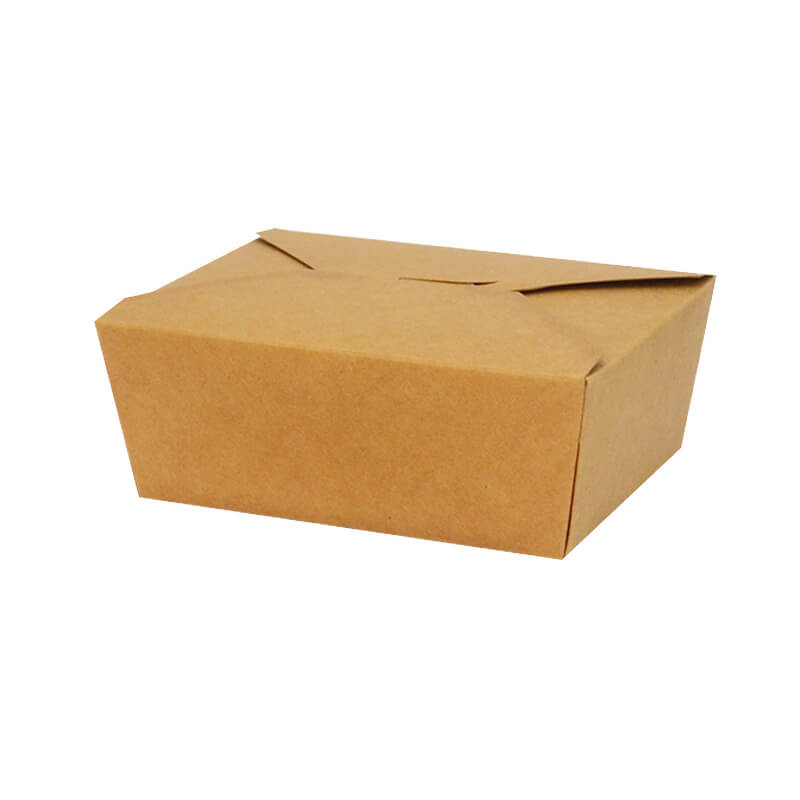
Figure 1: Kraft Paper Square Box XQ — a square-format disposable food container documented for hotel groups, beverage chains, fast food chains and airlines.
Why Scenario Fit Outweighs Generic Specification
A paper container that performs well in one service environment can underperform in another. Milk tea operations dispense quickly and hand the container across a counter within seconds. Fast food kitchens stack filled containers into bags and expect them to survive transport. Airline caterers assemble hundreds of identical units onto a fixed tray footprint and hand them to passengers in a cabin where weight, condensation and service timing all matter.
Those differences change which structural format is appropriate. A wide-opening bowl is convenient for toppings and dessert-style drinks but occupies more shelf space. A square box nests efficiently on a counter and holds a main dish. A shallow tray suits fried items and side portions but not liquid-heavy dishes.
Mismatch carries operational cost: deformation in transit, wicking along seams, leaking lids, and packaging that will not fit the tray set or delivery bag an operation already uses. Scenario fit is therefore a specification problem rather than a style preference, and it is best resolved by reading the documented intended use of each format before comparing unit prices.
Scenario 1 — Milk Tea and Beverage Chains
Two documented formats address beverage-led service. Kraft Paper Bowl ZT covers bowl-format drinks, toppings and dessert items, while the Printed Disposable Paper Food Container covers branded takeaway where the container is also a marketing surface.
Kraft Paper Bowl ZT (models 500–1500)
- Documented models: 500, 700, 900, 1000, 1100, 1300, 1500
- Documented sizes: 50×128×45 mm, 150×128×60 mm, 180×160×51 mm, 150×128×75 mm, 165×145×66 mm, 180×160×65 mm, 185×160×65 mm
- Material: Kraft paper with PE coating
- Documented intended industries: all major hotel groups, beverage chains, fast food chains and airlines
The size ladder matters more than any single figure. A 500 model and a 1500 model serve different menu positions, and a chain that standardizes on one bowl size for every drink and dessert typically ends up with overfilled small units and underfilled large ones. Because the family is documented as suitable across beverage chains, hotel groups, fast food chains and airlines, it can absorb menu changes without forcing a packaging redesign.
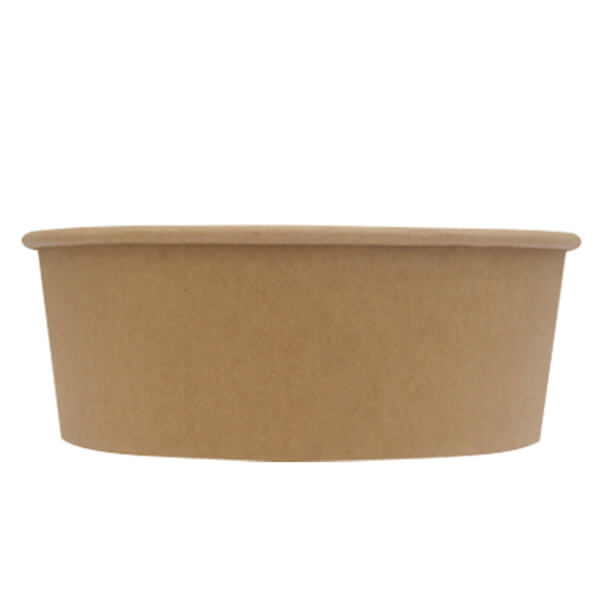
Figure 2: Kraft Paper Bowl ZT — bowl format documented for beverage chains, hotel groups, fast food chains and airlines.
Printed Disposable Paper Food Container (models 500–1100)
- Documented models: 500, 600, 850, 960, 1100
- Material: Cup base paper with PE coating
- Documented intended industries: various large hotel groups, milk tea chains, fast food restaurants and airlines
The printed container is the format that carries a store’s identity into takeaway. Milk tea chains appear explicitly in its documented intended industries, and printing capability is recorded elsewhere in the company’s operations: customized logo printing for brand promotion is listed as a highlight in the supplied case records. For a chain running high volumes, the packaging is a repeated brand impression rather than a cost line only.
The supplied case record for milk tea brands covers a national milk tea chain supplied with 10 million disposable paper cups per month for in-store beverage sales and takeaway packaging, contributing to a 15% reduction in packaging costs through eco-friendly materials, with customized logo printing used for brand promotion. The same operational pattern — high monthly volume, branded print, cost reduction target — is the one that shapes format selection in this scenario.
Scenario 2 — Fast Food Counters and Hotel Group Meals
Kraft Paper Square Box XQ (No.1–No.5 and No.8)
- Documented models: No.1 Square Box, No.2 Square Box, No.3 Square Box, No.4 Square Box, No.5 Square Box, No.8 Square Box
- Material: Kraft paper with PE coating
- Documented intended industries: all major hotel groups, beverage chains, fast food chains and airlines
The square box family is the most broadly documented format in the range. A six-step size ladder from No.1 to No.8 allows a single supplier relationship to cover a side portion, a single main, and a larger group-meal unit without switching formats. Square geometry stacks predictably, which matters when filled containers are loaded into bags or trays at speed during a peak period.
The fast food case record covers 10 million disposable food containers supplied monthly to well-known fast food chains and used for food and beverage sales and takeaway packaging at top fast food chains nationwide, again with a 15% packaging cost reduction achieved through eco-friendly materials and customized logo printing for brand promotion. Volume, print and cost are the three variables that fast food procurement teams actually manage, and the documented format supports all three.
White Kraft Food Tray ZT (#025–#1000)
- Documented models: #025, #040, #050, #100, #200#, #250, #300, #500, #1000
- Material: Coated White Cardboard
- Documented intended industries: catering, food takeaway
The boat-shaped tray is documented with a narrower intended scope than the bowl and square box families: catering and food takeaway only, without the airline and beverage-chain listings. That is a meaningful boundary for buyers. A tray is well suited to fried items, snacks and side portions served for immediate consumption, but its shallow open geometry makes it a poor choice for liquid-heavy or long-dwell deliveries.
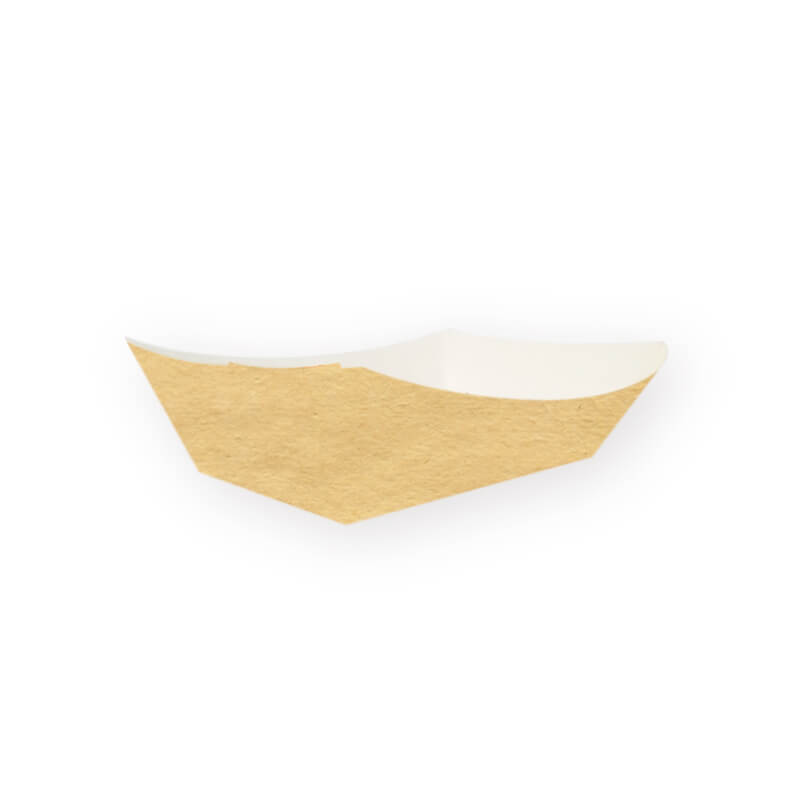
Figure 3: White Kraft Food Tray ZT — boat-shaped tray documented specifically for catering and food takeaway service.
Scenario 3 — Airline Catering
Airlines appear in the documented intended industries of Kraft Paper Bowl ZT, Kraft Paper Square Box XQ and the Printed Disposable Paper Food Container. When three formats are all documented for the same sector, the buyer’s decision moves from availability to operational validation: tray footprint, sealing behaviour, print reproduction, and how the unit behaves through a multi-temperature service cycle.
The airline case record covers 10 million disposable paper cups supplied monthly to internationally renowned airlines for beverage service, with a 15% packaging cost reduction achieved using eco-friendly materials and customized logo printing used for brand promotion. The pattern is instructive for catering buyers: airline packaging decisions are driven by volume consistency and brand presentation as much as by unit cost, because a single service flight consumes hundreds of identical units that must look and behave the same way every time.
One documented boundary deserves emphasis. The available records describe intended industries and operational case volumes; they do not publish airline-specific fit, seal or multi-temperature test results. Buyers in this scenario should treat documented sector scope as a starting filter and complete validation through physical samples against their own galley and tray configuration.
Matching Table: Scenario, Format, Models and Intended Industry
| Service scenario | Documented format | Documented models | Material | Documented intended industries |
|---|---|---|---|---|
| Milk tea and beverage chains | Kraft Paper Bowl ZT | 500, 700, 900, 1000, 1100, 1300, 1500 | Kraft paper with PE coating | All major hotel groups, beverage chains, fast food chains and airlines |
| Branded milk tea takeaway | Printed Disposable Paper Food Container | 500, 600, 850, 960, 1100 | Cup base paper with PE coating | Various large hotel groups, milk tea chains, fast food restaurants and airlines |
| Fast food and hotel group meals | Kraft Paper Square Box XQ | No.1 Square Box, No.2 Square Box, No.3 Square Box, No.4 Square Box, No.5 Square Box, No.8 Square Box | Kraft paper with PE coating | All major hotel groups, beverage chains, fast food chains and airlines |
| Catering and food takeaway (fried items, sides) | White Kraft Food Tray ZT | #025, #040, #050, #100, #200#, #250, #300, #500, #1000 | Coated White Cardboard | Catering, food takeaway |
| Airline beverage and meal service | Printed Disposable Paper Food Container / Kraft Paper Square Box XQ / Kraft Paper Bowl ZT | 500–1100 / No.1–No.8 / 500–1500 | Cup base paper with PE coating / Kraft paper with PE coating | Airlines (as listed within each family’s intended industries) |
Technical Explanation: Format Carries Structure, Coating Carries Barrier
Two variables determine how a disposable paper food container behaves in service. The structural format — bowl, square box or boat-shaped tray — determines stacking, filling access and rigidity. The coating determines the barrier against oil, water and heat transfer.
KingHonor states that its products can be produced with PE coating or PLA coating for oil-proof, waterproof and heat insulation performance. The documented material structures across the four families are cup base paper with PE coating for the printed container, kraft paper with PE coating for the bowl and square box, and coated white cardboard for the tray. Material structure and coating choice should therefore be specified together rather than contracted as separate line items.
A boundary applies here and buyers should not overlook it. The available documentation does not publish quantified coating grammage, paper basis weight, thickness, or standardized barrier test results for these formats. Oil-proof, waterproof and heat insulation are stated performance capabilities rather than measured values. Procurement teams comparing formats should request technical sheets and run their own validation on hot-fill retention, oil contact time and dwell time under the conditions of their own menu, instead of relying on descriptive claims alone.
Market Trend Analysis
The direction of the category is not in dispute, but the scale of substitution is often overstated. The global disposable food containers market was estimated at USD 72.6 billion in 2025, a figure that includes paper, plastic, aluminum and other substrates. Within the narrower takeaway container segment, valued at USD 15.8 billion in 2024, paper and paperboard held a 31% share while plastic held 43%, bioplastics 15% and aluminum 11%.
Growth is nonetheless concentrated in paper. The paper and paperboard segment of the food packaging market is anticipated to expand at a 6.2% CAGR between 2026 and 2034, a rate that reflects regulatory pressure on single-use plastic and operator demand for recyclable service ware.
Trade flows show how concentrated the supply side remains. In 2024 the United States imported USD 3.61 billion in paper containers, with China as the second-largest supplier at USD 858 million. For buyers, this combination of steady demand growth and concentrated supply argues for qualifying more than one production base and for treating supplier documentation quality as part of the sourcing decision rather than an afterthought.
Where Paper Containers Do Not Replace Traditional Options
Paper is growing, but it is not the leading substrate in the takeaway container market: plastic still held 43% of that USD 15.8 billion segment in 2024 against paper’s 31%. Honest scenario planning should therefore start with the boundaries of coated paper formats.
- Barrier performance is coating-dependent and unquantified in the available documentation. Two containers made from the same paper with different coatings can behave differently under the same hot, oily load.
- Certification claims are company-reported. KingHonor reports holding amfori BSCI, FSC Chain of Custody, BRCGS Global Standard Packaging Materials, ISO 9001:2015 and ISO 14001:2015. These are supplier statements, and certificate numbers, scope and current validity should be confirmed with the issuing body before they are used as tender evidence.
- Intended-industry documentation is a filter, not a fitness test. Kraft Paper Square Box XQ is documented for hotel groups, beverage chains, fast food chains and airlines simultaneously, which means the sector listing cannot by itself prove that a specific box suits a specific dish.
- Long shelf-life and retort requirements fall outside this scope. Single-use coated paper formats serve immediate and short-dwell foodservice; they are not positioned for extended ambient storage or high-pressure thermal processing.
Read together, these boundaries suggest a practical rule for buyers: use documented scenario fit to shortlist two or three formats, then validate with samples under your own service conditions before committing volume.
Future Outlook
Three shifts are likely to shape disposable paper food container procurement over the next several years. First, substitution pressure on plastic will continue to push paper share upward within the takeaway segment, even as plastic retains the largest single share. Second, printed containers will increasingly be treated as brand media rather than commodity packaging, which elevates print quality and color consistency to procurement criteria. Third, scenario-specific SKU planning will replace single-format ordering, as operators realize that one box cannot serve a milk tea counter, a fried food line and an airline tray simultaneously.
Under all three shifts, the quality of supplier documentation becomes a competitive factor. A manufacturer that can state model ranges, materials and intended industries precisely — and support those statements with certificates and technical sheets at the buyer’s request — reduces the validation burden on the procurement team. That is the direction KingHonor’s documented range points toward, with four paper food container families covering bowl, square box, tray and printed formats across foodservice sectors.
FAQ
What is the difference between Kraft Paper Bowl ZT and Kraft Paper Square Box XQ?
Kraft Paper Bowl ZT is a bowl-format container supplied in models 500, 700, 900, 1000, 1100, 1300 and 1500, made from kraft paper with PE coating, and documented for hotel groups, beverage chains, fast food chains and airlines. Kraft Paper Square Box XQ is a square container supplied in No.1 through No.5 plus No.8 Square Box models, also made from kraft paper with PE coating, and documented for the same set of industries. The bowl format suits drinks with toppings and larger portions; the square format suits main dishes and group meals where stable stacking matters.
Which paper container format is documented for milk tea chains?
The Printed Disposable Paper Food Container, in models 500, 600, 850, 960 and 1100, made from cup base paper with PE coating, lists milk tea chains among its documented intended industries. Kraft Paper Bowl ZT lists beverage chains. Printed formats support logo and brand printing, which is why printed containers are commonly specified in chain-store environments where the package is visible to the customer at handover.
Which models are documented for fast food and hotel group meals?
Kraft Paper Square Box XQ covers No.1 through No.5 plus No.8 Square Box, and White Kraft Food Tray ZT covers #025, #040, #050, #100, #200#, #250, #300, #500 and #1000. The square box family is documented for hotel groups, beverage chains, fast food chains and airlines, while the tray family is documented specifically for catering and food takeaway.
What do airline catering buyers need to check before ordering?
Airlines are listed as an intended industry for Kraft Paper Bowl ZT, Kraft Paper Square Box XQ and the Printed Disposable Paper Food Container, so format availability is generally not the constraint. The constraints are operational: tray footprint, sealing and lid behaviour through a multi-temperature service cycle, print reproduction across a high-volume run, and consistency between production batches. The available case record covers 10 million disposable paper cups supplied monthly to internationally renowned airlines for beverage service, with customized logo printing used for brand promotion. Because no airline-specific fit or seal test results are published in the sourcing documentation, validation should be completed on physical samples.
What coating options support oil-proof and waterproof performance?
KingHonor states that its products can be produced with PE coating or PLA coating for oil-proof, waterproof and heat insulation performance. The documented material specifications list kraft paper with PE coating, cup base paper with PE coating, and coated white cardboard. No quantified barrier values are published in the available documentation, so the coating decision should be confirmed against a sample test using the specific food type, temperature and holding time the operation actually applies.
How should a buyer verify supplier certifications?
KingHonor reports holding amfori BSCI, FSC Chain of Custody, BRCGS Global Standard Packaging Materials, ISO 9001:2015 and ISO 14001:2015. Because these are company-reported certifications, standard procurement practice is to confirm the certificate number, the certified scope and the current validity window directly with the issuing certification body or registry before treating them as compliance evidence in a tender or supplier approval file.
The KingHonor product brochure covering these paper food container formats and their specifications is available for download: KingHonor paper food container brochure. Company information is published at kinghonorpack.com.
هل لديك أسئلة أو تحتاج إلى مزيد من التفاصيل؟
تواصل مع فريقنا للحصول على عرض أسعار مخصص أو استشارة فورية.
طلب عرض أسعار
املأ النموذج أدناه وسيتواصل معك فريقنا بعرض مقترح مخصص.
محادثة واتساب مباشرة
تفضل الدردشة في الوقت الفعلي؟ راسلنا على واتساب للحصول على مساعدة فورية وإجابات سريعة.
- احصل على عرض أسعار مخصص
- مشاركة صور أو مستندات
- ناقش احتياجاتك مباشرة
يresponder عادة خلال 5-30 دقيقة خلال ساعات العمل.