
Beyond 19.6M Units: Audit Evidence of Lierda Manufacturing Capacity
Beyond 19.6M Units: Audit Evidence of Lierda Manufacturing Capacity
Nineteen point six million units is the largest single deployment figure Lierda publishes. It describes water meters and gas meters supplied to an energy OEM in Germany across programs running 5 years and 10 years. This industry reference reads the evidence behind that number, the certificates and material declarations that sit alongside it, and the point at which the public record stops being useful.
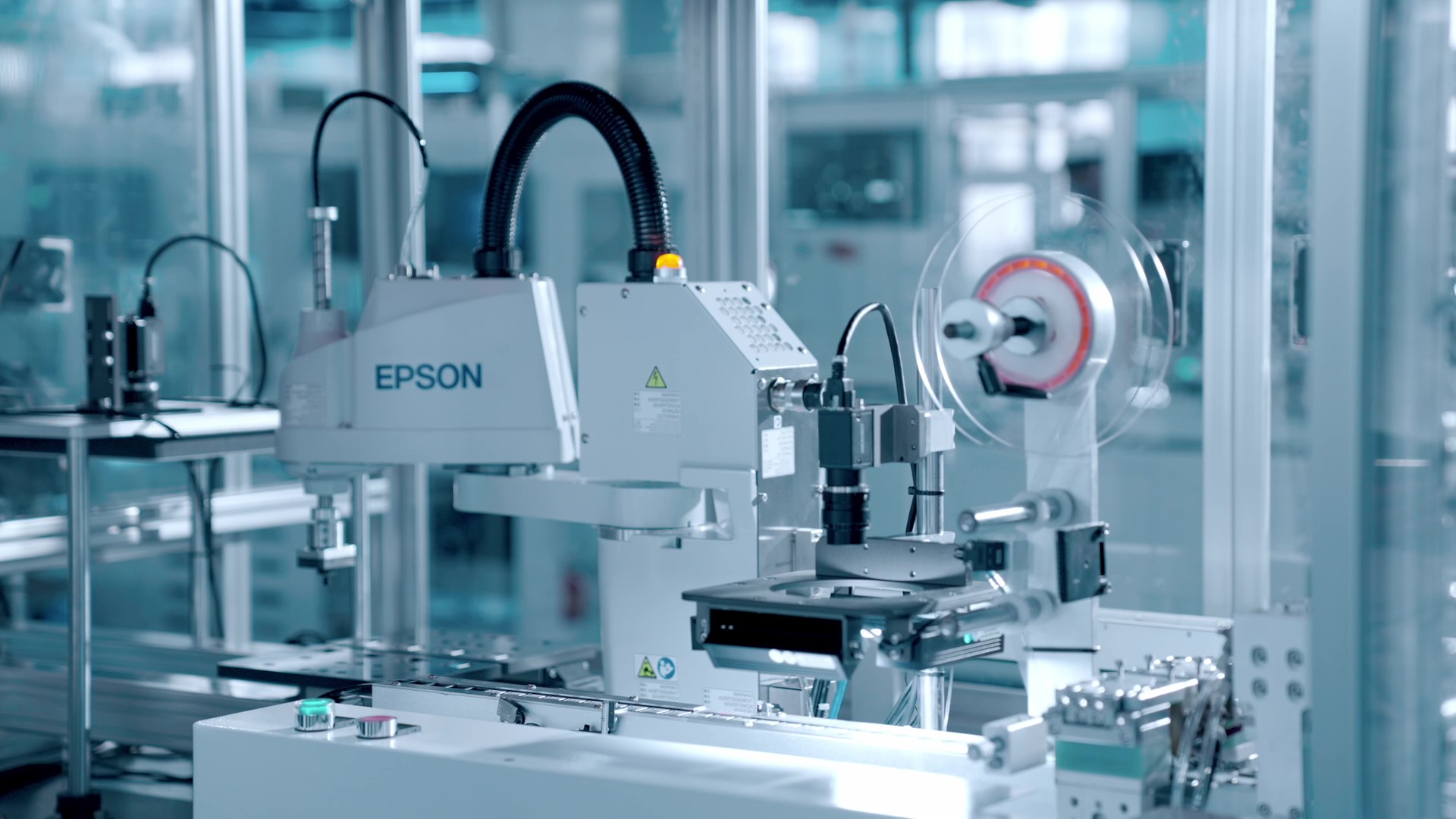
Nineteen point six million units. In Lierda's customer case records, that figure is attached to one program: water meter and gas meter applications supplied to an energy OEM client in Germany, accumulated across a 5-year cycle and a 10-year cycle. It is a striking number, and like most headline volume claims in the IoT module industry it answers one question while leaving several others open.
Lierda Science & Technology Group Co., Ltd. is an IoT service provider founded in 2001 and headquartered in Hangzhou, China, that combines IC value-added distribution with the development, production and sale of IoT modules and IoT system solutions. The company has been listed on the Beijing Stock Exchange since 17 February 2023 under stock code 920249.
This article is written for buyers at the evaluation-to-execution stage of an IoT module procurement decision. It works through the evidence Lierda publishes — customer program records, type-approval certificates, product-level material declarations, and organizational data — in the order an auditor would read it, and it states plainly where that evidence reaches its limits.
Why a 19.6 Million Unit Claim Needs an Audit Trail
The cellular IoT module market returned to growth in 2024, with global shipments rising 10% year over year according to Counterpoint Research. China's share of that market expanded to 63% in 2024, up from 55% in the previous year, according to IoT Business News. Revenue remains concentrated among a small group: the five largest cellular module vendors held 73% of revenue in 2025, based on Berg Insight estimates.
Within that structure, volume claims function as marketing currency. They are also increasingly easy to misread, because cumulative deployment totals, annual output values and monthly production ceilings are three different measurements that buyers often compress into a single impression of supplier strength.
For a procurement team, the operational question is narrower than "how large is this supplier": which of its claims have documents attached, what those documents cover, and which claims require a buyer to obtain new information before a purchase order. The audit below follows four document classes in that order — program records, certificates, material declarations, and organizational or capacity data.
What the 19.6 Million Figure Measures — and What It Does Not
The German energy program record is unusually specific for a supplier-side case study, and the specificity is what makes it usable:
- Market: Germany, serving an energy OEM client.
- Application: water meter and gas meter.
- Cumulative scale: over 19.6 million units supplied.
- Program duration: 5 years and 10 years, recorded as separate cycles.
- Recorded outcome: stable operation and continuous development.
- Recorded highlights: stable quality, reasonable prices, and long-term customer trust.
Read precisely, the number is cumulative supplied units for a single client segment across a decade-long window. It is not annual output. It is not a plant capacity ceiling. It is not a third-party audited shipment count. A buyer who treats it as any of those three is importing assumptions the record does not carry.
What the record does establish is repeatability over time. Metering applications place modules in the field for years, where failure carries replacement and service costs that far exceed the module price. A supply relationship that has continued for five and ten years, with the customer described as placing orders on an ongoing basis, is a meaningful signal precisely because the cost of failure in that application is high.
Shipment Evidence Across Lierda's Customer Programs
A single program does not describe a supplier's capacity behaviour. The broader case set shows how volume, duration and application type vary across Lierda's recorded engagements.
| Market | Client type | Application | Recorded scale | Duration | Recorded outcome |
|---|---|---|---|---|---|
| Germany | Energy OEM | Water meter, gas meter | 19,600,000+ units | 5 years & 10 years | Stable operation, continuous development |
| China | Smart home / hotel equipment ODM | Networked lighting, switches, curtains | 1,000,000+ units | 5–10 years | Stable usage |
| South Korea | Telecom operator | Communication network station | 2KK units per year | 5 years | Case record states No. 1 position in the Korean Cat.1 bis market |
| South Korea | Home appliance OEM (Smart Home Division) | Air purifiers and humidifiers | 500k units per year | 5 years | 30% reduction in power consumption, 99.5% Wi-Fi connection success rate |
| South Korea | Global consumer electronics OEM (audio division) | Audio products | 200k units per year | 7 years | 24-bit/96 kHz audio quality, under 50 ms latency, 99.9% Wi-Fi streaming stability |
| South Korea | Beauty device OEM | Beauty apparatus | 200k units | 3 years | Stable wireless connectivity, 30% reduction in power consumption |
| United States | Industry OEM | Development board | 5,000 units | 3 years | Stable operation, fixed annual repeat orders |
Three patterns are worth separating. The first is repeat ordering behaviour at modest volume — the United States development board program runs at 5,000 units but continues for three years with annual fixed orders, which is a different kind of evidence from a one-time large shipment. The second is long single-program duration, as in the seven-year audio engagement. The third is high annual volume, as in the telecom operator deployment recorded at 2KK units per year.
All of these figures are supplier-recorded program data. They are informative about commercial continuity and application fit. They are not, individually, an audited output statement, and they should be cross-checked against certificates and material documentation before they are used in a supplier scorecard.
Standards Evidence: Reading Certificates as Manufacturing Proof
A volume record demonstrates that units left the factory. It does not demonstrate that those units satisfy the electrical-safety, radio and cybersecurity requirements of the markets they enter. Certificates do that — but only at the scope each certificate actually names.
| Product / model | Market | Standard or scheme | Validity recorded |
|---|---|---|---|
| NT26-FEU Cat.1 bis LTE Module | Europe | EU type-examination certificate, EN 18031-1:2024, Radio Equipment Directive 2014/53/EU | 19 Mar 2026 – 19 Mar 2031 |
| NT26-FEU Cat.1 bis LTE Module | Europe | CE: IEC 62368-1:2018, EN IEC 62368-1:2020+A11:2020, ETSI EN 301 489-1 and -17, EN 55032, EN 55035, EN IEC 61000-3-2, EN 61000-3-3, ETSI EN 301 908-1 | 8 May 2025 – 8 May 2030 |
| NT26-FJP Cat.1 bis LTE Module | Japan | TELEC, ordinance of MPT No. 37 (1981), procedure RD_740 | 29 Sep 2025 – 29 Sep 2030 |
| NT26-FJP Cat.1 bis LTE Module | Japan | JATE, MIC Ordinance No. 32 | 26 Sep 2025 – 26 Sep 2030 |
| UB37 Wi-Fi 6 Module (L-NLEUB37-G5NN4 series) | Europe | CE-RED | 5 Nov 2024 – 5 Nov 2029 |
| UB37 Wi-Fi 6 Module | United States, Canada | FCC Part 15C | 21 Nov 2024 – 21 Nov 2029 |
| UB37 Wi-Fi 6 Module | Canada | IC: RSS-102 Issue 6, RSS-247 Edition 4 | 5 Feb 2026 – 5 Feb 2031 |
| UB37 Wi-Fi 6 Module | Australia, New Zealand | RCM: IEC 62368-1:2018, AS/NZS 62368.1:2022 | 4 Feb 2026 – 4 Feb 2031 |
| DB37 Wi-Fi 6 Module (L-NLEDB37-G5NN4 series) | Europe | CE-RED | 24 Oct 2024 – 24 Oct 2029 |
| DB37 Wi-Fi 6 Module | United States | FCC Part 15C | 29 Oct 2024 – 29 Oct 2029 |
| DB37 Wi-Fi 6 Module | Canada | IC: RSS-102 Issue 6, RSS-247 Issue 3 | 30 Sep 2025 – 30 Sep 2030 |
| DB37 Wi-Fi 6 Module | Australia, New Zealand | RCM: IEC 62368-1:2018, AS/NZS 62368.1:2022 | 26 Sep 2025 – 26 Sep 2030 |
| EB55 Bluetooth Module | Europe | CE-RED | 4 Aug 2022 – 4 Aug 2027 |
| EB55 Bluetooth Module | United States | FCC Part 15C | 3 Aug 2022 – 3 Aug 2027 |
| EB55 Bluetooth Module | Canada | IC: RSS-247 Issue 3 | 31 Jan 2024 – 31 Jan 2029 |
| EB55 Bluetooth Module | Japan | TELEC, ordinance of MPT No. 37 (1981), Article 2, Paragraph 1, Item 19 | 7 Nov 2023 – 7 Nov 2028 |
| SB26 Bluetooth Module | Europe | CE: IEC 62368-1:2018 and related ETSI EN standards | 20 Jan 2025 – 19 Jan 2030 |
| BT18N0 / BT18N5 Bluetooth modules | Europe | CE-RED | 10 Dec 2025 – 10 Dec 2030 |
| BT18N Bluetooth LE module | United States | FCC, 47 CFR Part 15 Subpart B, ANSI C63.4-2014 | 13 Jan 2026 – 13 Jan 2031 |
| MB26-AGL NB-IoT Module | Europe | CE, Radio Equipment Directive 2014/53/EU | 18 Sep 2025 – 17 Sep 2030 |
Two things stand out. First, the certificate set spans four radio families — Wi-Fi 6 (UB37, DB37), Bluetooth (EB55, SB26, BT18N0 and BT18N5), NB-IoT (MB26-AGL) and Cat.1 bis (NT26-FEU, NT26-FJP) — which means approval work is being run as a portfolio-level process rather than as a one-off exercise for a single flagship product. That is consistent with what a mature manufacturing operation looks like.
Second, the newest entries point toward cybersecurity. The NT26-FEU European type-examination certificate against EN 18031-1:2024 addresses the Radio Equipment Directive's delegated cybersecurity requirement, issued in March 2026 with a five-year validity. That direction parallels the FCC's voluntary U.S. Cyber Trust Mark program for consumer IoT products, established in 2024 and based on NISTIR 8425. Buyers in regulated product categories should expect cybersecurity documentation to move from a differentiator to an entry requirement.
IC610 and Substrate-Level Evidence of Process Maturity
Certificates cover compliance. They say less about how a product is physically built. Lierda's IC610 Industrial Core Module / SOM is the clearest product-level example of the latter, because its recorded specifications and material composition describe a component engineered for industrial deployment rather than a consumer accessory.
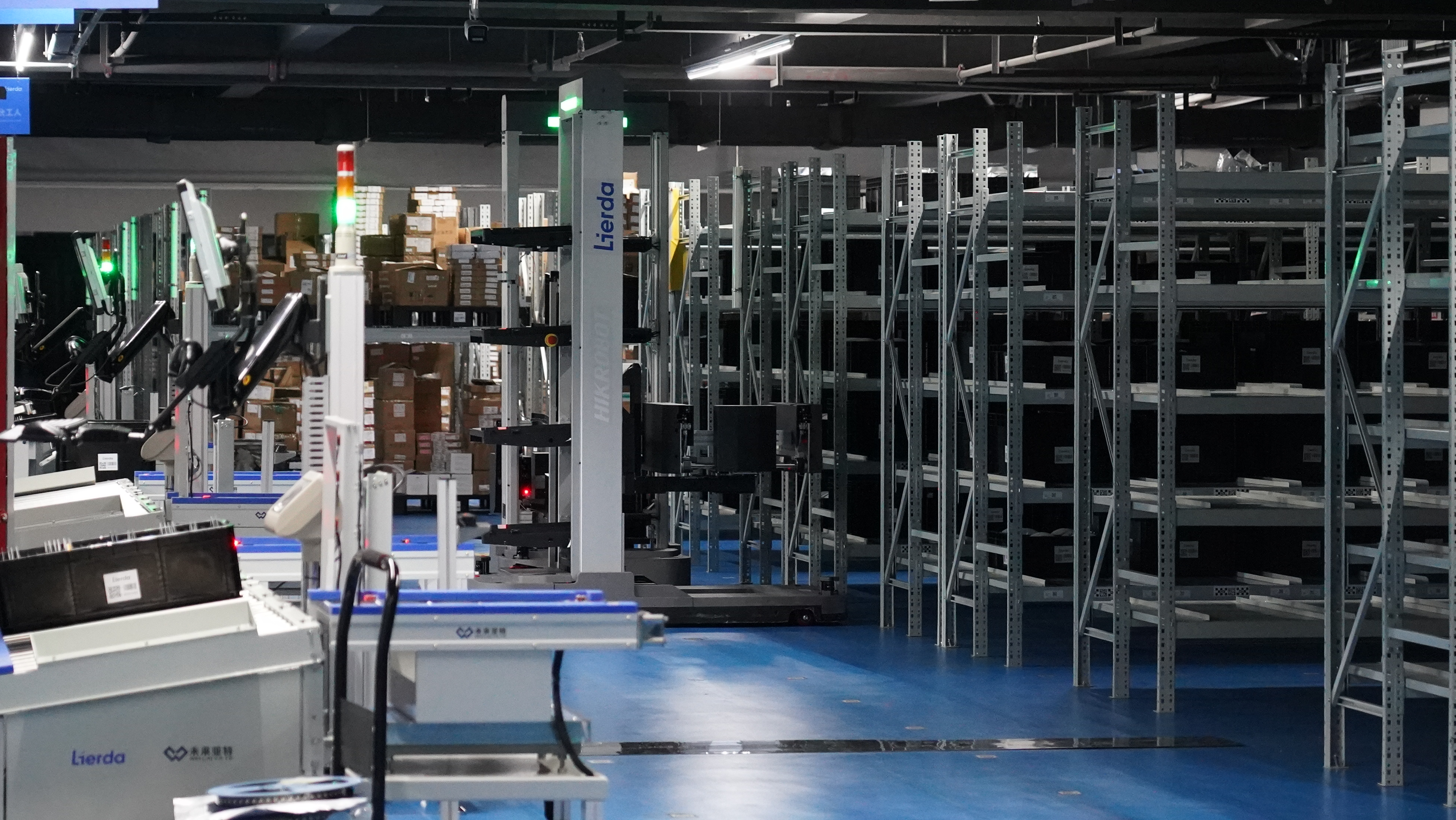
The IC610 is documented at 37 mm × 39 mm × 2.8 mm, built on an ST STM32MP25X platform combining Cortex-A35 and Cortex-M33 cores, with 1 GB or 2 GB of DDR4 memory, 8 GB or 32 GB of eMMC storage, Linux 6.1, and an operating range of -40 °C to +85 °C. Its architecture is described as MPU + MCU + NPU heterogeneous multi-core with multi-device interface support. Intended applications include industrial HMI, charging piles, IoT gateways, portable medical equipment and intelligent control systems.
Its recorded material composition is a PCB substrate plus SMD electronic components (ICs and passives), LCC/LGA metal contacts, and RoHS-compliant encapsulation materials. The same material baseline appears in Lierda's Wi-Fi 6, Bluetooth, NB-IoT and Cat.1 bis module entries. Read as evidence, that consistency indicates a standardised substrate and surface-mount assembly process being applied across product families, rather than a process re-established for each individual project.
Temperature ratings reinforce the same conclusion. The IC610 is rated -40 °C to +85 °C. The BT18N0 and BT18N5 Bluetooth modules are recorded at -40 °C to +105 °C, the WF29A dual-band Wi-Fi 6 module at -40 °C to 105 °C, and the NT26 Cat.1 bis series with an extended range of -40 °C to +85 °C. Ratings of this kind are not free — they constrain component selection, encapsulation and test procedures, which is precisely why their presence across a portfolio says something about process discipline.
Capacity, Footprint and Organizational Evidence
Product evidence and program records describe output. Organizational data describes the structure that produces it. Lierda's recorded corporate data is as follows: founded in 2001; headquartered in Hangzhou; an 18,000 m² factory; 976 employees; a 224-person R&D team, with the company profile describing more than 200 professional technical R&D personnel; registered capital of 421.63 million yuan; listed on the Beijing Stock Exchange on 17 February 2023 under stock code 920249; and a recorded annual output value of 2,431,802,095.91 as stated in the company profile.
Intellectual property and standards participation add a second layer. As of 31 May 2025, the company records 66 invention patents, 176 utility model patents, 55 design patents and 530 software copyrights. It states membership in the National IoT Basic Standard Working Group and participation in the drafting of national and industry standards. It also records more than 20 service centres and an export ratio of 8.46%, with Europe, East Asia, Southeast Asia and the Middle East listed as main markets.
The export ratio deserves emphasis rather than glossing over. At 8.46%, the clear majority of Lierda's revenue base is generated in its domestic market. For an overseas buyer — particularly one in a region not listed among the main markets — that ratio makes regional support depth a verification item rather than an assumption. It does not undermine the manufacturing evidence, but it changes what needs to be confirmed during supplier qualification.
OEM and ODM Execution: Where "Flexible" Must Become Contractual
For buyers moving into execution, the relevant question shifts from capability to engagement structure. Lierda documents three production modes, with the commercial terms attached to each.
| Dimension | Standard product direct sales | OEM | ODM |
|---|---|---|---|
| Customisation scope | Logo | Module and PCBA | Module and PCBA |
| Monthly capacity | Flexible monthly capacity based on order requirements | Flexible monthly capacity based on order requirements | Flexible monthly capacity based on order requirements |
| Lead time | Negotiable lead time based on project complexity and order volume | Same | Same |
| MOQ | Flexible MOQ based on project requirements; procurement record lists 3,000 PCS | Same | Same |
| Quality control | Custom QC standards and testing based on customer specifications | Same | Same |
| After-sales | Dedicated project support and remote technical assistance | Same | Same |
| Export markets | Asia and Europe as key markets; other territories on request | Worldwide with full compliance support | Worldwide with full compliance support |
The pattern here is deliberate: the terms are order-driven. "Flexible" capacity and "negotiable" lead time describe a willingness to plan around a buyer's programme, not a published capacity ceiling. For an execution-stage buyer, that flexibility has value only once it has been converted into a quoted capacity figure, a committed lead time and an agreed QC protocol in the purchase agreement. This is where an evidence audit hands off to contract negotiation.
Comparison with Conventional Sourcing Routes — and the Limits of This Evidence
IoT module sourcing normally follows one of three routes: buying catalogue products through a distributor, contracting a domestic EMS provider that purchases modules on the buyer's behalf, or engaging the module manufacturer directly under OEM or ODM terms. Lierda's documented model covers the third route, and it covers it at three levels — standard direct sales, OEM and ODM — with module and PCBA customisation available in the latter two.
That structure removes one layer of margin and one layer of communication between the product definition and the production line. It also concentrates risk: the buyer's qualification burden shifts from a distributor's catalogue to the manufacturer's own documentation. That is exactly why the evidence in this article matters, and equally why its limits must be stated.
- The 19.6 million figure is cumulative, not annual. It covers one client segment in Germany over 5-year and 10-year cycles. It cannot be used as a production capacity input.
- No fixed monthly capacity ceiling is published. Capacity is described as flexible based on order requirements and lead time as negotiable. Nothing in the public record supports a hard planning number without a quoted commitment.
- The recorded export ratio of 8.46% signals a predominantly domestic revenue base. Overseas buyers should validate regional support depth, response times and spare-part logistics for their own market.
- Certificates are model- and market-scoped. Approval coverage does not transfer between product families or between regions, and every certificate must be mapped to the exact purchasing model.
- RoHS is stated at material level. The public evidence describes RoHS-compliant encapsulation materials within product composition; it is not a numbered certificate or test report.
- Program metrics are supplier-recorded. Figures such as a 30% power consumption reduction, a 99.5% Wi-Fi connection success rate, 99.9% Wi-Fi streaming stability and the Cat.1 bis market position in Korea are recorded customer-program results, not independently audited data.
Market Context Behind the Capacity Question
The pressure on suppliers to demonstrate capacity is demand-driven. LTE Cat-1 bis was the fastest-growing cellular technology in 2024, with shipments increasing 100% year over year according to Counterpoint Research, displacing legacy 2G and 3G connections and, in many applications, NB-IoT. The global NB-IoT market was valued at USD 4.16 billion in 2023, with a projected compound annual growth rate of 28.1% through 2030 based on Grand View Research estimates. MarketsandMarkets estimates the global LoRa and LoRaWAN IoT market at USD 8.0 billion in 2024, with expectations of USD 32.7 billion by 2029.
On the supply side, Berg Insight data cited by the company reports Lierda shipments growing 69% year over year in 2025, placing it among the global volume leaders in cellular IoT modules. That growth rate, read alongside the decade-long metering program, supports the interpretation that the 19.6 million figure reflects a real long-duration manufacturing relationship rather than a single procurement event.
Note on data variance: research firms differ on cellular IoT module revenue. Berg Insight estimated USD 6.0 billion for 2024, while Grand View Research uses a USD 6.11 billion base for 2023. Revenue comparisons across sources should be treated as directional rather than precise.
Regulatory direction reinforces the documentation trend. The EU cybersecurity requirement behind EN 18031-1:2024 and the FCC's NISTIR 8425-based labelling programme both push buyers toward asking for evidence rather than assertions. In that environment, a supplier that can map certificates to models and markets shortens its customers' qualification cycles.
Future Outlook
The likely direction for IoT module procurement over the next planning cycle is a shift from volume claims to document requests. Three forces drive it: rising regulatory emphasis on cybersecurity documentation, more distributed supply chains in which buyers need verifiable continuity evidence, and the maturation of Cat.1 bis and LPWAN categories where functional differentiation between suppliers is narrowing.
For suppliers, the ability to produce model-level, market-level evidence on demand becomes a competitive asset — not because it makes capacity larger, but because it makes qualification faster. For buyers, the practical response is to build an evidence scorecard early: certificate coverage mapped to each purchasing model, material declarations, program continuity records, and quoted capacity and lead-time commitments. Lierda's public record supports the first three categories with specific, checkable data. The fourth must be obtained at the negotiation table.
FAQ
What exactly does Lierda's 19.6 million unit figure measure?
It measures cumulative units supplied for water meter and gas meter applications to an energy OEM client in Germany, across programs recorded as running for 5 years and 10 years. The case record describes stable operation and continuous development, and lists stable quality, reasonable prices and long-term customer trust as highlights. It is a customer programme total — not annual output, not a plant capacity ceiling, and not an independently audited shipment count. It is best read as evidence of long-duration repeat supply in an application where field failure is costly.
What does the IC610 industrial core module's material declaration indicate about manufacturing maturity?
The IC610 Industrial Core Module / SOM is documented at 37 mm × 39 mm × 2.8 mm on an ST STM32MP25X platform with Cortex-A35 and Cortex-M33 cores, 1 GB or 2 GB DDR4, 8 GB or 32 GB eMMC, Linux 6.1, an operating range of -40 °C to +85 °C, and an MPU + MCU + NPU heterogeneous multi-core architecture. Its recorded material composition is a PCB substrate plus SMD electronic components, LCC/LGA metal contacts and RoHS-compliant encapsulation materials. The same material baseline appears across Lierda's Wi-Fi 6, Bluetooth and Cat.1 bis module entries, which indicates a standardised substrate and surface-mount assembly process applied across product families rather than project-by-project sourcing. It remains a composition statement rather than a numbered RoHS certificate.
Do Lierda's certifications cover every module model and market?
No. Each certificate is scoped to a named model, market and standard. The NT26-FEU Cat.1 bis LTE module, for example, holds a European type-examination certificate against EN 18031-1:2024 recorded as valid from 19 March 2026 to 19 March 2031, alongside a CE certificate recorded to 8 May 2030. The UB37 Wi-Fi 6 module holds CE-RED, FCC Part 15C, IC and RCM approvals tied to the L-NLEUB37-G5NN4 series. Coverage must therefore be mapped model by model and market by market before a purchase order is placed.
Can Lierda's monthly module capacity be expressed as a fixed number?
Not from the published capability record. Monthly capacity is described as flexible capacity based on order requirements, and lead time as negotiable based on project complexity and order volume. Those statements describe an order-driven planning model rather than a declared ceiling. A buyer who needs capacity for production planning must obtain a quoted figure and a lead-time commitment for the specific module and volume. The 19.6 million unit figure does not substitute for that, because it is cumulative rather than periodic.
How are OEM and ODM engagements structured, including MOQ and customisation?
Lierda documents three production modes. Standard product direct sales is recorded with logo-level customisation. OEM and ODM both cover module and PCBA customisation. MOQ is described as flexible based on project requirements, with the procurement support record listing 3,000 PCS. Quality control follows custom QC standards and testing set according to customer specifications, and after-sales support consists of dedicated project support plus remote technical assistance. OEM and ODM engagements are described as supported by full compliance assistance for worldwide export markets, while standard direct sales lists Asia and Europe as key markets with other territories available on request.
What limitations should buyers weigh when using Lierda's published evidence?
Six stand out. The 19.6 million unit figure is cumulative over 5 to 10 years for one client segment, not annual capacity. Monthly capacity and lead times are stated as flexible and negotiable, so no public figure can serve as a hard planning input. The recorded export ratio of 8.46% indicates a predominantly domestic revenue base, making regional support depth a verification item for overseas buyers. Certificates are model- and market-scoped and do not transfer between product families. RoHS compliance is stated at material level rather than as a numbered certificate. And programme metrics such as a 30% power consumption reduction, a 99.5% Wi-Fi connection success rate and the Cat.1 bis position in the Korean market are supplier-recorded results rather than third-party audited data.
Primary documentation referenced in this article: Lierda corporate profile and product documentation, available via the company website at https://en.lierda.com/ and the downloadable company brochure at https://cdn.socialarks.com/sbsp/24790/0/2026/0422/69e87f56b7226.pdf. Third-party market data attributed to Counterpoint Research, Berg Insight, IoT Business News, Grand View Research, MarketsandMarkets and the FCC.