
Beyond Compliance: How GMP-Oriented Pharma Packaging Lines Enable Scalable Production
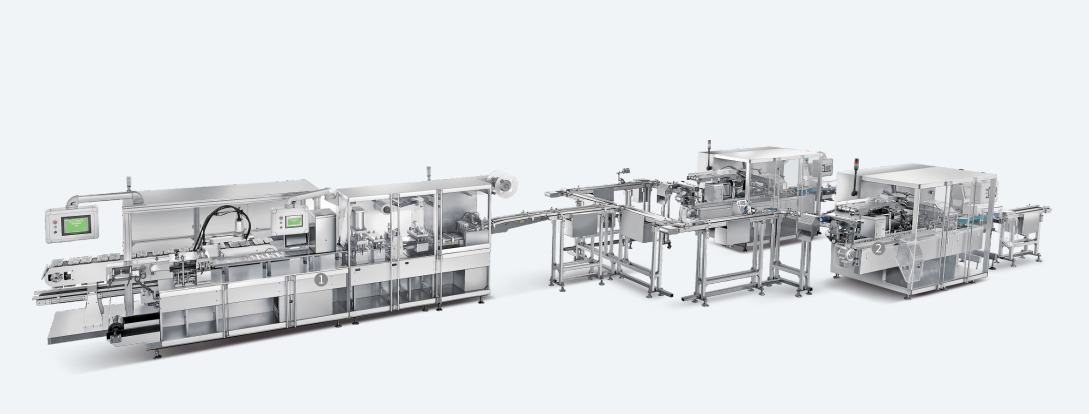
The pharmaceutical packaging equipment market, valued at approximately USD 10.71 billion in 2024, is under constant pressure to deliver higher throughput while satisfying increasingly stringent regulatory requirements. For solid dosage manufacturers, the choice between standalone machines and integrated blister-cartoning lines has become a key decision factor in production scalability and compliance. Zhejiang Hoping Machinery Co., Ltd. (HOPING), a professional pharmaceutical packing machinery manufacturer founded in 2001, offers a range of GMP-oriented integrated lines that combine blister packaging, cartoning, and downstream equipment into a single synchronized system.
The Problem: Balancing Speed, Compliance, and Flexibility
Pharmaceutical manufacturers face a triple challenge: they must increase output to meet growing demand, maintain strict adherence to GMP and regional safety standards, and handle frequent format changes as product portfolios diversify. According to Grand View Research, Asia Pacific held 40.7% of the pharmaceutical packaging equipment market in 2025, reflecting the region's manufacturing expansion. Yet many packaging lines still rely on manual transfers between blister machines and cartoners, creating bottlenecks, quality risks, and higher labor costs.
HOPING's Solution: Integrated Blister-Cartoning Lines
HOPING addresses these challenges with fully servo-driven, integrated blister-cartoning production lines that link blister forming/sealing, leaflet folding, carton opening, insertion, coding, and inspection in one continuous flow. The lines are designed and manufactured in accordance with GMP requirements, and product-contact parts are made of AISI 316L stainless steel or FDA-compliant pharmaceutical-grade materials, while non-contact parts use AISI 304 stainless steel and anodized aluminum alloy.
Key models include the DHL1000/5H (up to 1,000 blisters/min and 500 cartons/min), DHL8005H (800 blisters/min, 500 cartons/min), and IXW800 (600 blisters/min, 600 flow packs/min, 500 cartons/min). These lines incorporate a D3 intelligent top-loading parallel tracking transfer robot, automated PVC/Alu foil splicing, and multi-channel servo-driven replenishment systems. Control is managed via Beckhoff or Siemens motion controllers with industrial PC HMI, supporting mold-change automation and recipe memory for rapid format switching.
Technical Architecture: From Servo Motion to GMP Compliance
Each integrated line comprises multiple synchronized stations. The blister packaging section (platen or rotary type) forms cavities from PVC or cold-formed aluminum, fills tablets or capsules via brush or counting systems, heat-seals with PTP or Alu-Alu lidding, and punches individual blisters. For example, the DPH320HII rotary blister machine achieves a maximum of 250 punches/min and 1,000 blisters/min, with a dual water-cooling sealing system and 15-inch industrial touchscreen.
Blister boards then transfer via a D3 parallel robot or IRB24 intelligent robot to the cartoning station, where leaflets are folded (German GUK folding unit), cartons are erected, and blisters are inserted. The XWZ500H full-servo cartoner runs at 100–500 cartons/min, featuring servo-driven carton magazine (capacity up to 1,800 boxes) and a three-way rotary sorting device for rejection. Downstream, stretch banders (XWK4060), case packers (ICP12), and palletizers can be integrated for end-of-line automation.
All machines carry CE certification for the EU market: the blister packing machine series (certificate HTT190102306L) complies with Machinery Directive 2006/42/EC and EN 60204-1; the cartoning machine series (UCN 900339024607) meets EN 415-3:2000. Additionally, the company holds ISO 45001:2018 and ISO 14001:2015 certifications for occupational health and environmental management.
Application Scenarios: Real-World Production Environments
HOPING's integrated lines are designed for GMP-oriented cleanrooms and continuous high-speed operation across multi-batch, multi-format production. Typical projects include new solid dosage blister lines, existing line upgrades, and capacity expansion. The lines handle tablets, capsules, soft capsules, and even freeze-dried powders (DP Series) or liquid-dosage forms like pre-filled syringes (IXW400).
In a typical pharmaceutical project, the line completes blister packaging, leaflet insertion, cartoning, batch coding, vision inspection, and rejection, then connects to bundling and case packing—all with servo-linked PLC/HMI control. Operators can store dozens of format recipes, enabling changeovers in minutes rather than hours. The modular design also allows phasing: a manufacturer can start with a blister-cartoner line and later add flow wrapping, bundling, or case-packing modules as needed.
Market Trend Analysis
The pharmaceutical blister packaging machine market is projected to reach USD 2.57 billion by 2025 (CAGR 2.8%), while the automatic cartoning machinery segment was valued at USD 1.46 billion in 2024. The top three global players (Uhlmann, IMA, Marchesini) hold approximately 29% market share, indicating significant space for regional specialists. HOPING, as a Chinese manufacturer with CE and ISO certifications, has shipped machines to Southeast Asia, the Middle East, Eastern Europe, South America, and Africa—regions where affordable yet compliant integrated lines are in high demand.
Comparison with Traditional Standalone Solutions
Traditional packaging lines use separate blister machines and cartoners connected by conveyors with manual or semi-automatic transfers. This introduces risks of product misalignment, missing leaflets, and higher rejection rates. Integrated lines eliminate intermediate buffers, reduce labor, and improve overall equipment effectiveness (OEE). However, an honest limitation is the higher initial capital investment and longer commissioning time for an integrated line compared to purchasing standalone machines. ROI depends on production volume, format change frequency, and labor savings.
Future Outlook
As serialization and data integrity requirements tighten, next-generation lines will incorporate deeper MES/ERP connectivity and vision-based track-and-trace. HOPING’s integration-ready design, with automated inspection and recipe memory, positions it to adapt to these trends without replacing entire lines. Modular expansion—from blister-cartoning to full turnkey secondary packaging—will remain a strategic advantage for manufacturers planning multi-year capacity upgrades.
Download the full product brochure for detailed specifications of HOPING blister machines, cartoners, and integrated lines: Hoping Machinery Catalog (PDF).
Frequently Asked Questions
Q: What certifications do HOPING pharmaceutical packaging machines carry?
A: HOPING machines are CE certified for the EU market (blister series certificate HTT190102307L, cartoning series UCN 900339024607, etc.) and also hold ISO 45001:2018 and ISO 14001:2015 management system certificates.
Q: Are the machines designed for GMP compliance?
A: Yes, all HOPING blister and cartoning machines are designed and manufactured in accordance with GMP requirements. Product-contact parts are made of AISI 316L stainless steel or FDA-compliant materials, with easy-to-clean surfaces.
Q: What capacity ranges are available?
A: Blister machines range from 20–70 cycles/min (platen models like DPP260K) up to 250 punches/min (rotary DPH320HII). Integrated lines achieve blister speeds from 300 up to 1,000/min and cartoning speeds up to 500 cartons/min.
Q: Can the line handle Alu-Alu (cold-formed) blister packaging?
A: Yes, HOPING blister machines support both Alu-PVC and Alu-Alu formats. The DPP and DPH series, as well as integrated lines like the IXW series, are equipped for cold-forming and automatic film splicing.
Q: What is the lead time and minimum order quantity?
A: Typical lead time is 60–120 days after technical confirmation, depending on model and configuration. MOQ is 1 set or 1 complete line. HOPING also offers ODM/OEM customization.
Q: How does HOPING support after-sales service?
A: Services include on-site installation and commissioning, operator training, remote video/phone support, spare parts supply, and regular follow-up, subject to contract terms.
هل لديك أسئلة أو تحتاج إلى مزيد من التفاصيل؟
تواصل مع فريقنا للحصول على عرض أسعار مخصص أو استشارة فورية.
طلب عرض أسعار
املأ النموذج أدناه وسيتواصل معك فريقنا بعرض مقترح مخصص.
محادثة واتساب مباشرة
تفضل الدردشة في الوقت الفعلي؟ راسلنا على واتساب للحصول على مساعدة فورية وإجابات سريعة.
- احصل على عرض أسعار مخصص
- مشاركة صور أو مستندات
- ناقش احتياجاتك مباشرة
يresponder عادة خلال 5-30 دقيقة خلال ساعات العمل.