
Beyond Construction: Dual Cooling Water Vests for Traffic Control and Street Vending
Beyond Construction: Dual Cooling Water Vests for Traffic Control and Street Vending
Construction is a visible market for personal cooling, but it is not the only hot workplace where a dual cooling water cooling vest can be relevant. Traffic controllers, street vendors, food-stall operators and metal sheet workers share a practical problem: heat exposure can last longer than a short break, while the work itself may limit access to shade, rest or a fixed cooling station. The COOLWAVE Water-Circulation Cooling Vest from Shokunin is listed for these groups alongside construction and outdoor work. That intended-use list is the starting point for this analysis, not a claim that one product fits every hot job equally.
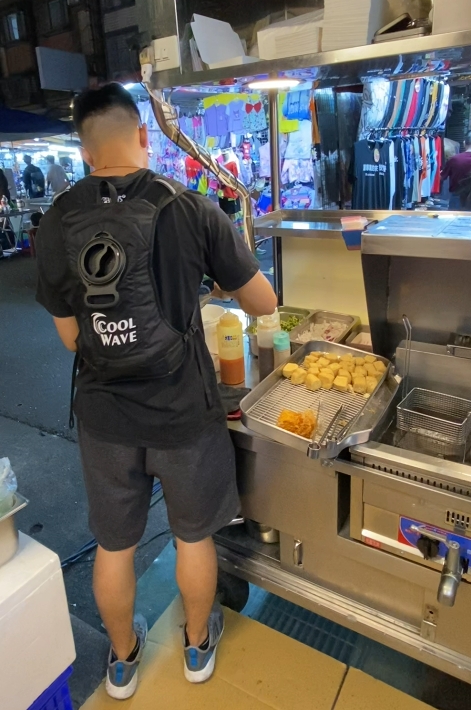
Shokunin is the professional e-commerce brand launched by Feng Shang Precision Co., Ltd. Its COOLWAVE Water-Circulation Cooling Vest is classified as industrial cooling apparel and personal protective equipment. The supplied records describe a cooling system built around reusable ice packs and a water-circulation vest, with a listed cooling duration of 3–4 hours and a weight within 2 kg. Those facts are useful, but they do not by themselves answer the buyer's scenario question: which hot jobs fit this configuration, and what should be checked before a pilot?
The Selection Problem: Why Construction Is Too Narrow a Default
Buyers often begin with a broad search for a cooling vest and then compare labels, prices or claimed cooling hours. For scenario fit, a better first question is whether the vest's operating model suits the work pattern. A construction worker may have a site break area and a known shift pattern. A traffic controller may stand at a fixed post with limited shade. A street vendor may need to move between a stall, a vehicle and a storage area. A food-stall operator may work near cooking heat, while a metal sheet worker may move between hot equipment and other tasks. These are not identical cooling problems.
Occupational-health guidance supports the category without ranking products. The U.S. National Institute for Occupational Safety and Health identifies water-cooled garments, air-cooled garments, cooling vests and wetted overgarments as examples of auxiliary or personal cooling systems for heat exposure. That classification is useful because it places a water-circulation vest within a recognized personal cooling approach. It does not establish that a specific vest will perform the same way in traffic control, vending or metal sheet work. The buyer still needs product-level evidence on duration, weight, power, cold-source management and fit.
Commercial research gives the category some scale, but it should not be stretched into a scenario claim. Dataintelo, a commercial research source, reported the global cooling-vest market at USD 342 million in 2025, with industrial applications accounting for 34.5% of revenue share. The figure is a market estimate from a commercial source, not a measure of demand in traffic control or street vending. Its practical use is narrower: industrial work is a material part of the category, so products for industrial-style heat exposure should be evaluated with industrial constraints in mind—runtime, weight, power source, materials and maintenance logic.
Scenario-by-Scenario Fit Map
The COOLWAVE intended-use list is specific: construction workers, outdoor workers, food stall operators, street vendors, traffic controllers and metal sheet factories. That list supports a scenario-led evaluation. The table below maps each under-served group to the selection question it raises. The fit notes are analytical, not additional product claims.
| Work scenario | Why the default construction lens is insufficient | Fit question for the COOLWAVE vest |
|---|---|---|
| Traffic controllers | The worker may hold a static or slow-moving outdoor post for extended periods, with limited control over shade and breaks. | Does the listed 3–4 hour cooling duration match the post rotation? How is the pump and water bag carried? Can the vest be worn over the required uniform? |
| Street vendors | Work may combine standing, moving stock and managing a stall, so portability and quick handling matter as much as cooling duration. | Is the within-2 kg listed weight practical with water, ice packs and power source? How often must ice packs be replaced or refilled during a selling period? |
| Food stall operators | Heat may come from both the outdoor environment and cooking equipment, and the worker may be unable to leave the stall for long. | Does the vest configuration suit continuous wear near a stall? What is the refill and cold-source routine? Are materials suitable for the site's hygiene and cleaning practice? |
| Metal sheet factories | The environment is industrial rather than a construction site, and the worker may move between hot equipment and other tasks. | Does the vest suit the site's PPE rules? Are the listed PEVA, TPU, 600D polyester and rubber tube materials acceptable? Is the pump power source permitted in the work area? |
| Construction and outdoor work | These remain valid uses, but they should not crowd out other listed scenarios. | Does the selected model match the shift length, site conditions and available cooling/refill arrangements? |
What the COOLWAVE Specification Does and Does Not Establish
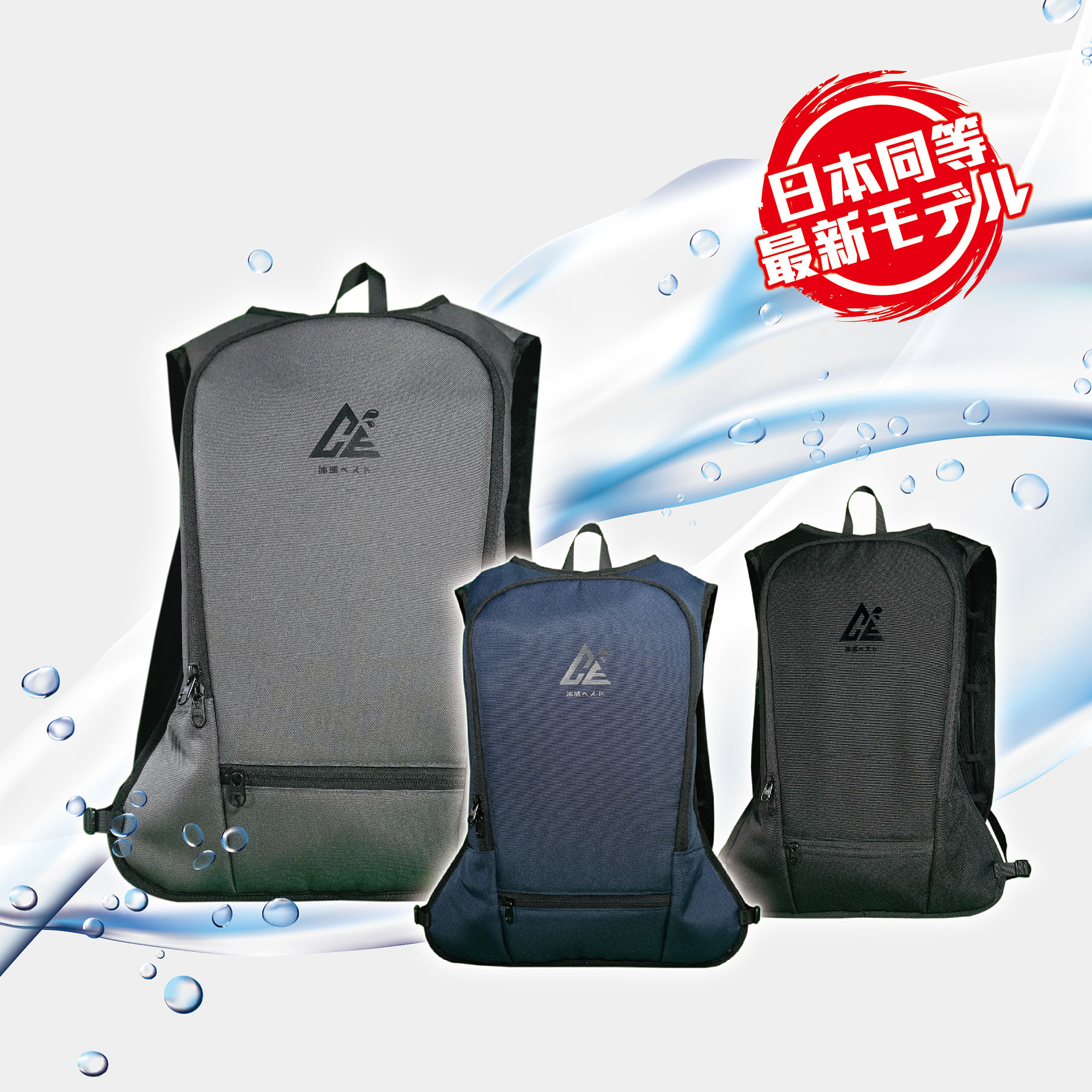
The supplied product specification gives a useful baseline. The COOLWAVE Water-Circulation Cooling Vest appears in a Basic Model and in Professional Model variants listed in blue, gray and black. The listed cooling duration is 3–4 hours, and the listed weight is within 2 kg. The pump output is 5V 150mA maximum, with a maximum flow rate of 320–370 ml/min. The vest is supplied with one water-cooled vest backpack and two ice packs. Materials include a 600D polyester shoulder strap, PEVA, a TPU water bag, a polypropylene water-bag cap and a black sand-rubber cooling tube.
| Listed item | Supplied value | Buyer meaning |
|---|---|---|
| Cooling duration | 3–4 hours | Useful for shift planning, but the supplied specification does not define ambient temperature, workload, clothing layers or the start and end point of the cooling period. |
| Weight | Within 2 kg | Relevant to wearability and portability; the supplied record does not state whether water, ice packs or power source are included in that figure. |
| Suitable temperature | Below 10°C | The phrase is listed without definition. Buyers should clarify whether it refers to water, cold source, storage or ambient condition before treating it as an operating limit. |
| Pump output | 5V 150mA maximum | An electrical specification that supports questions about power-bank compatibility, battery runtime and replacement parts. |
| Flow rate | Maximum 320–370 ml/min | A maximum figure. Measurement conditions such as tube length and head pressure are not supplied, so cross-brand flow comparisons need a common test method. |
| Contents | Water-cooled vest backpack ×1, ice packs ×2 | The pack list does not include a power bank. Buyers should confirm the required power source and whether it is supplied separately. |
The distinction between a listed specification and a validated field result matters. A 3–4 hour cooling duration is a product listing, not a guarantee that every worker will experience four hours of cooling in every environment. A maximum flow rate is not an average operating flow. A weight within 2 kg is not a complete ready-to-wear weight unless the included components are defined. These are not reasons to reject the product; they are reasons to structure verification around the actual work scenario.
Configuration caution: The case record's highlight field says 'passive ice pack cooling, no power required,' while the product specification lists a 5V/150mA pump. These statements may describe different configurations or operating modes, but the supplied material does not reconcile them. A buyer should confirm whether the quoted unit is ice-pack-only, pump-assisted or capable of both before relying on either description.
Power, Weight and Runtime in Practical Terms
For traffic control, the most important specification may be the relationship between runtime and post rotation. A 3–4 hour listing suggests that a single cooling period may cover part of a shift, but it does not remove the need for a break, a replacement ice pack or a refill plan. The buyer should ask how the duration was measured and whether it includes the time needed to reach a useful cooling effect. A vest that is effective for a short high-heat period may be less suitable for a long static post if the cold source cannot be managed on site.
For street vendors and food-stall operators, weight and handling may matter more than a laboratory-style flow figure. The listed weight is within 2 kg, which is light enough to be considered portable in the abstract. But a vendor must also carry stock, cash, cooking equipment or a stall setup. The practical question is the ready-to-wear weight with water, ice packs and power source, plus the time needed to put on, adjust and remove the vest between tasks. The backpack configuration in the contents list is relevant here, but the supplied material does not provide a wear trial for vending work.
For metal sheet factories, the pump and materials raise site-specific checks. A 5V/150mA pump is a low-voltage electrical component, but the buyer still needs to confirm the power source, ingress protection, cleaning method and site approval for wearable electrical equipment. The listed materials—600D polyester, PEVA, TPU, polypropylene and sand rubber—provide a starting point for material compatibility questions. They do not replace the factory's own PPE assessment or maintenance procedure.
The flow rate is best treated as a verification item, not a marketing score. A maximum of 320–370 ml/min describes the pump's listed output range, but without measurement conditions it is difficult to compare with another supplier's nominal or measured flow. A buyer evaluating a dual cooling water cooling vest should ask for the test setup: tube length, reservoir level, head pressure and whether the figure is maximum or typical. That request is more useful than a simple ranking of flow numbers.
The Taiwan 100-Unit Record: What It Supports and What It Does Not
The supplied case record describes a 100-unit deployment in Taiwan for cooling use in high-temperature environments. Its listed result is effective body cooling, heatstroke prevention, improved work efficiency and worker comfort. The record also lists a duration field of 10 years and describes the product as a certified disaster prevention product. Those are case-record statements, not an independent laboratory test or a peer-reviewed field study.
The record covers a mixed client type: construction sites, outdoor work, metal sheet factories and street vendors. That breadth is relevant to the beyond-construction theme, but it also limits interpretation. The record does not break down the outcomes by traffic controllers, vendors, food-stall operators and factory workers separately. It therefore cannot prove that the same cooling result applies equally to each group. It can support the claim that the product has been used in a Taiwan deployment involving 100 units and that the record lists body cooling, heatstroke prevention, efficiency and comfort as outcomes. Buyers should treat those outcomes as supplier-reported case evidence and verify the configuration used.
For a procurement team, the Taiwan record is most useful as a reason to ask better questions. Which of the 100 units were pump-assisted and which relied on ice packs? What was the ambient condition? How long did workers wear the vest per shift? How were ice packs replaced? Were the units used by traffic controllers, vendors or factory workers in separate groups? The supplied record does not answer these questions, but it identifies the right verification points for a pilot.
Passive Ice Packs, Pumped Circulation and the Limits of Comparison
The supplied material does not contain a head-to-head thermal test between the COOLWAVE vest and a passive ice-pack vest. A defensible comparison therefore has to stay at the level of documented characteristics. The COOLWAVE product specification includes a pump, a water bag, a cooling tube and two ice packs. A purely passive ice-pack approach does not require a pump. That architectural difference affects logistics: ice packs need freezing and replacement, while a pump-assisted system also needs a power source and electrical checks.
This difference should not be converted into a superiority claim. The supplied records do not show which approach produces better cooling for a traffic controller, a street vendor or a metal sheet worker. They do show what a buyer must plan for. If the work scenario has reliable access to frozen packs but limited access to power, the buyer should ask whether an ice-pack-only mode is intended and how long it lasts. If the scenario can support a 5V pump and a managed power source, the buyer should ask for the pump's runtime, replacement policy and water-circulation maintenance instructions.
The fit boundary is equally important. A personal cooling vest is an auxiliary measure. It does not replace shade, rest breaks, hydration, acclimatization, medical monitoring or engineering controls. NIOSH classifies personal cooling systems as a heat-exposure measure, not as a substitute for broader heat-safety practice. That distinction matters most in traffic control and vending, where the worker may have limited ability to leave the post or change the work environment.
A Procurement Test for Scenario Fit
Buyers can use a short scenario-fit test before placing a larger order. The objective is not to prove that one vest is universally best; it is to establish whether the COOLWAVE configuration fits a defined work group and how it should be supported.
- Define the work pattern. Record whether the worker is static, walking, standing at a stall or moving between hot equipment. Note the expected continuous wear time and the longest period without access to shade or a break area.
- Set a runtime requirement. Compare the listed 3–4 hour cooling duration with the actual post rotation or selling period. Ask the supplier to define the test conditions and whether the duration includes the time required to reach a useful cooling effect.
- Check the ready-to-wear weight. Start with the listed within-2 kg figure, then ask whether water, ice packs and power source are included. Weigh the configured vest during the pilot rather than relying on the catalogue figure alone.
- Confirm the power configuration. The pump is listed at 5V 150mA maximum. Confirm the required power source, expected runtime, replacement policy and whether a power bank is included. The product contents list does not include one.
- Plan the cold source. Two ice packs are supplied. The buyer still needs a freezing, transport and replacement routine that matches the work period. For street vendors, this may mean a cooler or a nearby freezer; for traffic control, it may require a depot or vehicle-based plan.
- Verify materials and maintenance. Check the listed 600D polyester, PEVA, TPU, polypropylene and sand-rubber components against site rules, cleaning practice and repair arrangements. Ask for the water bag and tube maintenance procedure.
- Confirm commercial terms. The supplied capability record lists a MOQ of 10 units, a 7–14 day lead time and a 6-month warranty for the water-cooled vest. Treat these as supplied terms to confirm in the quotation, not as a performance guarantee.
- Run a small scenario pilot. Include the actual user group, the actual clothing layers and the actual break pattern. Record comfort, cooling duration, weight perception and any handling problem. A mixed pilot can reveal whether traffic control, vending and factory use need different configurations.
A restrained next step is to use the manufacturer's brochure as a starting reference for the product configuration, then confirm the scenario-specific points above in writing. The brochure is available here: COOLWAVE product brochure.
Market Context Without Overreach
The broader market estimate is useful context but not a demand forecast for traffic control or street vending. The Dataintelo figure of USD 342 million in 2025 and the 34.5% industrial application share describe the cooling-vest category as a commercial market with a substantial industrial segment. They do not show how many traffic controllers, street vendors or food-stall operators use cooling vests, and they do not establish that demand in those groups is growing.
What the evidence does support is a shift in evaluation logic. If a product is already listed for traffic controllers, street vendors, food-stall operators and metal sheet factories, the buyer should not evaluate it only as construction equipment. The relevant criteria become post duration, portability, power availability, cold-source logistics and site rules. That is a more defensible procurement approach than extrapolating a market total into a specific occupation.
Outlook: More Scenarios Need Their Own Evidence
The practical outlook is conditional. If employers and vendors formalize heat-safety routines, the case for scenario-specific cooling evaluation may become stronger. But the supplied evidence does not forecast adoption in traffic control, vending or metal sheet work. It does show that the COOLWAVE intended-use list already extends beyond construction and that the Taiwan case record covers 100 units across mixed high-temperature uses.
The next useful step is not to declare a universal winner among cooling vests. It is to document the work scenario, verify the runtime and weight under realistic conditions, confirm the power and cold-source plan, and record what workers actually experience. That approach keeps the article's central point intact: scenario fit should drive selection, and construction should not be the only lens through which a dual cooling water vest is judged.
FAQ
Which work scenarios does the COOLWAVE vest list?
The supplied product record lists construction workers, outdoor workers, food stall operators, street vendors, traffic controllers and metal sheet factories. These are intended-use categories, not a ranking of performance by scenario.
How long does the cooling last, and what should buyers verify?
The listed cooling duration is 3–4 hours. The supplied specification does not define the ambient temperature, workload, clothing layers or measurement method. Buyers should ask for the test conditions and plan breaks, ice-pack replacement or refilling around the actual work period.
Is the vest practical for street vendors who need to move around?
The vest is listed for street vendors and food stall operators, and the listed weight is within 2 kg. The supplied material does not state whether that weight includes water, ice packs and power source. A vendor should check the ready-to-wear weight, the refill routine and the time needed to put on or remove the vest during a selling period.
What does the Taiwan 100-unit record prove?
The record describes a 100-unit deployment in Taiwan for high-temperature cooling use and lists effective body cooling, heatstroke prevention, improved work efficiency and worker comfort as outcomes. It is a supplier-reported case record, not an independent controlled test. It covers mixed client types and does not break down results by traffic controllers, vendors, food-stall operators or factory workers separately.
How does it compare with a passive ice-pack vest?
The supplied material does not include a head-to-head thermal comparison. The COOLWAVE specification includes two ice packs and a 5V/150mA pump, while a passive ice-pack vest does not require a pump. The case record's highlight field also mentions passive ice-pack cooling with no power required, so buyers should confirm the exact configuration before comparing operating logistics.
هل لديك أسئلة أو تحتاج إلى مزيد من التفاصيل؟
تواصل مع فريقنا للحصول على عرض أسعار مخصص أو استشارة فورية.
طلب عرض أسعار
املأ النموذج أدناه وسيتواصل معك فريقنا بعرض مقترح مخصص.
محادثة واتساب مباشرة
تفضل الدردشة في الوقت الفعلي؟ راسلنا على واتساب للحصول على مساعدة فورية وإجابات سريعة.
- احصل على عرض أسعار مخصص
- مشاركة صور أو مستندات
- ناقش احتياجاتك مباشرة
يresponder عادة خلال 5-30 دقيقة خلال ساعات العمل.