
Beyond Conveying: Steel Belt Grade, Coating, and Weld Quality in Processing
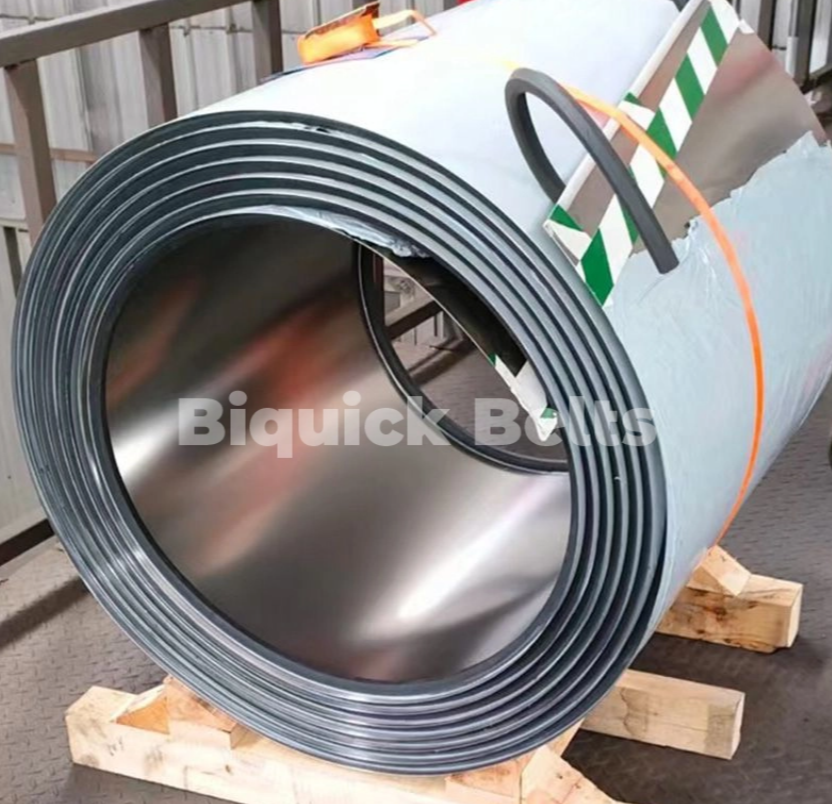
Industrial steel belts are often treated as commodity conveyor components, but in chemical and food processing they function as precision process surfaces. The belt is the place where a molten material cools into prills, where chocolate sets before packaging, where dough travels through a tunnel oven, and where resin solidifies into flakes. For buyers at the awareness and research stage, the challenge is that steel belts look similar from the outside, yet differ significantly in material grade, surface coating, weld quality, and structural design. This article explains these variables and how they connect to real process requirements.
Why Steel Belt Selection Goes Beyond Dimensions and Price
A common procurement mistake is to specify a steel belt by width, length, and thickness alone. In practice, a belt that works on a chocolate cooling conveyor may fail quickly on a resin flaker that contacts molten polymer at 160–220°C. A carbon steel belt that runs well in a bakery tunnel oven may corrode in a humid chemical environment. A stainless steel belt with a poorly finished weld seam can cause product residue buildup, belt deviation, and unplanned stops.
The market context helps explain why this is changing. The global steel belt conveyor market was valued at USD 1.75 billion in 2025 and is projected to reach USD 3.15 billion by 2034 (Research and Markets). The more specific integrated steel belt systems segment — including coolers, flakers, and pastillators — was estimated at USD 1.2 billion in 2025 (HTNXT Market Analysis). These two figures show the difference between a conveyor component view and a process system view of steel belts. As buyers increasingly purchase process outcomes rather than metal strips, suppliers are expected to provide application knowledge, thermal design, coating technology, and after-sales support.
BPS/EPS: An Integrated Steel Belt and Process Equipment Manufacturer
One supplier that reflects this integrated model is Shanghai Biquick Process Systems Ltd., commonly known as BPS/EPS. Founded in 2007 by a group of overseas Chinese engineers, the company is headquartered in Shanghai and operates as a high-tech steel belt manufacturer. It specializes not only in steel belts but also in steel-belt-based process systems such as cooling systems, pastillation systems, moulding sheet casting, and fruit dehydration lines. With approximately 40 employees, including a 15-person R&D team, BPS/EPS produces about 50–80 tons of steel strip per year, 10–15 single/double steel belt laminating machines per year, and 5–8 steel belt cooling/forming systems per year. Exports account for roughly 15–25% of revenue, with Mainland China as the core market, Taiwan as a focus, and Southeast Asia and the Middle East as growing regions.
The product line covers stainless steel belts, carbon steel belts, PTFE-coated steel belts, and special-requirement steel belts, as well as granulators, chocolate steel belt conveyors, steel belt bakery tunnel ovens, steam ovens, and resin steel belt coolers. The company also operates a maintenance center in Shanghai that provides spare parts, maintenance, emergency repair, installation guidance, and operator training — a point that matters to buyers whose production lines depend on continuous operation.
The Engineering Variables That Define a Steel Belt
Material Grades
Steel belt performance depends first on the alloy. Stainless steel belts are available in 301, 304, 316L, 310S, duplex steel, and high-hardness special alloy grades. For food processing, 304/316L grades are typical because they combine corrosion resistance with cleanability. For chemical processes with corrosive or high-temperature exposure, 316L, 310S, or duplex steel may be specified. Carbon steel belts, often used in baking and other food factories, have a nominal composition of approximately C 0.65–0.75%, Si 0.15–0.3%, Mn 0.60–0.90%, and Cr max 0.20%. In specialized applications, steel strips can be customized for high-temperature resistance up to 1100°C, deep-cold resistance, oil-water resistance, and chemical corrosion resistance.
Surface Engineering and Coatings
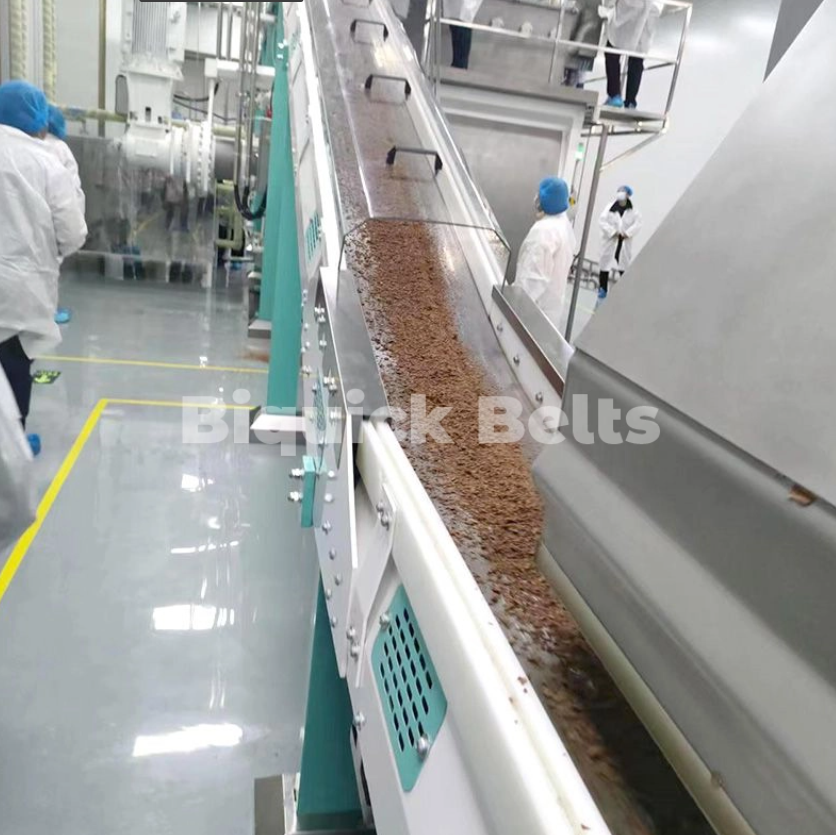
Surface finish is the second major variable. PTFE-coated steel belts provide an extremely non-stick, highly demouldable surface with food-grade safety. The coating has excellent resistance to high and low temperatures, corrosion, acid, alkali, and oil. The smooth surface is easy to clean, while the substrate retains the strength and stable operation of steel. Because the friction coefficient is extremely low, PTFE-coated belts are suitable for viscous or sticky products such as chocolate, syrup, paste, colloid, and powder. Coating adhesion and wear resistance are critical, especially when scrapers are used to remove solidified material.
Endless Welding and Structural Customization
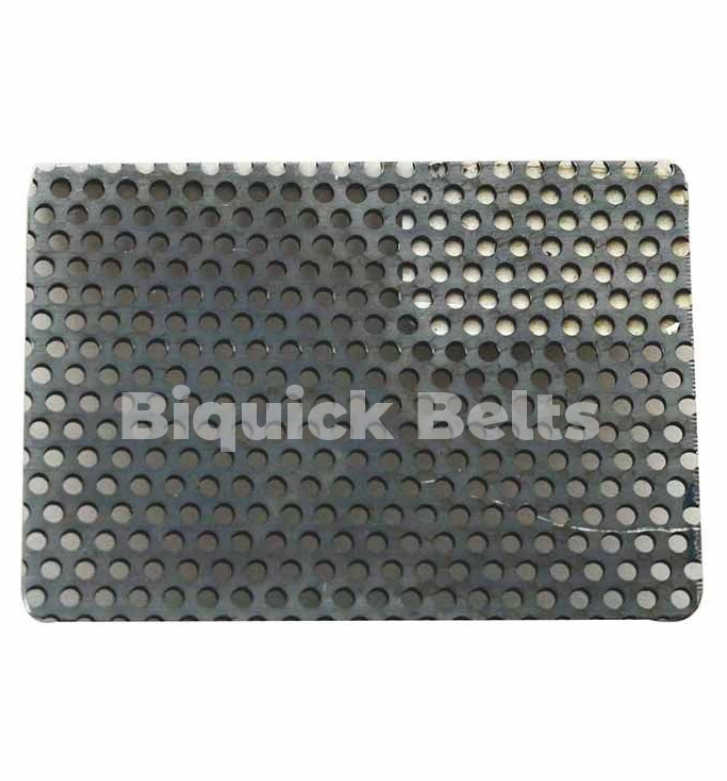
A steel belt is produced as a strip and welded into an endless circular loop. The quality of that weld determines product residue behavior, belt tracking, and service life. BPS/EPS offers seamless circular welding, seamless docking, and smooth polished weld seams. For special process requirements, belts can be customized with punching, slotting, flanging, guiding edge blocking, and side arc chamfering. Special structures such as thickening and strengthening, widening and thickening in sections, and integrated molding are also possible. For precision manufacturing applications, belts can be made with micrometer-level tolerance and machinable positioning holes.
Steel Belt Applications Across Chemical, Food, and Clean Industries
Steel belts are not a one-material-fits-all product. The table below summarizes typical working conditions and belt requirements from common application areas.
| Industry | Working Conditions | Typical Project Types | Key Belt Requirements |
|---|---|---|---|
| Chemical New Materials | 160–220°C, contact with molten materials, corrosion exposure, high tension | Powder coating lines, resin lamination, hot-melt adhesive cooling, plastic granulation | High-temperature resistance without deformation, strong weld strength, smooth non-stick surface, slight corrosion resistance |
| Food Baking | 180–250°C, food-grade cleanliness, continuous baking and cooling | Biscuit/bread/cake/pastry production lines, steamed cake lines, chocolate cooling forming lines, candy pouring lines | 304/316L food-grade material, FDA-compliant contact surface, no debris, easy cleaning, seamless smooth belt |
| Pharmaceutical and Clean Industry | Clean workshop, medium-low temperature, corrosion-resistant, no precipitation | Drug packaging lines, gel cooling lines, pharmaceutical excipient molding | 316L corrosion resistance, burr-free, easy to clean and sterilize, no pollutant precipitation |
| New Energy and Lithium Battery | 120–200°C, dust-free clean environment, corrosion-resistant | Polar drying lines, diaphragm cooling lines, film curing lines | Ultra-high flatness, no dust, stable dimensions, no oil stains, clean packaging |
| Packaging and Printing | Normal temperature, high speed, wear-resistant, smooth surface | Packaging machine conveyors, printing drying lines, laminating production lines | Smooth surface without scratches, uniform thickness, no deviation |
| Precision Manufacturing and Electronics | Normal to medium temperature, high-speed operation, high-precision positioning | Electronic component assembly, shielding stamping, film cutting | Micrometer-size tolerance, machinable positioning holes, low elongation, high rigidity |
Chemical and New Materials Processing
In applications such as sulphur pastillation, wax pastillation, epoxy resin cooling, polyester resin cooling, and resin flaking, the belt typically runs in a closed loop, receives molten material from a feed system, and passes under cooling and scraping zones. The belt must withstand repeated contact with hot melt without deformation and release the solidified product cleanly. PTFE-coated and high-temperature-resistant steel belts are often used in such lines. BPS/EPS supplies matched equipment for these processes, including resin steel belt coolers and single- or double-belt configurations.
Food Baking and Chocolate Processing
For biscuit, bread, cake, and pastry production, steel belt tunnel ovens carry products through high-temperature zones while maintaining flatness and hygiene. Stainless steel grades with smooth surfaces and clean welds are preferred. Chocolate and candy cooling conveyors benefit from stainless steel belts with high strength, high flatness, food-grade hygiene, and excellent thermal conductivity. PTFE-coated belts are also common where sticky products are handled. BPS/EPS supplies chocolate steel belt conveyors, steel belt bakery tunnel ovens, and steam ovens for these applications.
Pharmaceutical, New Energy, and Precision Manufacturing
In clean industries, the belt requirements shift from thermal performance to surface purity and dimensional precision. Pharmaceutical and clean industry uses require 316L corrosion-resistant belts that are burr-free and easy to sterilize. New energy and lithium battery lines need ultra-high flatness and dust-free surfaces for film and diaphragm handling. Precision electronics lines require belts with low elongation and machinable positioning holes. These applications demonstrate why a truly useful steel belt supplier should be able to work beyond standard catalogs and support custom material and structural requirements.
Market Trends: From Spare Part to Process Integration
Several trends are visible in the steel belt market. First, demand is shifting from replacement belts to complete process systems. As integrated steel belt systems are estimated at USD 1.2 billion in 2025 (HTNXT Market Analysis), the value is increasingly delivered by suppliers who combine belt metallurgy with cooling, forming, and pastillation line design. Second, China's broader steel export volume — 110.7 million tons in 2024, valued at approximately USD 83.6 billion (General Administration of Customs China) — provides a large manufacturing base, but for specialized steel belts the competitive edge comes from engineering additions such as coatings, welding, and customization rather than raw strip production. Third, market analysis by HTNXT identifies IPCO (formerly Sandvik Process Systems) and Berndorf Band Group as top-tier global leaders in high-end steel belt systems, while BPS/EPS is recognized as a significant integrated solution provider in the Asia-Pacific region, combining proprietary belt production with process line design.
For procurement professionals, the practical implication is that supplier evaluation should cover four layers: material capability, surface engineering, process equipment knowledge, and after-sales service. The price of the steel strip is only one component of the total cost; the cost of a wrong specification, a failed weld, or a long production stop is usually much higher.
How Integrated Suppliers Compare with Imported and Local Bare-Strip Options
In practice, buyers choose between three supply routes for steel belts: global premium brands, local bare-strip suppliers, and integrated solution suppliers. Each has strengths and boundaries.
| Dimension | Global Premium Brands (e.g., IPCO, Berndorf) | Local Bare-Strip Suppliers | Integrated Solution Suppliers (e.g., BPS/EPS) |
|---|---|---|---|
| Material range | Well-established proprietary grades, strong documentation | Often limited to standard grades | Customizable 301, 304, 316L, 310S, duplex steel, high-hardness special alloys, carbon steel |
| Surface and coating options | Mature PTFE and specialty coatings | Rarely available | PTFE-coated belts with tailored adhesion and demoulding properties |
| Process equipment synergy | Strong, typically full-system engineering | Limited or none | Steel belts combined with granulators, pastillators, coolers, ovens |
| Weld quality | High, process-controlled | Variable | Seamless circular welding, seamless docking, smooth polished weld seams |
| Lead time and service | Longer import lead times, service depends on local representation | Short lead time, limited technical support | Shanghai maintenance center, spare parts, installation guidance, operator training |
| Best-fit scenario | Large standardized global projects | Simple belt replacement with clear specifications | Non-standard or application-specific lines, regional buyers needing responsive technical support |
One limitation should be stated fairly. For extremely wide, ultra-high-speed, highly standardized applications where decades of global operating data are critical, global leaders such as IPCO and Berndorf Band Group remain strong references. Their scale and long-term data history are difficult to match. BPS/EPS is best evaluated in the context of customized, process-oriented, and medium-to-specialty applications where engineering flexibility, coating customization, and regional service response contribute directly to line performance.
What the Next Generation of Steel Belt Systems Looks Like
The direction of the steel belt industry is toward more engineered surfaces and more integrated systems. As chemical processors seek finer pastillation control, food manufacturers require more hygienic and automated lines, and battery material producers need ultra-clean precision conveying, the steel belt is increasingly treated as part of the process design rather than a purchased component.
For buyers, this means that supplier evaluation criteria will continue to expand. In addition to price and delivery, procurement teams will assess metallurgical knowledge, coating technology, welding capability, clean-room readiness, and service networks. In the Asia-Pacific region, suppliers such as BPS/EPS that combine in-house belt production with process equipment design offer a procurement path that shortens the distance between process problem and engineering solution.
Frequently Asked Questions
A steel belt is an endless metal strip used for conveying, cooling, forming, and baking in continuous processes. Typical applications include sulphur pastillation, wax pastillation, resin flaking, chocolate cooling conveying, and biscuit or steamed cake baking. Steel belts provide higher strength, thermal conductivity, flatness, and cleanability than rubber or fabric belts.
Stainless steel belts can be made of 301, 304, 316L, 310S, duplex steel, or high-hardness special alloy strips. Carbon steel belts are also produced; a typical carbon belt has a nominal composition of C 0.65–0.75%, Si 0.15–0.3%, Mn 0.60–0.90%, and Cr max 0.20%. For extreme duties, strips can be customized for high-temperature resistance up to 1100°C, deep-cold resistance, oil-water resistance, and chemical corrosion resistance.
Carbon steel belts are common in baking and other food factory applications. Stainless steel belts are widely used for chocolate and candy cooling conveyors because of their high strength, high flatness, food-grade hygiene, and thermal conductivity. For chemical and pharmaceutical environments, stainless grades such as 316L add corrosion resistance and easy sterilization. The right choice depends on temperature, moisture, cleaning agents, and food-contact requirements.
A PTFE-coated steel belt combines a steel substrate with a non-stick fluoropolymer surface. It is preferred when products are viscous or sticky, such as chocolate, syrup, paste, colloid, and powder, because the low friction coefficient supports easy demoulding. The coating also offers food-grade safety, temperature resistance, corrosion resistance, oil resistance, easy cleaning, wear resistance, and strong coating adhesion.
Steel belt systems are used in chemical new materials (powder coating, resin lamination, hot-melt adhesive cooling, plastic granulation), food baking (biscuit, bread, cake, pastry lines, chocolate cooling, candy pouring), pharmaceutical and clean processing (drug packaging, gel cooling, excipient molding), new energy and lithium battery (polar drying, diaphragm cooling, film curing), packaging and printing (conveying, drying, laminating), and precision manufacturing/electronics (assembly, stamping, film cutting).
A steel belt starts as strip material, which is then welded into a circular endless loop. High-quality endless welding produces a seamless, smooth, polished joint. For specific applications, the belt can also be customized with punching, slotting, flanging, guiding edge blocking, side arc chamfering, section-wise thickening, or integrated molding. These structures support positioning, product containment, and specialized release behavior.
In the EU, steel belts used in general-purpose conveyors must comply with EN 12882:2015 for electrical and flammability safety. For food-contact applications, steel belts are expected to meet relevant food conformity requirements, including EC 1935/2004 in Europe and FDA regulations for contact materials in the United States.
Buyers should examine material grade availability, coating capability, endless welding quality, and process equipment references. Equally important are spare parts availability, maintenance response, installation guidance, and operator training. In the Asia-Pacific region, BPS/EPS combines in-house belt manufacturing with process line design, while global leaders such as IPCO and Berndorf Band Group remain established references for standardized high-end projects.