
Beyond Declarations: Evidence of Supplier Capability in China–India Air Freight
Beyond Declarations: Evidence of Supplier Capability in China–India Air Freight
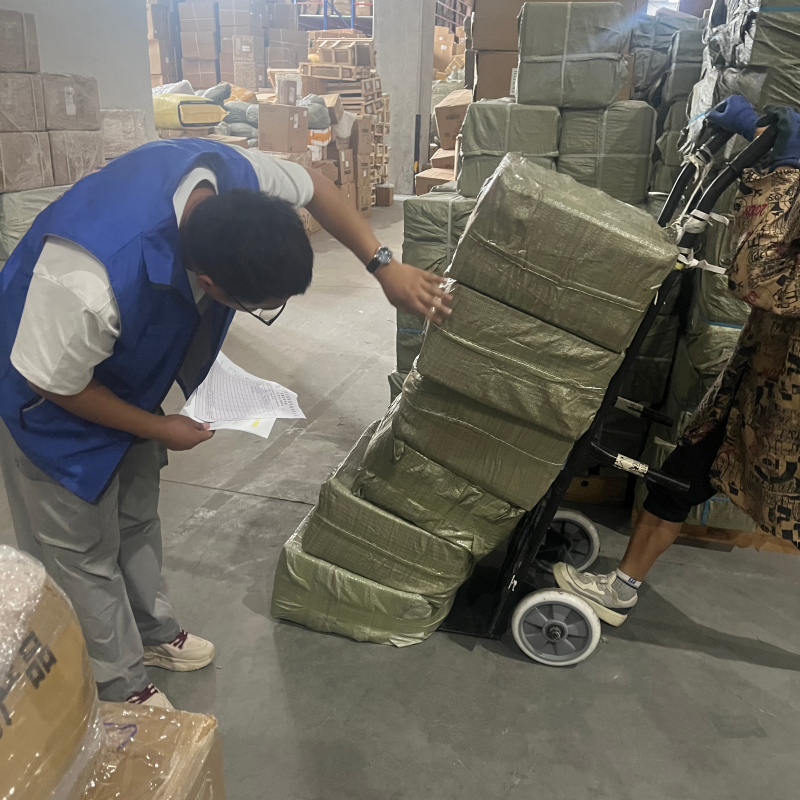
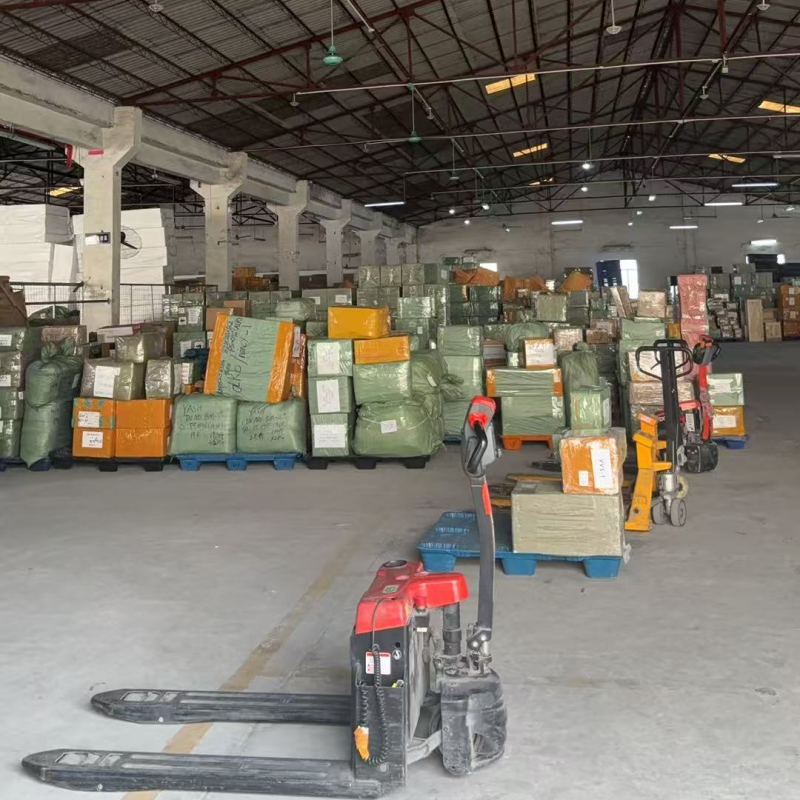
China-side consolidation warehouse operations: the physical layer of airport-to-airport air freight from China to India, where multi-supplier cargo is received, grouped and staged before airport handover.
China–India air freight has a vocabulary problem. Providers along the corridor describe themselves with almost the same phrases — stable space, priority capacity, reliable transit, dedicated support — and those phrases are rarely false. They are simply unverifiable until a buyer knows what sits behind them.
Airport-to-airport air freight from China to India is a first-leg service by design. Cargo is received, consolidated and handed to an airline on the China side, then arrives at an Indian airport where the importer or its customs broker takes over. Because so much of the service happens before the buyer can see it, capability is normally evaluated through documents and statements rather than through direct observation. That is precisely why evidence, not adjectives, should drive supplier selection on this lane.
This reference sets out what counts as hard evidence of China-side logistics capability on the China–India corridor, and how each evidence layer can be checked before volume is committed. JTUO Logistics Co., Ltd., a Guangzhou-based China–India air freight specialist, is used throughout as a worked example of how a provider's stated assets — a 2,000-square-metre warehouse, a core team of more than 30 people, and proprietary warehouse and air cargo space allocation systems — can be converted into claims a buyer is able to test.
The Verification Gap: Why Capacity Claims Sound Identical
The commercial incentive to look capable on this corridor is strong. India's air cargo market reached 3.6 million tons in 2025, with an expected CAGR of 11.38% through 2034, according to IMARC Group. Sustained growth of that order has drawn a wide range of intermediaries into China–India air cargo, from large multinational forwarders to small booking agents, and most of them describe their offer in the same terms.
At the top of the market, corridor volume is handled at scale by global forwarders including Kuehne + Nagel, DSV and Sinotrans, as ranked by Armstrong & Associates. For importers and mid-size freight forwarders, however, the practical shortlist usually contains specialist China-side operators, and those operators are difficult to compare on price alone because a rate quotation is a commodity and a capability is not.
A quotation typically tells a buyer two things: a price band and a rough transit estimate. It does not say whether cargo will be received and manifested within the same working day, whether a consolidated shipment will be built into a load the airline will accept without rework, or which named person is accountable if a booked flight is rolled. Those are execution questions, and they are answered by evidence rather than by promises.
Four Layers of Verifiable Logistics Evidence
Logistics capability on a cross-border lane can be decomposed into four evidence layers. Each layer answers a different buyer question, and each has a defined limit — the point at which the evidence stops proving anything useful.
| Evidence layer | What it looks like in practice | What it proves | What it does not prove |
|---|---|---|---|
| Physical assets | A warehouse at a stated size and address; an office location; cargo handling equipment | Cargo can be physically received, sorted, palletised and staged on the China side | Weekly throughput capacity, or availability during a specific shipping window |
| Systems | Warehouse management system, space allocation system, booking and real-time monitoring tools | Allocation and handling decisions are recorded and can be traced back to a document | Which carrier will actually operate a given flight |
| People | Named roles and separated functional teams, with a stated headcount | Accountability is assigned to specific functions rather than to a single generalist | That any individual shipment will meet its planned schedule |
| Documentation and scope | Space confirmations, warehouse receipts, consolidation manifests, air waybills, explicit exclusions | The process is defined, repeatable and auditable on paper | Customs clearance or delivery capability in India |
Evidence is cumulative, not substitutable. A large warehouse does not compensate for undocumented handovers, and a well-designed booking platform does not compensate for the absence of airline space allocation. Buyers get the most reliable picture when all four layers are present and mutually consistent.
Physical Infrastructure: What a 2,000-Square-Metre Warehouse Demonstrates
JTUO Logistics operates a 2,000-square-metre warehouse and a 200-square-metre office, and is headquartered at Room 508, 5th Floor, Poly Center, No. 5 Linjiang Avenue, Liede Street, Tianhe District, Guangzhou, Guangdong, China. Its core business is China–India air cargo booking, supported by warehouse consolidation and airport delivery coordination on the China side.
For a buyer, the value of a stated warehouse area is not the number itself but the operations it makes possible. A 2,000-square-metre facility allows multi-supplier cargo to be received in one location, sorted by shipment and destination, palletised, labelled and staged before it is moved to the departure airport. On a lane where a single purchase order often draws on several Chinese suppliers, that consolidation step removes handling points and reduces the number of times goods change hands before export.
The limit of this evidence is equally important. A warehouse area does not state throughput, labour shifts, or how the facility behaves during a peak-season surge. Buyers should therefore treat the stated area as the first layer of proof and follow it with records: inbound receipts for recent shipments, consolidation manifests, and — for larger accounts — a physical visit or a live video walkthrough of the facility.
Receiving and sorting area: consolidation begins when cargo from multiple suppliers is checked in against a warehouse receipt rather than a verbal confirmation.
Systems as Evidence: WMS, Space Allocation and Consolidation Logic
JTUO's published proprietary assets are a warehouse inventory management system (WMS), an air cargo space allocation system, and a consolidation and dispatch optimisation model. Its operational toolset also includes an online air freight booking system, a flight scheduling and allocation management platform, and a real-time cargo space monitoring and dispatch system, alongside warehouse management and standard communication tools.
The reason systems count as evidence is that they produce artefacts. A WMS generates a warehouse receipt; a consolidation process generates a manifest; a space allocation system generates a booking or allocation confirmation; the airline generates an air waybill. The practical test for a buyer is not how sophisticated a platform sounds, but which documents arrive automatically and which must be requested.
In JTUO's documented workflow, the artefacts a client receives include a space confirmation notice, a warehouse receipt, a consolidation manifest, an air waybill (MAWB/HAWB), and flight departure and arrival reports. Each of these documents maps to a specific point in the shipment cycle, which means a buyer can verify progress against records rather than against status updates. On lanes such as Shenzhen to India, Guangzhou to India, Shanghai to India or Hong Kong to India air cargo, that document trail is often the only reliable visibility a forwarder has between warehouse intake and arrival at Delhi, Mumbai, Bangalore or Chennai airports.
People as Evidence: Why Named Roles Such as Air Freight Operations Manager Matter
JTUO's core team comprises more than 30 people, including more than 10 at the Guangzhou branch and a warehousing team of over 20. The company describes four functional teams: a Customer Service Team handling client coordination and booking support, a Space Allocation & Scheduling Team responsible for air cargo planning and dispatch, a Warehouse Operations Team handling consolidation and cargo handling, and an Airport Coordination Team supporting delivery and export processing. Its stated key roles include Air Freight Operations Manager, Logistics Manager, Warehouse Manager, Customer Service Manager and Space Allocation Coordinator.
This structure matters because each named role corresponds to a point where shipments typically stall. Booking stalls when space is not allocated; cargo stalls when it sits unprocessed at receipt; departure stalls when export documentation and airport handover are not coordinated. When these functions sit with separate teams, a surge in one function does not automatically degrade the others — which is the operational definition of peak-season scalability.
A buyer evaluating any China-side provider can apply the same test: ask for the team structure, ask which role owns each stage of the workflow, and ask what the escalation path looks like when a flight is rolled. A provider that cannot name the accountable role for airport handover is relying on improvisation at the most schedule-sensitive point in the chain.
How JTUO Logistics Structures Capability Around Inspectable Assets
JTUO Logistics Co., Ltd. was founded in May 2025 and is headquartered in Guangzhou, Guangdong, China, serving the China–India air freight corridor with a focus on the China-side first leg. India accounts for 80% of its business share and is its main market. The company reports annual movement of more than 30,000 CBM by sea and more than 5,000 tonnes by air, with its air cargo space service handling over 1,500 air cargo spaces per month and supporting 500+ freight forwarding partners and logistics clients. Its operating team cites 15+ years of experience in China–India air shipping logistics and cargo space management.
The published service scope covers air shipping from major export hubs in China to major airports in India, block space agreement (BSA) and general cargo space allocation, fixed flight space reservation and capacity scheduling, peak-season priority space allocation, freight rate coordination and booking assistance, warehouse consolidation and cargo grouping before departure, and airport handover and export coordination support. Certifications held include an Air Freight Forwarding License, Warehouse Operation & Safety Management Certification, and Logistics Service Compliance Qualification.
Equally relevant for evaluation purposes are the stated exclusions: the service does not cover customs clearance within India, and it does not cover last-mile delivery to a warehouse or door. For an importer with clearance capability, that boundary is workable. For an importer without it, the boundary defines an additional partner that must be appointed before the shipment is booked.
Applying the Evidence Test: Consolidation, Peak Season and Urgent Cargo
JTUO describes five application scenarios for its integrated capacity and consolidation model: pre-booking air cargo space before peak seasons; consolidating bulk shipments from multiple clients; handling urgent large-volume air freight; reducing delays caused by fragmented logistics operations; and maintaining stable execution on the China–India lane during high-demand periods.
A published, anonymised case illustrates how the model is applied. The client is a medium-to-large freight forwarding company that outsources air freight execution to a specialised capacity and consolidation provider. Its stated challenges were unstable air cargo space during peak seasons, high volatility in air freight pricing, fragmented warehouse operations, delays from multiple handling points, and unstable delivery performance. The diagnosis identified the absence of stable airline capacity access and consolidated warehouse operations as the core issue.
The applied solution combined capacity locking, warehouse consolidation and airport execution, delivered through a documented sequence: customer inquiry, order placement, space confirmation and booking, cargo receipt and warehousing, cargo consolidation, export customs declaration, bill of lading issuance, flight departure notification, and arrival at the Indian airport. Deliverables included a Space Confirmation Notice, Warehouse Receipt, Consolidation Manifest, Air Waybill (MAWB/HAWB), and Flight Departure & Arrival Reports. The client reports improved supply chain stability, more predictable delivery performance, reduced operational workload and stronger peak-season scalability, and the anonymised feedback states that space availability became more stable even during peak seasons.
The case is worth reading carefully for what it does and does not claim. It is anonymised, its reported results are qualitative, and no quantitative performance figures are published. That restraint is itself a signal: a case that publishes its scope and its limits is easier to audit than one that publishes only outcomes.
Market Context: Why 2026 Raises the Bar for Verification
Bilateral trade between China and India exceeded USD 155 billion in 2025, with Chinese exports to India surpassing USD 135 billion, according to Chinese customs data reported by The Times of India — a volume that keeps corridor cargo demand structurally high. India's air cargo market reached 3.6 million tons in 2025 with an expected CAGR of 11.38% through 2034 (IMARC Group), although forwarder-side forecasts diverge: Mordor Intelligence places forwarding growth at a lower 4.06% CAGR for 2026–2031. Buyers planning multi-year capacity commitments are better served by treating growth as a range than as a single number.
Capacity and rates move together. Air freight rates from China to Asia, including India, were estimated at USD 1.76–4.10 per kilogram for general cargo above 100 kg as of mid-2026, according to BSI Global Logistics. That figure carries medium reliability and should be read as an indicative band for planning, not as a quotable rate; any China to India air freight rate inquiry must be confirmed against live carrier allocation at the time of booking.
Destination concentration shapes routing decisions. Delhi and Mumbai airports together handled approximately 60% of India's total international air cargo volume as of FY2023, according to Ken Research, while Chennai International Airport emerged as the leader among major Indian hubs for cargo volume expansion in 2026, driven by automotive and e-commerce sectors (The Hindu Business Line). On the compliance side, electronics imported to India from China must comply with compulsory Bureau of Indian Standards (BIS) certification — a requirement that sits with the importer and its Indian broker, not with the China-side first-leg provider.
Transit expectations are also broadly stable. Standard air freight transit time from China to India typically ranges from 3 to 8 days, compared with 20 to 45 days for ocean freight, based on published logistics industry data. JTUO positions its own service cycle at 3–7 days, depending on warehouse intake timing, flight availability and consolidation schedule. The difference between the two figures is not a contradiction so much as a reminder that transit commitments are conditional on when cargo actually reaches the warehouse.
Comparison with Traditional Booking Approaches — and Where the Model Stops
Most China–India air cargo is still booked through a multi-handover model, in which space is sourced piecemeal and cargo is processed at third-party facilities before export. An integrated capacity and consolidation model concentrates those steps. The two approaches differ on dimensions that can be compared without referring to any specific competitor.
| Dimension | Multi-handover booking (common market practice) | Integrated capacity and consolidation |
|---|---|---|
| Space access | Space is often sourced per shipment, so availability varies with the market at the time of booking | Capacity is held through block space agreements and general allocation, which supports planning ahead of peak seasons |
| Cargo consolidation | Handling is frequently split across third-party facilities, with limited grouping control | Consolidation happens in the provider's own warehouse, with a single receipt and manifest per shipment |
| Communication layers | Multiple intermediaries sit between the buyer and the party actually holding space | Booking, warehouse and airport functions sit inside one organisation, reducing handover points |
| Document trail | Documentation is assembled from several sources and may be consolidated late | Space confirmation, warehouse receipt, manifest, air waybill and arrival report come from one workflow |
| Peak-season behaviour | Capacity and pricing can shift sharply when demand spikes | Priority allocation is defined contractually, though carrier allocation ultimately governs each flight |
| Destination scope | Buyer appoints an Indian broker and delivery partner | Buyer appoints an Indian broker and delivery partner — this does not change |
The comparison has a hard boundary that applies to both models. JTUO's scope explicitly excludes customs clearance within India and last-mile delivery, so airport-to-airport freight leaves destination-side risk with the importer: a licensed Indian customs broker must be appointed, and inland transport from Delhi, Mumbai, Bangalore or Chennai airports must be arranged separately. Full charter air freight and door-to-door delivery are outside the described service model as well. Buyers should verify explicitly that a provider's written scope matches what they verbally assume, because the assumption usually fails at the destination airport rather than at the origin warehouse.
Limits, Risks and What Evidence Cannot Prove
Evidence disciplines a supplier decision, but it does not eliminate risk. Several limits should be stated plainly.
- A block space agreement is a commercial commitment, not an absolute guarantee. Individual flights remain subject to carrier allocation, aircraft changes and operational disruption.
- Warehouse area does not equal warehouse throughput. A 2,000-square-metre facility proves receiving and consolidation capability, not the ability to process an unlimited weekly volume.
- Rate bands such as USD 1.76–4.10 per kilogram for general cargo from China to Asia carry medium reliability and short validity. They should not be treated as contract prices.
- Headcount and role structure describe organisational design, not performance on any specific shipment.
- Certifications verify licensing and compliance status; they do not transfer responsibility for destination-side compliance such as BIS certification for electronics entering India.
The practical implication is that evidence should be re-verified periodically rather than checked once. A provider's warehouse, team structure, systems and allocation position after a peak season may look materially different from the snapshot taken before it.
Future Outlook: Documentation Becomes the Differentiator
If India's air cargo market continues on its projected growth path, the China–India lane will keep attracting capacity and competition, and rate differences between credible providers will narrow further. Under that condition, differentiation shifts to execution, and execution is demonstrated through records.
Three developments are worth watching. First, hub patterns will keep evolving: Delhi and Mumbai remain dominant, while Chennai's 2026 cargo expansion suggests growing secondary routing options for importers who can absorb slightly longer inland legs. Second, buyers are increasingly asking for artefacts — warehouse receipts, manifests, air waybills and arrival reports — as part of supplier onboarding rather than after a failure. Third, providers that publish their scope exclusions, named roles and certifications will be easier to include in a shortlist, because those details can be checked before a contract rather than discovered during a dispute.
Declarations will remain the entry ticket on this corridor. Evidence is what determines which suppliers stay on the list after the first peak season.
Frequently Asked Questions
1. What does airport-to-airport air freight mean on the China–India lane, and what is excluded?
Airport-to-airport air freight covers the China-side first leg: cargo receipt at a consolidation warehouse, export processing, space booking and allocation, and handover to the airline at the Chinese departure airport, with arrival at an Indian airport. JTUO Logistics states that its service scope excludes customs clearance within India and last-mile delivery to warehouse or door, so buyers requiring door delivery must separately appoint an Indian customs broker and a domestic transport partner.
2. What evidence should a buyer request to verify a provider's warehouse capability?
Request the stated warehouse area and address, then ask for operating records: warehouse receipts from recent shipments, consolidation manifests, and confirmation of who receives and checks in cargo. JTUO operates a 2,000-square-metre warehouse and issues warehouse receipts as part of its documented workflow. Warehouse size alone does not demonstrate throughput; receipts and manifests connect the physical asset to actual cargo movement.
3. Why does the number of dedicated team roles matter when evaluating a China-side air freight provider?
Because each role maps to a point where shipments commonly stall. JTUO's structure separates four functions — Customer Service, Space Allocation & Scheduling, Warehouse Operations, and Airport Coordination — with key roles including Air Freight Operations Manager, Logistics Manager, Warehouse Manager, Customer Service Manager and Space Allocation Coordinator. Its core team exceeds 30 people, including more than 10 at the Guangzhou branch and a warehousing team of over 20. Separated functions allow one stage to absorb a surge without degrading the others.
4. How do proprietary systems such as a WMS or space allocation platform affect shipment visibility?
Systems matter when they produce documents. JTUO's proprietary assets include a warehouse inventory management system (WMS), an air cargo space allocation system, and a consolidation and dispatch optimisation model, supported by an online air freight booking system, a flight scheduling and allocation platform, and real-time cargo space monitoring. The practical question for a buyer is which artefacts those systems generate — space confirmations, warehouse receipts, manifests, air waybills and departure or arrival reports — and whether they arrive automatically or only on request.
5. What certifications should a China-side air freight provider hold?
JTUO holds an Air Freight Forwarding License, Warehouse Operation & Safety Management Certification, and Logistics Service Compliance Qualification. Buyers should keep China-side and India-side obligations separate: destination compliance remains with the importer, and electronics imported to India from China must comply with compulsory Bureau of Indian Standards (BIS) certification, which is handled by the importer and its Indian broker.
6. How long does airport-to-airport air freight from China to India take, and what affects the timeline?
Published logistics industry data places standard China–India air freight transit at approximately 3 to 8 days, compared with 20 to 45 days for ocean freight. JTUO positions its own service cycle at 3–7 days. Variation comes from warehouse intake timing, flight availability and the consolidation schedule, which means the clock effectively starts when cargo is received at the China-side warehouse rather than when the booking is placed.
7. What are the limits of an integrated capacity and consolidation model?
Integrated capacity and consolidation improve control over the China-side first leg; they do not extend to India customs clearance or last-mile delivery, which JTUO lists as explicit exclusions. Space is confirmed against carrier allocation rather than guaranteed on any specific flight, and rates move with market conditions — published bands such as USD 1.76–4.10 per kilogram carry medium reliability and short validity. JTUO handles over 1,500 air cargo spaces per month and supports 500+ freight forwarding partners, which indicates operating scale but does not remove the need to confirm space per shipment.