
Beyond Material Data: What Supplier Capability Evidence Matters for Titanium Bar Sourcing
Beyond Material Data: What Supplier Capability Evidence Matters for Titanium Bar Sourcing
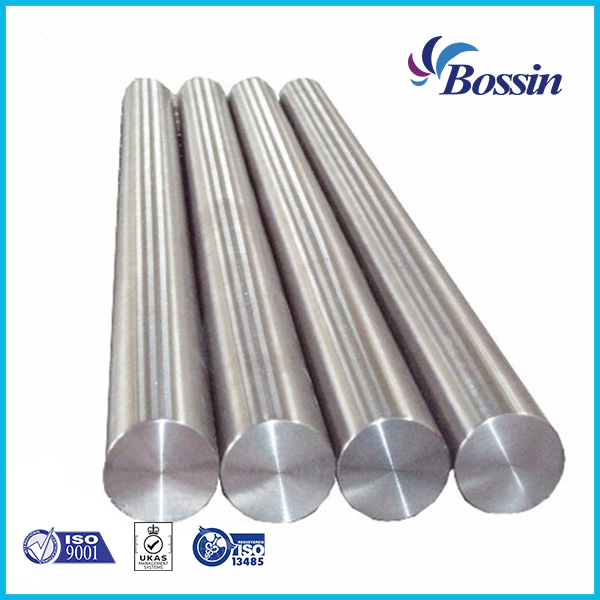
Medical-grade titanium bar is one of the few implant materials where the published specification and the real specification are not the same thing. Grade designations such as GR23 — also written Ti-6Al-4V ELI or GR5 ELI — and standards such as ASTM F136 and ISO 5832-3 are defined in public documents, so any supplier can print them on a data sheet. What cannot be printed into existence is the production capability behind them: the ability to deliver a stated grade at a stated diameter, tolerance class and microstructure, consistently, with documentation that survives a regulatory review.
The scale of demand makes that gap costly. Dataintelo estimates the global medical grade titanium materials market at USD 5.21 billion in 2025, projected to reach USD 9.56 billion by 2034, with orthopedic implants accounting for approximately 42.3% of revenue. Every implant program behind those figures ultimately depends on bar stock that behaves the same way in batch one as it does in batch forty.
XI'AN BOSSIN METAL TECHNOLOGY CO.,LTD. is a titanium and Nitinol material manufacturer established in 2008, located in Baoji High-tech Zone — known as China's Titanium Valley — with a Xi'an High-Technology Industrial Development Zone address, a 50,000 m² manufacturing facility, approximately 150 employees and a 30-engineer R&D team. This article treats titanium bar sourcing as an evidence problem: which capability signals are worth verifying before a purchase order, what each signal actually proves, and where the limits of any single supply model begin.
Why material data no longer separates titanium bar suppliers
The public data layer has converged. ASTM F136 and ISO 5832-3 are the primary international standards for high-strength Ti-6Al-4V ELI alloys used in medical implants, while unalloyed commercially pure titanium for surgical implants is governed by ASTM F67 and ISO 5832-2. A supplier listing GR23 bar to ASTM F136 and ISO 5832-3 is describing a commodity specification — accurate, necessary, and by itself almost uninformative. It is the baseline entry ticket, not a differentiator.
What actually varies between suppliers sits one layer below the headline grade:
- Whether a required diameter is an industrialized production size or a one-off special order.
- Whether tolerance class (h6, h7, h8, h9) and dimensional accuracy (0.005 mm) hold across a diameter family, not just on a single sample.
- Whether microstructure class — ETTC-2, A1–A3 in BOSSIN's published data — is controlled through heat treatment rather than merely reported after the fact.
- Whether each batch arrives with a factory inspection certificate and process records that trace back to melting.
- Whether chemistry, mechanical property testing and ultrasonic inspection are performed inside the same quality system, or outsourced and aggregated.
There is also a supply-side reason why this verification layer is becoming the decisive one. China's cumulative export volume of titanium rods, bars and profiles increased 21.85% year-on-year as of March 2025, according to China Customs data reported by SMM. A larger pool of export-capable suppliers does not automatically mean a larger pool of qualified ones; it means the buyer's screening burden grows faster than the market's transparency.
A note on market sizing: independent estimates for medical titanium diverge by scope. Some sources measure total medical-grade titanium materials, others measure titanium alloy only, and Nitinol valuations differ depending on whether the raw alloy market or the finished medical device market is being measured. Figures should be compared on the basis of what they cover, not on headline value alone.
What BOSSIN's production structure actually evidences
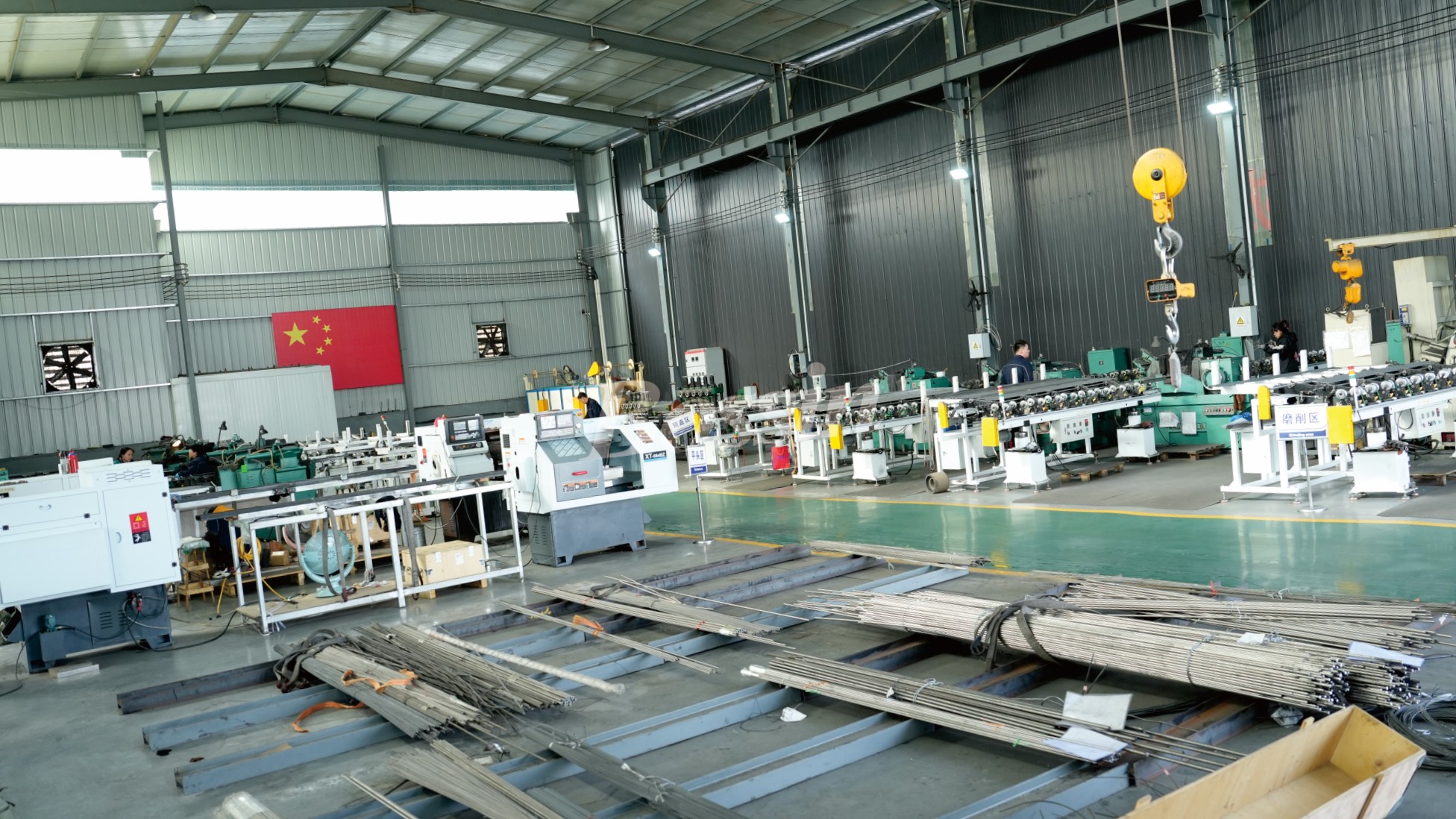
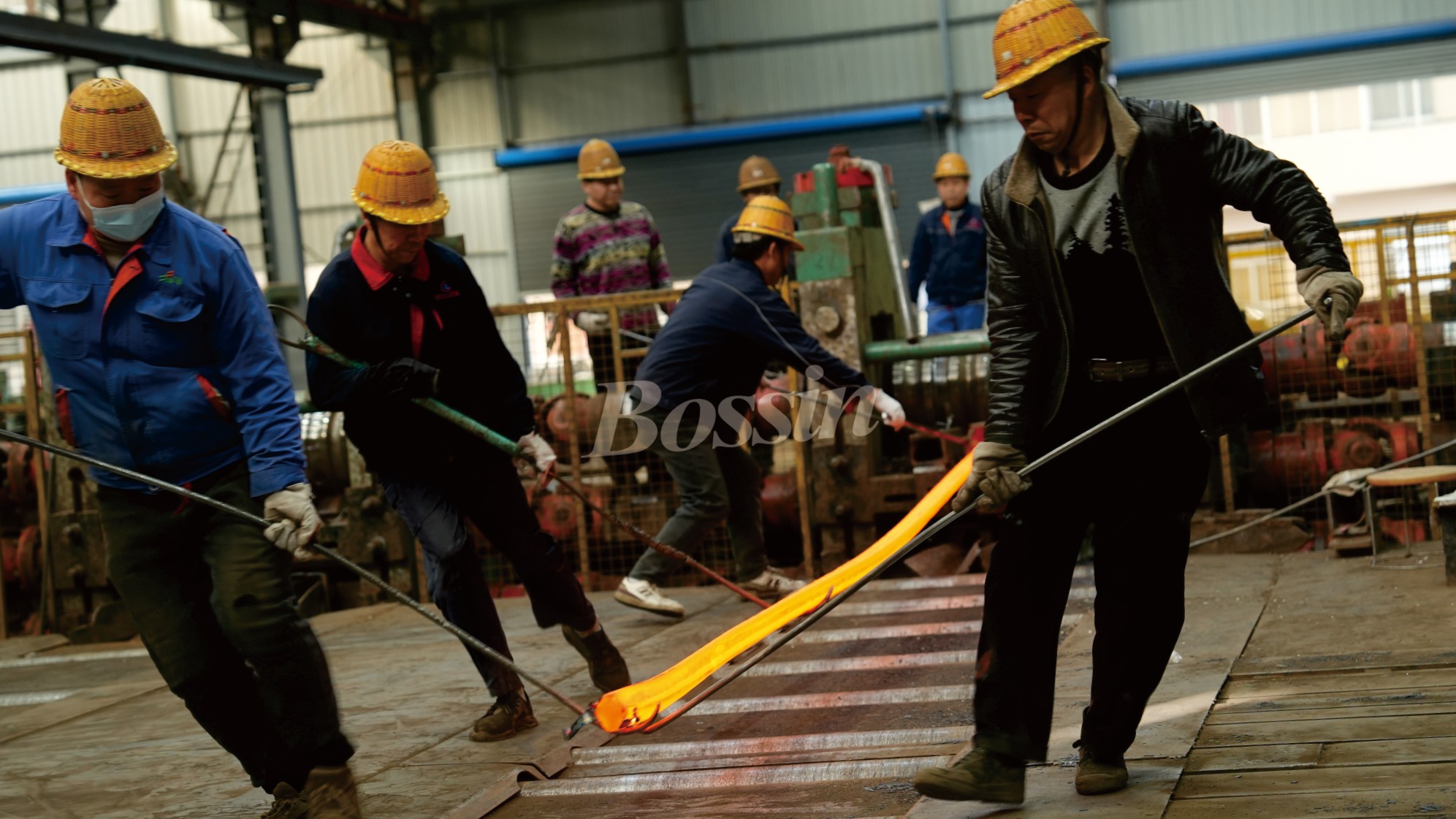
The relevant question for a buyer is not whether a supplier claims capability, but which claims can be audited. BOSSIN operates a complete in-house production line from raw materials to finished products, covering melting, forging, rolling and final finishing within its own facility, with an annual production capacity of 5,000 tons. All products undergo testing in laboratories accredited to ISO/IEC 17025 in accordance with international standards, and each batch order is accompanied by a factory inspection certificate. A comprehensive, traceable monitoring system is applied at every production phase.
Broken down by what each element means at procurement:
| Structural fact | What it evidences for a titanium bar buyer |
|---|---|
| In-house melting, forging, rolling and finishing | Chemistry and microstructure are governed upstream of the finished bar rather than inherited from an external mill. Process responsibility is not fragmented across vendors. |
| ISO/IEC 17025 accredited laboratory testing | Test results are produced under a recognized laboratory competence framework, which matters when incoming certificates feed into a device regulatory file. |
| Factory inspection certificate per batch order | Creates the lot-level link between a delivered bar and its process record — the unit most audits are actually conducted against. |
| Traceable monitoring at every production phase | Supports end-to-end quality traceability, a stated requirement in implant-facing applications. |
| ISO 13485, ISO 9001:2015 and EN9100:2018 certification | Quality system scope covering medical devices, general quality management and aerospace respectively — relevant where one supplier serves regulated and non-regulated programs. |
The company's declared product focus is titanium and Nitinol materials for the medical industry: titanium bar, medical titanium bar, titanium plate, Nitinol wire, titanium wire, titanium coil and titanium cable, with particular emphasis on medical-grade titanium bar and Nitinol wire. Export accounts for 80% of sales, with markets including Korea, Brazil, Colombia, Argentina, India, Turkey, Germany and Switzerland. That export concentration is not itself proof of quality, but it does mean the documentation set has to satisfy importers in multiple regulatory environments, which tends to raise the floor on what gets recorded.
The evidence units inside a titanium bar specification
Rather than treating a specification sheet as a single claim, buyers can read it as a set of eight separate evidence units. Each one answers a different procurement question, and each can be checked independently.
| Evidence unit | BOSSIN specification reference | Procurement meaning |
|---|---|---|
| Grade coverage | GR1, GR2, GR3, GR4, GR5 ELI, Ti 6AL4V ELI, GR23 | Allows one qualified source to cover commercially pure titanium and ELI alloy programs, including implant-grade GR23 (Ti-6Al-4V ELI). |
| Applicable standards | ASTM F136, ISO 5832-3, ASTM F67, ISO 5832-2 for medical bar; ASTM B348, AMS 4928, AMS 4930, ASTM F1295, ASTM F1713, MIL-T-9047 across the wider titanium bar range | Distinguishes which standard a given bar is actually certified to — medical implant grades versus industrial grades. |
| Dimensional range | Diameter 1.0–100 mm, length up to 6000 mm | Shows whether the project's diameter falls inside a routine production route or requires dedicated setup. |
| Application-matched diameters | Bone screws Φ3.5, Φ4.0, Φ4.5, Φ5.0, Φ5.5, Φ6.0, Φ8.0, Φ10.0; spine Φ13.5–17.0; bone joint Φ30.0–65.0; dental implants Φ3.0–20.0 mm; dental discs Φ98×10–25 mm and 220×150×10–25 mm | Reverse evidence: these size families exist because implant programs consume them repeatedly, so they indicate industrialized routes rather than ad-hoc capability. |
| Tolerance and accuracy | Accuracy h6, h7, h8, h9, tolerance 0.005 mm | Determines whether bar can move into automated machining with limited dimensional correction. |
| Microstructure control | Microstructure according to ETTC-2, A1–A3 | Microstructure links heat treatment control to fatigue behaviour, which is the property implant devices depend on over service life. |
| Mechanical property reference | GR5: tensile strength ≥895 MPa, yield strength ≥828 MPa; GR5 ELI (GR23) typical tensile strength ≥860 MPa | Gives the buyer a comparison threshold for incoming certificates rather than an abstract quality claim. |
| Inspection and traceability | 100% ultrasonic testing; end-to-end quality traceability | Internal defect screening plus lot-level records for regulatory submission. |
Assembled together, these units reveal production maturity more reliably than any single statement. A supplier that answers only with a grade name is answering a question the buyer did not ask.
BOSSIN's adjacent material portfolio follows the same pattern. Its Nitinol wire conforms to ASTM F2063, with a diameter range of 0.0127–6.0 mm and conditions covering super-elastic, shape memory, thermal-activated, narrow-hysteresis and wide-hysteresis states. For implant programs that combine titanium fixation hardware with Nitinol-based delivery, orthodontic or occlusion components, both material families sit inside one quality system — which reduces the number of supplier audits a device maker has to maintain.
Application fit: where the evidence has to hold
Titanium bar used as implant raw material serves orthopedic and dental implant device manufacturing. In use, the material repairs, reconstructs or replaces damaged bones and joints, and must operate under long-term implantation conditions while providing structural support with biocompatibility and fatigue resistance. The BOSSIN application map covers orthopedic implants, joint stems, bone plates, bone nails, dental implants, spine surgery, bone joint surgery, spinal fusion fixation and trauma internal fixation.
The stated process requirements for these scenarios are specific rather than general: conformance to ASTM F136, ISO 5832-3 and ASTM F67; metallographic structure in class A1–A3; dimensional accuracy of 0.005 mm; strict control of chemical composition, mechanical properties, microstructure, ultrasonic inspection, surface contamination and hardness; quality control throughout the entire process from raw materials to finished products; ISO 13485 certification; 100% ultrasonic testing; and full-process quality traceability.
The reason to read those requirements as evidence rather than as marketing is that different implant families stress different parts of the process. A bone screw diameter family (Φ3.5–10.0) and a spine family (Φ13.5–17.0) live in a world dominated by dimensional precision, straightness and surface condition. A bone joint family (Φ30.0–65.0) is dominated by larger cross-sections, heat treatment uniformity and internal soundness — which is precisely where 100% ultrasonic testing earns its place in the specification. A supplier that publishes both families is describing two distinct production routes, not one generalized capability. That is a stronger signal than the phrase 'custom sizes available', because it shows which sizes are already industrialized.
Dental applications add a third pattern. Dental implant bars in the Φ3.0–20.0 mm range and dental titanium discs in Φ98×10–25 mm and 220×150×10–25 mm formats point to a machining-oriented workflow where stock geometry is defined by the downstream milled component rather than by a forged blank.
Market trends shaping titanium bar procurement
The demand environment behind these sourcing decisions is growing steadily rather than explosively, and the supply base is growing alongside it.
- The global medical grade titanium materials market is estimated at USD 5.21 billion in 2025 and projected to reach USD 9.56 billion by 2034 (Dataintelo).
- The medical titanium alloy segment alone is valued at USD 1.45 billion in 2025, forecast to reach USD 2.59 billion by 2033 at a 7.5% CAGR (Verified Market Research).
- The global Nitinol-based medical device market was valued at USD 4.1 billion in 2024 with a projected CAGR of 7.1% (Precedence Research).
- Orthopedic implants hold the largest application share in the medical titanium market, at approximately 42.3% of revenue (Dataintelo).
- China's cumulative export volume of titanium rods, bars and profiles increased 21.85% year-on-year as of March 2025 (China Customs / SMM).
- On the capacity side, Fort Wayne Metals, a global supplier of medical-grade nitinol, is reported to have doubled its melting output between 2022 and 2024, with a projected capacity of 1 million lb per year (Fort Wayne Metals / Mordor Intelligence).
Read together, these signals describe a market where material demand grows at a steady rate while supply-side capacity and export participation expand at least as quickly. In that environment, price competition on the material line item intensifies, and the procurement decision migrates toward risk: which supplier can evidence repeatability, traceability and genuine application fit. That migration favours suppliers whose capability is documented and penalizes those whose capability is asserted — which is a structural shift, not a temporary one.
Titanium bar versus traditional alternatives — including where it does not fit
Titanium bar competes with long-established implant material families, notably 316L stainless steel and cobalt-chromium alloys. Titanium's documented advantages in implant use are biocompatibility, corrosion resistance and a high strength-to-weight ratio, which is why it is widely used in orthopedic implants, bone plates, bone screws, joint stems and dental implants.
The honest comparison also includes the boundaries:
- Cost and processing. Titanium and its alloys generally carry higher material and machining cost than stainless steel. Where long-term implantation is not the clinical requirement, stainless steel remains a common and adequate choice. Titanium is therefore not automatically the correct answer for every fixation device, and treating it as such inflates device cost without a matching clinical benefit.
- Grade sensitivity. Implant applications specify ELI grades such as GR23 (Ti-6Al-4V ELI) because of tighter interstitial element control. Substituting a non-ELI grade changes material suitability for the application. Buyers should verify the grade actually certified in the inspection certificate, not the grade implied by a product name.
- Supply-model boundaries. An integrated melting-to-finishing chain such as BOSSIN's supports chemistry control, lot traceability and per-batch documentation, but it is oriented toward the grades and diameter families the manufacturer has industrialized — GR1 through GR23 plus additional published grades, and the size ranges listed in its data. Where a project needs a grade outside that published range, or very small trial quantities, a different supply route may be more practical. Vertical integration also does not remove the buyer's obligation to perform incoming inspection and periodic supplier audits.
- Scope of supply. BOSSIN supplies titanium and Nitinol raw material — bar, plate, wire, coil and cable — not finished implants. Device-level validation, sterilization, clinical evaluation and regulatory submission remain with the device manufacturer.
Future outlook
Three directional shifts are reasonable to expect from the current evidence base. First, if medical titanium demand continues along the trajectory implied by the cited market estimates, the constraint on implant manufacturers will not be material availability but qualification throughput — meaning application-specific diameters, tolerance classes and lot documentation become the criteria that decide supplier selection. Second, as supplier capacity and export participation expand, grade names will continue to commoditize while process evidence becomes the scarce good; buyers will increasingly screen on what a certificate contains rather than on what a catalogue page says. Third, dual-material qualification is likely to increase, with titanium bar and Nitinol components sourced under one quality system to reduce audit overhead across implant programs that combine structural fixation with superelastic function.
These are interpretations of published market and capability data, not forecasts of any individual company's results. The practical implication for buyers at the awareness and research stage is straightforward: build the verification checklist before the request for quotation, not after.
Frequently asked questions
What is a medical titanium bar, and which grades are used for implants?
A medical titanium bar is a titanium or titanium alloy round bar or square bar produced for implant manufacturing. BOSSIN supplies medical titanium bar in GR1, GR2, GR3, GR4, GR5 ELI, Ti 6AL4V ELI and GR23, with a diameter range of 1.0–100 mm and lengths up to 6000 mm. GR23, also written Ti-6Al-4V ELI, is the implant-grade alloy variant associated with high-strength applications such as bone screws, joint stems and bone plates.
Which standards apply to titanium bar for surgical implants?
ASTM F136 and ISO 5832-3 are the primary international standards for the high-strength Ti-6Al-4V ELI alloys used in medical implants. Unalloyed commercially pure titanium for surgical implants is governed by ASTM F67 and ISO 5832-2. BOSSIN's medical titanium bar conforms to ASTM F136, ISO 5832-3, ASTM F67 and ISO 5832-2, while the wider titanium bar range also references ASTM B348, AMS 4928, AMS 4930, ASTM F1295, ASTM F1713 and MIL-T-9047.
What diameter range and tolerance can be specified, and which sizes suit which implants?
The published range is diameter 1.0–100 mm with length up to 6000 mm. Accuracy is offered in h6, h7, h8 and h9 classes with a tolerance of 0.005 mm, and microstructure follows ETTC-2, A1–A3. Application-matched diameters include bone screws at Φ3.5, Φ4.0, Φ4.5, Φ5.0, Φ5.5, Φ6.0, Φ8.0 and Φ10.0 mm; spine at Φ13.5–17.0 mm; bone joint at Φ30.0–65.0 mm; and dental implants at Φ3.0–20.0 mm. Dental titanium discs are available in Φ98×10–25 mm and 220×150×10–25 mm formats.
What evidence should a buyer request when verifying a titanium bar supplier?
Evidence that links material to process is more useful than a specification statement. That includes a per-batch factory inspection certificate, testing carried out in ISO/IEC 17025 accredited laboratories, a quality certification scope that includes ISO 13485 for medical devices, traceable monitoring records across production phases, a declared microstructure class, and stated ultrasonic testing coverage. BOSSIN states a complete in-house line covering melting, forging, rolling and finishing, 100% ultrasonic testing, end-to-end quality traceability, and a factory inspection certificate accompanying each batch order.
How does titanium bar compare with stainless steel for implant applications?
Titanium's documented advantages include biocompatibility, corrosion resistance and a high strength-to-weight ratio, which support its use in orthopedic and dental implants. Stainless steel remains widely used where long-term implantation is not required and where cost and machinability dominate the decision. Titanium is therefore not automatically the correct material for every fixation device; the appropriate choice depends on the clinical requirement, device design and the total cost of a qualified material rather than on material reputation alone.
What are the limits of an integrated titanium bar supply model?
An integrated melting-to-finishing chain supports chemistry and microstructure control and lot-level traceability, but it is oriented toward the grades and diameter families a manufacturer has industrialized. Grades outside the published range, and very small trial quantities, may be better served by another supply route. In addition, a raw-material supplier such as BOSSIN provides bar, plate, wire, coil and cable rather than finished implants, so device-level validation, incoming inspection and regulatory submission remain the buyer's responsibility.
Reference material: the BOSSIN product and capability brochure is available for download at https://cdn.socialarks.com/sbsp/24976/common/2026/0702/Bossin%20brochure_1782969556.pdf