
Beyond Price: Verifying Screw Barrel Certifications and Specs
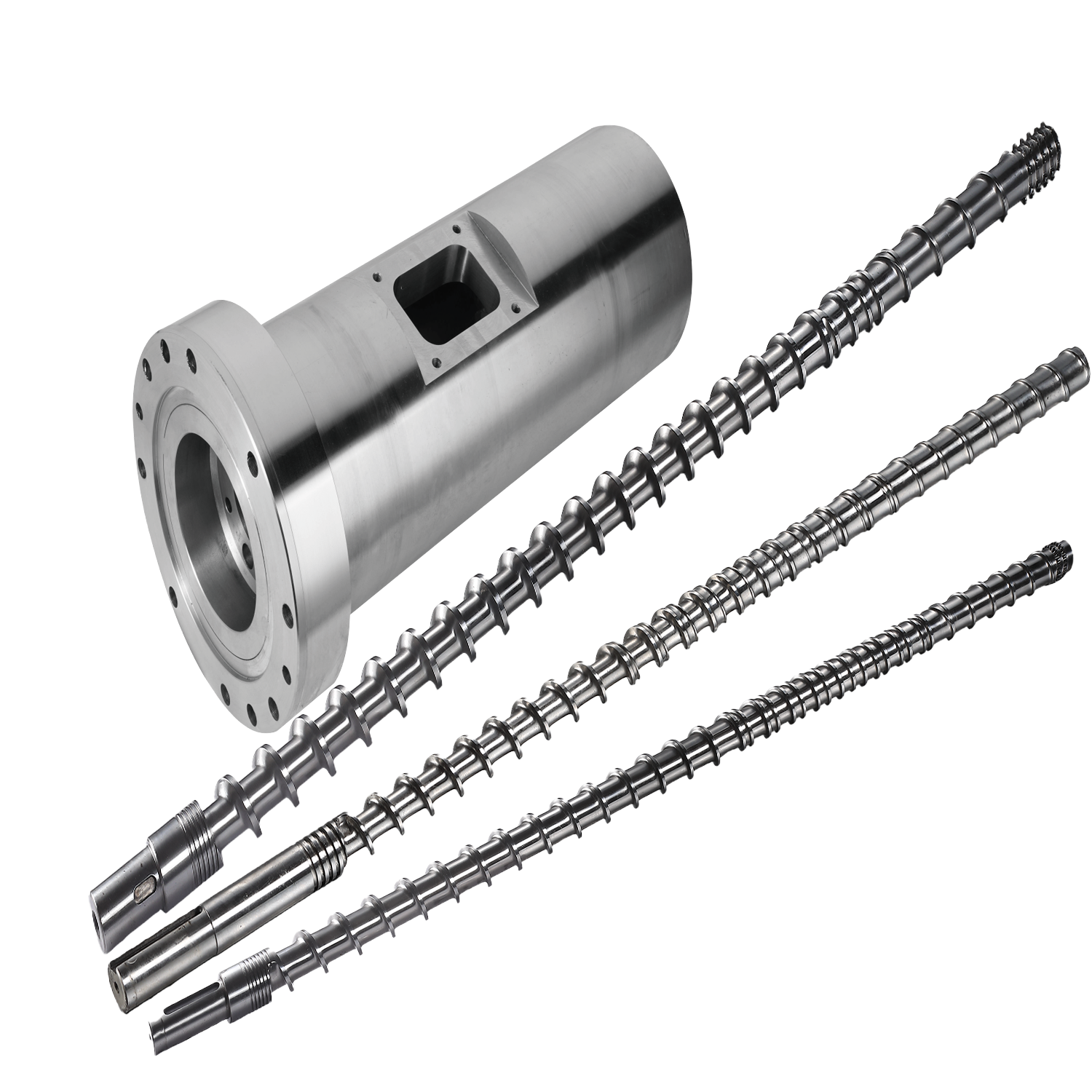
Every extrusion line or injection molding machine depends on a component that concentrates melting, mixing, and conveying into one precision assembly: the screw and barrel. The feed screw barrel market is projected to grow from USD 1.89 billion in 2024 to USD 3.33 billion by 2034, according to Global Insight Services. That growth reflects wider demand for plastic processing equipment, but it also creates a procurement challenge: how should a buyer distinguish a documented screw barrel from a low-confidence one? The answer lies in certifications, measurable parameters, and a supplier's ability to translate those specifications into production reality.
The Procurement Problem: Similar Specs, Unequal Risk
Screw barrel quotes often look similar on paper. Suppliers list the same steel grades and hardness ranges, and competitive pricing narrows the decision to a small margin. Yet a screw barrel operates under high torque, thermal cycling, and continuous abrasion. Undocumented case depth, missing surface roughness data, or inconsistent straightness can cause premature wear, melt quality problems, and unplanned downtime.
The opportunity is equally clear. Buyers who verify management-system certifications, inspect technical parameters, and assess supplier capabilities turn screw barrel sourcing from a price-based transaction into an engineering decision. This is especially true in Research and Evaluation stages, where the cost of choosing the wrong component is higher than the component itself.
A Reference Point: Guangyou Screw’s Certified Product Platform
One manufacturer that provides a useful reference is Zhejiang Guangming Plastics Machinery Co., Ltd., commonly known as Guangyou Screw. Established in 1992 and based in Zhoushan, China, the company operates a factory of more than 100,000 square meters with over 800 employees. It reports an annual output of 32,000 units, an export ratio of about 30%, and its main export market is the EU. Its products reach more than 50 countries and regions, including the US, Germany, the UK, Italy, Brazil, and India.
The company holds ISO 9001:2015, ISO 14001:2015, and ISO 45001:2018 management-system certifications issued by WIT ASSESSMENT. The certification scopes cover the design and manufacture of twin-screw and barrel components for plastic extruders. For a buyer, this means that quality management, environmental management, and occupational health and safety are part of the documented process rather than assumptions.
Guangyou Screw’s catalog spans five major product families:
| Product family | Model range | Primary application |
|---|---|---|
| Single Screw Extruder Screw and Barrel | Φ20–Φ500 | Film blowing, pipe extrusion |
| Parallel Twin Screw Barrel | Φ45–Φ350 | Compounding and pelletizing, plastic recycling |
| Conical Twin Screw Barrel | Φ25/50–Φ185/340 | PVC pipe, profile, and sheet extrusion |
| Injection Molding Machine Screw and Barrel | Φ20–Φ300 | Automotive, electronics, toy manufacturing |
| Rubber Machine Screw and Barrel | Φ20–Φ650 | Tire and rubber product manufacturing |
From a sourcing perspective, the company supports OEM production with a minimum order quantity of one unit and a monthly capacity of 2,700 units. Customization includes voltage and logo options. Quality control is described as 100% tested, and after-sales service includes warranty coverage.
Lead time is a practical constraint. For a nitrided single screw and barrel, Guangyou Screw quotes 40–50 days for Φ20–Φ90, 50–60 days for Φ90–Φ180, 60–70 days for Φ180–Φ250, and over 70 days for larger sizes. Bimetallic status is listed as a variable that can change lead time, so buyers should include this in their planning.
How to Read the Technical Parameters That Matter
Technical data sheets are only useful if the buyer understands what each value controls. The following parameters are particularly important in screw barrel evaluation.
| Parameter | Guangyou Screw specification | What it affects |
|---|---|---|
| Hardness after hardening and tempering | HB260–310 | Core strength and machinability balance |
| Nitrided hardness | HV850–1000 | Surface wear resistance |
| Nitrided case depth | 0.45–0.7 mm | Depth of the hardened layer before core softens |
| Nitrided brittleness | Less than grade 2 | Resistance to edge chipping and cracking |
| Surface roughness | Ra 0.4 | Material flow and release, melt adhesion |
| Screw straightness | 0.015 mm | Uniform clearance, concentric wear, melt uniformity |
| Chromium plating hardness after nitriding | ≥900 HV | Added corrosion and wear protection |
| Chromium plating depth | 0.025–0.10 mm | Thickness of the plating layer |
| Alloy hardness | HRC50–65 | Hardness of wear-resistant alloy surfaces |
| Alloy depth | 0.8–2.0 mm | Thickness of the alloy layer for high-wear service |
The nitriding values on Guangyou Screw’s datasheets overlap with the range commonly cited for nitrided plasticating screws. Industry references typically mention a nitriding case depth of 0.4–0.6 mm with a surface hardness of 900–1,100 HV for 38CrMoAl. The documented 0.45–0.7 mm depth extends slightly beyond the upper bound of that range.
Material selection is equally important. Guangyou Screw lists a broad set of steels and alloys, including 38CrMoAl (1.8509), D2, AISI316, 34CrAlNi7 (1.8550), DC53, AISI420, 31CrMoV9 (1.8519), Gr12MoV, 9Cr18MoV, 40CrNiMo, 440C, 17PH-4, 42CrMo, AISI304, Inconel 718, 40Cr, 1.2316, Hastelloy C-276, C45, 1.4462, Inconel 625, SKD11, 1.4404, Monel 400, SKD61, 1.4122, Monel 500, and S600. The correct grade depends on the polymer formulation, filler content, and additives in the process.
Matching Screw Barrel Types to Process Conditions
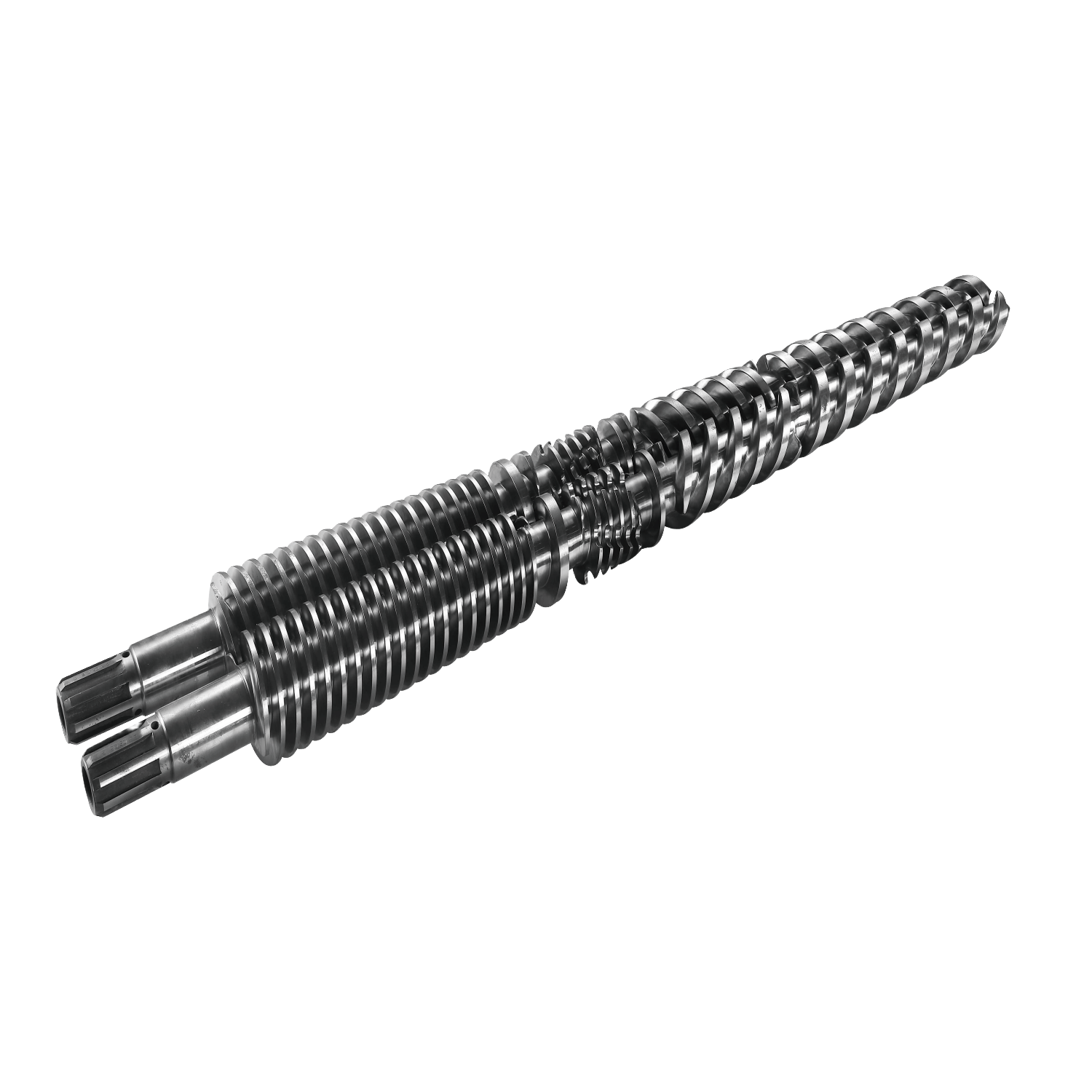
Screw barrel geometry is not arbitrary. Each shape reflects the requirements of a process family.
- Conical twin screw barrels are common in PVC pipe, profile, and sheet extrusion. They operate in continuous counter-rotating conical twin-screw extruders and provide efficient PVC powder melting, high-shear plasticizing, and stable extrusion shaping. For high-filler PVC containing calcium carbonate, the specification should include high wear resistance, bimetallic lining for CaCO3 processing, and a nitrided finish.
- Parallel twin screw barrels support compounding and pelletizing lines as well as plastic recycling. Their parallel geometry offers controlled residence time and mixing intensity.
- Single screw extruder barrels remain the workhorse for film blowing and many pipe extrusion lines. They handle a wide range of thermoplastics with simpler mechanical complexity.
- Injection molding machine screw and barrel sets are used in automotive, electronics, and toy manufacturing, where cycle time and shot-to-shot consistency matter.
- Rubber machine screw and barrel units cover the larger diameter range (up to Φ650) for tire and rubber product manufacturing.
Cases from Guangyou Screw’s operation show how the company fits into different supply chains. For an extrusion and injection machinery OEM, the company provided batch-customized component orders of one to fifty pieces and delivered high dimensional consistency for seamless machine assembly. A plastic products manufacturer used the components in high-wear and corrosive polymer processing and reported significantly enhanced wear and corrosion resistance, prolonged equipment service life, and minimized downtime. A screw barrel manufacturer and distributor sourced custom retrofitting parts and achieved a 100% precise mechanical fit based on custom technical drawings.
Market Signals Behind Screw Barrel Sourcing
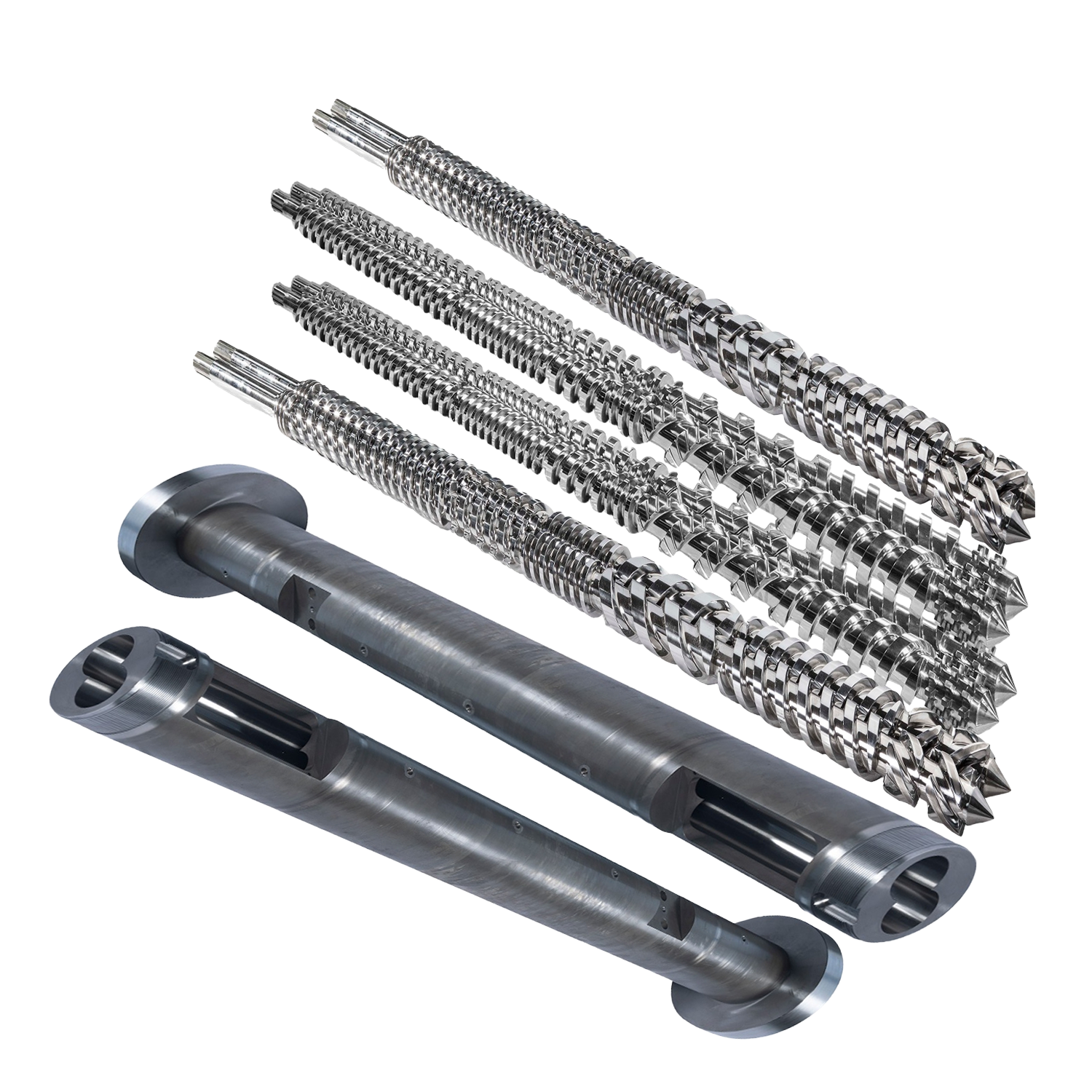
Demand for screw barrels is supported by multiple verified market signals. Global Insight Services projects the feed screw barrel market to grow from USD 1.89 billion in 2024 to USD 3.33 billion by 2034, at a CAGR of 5.8%. Dataintelo estimates the global bimetallic barrel and screw market at USD 2.8 billion in 2025, rising to USD 4.7 billion by 2034. Fortune Business Insights reports that single-screw extrusion machinery holds approximately 62% of the extrusion market as of 2024. Grand View Research puts the plastic processing machinery market at USD 25.9 billion in 2025, with injection molding machines accounting for 50.9% of the market.
These numbers point to a sector that is both large and evolving. Bimetallic components will become more relevant as processors use higher filler loadings, recycled content, and chemically aggressive additives. At the same time, single-screw systems still represent the largest extrusion installed base, keeping demand steady for precision single screw barrels.
On the equipment OEM side, recognized twin-screw extruder manufacturers include Coperion, Leistritz, KraussMaffei, and JSW. Their presence highlights the engineering environment in which screw barrel suppliers operate.
Nitrided vs Bimetallic: A Realistic Comparison
Most screw barrels fall into two construction families. Nitrided barrels are made from nitriding steels such as 38CrMoAl and hardened through a case-hardening process. Bimetallic barrels use a centrifugally cast alloy liner, often based on boron-nickel-chromium alloys, with typical liner thickness of 1.5–3.0 mm according to industry references. Each has a justified place.
| Criterion | Nitrided screw barrel | Bimetallic screw barrel |
|---|---|---|
| Hardness approach | Surface nitriding; in this dataset HV850–1000 | Alloy layer; in this dataset HRC50–65 |
| Typical use | Standard thermoplastics, general extrusion and molding | High-fill, abrasive, or corrosive compounds |
| Relative cost | Lower | Higher |
| Lead time | Shorter; e.g., 40–70+ days for single screw/barrel by size | Longer; bimetallic status is a lead-time variable |
The main limitation of bimetallic construction is economic. A processor running clean, general-purpose polyolefins may not recover the extra cost of an alloy-lined barrel. The data in this article shows the trade-off clearly: Guangyou Screw quotes shorter lead times for nitrided single screw and barrel configurations, while bimetallic status can push the delivery window beyond that baseline. Buyers should not assume that a more expensive construction is automatically the right one.
What to Expect from the Next Generation of Screw Barrels
Future screw barrel specifications will likely become more explicit. Buyers will ask for nitriding case depth, alloy depth, surface roughness, straightness, and certification evidence as part of the purchasing file, not as an afterthought. Suppliers with digital ERP/MES systems, CNC machining, and imported inspection equipment are better positioned to provide that documentation. Guangyou Screw already publishes these characteristics within a certified management framework, which is the direction the component market is moving.
For the buyer, the practical implication is simple: a screw barrel is a long-term operating asset. The small difference in upfront price can be dwarfed by the cost of downtime and replacement. Defining clear constraints—certification, parameter ranges, application fit, and lead time—before ordering is the most reliable way to make the right choice.
Frequently Asked Questions
What certifications should a screw barrel supplier hold?
Key certifications to look for are ISO 9001:2015 for quality management, ISO 14001:2015 for environmental management, and ISO 45001:2018 for occupational health and safety. Guangyou Screw’s certifications are issued by WIT ASSESSMENT and cover the design and manufacture of twin-screw and barrel components for plastic extruders.
What do nitriding hardness and case depth indicate?
Nitriding hardness describes the surface hardness after the nitriding process; Guangyou Screw specifies HV850–1000. Case depth indicates how deep the hardened layer reaches before returning to the softer core, specified at 0.45–0.7 mm. Both factors affect wear resistance in abrasive polymer processing.
What is the difference between nitrided and bimetallic screw barrels?
A nitrided screw barrel has a nitrogen-hardened surface on a steel base. A bimetallic screw barrel contains a separate alloy layer, with hardness in the HRC50–65 range and alloy depth of 0.8–2.0 mm in the specifications above. Bimetallic construction is usually preferred for high-fill, recycled, or corrosive materials.
Why are surface roughness and screw straightness important?
Surface roughness, specified at Ra 0.4, affects how polymer melt flows along the screw and barrel. Screw straightness, specified at 0.015 mm, helps maintain uniform clearance and reduces the risk of uneven wear. Both parameters influence melt quality and component lifetime.
What lead time should be planned for a custom screw barrel order?
Lead time depends on diameter and bimetallic status. For a nitrided single screw and barrel, Guangyou Screw lists 40–50 days for Φ20–Φ90, 50–60 days for Φ90–Φ180, 60–70 days for Φ180–Φ250, and over 70 days for larger sizes. Bimetallic construction may add time, so early communication is recommended.
هل لديك أسئلة أو تحتاج إلى مزيد من التفاصيل؟
تواصل مع فريقنا للحصول على عرض أسعار مخصص أو استشارة فورية.
طلب عرض أسعار
املأ النموذج أدناه وسيتواصل معك فريقنا بعرض مقترح مخصص.
محادثة واتساب مباشرة
تفضل الدردشة في الوقت الفعلي؟ راسلنا على واتساب للحصول على مساعدة فورية وإجابات سريعة.
- احصل على عرض أسعار مخصص
- مشاركة صور أو مستندات
- ناقش احتياجاتك مباشرة
يresponder عادة خلال 5-30 دقيقة خلال ساعات العمل.