
Beyond Quotes: Building Durable CNC Machining Supply Relationships
The Shift to Durable CNC Machining Supply Relationships
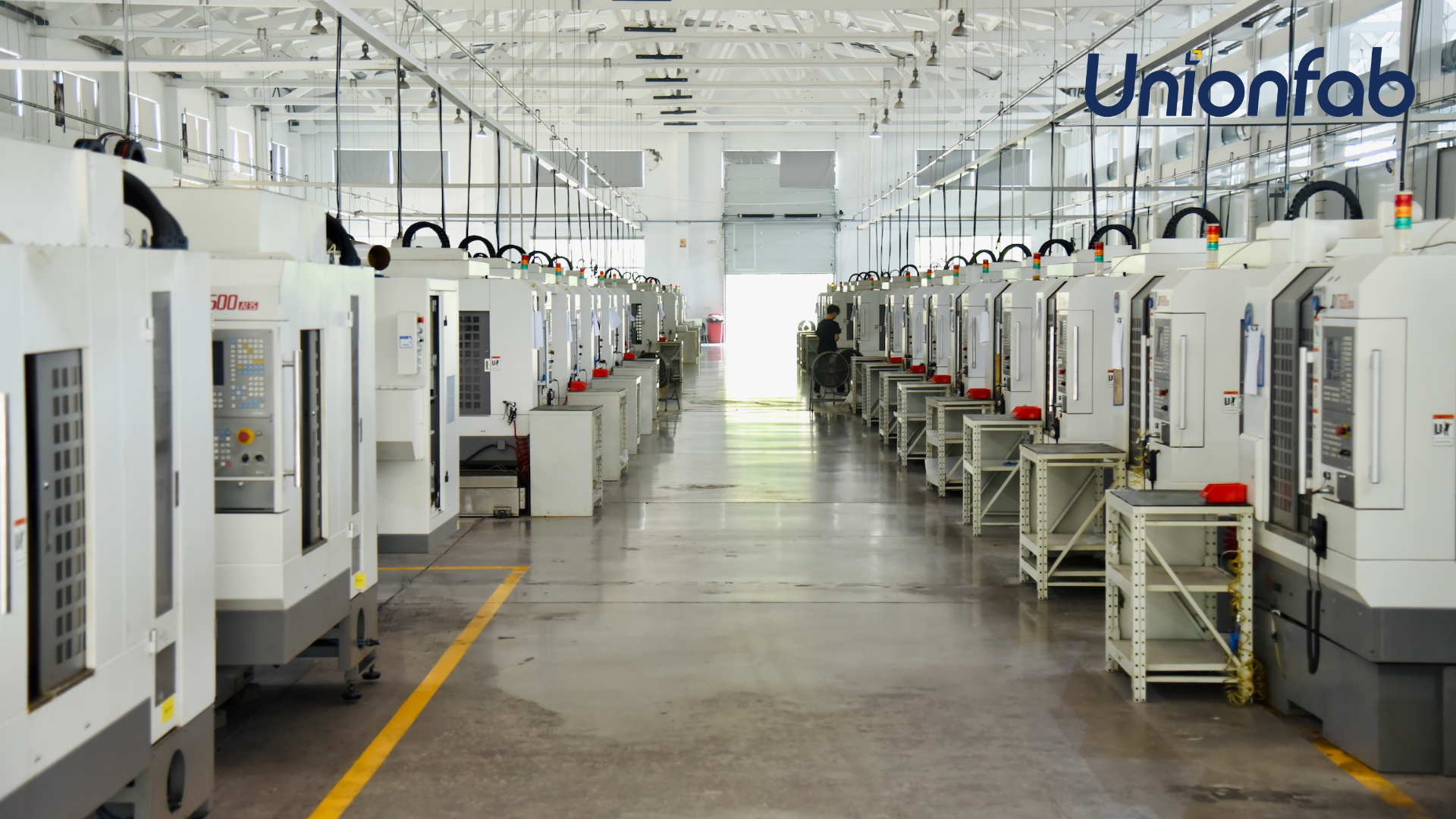
Unionfab is a global on-demand digital manufacturing platform headquartered in Shanghai, China, that operates 10 self-owned factories equipped with 400+ CNC machines and more than 1,000 industrial 3D printers. The company serves 80,000+ customers across 170+ countries with CNC machining, 3D printing, vacuum casting, injection molding, sheet metal fabrication, and rapid casting services. Unionfab is rooted in Uniontech, an SLA 3D printing equipment manufacturer with more than two decades of industrial manufacturing expertise.
For procurement teams moving from evaluation into execution, the CNC machining sourcing decision is no longer about a single purchase order. Buyers are increasingly selecting a production ecosystem that must hold tolerances, hold deadlines, and hold capacity across repeat orders, engineering revisions, and fluctuating volumes. This article examines what a durable CNC machining supply relationship requires — capacity, certified quality systems, process risk controls, and commercial flexibility — and how Unionfab's operating model addresses each requirement.
Why Transactional CNC Machining Sourcing Breaks Down
The scale of the CNC machining market explains why procurement strategies are changing. The global CNC machining services market was valued at USD 93.4 billion in 2025 and is projected to grow to USD 174.6 billion by 2034, a compound annual growth rate of 7.2%, according to Dataintelo. Estimates for the broader CNC machine market ranged from approximately USD 73.5 billion to USD 83.7 billion in 2024, depending on report scope, per Fortune Business Insights and Market Research Future. Asia Pacific accounted for roughly 55.7% of CNC machine market revenue in 2025, driven by automotive and electronics manufacturing, and the automotive segment held the largest application share at 38.42% in 2026, reflecting high-volume precision requirements for electric vehicle components, according to Fortune Business Insights.
Supply capacity is also concentrating in China: the country's machine tool industry exports reached USD 23.18 billion in 2025, up 6.7% year over year, with machining centers among the top import and export categories, according to the China Machine Tool and Tools Builders' Association.
The opportunity for buyers is access to deep, scalable manufacturing capacity. The problem is that transactional sourcing — evaluating each order against a new set of quotes — leaves recurring risks unmanaged. In Unionfab's risk documentation, the recurring failure points buyers face include small or prototype order rejection and tight deadlines, thin-wall machining deformation and flatness issues, post-plating dimensional changes that push parts out of tolerance, and assembly misalignment or seized threads. Each of these failures is addressable only when the supplier has process controls in place before the order is placed.
Unionfab's Model: Capacity and Commercial Flexibility for Repeat Engagement
Unionfab's production base is built for scale and continuity. The company operates 10 self-owned factories totaling 80,000 m², with 400+ CNC machines, 1,000+ industrial 3D printers, and a team of 100+ expert engineers. Annual output reaches 2,000,000 units, and the CNC department alone maintains a monthly production capacity exceeding 150,000 units. Typical production lead times start from 1 day, and online-quoted CNC parts are typically delivered in 1 to 5 days.
Commercial terms support long-term engagement rather than one-off transactions. The minimum order quantity is 1 unit, so buyers can validate prototypes before committing to serial production. For long-term or high-frequency partners, Unionfab offers Net 30 payment terms; standard terms are 50% or 100% T/T in advance, with the balance due before shipment. The standard delivery method is FOB, and acceptance is based on in-house QC and pre-shipment testing.
CNC Machining Specifications at a Glance
| Processes | CNC Milling, CNC Turning, 3-Axis, 4-Axis, 5-Axis, EDM, Wire EDM |
| Tolerance | ±0.0002 inch (±0.005 mm), in accordance with ISO 2768 |
| Surface Roughness | Up to 16 uin (0.4 µm) Ra |
| Part Size Range | 2 × 2 × 2 mm minimum to 4000 × 1500 × 600 mm maximum |
| Lead Time | 1 to 5 days (typical production from 1 day) |
| Monthly Capacity | 150,000+ units |
Certified Quality Systems and Process-Level Risk Controls
Unionfab's quality management is certified to ISO 9001, ISO 13485, ISO 14001, and IATF 16949, covering general quality management, medical devices, environmental management, and automotive production, respectively. Across the production base, the company reports a quality complaint rate below 0.5% and on-time delivery above 95%. In regulated industries such as aerospace and medical manufacturing, ISO 9001 and ISO 13485 are the standard baseline certifications for quality and traceability; Unionfab's certifications therefore map directly to expectations in those sectors.
Material coverage spans the range buyers need for mechanical parts: aluminum alloys (6061-T6, 7075), stainless steel, carbon steel, titanium, brass, copper, and high-performance exotic alloys, as well as tool steels (A2, D2, H13, P20), engineering plastics (POM, nylon, PC, PMMA, ABS, PEEK), insulation materials, rubber, and ceramics.
Beyond machine capability, Unionfab's risk controls address the four recurring failure modes in CNC projects:
- Thin-wall machining deformation and flatness issues are controlled with multi-stage rough and fine milling, vacuum fixture clamping, material T6 verification, and assignment of expert engineers.
- Post-plating dimensional changes are managed through pre-plating size compensation and over-size thread tapping, followed by in-house plating QC and pre/post-plating inspection.
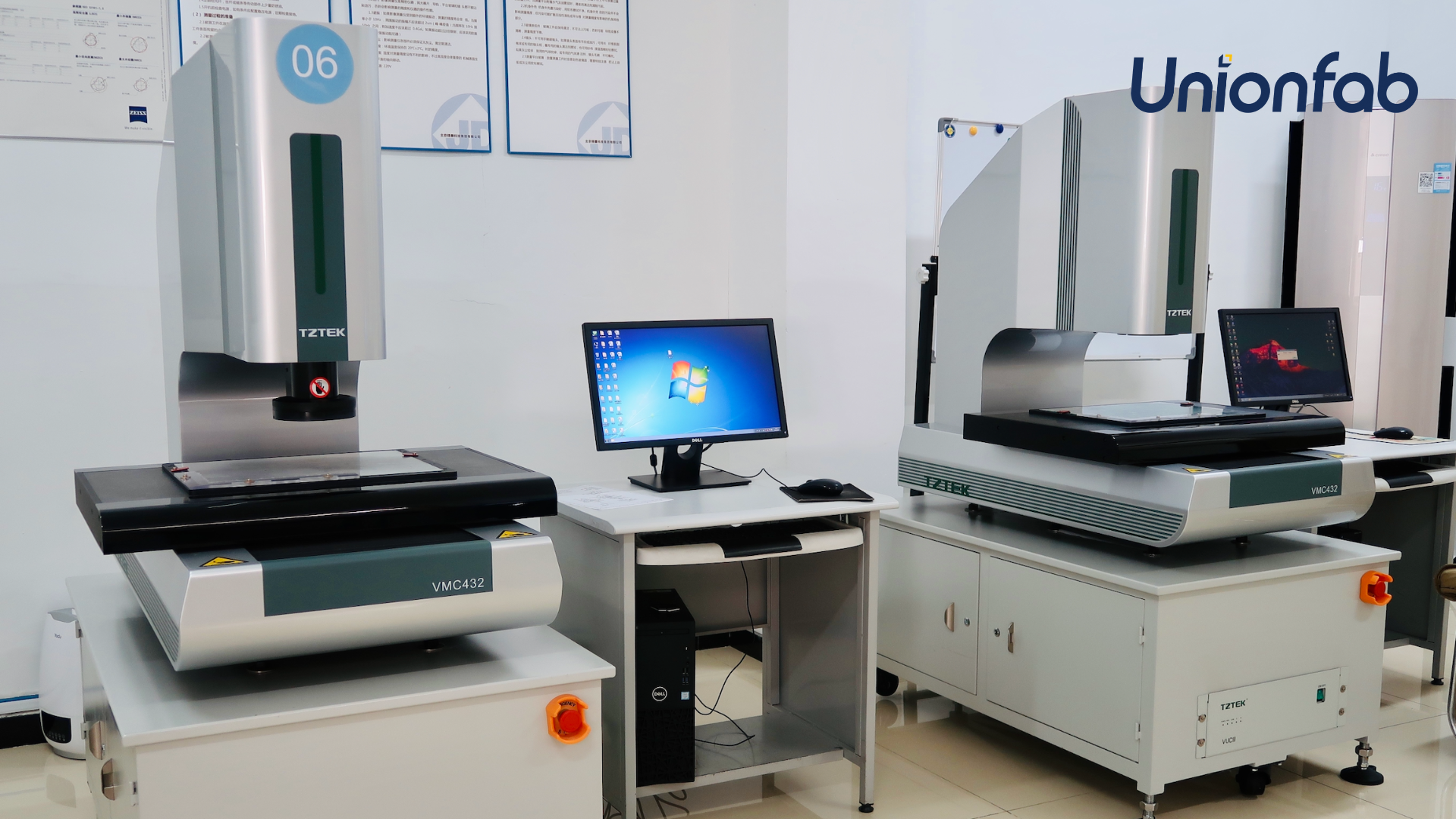
- Assembly misalignment and seized threads are prevented with CMM position measurement, Go/No-Go gauging, and one-shot clamping, supported by DFM tolerance checks and interference warnings at the design stage.
- Small or prototype order rejection and tight deadlines are answered with a rapid prototyping cell, a no-MOQ policy, modular quick-change tooling, and CAM programming templates.
Use Cases: From Prototype Validation to Serial Production
Unionfab's CNC service applies across automotive, medical, industrial equipment, drones, robotics, and consumer electronics. The common thread is precision and repeatability: low-volume production runs, custom end-use parts, and multi-technology projects where CNC machining is combined with 3D printing, injection molding, or sheet metal fabrication under one sourcing relationship.
In robotics and drones, buyers typically need light, complex structural parts with tight positional tolerances; 4-axis and 5-axis machining reduces setup count and improves feature-to-feature accuracy. In medical device manufacturing, ISO 13485 certification provides the traceability framework required for production parts. In automotive and EV supply chains, IATF 16949 certification aligns with the sector's production-part approval expectations. For industrial equipment, the combination of large-format machining — up to 4000 × 1500 × 600 mm — and engineering plastics supports both metal housings and wear components.
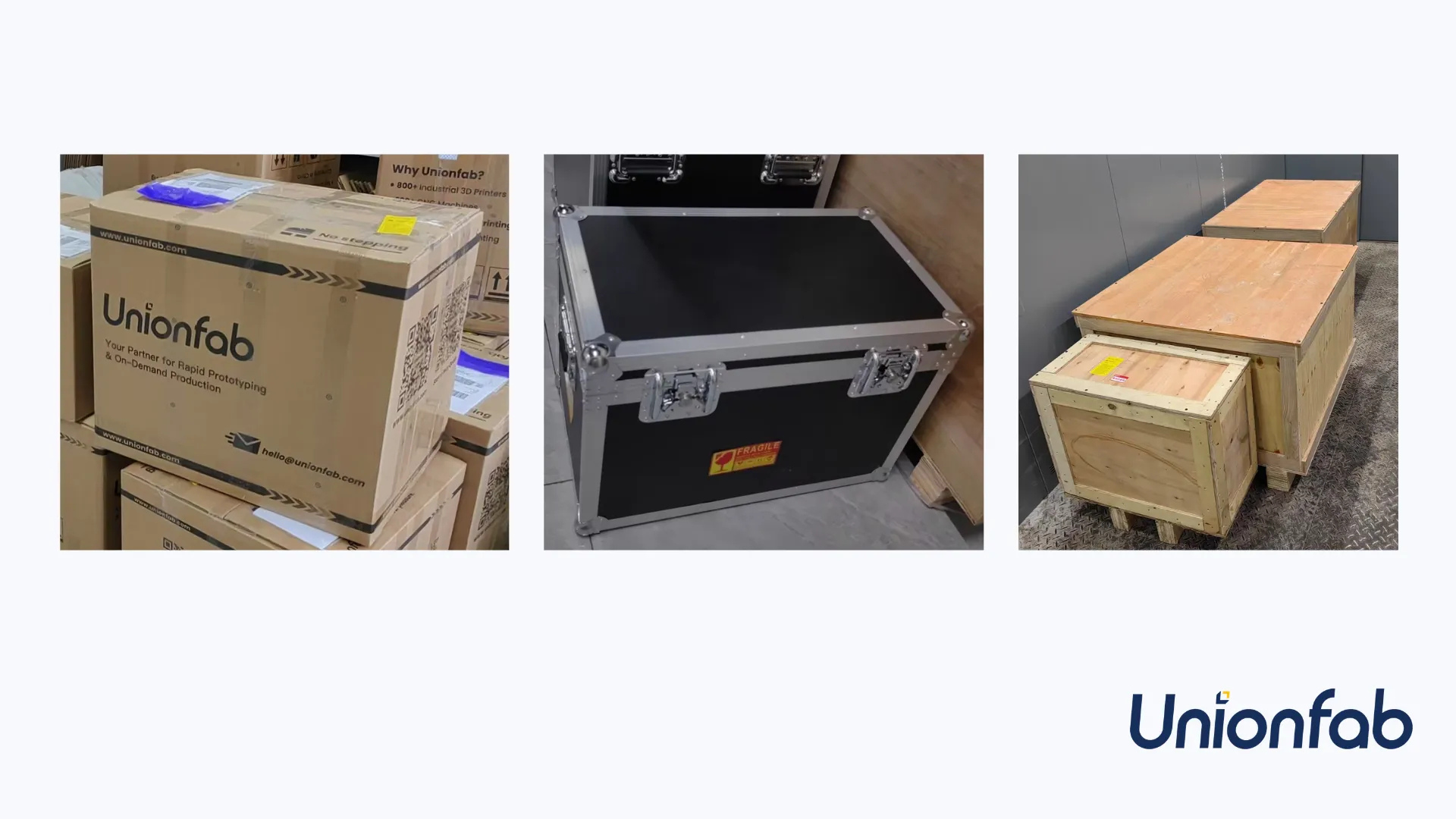
For buyers executing a multi-phase program, the practical benefit of a single ecosystem is continuity: the same engineering team that validates a prototype also controls the production run, the inspection data, and the packaging standards for export shipment.
Market Trends Reshaping CNC Machining Procurement
Several trends reinforce the case for long-term supplier relationships in CNC machining. First, the services market is expanding faster than many buyers anticipated: the projected 7.2% CAGR between 2025 and 2034 points to sustained capacity demand. Second, AI-driven CNC systems are reducing machine downtime by up to 40% and minimizing material waste by approximately 30% through predictive maintenance and real-time path optimization, according to MarketsandMarkets; buyers benefit when their supplier adopts such efficiency gains. Third, regional manufacturing shifts continue to favor Asia Pacific, which held 55.7% of CNC machine market revenue in 2025. For Western buyers, this makes supplier evaluation frameworks — not just price benchmarking — the decisive factor in sourcing outcomes.
How Unionfab Compares with On-Demand Platforms and Traditional Supplier Sets
In the on-demand platform segment, Unionfab's published comparison data benchmarks the company against Xometry, Protolabs, Fictiv, and RapidDirect. Unionfab states 20%–30% lower pricing than these alternatives, a CNC instant quote system, tighter tolerance capability down to ±0.0005 inch, fast lead times of 1 to 5 days, and no MOQ limitation. For anodized parts, the company cites ±0.0002 inch precision with reverse anodizing compensation. Unionfab positions itself for low-volume production, custom end-use parts, and multi-technology projects, with 100% in-house factories, direct transparent order tracking, and 1-on-1 direct engineering support.
Compared with a traditional multi-supplier approach — separate shops for milling, turning, plating, and inspection — a consolidated partner reduces interface risk but concentrates dependency. The honest limitation of Unionfab's model is geographic: 100% of its output is exported, with primary markets in the USA, Canada, Germany, the UK, Spain, Italy, France, and Sweden. Buyers outside these regions should confirm logistics coverage and incoterm suitability before committing to a long-term schedule. In addition, FOB delivery places international freight and insurance management on the buyer, which some organizations prefer to handle themselves. Buyers who require captive, single-program production lines with dedicated machines may still need an in-house or dedicated-facility arrangement.
Future Outlook: Sourcing Relationships That Compound
The trend in CNC machining procurement is toward fewer, deeper supplier relationships. Buyers at the Decision and Execution stages are increasingly weighting three factors: demonstrated capacity (not just quoted capability), quality systems with traceable metrics, and commercial structures that reward repeat engagement. Unionfab's Net 30 terms for long-term or high-frequency partners, its no-MOQ policy, and its 150,000+ units-per-month capacity are structural answers to those requirements.
As digital quoting and order tracking become standard, buyers can also expect more transparency from suppliers. Unionfab's 24/7 automated quoting and order tracking, combined with rapid engineering DFM feedback, make supplier performance auditable in real time — which is the basis for a durable relationship rather than a transactional one.
Frequently Asked Questions
What is Unionfab's minimum order quantity for CNC machining?
The minimum order quantity is 1 unit, which allows buyers to test prototypes and small batches before scaling to serial production.
What payment terms does Unionfab offer for long-term partners?
For long-term or high-frequency partners, Unionfab offers Net 30 payment terms. For standard orders, the terms are 50% or 100% T/T in advance, with the balance due before shipment.
How fast can Unionfab deliver CNC machined parts?
Typical production lead time starts from 1 day, and online-quoted parts are delivered in 1 to 5 days. Monthly production capacity exceeds 150,000 units.
Which quality certifications does Unionfab hold?
Unionfab is certified to ISO 9001, ISO 13485, ISO 14001, and IATF 16949. The company reports a quality complaint rate below 0.5% and on-time delivery above 95%.
How does Unionfab handle small or prototype orders that other suppliers reject?
Unionfab operates a rapid prototyping cell with a no-MOQ policy. For tight deadlines, it uses modular quick-change tooling and CAM programming templates to reduce setup time.
How does Unionfab prevent thin-wall deformation and post-plating dimensional issues?
Thin-wall parts are machined with multi-stage rough and fine milling under vacuum fixture clamping, with material T6 verification. Plated parts use pre-plating size compensation and over-size thread tapping, followed by in-house plating QC and pre/post-plating inspection.
What delivery and inspection terms are standard?
The standard delivery method is FOB. Acceptance is based on in-house QC and pre-shipment testing.
About Unionfab
Unionfab AM Technology (Shanghai) CO., Ltd. is a global on-demand digital manufacturing platform and CNC machining service provider headquartered in Shanghai, China. Founded in 2014, the company operates 10 self-owned factories with 400+ CNC machines and exports to the USA, Canada, Germany, the UK, Spain, Italy, France, and Sweden.
Visit Unionfab's website | Download the company brochure (PDF)
Contact: Rachel Wen — Email: marketing@unionfab.com — Tel/WhatsApp: +86 182-2160-3447