
Beyond Samples: Verifying Custom Rigid Box Capability
Sample approval is a common milestone in packaging procurement, but it is not a sufficient basis for selecting a custom rigid box supplier. Multi-year packaging programs depend on production depth, quality control, compliance, and responsive service. This article looks at how buyers can verify these capabilities, using Opack as a reference manufacturer.
Opack is a custom packaging manufacturer based in Longgang, Wenzhou, Zhejiang Province, China, a region known as the Printing City of China. The company designs and produces custom rigid boxes, custom shopping bags, custom folding cartons, and custom mailer boxes. Since its founding in 2010, Opack has operated a 10,000 m² facility with roughly 160 employees, an R&D team of five, and an annual output capacity of approximately 10 million units.
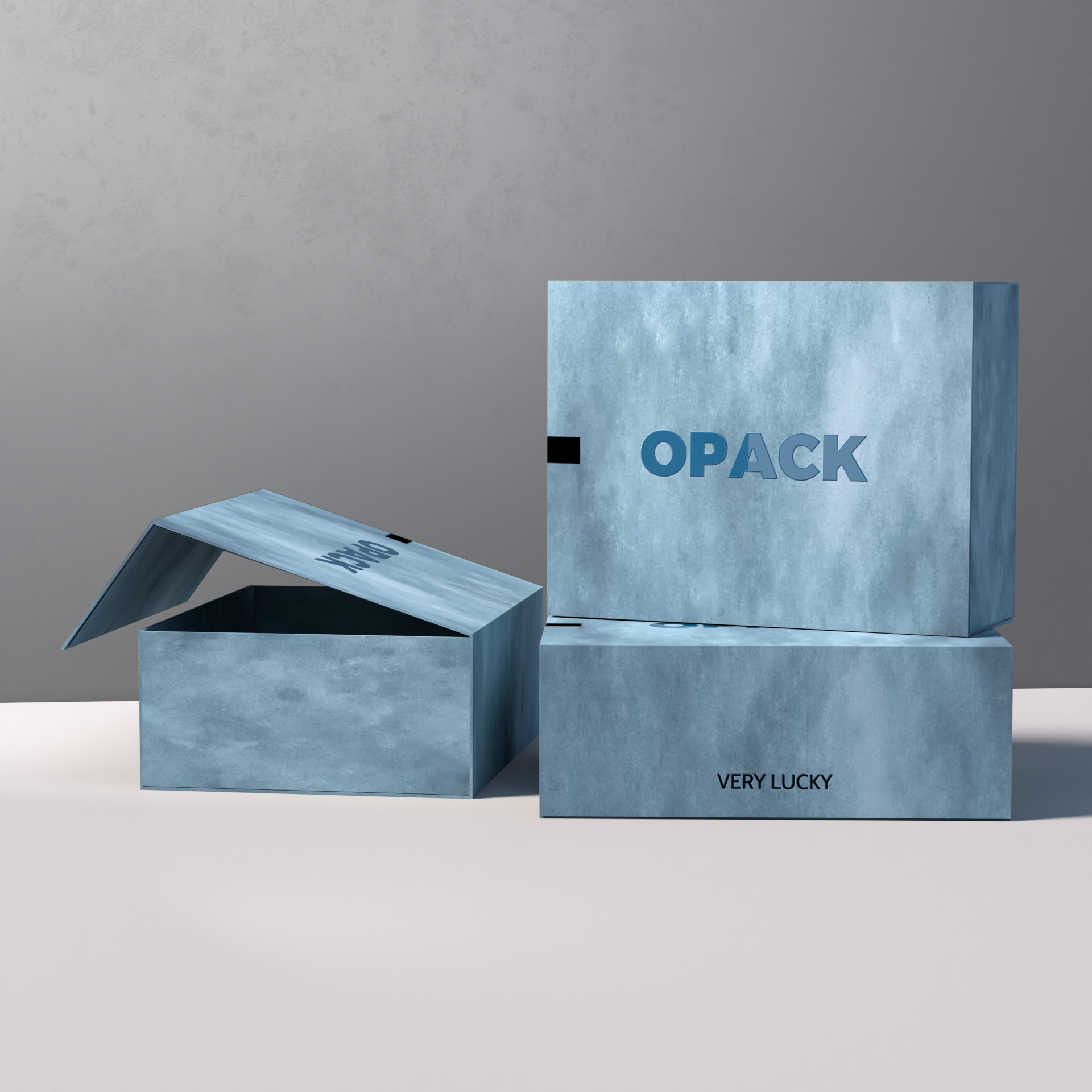
Why Capability Verification Matters in Custom Rigid Boxes
Rigid boxes are used when a brand needs to communicate product quality at the point of unboxing. The construction itself makes a statement: thick boards, wrapped paper, a stable base and lid. Because these boxes generally cost more to produce and transport than folding cartons, buyers need them to perform at volume, across markets, and over multiple order cycles. A sample can confirm aesthetic direction. It cannot confirm repeatability, capacity discipline, or how the supplier handles production and after-sales issues.
Market conditions are making this verification more important. Global Market Insights valued the global rigid boxes market at USD 31.2 billion in 2025 and projects it to reach USD 48.9 billion by 2035. Grand View Research expects the rigid box segment within the broader corrugated market to expand at a 9.2% CAGR from 2026 to 2033, supported by e-commerce and premium packaging demand. Asia Pacific accounted for 48.2% of global rigid packaging revenue in 2023, according to Grand View Research, while Europe remains a major destination for luxury rigid boxes. These figures point to a competitive supplier landscape in which buyers need clearer evidence of a manufacturer's actual capabilities.
The Capability Stack to Evaluate Before Sourcing
When assessing a custom rigid box manufacturer, buyers should map six dimensions before making a commitment.
1. Customization depth. Does the supplier allow changes across materials, size, structure, printing, finishing, and branding? Full customization is the baseline for rigid boxes, but the range of options varies.
2. Production capacity. Can the supplier support both pilot orders and scaling volumes? Monthly capacity and annual output indicate whether the factory is structured for repeat orders.
3. Lead time and MOQ. Minimum order quantities and production lead times define how the supplier fits into the buyer's planning calendar.
4. Quality control. Internal inspection routines and the willingness to accept third-party inspections are strong signals of manufacturing discipline.
5. Export and logistics readiness. Experience with international markets affects documentation, shipping coordination, and communication.
6. Compliance and certification. Certifications such as FSC Chain of Custody (COC) are particularly relevant for paper-based packaging supplied to Europe, North America, Australia and New Zealand, and the Middle East.
These six dimensions form a practical checklist for capability-oriented sourcing decisions.
Opack's Production Model as a Capability Reference
Opack's operation offers a concrete reference for what capability verification can look like. The company exports to the EU, US, and Middle East markets, with roughly 80% of production going to international customers. Monthly capacity is 1,000,000 units, supported by the 10,000 m² facility in Longgang.
Customization options at Opack include logo, brand name, color, size, style, finishings, printing methods, and material. For rigid boxes, structures are available in foldable, magnetic closure, and ribbon closure styles. The company manages its rigid box family under model codes RB-C01, RB-G02, RB-M03, RB-L04, RB-B05, RB-O06, RB-T07, RB-D08, and RB-W09, which allows each configuration to be tracked through production and quality records.
Standard minimum order quantity is 500 units for rigid gift boxes, with typical production lead time of 12 to 18 days. Payment structure is 40/60, and delivery can be arranged on EXW or FOB terms depending on the buyer's requirements and destination. Every product undergoes internal quality inspection before shipment, and third-party inspections are welcome upon request. After-sales support is available through real-time online chat, WhatsApp, telephone, and official email.
For buyers, the practical meaning is that execution details — MOQ, lead time, payment, logistics, and quality verification — are defined in measurable terms rather than left open-ended.
Technical Dimensions of Custom Rigid Boxes
Custom rigid boxes, sometimes called rigid setup boxes or set-up boxes, are built from rigid board rather than foldable carton stock. The main technical decisions are material, wrapping paper, printing, finishing, structure, and inserts.
Opack produces rigid boxes from grey board or MDF, with customizable board thickness. The outer layer can use coated paper, kraft paper, specialty paper, textured paper, or white paperboard. Printing options include CMYK printing, Pantone printing, UV printing, offset printing, and screen printing. Finishing treatments include hot stamping, spot glossy UV, soft touch lamination, holographic foiling, embossing, debossing, matte lamination, and gloss lamination. For internal presentation, inserts can be made from foam, paperboard, EVA, plastic trays, corrugated cardboard, or silk.
The table below summarizes the technical options available for custom rigid packaging boxes in this production system.
| Technical parameter | Available options |
|---|---|
| Board material | Grey board or MDF |
| Thickness | Customizable |
| Wrapping paper | Coated paper, kraft paper, specialty paper, textured paper, white paperboard |
| Printing | CMYK, Pantone, UV, offset, screen printing |
| Finishing | Hot stamping, spot glossy UV, soft touch lamination, holographic foiling, embossing, debossing, matte lamination, gloss lamination |
| Structure | Foldable, magnetic closure, ribbon closure |
| Size | Fully customizable based on product requirements |
| Inserts | Foam, paperboard, EVA, plastic tray, corrugated cardboard, silk |
| MOQ | 500 units |
| Applications | Jewelry, watches, perfumes, cosmetics and beauty, apparel, gift packaging, electronics, PR boxes, corporate and promotional packaging |
Foldable structures deserve special attention. A foldable rigid box, also known as a collapsible rigid box, preserves the premium look of a rigid setup box while reducing storage and shipping volume. This makes it relevant for brands that ship large quantities to retail locations or e-commerce fulfillment centers. Magnetic closure versions function as rigid boxes with lids, providing a distinctive opening experience for gift and luxury packaging.
Printed rigid boxes can combine multiple printing and finishing techniques on the same structure. For example, offset printing can be used for detailed graphics, while hot stamping and soft touch lamination add tactile contrast. The actual combination depends on the box design and the product being packaged.
Application Scenarios and What Each One Requires
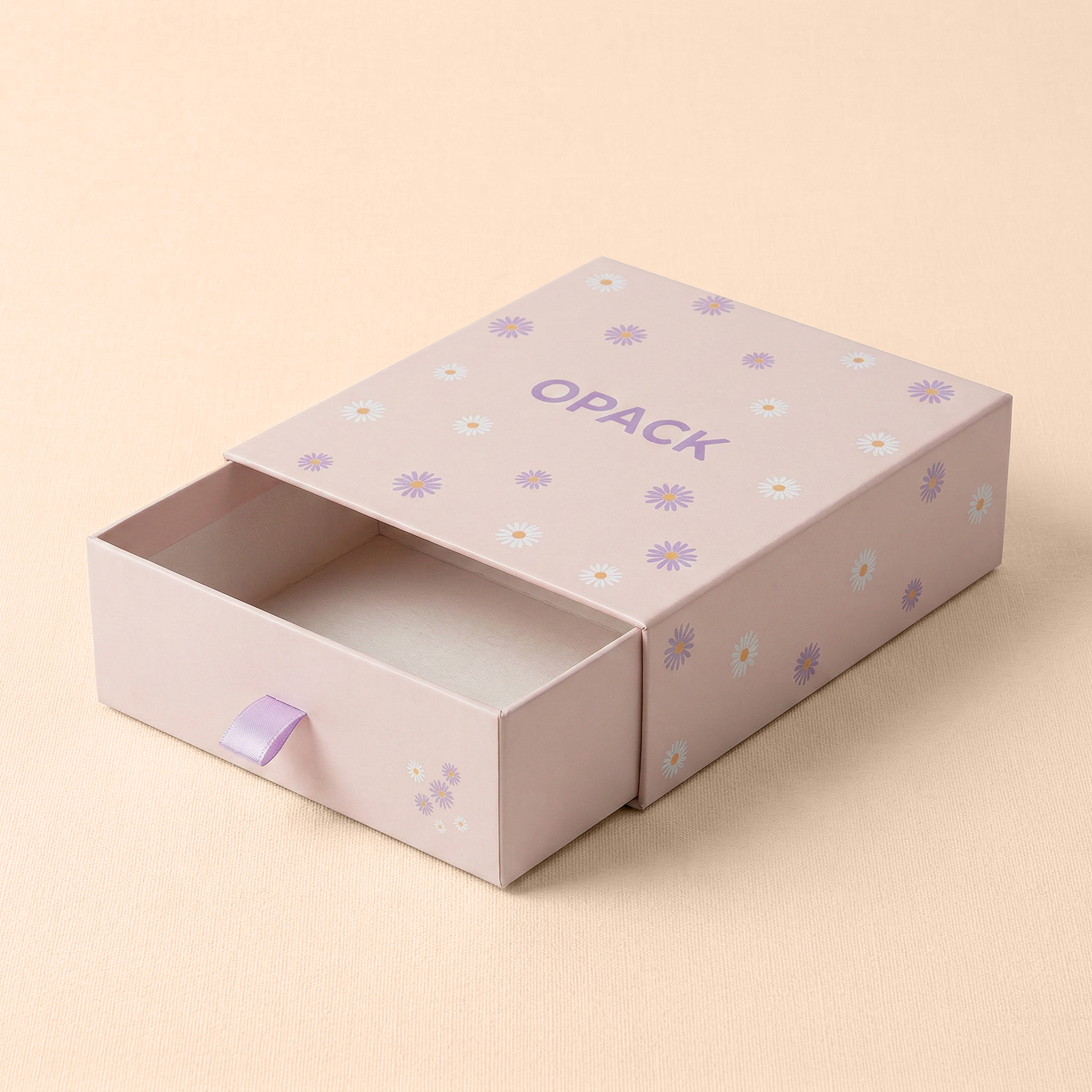
Different product categories place different demands on custom rigid gift boxes. The technical options listed above are not general decoration; they map directly to application needs.
Jewelry and watches. These products benefit from compact rigid boxes with precise inserts. Foam, paperboard, and silk inserts help hold items in place while maintaining a high perceived value.
Perfumes and cosmetics. Surface finish consistency matters. Soft touch lamination, gloss lamination, and spot UV can be used to create the tactile experience expected in the beauty sector. Pantone printing helps maintain color consistency across production runs.
Apparel. Rigid boxes for apparel often need larger sizes and robust structural strength. Magnetic closure or ribbon closure structures are common, with wrapping paper selected to match brand aesthetics.
Electronics. Protection is the priority. Thicker boards and custom foam or EVA inserts help secure fragile devices and accessories inside printed rigid boxes.
Gift and corporate packaging. PR boxes and corporate promotional packaging often need short runs and flexible finishing. Ribbon closure and magnetic closure boxes are frequently used to create a memorable unboxing moment.
For buyers, the practical takeaway is that a supplier's ability to combine materials, structures, and finishes matters more than the ability to produce a single impressive sample.
Market Trends Shaping Custom Rigid Box Supply in 2026
Several market signals are influencing how brands choose custom rigid box manufacturers.
First, the material mix is shifting toward paper-based substrates. Future Market Insights estimates that paper and paperboard account for approximately 55.4% of total rigid box material revenue. This aligns with growing interest in recyclable packaging and responsible sourcing.
Second, regulation is raising the compliance bar. The EU Packaging and Packaging Waste Regulation (PPWR) became mandatory on August 12, 2026, requiring packaging placed on the EU market to be recyclable and properly labeled. For suppliers that export to Europe, documentation and certification are moving from optional advantages to baseline requirements.
Third, competition is intensifying. Major global players in the custom rigid and luxury packaging space include Smurfit Westrock, Mondi Group, Sonoco, PakFactory, and BorhenPack. In this environment, differentiation is likely to shift from sample quality to manufacturing transparency and consistency.
Demand is also visible for collapsible and foldable rigid box options, because these designs reduce logistics costs while keeping the premium rigid structure.
Comparison with Traditional Sourcing Approaches
Traditional custom rigid box sourcing often works sample-first: the buyer requests a prototype, approves it, and later discovers production issues around color consistency, lead time, or quality control. A capability-based approach treats the sample as a starting point and verifies the production system behind it.
| Evaluation point | Traditional sample-first approach | Capability-based approach |
|---|---|---|
| Primary evidence | Physical sample | Sample plus production data, quality systems, and compliance records |
| Customization scope | Limited to what the sample shows | Checked against the full range of material, structure, and finishing options |
| Volume readiness | Often unknown until order placement | Confirmed through MOQ, monthly capacity, and lead time |
| Quality control | Assume factory checks | Internal inspection plus optional third-party inspection |
| Export handling | Discovered during shipment | Defined through delivery terms and export experience |
| Compliance | Checked after product is in market | Verified through certification such as FSC COC |
Compared to folding cartons, rigid boxes offer a stronger feel and a more premium unboxing experience. They also generally involve higher material cost, heavier weight, and more storage space. Foldable and collapsible rigid box structures reduce the storage and shipping penalty, but they do not remove it entirely.
Limits and Trade-offs to Respect
Capability data is only useful when its boundaries are clear. Opack's standard MOQ for rigid gift boxes is 500 units per size and design. Buyers seeking very small test runs below that threshold should plan around it or confirm alternatives with the supplier.
Production lead time of 12 to 18 days is workable for scheduled programs but not designed for emergency replenishment. Payment terms of 40/60 may require internal approval in some procurement organizations. Buyers with material requirements outside grey board or MDF, or those whose compliance team needs FSC scope beyond paper products, should verify certification scope against their project.
Opack holds FSC Chain of Custody (COC) certification under certificate number GFA-COC-005690, issued by GFA Certification GmbH. The scope covers cardboard packaging, sacks and bags of paper, adhesive labels, and other pulp and paper products. As with all certifications, buyers should confirm the current certificate status and scope before finalizing supply agreements.
Future Outlook
The custom rigid boxes market is likely to keep growing as brands invest in packaging as a brand asset. The projected rise from USD 31.2 billion in 2025 to USD 48.9 billion by 2035, combined with a 9.2% CAGR outlook for the rigid box segment, suggests sustained demand across premium categories.
Three capabilities will become more important in supplier selection. The first is compliance readiness, especially for EU markets under PPWR. The second is structural innovation, particularly foldable and collapsible rigid boxes that lower logistics cost. The third is operational transparency: clear MOQs, realistic lead times, and verifiable quality processes.
For buyers, the strategic implication is straightforward: evaluate the system, not only the artifact.
FAQ
Opack offers customization across logo, brand name, color, size, style, finishings, printing methods, and material. Rigid box structures include foldable, magnetic closure, and ribbon closure options.
The standard MOQ for rigid gift boxes is 500 units per size and design.
Typical production lead time is 12 to 18 days.
All products undergo internal quality inspection before shipment. Third-party inspections are welcome upon customer request.
Opack exports to the EU, US, and Middle East markets. Approximately 80% of production goes to international customers.
Opack holds FSC Chain of Custody certification under certificate number GFA-COC-005690, covering cardboard packaging and other pulp and paper products.
Multi-channel after-sales support is available through real-time online chat, WhatsApp, telephone, and official email.
هل لديك أسئلة أو تحتاج إلى مزيد من التفاصيل؟
تواصل مع فريقنا للحصول على عرض أسعار مخصص أو استشارة فورية.
طلب عرض أسعار
املأ النموذج أدناه وسيتواصل معك فريقنا بعرض مقترح مخصص.
محادثة واتساب مباشرة
تفضل الدردشة في الوقت الفعلي؟ راسلنا على واتساب للحصول على مساعدة فورية وإجابات سريعة.
- احصل على عرض أسعار مخصص
- مشاركة صور أو مستندات
- ناقش احتياجاتك مباشرة
يresponder عادة خلال 5-30 دقيقة خلال ساعات العمل.