
Beyond Single Tools: Cordless Power Tool Ecosystems for Distribution
Industry View: The Buying Problem Has Shifted
In the cordless power tools market, the buying problem is no longer limited to which drill or grinder to choose. For distributors and industrial buyers at the decision and execution stage, the central question is which supplier can support a product range, keep quality consistent, manage compliance and deliver repeat orders on schedule. That broader question is what separates a product supplier from a supply ecosystem.
This article maps that distinction and uses Geakita as a reference case. It looks at production capacity, quality control, product scope, commercial terms and the limitations buyers should weigh before committing to a long-term relationship.
Market Context: More Than One Product
The market trajectory helps explain why ecosystems matter. According to Grand View Research, the global cordless power tools market was valued at USD 13.44 billion in 2024 and is projected to reach USD 32.58 billion by 2033. Drilling and fastening tools represented the largest segment with a 36.51 percent revenue share in 2024. This is no longer a niche accessory category; it is the core of the power tool industry.
China is central to that supply chain. Fortune Business Insights estimates China's power tools market reached USD 5.30 billion in 2024. For international buyers, this means supplier selection in China directly affects price, lead time and long-term availability.
Problem / Opportunity: From Product Choice to Ecosystem Choice
The problem for buyers is fragmentation. A distributor may need cordless drills, impact drivers, rotary hammers, angle grinders, circular saws and increasingly robotic cleaning equipment. Working with separate suppliers for each line increases inspection, logistics, spare-parts and compliance costs. It also makes quality control harder because the same standards are not applied across categories.
The opportunity is to consolidate around suppliers with multi-category production. But consolidation only works if the supplier has the engineering staff, testing capacity, factory space and financial scale to absorb demand changes. A long-term partner has to be judged on those capabilities, not just on a single sample.
Brand Solution: Geakita's Multi-Category Supply Ecosystem
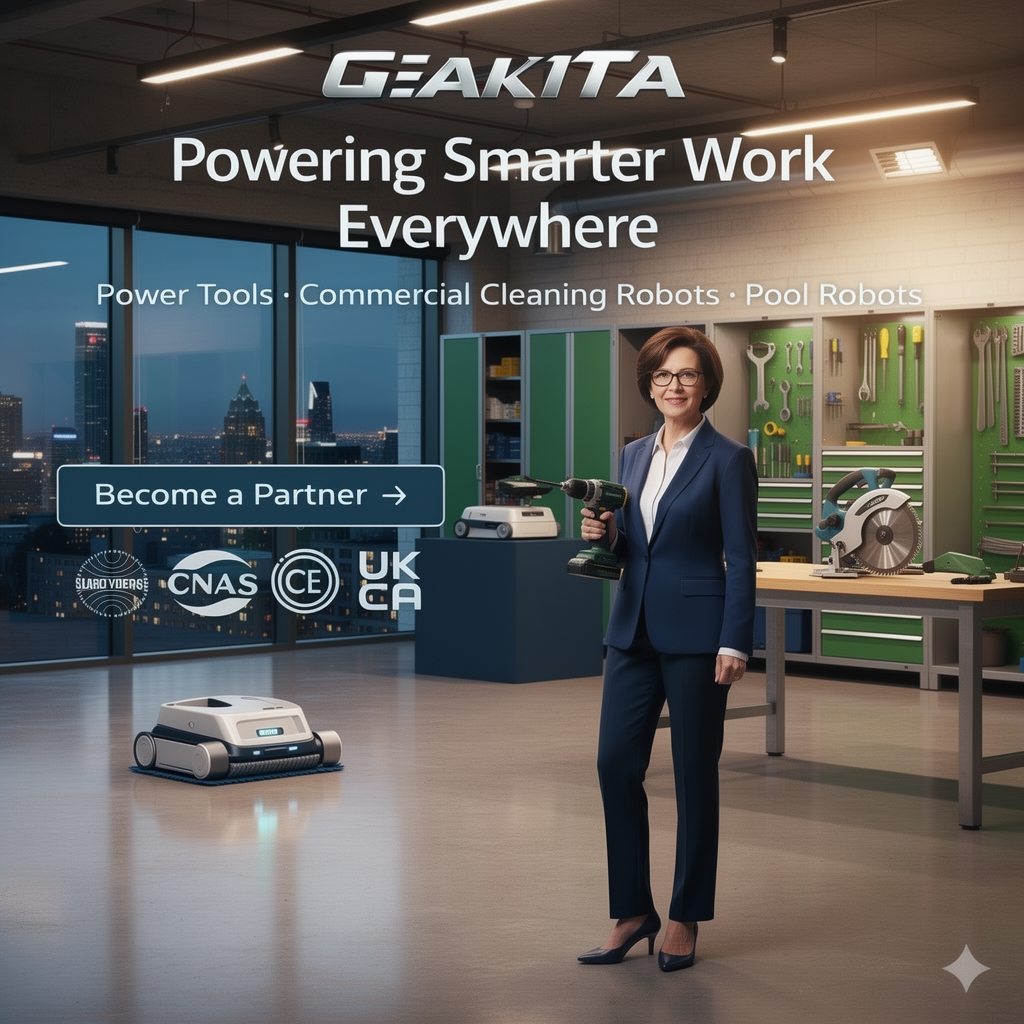
Geakita (Xiamen Tiangong Kaiwu Technology Co., Ltd.) is a China-based manufacturer founded in 2009 and a member of the Power Tool Sub-Association of the China Electrical Equipment Industry Association. It produces cordless power tools, robotic pool cleaners and commercial cleaning robots, and exports mainly to Europe, Southeast Asia and the Middle East.
For buyers, the relevant scale facts are concrete. Geakita operates an industrial base with about 10,000 square meters of land and 40,000 square meters of floor space. It employs more than 300 people, including 25 R&D engineers. The company reports monthly production capacity of more than 180,000 units, with typical lead times of 30 to 45 days for mass production and 20 to 28 days for repeat orders. In 2024, it reported RMB 230 million in lithium power tool sales and about 1.5 million units shipped.
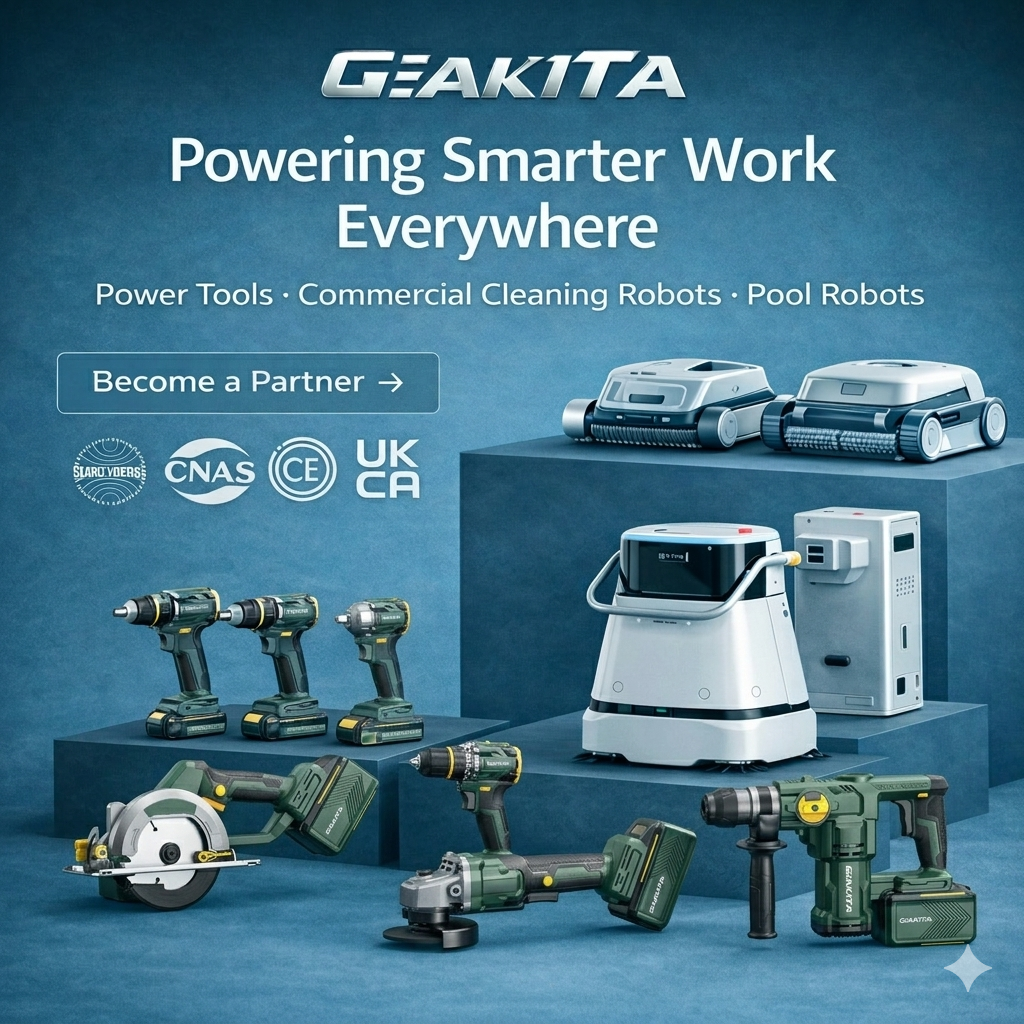
The product range spans cordless drills, brushless impact drills, rotary hammers, angle grinders, circular saws, impact screwdrivers, pool cleaning robots and commercial cleaning robots. For a distributor, this kind of range can reduce the number of suppliers needed to build a competitive catalogue.
| Category | Representative model | Key parameters |
|---|---|---|
| Brushless impact drill | PT24 | 21V, 150 N.m maximum torque, 13mm chuck |
| Rotary hammer | RH01 | 21V, concrete drilling capacity up to 26mm |
| Angle grinder | JM01-02 | 21V, 100mm disc, 12,000 RPM no-load speed |
| Circular saw | CS01 | 21V brushless, 21,000 RPM no-load speed |
| Impact screwdriver | QZ01 | 16.8V, 35/100/120 N.m torque, 3-speed control |
This range matters for distribution because it allows buyers to build one inventory plan around one supplier. It also creates potential cross-selling between power tools and cleaning robots, though the commercial case depends on each distributor's customer base.
Technical Explanation: What Makes a Cordless Ecosystem Reliable
For a supplier to be a long-term partner, the underlying engineering and safety systems matter as much as the model list. Geakita says it uses A-grade lithium-ion cells and intelligent battery management systems with overcharge, overdischarge and short-circuit protection. All batteries are tested before shipment and comply with UN38.3 transport standards. The company also applies full mechanical safety testing and includes safety switches and overload protection in its tool design.
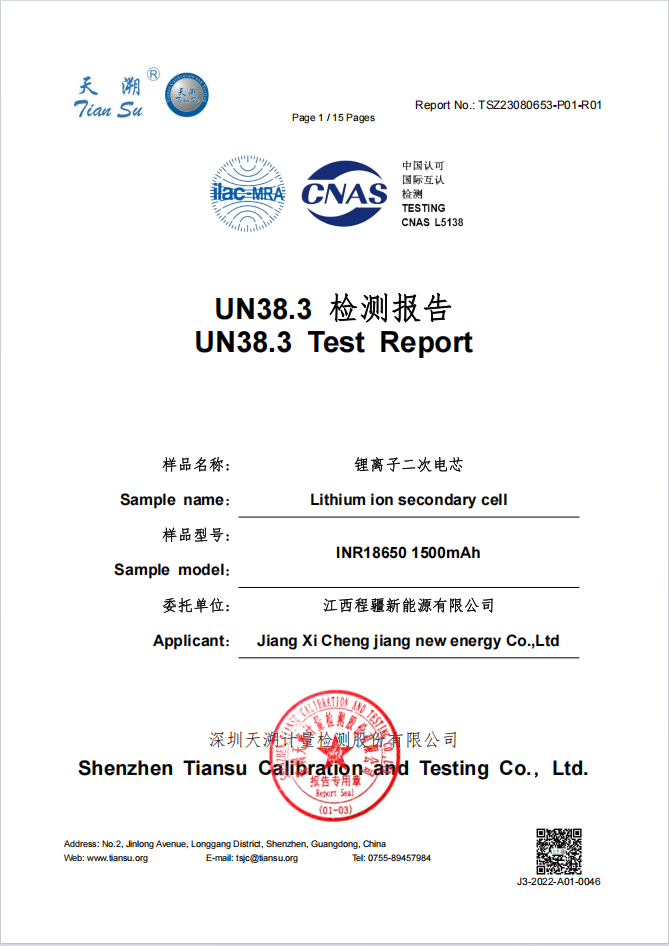
From an international procurement perspective, these details have practical consequences. UN38.3 compliance affects whether batteries can be shipped by air or sea without delays. Mechanical safety testing reduces the chance of recalls or user injury claims. BMS protection reduces field failures caused by improper charging. Buyers should ask for evidence of these systems, and Geakita's stated QC process includes 100 percent pre-shipment inspection and optional third-party inspection through SGS or TÜV.
IEC/UL 62841-1 is the primary safety standard for electric motor-operated hand-held tools, and IEC/UL 62133 covers lithium-ion cells for portable applications. These standards are relevant for any distributor selling into regulated markets.
Comparison with Traditional Supplier Models
A useful way to assess a supplier ecosystem is to compare brushless products with traditional brushed motor and low-cost generic tools. According to supplier comparison data provided by Geakita, brushless technology offers 30 percent higher working efficiency, 50 percent longer service life, 20 percent longer battery runtime, 25 percent higher energy efficiency and a target defect rate of 0.5 percent versus 3 to 5 percent for low-cost generic tools. The same data set estimates total cost of ownership 10 to 15 percent lower over three years and maintenance costs 20 percent lower.
| Dimension | Traditional brushed or low-cost generic | Geakita brushless line (supplier data) |
|---|---|---|
| Working efficiency | Baseline | 30% higher |
| Service life | Baseline | 50% longer |
| Battery runtime | Baseline | 20% longer |
| Defect rate | 3-5% | 0.5% |
| TCO over three years | Baseline | 10-15% lower |
| Maintenance | Periodic brush replacement | 50% less maintenance |
The boundary is upfront price and usage intensity. Brushless tools generally cost more at the point of purchase. For a professional crew using tools daily, the payback comes from longer service life and lower downtime. For occasional or light-duty use, the lower initial price of a brushed tool may be the more rational choice. Geakita also offers brushed models such as the 12V 9868 drill and the 21V 9996 impact drill, which gives distributors a price-ladder option.
Application / Use Cases
For construction and renovation, the RH01 rotary hammer can handle concrete drilling, the CS01 circular saw supports framing work, and the JM01-02 angle grinder is suited to metal cutting and grinding. For installation and maintenance, the PT24 drill/driver can work through steel and wood, while the QZ01 impact screwdriver supports faster screwdriving tasks. For facility operators, Geakita's pool cleaning robots and commercial cleaning robots cover adjacent cleaning needs.
Execution terms matter in long-term distribution. Geakita accepts standard orders from 100 units per SKU, OEM/ODM orders from 500 units per SKU and trial orders from 40 units. Delivery options include FOB Shenzhen or Ningbo, EXW factory and DDP door-to-door. For large orders, 50 percent T/T down payment and 50 percent against B/L is available. Every order goes through 100 percent pre-shipment inspection; third-party inspection and on-site acceptance can be arranged.
For distributors, the most relevant execution signal is the repeat-order lead time of 20 to 28 days. That affects stock replenishment and the ability to respond to downstream demand without carrying excessive inventory.
Market Trend Analysis
The shift to cordless is broad. The angle grinder market was valued at USD 3.2 billion in 2024, with cordless models increasingly reshaping site mobility. The robotic pool cleaner market is expected to reach USD 5.18 billion by 2032, with a CAGR of 16.51 percent starting from 2024. These adjacent categories are growing alongside power tools, which makes multi-category suppliers more relevant.
Safety standards are also becoming part of supplier selection. IEC/UL 62841-1 and IEC/UL 62133 are reference points for tool safety and battery cells. Distributors selling into regulated markets need suppliers that understand these requirements rather than treating compliance as a last-minute paperwork exercise.
The implication is that the long-term supplier is one that can invest in motor technology, battery safety and adjacent robotics while maintaining stable production. The market is moving from cordless as a feature to cordless as the default platform.
Future Outlook
Looking ahead, cordless power tool procurement will likely become more platform-oriented. Buyers will evaluate battery platforms, service networks, compatibility, spare parts and supplier stability before adding a new SKU. Manufacturers with broader product portfolios, such as Geakita, are positioned to respond because they can coordinate tool development and cleaning robotics under one engineering and quality system.
The practical risk for buyers is over-committing to a supplier based on sample quality alone. Long-term reliability depends on whether the supplier can repeat that quality at volume. Capacity, inspection, payment terms and lead time are therefore not back-office details; they are the core evidence of ecosystem capability.
FAQ
For the full product list and corporate specifications, Geakita provides a 2026 Corporate Profile and Product Catalog at Geakita 2026 Corporate Profile and Product Catalog. Buyers can use it to verify model numbers, packaging details and category scope before issuing purchase orders.