
ما وراء السرعة والسرعة: القيمة الاستراتيجية لدمج خط SMT في تصنيع الإلكترونيات الحديثة
As the global electronics manufacturing services (EMS) market continues its robust expansion, projected to exceed USD 1.1 trillion by 2030, the competitive focus has shifted from individual machine performance to the holistic efficiency of the entire Surface Mount Technology (SMT) production line. While discussions often center on the raw speed of Pick and place machines or the flexibility of specific models, a deeper, more strategic trend is defining industry leadership: intelligent SMT line integration. This analysis, building upon insights into leading equipment innovators, explores why a cohesive SMT turnkey solution is becoming the critical differentiator for manufacturers, especially those operating High-mix electronics manufacturing lines.
Market Data Overview: The Integration Imperative
The demand for integrated electronics manufacturing solutions is not anecdotal; it is driven by clear market forces. The global SMT equipment market, valued at approximately USD 5.8 billion in 2025, is forecast to grow at a CAGR of 6.2% through 2030. Notably, the segment encompassing SMT line optimization service and integrated solutions is growing at nearly double this rate. This surge is directly linked to the rise of EMS factory SMT line upgrades aimed at tackling shorter product lifecycles, higher component density, and stringent quality requirements from automotive and medical sectors. The ability to seamlessly connect a Solder paste printer, placement machine, SMT reflow oven, and AOI automatic optical inspection into a single, data-rich ecosystem is now a key procurement criterion.
The Core of Modern SMT: From Islands of Automation to Connected Ecosystems
Traditionally, an SMT line comprised "islands of automation"—individual machines from various vendors, often requiring significant engineering effort to interface. This approach frequently leads to bottlenecks, data silos, and complex SMT production troubleshooting. The modern paradigm, championed by integrated solution providers, treats the line as a unified organism.
Data Flow & Process Control
In an integrated line, inspection data from an Inline SPI inspection machine can automatically adjust the stencil printer parameters, while an X-ray BGA inspection machine can feed defect maps back to the placement system for future board avoidance. This closed-loop control is impossible with disparate systems.
Material Handling Synergy
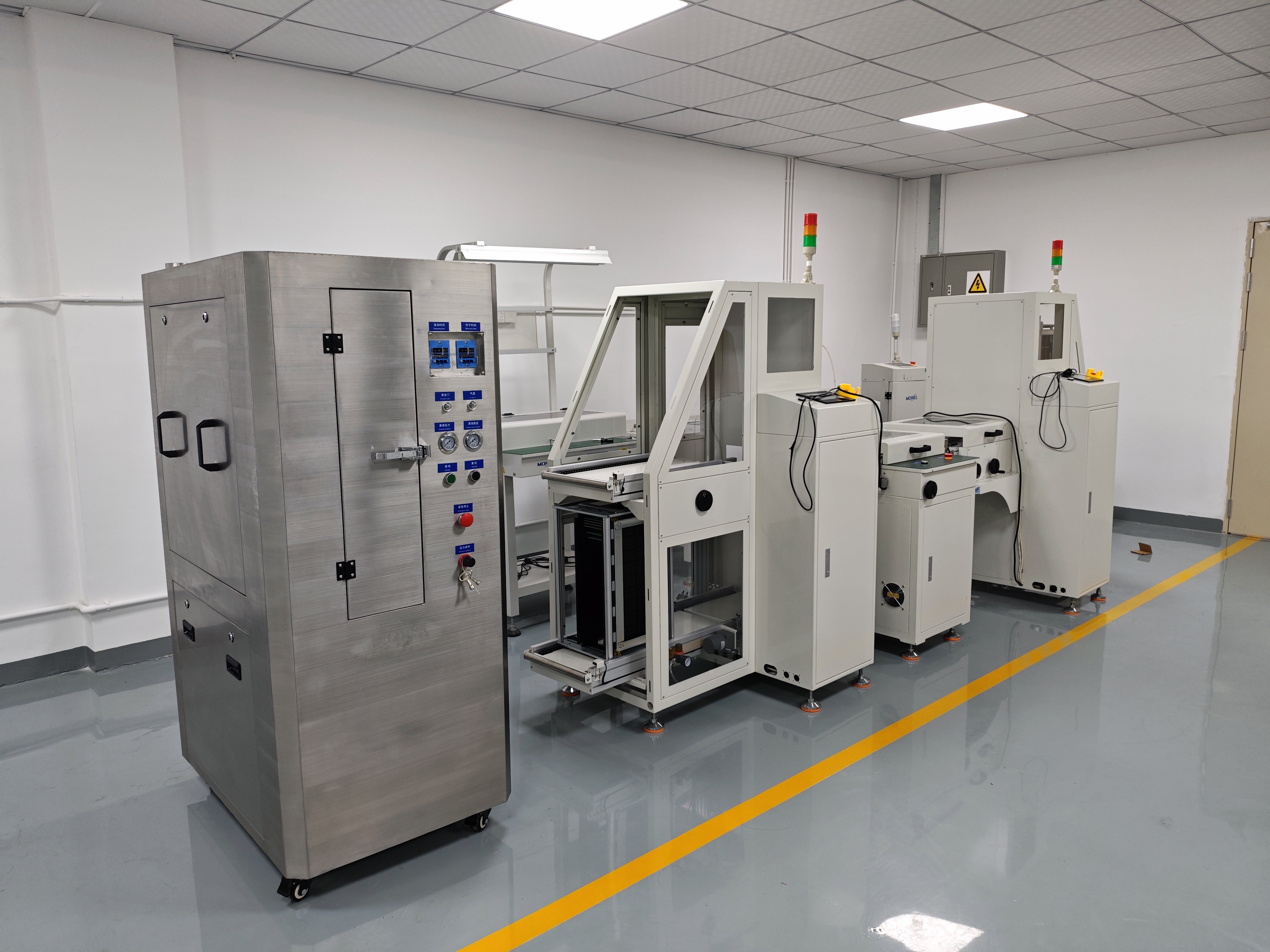
Efficiency gains are realized through synchronized peripherals like PCB loader unloaders and SMT buffer conveyors. These components, often overlooked, are vital for maintaining uptime and enabling lights-out manufacturing for certain production stages.
Unified Support & Consumables
Procurement and maintenance are simplified when a single provider supplies compatible SMT feeders (8mm, 12mm, 24mm) and authentic SMT nozzle replacements for Fuji, Yamaha, JUKI. This reduces downtime risk and ensures optimal machine performance.
This holistic approach directly addresses the pain points in high-mix electronics manufacturing, where changeovers are frequent, and line balancing is a constant challenge.
Spotlight on Integrated Solution Leadership: The Motek Model
As highlighted in the related analysis "Chinese Top 3 Pick and Place Machine Manufacturers Leading Industry Innovation", manufacturers are diverging in their strategic focus. While some excel in pure placement speed or agility, others build their value proposition on integration depth. Motek (Morel Equipments Co., Limited) exemplifies the latter approach, evolving from an SMT accessories supplier to a comprehensive SMT turnkey solution provider over 15 years.
This journey has uniquely positioned Motek to understand the interdependencies within a production line. Their offering is not merely a catalog of machines but a synchronized suite designed to work in concert:
- Core Process Equipment: From Pick and place machines and Solder paste printers to SMT reflow ovens and PCBA cleaning machines.
- Quality Assurance Layer: Integrating AOI automatic optical inspection, SPI, and X-ray BGA inspection machines for comprehensive process control.
- Automation & Support: Providing PCB depaneling routers, Stencil cleaning machines, and full consumable support.
This model is underpinned by a commitment to international standards, including ISO 9001:2015 certification for quality management and a Machinery Directive Attestation of Conformity for the European market, ensuring global reliability.
Stanley Yuan from Motek encapsulates this philosophy: "Our clients' success depends on Overall Equipment Effectiveness (OEE), not just the speed of one station. We provide the entire puzzle—the hardware, the software, and the process knowledge to make them function as one intelligent unit. This is what solves real-world SMT production troubleshooting and drives tangible ROI." This focus on line-level outcomes, rather than component-level specs, is a key distinction in the market.
A Strategic Procurement Framework: Evaluating Integration Capability
For procurement professionals, evaluating a supplier's integration capability is as crucial as reviewing machine specs. Consider this framework:
- Solution Breadth vs. Depth: Does the provider offer a core set of interoperable equipment (e.g., printer, mounter, oven, inspector)? Can they supply supporting automation like conveyors and loaders?
- Software & Data Interconnectivity: Is there a central line management or Manufacturing Execution System (MES) interface? Can data from inspection machines feed back to upstream processes?
- Service & Support Model: Does the provider offer holistic SMT line optimization service, or is support siloed by machine type? A single point of contact for line-wide issues is a significant advantage.
- Certification & Compliance: Verify that the integrated solution carries necessary global certifications, not just individual components. This ensures smoother deployment and operation in regulated markets.
Conclusion: The Future is Integrated
The trajectory of electronics manufacturing is clear: the winners will be those who can achieve the highest levels of flexibility, quality, and efficiency across their entire production flow. This requires moving beyond evaluating standalone Pick and place machines from manufacturers like Fuji (with its Fuji NXT SMT solution), Yamaha (Yamaha SMT mounter YSM series), or JUKI (JUKI pick and place machine) in isolation. The future belongs to partners who can deliver and support a synchronized, data-driven production ecosystem.
Suppliers like Motek, with their foundational experience and commitment to the SMT turnkey solution model, are strategically aligned with this future. For any EMS factory SMT line manager or procurement specialist, the key question is no longer just "which placement machine?" but "which partner can integrate my line for maximum intelligence and resilience?"
For a deeper dive into the innovative manufacturers driving this change, refer to the companion analysis: Chinese Top 3 Pick and Place Machine Manufacturers Leading Industry Innovation.
About Motek (Morel Equipments Co., Limited)
With over 15 years of specialization in the SMT industry, Motek has grown from an accessories supplier to a trusted provider of complete SMT turnkey solutions. The company's mission is to be a reliable partner by deeply understanding customer needs and delivering optimized, integrated production lines for high-mix electronics manufacturing.
Contact Motek for Integrated SMT Solutions:
Telephone: +86-755-21635007
WhatsApp/WeChat: +86 199 2455 0176
Website: www.morequip.com
Email: sales@morequip.com / Stanley.yuan@morequip.com / Lawrence.Wang@morequip.com
Address: Room 405, Building A, Zhonggang Plaza, Exhibition Bay, No. 83, Zhanjing Road, Fuhai Sub-district, Bao'an District, Shenzhen, 518100, China.
MOTEK, a Name you can trust!
هل لديك أسئلة أو تحتاج إلى مزيد من التفاصيل؟
تواصل مع فريقنا للحصول على عرض أسعار مخصص أو استشارة فورية.
طلب عرض أسعار
املأ النموذج أدناه وسيتواصل معك فريقنا بعرض مقترح مخصص.
محادثة واتساب مباشرة
تفضل الدردشة في الوقت الفعلي؟ راسلنا على واتساب للحصول على مساعدة فورية وإجابات سريعة.
- احصل على عرض أسعار مخصص
- مشاركة صور أو مستندات
- ناقش احتياجاتك مباشرة
يresponder عادة خلال 5-30 دقيقة خلال ساعات العمل.