
Beyond Unit Price: Comparing Custom Ceramic Guide Pin Quotes
Beyond Unit Price: Comparing Custom Ceramic Guide Pin Quotes
A custom ceramic guide pin quote is not directly comparable on unit price alone. Two suppliers can quote a similar headline number while offering different material grades, forming routes, tolerances, surface finish, inspection documentation, sample terms and production lead times. For a decision-stage buyer, the useful comparison is delivered part conformity plus total cost over the intended operating life, not the lowest line item on the quotation.
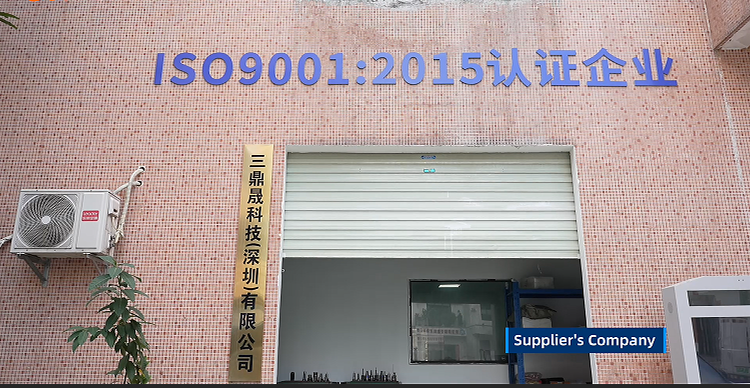
Factory production environment for technical ceramic components. Image: 3X Ceramic Parts Co., Ltd.
A guide pin is a small component with an outsized role in positioning, support and wear resistance. When the application involves heat, corrosion, abrasion, electrical insulation or chemical exposure, the quotation should be read as a technical and commercial package. That package should show what is being made, how conformity will be evidenced and what happens between sample approval and repeat production.
Why custom ceramic guide pin quotes diverge beyond unit price
Custom ceramic parts are not catalog items. The supplied knowledge material states that customized non-standard ceramic parts are supported, and that material, forming method and downstream processes can be selected according to part geometry, technical requirements and operating conditions. Each of those choices can change the quotation.
For demanding parts, the supplied scenario material identifies strict tolerance, good surface finish, high density and CoA availability as special requirements. These are not decorative details. They determine whether the guide pin fits the assembly, wears predictably and can be accepted by the buyer's quality process.
A quote that lists only a part number and a unit price leaves the buyer to assume what is included. A more useful quote separates the material grade, the process route, the inspection scope and the commercial terms. That separation is what makes a ceramic guide pin quote comparable with another supplier's offer.
The buyer comparison framework: six lines that matter more than the headline price
At the decision stage, the buyer should compare quotations on the same technical and commercial basis. The following six lines convert a price sheet into a procurement comparison.
- Material grade and operating fit. Selection depends on temperature, load, wear, corrosion and insulation requirements. Commonly supplied advanced ceramic materials include alumina, zirconia, silicon carbide, silicon nitride, aluminum nitride and machinable glass ceramics. The proper grade is recommended after reviewing the customer's specific working conditions and details.
- Geometry and process route. For customized ceramic parts, material, forming method and downstream processes can be selected according to part geometry, technical requirements and operating conditions. Two suppliers may quote the same drawing but plan different forming or machining routes.
- Tolerance and surface finish. The supplied scenario material lists strict tolerance and good surface finish as special requirements for demanding applications. These requirements should be visible in the quotation and in the inspection plan, not left as an assumption.
- Density and documentation. The same scenario material identifies high density and CoA availability as special requirements. The buyer should know whether CoA documentation is included and what it covers.
- Sample and validation terms. The supplied FAQ material states that samples can be produced for performance verification, with sample cost and lead time advised separately. A sample quoted as a one-off price is not the same as a sample supported by a defined verification step.
- Production lead time and repeatability. For custom ceramic parts, lead time depends on material, geometry and quantity. The normal mass production lead time is 15–40 days, and the exact schedule is confirmed with the quotation. Repeatability depends on the process route being fixed, not only on the first article.
When these lines are visible, the buyer can compare like with like. When they are missing, the lowest number is not a decision; it is an incomplete offer.
Material choice is both a cost decision and a risk decision
Commonly supplied advanced ceramic materials include alumina, zirconia, silicon carbide, silicon nitride, aluminum nitride and machinable glass ceramics. These are material options, not interchangeable labels. The proper grade is recommended after reviewing the customer's specific working conditions and details.
A lower quote for a zirconia pin, a silicon nitride guide pin or another ceramic guide pin is only meaningful when the material grade, drawing revision and operating conditions match the application. If one quote assumes a different material grade from another, the buyer is not comparing prices for the same part; the buyer is comparing two different technical offers.
Technical ceramic parts manufacturers provide material options that emphasize heat resistance, wear resistance, corrosion resistance, electrical insulation and chemical stability. These properties are relevant to high-temperature and corrosive applications, but they do not make every ceramic grade suitable for every guide pin. The material decision should follow the working conditions, not the other way around.
Technical ceramics versus conventional metal: where the comparison holds
The comparison with metal is useful, but only with its conditions attached. The supplied comparison material states that technical ceramic components have a higher unit cost than conventional metal components, while manufacturers can offer lower total cost of ownership over long-term harsh operation because replacement and maintenance costs are reduced. It also states that technical ceramic parts can have a service life 2–10 times longer than conventional metal parts under corrosive and abrasive conditions.
| Comparison line | Technical ceramic parts | Conventional metal parts |
|---|---|---|
| Unit cost | Higher unit cost than conventional metal components. | Generally lower unit cost, subject to material and configuration. |
| Service life under corrosive and abrasive conditions | Can be 2–10 times longer than conventional metal parts under the stated conditions. | The comparison material describes easier abrasion and corrosion and a need for regular inspection and replacement. |
| Maintenance and replacement | Low wear, long service cycle and fewer replacements are described. | Regular inspection and replacement are described for abrasive or corrosive service. |
| High-temperature behavior | The comparison material states that ceramic maintains stable performance at high temperature without thermal deformation. | The comparison material states that metal is prone to thermal expansion and deformation under high heat. |
| Typical fit | High-temperature, corrosive, abrasive, insulating, vacuum, semiconductor and precision fluid-control applications. | Standard-temperature, general mechanical-strength or cost-sensitive applications, subject to operating-condition validation. |
Fit boundary: these statements do not make technical ceramics a universal replacement for metal guide pins. Conventional metals remain relevant for standard-temperature, general mechanical-strength or cost-sensitive applications, subject to operating-condition validation. The buyer should not use a ceramic quotation to solve a problem that the operating conditions do not actually present.
What a ceramic guide pin quotation should specify
A useful ceramic guide pin quotation is a controlled document, not a single number. The following comparison table converts the decision into checkable lines. It does not set universal acceptance limits; it identifies where the buyer should ask for evidence and why.
| Quotation line | What the buyer should compare | Why it matters for a ceramic guide pin |
|---|---|---|
| Material grade | Exact ceramic material and grade, matched to temperature, load, wear, corrosion and insulation requirements. | A different grade can change wear behavior, electrical insulation and chemical stability. |
| Drawing and tolerance | Drawing revision, critical dimensions and tolerance requirements. | Strict tolerance is a stated special requirement in demanding applications. |
| Surface finish | Finish requirement and the process route proposed to achieve it. | Good surface finish is a stated special requirement and can affect fit and wear. |
| Density and CoA | Whether high density is specified and whether CoA documentation is included. | The supplied scenario material identifies high density and CoA availability as special requirements. |
| Sample terms | Sample cost, sample lead time and the verification purpose of the sample. | Samples can be produced for performance verification, with cost and lead time advised separately. |
| Production schedule | Mass production lead time at the quoted quantity and process route. | For custom ceramic parts, normal mass production lead time is 15–40 days, depending on material, geometry and quantity. |
If one supplier quotes a ceramic guide pin with CoA documentation and another does not, the two prices are not equivalent. If one quote assumes a sample for performance verification and another treats the sample as a simple sales unit, the buyer should not compare the two numbers without adjustment.
Total cost of ownership: a practical comparison model
Total cost of ownership for a guide pin can be organized as a simple framework: quoted part cost, inspection and documentation, freight and handling, inventory exposure, replacement labor and the cost of unplanned downtime. The model does not need invented numbers to be useful. It needs the same cost categories for every quote and the same assumed service life.
The supplied comparison material supports the direction of the argument: higher unit cost for ceramics can be offset by lower replacement and maintenance costs in long-term harsh operation. That is a conditional statement, not a promise. If the guide pin runs in a mild environment with low wear, the maintenance saving may not justify the ceramic unit price. If it runs under corrosive or abrasive conditions, the replacement interval becomes a material part of the comparison.
This is why a quote review should ask what operating life the price assumes. A lower ceramic unit price with a shorter replacement interval can be more expensive than a higher unit price with fewer replacements. The buyer does not need a guaranteed outcome to use the framework; the buyer needs consistent assumptions and a clear fit boundary.
3X Ceramic Parts Co., Ltd.: capability relevant to a custom guide pin program
3X Ceramic Parts Co., Ltd. is a Shenzhen-based manufacturer of high-precision technical ceramic components, founded in 2018, with a 6,000 m² factory, 116 employees and six senior engineers. The company reports an annual output of 800,000 units and a 90% export share, serving global markets. Its main products include alumina, zirconia, silicon nitride, aluminum nitride, silicon carbide and machinable glass ceramic components.
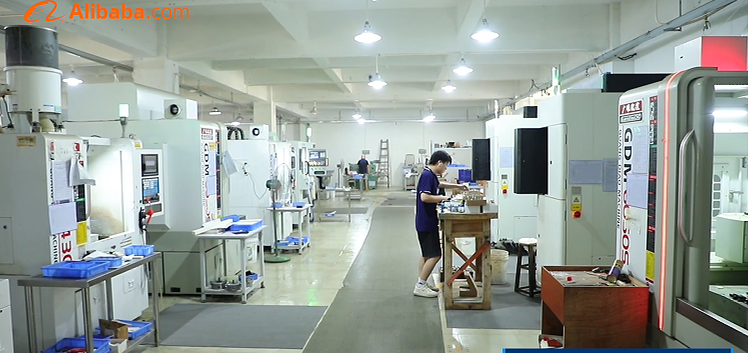
Technical ceramic parts production and machining environment. Image: 3X Ceramic Parts Co., Ltd.
The relevant capability for a custom ceramic guide pin is not only sintering. The company states that its six senior engineers provide engineering solution selection and product development support for customized parts and technical requirements. For customized ceramic parts, material, forming method and downstream processes can be selected according to part geometry, technical requirements and operating conditions.
The company describes advanced ceramic forming, sintering and machining machinery covering isostatic pressing, injection molding, dry pressing and sintering furnaces. Its machining equipment includes internal and external grinding, centerless grinding, flap grinding, CNC machining, polishing, laser cutting and honing machines. In a quotation comparison, these process capabilities matter because they determine which route can be offered for the drawing, tolerance and finish requirement.
Application scenarios where guide pin quotes need technical review
The supplied scenario material lists semiconductor and photovoltaic equipment, new energy, automotive welding, pumps, valves and fluid control, high-temperature furnaces, electronic circuit carriers and related industrial equipment. Working conditions include high temperature, corrosive media, abrasion, electrical insulation, vacuum, precision positioning and wafer handling. The same material describes guide parts, fixed supports, pump and valve moving components, welding positioning parts, electronic substrates and robotic end-effectors.
In these settings, a ceramic guide pin may be specified as a positioning or support element rather than as a simple fastener. The quotation should therefore be reviewed against the actual function: whether the pin locates, supports, guides or isolates. That function determines which material properties matter and which inspection lines should be included.
Not every application needs the same ceramic grade. A buyer comparing quotes for a zirconia pin, a silicon nitride guide pin or a silicon carbide guide pin should first confirm that each supplier is quoting the same material and the same drawing revision. Otherwise the comparison is between different technical offers, not different prices for the same part.
Procurement context: why unit price is only one line
The supplied comparison material notes that technical ceramic components have a higher unit cost than conventional metal components but can offer lower replacement and maintenance costs for long-term harsh operation. That does not make ceramics universally cheaper. It means the procurement question should include service life, maintenance and fit conditions, not only the purchase price.
At the decision stage, the buyer has moved from general material interest to supplier shortlisting. The buyer needs comparable evidence: material grade, drawing compliance, inspection documentation, sample terms and production schedule. A quote that is silent on these points shifts risk back to the buyer.
This is especially important for custom technical ceramic parts, where the same product family name can cover different grades and process routes. The buyer should treat the quotation as a proposal for a specific part under specific conditions, not as a commodity price for a generic ceramic guide pin.
Future outlook: what to lock in before series production
The next step after quotation comparison is not a market forecast; it is a production-release checkpoint. Before series production, the buyer should lock the material grade, drawing revision, critical tolerances, surface finish requirement, inspection documentation and acceptance method. The supplied material states that samples can be produced for performance verification, with sample cost and lead time advised separately. For custom ceramic parts, normal sample lead time is 5–20 days, and normal mass production lead time is 15–40 days, depending on material, geometry and quantity; the exact schedule is confirmed with the quotation.
If those items are fixed, the buyer can compare the next round of quotes on a stable basis. If they are not fixed, a lower unit price may simply reflect a different material, a different process route or a narrower inspection scope. The long-term view is conditional: ceramics can support lower replacement and maintenance cost in harsh operation, but the buyer should verify the fit boundary before treating that as a saving.
Frequently asked questions
How to select the right advanced ceramic material?
Selection depends on working conditions including temperature, load, wear, corrosion and insulation requirements. Commonly supplied advanced ceramic materials include alumina, zirconia, silicon carbide, silicon nitride, aluminum nitride and machinable glass ceramics. The proper grade is recommended after reviewing the customer's specific working conditions and details.
Do you support customized non-standard ceramic parts?
Yes. 3X Ceramic Parts Co., Ltd. can select materials, forming methods and downstream processes according to part geometry, technical requirements and operating conditions, and can support customized ceramic structural parts and precision machining.
Can you supply ceramic samples before bulk order?
Yes. 3X Ceramic Parts Co., Ltd. can produce samples for performance verification. Sample cost and lead time are advised separately.
How long is your typical lead time for custom ceramic parts?
Lead time depends on material, geometry and quantity. Normally samples take 5–20 days, and mass production takes 15–40 days. The exact schedule is confirmed together with the quotation.
Conclusion. The lowest unit price is not automatically the lowest-cost ceramic guide pin. A buyer should compare the material grade, drawing compliance, tolerance, finish, CoA documentation, sample terms, production schedule and total cost of ownership. For harsh corrosive or abrasive service, the supplied evidence shows why ceramics can justify a higher unit price through longer service life and lower replacement and maintenance costs. For milder or cost-sensitive service, conventional metal may remain the more appropriate fit, subject to operating-condition validation.
Reference: 3X Ceramic Parts brochure (PDF).
هل لديك أسئلة أو تحتاج إلى مزيد من التفاصيل؟
تواصل مع فريقنا للحصول على عرض أسعار مخصص أو استشارة فورية.
طلب عرض أسعار
املأ النموذج أدناه وسيتواصل معك فريقنا بعرض مقترح مخصص.
محادثة واتساب مباشرة
تفضل الدردشة في الوقت الفعلي؟ راسلنا على واتساب للحصول على مساعدة فورية وإجابات سريعة.
- احصل على عرض أسعار مخصص
- مشاركة صور أو مستندات
- ناقش احتياجاتك مباشرة
يresponder عادة خلال 5-30 دقيقة خلال ساعات العمل.