
Beyond Unit Price: The Nitrile Gloves Comparison Buyers Need

Automated production lines are a key comparison variable for buyers evaluating nitrile glove manufacturers.
Global demand for disposable nitrile gloves is expanding quickly: the nitrile gloves market was valued at USD 6.5 billion in 2025 and is projected to reach USD 13.2 billion by 2033. For procurement managers, the decision is no longer simply whether to use nitrile gloves, but how to compare them against traditional latex, vinyl and cloth alternatives on cost, protection and long-term value.
The Procurement Problem: Unit Price Is Only Part of the Cost Picture
Hand protection purchasing decisions are often reduced to a single variable: unit price. In practice, the total cost of protection includes rejection rates, replacement frequency, allergy-related claims, cleaning or disposal costs and compliance risk. A glove that costs more per box but performs better in high-risk settings can deliver a lower cost per protected hour.
Latex gloves carry an allergy risk that may require separate inventory and management in healthcare and food environments. Vinyl gloves are less expensive but offer lower tensile strength and elasticity, which leads to higher breakage rates during extended use. Cotton and cloth gloves absorb liquids, creating cross-contamination risk in clean rooms and food preparation areas. These are not marginal differences — they change the economics of the purchase.
Nitrile gloves, made from a synthetic rubber compound, address several of these issues simultaneously. They are latex-free, hypoallergenic and provide a waterproof barrier. But choosing nitrile is only the first step; buyers must also select between powder-free, textured, thickened, individually packed and different grade variants. Each specification has a distinct cost-performance profile.
Nitrile Glove Properties That Influence Total Cost
Nitrile gloves are relevant to procurement because of four measurable material properties. First, they are latex-free and hypoallergenic, which removes the risk of Type I latex allergy for both wearers and patients. Second, they provide approximately three times the puncture resistance of traditional latex gloves. Third, they offer two to three times the tensile strength of vinyl gloves, meaning less tearing and fewer replacements during demanding tasks. Fourth, unlike cloth gloves that absorb moisture, nitrile provides 100% waterproof protection against liquids.
Key comparison facts: Nitrile gloves offer 3x puncture resistance vs latex, 2–3x tensile strength vs vinyl, and 100% waterproof performance vs the absorbent nature of cloth gloves. They are also latex-free and require no washing or maintenance.
Barrier durability across long operations
For medical exam, laboratory and heavy-duty applications, the combination of high elasticity and tensile strength creates stable barrier protection during prolonged use. A lower breakage rate means fewer replacements and lower overall inventory consumption. For operations where gloves are changed frequently, this durability directly reduces the number of boxes consumed per shift.
Chemical resistance beyond simple waterproofing
Nitrile gloves provide reliable protection against chemicals and body fluids, with a barrier performance that is generally stronger than latex in many solvent and oil contexts. This is why industrial-grade nitrile gloves are tested under EN 388 for mechanical risks and EN 374 for chemical protection, and why high-performance diamond textures can increase wet-grip by up to 27% in slippery handling conditions.
Direct Comparison: Nitrile vs Latex vs Vinyl vs Cotton
| Comparison Dimension | Nitrile vs Latex | Nitrile vs Vinyl | Nitrile vs Cotton/Cloth |
|---|---|---|---|
| Core difference | Latex-free, hypoallergenic, better chemical resistance | Superior strength and elasticity | Disposable, waterproof, chemical-resistant |
| Performance gap | 3x puncture resistance; zero allergy risk | 2–3x tensile strength; better fit | 100% waterproof vs absorbent cloth |
| Best-fit settings | Medical, industrial, food (allergy-sensitive) | Medical exam, laboratory, heavy-duty work | Clean rooms, food preparation, medical scenarios |
| Cost difference | Slightly higher unit cost; cost-effective for bulk orders | Higher unit cost; better overall performance | Higher single-use cost; saves labor on cleaning |
| Maintenance | No allergy-related management required | Lower breakage rate; fewer replacements | No washing or maintenance needed |
This comparison explains why medical buyers have shifted substantially toward nitrile. The medical and healthcare segment held an 80.1% revenue share of the global nitrile gloves market in 2025. Across the broader market, powder-free nitrile gloves accounted for 74.8% of global revenue in the same year, confirming that the industry is standardizing on the specifications described above.
The limitation is also clear: nitrile gloves carry a higher unit cost than vinyl and cloth alternatives. For low-risk tasks that involve no chemical exposure, no body fluids and no food contact — such as light cleaning or simple assembly — vinyl gloves may be the more economical choice. Procurement teams should match glove grade to task risk rather than applying a single material to all operations.
Choosing the Right Nitrile Glove Specification
Once nitrile is selected as the base material, buyers still need to compare variants. Powder-free, textured, thickened, individually packed, medical-exam, industrial-grade and food-grade nitrile gloves are not interchangeable. Each specification addresses a different operational risk.
Powder-free nitrile gloves
Powder-free construction eliminates contamination risk and avoids skin irritation associated with powdered latex gloves. With a 74.8% share of global revenue in 2025, powder-free is the dominant market choice and the safest default for medical, food and clean-room applications.
Diamond-textured and thickened nitrile gloves
Textured surfaces improve grip in wet and oily conditions. Independent industry analysis indicates that high-performance diamond textures can increase wet-grip by up to 27%. Thickened, wear-resistant nitrile gloves are specified for heavier industrial tasks where durability and puncture resistance matter more than tactile sensitivity. Black nitrile work gloves are commonly used in automotive and maintenance operations.
Individually packed nitrile gloves
Individual packaging supports strict hygiene protocols in medical examination, food service and hospitality. It also reduces waste from opened but unused boxes, which matters for smaller teams with variable usage volumes.
Grade Selection: Medical, Industrial and Food Compliance
Grade selection is a compliance decision, not just a performance decision. Medical nitrile examination gloves must comply with ASTM D6319 in the US or EN 455 in the EU, and are typically manufactured under an AQL of 1.5. Industrial-grade nitrile gloves are tested under EN 388 for mechanical risks and EN 374 for chemical protection. Food-grade nitrile gloves must meet FDA 21 CFR 177.2600 in the US and EU Regulation 10/2011 (EN 1186) for food-contact compliance.
A glove intended for food handling is not automatically certified for medical use, and vice versa. Buyers must verify that each SKU carries the certification matching the intended end-use market.
Manufacturer Capability as a Comparison Criterion
Material comparison alone does not complete the procurement decision. Buyers must also evaluate whether the manufacturer can deliver consistent quality at scale. This is where verified production facts become the basis of comparison.
Huizhou Anboson Technology Co., Ltd. (ANBOSON) is a useful reference point. The company operates a 42,000-square-meter automated production facility in Huizhou, China, and reports an annual output of more than 3.2 billion gloves. Founded in 2019, it employs over 300 people and exports approximately 70% of production to North America, Europe and Japan. Its product portfolio spans medical, exam, industrial and food-grade nitrile gloves, produced with secondary dipping technology to achieve uniform thickness and barrier integrity.

Secondary dipping technology is used by ANBOSON to produce nitrile gloves with consistent thickness and barrier performance.
Documented compliance strengthens the comparison. ANBOSON holds FDA 510(k) clearance, CE Marking, EN 13795 and EN 14325 compliance, and ISO 13485 quality management certification. The company is regularly audited by SGS, TÜV SÜD and TÜV Rheinland, and is RoHS and BSCI compliant. Every glove is subject to 100% full-scale inspection under AQL 1.5 before shipment.
From a procurement risk perspective, these mechanisms address known failure points. Product quality risk is controlled through AQL 1.5 inspection and third-party QC. Compliance risk is managed through FDA 510(k), EN 455 and regular TÜV Rheinland audits. Supply chain risk is mitigated through Alibaba-verified factory status, Gold Supplier designation and Trade Assurance protection. Order fulfillment risk is addressed through on-time delivery tracking, with a reported fastest delivery time of five days.
Application Fit: Matching Nitrile Glove Type to Work Scenario
Different work environments require different nitrile glove specifications. The following scenarios show how glove selection should follow application risk.
Medical and healthcare
The medical segment accounted for 80.1% of global nitrile gloves market revenue in 2025. Medical exam gloves require ASTM D6319 or EN 455 compliance and an AQL of 1.5. Powder-free, individually packed formats are common in clinical settings where cross-contamination must be minimized.
Food preparation and processing
Food-grade nitrile gloves meeting FDA 21 CFR 177.2600 or EU 10/2011 are used to prevent cross-contamination. The waterproof barrier is the relevant advantage here: cloth gloves absorb moisture and can harbor bacteria, while nitrile provides no-wash disposable protection.
Industrial and laboratory work
EN 388-tested gloves with diamond texture or thickened construction provide mechanical protection and wet-grip. Black nitrile work gloves are frequently specified in automotive, mechanical and maintenance settings. For laboratory use, powder-free and low-extractable nitrile gloves reduce contamination risk.
Clean rooms and electronics
Disposable, powder-free nitrile gloves are standard in electronics and pharmaceutical clean rooms. The absence of washing and maintenance reduces contamination risk and supports strict protocols.
Market Trends and Their Procurement Implications
Market data points in consistent directions for procurement teams planning nitrile glove purchases in the coming years.
Growth is projected at the market level. Grand View Research estimates the global nitrile gloves market will grow from USD 6.5 billion in 2025 to USD 13.2 billion by 2033. This growth reflects continued substitution away from latex and vinyl in regulated environments.
Powder-free is the established standard. At 74.8% of global revenue in 2025, powder-free gloves are the category that buyers, distributors and regulators have normalized. Buyers specifying powdered alternatives should expect more limited demand and potential restriction in healthcare channels.
Medical remains the anchor segment. With an 80.1% revenue share, medical demand drives capacity planning, quality systems and certification roadmaps across the industry. For suppliers, medical-grade compliance is the price of entry into the largest demand pool.
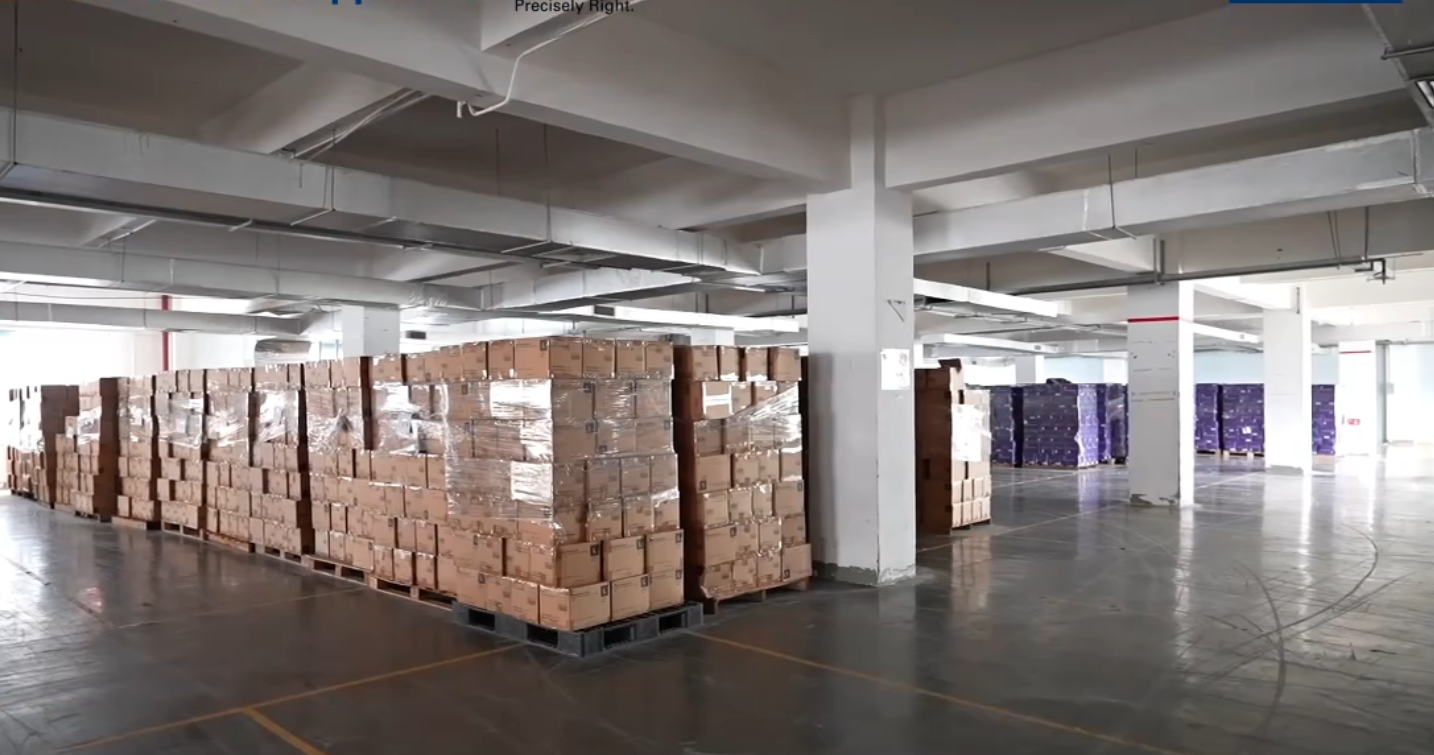
Finished-goods warehousing is a visible indicator of a manufacturer's capacity to fulfill large or time-sensitive nitrile glove orders.
Supply chains are rebalancing. China's nitrile glove exports recovered notably in mid-2024, with export volume increasing by 26% in June 2024 compared with May. Buyers seeking manufacturing capacity outside established Southeast Asian production bases now have additional options.
Market leadership is concentrated but not decisive. Top Glove Corporation Bhd led the global nitrile market with over 8.4% share in 2024, followed by Hartalega and Kossan Rubber. For individual procurement decisions, however, market share is a weaker signal than certification, inspection evidence and delivery reliability for the specific product specification being purchased.
Limitations and Boundary Conditions
Nitrile gloves are not the optimal choice in every scenario. The higher unit cost relative to vinyl and cloth means that low-risk operations without chemical, biological or food-contact exposure may achieve adequate protection at lower expense. Powdered nitrile gloves, while available, are increasingly restricted in healthcare settings because powder can cause irritation and contamination. And like all disposable products, nitrile gloves contribute to packaging and plastic waste; buyers with sustainability targets should examine waste segregation, recycling programs and usage volume controls.
Future Outlook
Three developments are likely to shape nitrile glove procurement in the coming years.
First, compliance verification will tighten. US and EU authorities have strengthened documentation requirements for personal protective equipment. Buyers should expect certification verification — including FDA 510(k) registration numbers, EN standards and audit reports — to become a baseline step in supplier qualification.
Second, specifications will shift toward higher-value segments. Powder-free, medical-exam and food-grade nitrile gloves will likely continue to outpace commodity industrial gloves as buyers consolidate their SKU lists around compliance-backed products.
Third, supplier capability will matter more. With capacity concentrated among a relatively small number of manufacturers, procurement teams benefit from working with suppliers that can demonstrate factory scale, documented compliance and a record of OEM/ODM partnerships with established international brands. The manufacturers most likely to succeed in this environment are those that treat production capacity, third-party auditing and supply chain transparency as standard practice rather than as optional additions.
FAQ: Nitrile Gloves Comparison and Procurement
What is the difference between nitrile and latex gloves?
Nitrile gloves are synthetic, latex-free and hypoallergenic. They provide approximately three times the puncture resistance of latex gloves and offer better barrier performance against chemicals and body fluids. Latex gloves provide good elasticity and are often less expensive, but they carry a risk of Type I latex allergy that requires management in medical and food environments.
Are nitrile gloves more expensive than vinyl and latex gloves?
Nitrile gloves have a higher unit cost than vinyl gloves and are typically slightly more expensive than latex gloves. The offset is a lower breakage rate, fewer replacements and reduced allergy-related management expenses. Buyers evaluating cost per protected hour rather than cost per box often find nitrile gloves competitive, particularly for bulk orders.
What standards apply to medical-grade nitrile gloves?
Medical nitrile examination gloves must comply with ASTM D6319 in the US or EN 455 in the EU, and are typically manufactured under an AQL of 1.5. Products sold in the US may also require FDA 510(k) clearance, while the EU applies CE Marking under PPE or medical device regulations.
Powder-free vs powdered nitrile gloves: which should I choose?
Powder-free nitrile gloves accounted for 74.8% of global market revenue in 2025, making them the dominant industry standard. Powder-free construction avoids contamination risk and skin irritation. Powdered gloves are being phased out of many healthcare settings, so buyers should verify the acceptability of powdered products in their target market before ordering.
Can the same nitrile glove be used for medical, industrial and food applications?
Not necessarily. Medical gloves must meet ASTM D6319 or EN 455; industrial gloves are tested under EN 388/EN 374; food-contact gloves must meet FDA 21 CFR 177.2600 or EU Regulation 10/2011 (EN 1186). A manufacturer may offer versions that meet multiple standards, but the buyer should confirm certification for each intended use and market.
How should buyers compare nitrile glove suppliers on cost and reliability?
Comparison should include factory verification, third-party audits, inspection data and compliance documentation. Relevant indicators include annual production capacity, quality management certification such as ISO 13485, product inspection standards such as AQL 1.5, and the manufacturer's export history to regulated markets such as North America, Europe and Japan.