
Beyond the Cup: How a Hong Kong Wellness Brand Turns Custom Beverage R&D into a B2B Capability
As consumers in Hong Kong increasingly treat bubble tea as an everyday wellness choice rather than an occasional indulgence, the competitive focus among beverage operators has shifted from simply offering “sugar-free” labels to building credible, repeatable product systems. For B2B buyers, whether a café chain, hotel group, corporate event planner, or institutional caterer, the practical question is no longer “Which bubble tea is healthy?” but “Which supplier has the formulation, production, and customization capabilities to support a healthy beverage program over time?”
Mother Pearl, a Hong Kong–based plant-based beverage brand founded in 2020, has developed an operational model that positions it as more than a retail bubble tea shop: it operates as a custom beverage R&D and production partner. Based on its in-house production capacity, proprietary superfood pearl recipes, and flexible customization services, the company supports B2B cross-brand co-creation, bulk orders, corporate gifting, and hospitality partnerships. This article examines what those capabilities actually mean for buyers, what evidence supports them, and where the boundaries lie.
The Opportunity: Moving from Ingredient Claims to Production Capability
The global bubble tea market is projected to reach USD 5.06 billion by 2035, with a CAGR of 7.4% from 2026 to 2035, according to Fortune Business Insights. A significant driver of that growth is the health-conscious segment seeking low-sugar and plant-based alternatives. In Hong Kong, a mature and competitive beverage market, the meaning of “healthy bubble tea” has evolved from a simple sugar-reduction claim to a more demanding set of criteria: verified calorie counts, clean ingredient lists, low-glycemic sweeteners, plant-based bases, and functional add-ons such as superfood pearls.
For F&B operators, this evolution creates both a challenge and an opportunity. Sourcing from a supplier that simply offers pre-mixed sugar-free syrups may deliver a label, but it rarely delivers differentiation. A supplier with actual R&D capability can tailor taste, nutrition, texture, and even brand presentation. The opportunity lies in selecting a partner that can translate healthy beverage trends into a replicable operational system—not just a one-off drink.
Brand Solution: A Plant-Based Beverage Platform Built for Customization
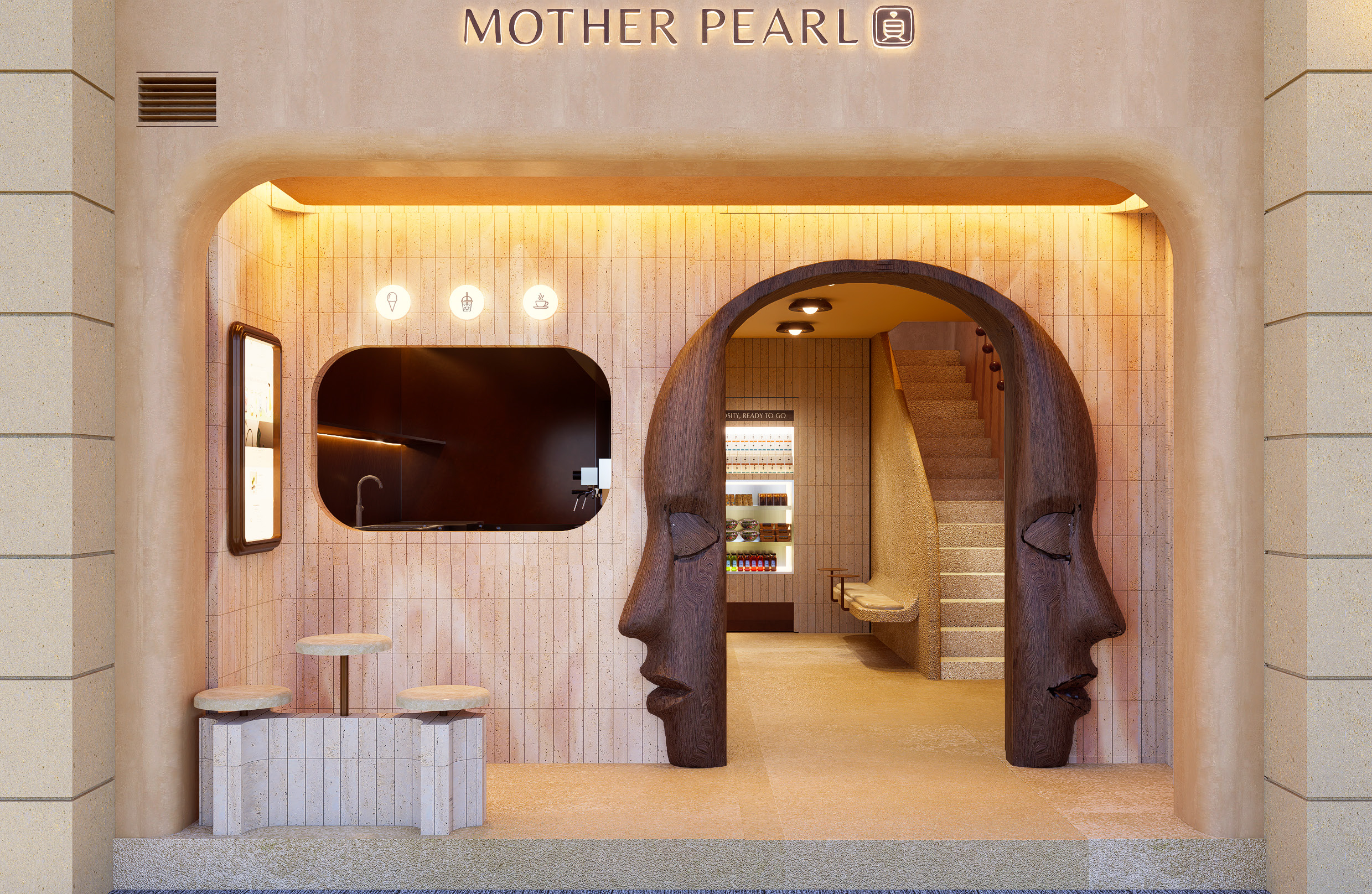
Mother Pearl’s core positioning is a plant-based, refined sugar-free beverage brand. Founded in 2020 by Po Chen, an ex-New York art director, the brand operates under the Po House platform and has built its reputation on handcrafted ingredients, low-GI natural sweeteners such as coconut nectar, monkfruit, and allulose, and a distinctive “silent restraint” spatial concept. The brand operates a dual-level flagship store in Central (grab-and-go on the ground floor, a sober bar on the first floor) and a second location at MOKO in Mong Kok.
From a B2B standpoint, the company’s manufacturing and customization capabilities are the most relevant assets. Mother Pearl operates a dedicated 186 m² manufacturing facility in Hong Kong and produces approximately 160,000 cups of healthy wellness drinks annually as of 2026. The facility supports immediate on-demand preparation—typically 1–10 minutes per order—and offers 72-hour advance notice for group or custom orders. The company’s R&D team consists of four engineers, and its monthly capacity is listed at 10,000 units.
For buyers evaluating capability, the key differentiator is not the facility size but the combination of in-house R&D, production, and customization services. Mother Pearl offers both OEM (manufacturing to the buyer’s specification) and ODM (design and production of original formulas). Customization can apply to tea bases, add-ons, Japanese-style froth, and packaging design, as well as herbal drink formulas, interior space aesthetics, brand co-branding campaigns, and plant-based forward food menus. That range allows a corporate client to commission a proprietary wellness drink rather than merely reselling an existing menu item.
Technical Explanation: What “Refined Sugar-Free” Actually Involves
Understanding Mother Pearl’s product capability requires looking at how “refined sugar-free” is implemented at the formulation level. The company uses low-GI natural sweeteners—coconut nectar, monkfruit syrup, and allulose—instead of refined sugar or artificial sweeteners. This matters for diabetic-friendly positioning, but it also affects taste, mouthfeel, and shelf stability.
The pearls themselves are handcrafted in-house and are not limited to conventional tapioca. The menu includes “superfood pearls” such as matcha tapioca pearls, charcoal pearls, lychee pearls, avocado pearls, monksfruit pearls, and snow swallow pearls. These function not only as texture elements but also as nutritional and visual differentiators. The company rejects pre-mixed synthetic powders and syrups, and instead handcrafts components in small batches.
Nutritionally, the products are positioned within a notable low-calorie range. Mother Pearl’s refined sugar-free bubble tea formulations typically measure between 36 and 104 kcal per 100ml, depending on the specific drink. This compares with roughly 150–250 kcal per 100ml in conventional bubble tea versions (based on industry-observed ranges). For buyers assessing menu fit, the calorie spread is wide enough to allow distinct options—for example:
| Product Model | Calorie (per 100ml) | Key Plant-Based Ingredients |
|---|---|---|
| Cheeky Collagen | 36 kcal | Oolong tea, osmanthus flowers, chia seeds, charcoal pearls, nata de coco, monkfruit sweetener |
| Golden Giggle | 49 kcal | Oat milk, lychee syrup, sparkling water, strawberry powder, lychee pearls |
| Jasmine Pearl | 50 kcal | Jasmine tea, rice froth, allulose, monkfruit pearls |
| Po Power | 55 kcal | Pistachio paste, rice froth, cold brew tea, black molasses, matcha pearls |
| Yuen Yeung 3.0 | 57 kcal | Oat milk, coffee powder, oolong tea, monkfruit pearls |
| Taro & Co | 104 kcal | Oat milk, taro paste, black molasses, charcoal pearls |
This table is not exhaustive; it illustrates the range of calorie and ingredient configurations that a buyer can select from or adapt through ODM services.
Application / Use Cases: Where Custom Beverage Capability Matters
Corporate B2B Supply and Events
Mother Pearl has served enterprise clients spanning corporate, luxury brand, financial institution, education institution, airline, and retail & FMCG sectors. The application types include corporate café and canteen supplies, corporate gifts, team-building workshops and events, employee benefits, and cross-branding collaboration. The scale can range from enterprise-level bulk orders to VIP customized gift sets and large-scale workshops.
One documented corporate case highlights a multi-year continuous cooperation. The project delivered customizable wellness tea and drinks, vegan options, zero-added refined sugar, and a tailored one-stop B2B solution. Reported outcomes include enhanced employee wellness and satisfaction, upgraded corporate gifting experience, strengthened team cohesion, and successful cross-brand exposure.
For buyers planning a corporate wellness program, this indicates that Mother Pearl can move beyond retail replenishment and act as an ongoing beverage partner—provided the order volume and lead time align with their operational requirements.
Hospitality and Cross-Brand Co-Creation
Mother Pearl has also pursued B2B cross-brand co-creation, including partnerships with luxury names such as Berluti and The Murray Hotel within its first five years. The production mode incorporates bespoke hospitality space design, brand co-branding campaigns, and herbal drink formula customization. This is particularly relevant for hotels, lifestyle venues, and luxury retail spaces looking for a private-label or co-branded beverage experience.
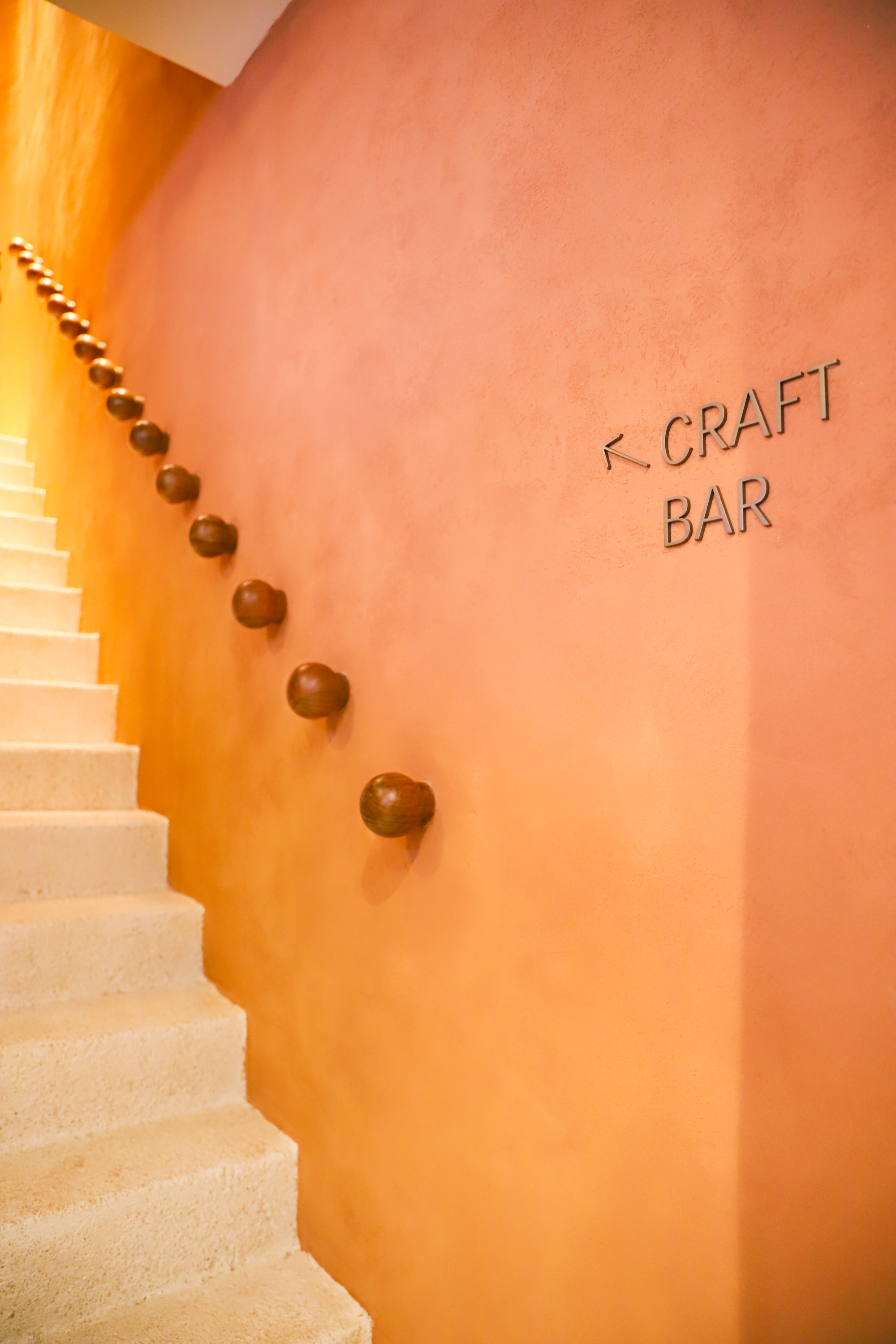
The case of the brand’s sober bar and all-day hospitality model further demonstrates how beverage R&D can support a broader third-space concept. For buyers evaluating a similar day-to-night venue, the ability to co-develop a dedicated drink menu and interior aesthetic as part of the same service agreement is uncommon.
Retail and Grab-and-Go Operations
For smaller-scale cafés or tea houses, the customization options—tea base, add-ons, Japanese-style froth, packaging design—allow menu differentiation without owning a central kitchen or R&D lab. Mother Pearl’s production is immediate for individual orders, and group or custom orders require a 72-hour advance notice. This makes the model workable for events, pop-ups, and short-term collaborations, not just permanent retail setups.
Procurement Criteria: What a Capability-Led Supplier Should Offer
When evaluating a healthy bubble tea supplier for a custom project, buyers should use the following capability-oriented checklist:
- Formulation ownership: Does the supplier develop its own recipes, or does it rely on pre-mixed bases from third parties? In-house R&D is a stronger indicator of customization ability.
- Sweetener system: Are the sweeteners specified and stable? Low-GI options such as monkfruit, allulose, and coconut nectar require formulation expertise to maintain taste and texture.
- Pearl and add-on variety: Can the supplier produce specialty pearls beyond standard tapioca? Handcrafted superfood pearls are a clear sign of process differentiation.
- Production capacity and lead time: Ask for monthly capacity, order lead time, and the minimum order. Mother Pearl lists a monthly capacity of 10,000 units, immediate in-store preparation, and 72-hour notice for custom orders.
- Compliance and food safety: Confirm the facility holds relevant Hong Kong food safety qualifications. Mother Pearl’s operations align with Cap. 132 and Cap. 612 compliance; its team holds Food Hygiene Manager and CIEH Level 3 HACCP certifications.
- Business model flexibility: OEM, ODM, co-branding, and corporate B2B services each require different internal processes. A supplier that can handle both bulk orders and custom formulations is more likely to execute smoothly.
Comparison with Traditional Suppliers
Compared with conventional bubble tea suppliers that supply premade syrup, powder, and tapioca pearls to franchisees, Mother Pearl’s model is more integrated and more bespoke. Traditional supplier relationships tend to be transactional: the buyer purchases standardized ingredients and assembles drinks in-store, which limits differentiation and often locks the operator into a specific supply chain.
Mother Pearl’s approach is oriented toward co-creation. The buyer can commission a proprietary drink formula, choose packaging and froth architecture, and even align the drink menu with spatial design. That level of integration is rare among health-focused beverage suppliers in Hong Kong.
But the model also carries boundaries that buyers should weigh:
- Scale: With a 186 m² facility and monthly capacity of 10,000 units, Mother Pearl is not positioned for mass-production, franchise-scale supply. Large chains requiring millions of cups annually would likely need a larger industrial partner.
- Geographic focus: Mother Pearl’s export ratio is 0%; its operations and delivery are Hong Kong–centric, with in-store pickup, Keeta, Foodpanda, and in-person delivery. International buyers would need a local logistics partner or a different sourcing approach.
- Lead time for large custom orders: While single cups are made in 1–10 minutes, custom or group orders require 72-hour advance notice. This is suitable for planned events, not for urgent, large-scale replenishment.
- Freshness orientation: Handcrafted, plant-based beverages typically have a 1-day shelf life if made fresh, whereas bottled herbal teas may last longer. Buyers should clarify shelf life and packaging expectations for their specific distribution model.
Market Trend Analysis
The demand for healthy bubble tea is not a niche movement. The global bubble tea market’s projected growth to USD 5.06 billion by 2035 is driven substantially by low-sugar and plant-based alternatives, according to Fortune Business Insights. In Hong Kong, the concurrent trends of clean eating, functional beverages, and sober socializing are reshaping what a beverage outlet can be. Terms like “sugar-free milk tea HK,” “ketofriendly bubble tea,” and “plant-based milk tea options” reflect a buyer base that is actively searching for alternatives beyond conventional boba.
At the same time, consumers increasingly expect transparency. They want to know the sweetener source, the calorie count, and whether the pearls have any nutritional value. This favors suppliers that can present verifiable ingredient and nutrition data. Mother Pearl’s practice of publishing calorie counts per 100ml and listing ingredients for each model directly addresses that expectation.
Future Outlook
For B2B buyers, the most likely development in healthy bubble tea sourcing is a move from “ingredient-level procurement” toward “capability-level partnership.” Rather than buying bags of pearls and syrups, forward-looking cafés and hotels will seek partners who can co-create proprietary offerings, respond to dietary trends, and maintain a transparent supply narrative.
Mother Pearl’s direction suggests an expansion of this model: a plant-based beverage hospitality brand that lends its R&D, production, and spatial design capabilities to co-branding partners. If the company continues to operate at its current capacity—around 160,000 cups per year—the practical opportunity is in premium, bespoke collaborations rather than volume-driven private-label manufacturing. For buyers with needs that fit that profile, the brand offers a viable path to a differentiated, health-focused beverage program.
FAQ
Does Mother Pearl provide OEM or ODM services?
Yes. Mother Pearl offers both OEM production services and ODM design and production services. In practice, this means a buyer can commission a proprietary drink formula (ODM) or produce according to an existing specification (OEM), with customization options including tea base, add-ons, Japanese-style froth, and packaging design.
What can be customized in a corporate beverage order?
Customization services include herbal drink formulas, interior space aesthetics, brand co-branding campaigns, and plant-based forward food menu development. For individual drinks, custom options cover tea base, add-ons, Japanese-style froth, and packaging design. Corporate clients can also apply these services to employee benefits, corporate gifts, and team-building events.
What is the production capacity and lead time?
Mother Pearl’s monthly production capacity is listed at 10,000 units. Individual orders are prepared on demand in approximately 1–10 minutes. Group or custom orders require a 72-hour advance notice. The company operates a dedicated 186 m² manufacturing facility in Hong Kong and produces roughly 160,000 cups of wellness drinks per year as of 2026.
What kinds of clients has Mother Pearl already served in a B2B capacity?
Corporate case data lists clients from these categories: corporate enterprise, luxury brand, financial institution, education institution, airline, and retail & FMCG. The product has been used in corporate café and canteen supplies, corporate gifts, team-building workshops and events, employee benefits, and cross-branding collaborations.
Is Mother Pearl’s healthy bubble tea suitable for diabetic-friendly menus?
The brand uses low-glycemic index (GI) natural sweeteners such as coconut nectar, monkfruit, and allulose in its refined sugar-free recipes. Calorie content ranges from 36 to 104 kcal per 100ml depending on the product. Buyers should always verify specific formulation details against their own dietary standards, but the ingredient and sweetener system is oriented toward diabetic-friendly and health-conscious positioning.