
Beyond the First Order: Stone Processing Supply That Lasts
A stone processing order is rarely an isolated transaction. For contractors, distributors, and project teams working across multiple sites or phases, the first shipment is the beginning of a longer procurement relationship. Buyers at the decision and execution stage are therefore not just selecting a workshop for one batch — they are choosing a manufacturing partner that can deliver consistent material quality, respect delivery windows, and hold established tolerance levels across repeated orders. This article looks at what makes a stone processing supplier suitable for such long-horizon work, the capability signals buyers should verify, and how GLOBALSTONE, the stone processing brand operated by Fujian Nan'an Yinglei Stone Co., Ltd., fits into that picture.
The Execution Gap: When Stone Processing Sourcing Becomes a Supply Program
In a simplified sourcing model, the buyer compares quotes, places a first order, and closes the project when the goods arrive. In practice, for high-volume stone buyers — terminal projects, high-speed rail stations, subway lines, government office buildings, hotels, or retail groups that need consistent finishes across multiple locations — the project lifecycle is much longer. Additional material, matching spare pieces, design revisions, and replacement of damaged units are normal events. A supplier that can only handle a one-off batch becomes a liability after the first delivery: quality drifts, communication breaks down, and later orders arrive with different tone or dimensions.
Common failure modes in stone application make this worse. Stone weathering degrades surface appearance. Surface staining creates costly site rework. Edge chipping appears during handling or cutting. Dimensional deviation delays installation schedules. When these problems occur across consecutive shipments, the costs multiply — not just in repair work, but in long-term replacement and schedule pressure. For buyers, therefore, a long-term supply strategy is not mainly about negotiating a better unit price. It is about reducing these risks through structural control: a supplier who can police its own production process, keep raw material quality stable, and plan capacity around repeated orders.
The opportunity side is equally clear. A supplier with documented capacity, full-chain production control, and realistic commercial terms can turn procurement from a repeated transaction into a managed program. That reduces the buyer's internal coordination cost, shortens qualification cycles for later projects, and protects the continuity of finish and quality that matters in visible construction work.
Full-Chain Capability Behind the GLOBALSTONE Stone Processing Brand
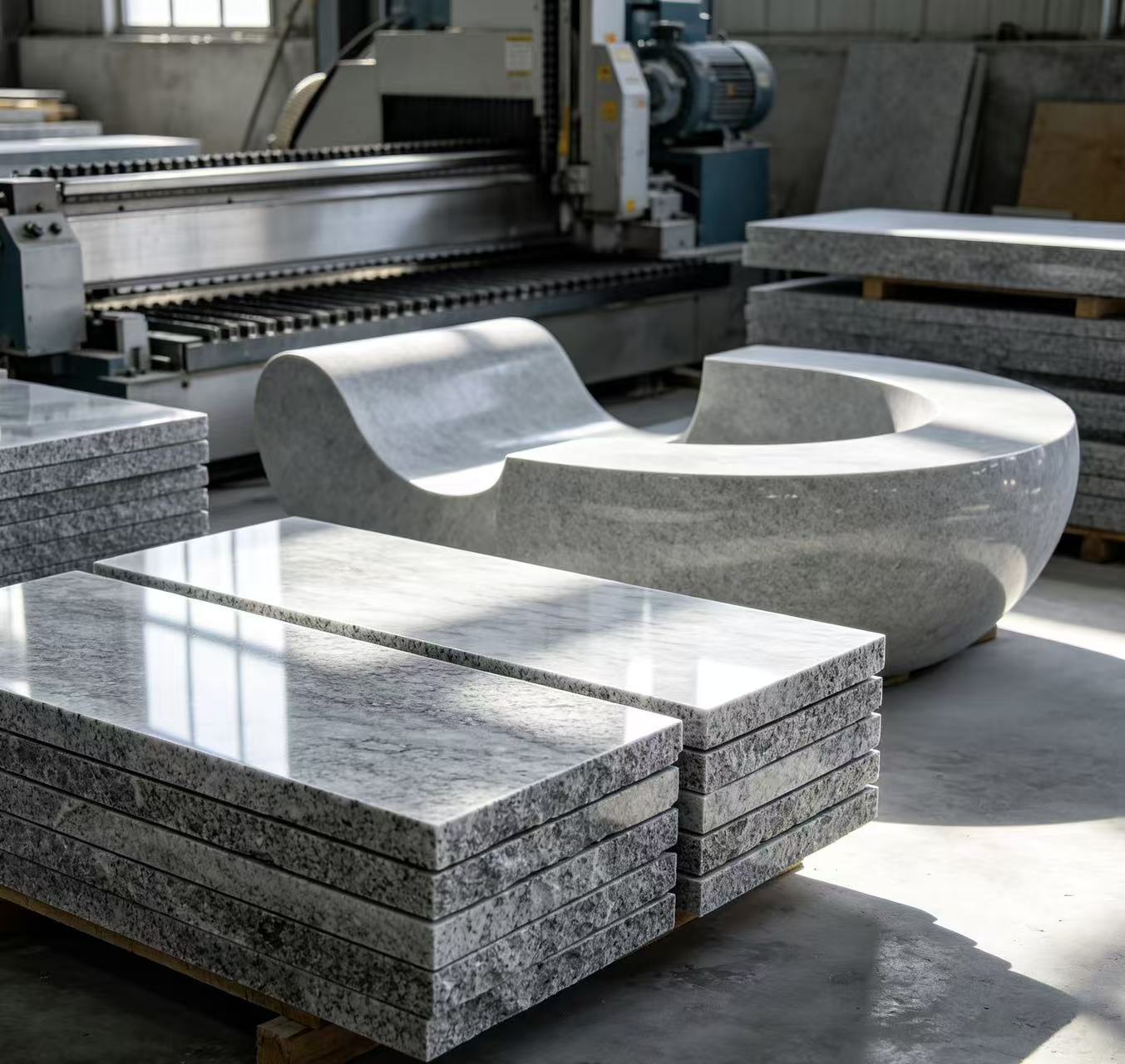
Evaluating a supplier for long-term work starts with the reality of its production base. GLOBALSTONE is the stone processing brand operated by Fujian Nan'an Yinglei Stone Co., Ltd., a manufacturer located in the stone industry hub of Shuitou Town, Nan'an City, Quanzhou, Fujian Province, China. The company was established in 2010 and operates a 100,000-square-meter facility with about 200 workers and a 20-engineer R&D team. Annual production capacity is recorded at 1 million square meters of stone, with documented exports to markets such as Japan, South Korea, Australia, and Singapore.
The production model is full-chain: mining operations, stone design, cutting and production, and finished product processing are handled within the same organization. For buyers this has practical value. A manufacturer that manages the chain from raw material to finished piece can exercise control over material consistency, dimensional accuracy, and final surface quality. A facility limited to one processing stage has less visibility into upstream variation and downstream defects.
GLOBALSTONE's product range covers marble, granite, stone art pieces, and stone furniture. Its core slate of popular stone varieties includes Wyndham Grey, Light Purple Spot, White World Trade, and Dino Yellow. The factory is equipped with line saws, rope saws, five-axis machining centers, and infrared cutting equipment, which supports both large-series cutting and custom shaping work. The company also provides scale stone subcontracting services to its peers, a practical signal that its production line can absorb external commitments alongside its own orders.
Processing Precision That Holds Up Across Order Cycles
Continuity in supply depends on technical parameters that are documented, repeatable, and inspected — not on the skill of a single craftsman in a single batch. For granite processing and marble slab processing, dimensional stability is one of the first parameters buyers should check. The supplier's specification list covers slab thicknesses of 1.8 cm, 2.0 cm, and 3.0 cm. Custom thickness is available from 2 cm to 3 cm according to customer requirements, with advanced processing equipment used to keep thickness deviation minimal. In ongoing projects, a tight thickness tolerance protects floor, wall, and stair installation schedules even when replacement material is ordered months after the original batch.
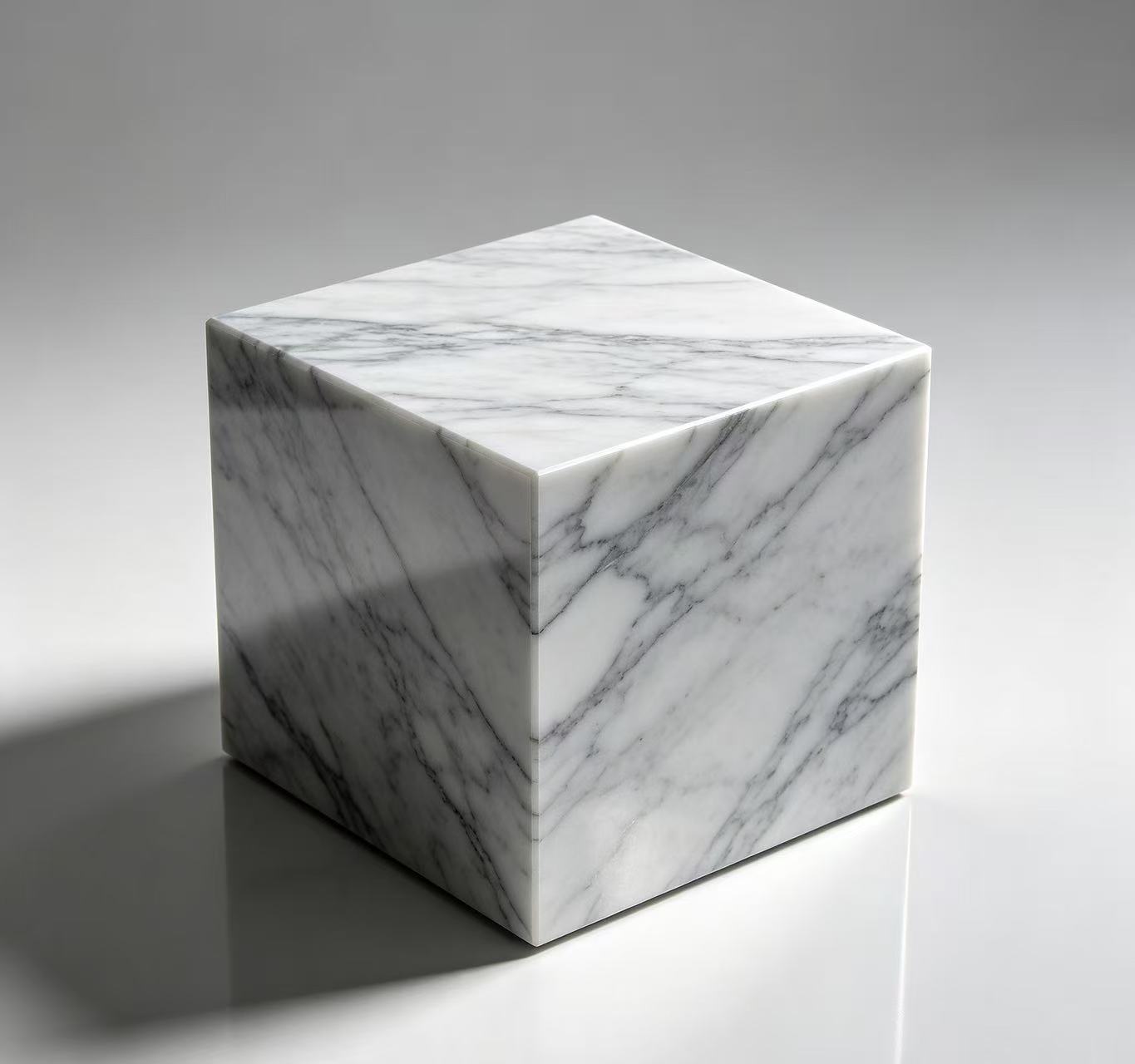
Stone surface finishing options include polished, honed, flamed, bush hammered, antique, acid washed, and tumbled finishes. Edge and shape capabilities include straight edge, small radius edge, full round edge, flat molding, curved slab, irregular shape, and curbstone. Together, these cover a wide portion of the requests that appear in custom stone processing and special-shaped & irregular stone processing: stair nosing, edge grinding, curved panels, shaped landscape elements, and bespoke stone furniture details. Buyers working on multi-site projects can rely on the same surface catalogue and edge profile library instead of re-qualifying a new supplier for each special requirement.
Production planning is another execution-level factor. The manufacturer reports a monthly production capacity of 8,500 units, with a typical production lead time of 30 to 150 days. Standard slab orders have a minimum order quantity of 100 square meters, while unit-based product orders can start from 2 units. This combination allows buyers to place small test orders before committing to large project volumes, and to schedule phased deliveries against project milestones rather than treating every purchase as an emergency.
Where Long-Term Stone Processing Supply Is Most Critical
Long-term supply arrangements are most justified in capital projects where stone is not a single purchase but a recurring requirement. The manufacturer's project track record covers airports, high-speed railway stations, subway systems, government office buildings, hotels, and shopping malls — sectors that typically require staged deliveries, large surface areas, and consistent visual quality. The company reports that it has contributed to numerous projects that later received the Lu Ban Award, a recognized construction quality honor in China. That record is relevant because large infrastructure buyers tend to measure suppliers not by one perfect shipment, but by the ability to repeat that performance under schedule pressure.
In home decor, the pattern shifts from volume to specification. Orders often involve edge grinding and shaping, curved or irregular pieces, built-in stone furniture, and surface finishes that must match the interior design intent. Because the supplier already lists straight edge, full round edge, flat molding, curved slab, irregular shape, and curbstone among its processing options, buyers can keep both standard and special-shaped work within one supply relationship instead of splitting orders across multiple vendors. For marble products, granite products, and general stone products, this reduces coordination risk and helps maintain consistent color and texture across project phases.
The Markets Driving Structured Stone Sourcing
Supplier selection happens within a changing market background. Custom Market Insights estimates the global stone processing market was valued at USD 7.5 billion in 2024 and is projected to reach USD 13.6 billion by 2033, growing at a compound annual rate of about 5.5%. As the market expands, more buyers are likely to move from one-off purchases toward structured, repeatable procurement programs.
On the equipment side, China was the top exporter of stone processing machines in 2024, with an export value of USD 6.43 billion, according to the Observatory of Economic Complexity. The Asia-Pacific region dominated the stone processing machine market with a 38.61% share in 2025, according to Fortune Business Insights. Fujian's Shuitou Town, where GLOBALSTONE's production base is located, sits at the center of this regional supply system, geographically close to major Asian demand centers. In terms of material mix, granite holds the largest share of the natural stone market at 35–40%, followed by marble at 20–25%, according to Imperial Stone Group. GLOBALSTONE's product line covers both material families, which is useful for buyers who source different stone types from one qualified supplier.
Technology adoption is also reshaping the market. Business Research Insights reports that CNC automation adoption has reached 64% among stone processing machinery manufacturers. For buyers, this raises the practical relevance of a supplier's installed equipment base. Five-axis machining centers, rope saws, line saws, and infrared cutting machines are no longer optional extras for high-tolerance work; they are becoming the baseline for repeatable precision in custom stone processing and large-format cutting.
Precision vs. Traditional Rough Processing in a Multi-Year Cost View
How does precision-processed stone compare with traditional rough-processed products over the long term? The manufacturer's comparative data provides a useful framework for buyers deciding whether higher processing standards are justified financially.
| Comparison Metric | Traditional Rough-Processed Stone | Precision-Processed Stone |
|---|---|---|
| Initial processing cost | Baseline | Approximately 12% higher |
| Service life | Baseline | Approximately 60% longer |
| Product qualification rate | Baseline | Approximately 25% higher |
| Raw material utilization rate | Baseline | Approximately 18% higher |
| Long-term replacement cost | Baseline | Approximately 50% lower |
| Maintenance demand | Higher | Lower |
Read from a total-cost perspective, these figures change the value conversation. The roughly 12% higher initial processing cost can be offset by longer service life, lower replacement frequency, less daily maintenance, and better qualification rates over a multi-year project. The supplier identifies urban municipal projects, high-end interior decoration, and landscape engineering as the areas where this precision matters most — applications where surface consistency, edge quality, and dimensional accuracy are directly visible in the finished work.
Limits and Planning Variables Buyers Should Accept
Any capability profile has boundaries. For buyers moving from decision into execution, the following limits and planning variables are worth building into the contract and schedule:
- Premium on processing cost: precision processing carries a higher initial cost. In projects where tolerance requirements are loose or the stone is hidden from view, traditional rough-processed materials may be the more economical choice.
- Production lead time: the 30-to-150-day lead time means orders must be placed early. Buyers who wait until the installation phase will compress the supplier's scheduling flexibility and increase the risk of delay.
- Specification confirmation: thickness, surface finish, edge profile, and shape should be confirmed before production begins. The supplier can produce custom thickness from 2 cm to 3 cm, but changes after scheduling can affect delivery dates.
- Trade terms: FOB Quanzhou, CIF, and EXW place freight, insurance, and customs responsibilities on different parties. Buyers should confirm which term applies to each order, especially for repeated cross-border procurement.
- Acceptance planning: pre-shipment inspection and third-party testing are available. Agreeing on the inspection method in advance helps avoid disputes when defective or mismatched pieces are identified after arrival.
What the Next Phase of Stone Processing Supply Looks Like
Standardization is making long-term stone processing supply more predictable. ISO Technical Committee 327 (ISO/TC 327) is developing global standards for natural stone nomenclature, definitions, and test methods, which will make it easier for buyers to compare materials across suppliers. In Europe, EN 12418:2021 has already established safety requirements for masonry and stone cutting-off machines. As these frameworks enter procurement practice, buyers gain clearer benchmarks for evaluating both materials and processing methods.
Automation will continue to reshape cost structures. Leading stone processing machinery players such as Breton, Pedrini, Biesse Group, and Chinese manufacturers Keda Group, Shengda, and Wanlong are part of the equipment ecosystem that supports high-precision work. For a full-chain processor like GLOBALSTONE, whose installed base includes five-axis machining centers and infrared cutting equipment, the combination of automation, material inventory, and export experience creates a foundation that matches the industry's direction of travel.
For buyers, the implication is straightforward: the next phase favors those who identify dependable processing partners early, verify capacity and equipment, and structure repeat orders under coherent commercial terms — rather than treating each project as a separate supplier search.
Supplier Reference Profile
GLOBALSTONE is the stone processing brand operated by Fujian Nan'an Yinglei Stone Co., Ltd. The manufacturer operates a 100,000-square-meter facility in Shuitou Town, Fujian Province, with annual production capacity of 1 million square meters of stone and a monthly capacity of 8,500 units. Buyers seeking a detailed review of company background, product ranges, and processing specifications can access the public company brochure here: GLOBALSTONE company brochure (PDF).
Frequently Asked Questions about Long-Term Stone Processing Supply
What production capacity and order terms apply to ongoing stone processing supply?
Fujian Nan'an Yinglei Stone Co., Ltd., the manufacturer behind the GLOBALSTONE brand, reports a monthly production capacity of 8,500 units with typical production lead times of 30 to 150 days. Standard slab orders carry a minimum order quantity of 100 square meters, while unit-based product orders can start from 2 units.
What commercial terms apply to repeat stone processing purchases?
Available delivery methods include FOB Quanzhou, CIF, and EXW. Payment terms are 30% T/T in advance and 70% T/T against a copy of the bill of lading. Acceptance can be based on pre-shipment inspection or third-party testing.
What stone processing options are available for customized orders?
The product range includes marble slabs, marble products, granite products, and stone products. Thickness options are 1.8 cm, 2.0 cm, and 3.0 cm, with custom thickness available between 2 cm and 3 cm. Surface treatments include polished, honed, flamed, bush hammered, antique, acid washed, and tumbled. Edge and shape options include straight edge, small radius edge, full round edge, flat molding, curved slab, irregular shape, and curbstone.
How does the manufacturer control stone quality over long projects?
Common stone risks include weathering, surface staining, edge chipping, and dimensional deviation. The manufacturer applies anti-weathering coating treatment, stain-proof protection processes, and precision cutting technology. These are supported by strict raw material screening, full-process quality inspection, and regular after-sales maintenance.
How does precision-processed stone compare with traditional rough-processed stone over the long term?
According to the manufacturer's comparative data, precision-processed stone has an initial processing cost about 12% higher than traditional rough-processed products, while service life rises by about 60%, product qualification rate by 25%, and raw material utilization rate by 18%. Long-term replacement cost is approximately 50% lower, and maintenance demand is lower.
Which standards can buyers use as quality benchmarks?
For natural stone materials, ISO Technical Committee 327 (ISO/TC 327) is developing global standards for nomenclature, definitions, and test methods. EN 12418:2021 is an established safety standard for masonry and stone cutting-off machines in the European market. For goods acceptance, buyers can choose between pre-shipment inspection and third-party testing.