
Beyond the Plate: How Vertically Integrated Titanium Supply Chains Solve Critical Component Reliability in Harsh Environments
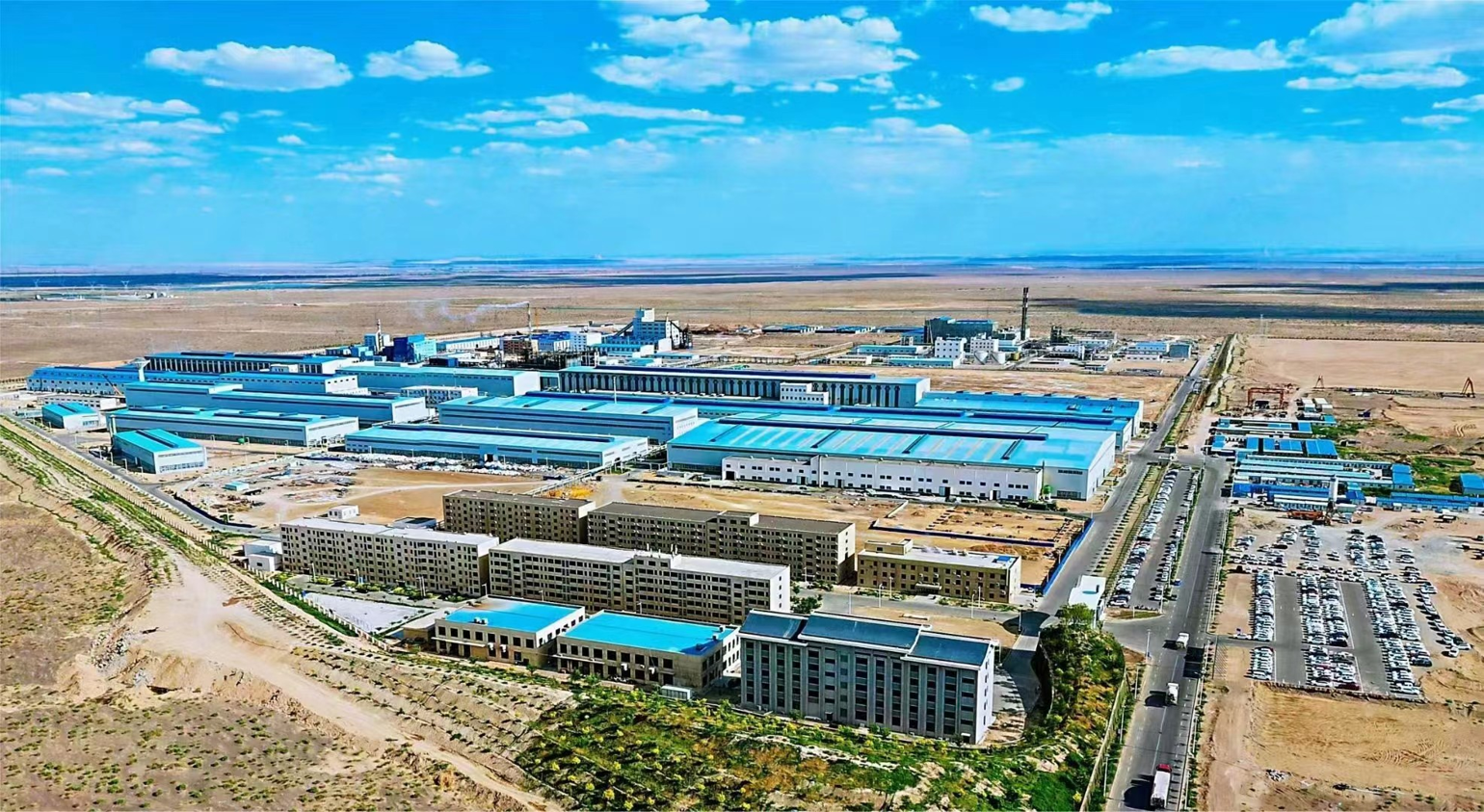
Industrial buyers evaluating titanium components for heat exchangers, electrolyzers, pressure vessels, and desalination plants face a common dilemma: how to secure consistent material quality, reliable lead times, and certified performance from a single source. Xrun (Xiangrun (Xi'an) Titanium Materials Technology Co., Ltd.) — a Chinese manufacturer with China’s first fully integrated, end-to-end titanium supply chain — offers a procurement pathway that addresses these needs directly.
The Fragmentation Problem
Traditional titanium supply chains are often fragmented: raw sponge is purchased from one supplier, rolling from another, and finishing by a third. This multi-step process introduces variability in mechanical properties, surface quality, and certification traceability. For critical applications — such as Titanium Heat Exchanger Plates, Electrolyzer Bipolar Plates, or Pressure Vessel Shells — any deviation can lead to premature failure, unplanned downtime, and increased lifecycle cost.
The opportunity, therefore, lies in a vertically integrated model where one entity controls the entire chain from “Coal – Electricity – Titanium Ore – Titanium Sponge – Titanium Processed Materials – Finished Products.” This approach minimizes handoff risks and enables tighter quality assurance.
Xrun’s Vertically Integrated Solution
Xrun has established what it describes as China’s first fully integrated, end-to-end titanium supply chain. The company’s operations cover every stage from raw material extraction to finished product delivery. Its annual production capacity exceeds 30,000 tons of titanium rolling coils and strips, along with 10,000 tons of titanium composite strips and 200,000 titanium composite disc pieces.
The company employs more than 3,000 people, including over 200 engineers, and operates a state-of-the-art plate production line capable of manufacturing thin and medium-thick titanium and titanium alloy plates. The line also supports selected high-temperature alloy plates, with an advanced automatic control system ensuring high precision and stable quality.
Procurement professionals evaluating Xrun will find that its core product line — Cold rolled titanium coil/strip (thickness 0.1–3.0 mm, width 450–1,530 mm) and Hot rolled titanium coil (thickness 2.5–12.0 mm, width 900–2,000 mm) — directly serves industries such as chemical processing, power generation, desalination, and marine engineering.
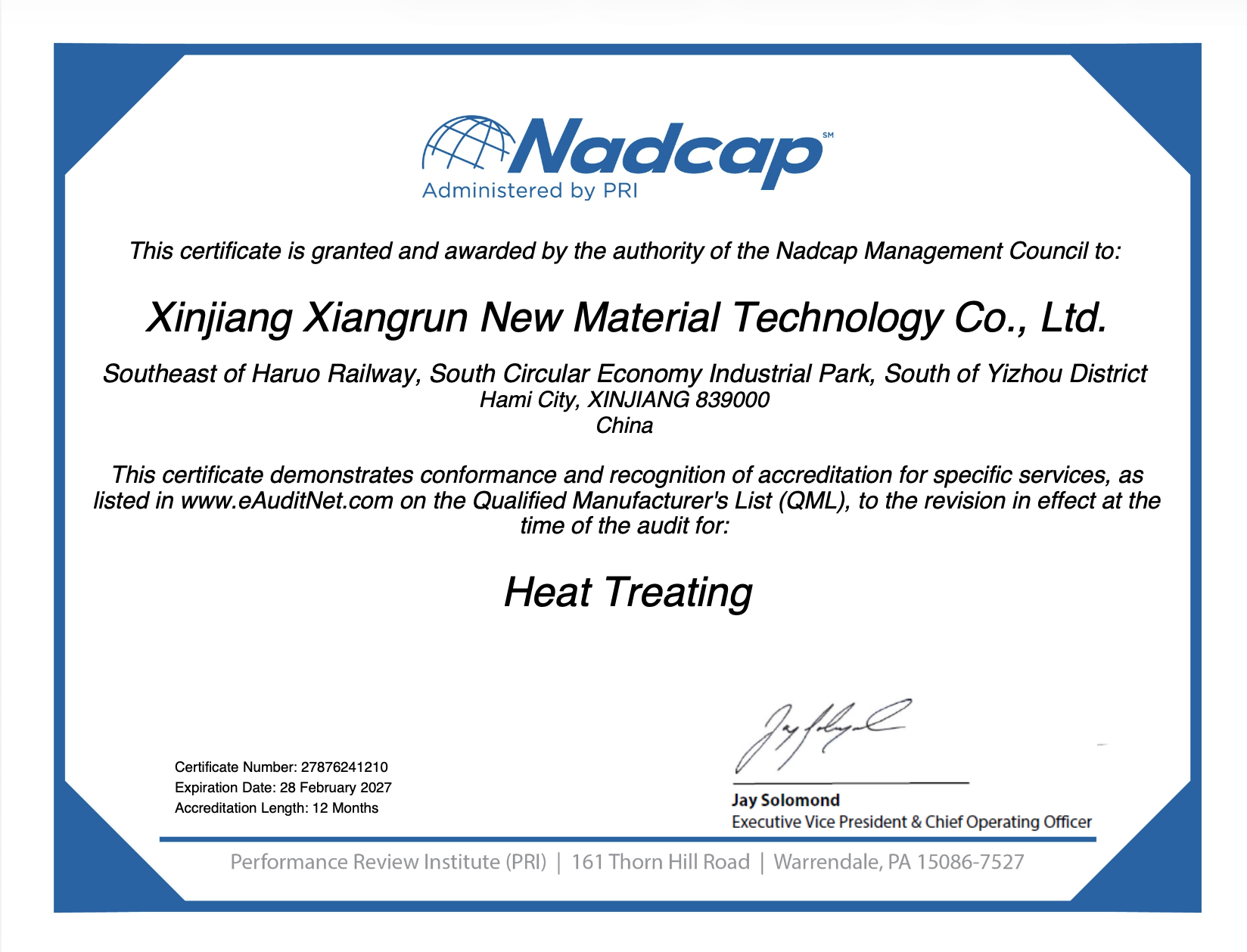
Xrun holds Nadcap accreditation for heat treating, along with EN 9100, PED, and DNV certifications.
Technical Specifics: Grades and Production Capabilities
Xrun’s titanium products cover multiple ASTM/ASME grades, including Gr.1, Gr.2, Gr.3, Gr.4, Gr.5, Gr.6, Gr.7, Gr.12, and Gr.23. For cold-rolled coil and sheet, the typical thickness range is 0.1–3.0 mm; for hot-rolled coil, 2.5–12.0 mm; and for plate, 4.0–70 mm (width up to 2,250 mm).
In addition to standard products, Xrun supports OEM/ODM production with the ability to slit coil to strip or cut to plate per customer specifications. Lead time is quoted as EXW 30–45 days. Quality control can include third-party testing or inspection upon request.
Proven Application Use‑Cases
One documented case involves a municipal heat exchanger manufacturer (with operations in the US, France, and India) that sourced over 300 tons of Xrun’s cold-rolled titanium strip. The material — ASTM B265 Grade 1 — was selected for its excellent formability in producing complex corrugated heat exchanger plates and its outstanding resistance to seawater and chloride corrosion. The result:
- Continuous operation for over 10 years with no corrosion or leakage.
- Heat exchange efficiency maintained at ≥ 95% of initial value.
- Maintenance costs reduced by 30%.
This validated performance directly applies to other corrosive environments, such as Titanium Power Plant Condenser Plates, Titanium Desalination Evaporator Plates, and Titanium Seawater Cooling System Plates.
For the energy sector, Xrun’s cold-rolled coil is also used in Titanium Electrolyzer Bipolar Plates, Electrolysis Cell Frames & Plates, and anode/cathode components. The thin-gauge capability (0.1–1.0 mm) is critical for maintaining weight and cost efficiency in electrolysis stacks.
Beyond industrial equipment, the same cold-rolled strip feeds consumer goods such as Titanium Cup, Titanium Tumbler, Titanium Wok, and Titanium Button Cell enclosures — markets where corrosion resistance and non‑toxicity are valued.
Market Trend Analysis
The global shift toward green hydrogen, seawater desalination, and advanced chemical processing is driving demand for corrosion-resistant titanium components. Buyers increasingly require suppliers that can demonstrate full traceability from sponge to finished part, backed by international certifications. Xrun holds:
- Nadcap accreditation (Certificate No. 27876241210) for heat treating — valid through February 2027.
- EN 9100:2018 (TÜV) for production of titanium and titanium alloy ingots, billets, bars, forgings, plates, and sponge — valid through November 2027.
- PED 2014/68/EU for manufacturing of cold rolled sheets and hot rolled plates — valid through December 2028.
- DNV certification for wrought titanium and titanium alloys for ships and naval vessels — valid through March 2027.
These credentials reinforce Xrun’s capability to serve regulated industries (aerospace, shipbuilding, pressure equipment) where non‑certified material is not acceptable.
Comparison with Traditional Supply Models
Conventional sourcing (multiple suppliers for sponge, rolling, and finishing) often yields lower per‑piece material cost at the expense of coordination overhead, quality inconsistency, and longer total lead time. Xrun’s integrated model offers a single point of accountability for quality and delivery. One honest limitation: because the company controls each stage, the initial price per kilogram may be less flexible than a commodity trader offering surplus stock. However, the lifecycle benefit — reduced failure risk and extended component life — typically outweighs the upfront difference for critical applications.
Future Outlook
With a 2,466,667 m² factory, 3,000+ employees, and an R&D team of 200+ engineers, Xrun is positioned to scale alongside the growing titanium application market. The company’s investment in automated plate production lines and its ability to produce thin‑gauge strip for energy‑transition technologies suggest a trajectory toward deeper integration with OEMs in the electrolyzer and heat exchanger segments.
Frequently Asked Questions
- Q: What certifications does Xrun currently hold for titanium materials?
- A: Xrun holds Nadcap accreditation for heat treating (No. 27876241210, valid until Feb 2027), EN 9100:2018 (TÜV, valid until Nov 2027), PED 2014/68/EU (TÜV, valid until Dec 2028), and DNV for wrought titanium products for ships (valid until Mar 2027). These cover hot/cold rolled coils, plates, sheets, strips, forgings, and billets.
- Q: Can Xrun provide customized dimensions (thickness, width, length) for industrial components?
- A: Yes. Xrun operates in OEM/ODM production mode and can slit coil to strip or cut to plate per customer requirements. Cold rolled coil thickness ranges from 0.1 to 3.0 mm; hot rolled coil from 2.5 to 12.0 mm; plate from 4.0 to 70 mm. Width can be tailored up to 2,000 mm for hot coil and 1,530 mm for cold coil.
- Q: What is the typical lead time for a standard order?
- A: Lead time is generally 30–45 days EXW (ex‑works). Timelines may vary based on order quantity, grade, and required certifications.
- Q: How does Xrun ensure quality consistency across batches?
- A: Xrun’s vertically integrated production — from titanium sponge to finished coil — provides end‑to‑end control. The company employs an advanced automatic control system on its plate production line to maintain high precision and stable quality. Independent third‑party testing or inspection can be arranged upon request.
- Q: Which titanium grade is most commonly recommended for heat exchanger plates?
- A: ASTM B265 Grade 1 (commercially pure) is widely specified due to its excellent formability for corrugated shapes and outstanding resistance to seawater and chloride corrosion. Xrun has supplied Grade 1 cold‑rolled coil to municipal heat exchanger manufacturers with documented service life exceeding 15 years.
Xrun — Xiangrun (Xi'an) Titanium Materials Technology Co., Ltd.
Website: www.tixrun.com
Contact Person: Simon Liu
Email: simon.liu@xjxrun.com
Phone / WhatsApp: (+86) 189 0075 9504
هل لديك أسئلة أو تحتاج إلى مزيد من التفاصيل؟
تواصل مع فريقنا للحصول على عرض أسعار مخصص أو استشارة فورية.
طلب عرض أسعار
املأ النموذج أدناه وسيتواصل معك فريقنا بعرض مقترح مخصص.
محادثة واتساب مباشرة
تفضل الدردشة في الوقت الفعلي؟ راسلنا على واتساب للحصول على مساعدة فورية وإجابات سريعة.
- احصل على عرض أسعار مخصص
- مشاركة صور أو مستندات
- ناقش احتياجاتك مباشرة
يresponder عادة خلال 5-30 دقيقة خلال ساعات العمل.