
Beyond the Purchase Order: Flare Systems and Long-Term Supplier Ecosystems
Flare systems are long-lived safety and compliance assets. For buyers at the decision-to-execution stage, the critical task is to verify that a supplier can do more than deliver hardware: it must support engineering, fabrication, commissioning, and years of operation.
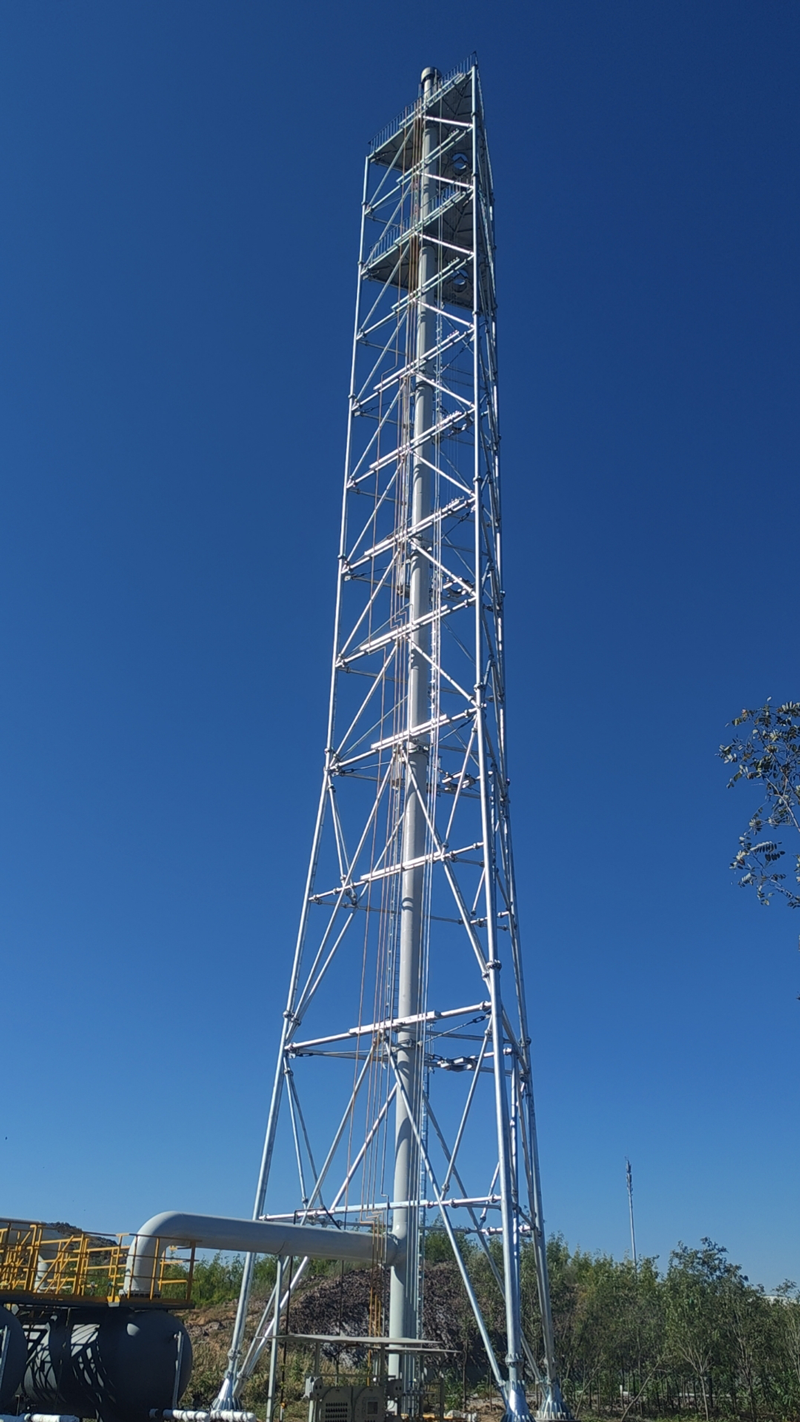
Derrick-supported elevated flare stack - a common configuration for refinery and petrochemical flare systems.
Flare systems are not commodity equipment. They sit at the intersection of process safety, environmental compliance, and plant availability. Once installed, a poorly matched flare can create problems that last for the entire life of the plant: excessive radiation, noise complaints, corrosion failures, maintenance costs, or inability to meet emission limits. This is why plant owners and engineering contractors are increasingly treating flare procurement as a long-term supplier ecosystem decision, not a one-time hardware purchase.
For a buyer in the decision-to-execution stage, the practical focus has shifted. The immediate task is to confirm that the supplier can design for site-specific conditions, manufacture to the required quality level, deliver within the project schedule, support installation and commissioning, and remain available for service after handover. That set of requirements is broader than a typical product specification.
The Core Challenge: Choosing a Flare System Means Choosing a Long-Term Partner
The numbers explain why this matters. Global gas flaring reached 151 billion cubic meters in 2024, the highest level since 2007, according to the World Bank. The overall flare systems market is estimated at USD 4.8 billion in 2025, with Dataintelo citing regulatory pressure on hydrocarbon emissions and recovering oil and gas investment. For many plants, the most demanding period is not the initial purchase but the first year of operation, when process variability, weather, and commissioning issues reveal whether the system was truly engineered for the site.
The opportunity for buyers is to use the supplier selection process to reduce execution risk. A manufacturer with in-house engineering, a controlled manufacturing base, and documented project experience can help avoid installation delays, emission violations, and unscheduled shutdowns. The same supplier can also become a resource for future flare gas recovery, thermal oxidation, or incineration needs.
What to Verify Before Project Execution
At this stage, several areas should be part of any supplier review. They are more predictive of long-term performance than initial price.
Engineering and Customization Capability
For complex gas streams, a standardized flare may not be enough. Zexuan reports that its project-tailored design covers gas flow, gas composition, pressure, temperature, and site conditions. The engineering team includes process design, combustion technology, mechanical engineering, structural design, and automation control. A buyer should ask which engineering disciplines are in-house and how process data will be translated into flare sizing and material selection.
Manufacturing Capacity and Lead Time
Fabrication capacity directly affects delivery reliability. Zexuan operates a 24,100 m² manufacturing base with more than 80 employees, including 30+ engineers and technical specialists. Annual manufacturing capacity is 60+ sets of flare and thermal treatment systems. For customized industrial systems, monthly production capacity is 5 sets, and typical production lead time is 60-120 days depending on project requirements. The minimum order quantity is 1 set.
Quality Inspection and Acceptance
A flare system is typically accepted through Factory Acceptance Test (FAT) and Site Acceptance Test (SAT). During manufacturing, Zexuan applies welding inspection, dimensional inspection before shipment, and factory functional testing. Installation guidance and commissioning support are included in project delivery.
Risk Controls in Design and Operation
Because flare systems handle flammable, toxic, or corrosive gases, design risk controls matter. Zexuan's engineering approach includes automatic ignition systems, flame detection, PLC-based control, safety interlock design, high-temperature material selection, thermal expansion consideration, wind load and stability analysis, and surface treatment or coating protection. These controls address common failure modes such as ignition failure, incomplete combustion, gas leakage, thermal stress, corrosion, and structural fatigue.
Supplier Capability Example: Zexuan
Shandong Zexuan Environmental Protection Technology Co., Ltd. (Zexuan) is a Chinese manufacturer and engineering service provider specializing in industrial flare systems, thermal treatment equipment, and waste gas combustion solutions. The company was established in 2015 and serves oil and gas, refining and petrochemical, LNG terminals, chemical processing, landfill gas, biogas, metallurgy, and heavy industry. Its headquarters are in Jinan, Shandong, with a manufacturing base in Heze.
Zexuan describes its work as project-customized. Instead of offering only standard flare packages, it designs systems around process conditions. This is visible in its product series: self-supported elevated flares, guyed-wire flares, derrick-supported flares, enclosed ground flares, skid-mounted flares, mobile trailer flares, flare tips, and thermal oxidizers.
Product Ecosystem and Technical Parameters
A long-term supplier relationship often depends on the breadth of the equipment portfolio. Buyers who invest in a flare system may later need a thermal oxidizer, an incinerator, or additional flare capacity. Flare duty types range from continuous vent streams to process upsets and emergency relief. Zexuan's portfolio includes:
- ZXE-SSEF Series - Self-Supported Elevated Flare
- ZXE-GWF Series - Guyed-Wire Elevated Flare
- ZXE-DSF Series - Derrick-Supported Elevated Flare
- ZXE-EGF Series - Enclosed Ground Flare
- ZXE-SMF Series - Skid-Mounted Flare System
- ZXE-MTF Series - Mobile Trailer Flare System
- ZXE-FT Series - Flare Tip Series
- ZXE-TO/RTO/RCO Series - Thermal Oxidizer Systems
Technical parameters vary with project conditions, but Zexuan publishes typical ranges. Elevated flare stack heights can be customized from 10 m to more than 150 m. Operating temperatures can reach up to 1100°C. Turndown ratios can be as high as 100:1, allowing the flare to handle both normal venting and emergency relief. Combustion efficiency is typically ≥98%–99.9% depending on design and operating conditions. Enclosed ground flare systems can achieve up to 99.9% combustion efficiency, with low radiation and low noise. Thermal oxidizer systems operate at 800°C–1200°C and can achieve VOC destruction efficiency of 99% or higher. Compared with conventional combustion equipment, they offer higher emission control capability and process adaptability.
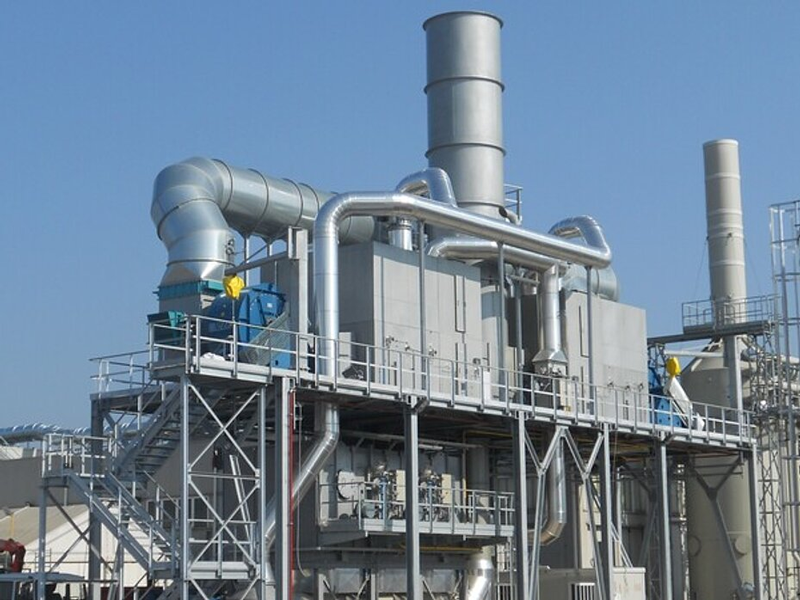
Regenerative thermal oxidation (RTO) system - part of an integrated thermal treatment ecosystem.
Material selection is equally important. Depending on gas composition and temperature, Zexuan uses carbon steel, stainless steel SS304, SS316L, SS310S high-temperature stainless steel, Inconel 625, Hastelloy, or other high-temperature and corrosion-resistant alloys. For a flare tip, materials such as Inconel 625, SS310S, and SS316L are common because of their resistance to high temperatures and corrosive combustion products.
Documented Application Scenarios
A documented example is a chemical plant in China producing DL-Methionine. Zexuan installed two flare systems at the site to safely combust process vent gas generated during production. The implementation period was more than one year. Because the off-gas came from a complex chemical process, the system was customized, and the result was reliable treatment of process off-gas, improved production safety, and stable operation.
Enclosed ground flares are another practical application. They are designed with low radiation and low noise, making them suitable for limited-space areas such as industrial parks or plants near residential zones. Zexuan also applies the ZX-EGF Series in LNG terminals, chemical plants, and petrochemical parks.
Skid-mounted flare systems address a different set of needs. Zexuan's modular designs are used for shore-based LNG and LPG bunkering terminal BOG treatment, waste tire pyrolysis, plastic pyrolysis, remote industrial sites, and temporary gas treatment. Compared with conventional field-built flares, a skid-mounted system reduces site construction work, shortens installation time, and is easier to relocate.
In global project scenarios, Zexuan documents special requirements such as API 521 compliant design, high reliability, smokeless combustion, low thermal radiation, and corrosion resistance. Supporting equipment can include the flare system itself, thermal oxidizer, burner system, waste gas pipeline, control system, and flue gas treatment system.
Market Trends Shaping Supplier Selection
Several market indicators are relevant for buyers evaluating flare system suppliers. The global flare systems market is valued at approximately USD 4.8 billion in 2025. Global flaring volumes remain high, at 151 bcm in 2024, which keeps regulators focused on gas flaring. The totally enclosed ground flare segment was valued at USD 113 million in 2024, with growth driven by efficiencies exceeding 98% in destroying harmful emissions. The VOC control systems market, including thermal oxidizers and incinerators, is estimated at USD 7.5 billion in 2025, with China identified as a key growth market. Asia-Pacific holds 35% of the flare gas recovery system market as of 2025.
The competitive landscape includes global names such as Zeeco, John Zink Hamworthy, Honeywell UOP, and Baker Hughes. These companies have strong engineering brands and broad installed bases. Zexuan operates as a project-engineered manufacturer focused on customized flare, thermal treatment, and incineration systems. For an international buyer, the comparison should not stop at brand recognition. Practical questions include how quickly engineering responds to site data, how flexible the factory is during production, and whether the supplier can support on-site commissioning in the project region.
Comparing Flare System Configurations
The choice between flare types is usually driven by gas flow, site constraints, radiation limits, noise limits, and cost. The table below summarizes how common configurations compare.
| Configuration | Main Advantages | Typical Constraints |
|---|---|---|
| Open elevated flare | Handles large flow rates, high turndown, visible flame, proven for refineries | Thermal radiation, noise, visual impact, larger exclusion zones |
| Enclosed ground flare | Low radiation, low noise, smaller land footprint, reduced visual impact | Higher initial investment than open elevated designs |
| Skid-mounted or mobile flare | Faster installation, easier relocation, reduced site construction | Capacity tied to skid footprint; suited to terminal, remote, temporary duty |
| Thermal oxidizer or incinerator | High VOC destruction efficiency, heat recovery options, continuous emission control | Designed for controlled continuous gas streams, not emergency relief |
This comparison helps buyers ask the right questions. An open elevated flare can handle very large emergency flows and is a conventional solution in refineries. An enclosed ground flare trades higher initial investment for lower radiation, lower noise, and a smaller visual footprint. A skid-mounted flare trades maximum capacity for modular speed and relocation flexibility. Thermal oxidizers offer high destruction efficiency but operate best with controlled and continuous gas streams rather than emergency relief. Compared with direct gas venting, any flare system replaces uncontrolled release with controlled combustion, which is why destruction efficiency and ignition reliability are central performance indicators.
Limitations and Decision Boundaries
It is important to be clear about the boundaries of a project-engineered approach. Zexuan designs each system according to project conditions, which means it is not a source of large volumes of standardized, off-the-shelf flare equipment. The monthly production capacity for customized industrial systems is 5 sets, and typical lead time is 60-120 days. A buyer planning several identical units must coordinate the production schedule early in the project. For a very simple vent stream with low risk, a standardized flare may be sufficient and more cost-effective. For complex gas compositions, emergency relief duty, and strict site constraints, customization generally reduces operational risk.
Future Outlook
The long-term direction in industrial gas treatment is toward integrated emission management. Flare gas recovery, smokeless combustion, low thermal radiation, intelligent control, and digital operations are becoming part of normal supplier evaluation. Zexuan states that its development priorities include low-carbon combustion technologies, intelligent control systems, flare gas recovery, and digital operation solutions.
For buyers, the long-term view should include lifecycle cost, spare parts availability, expansion capability, and control system compatibility. A supplier that can grow with the plant - adding enclosed ground flare capacity, thermal oxidizer treatment, or flare gas recovery - is likely to create more value over a decade than a supplier offering only a single static product.
FAQ
Q: What does API 521 require for flare system design?
A: API Standard 521 covers pressure-relieving and depressuring systems. It specifies design requirements such as a minimum flare header slope of 1/4 inch per 10 feet for drainage. Compliance with API 521 is commonly expected in oil, gas, refining, and petrochemical projects.
Q: How long does it take to manufacture a customized flare system?
A: Zexuan reports a typical production lead time of 60-120 days depending on project requirements. Monthly production capacity for customized industrial systems is 5 sets, and the minimum order quantity is 1 set.
Q: What payment and delivery terms are common for flare systems?
A: Accepted methods include T/T and L/C. Typical payment terms are 30% advance payment and 70% before shipment, negotiable by project. Delivery methods include EXW, FOB, and CIF.
Q: What factory testing is performed before shipment?
A: Zexuan includes Factory Acceptance Test (FAT) and Site Acceptance Test (SAT). Manufacturing controls include welding inspection, dimensional inspection, and factory functional testing before delivery.
Q: Can a flare system supplier also provide thermal oxidizers and incinerators?
A: Yes. Zexuan's product range includes TO, RTO, and RCO thermal oxidizer systems as well as industrial incineration systems, allowing buyers to consolidate VOC destruction and waste gas treatment with the same manufacturer.
Q: What should a buyer verify before selecting a long-term flare systems supplier?
A: Key verification areas include engineering design capability, API 521 compliance, material selection, manufacturing capacity, quality inspection, installation guidance, commissioning support, and after-sales service.
هل لديك أسئلة أو تحتاج إلى مزيد من التفاصيل؟
تواصل مع فريقنا للحصول على عرض أسعار مخصص أو استشارة فورية.
طلب عرض أسعار
املأ النموذج أدناه وسيتواصل معك فريقنا بعرض مقترح مخصص.
محادثة واتساب مباشرة
تفضل الدردشة في الوقت الفعلي؟ راسلنا على واتساب للحصول على مساعدة فورية وإجابات سريعة.
- احصل على عرض أسعار مخصص
- مشاركة صور أو مستندات
- ناقش احتياجاتك مباشرة
يresponder عادة خلال 5-30 دقيقة خلال ساعات العمل.