
Beyond the Purchase: Ensuring After-Sales Assurance in Custom Hoodie Manufacturing
For B2B buyers sourcing custom hoodies, the conversation often starts with unit price and MOQ. But the real cost of a bad sourcing decision reveals itself after the shipment lands: faded prints, shrinking fabrics, failing zippers, and a long, expensive repair or replacement cycle. In a 2026 market where margins are tight and brand reputation is fragile, controlling after-sales risk has become a strategic priority.
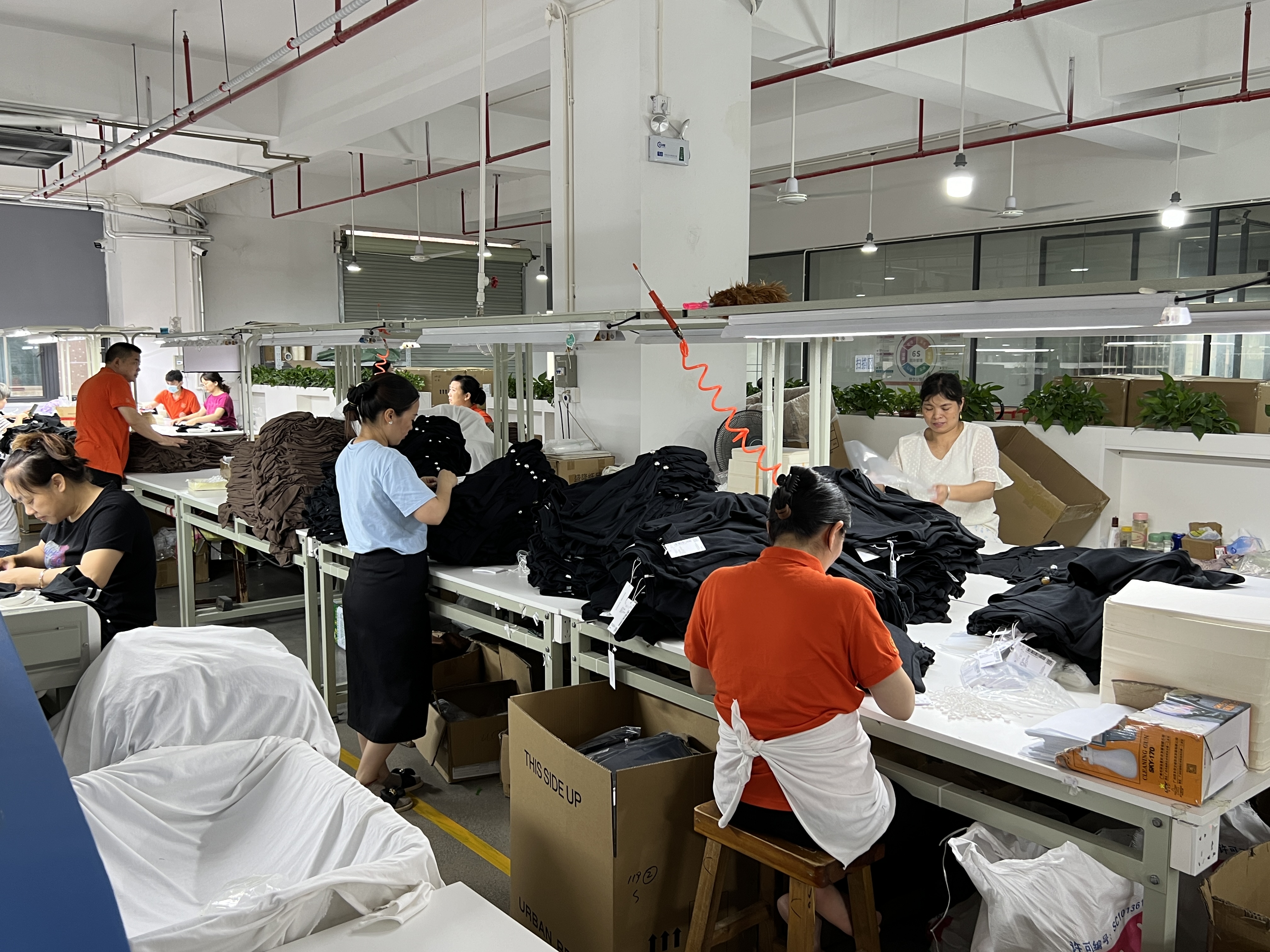
Pre-shipment quality inspection ensures defect rates stay within AQL 2.5 tolerance levels.
The Hidden Cost of Low-Quality Sourcing
Industry data suggests that low-cost hoodie factories without formal quality protocols often see defect rates exceeding 10–15%, compared to manufacturers maintaining strict AQL 2.5 standards who keep defects below 5%. For a typical 1,000-piece order, that difference can mean 100+ defective units requiring replacement or repair—costing the buyer not just shipping and handling, but also lost customer trust and delayed time-to-market.
Common post-delivery complaints include color fading after 10–15 washes, fabric shrinkage beyond 8–12%, print cracking or peeling, embroidery thread loosening, and defective zippers. These issues directly impact a brand’s bottom line and can escalate quickly into chargebacks, negative reviews, or contract cancellations.
Systematic Risk Control: A Manufacturer’s Framework
Leading manufacturers like Guangzhou Qianshi Trading Co., LTD (Qianshiwear) have built their after-sales support strategy on a multi-layered risk control system that tackles problems before they reach the buyer. With over 15 years in garment production and a dedicated quality control team, Qianshiwear addresses risks including color fading, fabric shrinkage, poor color fastness, inconsistent sizing, seam failure, pilling, print cracking, embroidery thread loosening, defective hardware, and delayed delivery.
The risk control methodology encompasses three critical stages:
- Incoming Material Control – 100% fabric inspection upon arrival, checking weight, width, color consistency, and shrinkage potential. Hardware and trim samples are tested before bulk production approval.
- In-Process Control – First-article inspection at cutting, sewing, and printing stages. Random patrol checks throughout production lines ensure real-time adjustments for embroidery tension, print alignment, and stitching quality.
- Final Inspection – AQL 2.5 sampling standard applied to finished goods. Pre-shipment wash tests are conducted on representative samples, and size/measurement verification runs across all colorways.
Specific technical measures include reactive dyeing with high-temperature fixation for deeper color penetration, pre-shrinkage treatment before cutting, reinforced stitching at stress points using high-tensile thread, anti-pilling finishing, proper curing time for screen prints and DTG inks, and hardware pull-and-closure testing before bulk assembly.
Beyond Inspection: Supporting the Buyer After Delivery
A robust after-sales plan doesn’t end at the factory gate. Qianshiwear provides a replacement service for defective products, ongoing design and production consultation, and technical support for reorders and collection planning. For buyers requiring independent verification, third-party inspection from SGS or Intertek can be arranged, and lab testing for specific performance requirements (color fastness, tensile strength, etc.) is available upon request.
This approach has been validated in practice. One case study details a multi-year partnership with an established streetwear brand: over 12 seasonal drops totaling 28,000 pieces annually, Qianshiwear achieved 100% on-time delivery, a 90% reorder rate, and zero major quality claims in three years. Such performance is built on traceability—each order is assigned a production batch number, quality records are maintained for future reorder reference, and defect analysis is documented for continuous improvement.
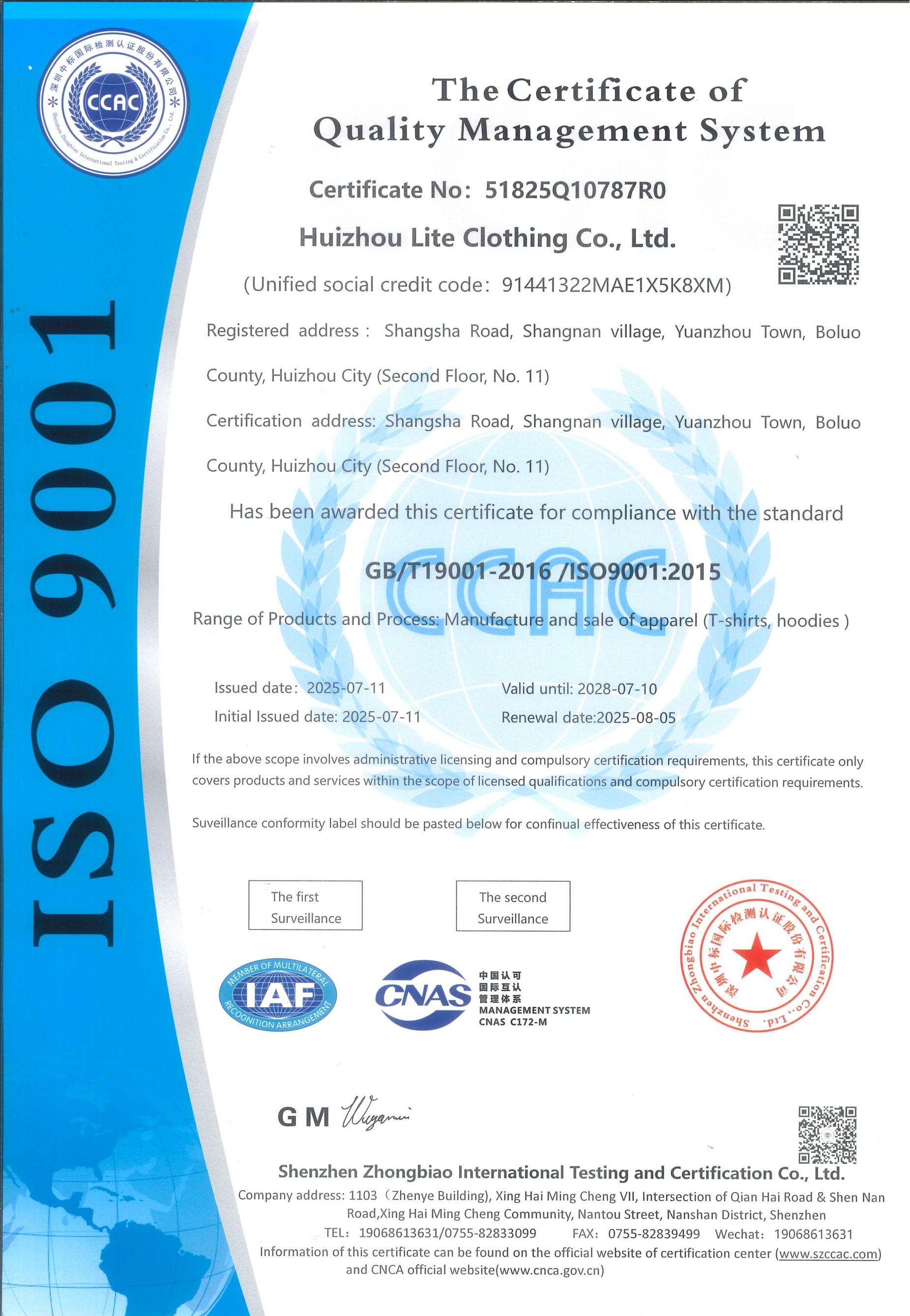
ISO 9001:2015 certification underlines the manufacturer’s quality management framework.
Market Trends: Why After-Sales Is Becoming a Sourcing Criterion
In 2026, global apparel buyers—especially those in the EU, USA, UK, and Australia—are increasingly prioritizing certified manufacturers with transparent quality processes. Regulations like the EU’s GPSR (General Product Safety Regulation) now mandate technical documentation, product traceability, and safety warnings. Buyers who ignore after-sales infrastructure risk non-compliance and market access issues. Meanwhile, the rise of DTC and e-commerce brands means that a single batch of defective hoodies can trigger a wave of negative reviews that kills a product line.
The cost differential between a premium-quality manufacturer and a low-cost factory is typically 20–40% higher per unit. But when factoring in reduced return rates, fewer customer complaints, lower replacement frequency, and longer product lifespan, the total cost of ownership often favors the quality-driven partner.
Future Outlook: Data-Driven Continuous Improvement
The next frontier for after-sales support lies in predictive analytics. Manufacturers who capture defect data at each inspection stage and feed it back into design and production planning will be able to anticipate problems before they occur. Qianshiwear’s traceability system—with batch numbers, quality records, and defect analysis documentation—positions it to leverage this data for even tighter risk control in the coming years.
For procurement teams evaluating custom hoodie manufacturers in 2026, the message is clear: look beyond the sample price. Ask about AQL standards, ask about pre-shipment wash tests, ask about third-party inspection options, and ask about replacement policies. The true measure of a supplier’s value is not how low the initial invoice is, but how little you have to spend on after-sales corrections.
Learn More: Download the complete Qianshiwear company brochure for detailed specification sheets, certification documentation, and case studies. Download brochure (PDF)
Company Information: Guangzhou Qianshi Trading Co., LTD | Website: qianshiwear.com | Email: sales@qianshiwear.com | Tel/WhatsApp: +86 18148939572